How to build a website like Uber Eats
Learn how Uber Eats built a $32 billion food delivery marketplace and get a practical guide to creating your own three-sided platform connecting restaurants, drivers, and customers.
Published: Mar 5, 2026
Last updated: Mar 19, 2026
Uber Eats built a new model for food delivery from a luxury service to an everyday convenience. In 2024, the platform facilitated over 2.6 billion orders globally, generating around $18.1 billion in gross bookings across more than 70 countries.
What started as "UberFresh" in 2014 has become one of the world's largest on-demand delivery marketplaces. The platform connects three distinct user groups: restaurants seeking customers, drivers wanting flexible income, and hungry consumers craving convenience.
Building a marketplace like Uber Eats involves creating a complex three-sided platform with real-time logistics, location-based services, and advanced matching algorithms. But the technology is only part of the equation. The real challenge lies in achieving marketplace liquidity across all three sides while managing unit economics in a notoriously low-margin industry.
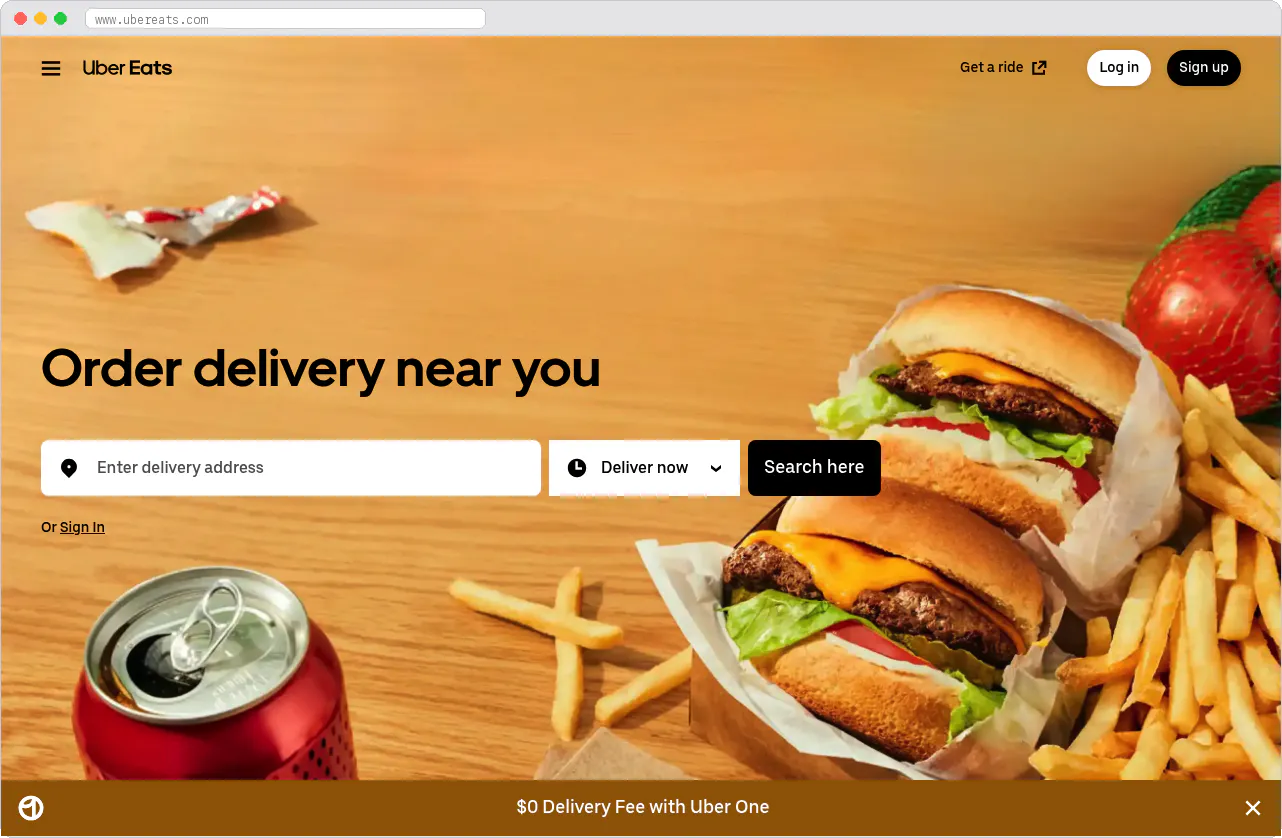
How does Uber Eats work?
Uber Eats operates as a three-sided marketplace, which is more complex than traditional two-sided platforms. The three user groups each have different needs and motivations:
Customers browse restaurant menus, place orders, and pay through the app. They want variety, speed, and reliability. The average order value in the US is around $27, and customers typically reorder from the platform within 7-10 days.
Restaurants list their menus, receive orders, and prepare food for pickup. They gain access to new customers without building their own delivery infrastructure. Restaurants pay commissions ranging from 15-30% of each order, plus additional fees for marketing and delivery.
Delivery drivers accept delivery requests, pick up prepared orders, and deliver to customers. They earn money through base pay, tips, and surge pricing during peak hours. Drivers are independent contractors who can work flexible schedules.
The transaction flow works like this: A customer places an order through the app. The restaurant receives the order and begins preparation. The platform's algorithm matches a nearby driver to the order. The driver picks up the completed order and delivers it to the customer. Payment is processed automatically, with funds distributed to the restaurant (minus commission) and driver (plus tip).
This three-sided model creates powerful network effects. More restaurants attract more customers. More customers create more delivery opportunities for drivers. More drivers enable faster delivery times, which attracts more customers and restaurants. However, it also means the platform must simultaneously solve the supply-and-demand challenges for three different user groups.
Location plays a critical role in every transaction. Unlike e-commerce marketplaces where products can ship anywhere, food delivery requires geographic proximity between all three parties. The driver must be close enough to the restaurant for efficient pickup and close enough to the customer for timely delivery. This constraint shapes everything from pricing to expansion strategy.
How does Uber Eats make money?
The Uber Eats business model generates revenue through multiple streams, primarily from transaction-based fees charged to restaurants and customers:
Restaurant commissions represent the largest revenue source. Restaurants pay 15-30% of each order value, with the exact rate depending on factors like restaurant size, exclusivity agreements, and local competition. High-volume chain restaurants often negotiate lower rates around 15-18%, while smaller independent restaurants may pay 25-30%.
Delivery fees charged to customers typically range from $0.99 to $4.99 per order, varying by distance, demand, and local market conditions. During peak hours or bad weather, surge pricing can increase these fees notably.
Service fees add another 2-5% to customer orders, positioned as operational costs for payment processing and customer support.
Uber One subscription costs $9.99 monthly and offers benefits like free delivery on orders over $12, reduced service fees, and exclusive restaurant access. Subscription revenue provides more predictable income and increases customer retention.
Advertising revenue comes from restaurants paying for promoted placement in search results and featured positions on the app's homepage. This high-margin revenue stream has grown rapidly, contributing over $1.3 billion to Uber's total revenue in 2023.
Small order fees penalize orders under $12 (typically $2-3 additional fee) to encourage larger basket sizes and improve driver economics.
The unit economics reveal why profitability has been challenging. On a typical $27 order, Uber Eats might collect $6-8 in total fees (restaurant commission plus customer fees). After paying the driver $3-5, credit card processing fees of $0.50-0.80, and platform operational costs, the gross profit per order is often just $1-3.
This thin margin structure explains why Uber Eats focuses heavily on increasing order frequency, basket size, and operational efficiency. The company has invested billions in logistics optimization, demand forecasting, and driver routing to squeeze out additional profitability from each transaction.
What makes Uber Eats successful?
Several strategic advantages have enabled Uber Eats to compete effectively in the crowded food delivery market:
using Uber's existing infrastructure provided a massive head start. The company could reuse driver networks, payment systems, mapping technology, and customer acquisition channels from its rideshare business. This allowed Uber Eats to launch in new cities much faster than competitors building from scratch.
Dense urban focus maximizes delivery efficiency. Rather than spreading thin across suburban areas, Uber Eats concentrated on high-density markets where short delivery distances improve unit economics. The average delivery distance is under 3 miles, keeping driver costs manageable.
Restaurant selection and exclusivity drives customer preference. Uber Eats secured partnerships with popular chains like McDonald's, Subway, and local favorites, often with exclusive delivery rights. Having the restaurants customers want most is vital for marketplace differentiation.
Technology sophistication optimizes the entire delivery process. Machine learning algorithms predict demand patterns, optimize driver routes, estimate delivery times, and match orders with the best-positioned drivers. The platform processes millions of location data points to continuously improve efficiency.
Global scale and local adaptation allows Uber Eats to compete with local players while using global resources. The platform adapts to local preferences (cash payments in some markets, alcohol delivery where legal) while maintaining consistent core functionality.
Cross-selling with Uber rides creates customer stickiness. Users who use both services have higher lifetime value and lower churn rates. The shared app ecosystem reduces customer acquisition costs and increases engagement.
However, success has come with substantial challenges. The food delivery market is intensely competitive, with razor-thin margins and high customer acquisition costs. Uber Eats spent years losing money while building market share, only achieving positive adjusted EBITDA in recent quarters.
Key features of an Uber Eats-like marketplace
Building a food delivery marketplace requires specific functionality to serve three different user groups simultaneously:
Restaurant management portal enables food businesses to control their presence on the platform. Restaurant partners need tools to upload and update menus with descriptions, prices, and photos. They require real-time order management systems showing incoming requests, preparation times, and special instructions. Inventory management helps track item availability and automatically disable out-of-stock dishes. Analytics dashboards provide insights into sales performance, popular items, and customer feedback.
Customer mobile applications must deliver smooth ordering experiences across iOS and Android platforms. Location-based restaurant discovery shows nearby options with filtering by cuisine type, delivery time, ratings, and price range. Menu browsing includes high-quality food photos, detailed descriptions, customization options, and allergen information. The shopping cart allows order modifications, special requests, and multiple payment methods. Real-time order tracking shows preparation status, driver location, and estimated delivery time.
Driver applications coordinate the logistics network efficiently. Order matching algorithms consider driver location, restaurant proximity, and delivery destination to optimize assignments. Turn-by-turn navigation integrated with mapping services guides drivers along optimal routes. Earnings tracking shows daily, weekly, and monthly income with breakdowns of base pay, tips, and bonuses. Driver communication tools enable contact with customers and restaurants when needed.
Real-time logistics coordination manages the complex dance of timing food preparation with driver availability. Order batching allows drivers to pick up multiple orders from the same restaurant or deliver to nearby customers. Dynamic pricing adjusts delivery fees and driver pay based on demand patterns and supply availability. Estimated delivery time calculations account for restaurant preparation speed, driver availability, traffic conditions, and distance.
Payment processing and financial infrastructure handles money flow between all parties securely. Split payments distribute order totals between restaurants (minus commission), drivers (plus tips), and platform fees. Delayed payouts to restaurants protect against chargebacks and order issues. Multiple payment methods include credit cards, digital wallets, cash, and meal vouchers. Subscription billing manages recurring Uber One memberships.
Trust and safety systems build confidence in transactions between strangers. Identity verification confirms driver background checks and vehicle requirements. Two-way rating systems allow customers and drivers to evaluate each other. Photo confirmation shows order pickup and delivery moments. Customer support handles disputes, refunds, and technical issues through multiple channels.
Admin and analytics platforms provide operational oversight and business intelligence. Restaurant onboarding tools streamline the partnership process with document verification and menu setup. Marketing campaign management enables targeted promotions and advertising placement. Financial reporting tracks revenue, commissions, and key performance metrics across markets. Fraud detection identifies suspicious activity and prevents platform abuse.
Competitors and alternatives
The food delivery market includes several major players, each with different strategic approaches:
DoorDash dominates the US market with approximately 65% market share, compared to Uber Eats' 24%. DoorDash succeeded through aggressive suburban expansion and focus on smaller cities often ignored by competitors. Their DashPass subscription program launched before Uber One and built strong customer loyalty. DoorDash also invested heavily in ghost kitchens and exclusive restaurant partnerships. The platform charges similar commission rates to Uber Eats but often provides better restaurant support and marketing tools.
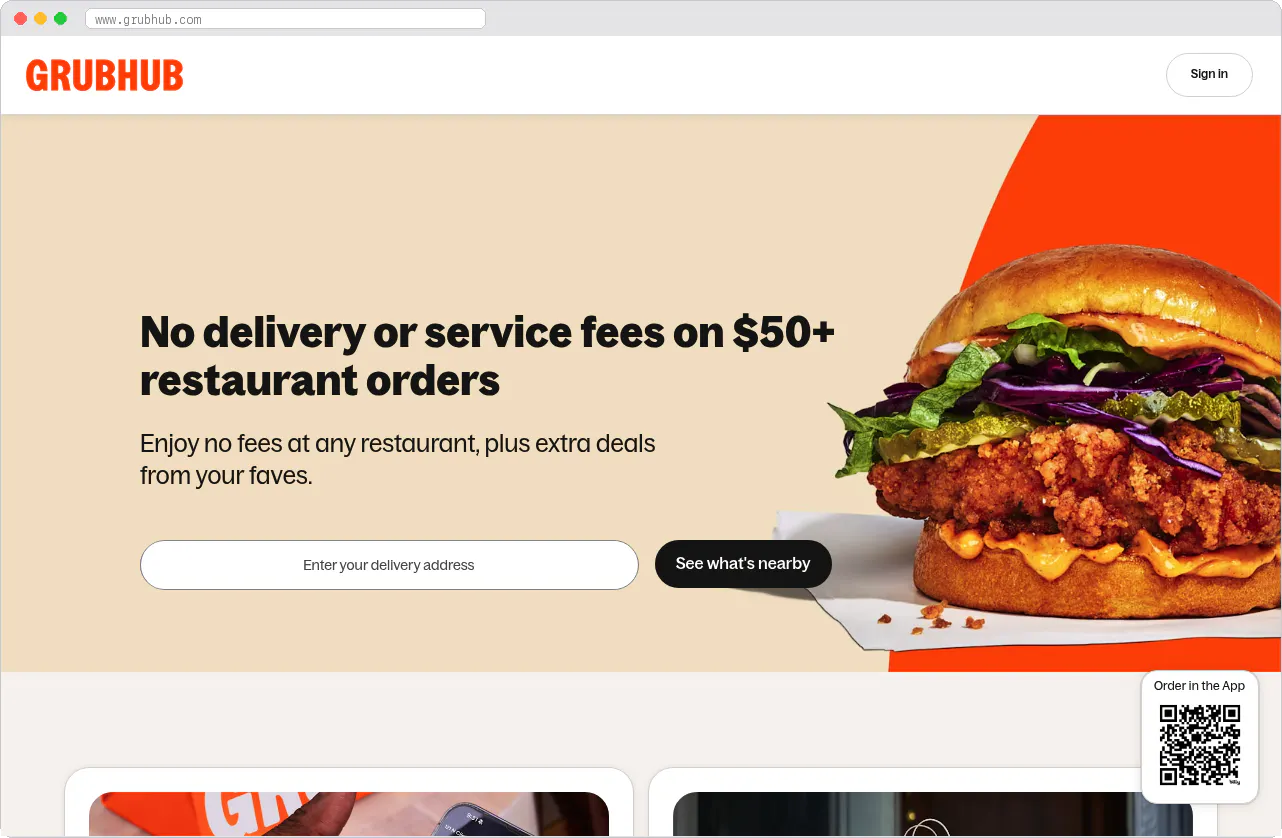
Grubhub was the early market leader but lost ground to more aggressive competitors. Founded in 2004, Grubhub focused initially on order management for existing restaurant delivery services rather than providing drivers. This approach worked well in dense urban markets but limited expansion potential. Grubhub+ subscription offers similar benefits to Uber One but with a smaller restaurant network. The platform was acquired by Just Eat Takeaway in 2020 and has struggled to maintain market share.
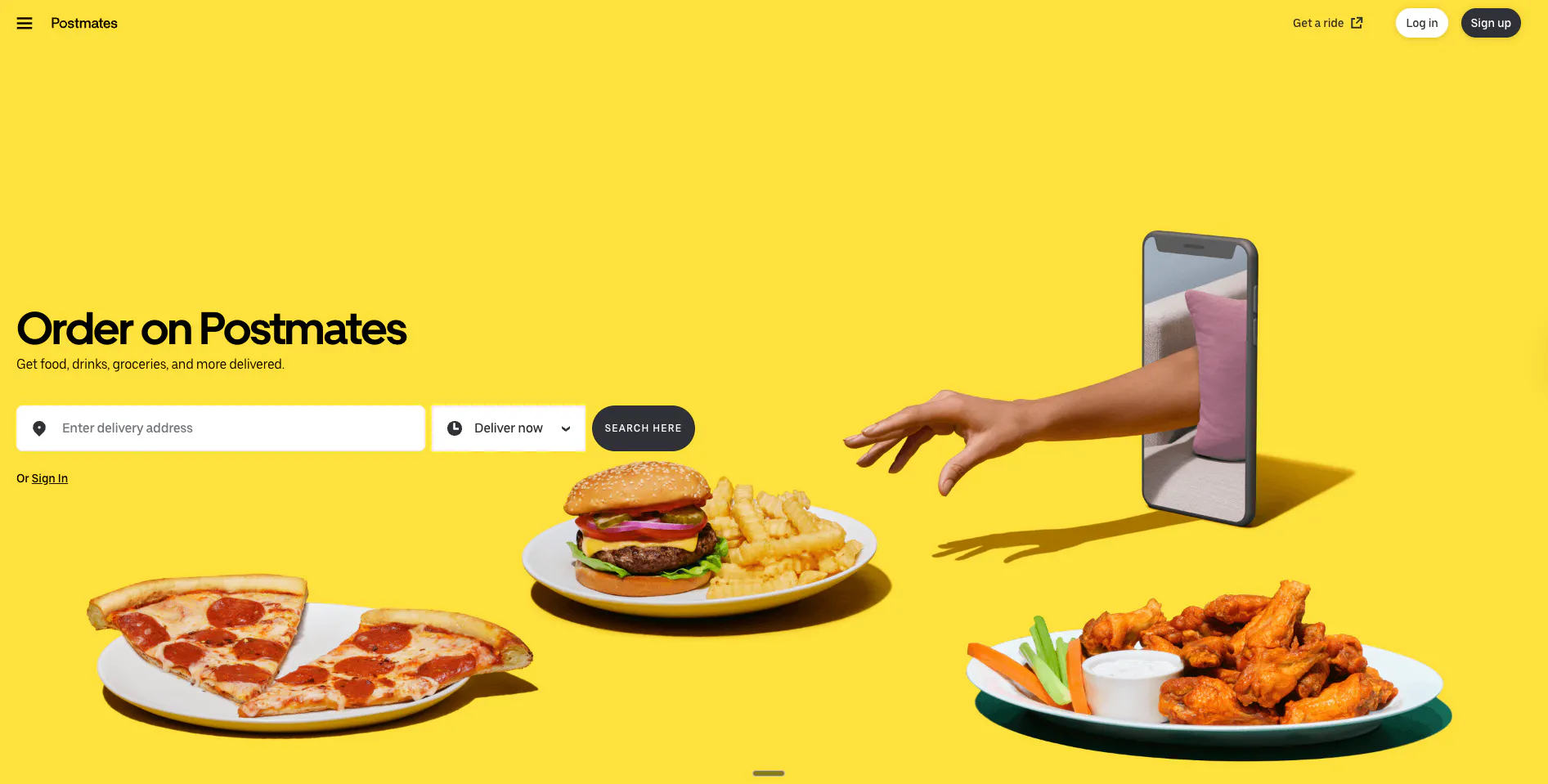
Postmates operated as Uber Eats' main competitor until Uber acquired the company for approximately $2.65 billion in 2020. Postmates differentiated itself through broader selection beyond restaurants, delivering from grocery stores, pharmacies, and retail locations. The "Postmates Party" feature allowed customers to join group orders from the same restaurant. After acquisition, Uber integrated Postmates' merchant relationships and customer base into Uber Eats.
Deliveroo leads markets in the UK, Europe, and parts of Asia with a premium positioning strategy. The platform focuses on higher-quality restaurants and faster delivery times, often charging higher fees than competitors. Deliveroo pioneered the "dark kitchen" concept, building ghost kitchen facilities optimized purely for delivery. Their subscription service, Deliveroo Plus, costs more than Uber One but targets affluent urban customers willing to pay for premium service.
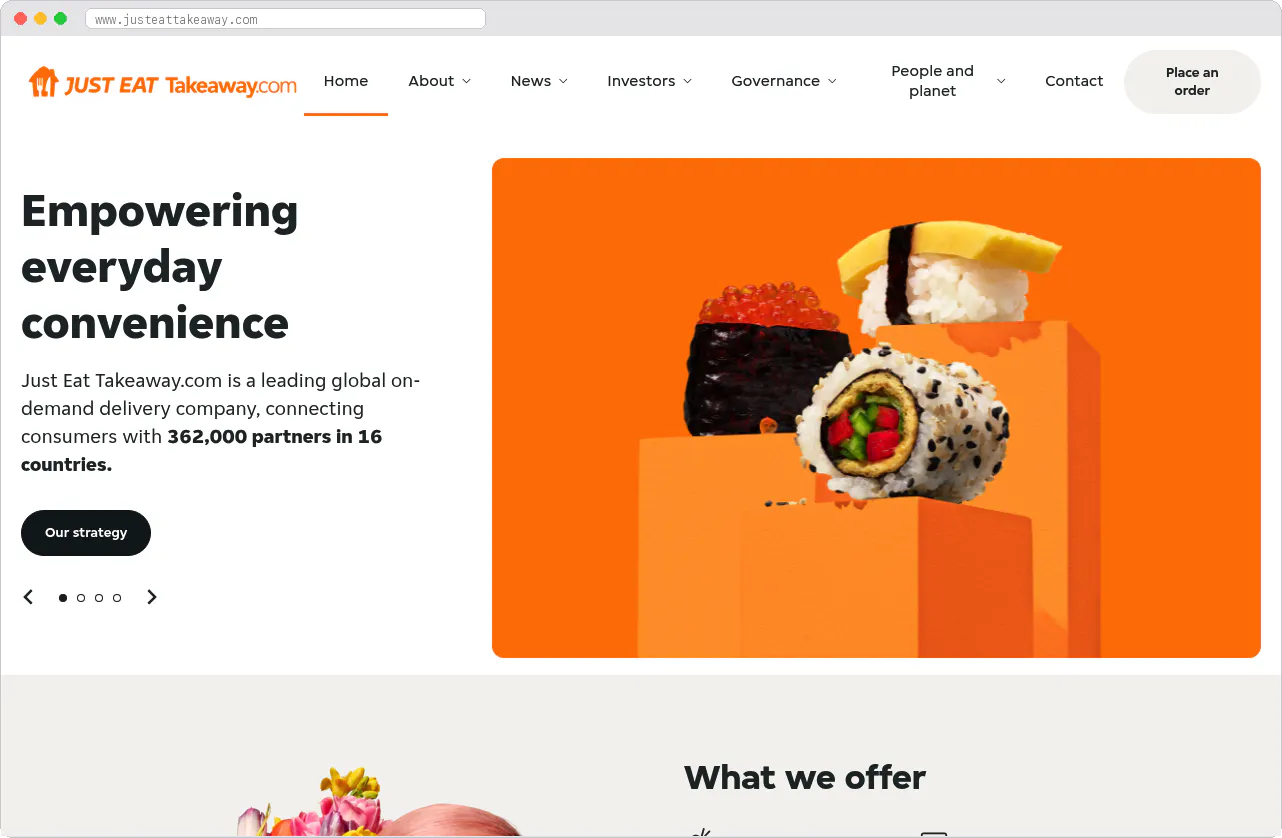
Just Eat Takeaway operates across Europe and recently entered the US market through Grubhub acquisition. The company's strategy emphasizes local market knowledge and partnerships with established restaurant chains. In many European markets, Just Eat focuses on order facilitation rather than providing delivery drivers, partnering with restaurants that handle their own delivery operations.
Each competitor has found different paths to market share, but all face similar challenges around unit economics, driver retention, and customer acquisition costs. The most successful platforms achieve differentiation through restaurant selection, delivery speed, geographic focus, or pricing strategy rather than notable technology differences.
How to build a marketplace like Uber Eats
Creating a successful food delivery marketplace requires careful planning across multiple complex systems:
Start with market research and validation before building anything. Identify your target geographic area and study existing competition, restaurant density, customer behavior, and delivery logistics challenges. Survey potential restaurant partners about their current delivery operations, pain points, and commission expectations. Talk to potential drivers about income expectations, preferred working hours, and vehicle requirements. Interview consumers about ordering frequency, preferred cuisines, and willingness to pay delivery fees.
Choose your initial scope carefully to maximize chances of success. Rather than launching city-wide, focus on specific neighborhoods with high restaurant density and tech-savvy customers. Target areas with limited parking where delivery provides clear value over pickup. University campuses, downtown business districts, and affluent residential neighborhoods often provide ideal testing grounds.
Develop your minimum viable platform with core functionality for all three user groups. Restaurants need basic menu management, order receiving, and preparation tracking. Customers need restaurant discovery, ordering, payment, and delivery tracking. Drivers need order assignment, navigation, and earnings tracking. Start with manual processes where possible (phone orders, manual driver dispatch) to validate demand before building complex automation.
Solve the chicken-and-egg problem by focusing first on restaurant supply. Restaurants are often willing to try new delivery channels, especially if you offer competitive commission rates or exclusive territory rights initially. Build relationships with 20-30 quality restaurants before launching to customers. Consider starting with restaurants that already have delivery operations to reduce operational complexity.
Design efficient logistics operations that balance speed, cost, and reliability. Implement zone-based delivery to keep distances short and predictable. Develop driver scheduling to match supply with predicted demand patterns. Create backup plans for peak hours, bad weather, and driver shortages. Consider partnerships with existing delivery services during initial phases.
Build trust through transparency and reliability from day one. Implement accurate delivery time estimates based on real historical data, not optimistic projections. Provide clear refund and dispute resolution policies. Invest in customer service infrastructure to handle inevitable problems quickly. Encourage honest restaurant and driver ratings to build platform credibility.
Plan your expansion strategy systematically rather than opportunistically. Once you achieve strong performance metrics in your initial market (repeat customer rates above 60%, average delivery times under 45 minutes, restaurant satisfaction scores above 4.0), identify similar adjacent areas for expansion. Avoid spreading too thin across multiple markets simultaneously.
Develop sustainable unit economics that work for all parties. Model different commission structures, delivery fee strategies, and customer acquisition costs. Ensure restaurants can profit after paying your commission. Confirm drivers earn adequate income per hour including vehicle costs. Price services to cover platform costs while remaining competitive with alternatives.
Implement reliable technology infrastructure that scales with growth. Real-time order tracking requires reliable backend systems and mobile apps. Payment processing must handle high transaction volumes securely. Location services need accuracy for efficient driver routing. Plan for peak load capacity (holidays, bad weather) that can be 3-5x normal volume.
Common pitfalls to avoid include launching too broadly without achieving local market penetration first. Many failed food delivery startups spread across multiple cities without establishing strong network effects in any single market. Underestimating operational complexity often leads to poor customer experiences and high churn. Inadequate financial planning for extended losses during market-building phases has killed numerous well-funded competitors.
Cost and development considerations
Building an Uber Eats-like marketplace involves considerable technology and operational investments across multiple approaches:
Custom development from scratch provides maximum flexibility but requires substantial resources. A full-featured three-sided marketplace typically costs $150,000-500,000+ for initial development, depending on feature complexity and team location. Core development includes separate mobile apps for customers and drivers, restaurant dashboard web application, admin management systems, real-time tracking infrastructure, payment processing integration, and mapping/routing services.
Development timeline usually spans 8-18 months with a team including project manager, backend developers, mobile app developers (iOS/Android), UI/UX designers, QA engineers, and DevOps specialists. Ongoing maintenance, hosting, security updates, and feature additions add $20,000-50,000+ monthly operational costs.
No-code and low-code solutions offer faster time-to-market with reduced upfront investment. Specialized marketplace platforms can provide food delivery functionality for $200-2,000 monthly subscription costs. These solutions typically include basic ordering systems, payment processing, user management, and mobile-responsive interfaces. However, customization options may be limited, and advanced features like real-time tracking or complex logistics might require additional development.
Implementation time ranges from 2-12 weeks depending on customization needs and content preparation. Additional costs include app store submissions ($99-299 annually), payment processing fees (2.9%+ per transaction), third-party integrations, and custom design work.
Hybrid approach combines no-code foundations with custom development for unique features. Start with a marketplace platform for basic functionality, then add custom mobile apps, advanced logistics features, or specialized integrations as needed. This approach might cost $50,000-150,000 initially while providing faster market entry than full custom development.
Additional operational costs are often underestimated but critical for success. Customer acquisition through digital marketing typically costs $15-50 per new customer in competitive markets. Driver recruitment and onboarding might cost $100-300 per driver including background checks, training materials, and sign-up bonuses. Restaurant partnership development requires business development staff and often includes equipment subsidies or reduced commission periods.
Insurance costs vary by market but can include general liability, commercial auto for driver coverage, and cyber liability protection. Legal compliance includes business licenses, food handling regulations, employment classification rules for drivers, and data privacy requirements like GDPR.
Technology infrastructure costs scale with usage volume. Cloud hosting for a regional marketplace might cost $500-5,000 monthly depending on user activity. Third-party services include mapping APIs ($500-2,000 monthly), SMS notifications ($200-1,000 monthly), email services, analytics tools, and customer support platforms.
Payment processing fees typically run 2.9-3.5% of gross transaction volume plus $0.30 per transaction. For a marketplace processing $100,000 monthly in orders, payment fees would be approximately $3,200-3,800 monthly.
Financial planning considerations should account for extended losses during market development. Most successful food delivery platforms lose money for 2-4 years while building network effects and achieving operational efficiency. Uber Eats, despite sizable scale advantages, only achieved profitability in select markets after years of investment.
Budget for customer acquisition costs that may not pay back for 6-18 months. Restaurant partnerships often require reduced commission rates or marketing support during onboarding. Driver retention programs might include bonuses, incentive payments, and equipment subsidies that impact near-term profitability.
Realistic total investment for a regional food delivery marketplace often ranges $500,000-2,000,000 including development, operations, marketing, and working capital for the first 18-24 months. Successful platforms require sufficient funding to achieve meaningful market penetration before competitors establish dominant positions.
Frequently asked questions
How much does Uber Eats make per order?
Uber Eats typically collects $6-8 in total fees per $27 order through restaurant commissions (15-30%), delivery fees ($0.99-4.99), and service fees (2-5%). After driver payments and operational costs, gross profit per order is often just $1-3.
What is Uber Eats' business model?
Uber Eats operates a three-sided marketplace connecting restaurants, drivers, and customers. Revenue comes from restaurant commissions (15-30%), customer delivery and service fees, Uber One subscriptions ($9.99/month), and restaurant advertising.
How much does it cost to build an app like Uber Eats?
Building from scratch costs $200,000-500,000+ and takes 12-18 months. No-code marketplace platforms ($99-399/month) let you launch the core marketplace model in weeks for under $5,000 in the first year. You won't replicate every feature of a billion-dollar platform, but you can validate whether the business model works in your market.
How does Uber Eats compete with DoorDash?
Uber Eats uses its existing rideshare infrastructure, focuses on dense urban markets, and offers global scale. However, DoorDash leads US market share through suburban expansion and stronger restaurant partnerships.
What makes a food delivery marketplace successful?
Success requires achieving network effects across restaurants, drivers, and customers while managing complex logistics. Key factors include dense geographic focus, efficient delivery operations, restaurant selection, and sustainable unit economics that work for all parties.
How long does it take to build a food delivery app?
Custom development typically takes 8-18 months with a full development team. No-code solutions can launch in 2-12 weeks. However, building the technology is just the start—achieving market traction usually requires 2-4 years of investment and iteration.
Start your 14-day free trial
Create a marketplace today!
- Launch quickly, without coding
- Extend infinitely
- Scale to any size
No credit card required