How to build a marketplace website like Lyft
Lyft transformed urban transportation through its two-sided marketplace bringing together riders and drivers. Learn how Lyft's business model works, generates $4+ billion annually through commissions and subscriptions, and what it takes to build a similar service marketplace.
Published: Feb 22, 2026
Last updated: Mar 19, 2026
Lyft pioneered a new approach to urban transportation by creating a marketplace that matches millions of riders with drivers through a simple mobile app. Since its founding in 2012, the platform has facilitated over 2 billion rides and generated more than $4 billion in annual revenue, proving the power of the on-demand service marketplace model.
What started as a side project called Zimride has become one of the most recognizable marketplace brands in the world. Lyft's success demonstrates how the right combination of technology, timing, and execution can create massive value in traditional industries ripe for disruption.
Building a marketplace like Lyft requires understanding both the technical infrastructure and the business strategy that makes two-sided platforms successful. This guide covers Lyft's business model, key features, competitive landscape, and practical steps for launching your own service marketplace.
How does Lyft work?
Lyft operates as a two-sided marketplace that connects two distinct user groups: riders who need transportation and drivers who provide it. The platform's value comes from efficiently matching supply with demand in real-time while handling payments, routing, and safety features.
The rider experience
Riders open the Lyft app, enter their destination, and see available ride options with estimated prices and wait times. They can choose from different service levels (standard Lyft, Lyft XL for larger groups, or premium options) before confirming their ride request.
Once a driver accepts the request, riders can track their driver's location in real-time, communicate through the app, and receive updates about arrival times. After the ride, payment is processed automatically through their saved payment method, and both parties can rate each other.
The driver experience
Drivers use a separate version of the Lyft app that shows nearby ride requests, passenger pickup locations, and trip details. They can accept or decline requests based on factors like distance, destination, and surge pricing multipliers.
The driver app provides turn-by-turn navigation, trip earnings information, and passenger contact details. After completing rides, drivers receive payment (minus Lyft's commission) through direct deposit or instant cash-out options.
The matching algorithm
Lyft's core technology matches riders with nearby drivers using algorithms that consider multiple factors:
- Geographic proximity between driver and pickup location
- Driver availability and online status
- Estimated trip duration and route efficiency
- Driver ratings and passenger preferences
- Surge pricing conditions and driver incentives
This matching process typically takes 30 seconds to 2 minutes, depending on driver availability and location density.
Transaction flow and payments
Lyft handles all financial transactions between riders and drivers. Riders pay through the app using credit cards, debit cards, or digital wallets. The platform calculates fares based on distance, time, and dynamic pricing, then processes payment automatically after the ride.
Drivers receive their earnings (minus commission) weekly, though they can access funds immediately through instant pay features for a small fee. This payment structure eliminates the need for cash transactions and provides financial tracking for both parties.
How does Lyft make money?
Lyft's business model centers on commission-based revenue, though the company has diversified into multiple income streams as it has matured. Understanding how Lyft generates revenue provides insight into the financial mechanics of successful service marketplaces.
Commission fees from rides
Lyft's primary revenue source is commissions on completed rides. The company takes approximately 20-25% of the total fare, though this percentage varies based on market conditions, driver incentives, and promotional pricing.
For example, on a $15 ride, Lyft might collect $3-4 in commission while the driver receives $11-12. These percentages have evolved over time as Lyft has balanced profitability goals with driver retention and competitive positioning.
Dynamic pricing and surge fees
During high-demand periods (rush hours, events, bad weather), Lyft implements surge pricing that increases fares by 1.5x to 3x or more. While riders pay higher fares during surge periods, drivers earn more per trip, and Lyft's commission increases proportionally.
Surge pricing serves dual purposes: it encourages more drivers to come online during busy periods and helps balance supply and demand by making rides more expensive when they're scarce.
Lyft Pink subscription program
Launched in 2019, Lyft Pink is a monthly subscription service ($9.95/month or $99/year) that offers members benefits like:
- 15% off ride prices
- Priority pickup at airports
- Relaxed cancellation policies
- Partner discounts with other services
Subscription revenue provides Lyft with predictable monthly income and increased customer loyalty. Subscribers typically take more rides than non-subscribers, generating additional commission revenue.
Express Drive vehicle rental program
Lyft partners with car rental companies to offer vehicles specifically for rideshare driving. Drivers who don't own cars or need vehicle upgrades can rent through Express Drive, with Lyft earning revenue sharing fees from rental partners.
This program helps Lyft increase its driver supply while generating additional revenue streams beyond ride commissions.
Advertising and partnerships
Lyft monetizes its platform through in-app advertising and strategic partnerships. The app displays ads for local businesses, events, and services, particularly those relevant to transportation and mobility.
Partnership deals with companies like Target, Starbucks, and various credit card companies generate revenue through customer acquisition fees and revenue sharing arrangements.
Financial performance
In 2023, Lyft generated approximately $4.1 billion in revenue, with the vast majority coming from ride commissions. The company has achieved profitability on an adjusted EBITDA basis, though it continues to invest heavily in technology development and market expansion.
Lyft's gross bookings (total value of all rides) exceeded $13 billion in 2023, indicating that the company's commission rate averages around 30% when including all fees and charges to riders.
What makes Lyft successful?
Lyft's success stems from several strategic advantages and execution decisions that have allowed it to compete effectively in the competitive rideshare market while building a sustainable business.
Network effects and liquidity
The core strength of Lyft's marketplace is its network effects. More riders attract more drivers (due to increased earning opportunities), and more drivers attract more riders (due to shorter wait times and better availability). This creates a virtuous cycle that becomes stronger as the platform grows.
In major markets, Lyft maintains high marketplace liquidity with average pickup times under 5 minutes. This reliability encourages regular usage and reduces customer churn to competitors.
Focus on brand differentiation
While Uber emphasized global expansion and aggressive growth tactics, Lyft positioned itself as the friendlier, more community-oriented alternative. The company's "Your Friend with a Car" branding and pink mustache logo (later replaced by a more complex pink design) created a distinct identity.
This brand positioning helped Lyft attract both drivers and riders who preferred a more approachable alternative to Uber's corporate image, particularly during Uber's various controversies and PR challenges.
Strategic geographic focus
Lyft concentrated on the North American market rather than pursuing global expansion. This focus allowed the company to optimize its operations for specific regulatory environments, consumer preferences, and competitive dynamics.
By dominating key U.S. markets instead of spreading resources across multiple countries, Lyft could achieve stronger network effects and operational efficiency in its core markets.
Driver experience and retention
Lyft invested heavily in driver satisfaction through:
- Competitive commission structures
- Driver rewards and incentive programs
- Better customer service and support
- Tools for tracking earnings and expenses
- Flexible scheduling and work options
Higher driver satisfaction led to better service quality, reduced turnover costs, and positive word-of-mouth marketing within driver communities.
Technology and user experience
Lyft's mobile app consistently receives high user ratings for its intuitive interface, reliable performance, and useful features. The company invests considerably in:
- Real-time GPS tracking and route optimization
- Machine learning for demand prediction and driver matching
- Safety features like emergency assistance and ride tracking
- Payment processing and fraud prevention
- Customer support and issue resolution
Regulatory navigation
Lyft successfully navigated complex local regulations across hundreds of cities and states. The company's approach to regulatory compliance and government relations helped it operate legally in markets where some competitors faced restrictions or bans.
This regulatory expertise became a meaningful competitive advantage and barrier to entry for potential new competitors.
Key features of a Lyft-like marketplace
Building a successful service marketplace like Lyft requires implementing core features that enable efficient matching, safe transactions, and positive user experiences for both service providers and customers.
Dual mobile applications
A Lyft-like marketplace needs separate, optimized mobile apps for customers and service providers. Customer apps focus on browsing, booking, and payment, while provider apps emphasize job management, navigation, and earnings tracking.
Both apps require real-time synchronization, offline functionality for poor network conditions, and push notifications for important updates like job requests, status changes, and safety alerts.
Real-time location services and mapping
Location-based matching is fundamental to on-demand service marketplaces. The platform needs GPS integration for:
- Showing nearby service providers to customers
- Calculating accurate arrival times and distances
- Providing turn-by-turn navigation for providers
- Tracking service completion and route optimization
- Enabling location-based pricing and service zones
Mapping features should include traffic data, route optimization, and alternative pickup/dropoff locations for maximum efficiency.
Dynamic pricing and surge algorithms
Refined pricing algorithms adjust rates based on supply, demand, time of day, weather conditions, and special events. These systems need to:
- Monitor real-time supply and demand ratios
- Calculate appropriate price multipliers
- Communicate pricing changes clearly to both sides
- Provide pricing estimates before booking confirmation
- Track pricing effectiveness and market response
Dynamic pricing helps balance marketplace supply and demand while maximizing revenue during peak periods.
Identity verification and safety features
Trust and safety are critical for marketplaces connecting strangers for in-person services. Essential safety features include:
- Background checks and identity verification for providers
- Document verification (licenses, insurance, vehicle registration)
- Real-time ride tracking shared with emergency contacts
- In-app emergency assistance buttons
- Two-way rating and review systems
- Photo verification and profile authenticity checks
Integrated payment processing
smooth payment handling eliminates friction and ensures transaction completion. The platform needs:
- Multiple payment method support (cards, digital wallets, bank accounts)
- Automatic fare calculation and processing
- Split payment options for group bookings
- Tip processing and distribution
- Instant payout options for providers
- Refund and dispute resolution capabilities
Payment systems must comply with financial regulations and maintain PCI DSS compliance for card processing.
Communication and messaging
Secure, anonymous communication allows customers and providers to coordinate without sharing personal contact information. Features include:
- In-app messaging with translation support
- Voice calling through masked phone numbers
- Automated status updates and notifications
- Photo sharing for location identification
- Message history and conversation archiving
Rating and review systems
Two-way rating systems build trust and accountability while helping users make informed decisions. The platform should support:
- Mandatory post-service ratings for both parties
- Detailed review categories (punctuality, cleanliness, communication)
- Rating aggregation and display
- Review moderation and authenticity verification
- Consequences for consistently poor ratings
Admin dashboard and analytics
Full admin tools enable marketplace operators to monitor performance, manage users, and optimize operations:
- Real-time transaction monitoring
- User management and account administration
- Dispute resolution and customer support tools
- Financial reporting and commission tracking
- Performance analytics and business intelligence
- Market expansion and pricing optimization tools
Competitors and alternatives
The rideshare and on-demand transportation market includes several major players, each with distinct positioning, geographic focus, and service offerings that differentiate them from Lyft's approach.
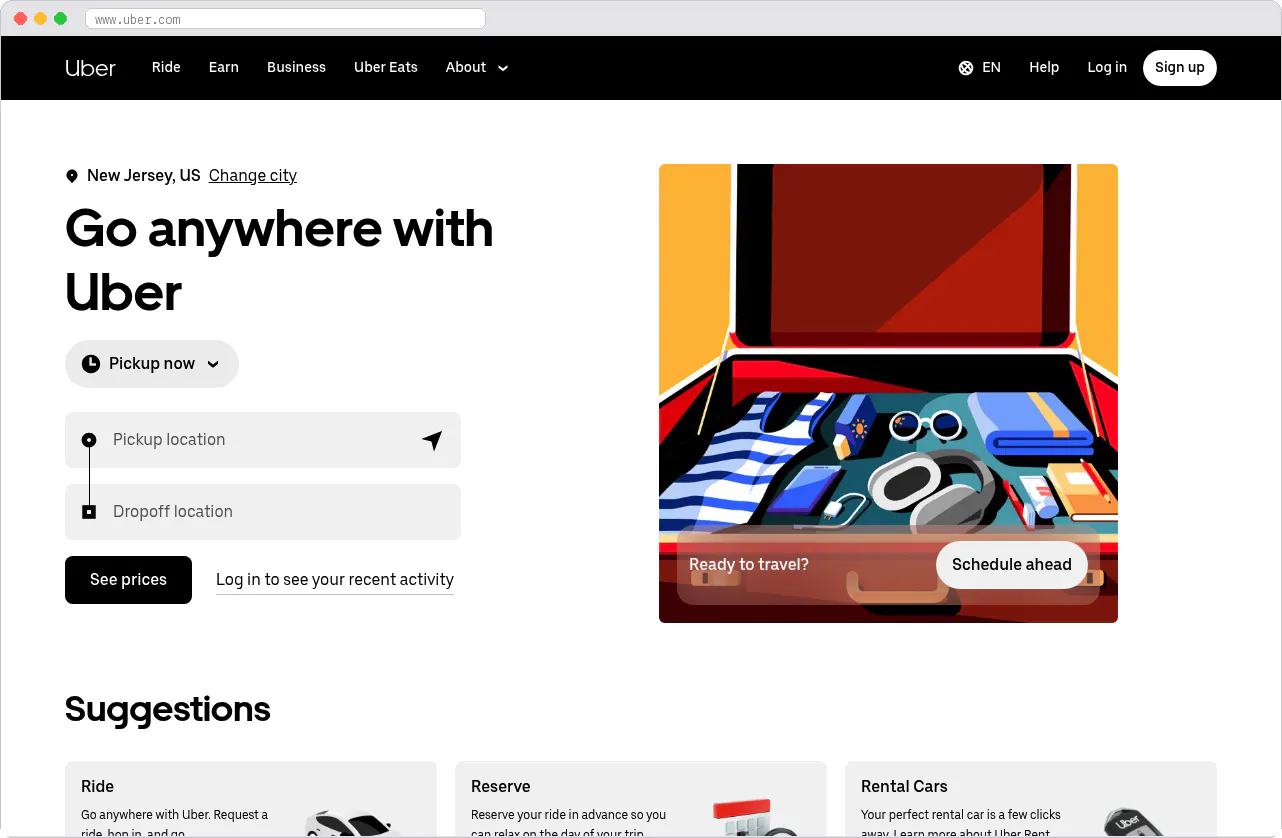
Uber
Uber remains Lyft's primary competitor and the global market leader in rideshare services. Founded in 2009, Uber operates in over 70 countries and has diversified beyond rideshare into food delivery (Uber Eats), freight (Uber Freight), and other logistics services.
Uber's competitive advantages include larger global scale, more diverse service offerings, and stronger international presence. The platform typically maintains higher driver supply in most markets, leading to shorter wait times. However, Uber generally charges higher commissions to drivers (25-30%) and has faced more regulatory challenges and public relations issues.
From a business model perspective, Uber generates meaningfully more revenue ($31+ billion annually) but also operates with higher costs due to its global expansion and diverse service portfolio.
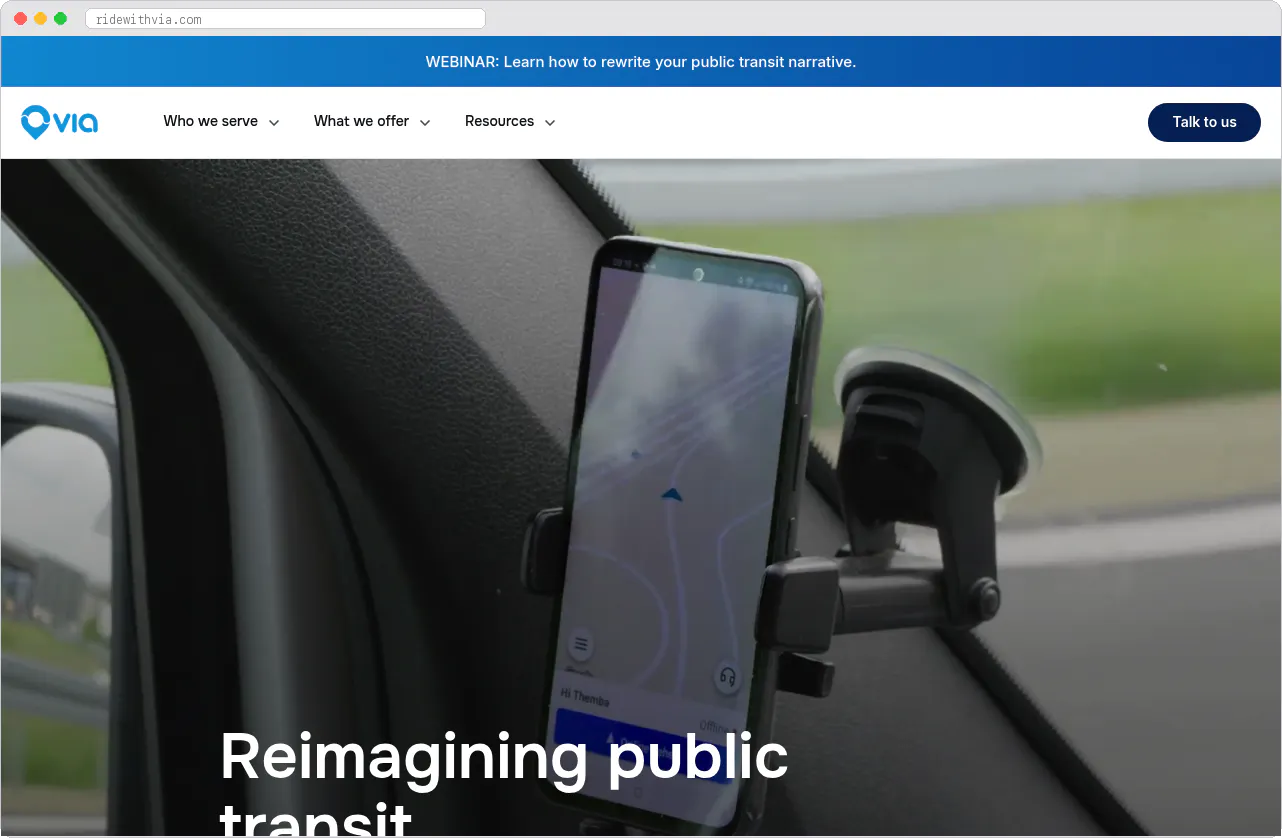
Via
Via focuses on shared mobility and B2B transportation solutions rather than individual rides. The company partners with cities, transit agencies, and private organizations to provide shuttle services, paratransit, and micro-transit solutions.
Via's technology emphasizes route optimization for shared rides, making it more efficient for certain use cases but less convenient for users who prefer direct, private transportation. The company's B2B focus provides more stable revenue streams but limits consumer brand recognition compared to Lyft.
Gett (formerly GetTaxi)
Gett operates primarily in Europe and Israel, focusing on business travel and corporate accounts. The platform emphasizes professional drivers and premium service quality, positioning itself as a business-focused alternative to consumer-oriented competitors.
Gett's revenue model relies heavily on corporate contracts and expense account integrations, providing predictable income but limiting growth potential compared to consumer-focused platforms like Lyft.
DiDi Chuxing
DiDi dominates the Chinese market and operates in several other countries including Mexico, Australia, and parts of Latin America. The company offers rideshare, taxi-hailing, bike sharing, and food delivery services.
DiDi's success demonstrates the importance of local market adaptation and regulatory compliance. The platform succeeded in China by working closely with government authorities and adapting its business model to local preferences and regulations.
Regional and local competitors
Many markets include smaller, local rideshare companies that compete by offering:
- Lower commission rates to attract drivers
- Better customer service and local market knowledge
- Integration with local transportation systems
- Specialized services for specific demographics or use cases
These competitors often struggle to achieve the scale necessary for efficient matching and competitive pricing, but they can succeed in specific niches or underserved markets.
Traditional alternatives
Lyft also competes with traditional transportation options:
- Taxi companies (often through their own apps)
- Public transportation systems
- Car rental services
- Car ownership and personal vehicles
The competitive landscape continues evolving as traditional players adopt new technology and new entrants focus on specific market segments or geographic regions.
How to build a marketplace like Lyft
Creating a successful service marketplace requires careful planning, strategic execution, and deep understanding of both technology and business model challenges inherent in two-sided platforms.
Step 1: Validate your marketplace concept
Before building anything, validate that your specific market has unmet demand and willing service providers. Research existing solutions, identify gaps in service quality or coverage, and talk directly with potential users.
For transportation marketplaces, consider factors like:
- Local taxi service quality and availability
- Public transportation gaps
- Parking costs and availability
- Regulatory environment for rideshare services
- Driver income opportunities and vehicle ownership rates
Conduct surveys, interviews, and observational research to understand user pain points and willingness to adopt a new platform.
Step 2: Choose your specific niche and geographic focus
Rather than competing directly with Lyft in major metropolitan areas, consider focusing on:
- Underserved geographic markets (suburbs, smaller cities, rural areas)
- Specific service types (luxury vehicles, accessibility services, corporate travel)
- Unique customer segments (elderly users, families with children, pet transportation)
- Specialized timing (late-night service, scheduled rides, long-distance trips)
Starting with a focused niche allows you to achieve marketplace liquidity with smaller user bases and provides opportunities to refine your platform before expanding.
Step 3: Design your business model and unit economics
Determine how your marketplace will generate revenue and ensure the economics work for all participants:
- Commission structure: What percentage will you charge, and how will it compare to competitors?
- Pricing strategy: Will you use dynamic pricing, flat rates, or subscription models?
- Provider incentives: How will you attract and retain service providers?
- Customer acquisition: What will it cost to acquire users, and what's their lifetime value?
Create detailed financial models that account for customer acquisition costs, provider incentives, operational expenses, and path to profitability.
Step 4: Build your minimum viable platform
Start with key features that enable basic marketplace functionality:
- User registration and profile creation
- Service provider onboarding and verification
- Request submission and provider matching
- Basic communication between users
- Payment processing and commission collection
- Simple rating and review system
Resist the temptation to build advanced features like dynamic pricing or refined matching algorithms initially. Focus on proving that your basic marketplace concept works.
Step 5: Solve the chicken-and-egg problem
Service marketplaces face the challenge of needing both supply (providers) and demand (customers) to create value. Common strategies include:
- Start with supply: Recruit service providers first by offering attractive terms, guaranteed income, or exclusive market access
- Create artificial demand: Use friends, family, and early employees as initial customers to give providers immediate work
- Subsidize early transactions: Offer promotional pricing or bonuses to encourage initial usage
- Focus on specific events or locations: Target times and places where demand is predictable and concentrated
Step 6: Implement safety and compliance measures
Service marketplaces connecting strangers require solid safety infrastructure:
- Background check systems for service providers
- Identity verification for all users
- Insurance coverage and liability policies
- Compliance with local transportation regulations
- Data protection and privacy safeguards
- Emergency response procedures
Work with legal experts to ensure compliance with local laws and regulations, which vary notably by location and service type.
Step 7: Launch and iterate based on user feedback
Launch your platform to a small group of users and providers, then collect detailed feedback about their experience:
- What features are missing or confusing?
- Where do transactions fail or create friction?
- How can you improve matching efficiency?
- What safety concerns do users have?
- How competitive is your pricing and service quality?
Use this feedback to prioritize platform improvements and feature development.
Step 8: Build growth mechanisms
Once your core marketplace functions well, invest in sustainable growth strategies:
- Referral programs that reward users for bringing friends
- SEO and content marketing to attract organic traffic
- Partnership with complementary businesses
- Social media marketing and community building
- Paid advertising with clear ROI tracking
Focus on channels that provide sustainable, profitable customer acquisition rather than unsustainable growth tactics.
Step 9: Scale operations and technology
As your marketplace grows, invest in operational efficiency and advanced features:
- Automated customer support and FAQ systems
- Advanced matching algorithms and machine learning
- Dynamic pricing based on supply and demand
- API integrations with third-party services
- Data analytics and business intelligence tools
Common pitfalls to avoid
- Underestimating regulatory compliance requirements
- Building too many features before validating core marketplace function
- Failing to achieve sustainable unit economics
- Neglecting either side of the marketplace (providers or customers)
- Expanding geographically before achieving strong local market penetration
- Ignoring safety and trust concerns
- Competing solely on price rather than value differentiation
Cost and development considerations
Building a marketplace like Lyft requires major investment in technology, operations, and market development. Understanding the cost structure helps entrepreneurs plan appropriately and choose the right development approach.
Custom development from scratch
Building a thorough rideshare platform from scratch typically costs $200,000 to $500,000 for initial development, with ongoing maintenance and improvement costs of $50,000 to $100,000 annually.
This approach includes:
- Mobile app development for iOS and Android (customer and provider apps)
- Backend infrastructure with APIs and databases
- Real-time GPS tracking and mapping integration
- Payment processing system integration
- Admin dashboard and analytics tools
- Security implementation and compliance measures
Development timeline typically ranges from 12 to 24 months, depending on feature complexity and team size. Additional costs include:
- Cloud hosting and infrastructure: $2,000-$10,000+ monthly
- Third-party API costs (maps, payments, SMS): $1,000-$5,000+ monthly
- Legal and regulatory compliance: $10,000-$50,000+ initially
- Insurance and liability coverage: $5,000-$25,000+ annually
No-code and hybrid approaches
No-code marketplace platforms run $99-399 per month in subscription fees. However, these solutions often have limitations for complex features like real-time GPS tracking, dynamic pricing, and advanced matching algorithms.
Hybrid approaches combine no-code foundations with custom development for specific features, typically costing $50,000-$150,000 and requiring 6-12 months for initial launch.
Operational costs and considerations
Beyond development, service marketplaces require major operational investment:
Customer acquisition costs: Rideshare platforms typically spend $50-$200 to acquire each active customer, with provider acquisition costs ranging from $100-$500 depending on market conditions and incentives offered.
Marketing and growth: Expect to invest 20-40% of revenue in marketing and user acquisition, especially during early growth phases.
Customer support: Service marketplaces require 24/7 customer support for both customers and providers, typically costing $5-$15 per active user annually.
Insurance and liability: Full coverage for marketplace transactions can cost 2-5% of gross transaction volume, depending on service type and local requirements.
Regulatory compliance: Legal costs for multi-market expansion can reach $25,000-$100,000 annually, plus ongoing compliance monitoring and updates.
Technology infrastructure scaling: As transaction volume grows, infrastructure costs typically scale from $2,000 monthly for small platforms to $50,000+ monthly for platforms processing millions of transactions.
Break-even timeline and funding requirements
Most successful service marketplaces require 2-5 years to reach profitability, with total funding requirements ranging from $500,000 for focused local markets to $10+ million for multi-market platforms competing with established players.
Key financial milestones include:
- Month 6-12: Basic platform functionality and initial user acquisition
- Year 1-2: Market penetration and liquidity achievement
- Year 2-3: Operational efficiency and path to profitability
- Year 3-5: Market expansion and sustainable growth
Successful platforms typically achieve gross margins of 15-25% of transaction volume after reaching scale, with net margins of 5-15% depending on operational efficiency and competitive dynamics.
Risk factors and mitigation strategies
Service marketplace development involves substantial risks:
- Regulatory changes that affect business model legality
- Competitive response from established players
- Economic downturns affecting discretionary spending
- Safety incidents that damage brand reputation
- Technology failures during peak usage periods
Mitigate these risks through diverse funding sources, strong legal counsel, detailed insurance, strong technology architecture, and conservative financial planning that accounts for market volatility.
Frequently asked questions
How does Lyft's business model work?
Lyft operates a two-sided marketplace connecting riders with drivers, earning revenue primarily through 20-25% commission on completed rides. The platform also generates income through surge pricing, subscription services (Lyft Pink), and partnerships.
How much does Lyft make per ride?
Lyft typically takes 20-25% commission per ride, so on a $15 ride, Lyft would earn approximately $3-4 while the driver receives $11-12. Commission rates vary based on market conditions and promotional pricing.
What are the main features needed for a rideshare marketplace?
Core features include dual mobile apps (rider/driver), real-time GPS tracking, dynamic pricing algorithms, integrated payments, identity verification, two-way ratings, and admin dashboards for marketplace management.
How much does it cost to build a rideshare app like Lyft?
The full platform would cost $200,000-500,000+ to build from scratch. But you don't need to replicate every feature from day one. A no-code marketplace platform at $99-399/month lets you launch core functionality for a few thousand dollars in year one, then invest in custom development as revenue supports it.
How long does it take for rideshare marketplaces to become profitable?
Most service marketplaces require 2-5 years to reach profitability, needing considerable investment in customer acquisition, technology development, and regulatory compliance before achieving sustainable unit economics.
What makes Lyft successful compared to other rideshare companies?
Lyft's success comes from strong network effects, brand differentiation as the friendlier alternative, strategic focus on North America, superior driver experience, and effective regulatory navigation across multiple markets.
Start your 14-day free trial
Create a marketplace today!
- Launch quickly, without coding
- Extend infinitely
- Scale to any size
No credit card required