How to build a website like Feastly
Feastly connected home chefs with diners for unique dining experiences before shutting down in 2018. Learn how to build a similar food marketplace that solves trust, discovery, and payment challenges in the peer-to-peer dining space.
Published: Mar 15, 2024
Last updated: Mar 19, 2026
What was Feastly?
Feastly was a peer-to-peer dining marketplace that connected home chefs with food enthusiasts for unique dining experiences. Launched in 2013 by Noah Karesh in New York, the platform allowed anyone to host dinner parties, cooking classes, and pop-up dining events in their homes or other venues.
The concept was compelling: passionate home cooks could monetize their culinary skills without the overhead of opening a restaurant, while diners could discover authentic, intimate dining experiences unavailable through traditional restaurants. Guests could browse events by location, cuisine type, and price, then book seats directly through the platform.
Feastly gained significant traction, raising $1.5 million in seed funding and expanding to multiple cities including San Francisco, Los Angeles, and Washington D.C. The platform facilitated thousands of dining experiences and built a community of food enthusiasts who craved more personal, authentic culinary adventures than what traditional restaurants offered.
However, Feastly shut down in 2018 after struggling with regulatory challenges, insurance complexities, and the inherent difficulties of scaling a trust-based marketplace where strangers eat food prepared in private homes. The platform's closure offers valuable lessons for entrepreneurs looking to build similar food marketplaces today.
How did Feastly work?
Feastly operated as a two-sided marketplace connecting home chefs (hosts) with diners (guests) through a commission-based business model. The platform's workflow was designed to make discovering and booking unique dining experiences as simple as booking a restaurant reservation.
For guests, the discovery process began with browsing available dining experiences by location, date, cuisine type, and price range. Each listing included detailed descriptions of the menu, the host's background, photos of previous events, and guest reviews. Diners could read about everything from a Syrian refugee sharing traditional recipes to a former restaurant chef offering intimate tasting menus in their Brooklyn apartment.
The booking process required upfront payment through the platform, with Feastly handling all payment processing and holding funds until the event concluded successfully. Guests received confirmation details, the host's contact information, and specific instructions about dietary restrictions, arrival times, and what to expect.
For hosts, the platform provided tools to create compelling event listings with photos, detailed menu descriptions, and pricing. Hosts set their own schedules, menu offerings, and guest capacity based on their space and cooking capabilities. The platform encouraged hosts to share their culinary stories, cultural backgrounds, and cooking philosophies to differentiate their offerings.
Feastly's business model centered on taking a commission from each booking, typically around 10-15% from hosts plus payment processing fees from guests. This commission structure meant Feastly only made money when successful transactions occurred, aligning the platform's interests with both hosts and guests.
What made Feastly unique
Feastly differentiated itself from traditional dining options through several key value propositions that addressed gaps in the restaurant industry.
The platform offered unprecedented access to home cooks from diverse cultural backgrounds who couldn't afford to open restaurants but possessed incredible culinary skills and authentic recipes passed down through generations. Guests could experience Lebanese home cooking from a grandmother in her Queens apartment or learn pasta-making techniques from an Italian chef's private kitchen.
Intimacy and personal connection set Feastly apart from impersonal restaurant experiences. Events typically hosted 6-12 guests, creating opportunities for meaningful conversations with both hosts and fellow diners. Many guests reported that Feastly events felt more like dinner parties with interesting strangers than commercial dining experiences.
The platform also provided economic opportunities for aspiring culinary entrepreneurs who wanted to test recipes, build followings, and generate income without the massive capital investment required to open restaurants. Successful hosts could earn several hundred dollars per event while maintaining full-time jobs or pursuing other ventures.
Cultural exchange became a natural byproduct of the Feastly model. Hosts often shared stories about their culinary traditions, family histories, and cultural backgrounds, creating educational experiences that went far beyond just eating food. Guests frequently left events with new perspectives on different cultures and cuisines.
Essential features for a Feastly-like marketplace
Building a successful peer-to-peer dining marketplace requires specific functionality that addresses the unique challenges of connecting strangers for food experiences in private spaces. These features must prioritize trust, safety, and smooth user experience.
Host and guest profiles with verification
Robust profile systems form the foundation of trust in peer-to-peer dining marketplaces. Host profiles need space for detailed culinary backgrounds, cooking experience, cultural stories, and high-quality photos of both the host and their food. Professional-looking profiles with personal narratives help guests feel comfortable booking experiences with strangers.
Verification becomes critical given the intimate nature of dining in private homes. Identity verification through government IDs, social media integration, and background checks help establish legitimacy. Some platforms require hosts to complete food safety training or obtain permits depending on local regulations.
Guest profiles enable hosts to screen potential attendees and build community among diners. Profile information might include dietary restrictions, food preferences, social media links, and reviews from previous events. This two-way transparency helps both sides make informed decisions about participating in events.
Event listing and discovery
Detailed event listings must capture the full experience hosts offer, not just basic menu information. Successful listings include comprehensive menu descriptions, ingredient sources, cooking methods, cultural context, and the overall dining experience guests can expect.
Location-based discovery with map integration helps guests find events in their preferred neighborhoods. Advanced filtering by cuisine type, dietary restrictions (vegetarian, vegan, gluten-free, kosher, halal), price range, date availability, and event size ensures guests can find experiences matching their specific needs.
High-quality photography becomes essential for conversion, as food is inherently visual. Platforms need tools for hosts to upload multiple photos showing their cooking space, previous dishes, and the dining environment guests will experience.
Booking and calendar management
Availability management allows hosts to set their schedules, maximum guest capacity, and recurring event patterns. Integration with external calendars prevents double-booking when hosts use the platform alongside other commitments.
Booking workflows must handle deposit requirements, full payments, and cancellation policies while protecting both hosts and guests. Some events might require immediate full payment, while others allow deposits with final payment closer to the event date.
Automated confirmation emails, reminder messages, and event details ensure smooth communication between booking and event execution. Last-minute changes to menus, locations, or timing need clear communication channels.
Trust and safety systems
Two-way review systems enable hosts and guests to rate each other after events, building reputation and accountability. Reviews should cover food quality, hospitality, cleanliness, and overall experience, with specific prompts that help future users make informed decisions.
Insurance and liability protection addresses the unique risks of peer-to-peer dining. Platforms need clear policies about what happens if guests become ill, property damage occurs, or events are cancelled due to safety concerns.
Dispute resolution systems handle conflicts between hosts and guests, from menu disappointments to no-shows. Clear policies and responsive customer support help maintain platform integrity.
Payment processing with held funds
Peer-to-peer dining marketplaces require payment systems that hold funds until events complete successfully, protecting guests from no-shows or misrepresented experiences while ensuring hosts receive payment for legitimate events.
Automatic commission deduction simplifies revenue collection while providing transparent fee structures for hosts. Payment schedules might release funds 24-48 hours after events conclude, giving time for any immediate issues to surface.
Refund processing handles cancellations, no-shows, and disputes with clear policies about timing and circumstances. Flexible refund options protect guests while preventing abuse that could harm hosts.
Communication tools
Direct messaging between hosts and guests facilitates discussion about dietary restrictions, menu modifications, arrival instructions, and special requests. Pre-event communication often determines the success of dining experiences.
Group messaging for multi-guest events helps coordinate arrival times, parking information, and any last-minute changes. Hosts can send updates about menu modifications or special preparation instructions.
Automated messaging handles routine communications like booking confirmations, reminder notifications, review requests, and follow-up surveys, reducing manual work for both platform operators and hosts.
How to build a peer-to-peer dining marketplace
Creating a successful alternative to Feastly requires understanding both the technical platform requirements and the complex business challenges that led to the original platform's closure. The process involves careful market validation, regulatory compliance, and building trust systems that enable strangers to feel comfortable sharing meals.
Research and validate your niche
Start by identifying a specific focus that differentiates your platform from generic peer-to-peer dining concepts. Successful food marketplaces often succeed by serving underrepresented communities or specific dietary needs that traditional restaurants don't address well.
Cultural cuisine marketplaces connecting immigrant communities with people interested in authentic cultural experiences have shown promise. Dietary-specific platforms focusing on vegan, kosher, or allergen-free dining experiences can serve passionate niche communities. Regional marketplaces emphasizing local ingredients and farm-to-table experiences appeal to sustainability-conscious diners.
Validate demand through direct conversation with potential hosts and guests in your chosen niche. Interview home cooks about their interest in hosting paid dining experiences, their concerns about safety and liability, and what support they would need. Talk to potential guests about their willingness to eat in private homes, pay premiums for unique experiences, and travel to residential locations.
Assess regulatory requirements in your target markets early in the planning process. Food safety regulations, business licensing requirements, tax implications, and insurance needs vary significantly by location and can impact platform viability. Some cities require permits for any commercial food service, while others have exceptions for small-scale home-based activities.
Choose your business model carefully
Commission-based revenue models align platform incentives with user success, but the percentage structure significantly impacts host participation and platform sustainability. Feastly typically charged 10-15% commissions, but modern platforms might experiment with different structures.
Membership models where hosts pay monthly fees for platform access can provide predictable revenue while reducing per-transaction costs for high-volume hosts. Hybrid models combining lower commissions with optional premium features offer flexibility for different host types.
Value-added services like professional photography, menu consultation, or marketing support can generate additional revenue while helping hosts succeed. Insurance partnerships, permit assistance, and tax preparation services address host pain points while creating revenue opportunities.
Build your minimum viable platform
Start with core functionality that enables basic host-guest connections and transactions. Your initial platform should allow hosts to create detailed event listings, guests to discover and book experiences, and secure payment processing with appropriate fund holding.
Focus on one geographic market initially to concentrate your user acquisition efforts and ensure regulatory compliance. Choose a market with diverse culinary communities, adventurous diners, and reasonable regulatory environments for home-based food service.
Prioritize mobile optimization since both hosts and guests will likely access the platform on mobile devices for booking, communication, and event coordination. Responsive design ensures usability across different screen sizes and devices.
Integrate essential third-party services for payment processing, identity verification, and communication rather than building these complex systems from scratch. Platforms like Stripe Connect handle marketplace payments, while services like Twilio enable messaging functionality.
Launch with curated hosts
Recruit initial hosts through personal networks, cultural organizations, cooking classes, and social media communities focused on food and hospitality. Look for hosts who already have some social media presence or catering experience, as they understand food presentation and customer service.
Provide extensive onboarding support including photography assistance, listing optimization, pricing guidance, and event planning advice. Many talented home cooks need help translating their skills into compelling marketplace listings.
Start with a small group of vetted hosts before opening registration broadly. This approach ensures quality control and allows you to refine support processes before scaling. Early hosts can provide valuable feedback about platform functionality and missing features.
Consider hosting community events or cooking demonstrations to build relationships with potential hosts and create content for marketing purposes. Face-to-face interaction helps establish trust and identifies hosts who are serious about participating.
Build initial demand carefully
Guest acquisition requires different strategies than typical marketplace customer acquisition. Food experiences are inherently social and visual, making social media marketing and influencer partnerships particularly effective.
Content marketing through food blogs, local event listings, and cultural publications can reach adventurous diners interested in unique culinary experiences. Partner with food bloggers and local influencers to attend and review early events, creating authentic content that showcases the platform's value.
Email marketing to food enthusiasts, cultural organizations, and community groups can drive initial bookings. Many cities have active foodie communities that gather around restaurant openings, food festivals, and culinary events.
Referral programs incentivize early users to invite friends, taking advantage of the social nature of dining experiences. Group bookings for events naturally create word-of-mouth marketing when guests share their experiences on social media.
Address trust and safety proactively
Develop comprehensive safety protocols that address the unique risks of peer-to-peer dining. Food safety guidelines, host screening processes, guest verification requirements, and emergency response procedures help prevent problems and build user confidence.
Insurance partnerships or requirements protect both hosts and the platform from liability issues. Some platforms require hosts to obtain business licenses or food service permits, while others provide insurance coverage as part of their service offering.
Clear communication about safety measures, host screening processes, and platform policies helps users make informed decisions about participation. Transparency about risks and precautions builds trust more effectively than avoiding safety discussions.
Incident response plans for food poisoning, property damage, or personal conflicts ensure rapid resolution when problems occur. Having established relationships with local authorities, insurance providers, and legal counsel enables quick response to serious issues.
Competitors and alternatives in peer-to-peer dining
The peer-to-peer dining space includes several active platforms that have learned from Feastly's challenges while developing sustainable business models. Understanding these competitors helps inform strategic decisions about differentiation and market positioning.
EatWith
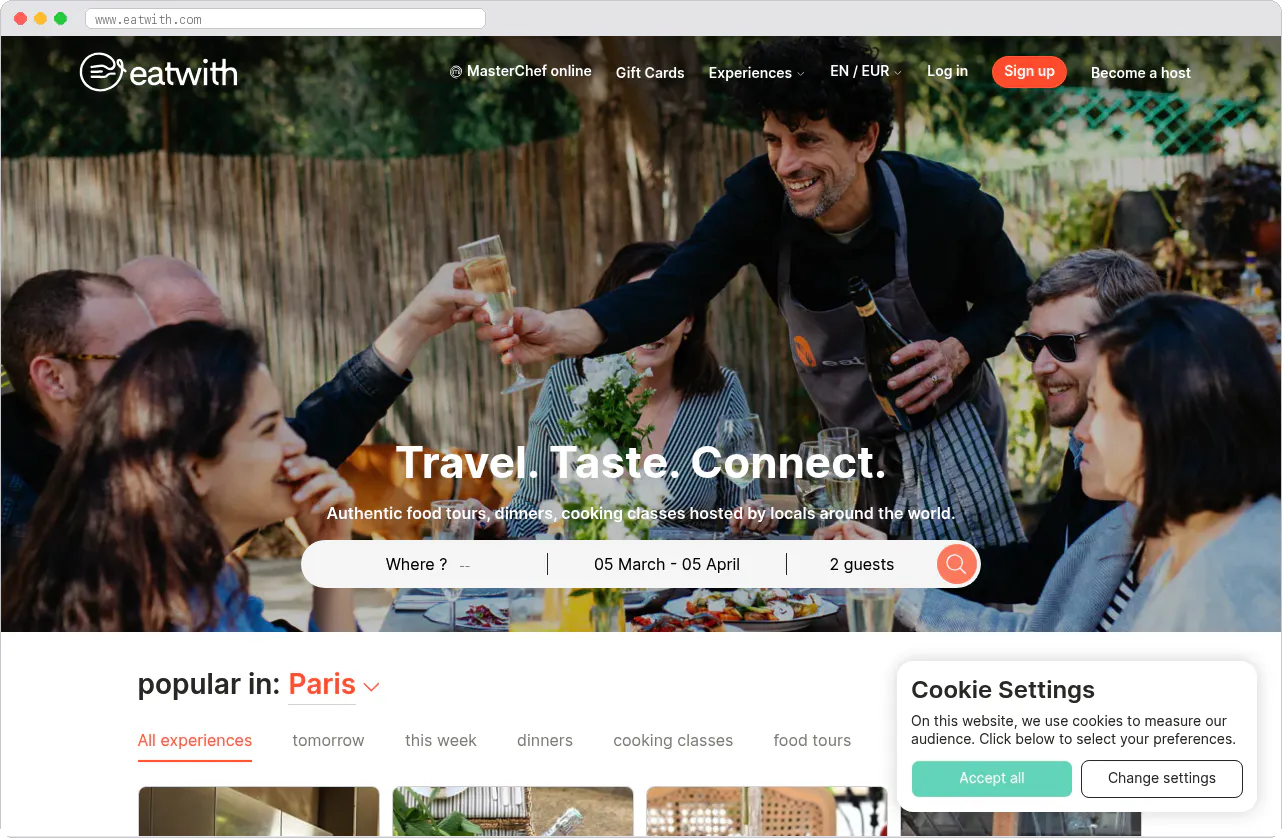
EatWith emerged as the most successful global competitor to Feastly, operating in over 130 cities worldwide with thousands of hosts offering dining experiences. The platform focuses heavily on host vetting and professional presentation, requiring detailed applications and often conducting phone interviews before approving hosts.
Unlike Feastly's more casual approach, EatWith emphasizes premium experiences with professional-quality photography and detailed host backgrounds. Many EatWith hosts are professional chefs, culinary school graduates, or serious home cooks with established social media presences.
EatWith's business model combines commission fees with premium services like professional photography, marketing support, and host training programs. The platform charges 15-20% commissions but provides more comprehensive support than Feastly offered.
The platform survived regulatory challenges by adapting to local requirements and working with authorities to establish compliant operating procedures. EatWith also expanded beyond home dining to include restaurant experiences, cooking classes, and food tours, diversifying revenue streams.
BonAppetour
BonAppetour focuses specifically on food experiences for travelers, positioning itself as a cultural tourism platform rather than a general dining marketplace. The platform connects travelers with local hosts offering traditional meals, cooking classes, and food tours in their home cities.
This tourism focus provides clearer value proposition for both hosts and guests. Travelers actively seek authentic cultural experiences, while local hosts can share their culture with international visitors. The platform operates in over 50 countries, emphasizing developing markets where authentic local experiences provide strong differentiation from hotel restaurants.
BonAppetour's model addresses some of Feastly's challenges by targeting customers who specifically seek unique experiences rather than convenient dining options. Travelers are typically more willing to accept higher prices and potential inconveniences for authenticity.
The platform generates revenue through commissions and also offers additional travel services like accommodation recommendations and tour bookings, creating multiple touchpoints with users.
VizEat (now Cookening)
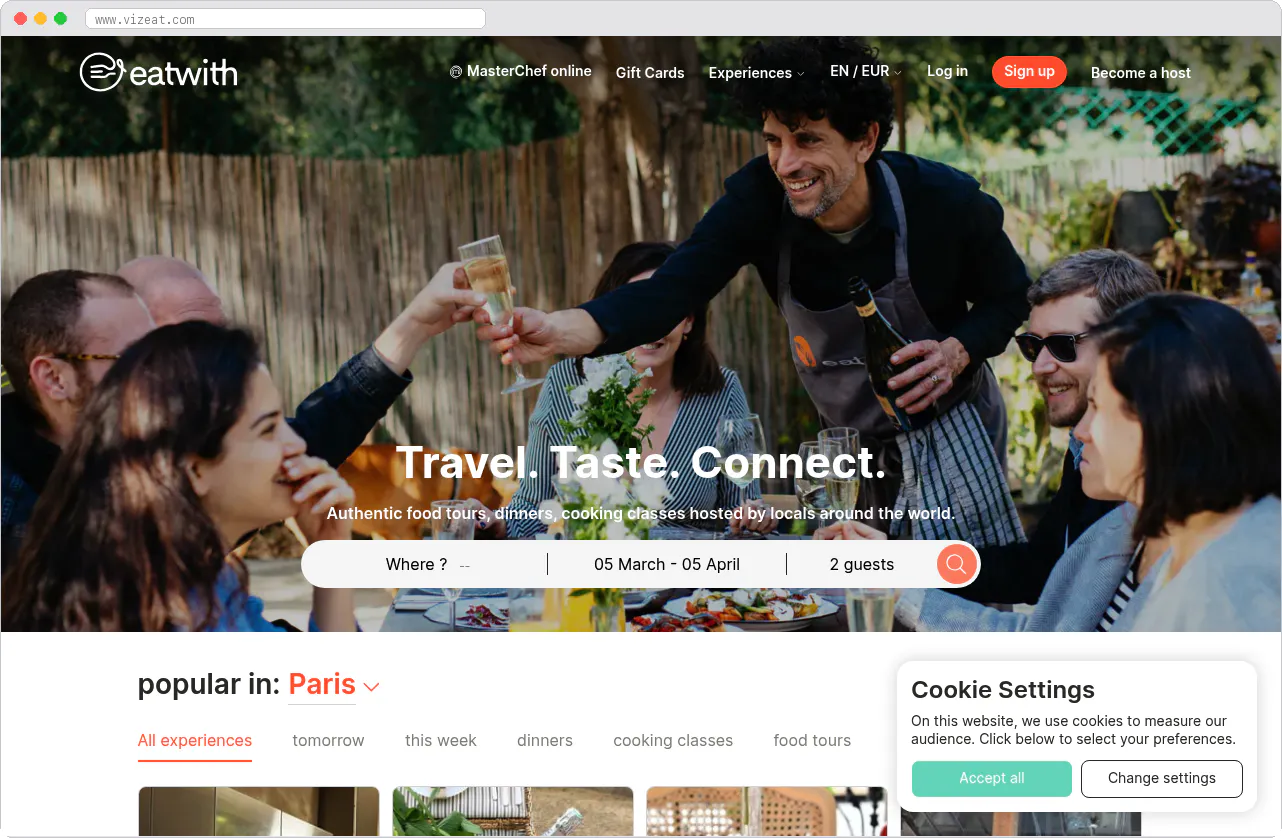
VizEat began similarly to Feastly but evolved into Cookening after facing regulatory challenges in several European markets. The platform now focuses primarily on cooking classes and food experiences rather than traditional dining events.
This pivot addresses liability concerns by emphasizing education and participation rather than simply consuming food prepared by hosts. Cooking classes face fewer regulatory restrictions than commercial food service, enabling broader geographic expansion.
Cookening operates across Europe and has expanded to select international markets, emphasizing verified hosts with teaching experience or professional culinary backgrounds. The platform requires hosts to demonstrate cooking skills through video applications and provides training materials.
Revenue comes from commissions on cooking class bookings plus premium services like advanced booking systems and marketing tools for professional cooking instructors.
Traveling Spoon
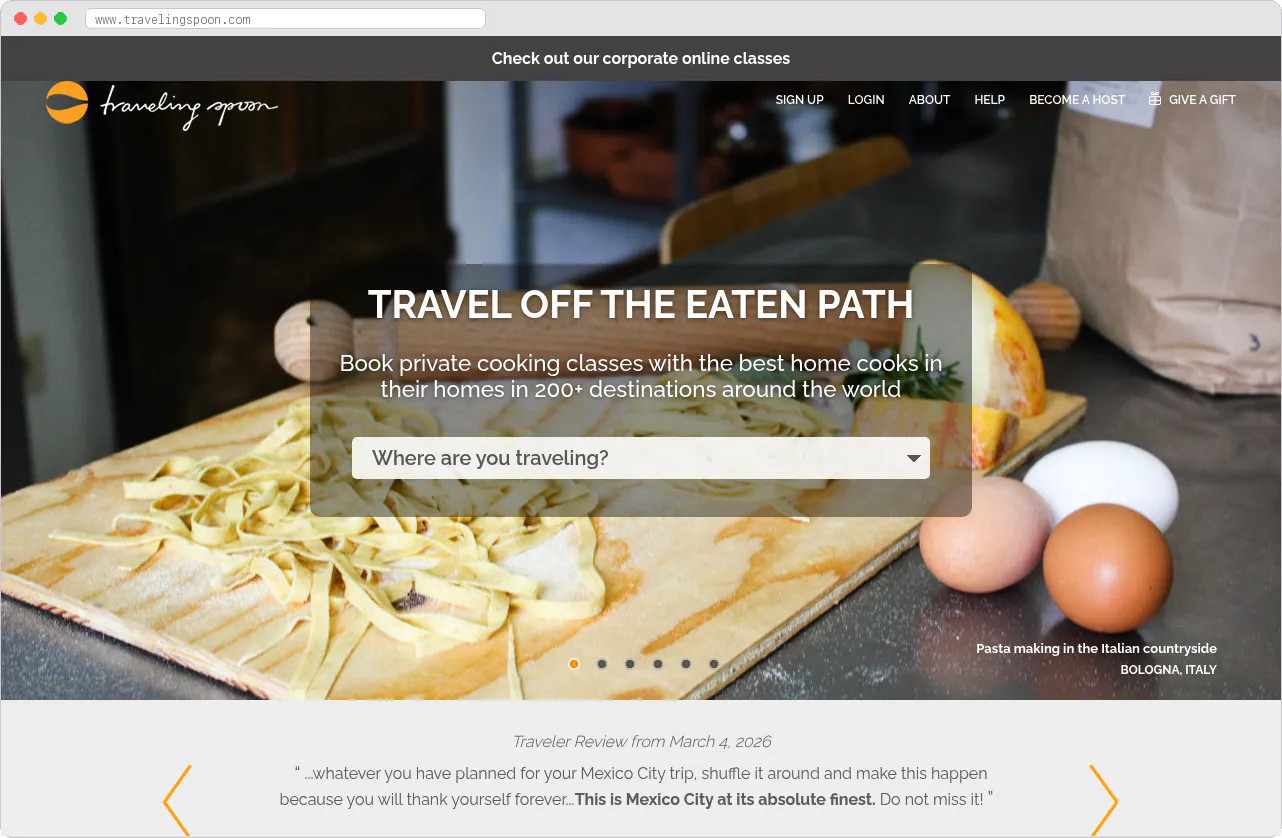
Traveling Spoon positions itself as a premium cultural dining experience platform, focusing on authentic home cooking experiences in international destinations. The platform emphasizes storytelling and cultural exchange alongside food experiences.
Hosts undergo extensive vetting processes including video interviews, reference checks, and in-person evaluations where possible. The platform maintains smaller host networks in each market but ensures consistently high-quality experiences.
Traveling Spoon charges higher prices than mass-market competitors but provides comprehensive support including professional photography, translation services, and 24/7 customer support. The premium positioning attracts affluent travelers willing to pay for guaranteed quality.
The platform focuses on major international destinations rather than attempting global coverage, allowing concentrated marketing efforts and localized support services.
Niche and regional platforms
Several smaller platforms serve specific niches or geographic regions, often finding sustainable business models by focusing on underserved communities or specific dining needs.
Kosher food marketplaces connect observant Jewish diners with hosts who maintain kosher kitchens, addressing a specific need not well-served by general platforms. Vegan dining platforms serve plant-based communities in major metropolitan areas.
Regional platforms focusing on specific cities or countries can provide better local support and regulatory compliance than global competitors. These platforms often build stronger community connections and host relationships through local presence.
Cultural-specific platforms serving immigrant communities create connections between diaspora populations and people interested in authentic cultural experiences. These platforms often succeed in cities with large, diverse populations.
Three approaches to building your dining marketplace
The technical approach you choose for building your platform significantly impacts development timeline, costs, and long-term scalability. Each option offers different trade-offs between speed to market, customization capability, and resource requirements.
Custom development from scratch
Building a peer-to-peer dining marketplace from scratch provides complete control over functionality, design, and user experience. This approach makes sense for well-funded teams with specific technical requirements or unique features that existing platforms don't support.
Custom development typically requires 6-12 months for initial launch, depending on feature complexity and team size. A full-featured platform needs frontend development for web and mobile, backend infrastructure for user management and payments, database design for listings and bookings, and integration with third-party services for payments, messaging, and maps.
Development costs typically range from $50,000 to $100,000 for initial launch, not including ongoing maintenance, security updates, and feature enhancements. These costs assume experienced development teams and don't include regulatory compliance, legal review, or business development expenses.
The main advantage of custom development is unlimited flexibility to implement unique features and optimize user experience exactly as envisioned. Custom platforms can integrate deeply with specialized services, implement complex business logic, and scale efficiently with proper architecture.
However, the opportunity cost is significant. Months spent on basic marketplace functionality could be invested in user acquisition, host onboarding, and market validation. Many marketplace concepts fail due to business model issues rather than technical limitations, making fast validation more valuable than perfect technical implementation.
No-code marketplace builders
Dedicated marketplace builders like Sharetribe enable launching fully functional dining marketplaces in weeks rather than months, without any coding required. These platforms provide pre-built functionality for user registration, listing creation, booking management, payment processing, and basic messaging.
Sharetribe includes features specifically designed for service and rental marketplaces, including availability management, location-based search, commission-based payments through Stripe Connect, and two-way review systems. The platform handles hosting, security, and compliance, reducing technical maintenance requirements.
For dining marketplaces, Sharetribe's booking system works well for event-based experiences where hosts set specific dates and times for dining events. The payment system holds funds until events conclude, protecting both hosts and guests from fraud or non-performance.
Monthly costs start around $79 for basic functionality, scaling up based on transaction volume and advanced features. This pricing model makes sense for early-stage marketplaces that need to validate concepts before investing heavily in custom development.
The main limitation is customization flexibility. While Sharetribe allows significant customization through its API and custom development options, some unique features might require workarounds or aren't possible within the platform's constraints.
For most dining marketplace concepts, no-code builders provide sufficient functionality for validation and early growth. Custom development can be added later once business model validation justifies the investment.
Hybrid approach with APIs and integrations
A hybrid approach combines no-code marketplace foundation with custom integrations and features as needed. This strategy provides faster time to market while maintaining flexibility for unique requirements.
Start with a marketplace builder for core functionality, then add custom features through APIs, webhooks, and third-party integrations. For example, integrate with specialized food safety services, custom insurance providers, or unique payment processing requirements.
Sharetribe's Developer Platform enables this approach by providing APIs for all platform functionality while maintaining the hosted, managed infrastructure. Teams can build custom mobile apps, integrate with external services, or add unique features while keeping the reliable marketplace foundation.
This approach works well for teams with some technical expertise who want to move quickly initially but plan to add sophisticated features over time. Development costs are lower initially but can scale up as needed for custom functionality.
The main challenge is managing complexity as custom features are added. Integration points need maintenance and updates, and custom features might conflict with platform updates. However, this approach provides good balance between speed and flexibility for most marketplace concepts.
Cost considerations for dining marketplaces
Building and launching a peer-to-peer dining marketplace involves various costs beyond initial development, including regulatory compliance, insurance, marketing, and ongoing operations. Understanding these expenses helps with realistic budgeting and business planning.
Development and platform costs
Using Sharetribe for initial launch keeps development costs minimal while providing professional functionality. The Essential plan at $99/month plus transaction fees provides sufficient features for validation and early growth. Professional photography and design assistance might add $2,000-5,000 for high-quality marketplace presentation.
Custom development costs vary dramatically based on feature requirements and development team location. Basic marketplace functionality typically costs $50,000-150,000, while comprehensive platforms with mobile apps, advanced search, and integrated payments can exceed $100,000.
Ongoing technical costs include hosting, payment processing, third-party integrations, and maintenance. Sharetribe includes hosting and basic maintenance, while custom platforms require dedicated technical resources or development agency relationships.
Legal and regulatory compliance
Legal consultation for terms of service, liability protection, and regulatory compliance typically costs $5,000-15,000 depending on market complexity. Multi-state or international expansion increases legal costs significantly.
Insurance requirements vary by jurisdiction but can include general liability, professional liability, and specialized food service coverage. Some platforms obtain master policies covering all hosts, while others require individual host insurance.
Permit and licensing fees depend on local requirements but can range from minimal registration fees to substantial business licensing costs in regulated markets. Research regulatory requirements early to avoid surprises that could impact platform viability.
Marketing and user acquisition
Host acquisition often requires significant upfront investment in content creation, photography assistance, and onboarding support. Professional photography for initial hosts might cost $200-500 per host, but high-quality images significantly improve booking conversion.
Digital marketing costs vary based on market competition and targeting strategy. Social media advertising, influencer partnerships, and content marketing typically require $2,000-10,000 monthly budgets for meaningful impact in competitive markets.
Community building events, host meetups, and PR efforts help establish local presence but require time and budget allocation. These activities often provide better ROI than digital advertising for trust-based marketplaces.
Insurance and risk management
Peer-to-peer dining marketplaces face unique liability risks that require specialized insurance coverage. General liability insurance protects against property damage and personal injury, while product liability covers food-related illnesses.
Some platforms require hosts to obtain their own business licenses and insurance, while others provide coverage as part of platform membership. Master insurance policies can cost $10,000-50,000 annually depending on platform size and coverage scope.
Legal reserves for dispute resolution and potential litigation should be factored into operating budgets. While most issues can be resolved through customer service, serious incidents might require legal intervention.
Why Sharetribe works for dining marketplaces
Sharetribe provides several advantages specifically relevant to peer-to-peer dining marketplaces, addressing common challenges while enabling rapid launch and iteration based on user feedback.
Built-in booking and availability management
Dining experiences require sophisticated scheduling systems where hosts can set specific event dates, times, and guest capacity limits. Sharetribe's availability management allows hosts to create recurring events, block unavailable dates, and manage capacity automatically.
The booking system handles deposits, full payments, and various pricing structures including per-person pricing, group rates, and add-on services. Automated confirmation emails and calendar integration reduce manual coordination work for hosts.
Guests can view real-time availability and book instantly or request custom dates, providing flexibility for both planned and spontaneous dining experiences. The system prevents overbooking while allowing hosts to maximize their event capacity.
Secure payment processing with fund holding
Peer-to-peer dining requires payment systems that protect both hosts and guests from fraud, no-shows, and service quality issues. Sharetribe's integration with Stripe Connect provides marketplace-optimized payment processing with automatic commission deduction.
Payment holding functionality releases funds to hosts only after events complete successfully, providing recourse for guests who experience problems while ensuring hosts receive payment for legitimate events. Customizable hold periods accommodate different event types and cancellation policies.
Multi-currency support enables international expansion, while automated tax handling simplifies compliance in jurisdictions that require sales tax or VAT collection on marketplace transactions.
Location-based search and discovery
Dining marketplaces need sophisticated location-based search that helps guests find events in convenient neighborhoods while accommodating various search preferences. Sharetribe's mapping integration displays events geographically and allows radius-based searching.
Advanced filtering by cuisine type, dietary restrictions, price range, and event size helps guests find exactly what they're looking for. Saved searches and email notifications keep engaged users informed about new events matching their preferences.
Mobile-optimized search ensures guests can discover events while traveling or making spontaneous plans. Integration with GPS and mapping services provides directions and estimated travel times.
Trust and safety infrastructure
Two-way review systems enable hosts and guests to rate each other after events, building reputation and accountability within the platform. Detailed review prompts help users provide specific, helpful feedback about food quality, hospitality, and overall experience.
User verification options including government ID verification, phone confirmation, and social media integration help establish legitimacy and reduce fraud risk. Optional background checks provide additional security for higher-risk events.
Dispute resolution tools and customer support systems help resolve conflicts between hosts and guests. Clear communication channels and escalation procedures maintain platform integrity when problems occur.
Scalability and customization options
Sharetribe's API-first architecture enables custom development as marketplace needs evolve. Teams can add unique features, integrate with specialized services, or build custom mobile apps while maintaining the reliable marketplace foundation.
The Developer Platform provides full access to marketplace data and functionality, enabling integration with external services like specialized insurance providers, food safety platforms, or unique payment processing requirements.
Hosted infrastructure scales automatically with user growth, eliminating technical scaling challenges that plague custom-built platforms. Security updates, performance optimization, and reliability monitoring are handled by Sharetribe's technical team.
Next steps for building your dining marketplace
Starting a peer-to-peer dining marketplace requires careful planning, regulatory research, and community building, but the potential for creating meaningful connections around food makes the effort worthwhile.
Begin by researching regulatory requirements in your target market and consulting with legal experts about liability, licensing, and insurance needs. Understanding compliance requirements early prevents costly pivots or shutdowns later.
Validate your concept by talking directly with potential hosts and guests in your chosen niche. Focus on specific communities or dietary needs rather than attempting to serve everyone initially. Strong niche focus enables better marketing, regulatory compliance, and community building.
Create your initial platform using Sharetribe's 14-day free trial to test functionality and gather feedback from early users. Focus on essential features first, then add unique functionality based on user needs and market feedback.
Start small with a curated group of hosts in one geographic area, providing extensive support for listing creation, photography, and event planning. Quality over quantity matters more in trust-based marketplaces than rapid user acquisition.
Build community through events, social media engagement, and partnerships with local culinary organizations. The social nature of dining experiences makes community building particularly important for long-term success.
The peer-to-peer dining space offers opportunities for entrepreneurs who can navigate regulatory challenges while building trust between strangers sharing meals. Learning from Feastly's experience while using modern marketplace technology creates possibilities for sustainable, profitable platforms that bring people together around food.
Frequently asked questions
What happened to Feastly and why did it shut down?
Feastly shut down in 2018 after struggling with regulatory challenges around home-based food service, insurance complexities, and scaling trust in a marketplace where strangers eat food prepared in private homes. These challenges offer important lessons for new platforms in this space.
How much does it cost to build a dining marketplace like Feastly?
Costs vary by approach: using Sharetribe starts around $99/month plus transaction fees, while custom development typically costs $50,000-200,000. Additional costs include legal compliance ($5,000-15,000), insurance, and marketing budget of $2,000-10,000 monthly.
What are the main competitors to Feastly today?
EatWith is the largest global competitor, operating in 130+ cities with premium focus. BonAppetour targets travelers specifically, while Cookening (formerly VizEat) pivoted to cooking classes. Regional and niche platforms serve specific communities or dietary needs.
What features does a peer-to-peer dining marketplace need?
Essential features include host/guest profiles with verification, detailed event listings with photos, location-based search, booking and calendar management, secure payment processing with fund holding, two-way reviews, and communication tools for coordinating events.
How do you handle legal and safety issues for home dining platforms?
Address through comprehensive host screening, clear terms of service, insurance requirements or coverage, food safety guidelines, emergency response procedures, and compliance with local business licensing and health regulations. Legal consultation is essential before launch.
Can you make money with a dining marketplace business model?
Yes, through commission fees (typically 10-20% of bookings), membership fees, premium services like photography assistance, and value-added services like insurance or permit help. Success requires achieving sufficient transaction volume and managing regulatory compliance costs.
Start your 14-day free trial
Create a marketplace today!
- Launch quickly, without coding
- Extend infinitely
- Scale to any size
No credit card required