How to build a website like Deliveroo: complete marketplace guide
Learn how Deliveroo's food delivery marketplace works and get a practical guide to building your own similar platform. Covers business model, key features, costs, and proven strategies for launching a three-sided marketplace.
Published: Mar 2, 2026
Last updated: Mar 19, 2026
Deliveroo built a new model for food delivery by creating a three-sided marketplace connecting restaurants, delivery riders, and hungry customers across Europe and beyond. Founded in London in 2013 by William Shu and Greg Orlowski, the platform has grown to serve over 100,000 restaurants and generate billions in gross merchandise value annually.
Where conventional delivery services, Deliveroo built its own fleet of independent contractors while partnering with restaurants that previously had no delivery capabilities. This marketplace model created new revenue streams for restaurants and flexible work opportunities for thousands of riders.
Today, building a food delivery marketplace like Deliveroo is more accessible than ever. Modern marketplace technology eliminates many technical barriers, allowing entrepreneurs to focus on the challenging business dynamics that make or break delivery platforms.
How does Deliveroo work?
Deliveroo operates as a three-sided marketplace, orchestrating interactions between restaurants, delivery riders, and customers through a smart logistics platform.
The customer experience begins with browsing restaurants in their area through the Deliveroo app or website. Customers can filter by cuisine type, delivery time, minimum order value, and ratings. Once they place an order, they pay through the platform and receive real-time tracking updates showing order preparation and delivery progress.
Restaurants receive orders through Deliveroo's tablet system or point-of-sale integration. They prepare the food according to estimated pickup times calculated by Deliveroo's algorithms. Many restaurants on the platform are delivery-only "dark kitchens" or "ghost kitchens" that exist solely to serve online orders, while others are traditional restaurants expanding their reach.
Delivery riders use the Deliveroo Rider app to receive delivery assignments based on their location, availability, and demand patterns. The platform's algorithms optimize routes and batch orders to maximize efficiency and earnings. Riders are typically independent contractors who can choose their working hours and areas.
The magic happens in Deliveroo's logistics coordination. When a customer places an order, the system estimates preparation time, identifies available riders in the area, and coordinates pickup timing to minimize waiting. This requires advanced demand forecasting, real-time tracking, and dynamic routing algorithms.
Unlike simple marketplace models where buyers and sellers transact directly, Deliveroo manages the entire fulfillment process. This creates operational complexity but also enables the platform to guarantee delivery times and maintain quality standards across all transactions.
How does Deliveroo make money?
Deliveroo's business model generates revenue from multiple sources across its three-sided marketplace, with commission fees forming the primary income stream.
Commission from restaurants represents the largest revenue source, typically ranging from 25% to 35% of order value. This commission covers payment processing, platform access, customer acquisition, and delivery logistics. Premium restaurants in prime locations often negotiate lower rates, while smaller establishments may pay higher percentages.
Customer delivery fees range from £1.49 to £3.99 per order in the UK, varying based on distance, demand, and weather conditions. During peak times or bad weather, surge pricing can increase these fees markedly. Some areas implement minimum order values (typically £10-15) to ensure order economics work for all parties.
Deliveroo Plus subscription generates recurring revenue at £11.99 per month in the UK. Subscribers receive free delivery on orders over a minimum threshold (usually £25) and access to exclusive restaurants. This subscription model improves customer retention and increases order frequency among paying members.
Small order fees of £1.99-2.99 apply to orders below minimum thresholds, encouraging customers to increase basket sizes while maintaining delivery economics for smaller orders.
Advertising revenue from restaurant partners continues growing. Restaurants pay for premium placement in search results, sponsored listings, and promotional features within the app. This "Deliveroo Marketing" service helps restaurants increase visibility and order volume.
Service fees and miscellaneous charges include payment processing fees for restaurants, tablet rental fees for point-of-sale integration, and charges for additional services like professional food photography.
In 2023, Deliveroo reported gross transaction value exceeding £7.3 billion, with revenue of approximately £1.9 billion. The company's take rate (revenue as percentage of gross transaction value) typically ranges between 25-30%, making it one of the higher-margin delivery platforms globally.
What makes Deliveroo successful?
Deliveroo's success stems from strategic decisions that differentiated it from competitors and created defensible network effects across its three-sided marketplace.
Geographic focus and market penetration enabled Deliveroo to achieve critical mass in specific cities rather than spreading thin across regions. The company concentrated on affluent urban areas with high smartphone adoption and disposable income, particularly in London, Paris, and other major European cities. This focus allowed them to optimize delivery routes, build brand recognition, and achieve the density needed for efficient operations.
Restaurant partnership strategy went beyond simply onboarding existing restaurants. Deliveroo actively developed "Editions" - delivery-only kitchen spaces where popular restaurants could set up secondary locations optimized for delivery. These dark kitchens allowed restaurants to expand into new neighborhoods without traditional real estate costs, while giving Deliveroo more control over supply and quality.
Technology-driven logistics separated Deliveroo from competitors relying on simpler dispatch systems. Their Frank algorithm optimizes delivery routes in real-time, batching orders and predicting demand patterns to minimize delivery times and maximize rider efficiency. This technological edge translates directly into better customer experience and lower operational costs.
Premium positioning attracted higher-value customers and restaurants compared to competitors focusing on lowest prices. Deliveroo emphasized restaurant quality, faster delivery times, and premium user experience over being the cheapest option. This positioning supported higher commission rates and customer lifetime values.
Flexible rider model balanced cost efficiency with service quality. By using independent contractors rather than employees, Deliveroo maintained operational flexibility while providing riders with earning opportunities. The company invested heavily in rider acquisition and retention through competitive pay rates, flexible scheduling, and additional benefits like equipment and insurance.
Network effects create increasing returns as the platform grows. More customers attract more restaurants, which attracts more riders, which enables faster deliveries and more restaurant options, attracting even more customers. This virtuous cycle becomes self-reinforcing once critical mass is achieved in a market.
Data-driven operations help Deliveroo optimize everything from restaurant recommendations to delivery routing. The platform uses customer ordering data to help restaurants optimize menus, predict demand, and reduce food waste. This data becomes more valuable as the network grows, creating additional switching costs for restaurants.
Key features of a Deliveroo-like marketplace
Building a successful food delivery marketplace requires complex features across customer, restaurant, and rider interfaces, plus powerful backend systems to coordinate operations.
Customer-facing features form the primary revenue-generating interface and must deliver exceptional user experience to drive repeat orders.
- Location-based restaurant discovery allows customers to browse available restaurants within delivery radius, with filters for cuisine type, delivery time, minimum order value, ratings, and dietary preferences. Advanced search includes ingredients, dish names, and restaurant specialties.
- Real-time order tracking shows order status from confirmation through preparation, pickup, and delivery. Customers receive notifications at each stage and can view rider location on a live map. Accurate ETAs based on actual preparation and delivery times build trust and reduce customer service inquiries.
- Flexible payment options support credit cards, digital wallets (Apple Pay, Google Pay), and local payment methods relevant to your target market. Secure payment processing with stored payment methods streamlines the checkout process for repeat customers.
- Order scheduling enables customers to place orders for future delivery, particularly valuable for office lunches and dinner planning. This feature helps restaurants manage preparation timing and enables better demand forecasting.
- Group ordering capabilities allow multiple people to add items to a shared cart, vital for office and family orders. This feature substantially increases average order values and customer satisfaction.
Restaurant management tools must simplify operations while providing visibility into performance metrics and customer feedback.
- Order management dashboard displays incoming orders with preparation time estimates, special instructions, and customer details. Integration with existing point-of-sale systems reduces manual data entry and errors.
- Menu and pricing management allows restaurants to update availability, prices, and descriptions in real-time. Bulk editing tools and scheduled changes help restaurants manage daily specials and inventory limitations.
- Analytics and reporting provide insights into popular items, peak ordering times, customer ratings, and revenue trends. These metrics help restaurants optimize menus, staffing, and marketing efforts.
- Delivery radius and timing controls let restaurants set maximum delivery distances and adjust availability based on kitchen capacity and staffing levels.
Rider application features must balance simplicity with functionality to support efficient deliveries while maintaining rider satisfaction.
- Intelligent order assignment uses algorithms to match riders with orders based on location, delivery efficiency, and rider preferences. The system should minimize wait times while maximizing earning opportunities.
- Turn-by-turn navigation integrates with mapping services to provide optimal routes considering traffic, road conditions, and delivery priorities. Offline map capabilities ensure functionality in areas with poor connectivity.
- Earnings tracking and payment provides real-time visibility into completed deliveries, tips, and bonuses. Weekly or daily payment options help riders manage their finances effectively.
- Delivery confirmation tools including photo capture for contactless deliveries, customer signatures, and order verification codes ensure successful handoffs and reduce disputes.
Administrative backend systems coordinate the complex logistics of three-sided marketplace operations.
- Demand forecasting algorithms predict order volumes by location, time, and weather conditions to optimize rider deployment and restaurant preparation.
- Dynamic pricing engines adjust delivery fees based on demand, distance, weather, and rider availability. Surge pricing during peak times helps balance supply and demand.
- Fraud detection and prevention monitors orders, payments, and user behavior to identify suspicious activity and protect all marketplace participants.
- Customer service tools enable support teams to track orders, process refunds, and resolve disputes across all user types through integrated communication systems.
Competitors and alternatives
The food delivery marketplace landscape includes several major players, each with distinct positioning and operational approaches that offer lessons for new entrants.

Uber Eats uses Uber's existing driver network and mapping technology to offer food delivery alongside ride-sharing. Their competitive advantage lies in geographic coverage and rider availability, particularly in areas where dedicated food delivery services haven't achieved critical mass. Uber Eats typically charges restaurants 15-30% commission plus customer delivery fees of $1.49-$3.99. Their integration with the main Uber app provides customer acquisition benefits, but the shared driver model can lead to longer delivery times during peak ride-sharing demand.
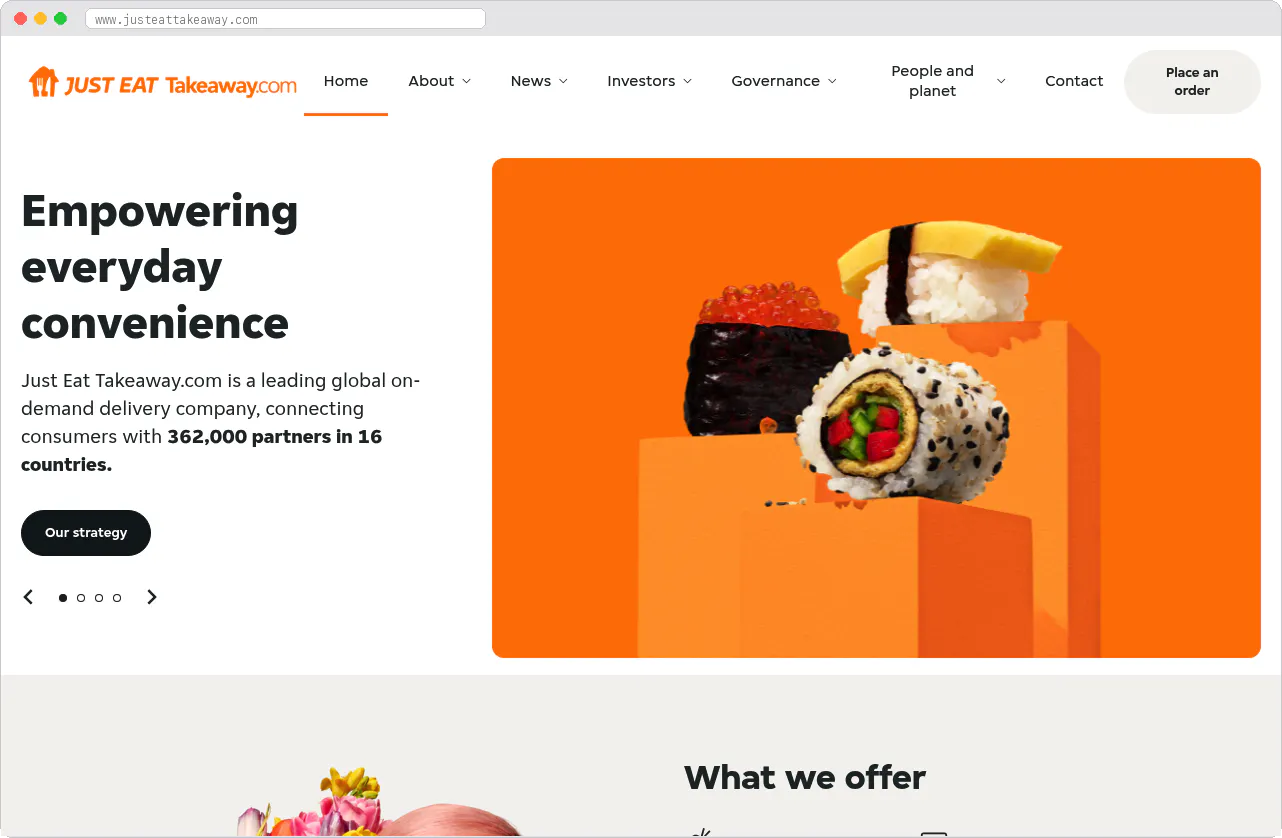
Just Eat Takeaway follows a different model, focusing primarily on connecting customers with restaurants that handle their own delivery. This asset-light approach reduces operational complexity and allows for lower commission rates (typically 10-15%), but limits control over delivery experience and times. Just Eat has expanded through aggressive acquisition, purchasing Grubhub and other regional players to build scale across Europe and North America.
DoorDash dominates the North American market through suburban expansion and exclusive restaurant partnerships. They achieve higher customer retention through DashPass subscription ($9.99/month) and focus on longer-distance deliveries that competitors avoid. DoorDash's commission structure ranges from 15-30%, with additional marketing and service fees. Their success in smaller cities demonstrates the importance of market selection and operational adaptation.
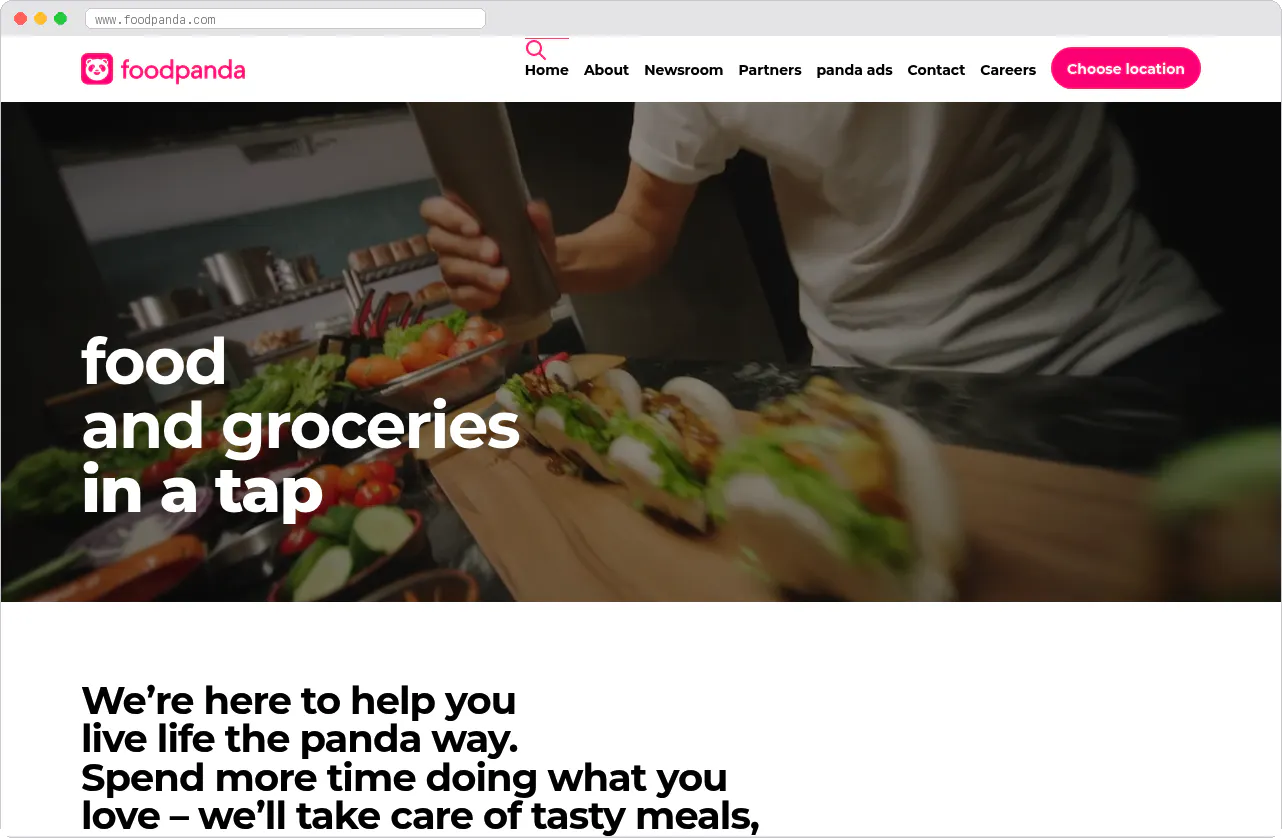
Foodpanda operates primarily in Asia and emerging markets, adapting the delivery model to local preferences and payment methods. They emphasize cash payments, local cuisine preferences, and motorcycle delivery in dense urban areas. Foodpanda's lower-cost operations in emerging markets show how regional adaptation can create competitive advantages.
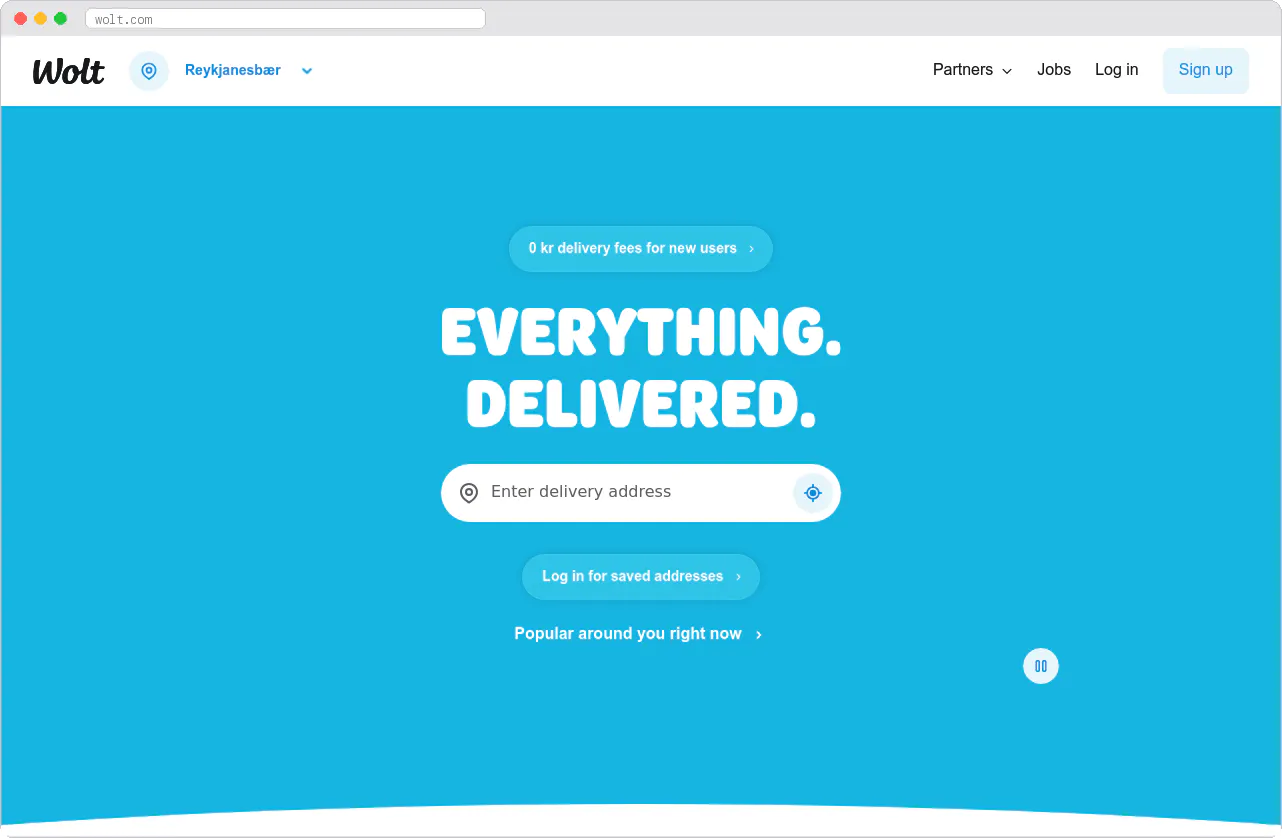
Wolt (acquired by DoorDash) built a premium brand focusing on user experience and restaurant quality in Nordic markets. Their success demonstrates how superior customer experience can command premium pricing even in competitive markets. Wolt's emphasis on local market knowledge and restaurant curation created strong network effects in relatively small geographic areas.
Each competitor's approach reveals different paths to success: Uber Eats uses existing assets, Just Eat minimizes operational complexity, DoorDash focuses on underserved markets, Foodpanda adapts to emerging market conditions, and Wolt emphasizes premium positioning. New entrants can learn from these strategies while identifying underserved niches or operational improvements.
How to build a marketplace like Deliveroo
Building a successful food delivery marketplace requires careful planning across business strategy, technology, and operations. The process involves distinct phases, each with specific goals and success metrics.
Phase 1: Market research and validation (2-4 weeks)
Start by analyzing your target market's specific characteristics and competitive landscape. Food delivery markets vary considerably by region, cuisine preferences, delivery infrastructure, and customer behavior.
Conduct customer interviews with potential users to understand their current ordering habits, pain points with existing services, and willingness to try new platforms. Focus on specific geographic areas where you can achieve critical mass rather than attempting broad coverage initially.
Research potential restaurant partners by visiting establishments, understanding their current delivery arrangements, and assessing their technology readiness. Many restaurants struggle with delivery logistics but hesitate to partner with platforms due to high commission rates or operational complexity.
Analyze the gig economy landscape in your target area. Assess potential rider availability, competing opportunities (ride-sharing, other delivery platforms), and local regulations affecting independent contractors.
Phase 2: Business model design (1-2 weeks)
Define your revenue structure based on local market conditions and competitive analysis. Consider starting with lower commission rates to attract restaurant partners, then gradually increasing as you demonstrate value through customer acquisition and operational efficiency.
Decide on your delivery model: independent contractor network like Deliveroo, restaurant-managed delivery like Just Eat, or hybrid approach. Each model has different operational complexity, cost structure, and control over customer experience.
Determine your geographic expansion strategy. Successful delivery platforms typically dominate specific neighborhoods before expanding citywide, then replicate the model in similar markets.
Phase 3: MVP development and testing (4-8 weeks)
Develop a minimum viable product focusing on core ordering, payment, and basic tracking functionality. Your MVP should handle the complete transaction flow but can lack advanced features like dynamic pricing or refined routing.
Key MVP features include:
- Restaurant and menu management
- Customer ordering and payment processing
- Basic order tracking and notifications
- Rider assignment and navigation
- Administrative dashboard for monitoring operations
Test your MVP with a small group of restaurants and customers in a limited geographic area. Focus on transaction completion rates, delivery times, and user feedback rather than scale metrics.
Phase 4: Pilot launch (4-6 weeks)
Launch your platform with 10-20 restaurants in a concentrated area where you can achieve reasonable delivery times and customer selection. Prioritize restaurants that complement each other in cuisine type and price points.
Recruit initial riders through local advertising, referrals, and competitive compensation packages. Ensure adequate rider coverage during peak meal times (lunch and dinner) to maintain service levels.
Implement manual processes for complex operations like customer service, rider disputes, and restaurant onboarding. This allows you to understand operational requirements before automating.
Monitor key metrics closely:
- Order completion rates (target: >95%)
- Average delivery times (target: <45 minutes)
- Customer retention (target: >30% monthly repeat rate)
- Restaurant satisfaction and retention
Phase 5: Iteration and optimization (ongoing)
Use data from your pilot to identify bottlenecks and improvement opportunities. Common areas for optimization include rider routing algorithms, restaurant onboarding processes, and customer acquisition channels.
Expand your restaurant network systematically, focusing on filling cuisine gaps and improving geographic coverage within your initial area. Quality control becomes key as you scale - maintain standards for food quality, delivery times, and customer service.
Develop operational procedures for common scenarios: weather delays, restaurant closures, rider no-shows, customer complaints, and payment disputes. Document these processes for consistent execution and future training.
Phase 6: Geographic expansion
Once you achieve sustainable unit economics and operational efficiency in your initial market, replicate the model in similar areas. Choose expansion markets based on demographic similarity, competitive landscape, and operational feasibility.
Develop standardized playbooks for market entry, restaurant recruitment, rider onboarding, and customer acquisition. This systematization enables faster expansion and consistent service quality across markets.
Common pitfalls to avoid:
- Premature scaling: Expanding to new markets before achieving profitability and operational efficiency in initial areas leads to unsustainable burn rates and poor service quality.
- Neglecting unit economics: Focusing on gross transaction volume without understanding per-order profitability creates unsustainable business models that collapse when funding becomes scarce.
- Inadequate rider supply: Insufficient delivery capacity during peak times leads to long wait times, customer dissatisfaction, and restaurant partner frustration.
- Poor restaurant onboarding: Complex integration processes and unclear value propositions result in low restaurant adoption and high churn rates.
- Ignoring local preferences: Applying standardized approaches across markets with different cuisine preferences, payment methods, or delivery expectations reduces customer adoption.
Cost and development considerations
Building a food delivery marketplace involves meaningful upfront investment and ongoing operational costs that vary sharply based on your development approach and market strategy.
Custom development approach ($150,000-$500,000+ initial cost)
Custom development provides maximum flexibility but requires substantial investment and technical expertise. A basic three-sided marketplace with important features typically requires 6-12 months of development time.
Core development costs include:
- Backend infrastructure and APIs: $50,000-$100,000
- Customer mobile apps (iOS and Android): $40,000-$80,000
- Restaurant dashboard and management tools: $30,000-$60,000
- Rider mobile application: $25,000-$50,000
- Administrative backend and analytics: $30,000-$60,000
- Payment processing integration: $15,000-$30,000
Ongoing technical costs:
- Cloud hosting and infrastructure: $2,000-$10,000+ monthly
- Third-party service integrations: $1,000-$5,000 monthly
- Technical maintenance and updates: $10,000-$25,000 monthly
- Security and compliance: $5,000-$15,000 monthly
Custom development makes sense for well-funded startups with specific technical requirements or established businesses expanding into delivery services.
**No-code marketplace platforms run $99-399 per month, keeping your monthly costs predictable.
Typical costs include:
- Platform subscription: $500-$2,000 monthly
- Payment processing: 2.9% + $0.30 per transaction
- Custom integrations and design: $5,000-$25,000 one-time
- Mobile app development: $10,000-$40,000
No-code approaches work well for validating market demand and testing business models before committing to custom development.
Hybrid development approach ($50,000-$150,000 initial cost)
Combining no-code foundations with custom features offers a middle ground, allowing rapid MVP development with room for specialized functionality.
This approach typically involves:
- No-code platform for core marketplace functions
- Custom development for delivery routing and logistics
- Third-party integrations for payments, mapping, and notifications
- Professional design and branding customization
Operational cost considerations
Beyond technology development, food delivery marketplaces face major operational expenses:
Customer acquisition costs in competitive markets range from $20-$50 per customer, with retention being vital for ROI. Organic growth through restaurant partnerships and word-of-mouth reduces these costs over time.
Restaurant onboarding and support requires dedicated staff for training, technical support, and relationship management. Budget $2,000-$5,000 per restaurant for full onboarding including menu photography, tablet setup, and training.
Rider recruitment and retention costs vary by market but typically include advertising, background checks, equipment provision, and incentive payments. Expect $100-$300 per rider acquisition in competitive markets.
Customer service operations become essential as order volume grows. Plan for 24/7 support capabilities covering customer, restaurant, and rider issues. Outsourced support costs $3-$8 per hour per agent.
Insurance and legal compliance costs depend on your business model and local regulations. Delivery marketplaces may need commercial auto insurance, general liability coverage, and worker classification compliance. Budget $50,000-$200,000 annually for legal and insurance expenses.
Marketing and brand development requires sustained investment to compete with established players. Successful delivery platforms typically spend 15-25% of revenue on marketing, including digital advertising, restaurant partnerships, and local market development.
The total cost of launching a food delivery marketplace typically ranges from $200,000-$1,000,000 for the first year, depending on market size, competitive intensity, and operational approach. Focus on achieving positive unit economics in your initial market before expanding to additional geographies.
Frequently asked questions
What is Deliveroo's business model and how does it make money?
Deliveroo operates a three-sided marketplace connecting restaurants, delivery riders, and customers. It makes money through restaurant commissions (25-35% of order value), customer delivery fees (£1.49-£3.99), subscription fees (£11.99/month for Deliveroo Plus), and advertising revenue from restaurant partners.
How much does it cost to build a food delivery app like Deliveroo?
Custom development of a platform this complex typically costs $150,000-500,000+ for the initial build, with $10,000-50,000 monthly in ongoing development. A no-code marketplace platform ($99-399/month) can replicate the core marketplace mechanics at a fraction of the cost, though highly specialized features like real-time tracking or complex algorithms may need custom work later.
What are the key features needed for a food delivery marketplace?
Key features include location-based restaurant discovery, real-time order tracking, flexible payment options, restaurant management dashboards, rider assignment algorithms, and administrative tools for managing the three-sided marketplace operations.
Who are Deliveroo's main competitors and how do they differ?
Main competitors include Uber Eats (uses existing driver network), Just Eat Takeaway (restaurant-managed delivery), DoorDash (suburban focus), and Foodpanda (emerging markets). Each has different commission structures, operational models, and geographic strategies.
What makes a food delivery marketplace successful?
Success factors include achieving critical mass in specific geographic areas, building strong network effects between restaurants and customers, optimizing delivery logistics through technology, maintaining high service quality, and balancing the needs of all three marketplace participants.
How long does it take to launch a food delivery platform?
Timeline varies by approach: no-code MVP can launch in 4-8 weeks, hybrid development takes 3-6 months, while custom development requires 6-12 months. Add 2-4 weeks for initial market research and validation before development begins.
Start your 14-day free trial
Create a marketplace today!
- Launch quickly, without coding
- Extend infinitely
- Scale to any size
No credit card required