How to build a website like Glovo
Glovo transformed on-demand delivery by bringing together customers and local couriers and businesses across Europe and Latin America. Learn how their multi-sided marketplace model works and get a hands-on walkthrough to building your own delivery platform.
Published: Mar 6, 2026
Last updated: Mar 19, 2026
Glovo reshaped on-demand delivery by creating a platform that connects customers, local businesses, and independent couriers in a single ecosystem. Founded in Barcelona in 2015 by Oscar Pierre and Sacha Michaud, the company has grown into one of Europe's leading delivery platforms, operating in over 25 countries and facilitating millions of orders monthly.
Compared to traditional food delivery apps that focus solely on restaurants, Glovo expanded the concept to include groceries, pharmacy items, electronics, and virtually anything available in local stores. This "anything, anywhere" approach helped them capture a broader market and build a more resilient business model.
The platform's success lies in solving a three-sided problem: customers want convenient access to local products, businesses need cost-effective delivery solutions, and individuals seek flexible earning opportunities as couriers. By connecting these groups efficiently, Glovo created a marketplace that generates value for all participants.
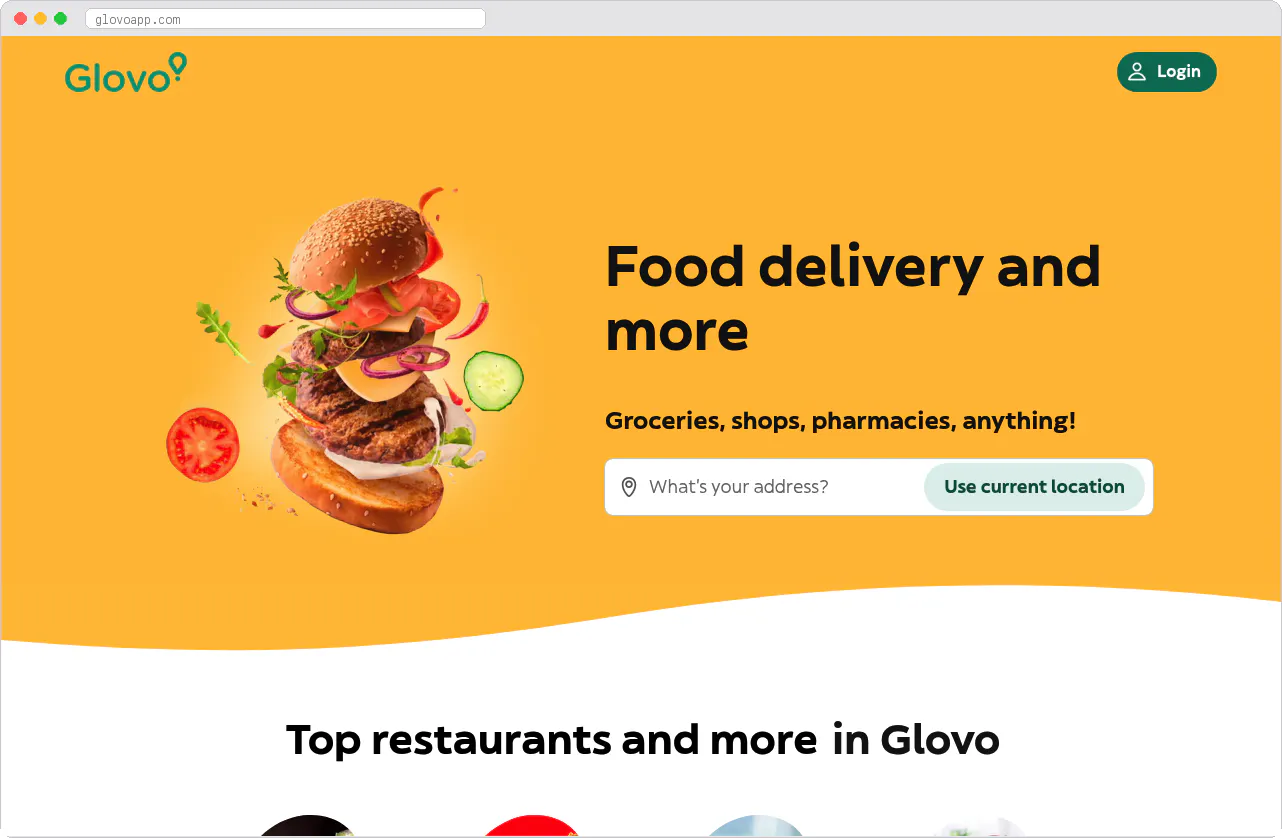
How does Glovo work?
Glovo operates as a three-sided marketplace connecting customers, partner businesses, and delivery couriers through a single platform. The transaction flow demonstrates how each participant benefits from the network effects.
When customers open the Glovo app, they can browse local restaurants, supermarkets, pharmacies, and specialty stores in their area. The platform displays real-time availability, estimated delivery times, and pricing from each partner business. Customers can order from multiple stores simultaneously, with the platform optimizing delivery routes automatically.
Partner businesses list their products on Glovo's platform, managing inventory and pricing through a dedicated merchant dashboard. Some businesses operate as full partners with integrated point-of-sale systems, while others receive orders through Glovo's tablet system or phone calls. Larger chains often have direct API integrations for smooth order processing.
The courier network consists of independent contractors who use their own vehicles, bicycles, motorcycles, or cars, to fulfill deliveries. Couriers receive order notifications through the Glovo courier app, which provides optimized routes, customer contact information, and earnings tracking. The algorithm matches orders to couriers based on location, availability, vehicle type, and delivery complexity.
Glovo's operational model includes both marketplace orders (where businesses fulfill from their own inventory) and quick-commerce orders (where Glovo stocks popular items in dark stores for ultra-fast delivery). This hybrid approach allows them to serve different customer needs while optimizing unit economics.
The platform handles customer service, dispute resolution, and quality control across all three user groups. When issues arise, missing items, late deliveries, or quality problems, Glovo's support team manages refunds, credits, and communication between parties.
How does Glovo make money?
Glovo generates revenue through multiple streams, creating a diversified income model that reduces dependence on any single source.
Commission fees form the primary revenue stream. Glovo charges partner businesses a commission on each order, typically ranging from 15% to 35% depending on the business category, order volume, and partnership terms. Restaurants usually pay higher commissions (25-35%) than grocery stores (15-25%) due to different margin structures and competitive dynamics.
Delivery fees paid by customers provide additional revenue. These fees vary based on distance, order value, time of day, and demand patterns. During peak hours or bad weather, dynamic pricing can increase delivery fees substantially. Many customers pay €1-4 per delivery, though promotional campaigns often waive these fees to drive adoption.
Glovo Prime subscription offers customers unlimited free deliveries for a monthly fee (typically €5-10 depending on the market). This recurring revenue stream improves customer lifetime value and increases order frequency among subscribers. Prime members typically order 2-3 times more frequently than non-subscribers.
Small order fees help maintain profitability on low-value purchases. Orders below a certain threshold (usually €10-15) incur additional fees to cover operational costs and ensure viable unit economics for small transactions.
Advertising revenue from partner businesses represents a growing income stream. Restaurants and stores can pay for premium placement in search results, featured listings, or promotional banners within the app. This performance marketing model helps businesses increase visibility while generating high-margin revenue for Glovo.
Service fees for additional business tools contribute to revenue diversification. These include advanced analytics dashboards, inventory management tools, marketing campaign management, and priority customer support for enterprise partners.
Glovo's revenue model emphasizes high transaction volumes and network effects. As more customers join the platform, it becomes more attractive to businesses and couriers, creating a self-reinforcing growth cycle that improves unit economics over time.
What makes Glovo successful?
Glovo's success stems from strategic decisions that differentiated them from traditional food delivery companies and created sustainable competitive advantages.
Category expansion beyond food proved key to their growth. While competitors focused narrowly on restaurant delivery, Glovo positioned itself as a general on-demand platform. This "anything" approach increased order frequency, reduced seasonality effects, and created multiple revenue streams. Customers who initially used Glovo for food delivery began ordering groceries, pharmacy items, and retail products, considerably increasing their lifetime value.
Geographic focus on underserved markets helped Glovo avoid direct competition with well-funded incumbents. Instead of launching in saturated markets like London or Paris, they targeted cities in Spain, Italy, Eastern Europe, and Latin America where delivery infrastructure was underdeveloped. This strategy allowed them to build strong market positions before international competitors arrived.
Flexible fulfillment models enabled Glovo to serve diverse business needs. Some partners prefer marketplace-style integration where they handle inventory and fulfillment, while others want Glovo to manage the entire process through dark stores. This flexibility helped them onboard businesses with varying operational capabilities and technical sophistication.
Technology-driven operations optimize efficiency across the three-sided network. Glovo's algorithm considers traffic patterns, courier locations, order complexity, and customer preferences to minimize delivery times and operational costs. Machine learning models predict demand patterns, helping optimize courier scheduling and inventory placement.
Strong unit economics focus differentiated Glovo from competitors who prioritized growth over profitability. By carefully managing commission rates, delivery fees, and operational costs, they built a sustainable business model that could expand without requiring continuous capital injections.
Local market adaptation helped Glovo succeed in diverse cultural and regulatory environments. Their platform supports local languages, payment methods, and business practices. In Latin American markets, they integrated cash payments and local banking systems. In European markets, they adapted to varying labor laws and taxation requirements.
Courier-centric approach created a reliable delivery network. Unlike platforms that treat couriers as purely transactional relationships, Glovo invested in courier training, safety equipment, and earnings optimization tools. This approach reduced churn and improved service quality.
Key features of a Glovo-like marketplace
Building a successful multi-sided delivery marketplace requires refined features that serve customers, businesses, and couriers simultaneously.
Multi-vendor catalog management forms the foundation of the platform. The system must handle thousands of businesses with varying product catalogs, pricing structures, and availability schedules. Each business needs tools to manage their listings, update prices, mark items as unavailable, and set operating hours. The platform must support different product categories, from hot food requiring immediate delivery to electronics allowing longer fulfillment windows.
Real-time inventory synchronization prevents overselling and customer disappointment. Integration with partner point-of-sale systems, inventory management software, or manual update tools ensures customers only see available items. This becomes particularly complex when managing grocery stores with rapidly changing stock levels or restaurants that run out of ingredients during peak hours.
Advanced search and filtering capabilities help customers find exactly what they need across thousands of available products. Users should be able to filter by cuisine type, delivery time, minimum order value, dietary restrictions, and business ratings. Location-based search must prioritize nearby businesses while considering delivery capacity and estimated fulfillment times.
Dynamic pricing and fee calculation requires smart algorithms that consider multiple variables. Delivery fees should adjust based on distance, traffic conditions, courier availability, order value, and demand patterns. The system must handle different commission structures for various business categories and calculate total costs transparently for customers.
Order management workflows coordinate complex multi-party interactions. When a customer places an order, the system must notify the business, find available couriers, calculate optimal routes, handle payment processing, and provide real-time updates to all parties. Support for split deliveries from multiple businesses adds another layer of complexity.
Courier dispatch and routing optimization maximizes efficiency while maintaining service quality. The algorithm must consider courier locations, vehicle types, order priorities, traffic conditions, and customer preferences when assigning deliveries. Route optimization becomes particularly important when couriers handle multiple orders simultaneously.
Real-time tracking and communication builds trust across the network. Customers want to know their order status, estimated delivery time, and courier location. Businesses need updates on order acceptance and completion. Couriers require clear delivery instructions, customer contact information, and navigation assistance.
Rating and review systems maintain quality standards across all participants. Two-way reviews between customers and businesses help identify excellent partners and problematic actors. Courier ratings from both customers and businesses provide feedback for service improvement. The system must handle review authenticity and prevent manipulation.
Payment processing and financial management handles complex money flows between multiple parties. The platform must collect payments from customers, calculate commissions, process courier earnings, handle refunds and disputes, and manage tax reporting requirements. Support for multiple payment methods, currencies, and payout schedules adds operational complexity.
Business analytics dashboards provide partners with insights to optimize their operations. Restaurants want to understand peak ordering times, popular items, and customer demographics. The platform should offer sales reporting, performance metrics, and market insights that help businesses grow their revenue.
Customer support infrastructure manages the increased complexity of multi-sided transactions. Issues can involve customers, businesses, couriers, or combinations of all three. The support system needs tools for dispute resolution, refund processing, quality control, and escalation management.
Competitors and alternatives
The on-demand delivery market features several strong competitors, each with different strategic approaches and geographic focuses.
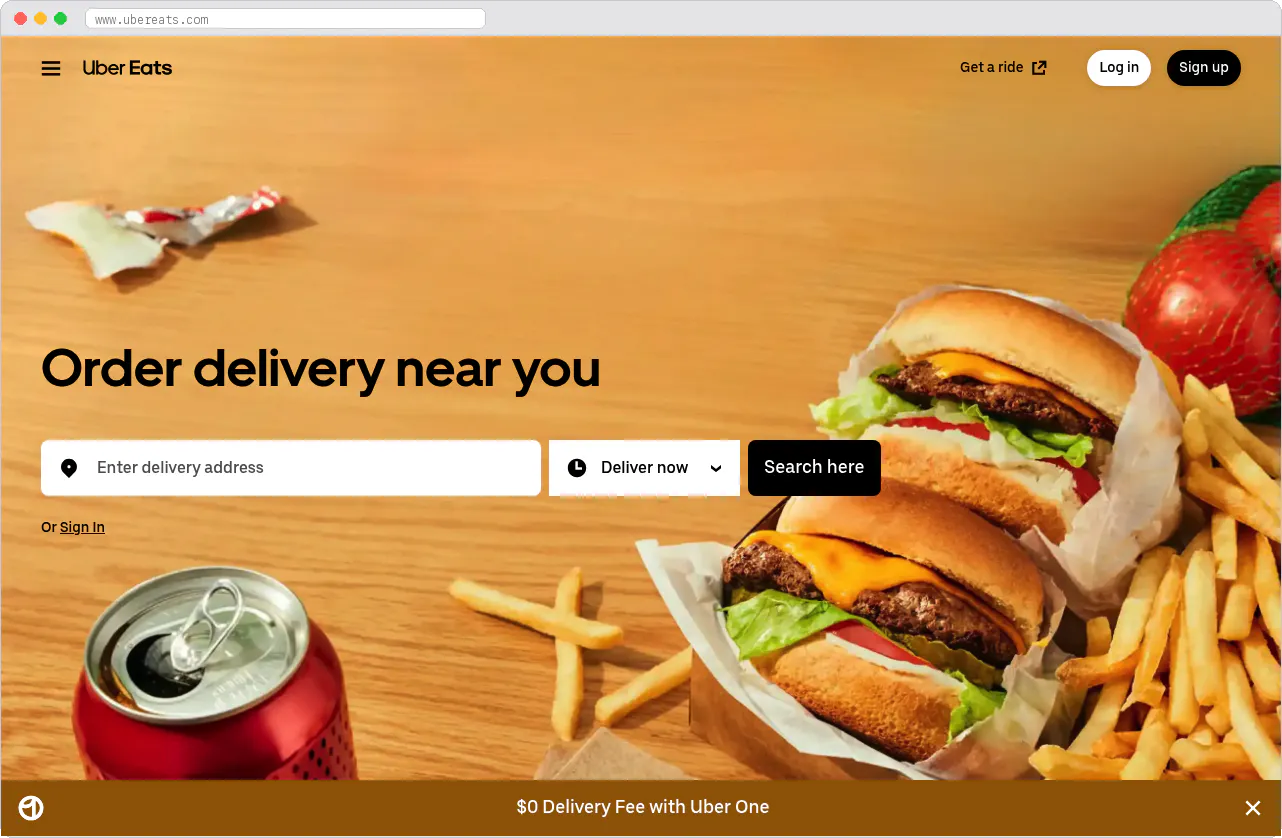
Uber Eats represents Glovo's primary global competitor, using Uber's existing courier network and technology infrastructure. Uber Eats typically focuses on restaurant delivery with some grocery expansion, but lacks Glovo's "anything" positioning. Their advantage lies in brand recognition, financial resources, and operational scale. However, their commission rates often exceed Glovo's, making them less attractive to smaller businesses. Uber Eats generally performs better in major metropolitan areas where they can achieve high courier utilization rates.
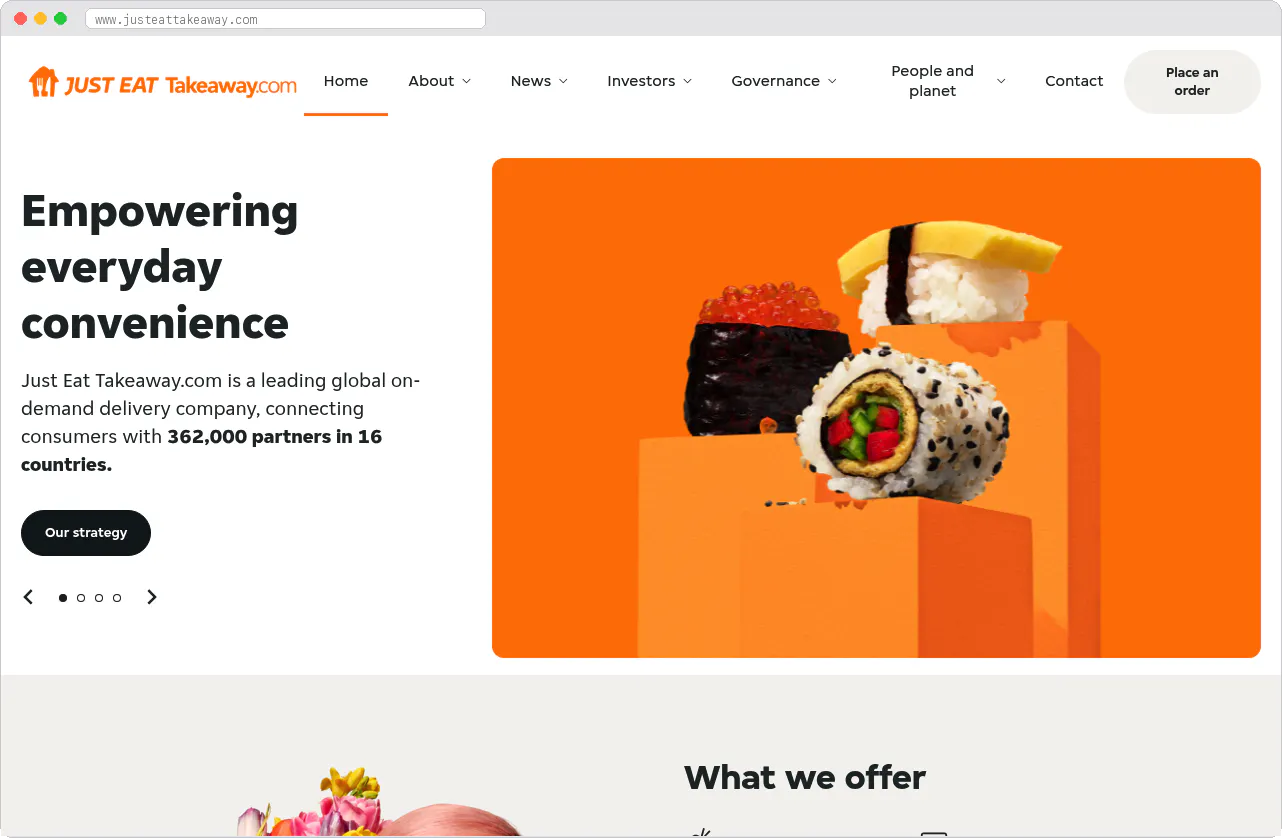
Just Eat Takeaway dominates Northern European markets through a different business model emphasizing restaurants' own delivery networks rather than third-party couriers. This approach reduces operational complexity but limits expansion into non-restaurant categories. Just Eat's commission rates are often lower than Glovo's, but they offer less detailed services to partner businesses. Their model works particularly well in markets with established restaurant delivery infrastructure.
Deliveroo competes directly with Glovo in several European markets, focusing on high-quality restaurant partners and premium positioning. Deliveroo's dark kitchen initiatives and emphasis on food quality differentiate them from Glovo's broader marketplace approach. They typically charge similar commission rates but target more upscale restaurants and customers. Deliveroo's geographic coverage is narrower than Glovo's, focusing on major cities rather than secondary markets.
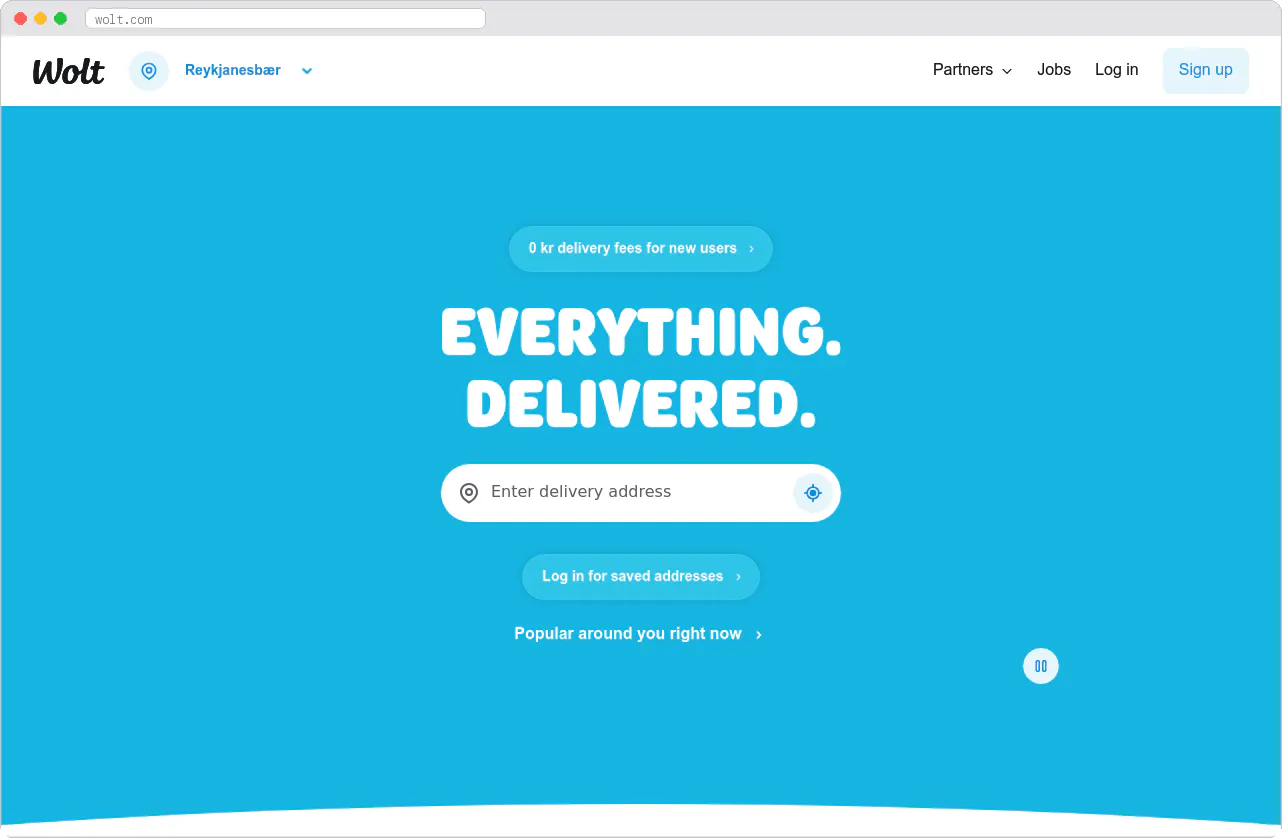
Wolt (acquired by DoorDash) built strong positions in Nordic and Baltic markets before expanding to other regions. Their user experience often receives higher ratings than Glovo's, with particular strength in customer service and app design. Wolt's commission structure and operational model closely resemble Glovo's, but they've historically focused more on restaurants than general retail. The DoorDash acquisition provides additional resources for geographic expansion.
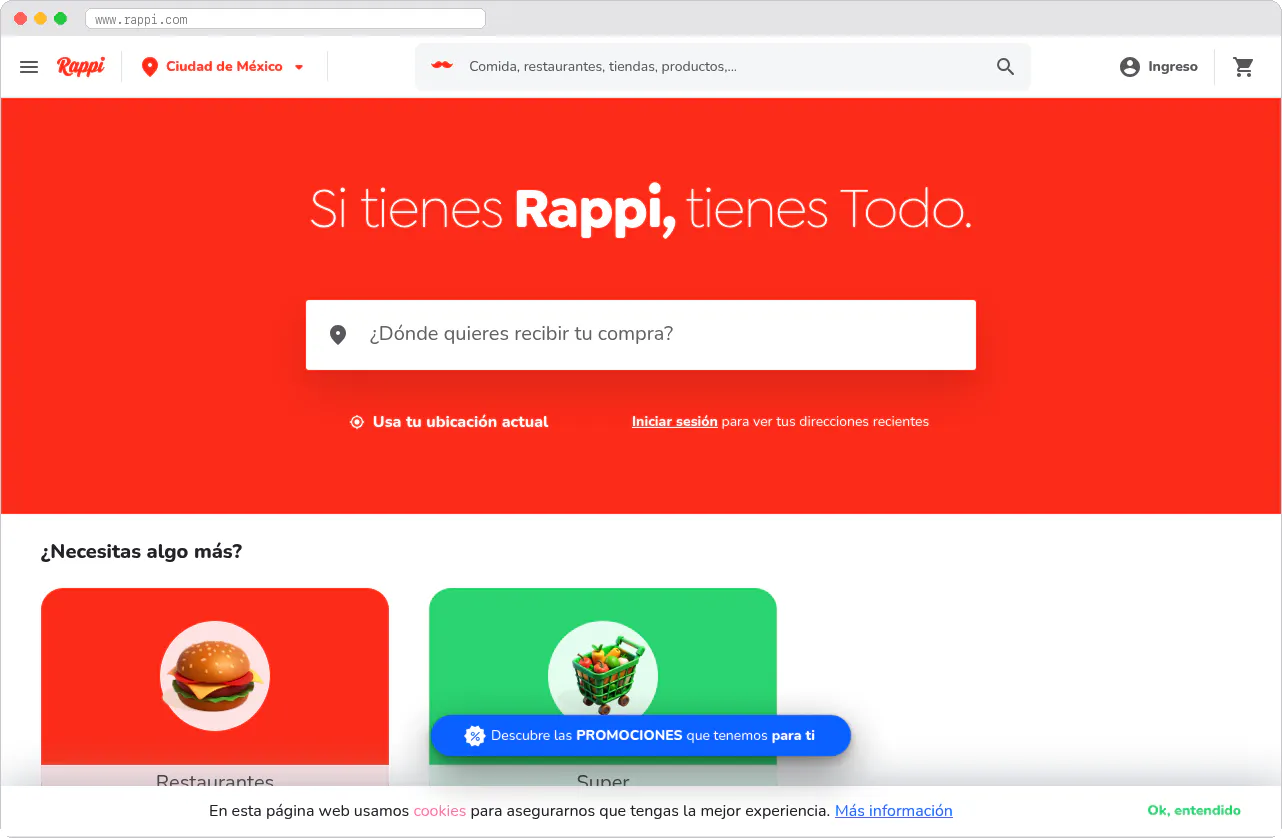
Rappi dominates Latin American markets where Glovo also operates, creating direct competition in key growth regions. Rappi's super app approach includes financial services, digital payments, and various on-demand services beyond delivery. This broader platform strategy differentiates them from Glovo's delivery focus. Rappi often operates in markets with less developed e-commerce infrastructure, requiring different operational approaches than European markets.
Each competitor has found success through different positioning strategies. Pure-play food delivery companies achieve operational efficiency but limit market size. Super app platforms increase customer engagement but face greater complexity. Glovo's "anything, anywhere" approach represents a middle ground that balances growth potential with operational focus.
How to build a marketplace like Glovo
Creating a successful multi-sided delivery marketplace requires careful planning, iterative development, and strategic execution across multiple phases.
Start with market research and validation before building any technology. Identify underserved geographic areas or customer segments where existing solutions don't meet market needs. Analyze local competition, regulatory requirements, labor laws, and payment preferences. Conduct interviews with potential customers, business partners, and couriers to validate demand and understand operational requirements.
Choose your initial scope carefully to avoid spreading resources too thin. Most successful delivery platforms start with a single city or metropolitan area, focusing on one primary category like restaurants before expanding. Glovo's founders initially concentrated on Barcelona's restaurant scene before adding other categories and cities. This focused approach helps you understand operational complexities and achieve marketplace liquidity more quickly.
Design your business model by determining commission structures, fee arrangements, and revenue streams. Consider how your target market's economics differ from Glovo's European base. Higher competition might require lower commission rates, while underserved markets might support premium pricing. Plan for multiple revenue streams from the beginning, even if you don't implement them immediately.
Build your initial technology platform with must-have features for all three user groups. Start with basic functionality: customer ordering, business catalog management, courier dispatch, payment processing, and order tracking. Avoid complex features like advanced analytics or AI-powered optimization until you've validated core marketplace mechanics. Focus on mobile-first design since most interactions happen through smartphone apps.
Establish operational processes for onboarding businesses and couriers. Develop standards for business verification, product catalog setup, courier background checks, and quality control. Create documentation, training materials, and support processes that can scale as your network grows. Consider which processes you'll handle manually versus automate, optimizing for speed to market initially.
Launch with a controlled rollout to manage complexity and gather feedback. Start with a small geographic area and limited business partners to test your operational workflows. Recruit initial couriers through targeted outreach, referral programs, or partnerships with existing gig economy platforms. Monitor key metrics like order completion rates, delivery times, and user satisfaction closely.
Focus on achieving marketplace liquidity by balancing supply and demand across all three sides. Too few businesses create limited selection for customers. Insufficient couriers lead to long delivery times and poor experiences. Too many couriers without enough orders create income instability and churn. Use promotional campaigns, partnerships, and targeted marketing to maintain healthy network effects.
Iterate based on real-world feedback rather than theoretical assumptions. Track which features customers actually use, where operational bottlenecks occur, and what causes businesses or couriers to stop using your platform. Be prepared to adjust commission rates, modify workflows, or add features based on market feedback.
Plan your expansion strategy systematically rather than opportunistically. Geographic expansion requires understanding local market dynamics, regulatory compliance, and competitive positioning. Category expansion into groceries, pharmaceuticals, or retail requires different operational capabilities and business relationships. International expansion adds currency, language, and cultural complexity.
Build strategic partnerships to accelerate growth and reduce operational burden. Partner with existing business aggregators, courier networks, payment processors, and technology providers rather than building everything internally. Glovo's success partially stems from smart partnership decisions that allowed rapid market entry.
Invest in data and analytics capabilities early to optimize operations and demonstrate value to partners. Businesses want to understand their performance metrics, customers benefit from personalized recommendations, and couriers need earnings optimization tools. Advanced analytics also help you identify expansion opportunities and operational improvements.
Develop a strong brand and marketing strategy that differentiates your platform from competitors. Glovo's "anything, anywhere" positioning clearly communicated their value proposition. Consider how your brand will resonate with local markets and what marketing channels effectively reach your target audiences.
Cost and development considerations
Building a Glovo-like marketplace involves major upfront investment and ongoing operational costs that vary greatly based on your development approach and market strategy.
Custom development from scratch provides maximum flexibility but requires substantial resources. A full-featured multi-sided delivery platform typically costs €150,000-500,000 to develop, depending on feature complexity and development team location. This includes customer mobile apps, business dashboard, courier app, administrative backend, payment processing integration, and basic analytics. Development timelines usually span 8-15 months for an initial launch version.
Ongoing technical costs include hosting infrastructure, payment processing fees, third-party service integrations, security compliance, and continuous development. Cloud hosting costs scale with usage but typically start at €500-2,000 monthly. Payment processing fees range from 2.5-3.5% of transaction volume plus fixed per-transaction costs.
No-code and low-code platforms substantially reduce initial development costs and time-to-market. Specialized marketplace builders designed for delivery platforms can launch basic functionality within 2-8 weeks at costs ranging from €100-1,000 monthly. However, customization options may be limited, and you'll depend on the platform provider's roadmap for advanced features.
The main advantage of no-code approaches is speed to market for validation purposes. You can test market demand, refine operational processes, and gather user feedback before committing to expensive custom development. Many successful platforms start with no-code solutions and later migrate to custom systems as they scale.
Hybrid approaches combining no-code foundations with custom development offer balanced cost-effectiveness. Use marketplace builders for core functionality while developing custom features for competitive differentiation. This approach typically costs €50,000-150,000 initially with 4-8 month development timelines.
Operational costs often exceed technology expenses, particularly in the early stages. Customer acquisition costs for delivery platforms range from €5-25 per customer, depending on marketing channels and competitive intensity. Business onboarding requires sales teams, account management, and technical support. Courier recruitment and retention involve marketing spend, training costs, and incentive programs.
Customer service represents a substantial ongoing expense due to the complexity of multi-sided transactions. Plan for €2-5 per order in customer service costs during the initial year, decreasing as operations mature and self-service options improve.
Regulatory compliance costs vary notably by geography but can be substantial. Labor law compliance for courier relationships, business license requirements, food safety regulations, and data privacy compliance all require legal expertise and ongoing monitoring. Budget €10,000-50,000 annually for legal and compliance costs, depending on operating markets.
Marketing and growth investments typically represent 15-30% of revenue during the growth phase. This includes customer acquisition campaigns, business partnership development, courier recruitment, and brand building activities. Performance marketing costs increase in competitive markets where customer acquisition becomes more expensive.
Working capital requirements arise from payment timing differences between customer payments and business/courier payouts. Most platforms collect customer payments immediately but pay businesses within 1-7 days and couriers weekly or bi-weekly. This creates a need for working capital to fund operations, particularly during growth phases.
Consider financing options early in your planning process. Many delivery platforms require external funding to achieve the scale necessary for sustainable unit economics. Venture capital, government grants, or strategic partnerships can provide resources for technology development, market expansion, and operational scaling.
The total cost to launch and scale a Glovo-like marketplace typically ranges from €250,000-1,500,000 over the first two years, depending on geographic scope, feature complexity, and growth ambitions. Success requires balancing initial investment with speed to market, ensuring you can validate demand and achieve growth milestones before running out of resources.
Frequently asked questions
How does Glovo's business model work?
Glovo operates a three-sided marketplace connecting customers, businesses, and couriers. They generate revenue through commissions (15-35% from businesses), delivery fees from customers, subscription services, and advertising fees from partner businesses.
What makes Glovo different from other delivery apps?
Unlike traditional food delivery apps, Glovo positions itself as an 'anything, anywhere' platform that delivers groceries, pharmacy items, electronics, and retail products in addition to restaurant food. This broader category approach increases customer order frequency and reduces seasonality.
How much does it cost to build a Glovo clone?
Building from scratch costs €150,000-500,000+ for the initial platform. No-code marketplace platforms cost €99-399 per month in subscription fees, letting you launch for under €5,000 in the first year. You will not replicate every Glovo feature immediately, but you can validate the business model in your market before investing in custom development.
What are the main challenges in building a delivery marketplace?
Key challenges include achieving marketplace liquidity across three user groups (customers, businesses, couriers), managing complex multi-party transactions, handling real-time logistics optimization, and maintaining sustainable unit economics while competing on price and speed.
How do delivery platforms like Glovo handle courier management?
Glovo treats couriers as independent contractors who use their own vehicles and set their availability. The platform provides order matching algorithms, route optimization, earnings tracking, and support tools while couriers maintain flexibility in their working schedules.
What features are essential for a multi-sided delivery platform?
Important features include multi-vendor catalog management, real-time inventory sync, dynamic pricing, courier dispatch optimization, order tracking, payment processing for multiple parties, rating systems, and analytics dashboards for all user types.
Start your 14-day free trial
Create a marketplace today!
- Launch quickly, without coding
- Extend infinitely
- Scale to any size
No credit card required