How to build a fashion marketplace
The complete guide to building a successful fashion marketplace, from validating your niche to launching your platform. Learn from successful examples, understand essential features, and discover how to build without coding.
Published: Dec 21, 2023
Last updated: Mar 19, 2026
What is a fashion marketplace?
A fashion marketplace is a digital platform where multiple sellers offer clothing, accessories, footwear, and style-related products to buyers in one centralized location. Unlike traditional e-commerce stores that sell their own inventory, fashion marketplaces facilitate transactions between independent sellers and customers while taking a commission from each sale.
The fashion marketplace model has proven incredibly successful because it solves problems for both sides of the market. Buyers get access to diverse styles, brands, and price points in one place, while sellers gain exposure to customers they couldn't reach on their own. The marketplace owner builds revenue by facilitating these connections and transactions.
Fashion marketplaces can focus on different segments: luxury designer items, vintage and secondhand clothing, sustainable fashion, handmade pieces, or mass-market apparel. Some cater to specific demographics like streetwear enthusiasts or plus-size fashion, while others offer broad selections across all categories.
The key differentiator of fashion marketplaces is their focus on style, trends, and personal expression. Unlike general product marketplaces, they emphasize visual discovery, style inspiration, and community engagement around fashion culture.
How fashion marketplaces work
Fashion marketplaces operate on a multi-sided business model where the platform connects fashion sellers with style-conscious buyers. Sellers list their products with detailed descriptions, multiple photos, sizing information, and pricing. Buyers browse, search, and filter through thousands of items to find pieces that match their style and budget.
The transaction flow typically follows this pattern: a buyer discovers products through browsing or search, adds items to their cart, completes checkout with payment, and receives their order from the individual seller. The marketplace handles payment processing, takes its commission, and transfers the remaining amount to the seller after accounting for any return periods or dispute resolution windows.
Most fashion marketplaces monetize through commission fees, typically ranging from 6% to 20% of each transaction value. Some also charge listing fees, subscription fees for premium seller features, or advertising fees for promoted listings. Payment processing, shipping logistics, and customer service responsibilities vary by platform, with some marketplaces handling everything centrally while others leave fulfillment to individual sellers.
Trust and authenticity are crucial in fashion marketplaces, especially for luxury or vintage items. Successful platforms invest heavily in seller verification, product authentication services, detailed return policies, and dispute resolution systems to build buyer confidence.
Why build a fashion marketplace?
The global fashion e-commerce market reached around $821 billion in 2023 and continues growing rapidly. Fashion marketplaces capture an increasing share of this market because they offer advantages that traditional retailers struggle to match.
For buyers, fashion marketplaces provide unparalleled variety and discovery opportunities. Instead of being limited to one brand's aesthetic or price point, shoppers can explore thousands of styles from emerging designers, vintage curators, and established brands in one browsing session. The social and community aspects of many fashion platforms also turn shopping into an engaging, inspirational experience rather than a purely transactional one.
Sellers benefit from reduced barriers to entry and access to established customer bases. Independent designers, vintage collectors, and small boutiques can reach global audiences without building their own e-commerce infrastructure. The marketplace handles payment processing, provides built-in trust mechanisms through reviews and ratings, and offers marketing tools that individual sellers couldn't afford independently.
For marketplace owners, fashion offers several business advantages. Fashion products typically have high margins, frequent repurchase cycles, and strong emotional engagement from customers. The visual nature of fashion also drives social sharing and organic marketing. Additionally, fashion marketplaces often develop strong network effects: more sellers attract more buyers, which attracts even more sellers, creating a virtuous growth cycle.
The fragmented nature of the fashion industry creates opportunities for niche marketplaces. While giants like Amazon dominate general commerce, specialized fashion platforms can compete effectively by serving specific communities, aesthetics, or needs that broader platforms overlook.
Successful fashion marketplace examples
Studying successful fashion marketplaces reveals different approaches to building and growing platforms in this space. Here are key examples that demonstrate various strategies and business models.
The RealReal focuses exclusively on authenticated luxury consignment. Founded in 2011, the platform has built a business worth an estimated over $1 billion by solving the authentication problem that plagued luxury resale. They employ expert authenticators, offer white-glove consignment services for high-value items, and guarantee authenticity. This approach commands premium commission rates (often 30-50%) because sellers trust the authentication process and buyers pay premiums for verified luxury goods.
Depop targets Gen Z with a mobile-first social shopping experience. The platform combines marketplace functionality with social media features, allowing users to follow sellers, like items, and discover products through social feeds. Depop's success stems from understanding their demographic's shopping behaviors: they want unique pieces, social discovery, and authentic connections with sellers. The platform processes over $1 billion in gross merchandise value annually, with users primarily aged 16-26.
Poshmark created a social marketplace where selling becomes a social activity. Sellers host virtual "Posh Parties" themed around brands or styles, follow each other's closets, and engage through comments and sharing. This social layer increases seller engagement and creates repeat usage patterns. Poshmark went public in 2021 and has facilitated over $8 billion in sales since launching in 2011.
Vestiaire Collective built a global platform for pre-owned designer fashion, operating in over 70 countries. Their success comes from combining local market knowledge with global reach. They offer different payment methods, languages, and shipping options for each market while maintaining consistent quality standards. The platform has raised over $250 million in funding and processes millions of transactions annually.
Farfetch operates as a marketplace connecting luxury boutiques worldwide with global customers. Rather than holding inventory, they enable boutiques to reach international markets through Farfetch's technology and logistics network. This asset-light model allowed rapid global expansion and IPO in 2018, though the company has faced profitability challenges that highlight the complexities of scaling fashion marketplaces.
These examples show that successful fashion marketplaces typically excel in specific areas: authentication and trust (The RealReal), demographic focus (Depop), social engagement (Poshmark), global operations (Vestiaire Collective), or logistics innovation (Farfetch).
Essential features for fashion marketplaces
Building a successful fashion marketplace requires specific functionality that addresses the unique needs of fashion buyers and sellers. Unlike general product marketplaces, fashion platforms must handle complex variations like sizes, colors, and fits while creating engaging visual experiences that inspire purchases.
Rich product listings and visual presentation form the foundation of any fashion marketplace. Sellers need tools to upload multiple high-quality photos from different angles, create detailed product descriptions, and specify attributes like brand, size, color, material, and condition. The listing creation process should guide sellers to provide complete information while remaining simple enough to encourage consistent use. Advanced features might include 360-degree product views, styling suggestions, or integration with social media for lifestyle photos.
Product pages must present this information clearly while highlighting key details that fashion shoppers prioritize. Size charts, material information, care instructions, and fit descriptions help reduce returns and increase buyer confidence. Many successful platforms also show how items look styled with other pieces or on different body types.
Advanced search and filtering capabilities are crucial because fashion shopping often involves browsing and discovery rather than searching for specific products. Users should be able to filter by multiple attributes simultaneously: size, color, brand, price range, style category, occasion, and condition. The search functionality needs to handle fashion-specific terminology and synonyms (searching "denim" should return "jeans" results).
Visual search features are increasingly important in fashion marketplaces. Some platforms allow users to upload photos to find similar items, while others use AI to suggest styling combinations or alternative products. Size-based filtering must account for the reality that sizing varies between brands and countries.
Size and fit management presents unique challenges in fashion marketplaces. Unlike standardized products, clothing sizes vary dramatically between brands, countries, and even individual items. Successful platforms provide detailed sizing information, conversion charts between different sizing systems, and fit feedback from previous buyers.
Some advanced marketplaces offer virtual fitting tools, size recommendation engines based on buyer measurements and preferences, or augmented reality try-on features. At minimum, fashion marketplaces should encourage sellers to provide accurate measurements and allow buyers to ask sizing questions before purchasing.
Seller profiles and brand presentation matter more in fashion than in other categories because personal style and brand identity drive many purchasing decisions. Seller profiles should showcase their aesthetic, specialties, and credibility through photos, descriptions, and curated collections. Features like seller following, favorite seller lists, and seller-specific promotions help build relationships between buyers and their preferred sellers.
For professional sellers or boutiques, the platform should support brand-specific storefronts with custom layouts, branding elements, and promotional tools. This helps establish seller authority and creates more engaging shopping experiences.
Review and rating systems must account for fashion-specific feedback. Beyond general satisfaction ratings, buyers should be able to comment on fit, quality, accuracy of photos, and shipping speed. Photo reviews showing how items actually look when worn provide valuable information for future buyers.
The review system should encourage honest feedback while protecting sellers from unreasonable complaints. Some platforms allow sellers to respond to reviews or provide additional context about sizing or fit issues.
Return and exchange management is critical in fashion marketplaces because buyers often purchase multiple sizes or colors with the intention of returning items that don't fit properly. The platform needs clear return policies, streamlined return processes, and systems for handling return shipping and refunds.
Some marketplaces offer store credit for returns to encourage repeat purchases, while others partner with logistics companies to simplify return shipping. The key is balancing buyer confidence with seller protection against excessive returns.
Mobile-optimized shopping experience is essential because fashion browsing often happens on mobile devices during commutes, breaks, or social media scrolling. The mobile experience should prioritize visual discovery, easy filtering, and streamlined checkout processes. Push notifications for new arrivals from favorite sellers, price drops, or restocked items can drive engagement and sales.
Mobile-specific features might include outfit styling tools, wishlist functionality, or social sharing capabilities that let users get feedback from friends before purchasing.
Fashion marketplace competitors and alternatives
The fashion marketplace landscape includes established giants, specialized platforms, and emerging challengers. Understanding this competitive environment helps founders identify opportunities and differentiate their platforms.
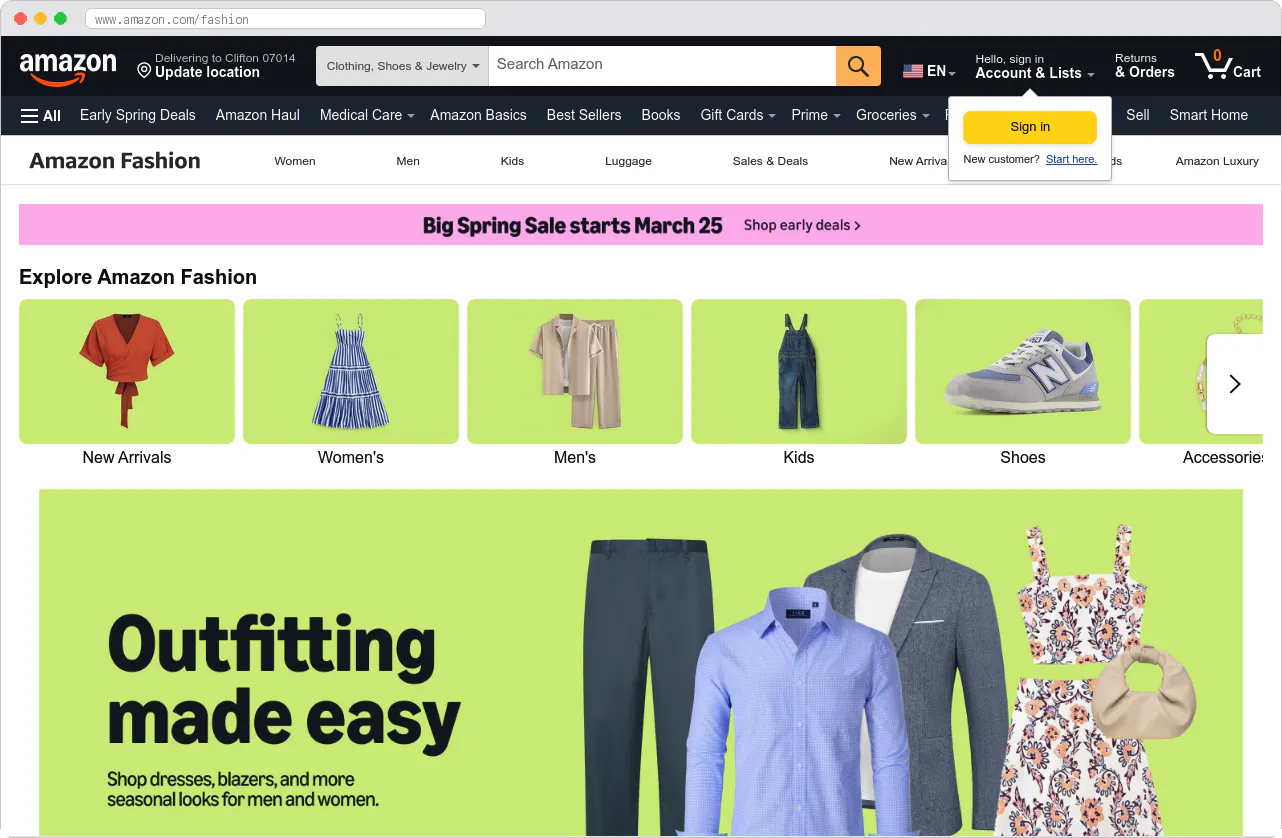
Amazon Fashion dominates through scale, logistics, and price competition. While not exclusively focused on fashion, Amazon's vast selection, fast shipping, and competitive pricing make it a default choice for many fashion purchases. Their weakness lies in discovery, curation, and community engagement. Amazon's algorithmic approach lacks the human curation and style inspiration that fashion enthusiasts seek. New marketplaces can compete by offering better discovery experiences, stronger seller communities, or specialized curation that Amazon's scale-focused approach cannot match.
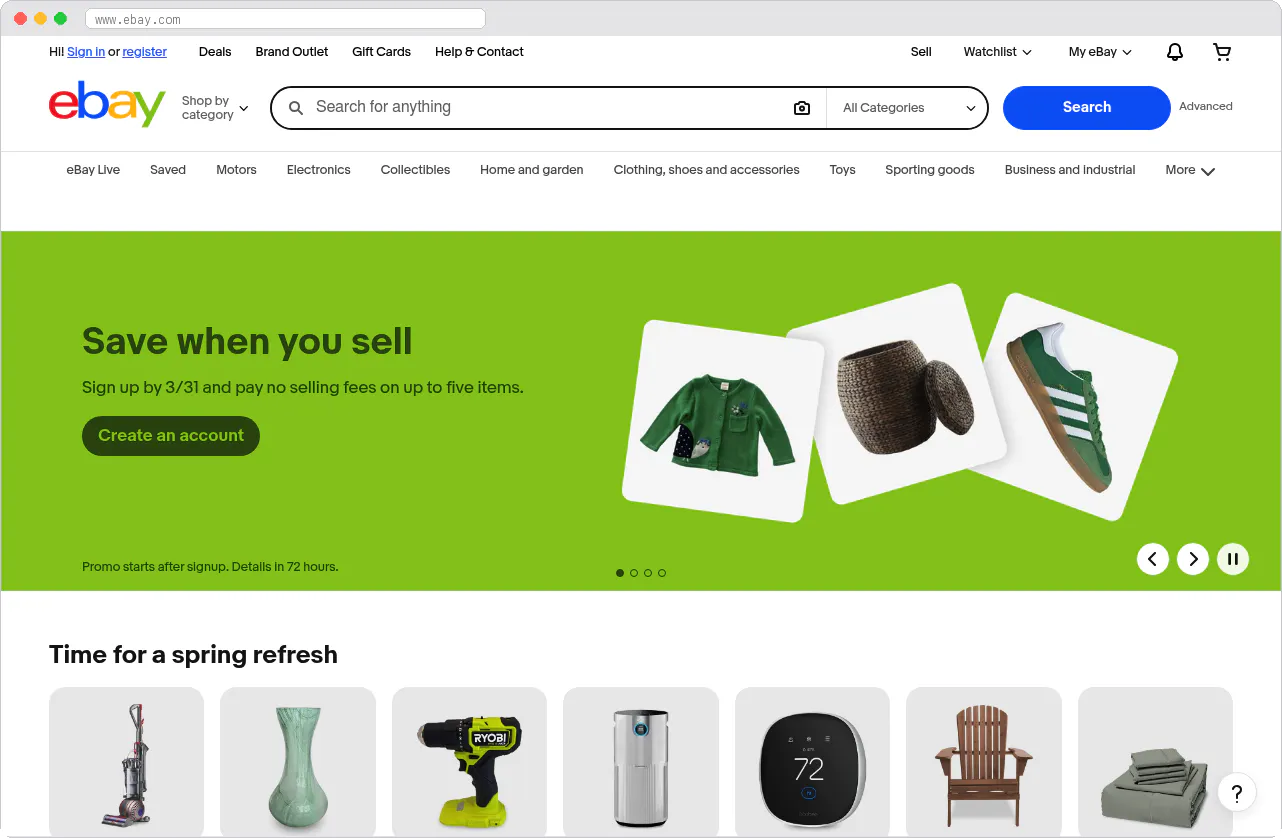
eBay remains significant in fashion, particularly for vintage, collectible, and hard-to-find items. eBay's auction format and global reach create value for unique pieces, but the platform's general marketplace design doesn't cater specifically to fashion shopping behaviors. The user experience feels dated compared to newer, fashion-focused platforms, creating opportunities for more modern, visually appealing alternatives.
Etsy serves the handmade and vintage fashion market effectively, building strong seller communities and emphasizing unique, artisanal products. However, Etsy's craft-focused brand and interface may not appeal to mainstream fashion shoppers. The platform's discovery mechanisms also favor established sellers, making it challenging for new fashion sellers to gain visibility.
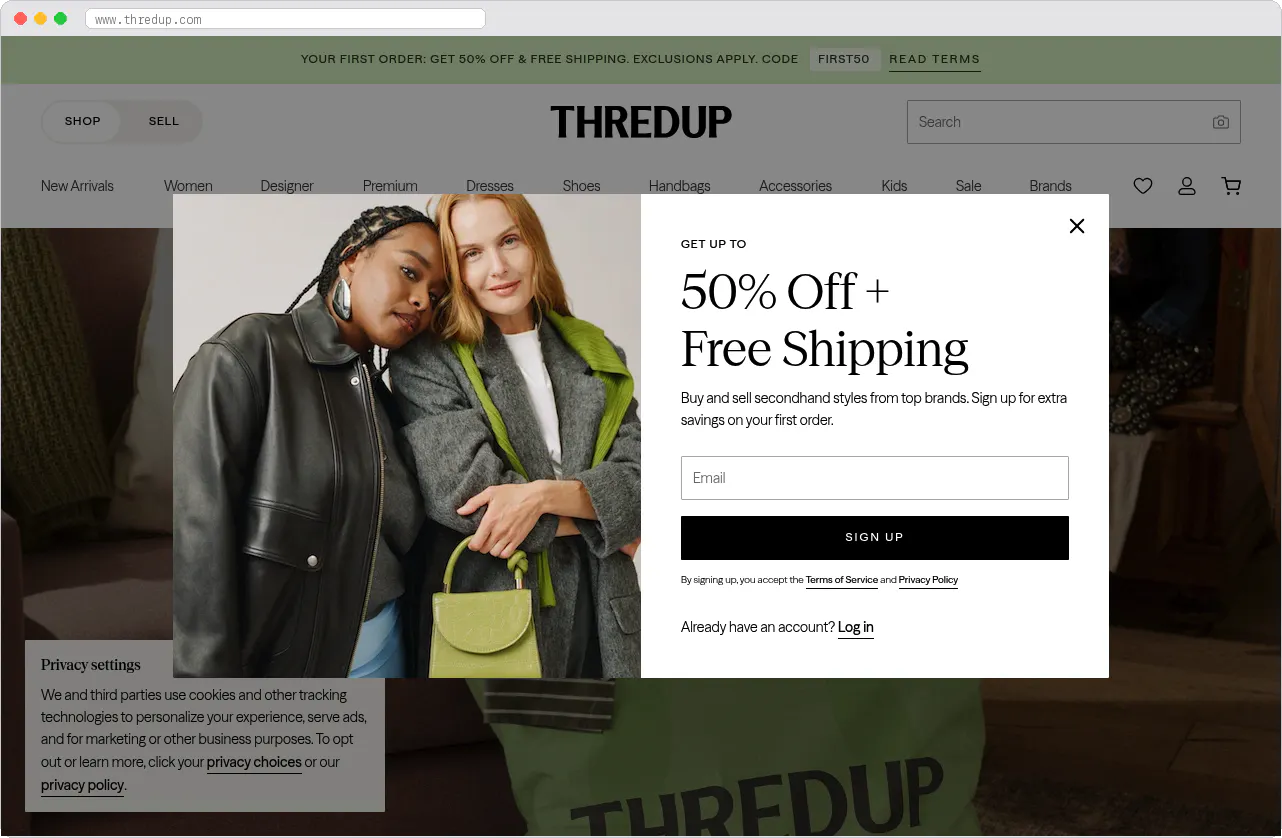
ThredUp and Poshmark have carved out significant positions in secondhand fashion. ThredUp operates more like a traditional retailer, purchasing and processing secondhand items centrally, while Poshmark enables peer-to-peer selling with social features. Both demonstrate the viability of focused fashion marketplaces but also reveal challenges: ThredUp struggles with profitability due to high processing costs, while Poshmark faces growth limitations as its social features don't appeal to all demographics.
ASOS Marketplace, Zalando, and other regional players show how fashion marketplaces can succeed by focusing on specific geographic markets or demographics. These platforms understand local fashion preferences, shipping requirements, and payment methods better than global generalists.
Specialized platforms like Grailed (streetwear and designer menswear), 1stDibs (luxury vintage), and Rebag (luxury handbags) demonstrate the power of niche focus. These platforms command premium commission rates and build strong communities by serving specific fashion segments exceptionally well.
The competitive analysis reveals several opportunities for new fashion marketplaces. Underserved demographics (plus-size, sustainable fashion, specific age groups), geographic markets (emerging economies, underserved regions), price segments (affordable designer alternatives, ultra-luxury), and shopping behaviors (subscription models, styling services, social commerce) all offer potential differentiation angles.
Competing against established platforms requires clear value propositions. Successful new entrants typically excel in areas where incumbents have weaknesses: better mobile experiences, stronger community features, superior curation, faster shipping, or more transparent seller policies.
How to build a fashion marketplace
Building a successful fashion marketplace follows a structured process that balances speed to market with strategic planning. The approach differs significantly from traditional e-commerce because marketplaces require building and balancing supply and demand simultaneously.
Step 1: Define your niche and target audience. Fashion is incredibly broad, so successful marketplaces typically start with focused segments. Research specific fashion communities, underserved demographics, or geographic markets where you can establish a strong initial presence. Consider factors like average order values, purchase frequency, shipping requirements, and competition intensity.
Validate your concept by engaging with potential users before building anything. Join fashion forums, attend local fashion events, or conduct surveys to understand whether your target audience faces problems that existing marketplaces don't solve effectively. Look for passionate communities that gather around specific styles, brands, or shopping behaviors.
Step 2: Choose your business model and monetization strategy. Commission-based models dominate fashion marketplaces because they align platform success with seller success. Research commission rates in your target segment: luxury platforms often charge 15-30%, while mass-market platforms typically charge 5-15%. Consider whether you'll charge buyers, sellers, or both, and how you'll handle payment processing, dispute resolution, and refunds.
Alternative models include subscription fees for premium seller features, listing fees for enhanced visibility, or advertising revenue from promoted listings. Some platforms combine multiple revenue streams as they scale.
Step 3: Plan essential features and user experience. Map out core user journeys for both buyers and sellers. Buyers need to discover products, evaluate options, make purchases, and receive orders. Sellers need to create listings, manage inventory, process orders, and communicate with customers. Design these flows to be as simple as possible while capturing necessary information.
Prioritize features that directly impact conversion rates and user satisfaction: high-quality image uploads, detailed product attributes, reliable search and filtering, streamlined checkout, and clear communication tools. Advanced features like social sharing, styling tools, or recommendation engines can wait until you've validated core marketplace dynamics.
Step 4: Build your minimum viable platform. Start with essential functionality that proves your marketplace concept: user registration, product listings, basic search, secure payments, and order management. Focus on creating a professional, trustworthy experience rather than comprehensive features.
Using a marketplace builder like Sharetribe allows you to launch with proven functionality in days rather than months. You get built-in payment processing, mobile-responsive design, admin tools, and marketplace-specific features like commission handling and dispute resolution. This approach lets you focus on your target audience and business strategy rather than technical infrastructure.
Custom development offers more flexibility but requires significant time and budget investments. Even experienced development teams typically need 3-6 months to build marketplace basics, not including ongoing maintenance and feature additions. Unless you have specific technical requirements that existing platforms cannot meet, custom development rarely offers advantages in the early stages.
Step 5: Source initial supply. Fashion marketplaces require compelling inventory to attract buyers. Start by identifying potential sellers in your target niche: local boutiques, individual fashion enthusiasts, vintage collectors, or emerging designers. Approach them directly with your value proposition: access to new customers, streamlined selling tools, and reliable payment processing.
Consider offering special incentives for early sellers: reduced commission rates, featured placement, or marketing support. Some successful marketplaces start by purchasing inventory themselves to ensure quality and availability, though this requires more capital and operational complexity.
Step 6: Launch to initial buyers and iterate. Once you have quality inventory, begin marketing to potential buyers through targeted channels: social media advertising, fashion blog partnerships, influencer collaborations, or local fashion community engagement. Start small and focus on creating excellent experiences for your first customers.
Gather detailed feedback about user experience, product selection, pricing, shipping, and overall satisfaction. Use this feedback to refine your platform, adjust your seller recruitment strategy, and improve your value proposition. The goal is achieving product-market fit with a small, engaged user base before scaling marketing efforts.
Step 7: Scale supply and demand strategically. As your marketplace gains traction, focus on balanced growth that maintains healthy supply-demand ratios. Too many sellers without enough buyers leads to disappointed sellers and reduced listing quality. Too many buyers without enough inventory leads to poor conversion rates and customer dissatisfaction.
Monitor key metrics like inventory turnover rates, seller satisfaction scores, buyer conversion rates, and repeat purchase behavior. These indicators help you identify when to recruit more sellers, adjust commission rates, or invest in demand generation.
Building options and costs
Fashion marketplace founders have several development approaches, each with different cost structures, timelines, and capabilities. The right choice depends on your technical skills, budget, timeline, and long-term scalability needs.
Custom development offers complete control over features, design, and functionality. You can build exactly the user experience you envision and integrate with any third-party services. However, custom development requires significant time and financial investment. Even basic marketplace functionality typically costs $50,000-150,000 to build, with luxury fashion platforms often exceeding $100,000 due to requirements for high-end design, authentication features, and complex logistics integration.
Development timelines usually extend 6-12 months for comprehensive marketplace functionality. This includes user management, product catalogs, search and filtering, payment processing, order management, seller tools, admin dashboards, and mobile optimization. Fashion-specific features like size management, style categorization, and visual search add additional complexity and cost.
Ongoing maintenance, security updates, and feature additions require dedicated development resources. Unless you have significant technical expertise or substantial funding, custom development often delays market entry and diverts resources from customer acquisition and business development.
No-code marketplace builders like Sharetribe enable rapid deployment with marketplace-specific functionality built in. You can launch a fully functional fashion marketplace in days rather than months, with features like commission processing, multi-vendor management, mobile-responsive design, and integrated payment systems included.
Sharetribe's approach is particularly valuable for fashion marketplaces because it combines no-code ease with developer extensibility. You can start with proven marketplace functionality and add custom features as your business grows. This hybrid approach eliminates the traditional choice between fast deployment and long-term scalability.
Costs start around $99/month for basic functionality, scaling based on transaction volume and feature requirements. Compared to custom development, this approach typically saves 90% of initial costs while enabling much faster market entry.
Hybrid solutions combine no-code foundations with custom development for specific features. Start with a marketplace builder to validate your concept and build initial traction, then add custom features like virtual fitting tools, AI-powered recommendations, or specialized authentication systems as your business grows and revenue justifies additional investment.
This approach optimizes for learning speed and capital efficiency. You can test marketplace dynamics, understand customer needs, and generate revenue before making larger technology investments. Many successful fashion marketplaces follow this progression: start simple, learn fast, then customize based on real user feedback.
WordPress and plugin combinations offer middle-ground solutions with more customization than pure no-code tools but less complexity than custom development. WooCommerce with marketplace plugins can create basic multi-vendor functionality, though fashion-specific features often require additional plugins or custom development.
This approach works for founders with WordPress experience or limited budgets, but scalability and marketplace-specific functionality often become limitations as the business grows.
The optimal choice depends on your specific situation. If you have significant funding and clear feature requirements, custom development might be justified. For most fashion marketplace concepts, starting with a proven marketplace builder offers the best combination of speed, cost-efficiency, and scalability.
Why Sharetribe works for fashion marketplaces
Sharetribe addresses the specific challenges that fashion marketplace founders face: complex product variations, visual-focused shopping experiences, and the need to balance supply and demand while building trust between buyers and sellers.
Rapid deployment for market validation. Fashion trends and consumer preferences change quickly, making speed to market crucial. Sharetribe's no-code builder includes all essential marketplace functionality from day one: user management, product listings with multiple photos, size and color variations, search and filtering, secure payments with commission handling, order management, and mobile-responsive design.
You can launch a professional fashion marketplace in days and begin testing with real users immediately. This speed advantage lets you validate your niche, understand customer needs, and iterate based on feedback while competitors are still building their platforms.
Fashion-specific functionality. The platform handles complex product variations that fashion marketplaces require. Sellers can specify multiple attributes (size, color, brand, condition, material) while buyers can filter and search across all these dimensions. The visual-first design emphasizes high-quality product photos and clean, modern layouts that showcase fashion products effectively.
Built-in features like seller profiles, review systems, and messaging tools address trust and community building needs that are crucial in fashion marketplaces. The mobile-optimized experience ensures your platform works well for fashion browsing behaviors that frequently happen on mobile devices.
Scalable architecture with customization options. As your fashion marketplace grows, you'll likely need specialized features: size recommendation engines, style matching algorithms, virtual try-on tools, or integration with fashion industry services like authentication platforms or influencer marketing tools.
Sharetribe's developer platform allows you to add these custom features while maintaining the reliable, secure foundation. You can integrate with fashion-specific APIs, build custom user interfaces, or create specialized workflows without rebuilding your entire platform. This approach scales with your business needs and revenue growth.
Proven payment and trust infrastructure. Fashion marketplaces face unique trust challenges, especially for high-value items or peer-to-peer transactions. Sharetribe's integration with Stripe Connect handles complex payment splitting, supports delayed payouts for return periods, and manages dispute resolution processes.
The platform includes features that build buyer confidence: seller verification systems, structured review processes, secure messaging, and clear return policies. These trust mechanisms are crucial for fashion marketplaces where buyers often make purchases based on photos and descriptions rather than direct product inspection.
Global capabilities for fashion markets. Fashion is inherently global, with buyers interested in styles from different countries and sellers wanting to reach international markets. Sharetribe supports multiple currencies, languages, and payment methods, enabling global operations from launch.
The platform handles complex tax calculations, international shipping integration, and localization features that help fashion marketplaces serve diverse markets effectively.
Compared to alternatives, Sharetribe offers unique advantages for fashion marketplace founders. Generic e-commerce platforms like Shopify or WooCommerce lack marketplace-specific functionality and require extensive customization. Custom development offers complete flexibility but demands significant time and budget investments that most early-stage fashion marketplaces cannot justify.
Other marketplace builders often focus on general use cases and lack the fashion-specific features and visual design quality that clothing and accessory marketplaces require. Sharetribe's combination of no-code speed, fashion marketplace optimization, and developer extensibility provides the most practical path from concept to successful business.
The key is starting with proven functionality that lets you focus on your customers, niche, and business model rather than technical challenges. Once you've validated your marketplace concept and built revenue, you can invest in custom features that differentiate your platform and serve your specific community even better.
Frequently asked questions
How much does it cost to build a fashion marketplace?
Costs vary significantly by approach. A no-code solution like Sharetribe starts at $99/month with transaction fees, while custom development typically costs $50,000-150,000+ upfront. Most fashion marketplace founders start with no-code solutions to validate their concept before investing in custom development.
What features are essential for a fashion marketplace?
Essential features include multi-photo product listings, size and color variations, advanced search and filtering, seller profiles, secure payments with commission handling, mobile-responsive design, review systems, and size charts. Fashion marketplaces also need strong visual presentation and discovery features.
How do fashion marketplaces make money?
Most fashion marketplaces use commission-based models, typically charging 5-30% per transaction depending on the market segment. Additional revenue streams include listing fees, subscription fees for premium seller features, advertising fees for promoted listings, and payment processing fees.
How long does it take to launch a fashion marketplace?
Timeline depends on your approach. No-code marketplace builders like Sharetribe enable launch in 1-2 weeks, while custom development typically takes 6-12 months. The key is starting simple to validate your concept, then adding custom features as your business grows.
What makes fashion marketplaces different from other marketplaces?
Fashion marketplaces require visual-first design, complex size and style variations, trend-based discovery, strong seller branding, mobile optimization for browsing behavior, and trust mechanisms for high-value or personal items. They also need to handle returns and exchanges more frequently than other marketplace types.
How do I compete with Amazon and other big fashion marketplaces?
Successful fashion marketplaces compete through niche focus, superior curation, community building, and specialized features that large platforms cannot offer. Focus on specific demographics, styles, or geographic markets where you can provide better experiences than generalist platforms.
Start your 14-day free trial
Create a marketplace today!
- Launch quickly, without coding
- Extend infinitely
- Scale to any size
No credit card required