How to build a website like 1stDibs: creating a luxury marketplace for collectors
Learn how 1stDibs revolutionized the luxury antiques market and discover the complete roadmap for building your own high-end marketplace platform. From understanding their proven business model to implementing core features for collectors and dealers.
Published: Feb 25, 2026
Last updated: Mar 19, 2026
1stDibs has reshaped how collectors discover and purchase luxury antiques, vintage items, and high-end design pieces. Founded in 2001 by Michael Bruno, the platform matches discerning buyers with vetted dealers specializing in fine art, antiques, jewelry, and designer furniture.
The marketplace has grown into a $500+ million business by focusing exclusively on premium inventory and maintaining strict quality standards. Unlike mass-market platforms, 1stDibs curates every dealer and listing, creating a trusted environment where buyers can confidently purchase $50,000 sofas or rare art pieces.
Building a marketplace like 1stDibs requires understanding both the luxury market dynamics and the technical infrastructure needed to support high-value transactions. This guide covers everything from 1stDibs's proven business model to the practical steps for launching your own curated marketplace.
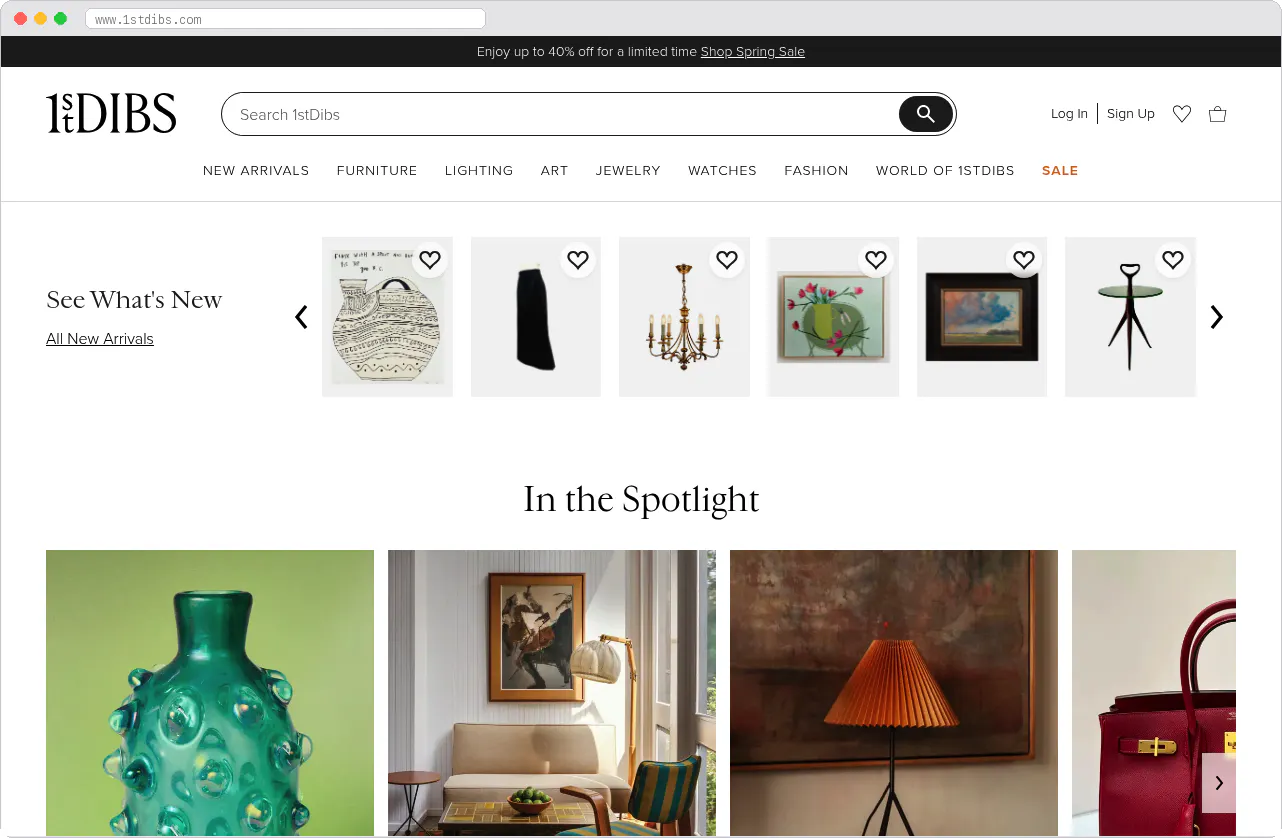
How does 1stDibs work?
1stDibs operates as a curated two-sided marketplace connecting luxury goods dealers with affluent collectors and interior designers. The platform's selective approach differentiates it from open marketplaces like eBay or Etsy.
Dealer onboarding and curation
Dealers must apply to join 1stDibs and undergo a vetting process. The platform evaluates their inventory quality, business credentials, and reputation within the antiques and design community. Only established dealers with premium inventory are accepted, maintaining the marketplace's luxury positioning.
Approved dealers pay monthly subscription fees ranging from $300 to several thousand dollars, depending on their membership tier and the number of listings they want to feature. This subscription model ensures only serious, professional dealers participate.
Listing and merchandising
Dealers upload detailed product listings with professional photography, thorough descriptions, provenance information, and pricing. Each listing includes dimensions, materials, condition reports, and historical context, critical information for collectors making considerable purchases.
1stDibs provides tools for dealers to manage their inventory, update availability, and showcase their expertise through detailed product descriptions. The platform's editorial team also creates content that highlights specific dealers, collections, and market trends.
Buyer discovery and purchasing
Buyers browse curated collections organized by category (furniture, art, jewelry, lighting, etc.), style period, designer, or price range. The advanced search functionality allows filtering by specific criteria like dimensions, materials, or geographic location of the dealer.
When buyers find items of interest, they can contact dealers directly through the platform's messaging system. Many transactions involve negotiation, as luxury goods pricing often has flexibility. Buyers can request additional photos, condition reports, or provenance documentation before making purchase decisions.
Transaction facilitation
1stDibs facilitates the transaction but doesn't typically handle physical inventory. Dealers maintain possession of their items until sold. The platform provides secure payment processing, shipping coordination, and dispute resolution services.
For high-value items, 1stDibs offers white-glove delivery services and can arrange professional installation. The platform also provides authentication services and condition guarantees for certain categories, adding buyer confidence.
How does 1stDibs make money?
1stDibs's revenue model combines multiple streams, focusing primarily on dealer subscriptions and transaction-based fees.
Subscription fees from dealers
The primary revenue source is monthly subscription fees paid by dealers. These range from approximately $300 per month for basic memberships to $3,000+ for premium tiers. Higher tiers include benefits like priority placement in search results, enhanced listing features, and marketing support.
With thousands of dealers on the platform, subscription revenue provides predictable recurring income. This model also ensures dealers are committed to the platform and actively managing their inventory.
Transaction fees and commissions
1stDibs charges transaction fees on completed sales, typically ranging from 3-8% depending on the item category and dealer membership level. For a $25,000 antique, this could generate $750-2,000 in commission revenue.
The platform also charges payment processing fees, usually 2.9% plus a fixed amount per transaction, similar to other e-commerce platforms.
Premium services and advertising
Dealers can purchase additional visibility through promoted listings, featured placements, and enhanced marketing opportunities. These premium advertising services generate incremental revenue beyond base subscription fees.
1stDibs also offers specialized services like authentication, appraisals, and white-glove shipping coordination, often taking a percentage of the service fee.
Estimated revenue scale
1stDibs went public in 2021, providing insight into their financials. The company reported approximately $100 million in annual revenue, with gross merchandise value (GMV) exceeding $500 million. The majority of revenue comes from subscription fees, with transaction-based revenue growing as the platform scales.
The business model's strength lies in predictable subscription revenue combined with transaction-based upside as GMV grows. This dual approach provides stability while capturing value from marketplace growth.
What makes 1stDibs successful?
1stDibs has achieved market leadership in luxury goods marketplaces through several key strategic advantages.
Curation and quality control
The platform's selective dealer approval process creates a trusted environment for high-value transactions. Buyers know that every dealer has been vetted, reducing the risk associated with purchasing expensive items from unfamiliar sources.
This curation extends to inventory quality. Unlike open marketplaces with inconsistent item quality, 1stDibs maintains standards that appeal to affluent customers willing to pay premium prices for exceptional pieces.
Trust and authenticity infrastructure
Luxury goods buyers prioritize authenticity and provenance. 1stDibs has built solid systems for verifying dealer credentials, item authenticity, and historical documentation. The platform's guarantee policies and dispute resolution processes provide buyer confidence for meaningful purchases.
The messaging system allows direct dealer communication, enabling buyers to ask detailed questions about condition, provenance, and shipping before committing to purchases.
Market expertise and content
1stDibs positions itself as more than a transactional platform by providing market intelligence, trend analysis, and educational content. The editorial team creates content about design movements, artist biographies, and collecting strategies that attracts serious collectors.
This content marketing approach builds authority and drives organic traffic from people researching luxury goods and design trends.
Network effects and liquidity
As more quality dealers join the platform, it becomes more attractive to buyers seeking diverse inventory. Conversely, as buyer traffic increases, dealers are willing to pay higher subscription fees for access to affluent customers.
The platform has achieved strong liquidity in most luxury categories, meaning buyers can typically find items they're seeking, and dealers can reach qualified prospects.
Geographic expansion and localization
While starting in the US market, 1stDibs has expanded internationally, adapting to local preferences and regulatory requirements. The platform supports multiple currencies and languages while maintaining consistent quality standards globally.
Technology and user experience
The platform's search and filtering capabilities are designed for the complexity of luxury goods shopping. Buyers can filter by specific designers, time periods, materials, and dimensions, criteria key for serious collectors and interior designers.
High-quality photography tools and detailed product pages accommodate the visual nature of luxury goods purchasing decisions.
Key features of a 1stDibs-like marketplace
Building a successful luxury marketplace requires specific functionality to support high-value transactions and discerning users.
Advanced search and filtering
Luxury goods buyers have specific requirements, making complex search capabilities essential. Your platform needs filtering by multiple criteria simultaneously: designer, time period, materials, dimensions, price range, and geographic location.
Search should support both broad browsing ("mid-century modern furniture") and highly specific queries ("George Nelson bubble lamp, medium size"). Auto-complete and suggested searches help users discover items they might not have explicitly searched for.
The search algorithm should consider item quality, dealer reputation, and user preferences to surface the most relevant results. Featured and promoted listings should be clearly marked but still maintain search relevance.
Professional listing management
Dealers need detailed tools for creating detailed product listings. This includes support for multiple high-resolution images, detailed descriptions with formatting options, and structured fields for key information like dimensions, materials, and provenance.
Inventory management tools should allow bulk uploads, easy updates, and integration with dealers' existing inventory systems. Template systems can help dealers create consistent, professional listings while maintaining their individual brand voice.
Secure messaging and communication
Luxury purchases often involve negotiation and detailed discussions about condition, shipping, and authenticity. Your platform needs a strong messaging system that allows rich media sharing (additional photos, documents, condition reports).
Message threading should maintain conversation history, and the system should support both real-time chat and asynchronous communication. Integration with email notifications ensures timely responses.
Payment processing and escrow services
High-value transactions require secure payment processing with support for multiple payment methods including wire transfers, which are common for expensive purchases. Your platform should integrate with payment processors experienced in luxury goods transactions.
Escrow services become important for items over certain price thresholds. Buyers want assurance that their payment is protected until they receive and approve their purchase. Similarly, sellers need confidence they'll be paid once they ship items.
Dealer verification and credentialing
Your platform needs systems for vetting dealer applications, verifying business credentials, and maintaining ongoing quality standards. This might include checking business licenses, reviewing sample inventory, and evaluating dealer expertise.
Dealer profiles should showcase their expertise, specializations, and credentials. Customer reviews and transaction history build trust and help buyers choose between different dealers offering similar items.
Mobile-optimized experience
While luxury goods research often happens on desktop computers, mobile optimization is essential. Many buyers browse during downtime or while visiting showrooms and galleries. The mobile experience should maintain full functionality while adapting to smaller screens.
Image viewing is particularly important on mobile, requiring smooth zooming and swiping between multiple product photos.
Analytics and reporting
Dealers need detailed analytics about their listing performance, buyer inquiries, and sales metrics. This data helps them optimize their inventory presentation and pricing strategies.
Platform operators need complete analytics about search behavior, conversion rates, and marketplace health metrics to guide product development and marketing decisions.
Competitors and alternatives
The luxury marketplace space includes several established players, each with different positioning and approaches.
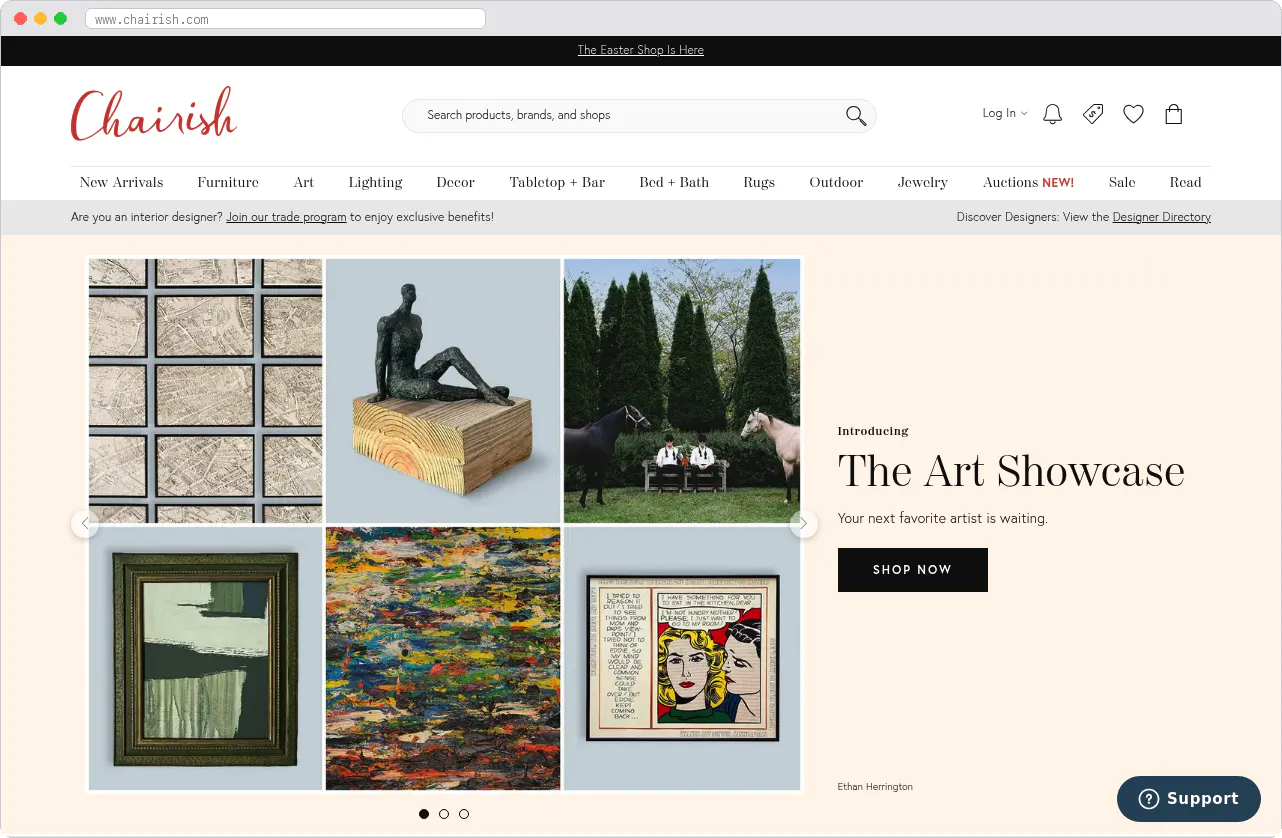
Chairish operates in a similar space but with a more accessible price point and streamlined seller onboarding. While 1stDibs focuses on vetted dealers, Chairish allows individual sellers to list items directly, creating a larger but less curated inventory.
Chairish uses a commission-based model rather than subscription fees, taking a percentage of each sale. This approach lowers barriers for sellers but may result in less committed inventory management. The platform has strong search and discovery features but less emphasis on provenance and dealer expertise.
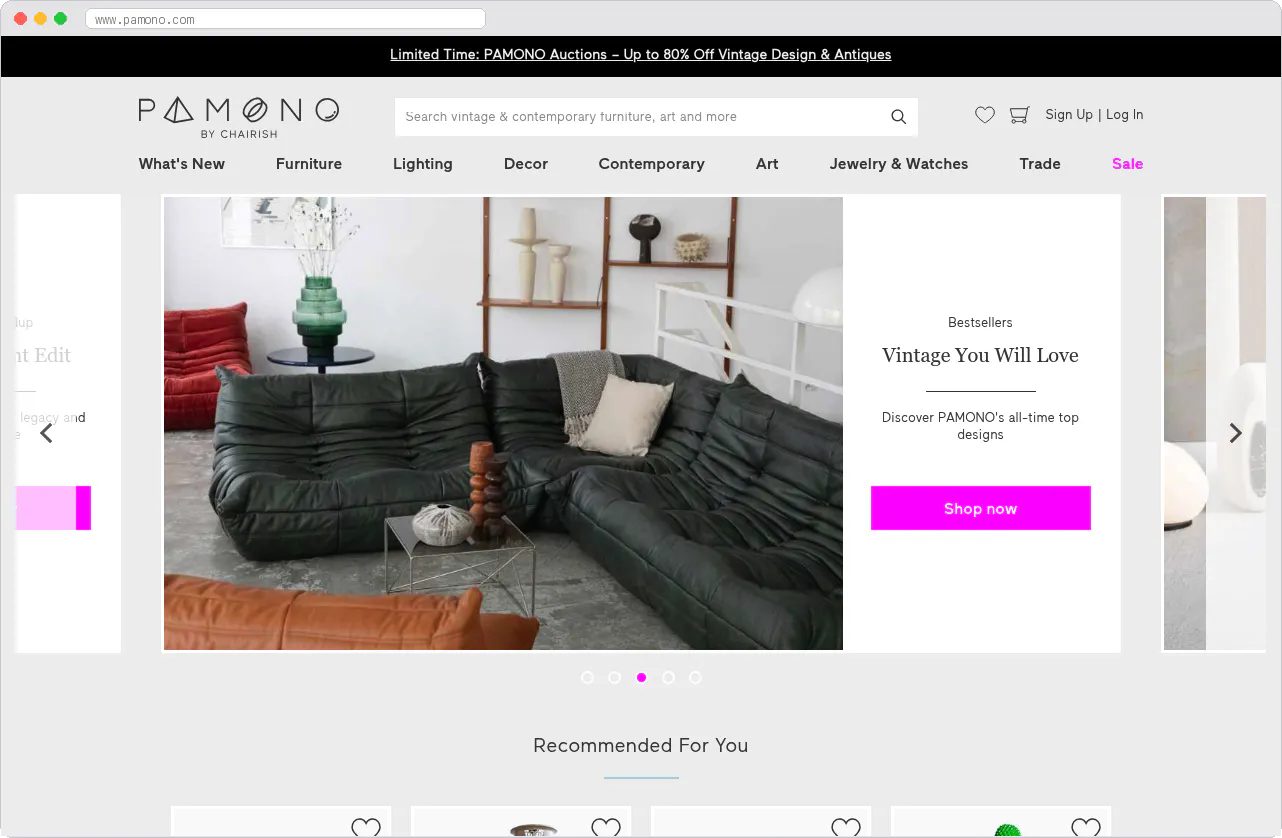
Pamono
Pamono, based in Europe, focuses specifically on vintage design and mid-century modern furniture. Their geographic concentration allows deeper local market knowledge and shipping optimization. The platform emphasizes design history and craftsmanship over broader antiques categories.
Pamono's business model combines dealer fees with transaction commissions. Their curated approach is similar to 1stDibs but with a more focused product scope, which can be both a strength in their niche and a limitation for broader growth.
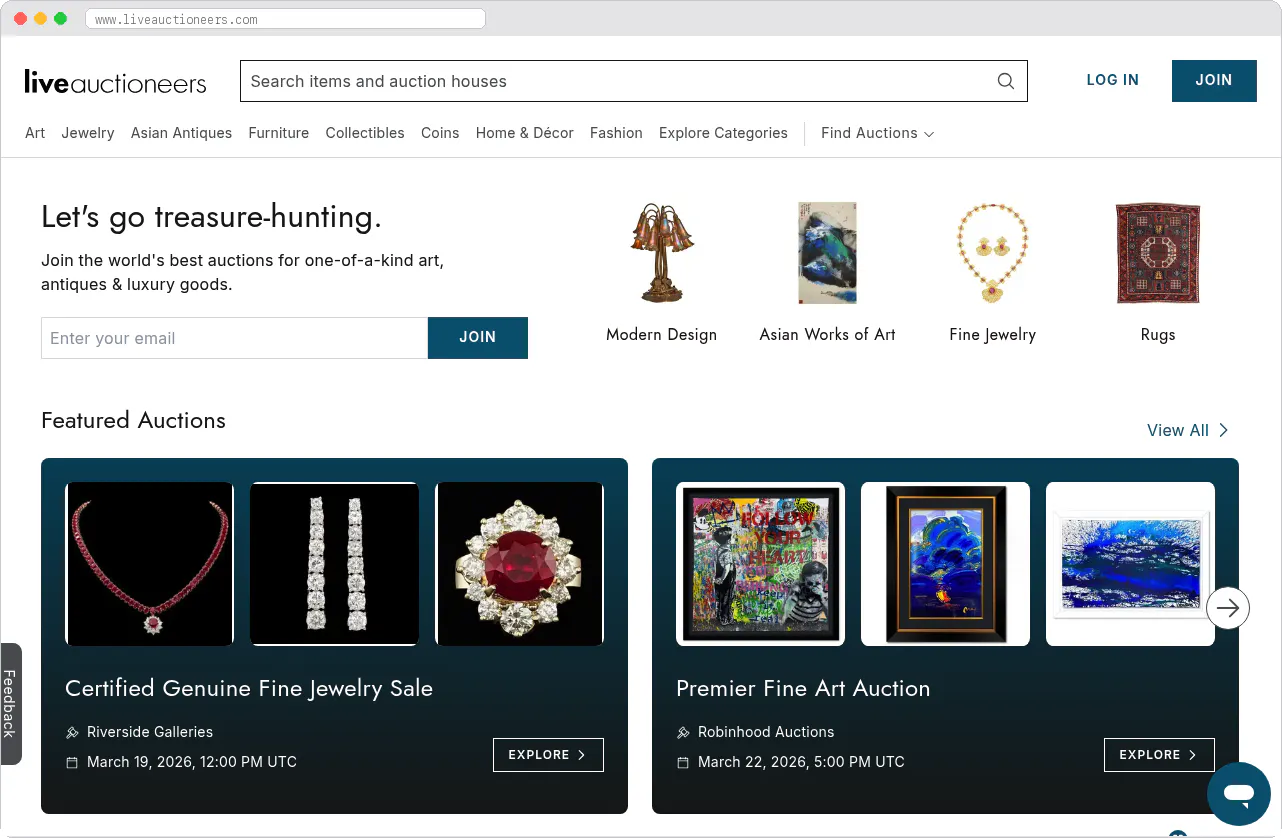
LiveAuctioneers
LiveAuctioneers operates differently, facilitating online participation in live auctions from galleries and auction houses worldwide. Rather than fixed-price sales, they enable real-time bidding on curated lots.
Their revenue comes from buyer's premiums and seller fees charged to auction houses. This model captures the excitement of live bidding but requires different infrastructure for real-time interaction and auction management.
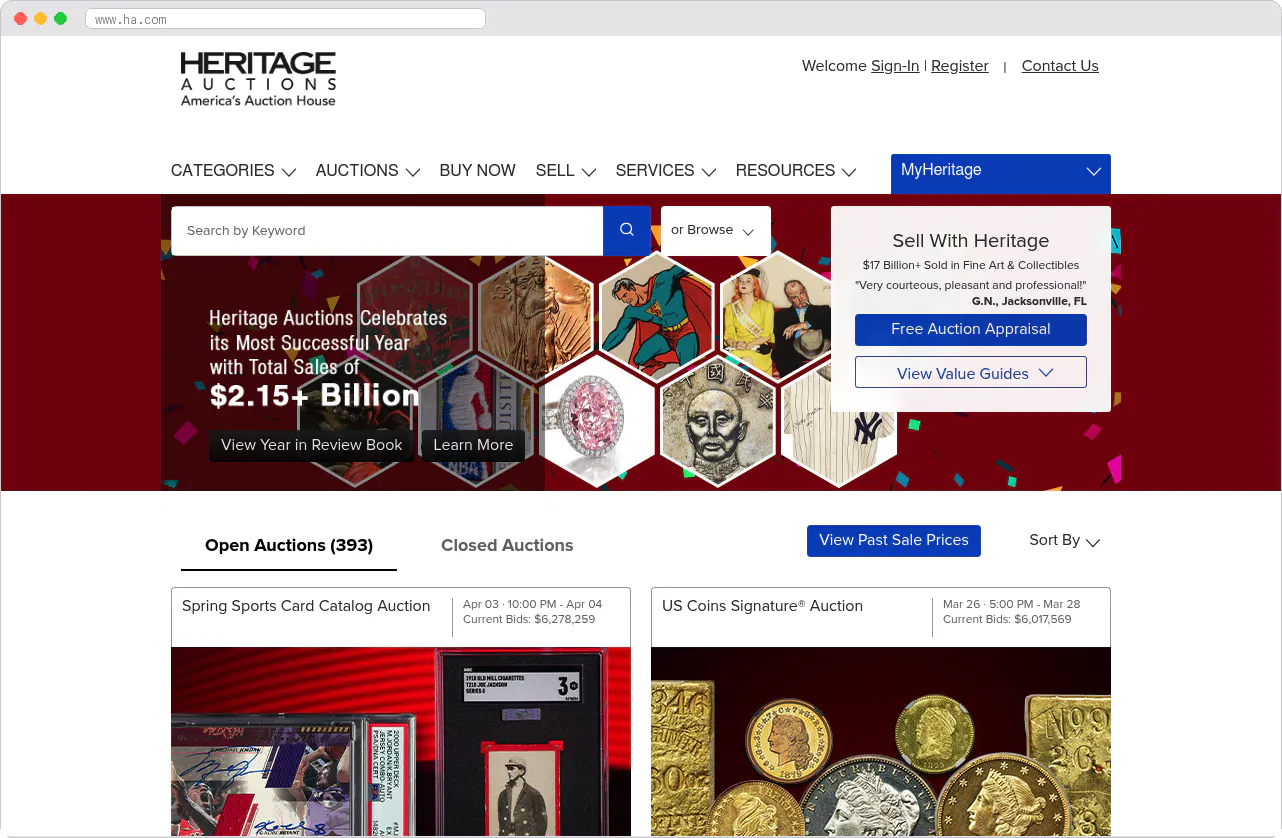
Heritage Auctions
Heritage focuses on collectibles, fine art, and memorabilia through online auctions. Their expertise in authentication and market valuations particularly strong in specific categories like coins, comics, and sports memorabilia.
The auction format creates urgency and can drive higher prices, but it requires different user behavior patterns than fixed-price marketplaces. Heritage's success demonstrates the viability of specialized, category-focused approaches.
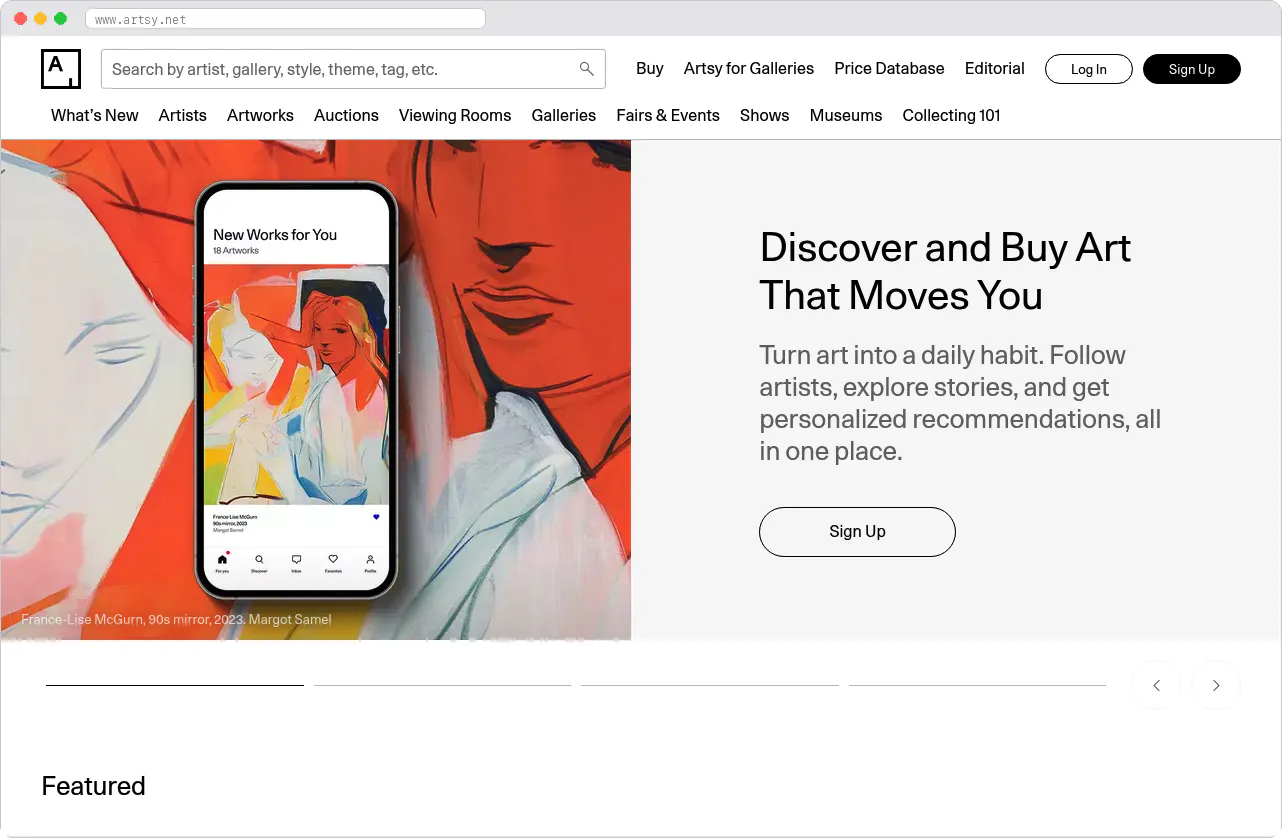
Artsy
Artsy concentrates specifically on fine art, connecting collectors with galleries, auction houses, and artists. Their platform includes editorial content, art fair integration, and refined recommendation algorithms based on artistic preferences.
Artsy's model includes gallery partnerships, transaction facilitation, and advertising revenue from art-related businesses. Their focus on art allows deeper specialization but limits expansion into other luxury categories.
How to build a marketplace like 1stDibs
Creating a successful luxury marketplace requires careful planning and execution across multiple dimensions.
Define your niche and positioning
While 1stDibs covers broad luxury categories, most successful new entrants focus on specific niches initially. Consider specializing in particular item categories (vintage jewelry, mid-century furniture, contemporary art), geographic regions, or price segments.
Research existing gaps in the market. Perhaps there's underserved demand for specific design periods, emerging artist categories, or regional markets that global players haven't fully addressed. Your positioning should clearly articulate why buyers and sellers would choose your platform over existing alternatives.
Develop your dealer network strategy
Success depends heavily on attracting quality dealers with desirable inventory. Start by identifying dealers in your chosen niche and understanding their current challenges with existing platforms or direct sales approaches.
Develop clear value propositions for dealers: access to new customer segments, marketing support, streamlined sales processes, or better economics than alternatives. Consider launching with a smaller group of committed dealers who can help refine your platform before broader expansion.
Build essential marketplace functionality
Your platform needs core marketplace features adapted for luxury goods transactions. This includes smart search capabilities, detailed product listing tools, secure messaging systems, and reliable payment processing.
Prioritize features that build trust: dealer verification systems, detailed product documentation capabilities, and clear policies for disputes or returns. Luxury buyers expect higher service levels than typical e-commerce customers.
Implement quality control processes
Develop clear standards for dealer approval and ongoing performance monitoring. This might include reviewing sample inventory, checking business credentials, and establishing inventory quality guidelines.
Create systems for monitoring listing quality, customer satisfaction, and dealer performance. Poor performers should be coached or removed to maintain platform reputation.
Focus on user experience and design
Luxury customers expect advanced, intuitive experiences. Invest in professional design that reflects the premium nature of your inventory. High-quality product photography, clean layouts, and smooth functionality are essential.
Test your platform extensively with real users before launch. Luxury customers are less forgiving of technical issues or confusing interfaces than typical e-commerce shoppers.
Develop trust and safety infrastructure
Implement solid policies for authenticity guarantees, return procedures, and dispute resolution. Consider partnerships with authentication services or independent appraisers for high-value categories.
Clear communication about shipping, insurance, and condition reporting helps buyers feel confident about purchases. Detailed seller profiles and transaction histories build additional trust.
Plan your launch and growth strategy
Consider launching with invitation-only access to create exclusivity and ensure quality control during early stages. Focus on achieving strong liquidity in your initial niche before expanding to additional categories or regions.
Develop content marketing strategies that demonstrate expertise in your chosen categories. Educational content about collecting, market trends, and item histories can attract both buyers and sellers while building platform authority.
Common pitfalls to avoid
Many luxury marketplace startups fail by trying to compete directly with 1stDibs across all categories. Instead, focus on specific underserved niches where you can provide superior value.
Avoid compromising on quality standards to accelerate growth. Poor inventory or unreliable dealers can quickly damage reputation in luxury markets where trust is paramount.
Don't underestimate the complexity of high-value transactions. Features that work for typical e-commerce may be inadequate for luxury goods purchases involving negotiation, complex shipping, and authenticity concerns.
Cost and development considerations
Building a luxury marketplace requires large investment in both technology and market development.
Custom development approach
Fully custom development offers maximum flexibility for unique luxury marketplace requirements. Expect development costs starting around $150,000-300,000 for a complete platform with essential marketplace features, payment processing integration, and mobile optimization.
Ongoing costs include hosting, maintenance, security updates, and feature development. Plan for $10,000-25,000 monthly in technical operations as your platform scales. Custom development also requires 6-12 months before launch, depending on feature complexity.
The main advantages are complete control over functionality and user experience. You can implement exactly the features your niche requires without platform limitations. Custom development also allows proprietary features that could become competitive advantages.
No-code and hybrid approaches
No-code marketplace platforms can greatly reduce initial development costs and time to market. No-code marketplace platforms cost $99-399 per month, plus any custom design or integration work.
However, luxury marketplaces often require complex features that may not be available in standard no-code solutions. You might need custom integrations for payment processing, advanced search capabilities, or specialized trust and safety features.
A hybrid approach combines no-code foundations with custom development for unique requirements. This can reduce initial costs while maintaining flexibility for specialized features as you grow.
Essential third-party services
Regardless of your development approach, budget for essential services:
Payment processing: 2.9% + $0.30 per transaction is typical, plus additional fees for international transactions or specialized payment methods common in luxury purchases.
Authentication services: Partnerships with authentication providers might cost $50-500 per item, depending on category and complexity.
Shipping and logistics: White-glove delivery services for luxury items can cost $200-2,000 per shipment, depending on item size and destination.
Insurance: Detailed coverage for high-value inventory and transactions requires specialized policies costing thousands annually.
Marketing and user acquisition costs
Luxury marketplaces require major marketing investment to attract both quality dealers and affluent buyers. Customer acquisition costs in luxury segments often range from $200-2,000 per customer, depending on your target market.
Content marketing, trade show participation, and partnerships with interior designers or collectors require substantial ongoing investment. Budget at least $50,000-200,000 for first-year marketing efforts.
Working capital requirements
Unlike typical e-commerce businesses, luxury marketplaces may need working capital for escrow services, authentication processes, or inventory financing partnerships. Plan for additional capital requirements beyond platform development costs.
Operational costs also tend to be higher due to personalized customer service expectations and complex transaction support requirements.
Total investment considerations
Successful luxury marketplace launches typically require $500,000-2,000,000 in total investment covering development, marketing, operations, and working capital. This includes 12-18 months of runway to achieve meaningful transaction volume and dealer engagement.
While these investment levels are substantial, the luxury market's high transaction values and customer lifetime values can support strong unit economics once you achieve market traction.
The key is realistic financial planning that accounts for the extended development and market-building timeline typical in luxury segments. Undercapitalized efforts often fail before achieving the scale necessary for sustainable operations.
Frequently asked questions
How does 1stDibs business model work?
1stDibs uses a hybrid revenue model combining monthly dealer subscription fees ($300-$3,000+) with transaction commissions (3-8% of sales). Dealers pay to access the platform and list inventory, while 1stDibs takes a percentage of completed sales.
What makes 1stDibs different from other marketplaces?
1stDibs focuses exclusively on luxury goods with strict dealer vetting and inventory curation. Unlike open marketplaces, every seller is pre-approved and must meet quality standards, creating a trusted environment for high-value transactions.
How much does it cost to build a marketplace like 1stDibs?
Custom development typically costs $150,000-300,000 initially, plus $10,000-25,000 monthly operations. Total investment including marketing and working capital often ranges $500,000-2,000,000 for a successful luxury marketplace launch.
Can individual sellers use 1stDibs or is it only for dealers?
1stDibs primarily serves established antique and design dealers, not individual sellers. The platform requires business credentials and professional inventory standards that most individual collectors don't meet.
What categories work best for luxury marketplaces?
Successful luxury marketplace categories include antiques, fine art, vintage designer furniture, jewelry, and collectibles. Items should have clear authenticity markers, established market values, and appeal to affluent collectors willing to pay premium prices.
How do luxury marketplaces handle authenticity and trust?
Luxury platforms use dealer vetting, authentication partnerships, detailed provenance documentation, and escrow services. Many offer guarantees and have specialized dispute resolution processes for high-value transactions.
Start your 14-day free trial
Create a marketplace today!
- Launch quickly, without coding
- Extend infinitely
- Scale to any size
No credit card required