How to build a marketplace for beauty products
Beauty marketplaces connect independent brands with consumers seeking unique, personalized products. Learn the proven steps to launch your own beauty marketplace, from validating your niche to scaling your platform.
Published: Dec 15, 2023
Last updated: Mar 19, 2026
What is a beauty products marketplace?
A beauty products marketplace is a platform that connects beauty brands, independent sellers, and consumers in a single digital space. These platforms aggregate products from multiple beauty sellers, allowing customers to discover and purchase cosmetics, skincare, haircare, and personal care items from various brands without visiting individual websites.
The beauty industry has experienced explosive growth in online marketplaces, driven by consumers' desire for product variety, authentic reviews, and the convenience of comparing multiple brands. Unlike traditional beauty retailers that primarily stock established brands, beauty marketplaces often emphasize diversity, featuring everything from major cosmetics companies to indie brands, clean beauty startups, and handmade artisan products.
Successful beauty marketplaces differentiate themselves through curation, community features, personalization, and specialized functionality like shade matching, ingredient filtering, and skincare consultations. The global beauty e-commerce market is projected to reach $131 billion by 2025, with marketplaces capturing an increasing share as consumers seek authentic, diverse, and specialized beauty products.
How beauty marketplaces work
Beauty marketplaces operate on a multi-sided platform model, connecting three key participants: beauty brands and sellers, customers seeking products, and the marketplace operator who facilitates transactions.
For beauty sellers, marketplaces provide access to a broader customer base without the overhead of building and maintaining their own e-commerce infrastructure. Independent beauty brands, in particular, benefit from the marketplace's marketing reach, payment processing, and customer service capabilities. Sellers typically create profiles showcasing their brand story, upload product listings with detailed descriptions and high-quality images, and manage inventory through the platform's seller dashboard.
For customers, beauty marketplaces offer convenience, variety, and discovery. Shoppers can browse thousands of products, read authentic reviews, compare ingredients and prices, and often access exclusive launches or limited-edition items. Many platforms incorporate social features, allowing users to share reviews, create wish lists, and follow their favorite brands or influencers.
The marketplace operator generates revenue primarily through commission fees on transactions, typically ranging from 10-30% depending on the platform and product category. Additional revenue streams include advertising fees from brands wanting featured placement, subscription services for premium sellers, and sometimes white-label services for beauty brands wanting their own marketplace presence.
The beauty marketplace model thrives because it solves distinct problems for each side. Sellers gain market access and operational support, while buyers access variety and convenience they can't find through traditional retail channels.
The opportunity in beauty marketplaces
The beauty industry's shift toward marketplaces reflects broader consumer behavior changes that create significant opportunities for entrepreneurs.
Consumer demand for diversity and authenticity drives much of this opportunity. Modern beauty consumers, particularly millennials and Gen Z, actively seek brands that align with their values, offer inclusive shade ranges, use clean ingredients, or support social causes. Traditional retailers often can't accommodate the hundreds of emerging indie brands that serve these niches, creating space for specialized marketplaces.
The rise of social commerce has transformed how people discover beauty products. Platforms like TikTok and Instagram have created a culture where consumers rely on peer recommendations, user-generated content, and influencer endorsements rather than traditional advertising. Beauty marketplaces that integrate social features and user-generated content tap into this behavioral shift.
Personalization technology enables beauty marketplaces to offer experiences that physical stores cannot match. AI-powered shade matching, ingredient analysis tools, and personalized product recommendations based on skin type, concerns, or preferences create value that keeps customers returning to specific platforms.
The long-tail opportunity in beauty is particularly compelling. While major retailers focus on bestselling products from established brands, thousands of niche products serve specific needs: skincare for sensitive skin, makeup for deeper skin tones, cruelty-free products, or region-specific beauty traditions. A focused marketplace can profitably serve these smaller markets that larger platforms ignore.
The barriers to entry in beauty retail are also lower than in many other industries. Beauty products are lightweight and relatively easy to ship, margins are typically healthy, and many products have long shelf lives. This makes beauty an attractive category for new marketplace entrepreneurs.
Key features beauty marketplaces need
Building a successful beauty marketplace requires functionality that addresses the unique characteristics of beauty products and customer behavior.
Advanced search and filtering capabilities form the foundation of any beauty marketplace. Customers need to filter by brand, price range, skin type, skin concern, ingredient preferences (like "paraben-free" or "vegan"), product type, and color or shade. Beauty shoppers often have very specific requirements, and the ability to quickly narrow down options is crucial for conversions.
Even more sophisticated filtering includes ingredients lists with allergen warnings, cruelty-free certifications, or geographic origin. Some advanced marketplaces incorporate AI-powered recommendations that learn from browsing behavior and purchase history to suggest relevant products.
Rich product pages with detailed information are essential because beauty purchases often involve significant research. Product listings need high-resolution images showing products from multiple angles, swatches in different lighting conditions, and sometimes video demonstrations. Ingredient lists, usage instructions, and detailed product descriptions help customers make informed decisions.
Customer reviews take on particular importance in beauty marketplaces because products perform differently on various skin types and tones. Review systems should allow customers to specify their skin type, undertone, and specific concerns, making reviews more valuable for similar customers.
Visual search and shade matching tools can differentiate beauty marketplaces from general e-commerce platforms. These features might include the ability to upload photos to find similar product shades, AR try-on functionality, or shade comparison tools that help customers find their perfect match across different brands.
Seller management and brand storytelling features support the relationship-building aspect that drives beauty purchases. Sellers need robust profiles where they can share their brand story, values, and expertise. Many successful beauty marketplaces allow sellers to publish educational content, tutorials, or ingredient guides that build trust and authority.
Personalized recommendations and discovery features help customers navigate the overwhelming variety of beauty products. This might include curated collections, seasonal recommendations, "products similar to what you viewed," or quiz-based product matching that helps customers discover products suited to their specific needs.
Social and community features use the social nature of beauty consumption. Features like wish lists, "favorites" that can be shared, customer photo galleries showing products in use, and the ability to follow favorite sellers or brands can increase engagement and repeat purchases.
Inventory management for variations becomes complex in beauty because products often come in multiple shades, sizes, or formulations. The platform needs to handle inventory tracking for products with dozens of color variations while ensuring accurate availability information.
Quality control and authenticity verification protect both marketplace reputation and customer safety. This includes verification processes for seller accounts, product authenticity checks, and sometimes ingredient analysis to ensure products meet safety standards and accurate labeling.
Major beauty marketplace competitors
Understanding the competitive landscape helps identify opportunities and positioning for new beauty marketplaces.
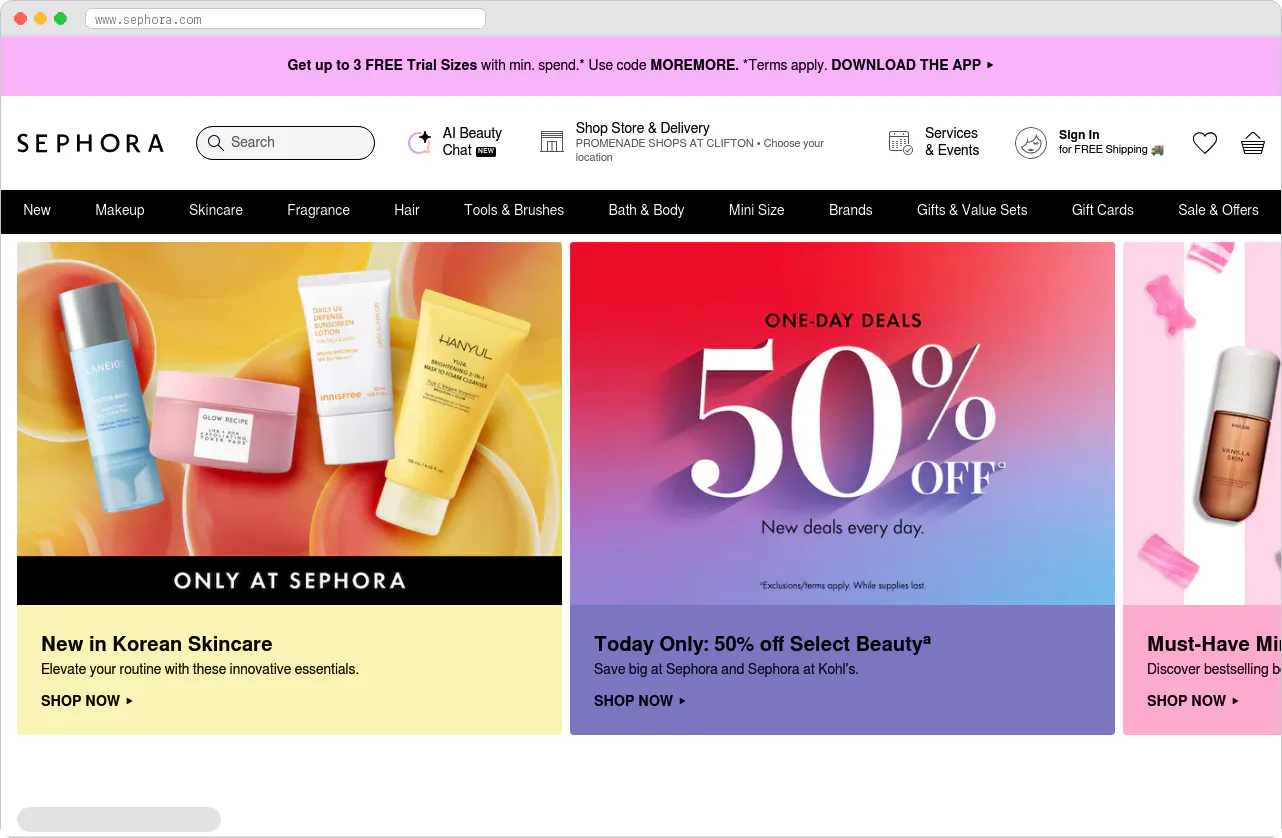
Sephora dominates the premium beauty marketplace space with over $10 billion in annual revenue. Sephora's strength lies in its curated selection, extensive customer education content, and omnichannel experience connecting online shopping with in-store services. They offer both established and emerging brands, but their selection process is highly curated, leaving room for marketplaces that serve brands Sephora doesn't carry.
Sephora's loyalty program and personalization features set high customer expectations for beauty marketplaces. However, their focus on premium products and selective brand partnerships creates opportunities for platforms serving budget-conscious consumers or ultra-niche brands.
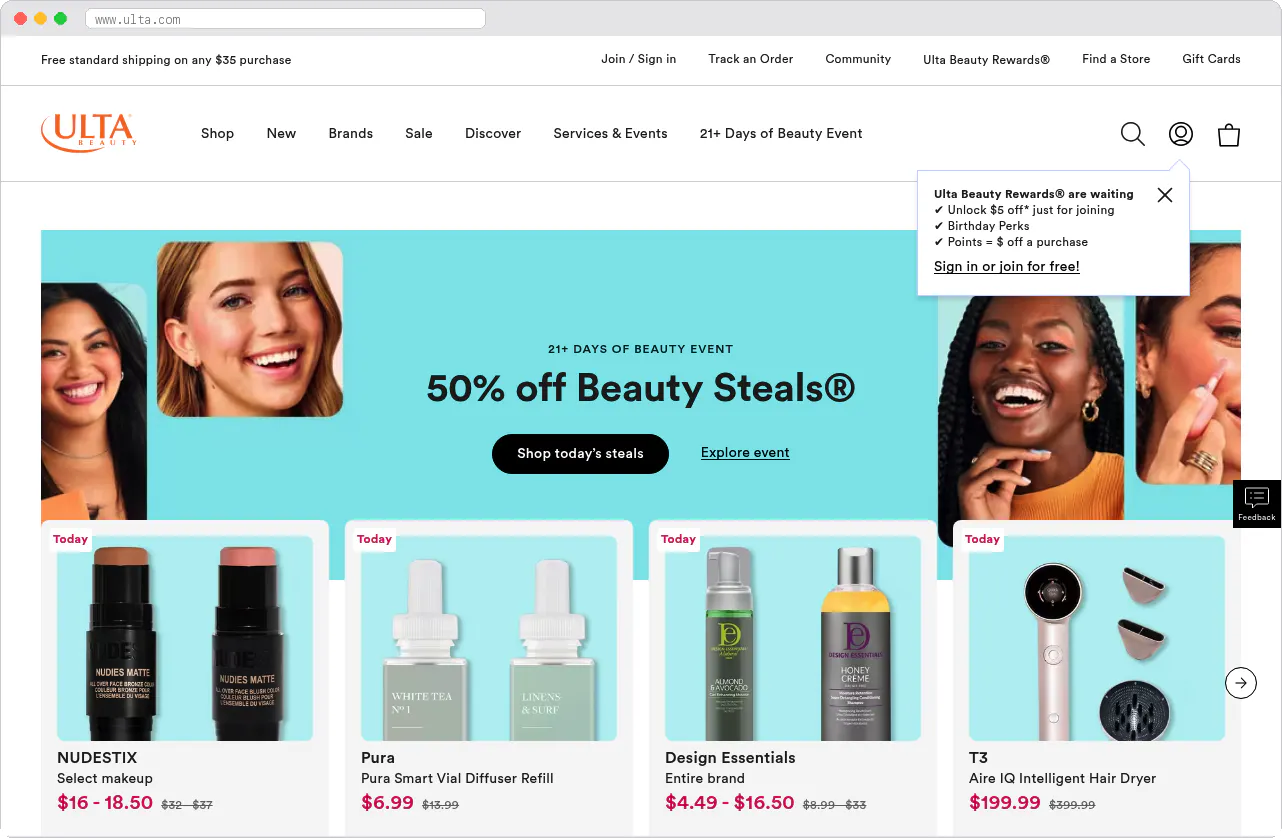
Ulta Beauty operates as both a marketplace and retailer, carrying over 25,000 products from 600+ brands. Ulta differentiates through its inclusive approach, carrying everything from drugstore to luxury brands and offering extensive salon services. Their marketplace model allows third-party sellers alongside Ulta's own inventory.
Ulta's success demonstrates the viability of the inclusive approach, but their broad focus means they can't specialize deeply in particular niches like clean beauty or specific cultural beauty traditions.
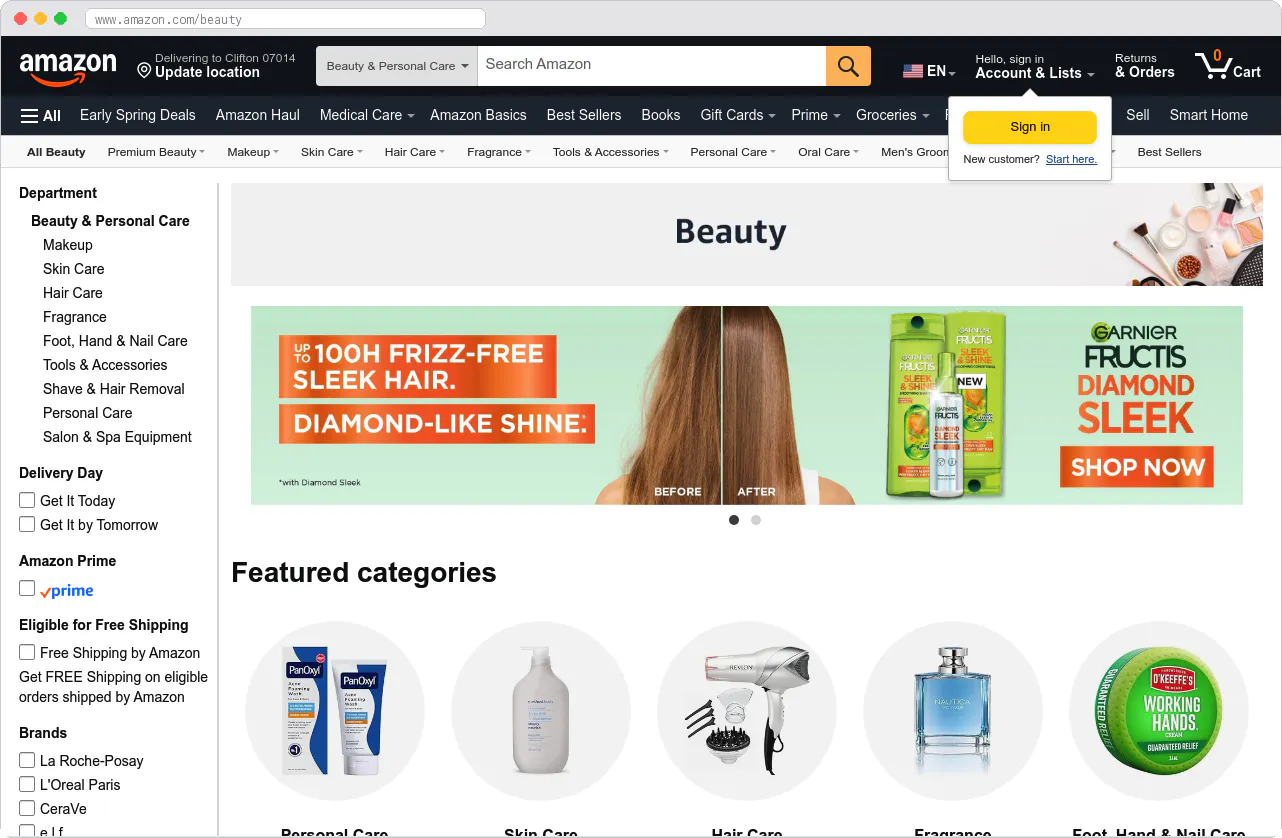
Amazon Beauty uses Amazon's massive infrastructure and customer base but faces ongoing challenges with counterfeit products and lacks the specialized beauty expertise that dedicated platforms offer. Amazon's strength is convenience and price, but many beauty consumers prefer platforms with more specialized knowledge and curation.
Beauty brands' direct-to-consumer platforms like Glossier, Fenty Beauty, and Rare Beauty have shown the power of building direct relationships with customers. These single-brand platforms excel at storytelling and brand experience but obviously lack the variety that multi-brand marketplaces provide.
Niche beauty marketplaces are emerging to serve specific customer segments. Credo Beauty focuses exclusively on clean beauty products, The Detox Market specializes in natural and organic beauty, and 13lune specifically supports beauty brands founded by Black and brown entrepreneurs. These platforms demonstrate how focused positioning can create defensible market positions.
International platforms like Nykaa in India or YesStyle for Korean beauty show how regional specialization can build strong marketplace businesses. These platforms succeed by understanding local beauty preferences, cultural practices, and regulatory requirements that global platforms might miss.
The competitive landscape reveals several positioning opportunities. Established players focus on either premium curation (Sephora) or broad selection (Amazon, Ulta), leaving space for platforms that combine curation with specific values like sustainability, inclusivity, or supporting independent brands.
Steps to build a beauty marketplace
Building a successful beauty marketplace follows a similar process to other marketplace businesses, with some beauty-specific considerations.
Identify your beauty market niche
The first step involves defining your specific position in the beauty marketplace ecosystem. The beauty industry is vast, encompassing skincare, makeup, haircare, fragrance, and personal care, with numerous sub-niches within each category.
Successful beauty marketplaces typically focus on a specific angle rather than trying to compete directly with established giants. This might mean focusing on clean beauty products, supporting independent brands from specific regions, serving underrepresented communities, or specializing in particular product categories like K-beauty or men's grooming.
Research your chosen niche thoroughly. Understand the specific pain points customers face when shopping for these products, the gaps in current marketplace offerings, and the unique selling propositions that would attract both customers and sellers to your platform.
Validate demand with potential users
Before building anything, validate that your target market actually wants the marketplace you're envisioning. This validation should involve both potential customers and potential sellers.
For customer validation, engage with beauty communities on social media, Reddit, Discord, or specialized forums. Ask about their current shopping frustrations, what they wish existed, and whether they'd be interested in your proposed marketplace concept. Pay attention to how they currently discover new products and what influences their purchasing decisions.
For seller validation, reach out to beauty brands that fit your target profile. Independent beauty brands are often receptive to conversations about new sales channels. Ask about their current challenges with existing marketplaces, what support they'd need from a new platform, and what would motivate them to list products on your marketplace.
This validation phase might reveal that your initial assumptions were wrong or that certain features are more important than you realized. Adjust your concept based on this feedback before proceeding to building.
Build your minimum viable marketplace
Start with a focused version that includes only the most essential features needed to facilitate transactions between beauty sellers and customers. Your MVP should enable users to browse products, read basic information, make purchases, and provide feedback.
For a beauty marketplace MVP, prioritize search and filtering functionality since beauty customers often have specific requirements. Include basic seller profiles and product pages with good image support, since visual presentation is crucial in beauty.
Implement a straightforward commission-based payment system from the start. Unlike some marketplaces that begin with manual payment processing, beauty marketplaces benefit from automated payments because transactions tend to be smaller and more frequent.
Avoid building advanced features like AR try-on tools, complex personalization algorithms, or extensive social features in your MVP. These can be added later once you validate the basic marketplace mechanics work for your audience.
Recruit your first beauty sellers
Focus on building high-quality supply before driving customer traffic. Beauty customers have high expectations for product quality and authenticity, so your initial seller base needs to be curated carefully.
Start by identifying 10-20 beauty brands that perfectly represent your marketplace positioning. If you're focusing on clean beauty, approach established clean beauty brands that may be underserved by existing platforms. If you're supporting indie brands, find emerging companies with great products but limited distribution.
Personalized outreach works best for recruiting beauty sellers. Show that you understand their brand, their target customer, and how your marketplace would help them reach their goals. Many beauty entrepreneurs are passionate about their products and appreciate platforms that understand their mission.
Consider becoming a seller yourself initially. If you have expertise in beauty, you might create some products or curate collections that help establish your marketplace's credibility and quality standards.
Provide significant support to early sellers. Help them create compelling listings, optimize their product photography, and understand how to use your platform effectively. These early sellers will become advocates who can help recruit additional sellers through word-of-mouth.
Launch to your target customers
Once you have a solid foundation of quality sellers and products, begin attracting customers who match your target profile. Beauty customers often discover new brands through social media, influencer recommendations, and community discussions, so focus your initial marketing efforts on these channels.
Content marketing works particularly well for beauty marketplaces. Create educational content about ingredients, application techniques, or industry trends that establishes your platform as a trusted resource. Beauty customers research extensively before purchasing, and providing valuable information builds trust and authority.
Partner with micro-influencers who align with your marketplace positioning. Beauty micro-influencers often have highly engaged audiences and may be interested in featuring unique products they can't find elsewhere.
Consider running targeted social media ads, but be prepared for higher costs in the beauty category due to competition from established brands. Focus on very specific targeting based on interests, behaviors, or lookalike audiences based on your early customers.
Email marketing can be particularly effective in beauty because customers often want to hear about new product launches, restocks of popular items, or seasonal recommendations.
Optimize based on user feedback
Once you have customers using your marketplace, collect detailed feedback about their experience. Beauty customers are often willing to provide detailed feedback because they're passionate about products and want platforms to serve their needs better.
Pay attention to both explicit feedback through surveys and reviews and implicit feedback through user behavior. Which products get viewed most but purchased least? Where do customers drop off in your purchase funnel? What search terms return poor results?
Common areas for optimization in beauty marketplaces include search functionality (improving filtering options), product pages (adding more detailed information or better images), and discovery features (helping customers find products they didn't know they wanted).
Iteratively improve your platform based on this feedback while maintaining focus on your core value proposition. It's tempting to add every feature customers request, but successful marketplaces maintain clear positioning and gradually expand functionality in ways that strengthen their core offering.
Scale your marketplace
After validating product-market fit, focus on scaling both supply and demand systematically. In beauty marketplaces, scaling often means expanding your product categories, adding complementary brands, or serving adjacent customer segments.
For supply scaling, develop systems for efficiently onboarding new sellers while maintaining quality standards. This might include seller application processes, product curation guidelines, or partnerships with beauty incubators and accelerators that can refer quality brands.
For demand scaling, double down on the marketing channels that have worked best while testing new acquisition methods. Beauty marketplaces often benefit from influencer partnerships, content marketing, and word-of-mouth referrals, so develop systematic approaches to these channels.
Consider geographic expansion carefully. Beauty products often have different regulatory requirements in different countries, and beauty preferences can vary significantly by culture and climate. Expansion might mean adding international shipping to serve diaspora communities before fully localizing for new markets.
Invest in technology improvements that support scale, such as better search algorithms, personalization features, or mobile app development. Beauty customers increasingly shop on mobile devices, so mobile experience becomes crucial as you scale.
Building approaches and costs
Beauty marketplaces can be built using several different approaches, each with distinct trade-offs in terms of time, cost, and flexibility.
Custom development from scratch
Building a beauty marketplace from scratch gives you complete control over features and user experience but requires significant technical expertise and financial investment.
A custom-built beauty marketplace typically costs $60,000-$80,000 for initial development, depending on feature complexity and development team location. This includes basic marketplace functionality, payment processing, seller onboarding, and mobile-responsive design. Advanced features like AR try-on tools, AI-powered recommendations, or complex inventory management for product variations can add $20,000-$50,000 to development costs.
Ongoing costs include hosting ($200-$1,000+ monthly depending on traffic), maintenance and updates (typically 15-20% of initial development cost annually), and payment processing fees (2.9% + $0.30 per transaction for most processors).
Custom development makes sense if you have specific feature requirements that existing platforms can't accommodate, significant funding to support development and maintenance, or technical expertise within your founding team. However, the six-month minimum development timeline means you'll be six months later to market compared to using existing marketplace software.
No-code marketplace builders
No-code platforms like Sharetribe enable launching beauty marketplaces quickly without programming skills while still supporting customization as you grow.
Sharetribe includes built-in functionality that works well for beauty marketplaces: commission-based payments, seller onboarding, product listings with multiple images, search and filtering, customer reviews, and mobile-responsive design. You can launch a fully functional marketplace in 1-2 weeks rather than months.
Costs are significantly lower with no-code builders. Sharetribe's Pro plan costs $199/month and includes hosting, security, maintenance, and customer support. Transaction fees are 3% plus payment processing, competitive with custom solutions when you factor in the technical infrastructure costs you'd otherwise need to manage.
The main limitation is that you're constrained by the platform's built-in features, though Sharetribe addresses this by allowing custom development on top of the no-code foundation. You can start with the standard marketplace functionality and add custom features like advanced search filters, integrations with beauty-specific tools, or unique seller features as your business grows.
No-code builders are ideal for beauty entrepreneurs who want to validate their marketplace concept quickly, don't have extensive technical backgrounds, or prefer to focus on business development rather than technical infrastructure.
Hybrid approaches
Some beauty marketplace founders choose hybrid approaches that combine different tools and platforms. This might involve using Shopify Plus for the seller-facing infrastructure while building custom customer-facing experiences, or using existing e-commerce platforms with marketplace plugins.
Hybrid approaches can work but often create complexity in managing multiple systems, ensuring data consistency, and providing smooth user experiences. They typically make sense only when you have very specific requirements that no single platform addresses well.
Why beauty marketplaces work well on Sharetribe
Sharetribe's marketplace software includes several features that particularly benefit beauty marketplace businesses.
Commission-based payments with automatic splitting handle the complex financial arrangements beauty marketplaces need. When customers purchase products from multiple sellers in a single order, Sharetribe automatically calculates and distributes payments to each seller while deducting your marketplace commission. This is crucial in beauty where customers often purchase complementary products from different brands.
Flexible product listing structures accommodate the complexity of beauty products. Beauty items often have multiple variations (different shades, sizes, formulations) and require detailed specifications like ingredient lists, usage instructions, and compatibility information. Sharetribe's product listing system supports this complexity while maintaining clean, searchable interfaces.
Advanced search and filtering capabilities help customers navigate large beauty product catalogs. Customers can filter by price, brand, product type, and custom fields you define like "cruelty-free," "vegan," or specific skin concerns. This is essential in beauty where customers often have very specific requirements.
Mobile-optimized design addresses how beauty customers actually shop. Beauty purchases increasingly happen on mobile devices, often while customers are browsing social media or comparing products across multiple platforms. Sharetribe's responsive design ensures your marketplace works smoothly on all devices.
Built-in trust and safety features like seller verification, customer reviews, and secure payments are crucial in beauty where product authenticity and quality are major customer concerns. These features are built into Sharetribe rather than requiring separate integrations.
Scalability without platform migration means you can start simple and add complexity as your business grows. Many beauty marketplace founders begin with basic product listings and gradually add features like subscription boxes, virtual consultations, or loyalty programs using Sharetribe's developer-friendly APIs.
Sharetribe also offers marketplace expertise beyond just software. The platform has powered successful beauty and personal care marketplaces, and the Sharetribe team can provide guidance on common challenges like managing product variations, optimizing for beauty-specific search behavior, and structuring commission rates that work for beauty sellers.
Next steps for building your beauty marketplace
Starting a beauty marketplace requires balancing speed to market with building something customers and sellers genuinely want to use.
Begin with market research and validation before building anything. Spend time in beauty communities, talk to potential customers about their frustrations with existing platforms, and reach out to beauty brands that fit your target profile. This research will save you months of building features no one actually wants.
Choose your development approach based on your priorities and constraints. If you want to launch quickly and focus on business development, no-code platforms like Sharetribe offer the fastest path to market. If you have specific technical requirements and sufficient funding, custom development might be worth the additional time and cost.
Start with a narrow focus and expand gradually. Successful beauty marketplaces typically begin by serving a specific niche exceptionally well rather than trying to compete directly with established players across all beauty categories. You can always expand your scope after proving your model works.
Plan for customer acquisition from day one. Beauty customers have many options, so you need clear value propositions for both customers and sellers. Understand how your target customers currently discover new products and build relationships with those channels early in your development process.
Consider regulatory and safety requirements specific to beauty products. Depending on your location and the products you'll carry, you may need to understand cosmetic safety regulations, ingredient disclosure requirements, or import/export rules for international sellers.
The beauty marketplace opportunity is significant, but success requires understanding both marketplace dynamics and beauty industry specifics. Focus on solving real problems for your target users, launch quickly to start learning, and iterate based on user feedback to build something customers choose over existing alternatives.
Frequently asked questions
How much does it cost to build a beauty marketplace?
Costs vary by approach. No-code platforms like Sharetribe cost $199/month plus 3% transaction fees. Custom development typically costs $60,000-$80,000 initially, plus ongoing hosting and maintenance. No-code builders offer the fastest, most affordable path to launch.
What features does a beauty marketplace need?
Essential features include advanced search and filtering (by skin type, ingredients, brand), rich product pages with multiple images, customer reviews, seller profiles, commission-based payments, and mobile optimization. Beauty-specific features like shade matching or ingredient analysis can be added later.
How do I compete with Sephora and Ulta?
Focus on a specific niche they don't serve well, such as clean beauty, indie brands, specific demographics, or underrepresented beauty categories. Successful beauty marketplaces differentiate through curation, community, and serving needs that larger platforms ignore.
How do I find beauty brands to sell on my marketplace?
Start with 10-20 brands that perfectly match your positioning. Reach out personally to indie beauty brands, attend beauty trade shows, engage with brands on social media, and consider beauty incubators or accelerators that can refer quality brands.
What's the best way to launch a beauty marketplace quickly?
Use a no-code marketplace builder like Sharetribe to launch in 1-2 weeks with all essential features included. This lets you validate your concept and start learning from real users immediately, rather than spending months on development.
Do beauty marketplaces need special payment processing?
Yes, beauty marketplaces need commission-based payment systems that can handle multiple sellers per order and automatically split payments. Platforms like Sharetribe include this functionality built-in with Stripe Connect integration for compliance and security.
Start your 14-day free trial
Create a marketplace today!
- Launch quickly, without coding
- Extend infinitely
- Scale to any size
No credit card required