How to build a website like Depop
Depop transformed fashion e-commerce by combining social media with peer-to-peer selling, reaching 35 million users and $2 billion in sales. This guide shows you how to build your own fashion marketplace inspired by Depop's success.
Published: Aug 9, 2024
Last updated: Mar 19, 2026
What is Depop and why build a similar marketplace?
Depop revolutionized fashion e-commerce by creating a marketplace that feels more like Instagram than eBay. Founded in 2011 by Simon Beckerman in London, the platform combines social media features with peer-to-peer selling, creating a community-driven shopping experience that resonates with Gen Z and millennial consumers.
The numbers tell Depop's success story. The platform reached 35 million registered users by 2023, with over $2 billion in total sales facilitated since launch. In 2021, Etsy acquired Depop for $1.6 billion, recognizing its unique position in the growing secondhand fashion market, which McKinsey estimates will reach $77 billion by 2025.
Depop's success stems from solving a specific problem: young consumers wanted an authentic, social way to buy and sell unique fashion pieces without the sterile, auction-based experience of traditional marketplaces. The platform's Instagram-like interface, emphasis on personal style, and focus on sustainable fashion created a new category of social commerce that traditional e-commerce sites struggled to replicate.
Building a marketplace inspired by Depop makes sense because the model addresses several growing trends. The secondhand fashion market continues expanding as consumers prioritize sustainability and individual expression over fast fashion. Social commerce is becoming mainstream, with platforms that combine shopping and social interaction seeing higher engagement rates. Most importantly, there's still room for niche players who can serve specific communities or geographic markets better than global platforms.
How does Depop work?
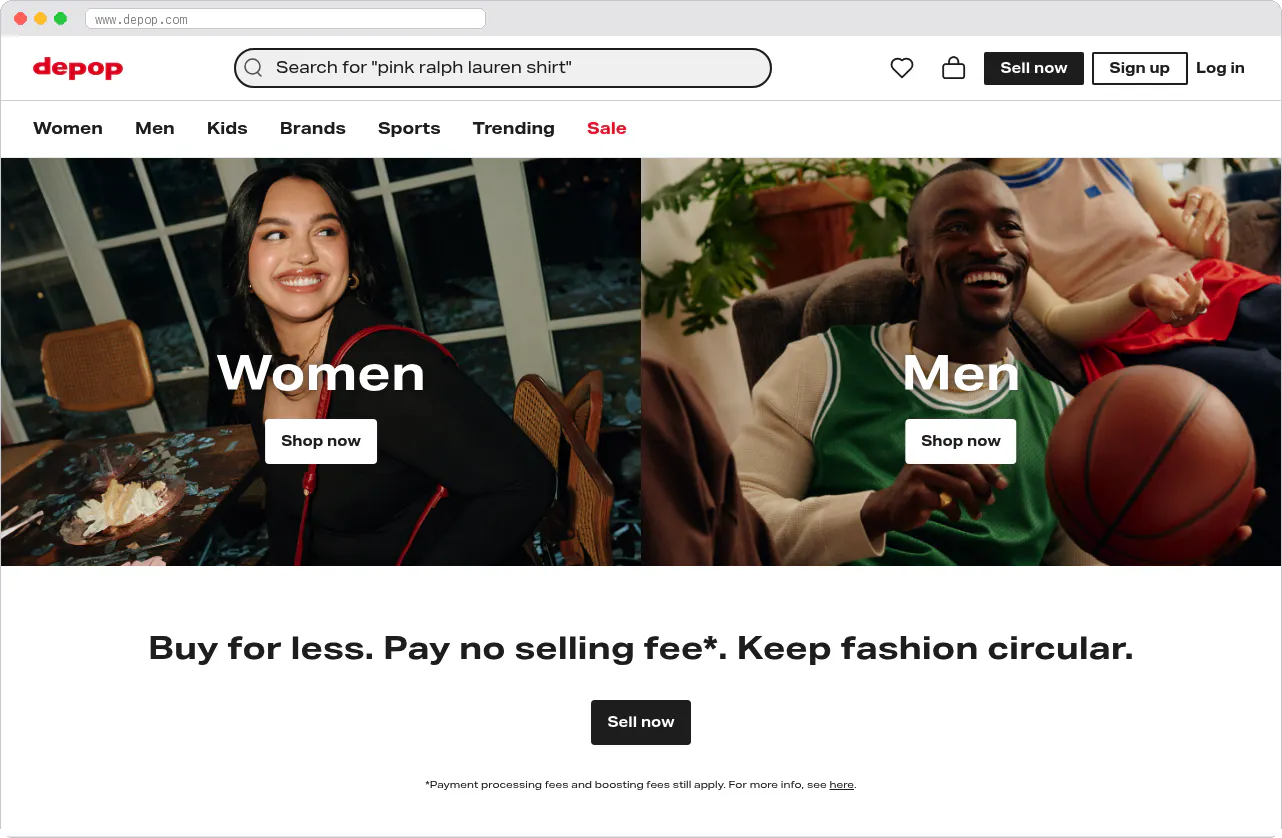
Depop operates as a peer-to-peer marketplace with strong social media characteristics. Unlike traditional e-commerce sites where products are the focus, Depop centers on individual sellers and their personal style.
For sellers, the process resembles posting on Instagram. They photograph their items, write descriptions, add hashtags, and publish listings to their profile. Sellers build followings, interact with potential buyers through comments and direct messages, and cultivate their personal brand. The platform encourages sellers to model their items, share styling tips, and engage authentically with their audience.
Buyers discover items through several channels. They can follow specific sellers whose style they admire, browse by category or hashtag, or explore the "Explore" feed that showcases trending items and sellers. The social aspect means buyers often discover items through seller interactions, reposts, or recommendations from friends on the platform.
Transactions happen directly through Depop's built-in payment system. When a buyer purchases an item, Depop holds the payment until the item is delivered, protecting both parties. The platform handles payment processing, dispute resolution, and provides seller protection for qualifying transactions.
The social features differentiate Depop from traditional marketplaces. Users can like items (which sellers often interpret as purchase interest), follow each other, leave reviews, and share items to other social platforms. This creates a community atmosphere where buying and selling feels more personal and authentic.
Depop's business model and revenue streams
Depop generates revenue primarily through transaction fees, charging sellers 10% of the total sale price, including shipping costs. This commission-based model aligns Depop's success with user success, the platform earns more as sellers sell more.
The fee structure is straightforward compared to competitors. eBay charges similar percentages but adds payment processing fees and listing fees for certain categories. Poshmark takes 20% on sales over $15 but handles shipping logistics. Depop's single 10% fee covers payment processing and platform usage, making it predictable for sellers.
Depop also generates revenue through promotional features. Sellers can pay to boost their listings in search results or promote items to targeted audiences. The platform offers premium seller tools and analytics for users who want additional insights into their sales performance.
The business model works because it removes friction from social selling. Traditional marketplaces require sellers to understand complex fee structures, shipping calculations, and payment processing. Depop simplifies this by handling everything in exchange for a flat commission, letting sellers focus on creating compelling content and building their audience.
Key features your Depop-like marketplace needs
Building a successful fashion marketplace requires specific functionality that balances e-commerce requirements with social features. Here are the essential components:
User profiles and social following
Your marketplace needs robust user profiles that function like social media accounts. Sellers should be able to upload profile photos, write bios, and showcase their style through their listings. The following system lets users discover new sellers and creates the community atmosphere that drives engagement.
Profiles need to display seller statistics like join date, number of sales, and review scores to build trust. Buyers want to know they're purchasing from established sellers with good track records.
Visual-first item listings
Depop's success comes from making fashion items look aspirational rather than purely transactional. Your listing system needs to support multiple high-quality photos, with the first image serving as the primary visual that appears in feeds and search results.
Sellers need tools to photograph items effectively, including guidelines for lighting, angles, and styling. The listing interface should encourage sellers to model items when possible, as these listings typically perform better than flat lay photos.
Item descriptions need structured fields for essential fashion information: size, brand, condition, measurements, and care instructions. Free-form description areas let sellers add personal touches, styling suggestions, and hashtags.
Advanced search and filtering
Fashion marketplaces require sophisticated search functionality because buyers often browse by specific criteria. Users need to filter by size, brand, color, condition, price range, and style category. Location-based filtering helps buyers find local sellers to reduce shipping costs and times.
Hashtag functionality lets users discover items through style keywords and trends. Popular hashtags on Depop include #vintage, #y2k, #streetwear, and brand-specific tags. Your search system should surface trending hashtags and suggest relevant tags to sellers.
Integrated messaging and negotiation
Unlike fixed-price e-commerce sites, fashion resale often involves negotiation. Your platform needs robust messaging that lets buyers ask questions about fit, condition, or styling while enabling price negotiations.
The messaging system should include photo sharing so buyers can ask for additional item photos or fit references. Automated responses can help sellers handle common questions about sizing or shipping.
Mobile-optimized experience
Depop's user base primarily accesses the platform through mobile devices. Your marketplace needs to be mobile-first, with intuitive touch interfaces for browsing, listing items, and managing sales.
Mobile photography tools help sellers capture better product photos directly in the app. Features like automatic background removal, filters, and cropping tools can improve listing quality without requiring external photo editing.
Review and reputation system
Trust is crucial in peer-to-peer marketplaces, especially for fashion items where condition and fit matter significantly. Your platform needs a transparent review system where both buyers and sellers rate each other after transactions.
Reviews should cover multiple aspects: item accuracy, communication, shipping speed, and packaging quality. This helps future buyers make informed decisions while encouraging sellers to maintain high standards.
Payment processing and seller protection
Fashion marketplaces need secure payment systems that protect both parties. Buyers want assurance they'll receive items as described, while sellers need protection from fraudulent chargebacks or returns.
Delayed payout systems hold buyer payments until items are delivered or a specified period passes. This protects buyers from non-delivery while ensuring sellers receive payment for legitimate transactions.
Depop's main competitors and alternatives
Understanding the competitive landscape helps you identify opportunities for differentiation and learn from successful models.

Poshmark
Poshmark targets a slightly older demographic than Depop, focusing on professional women and designer fashion rather than vintage and streetwear. The platform emphasizes "Posh Parties", virtual shopping events organized around themes or brands, and social selling features like sharing and following.
Poshmark's key differentiator is its shipping model. The platform provides prepaid shipping labels for all orders, simplifying logistics for sellers but taking a larger 20% commission on sales over $15. This appeals to sellers who want hassle-free shipping but may deter price-sensitive users.
The user experience feels more structured than Depop's Instagram-like feed. Poshmark organizes listings in traditional category grids rather than social media streams, appealing to users who prefer conventional shopping experiences.
Vinted
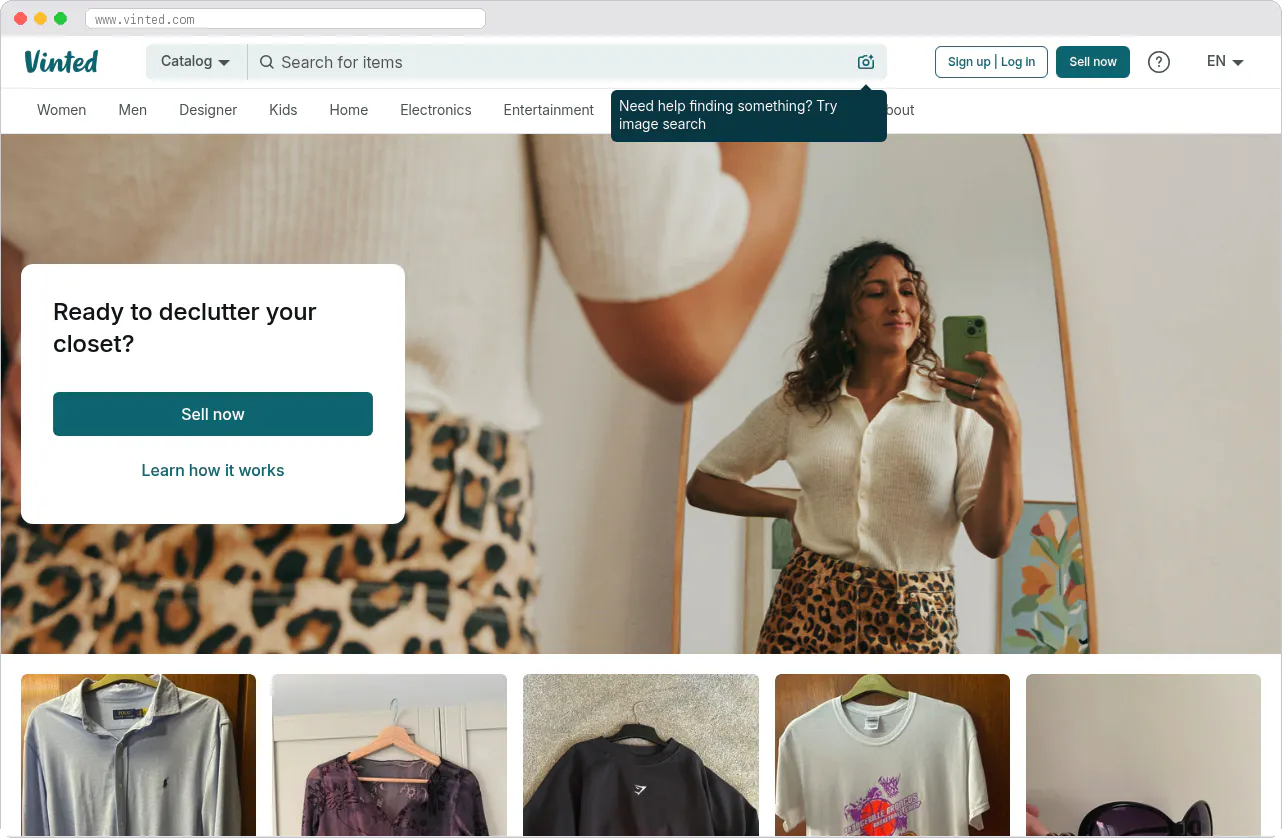
Vinted dominates European markets with a model that eliminates seller fees entirely. Instead, buyers pay a "buyer protection fee" that covers payment processing and purchase protection. This approach attracts cost-conscious sellers but may reduce listing quality since sellers don't pay to list items.
The platform focuses heavily on secondhand clothing rather than vintage or unique pieces, positioning itself as a practical solution for wardrobe turnover rather than fashion discovery. Vinted's swap feature lets users trade items directly, creating additional engagement beyond buying and selling.
Vinted's success in Europe demonstrates that regional marketplaces can compete with global platforms by understanding local preferences and regulations.
ThredUp
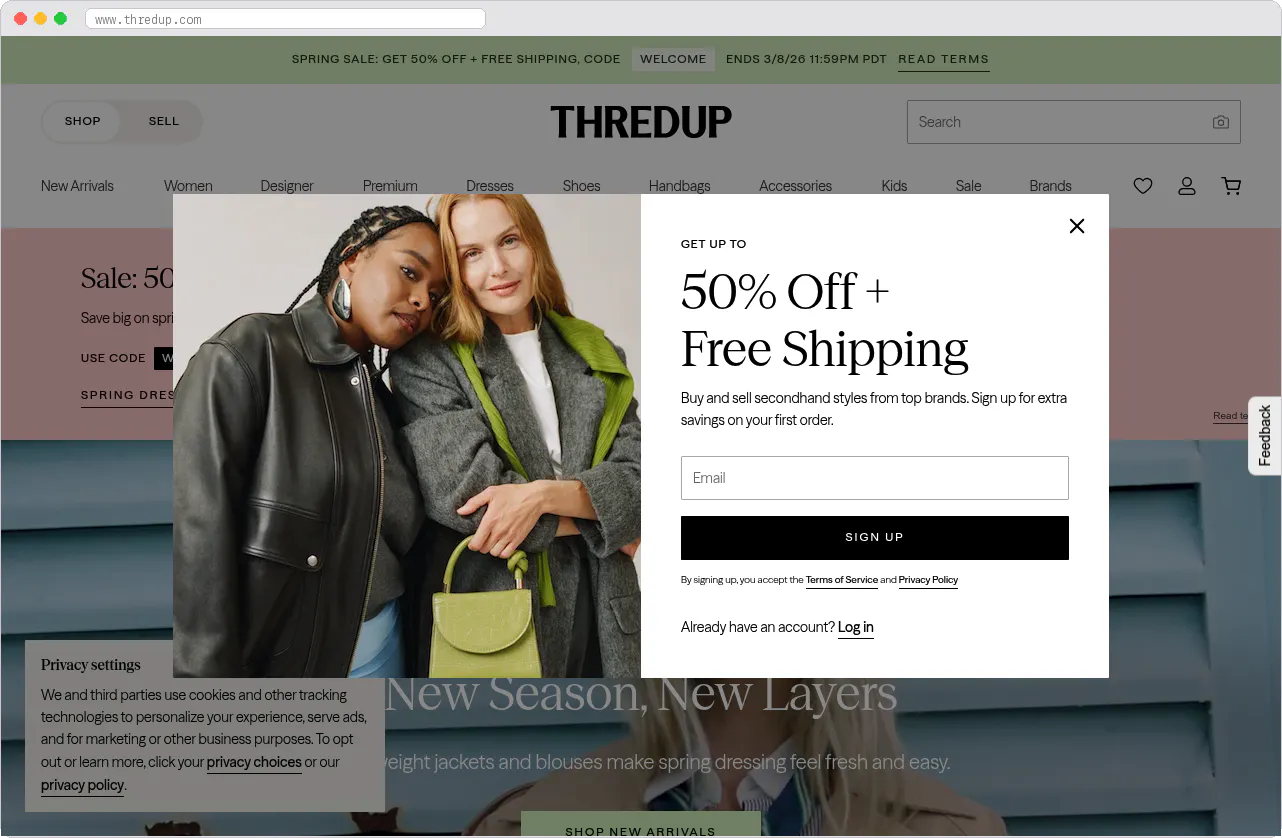
ThredUp operates differently from peer-to-peer platforms by functioning as a consignment service. Sellers send items to ThredUp, which photographs, lists, and ships items while taking a commission. This model appeals to sellers who want passive income without managing individual listings.
The trade-off is lower seller margins and less control over presentation. ThredUp's standardized photography and descriptions ensure consistency but remove the personal touch that makes platforms like Depop engaging.
ThredUp's success with busy professionals suggests opportunities for hybrid models that offer both peer-to-peer and managed selling options.
Grailed
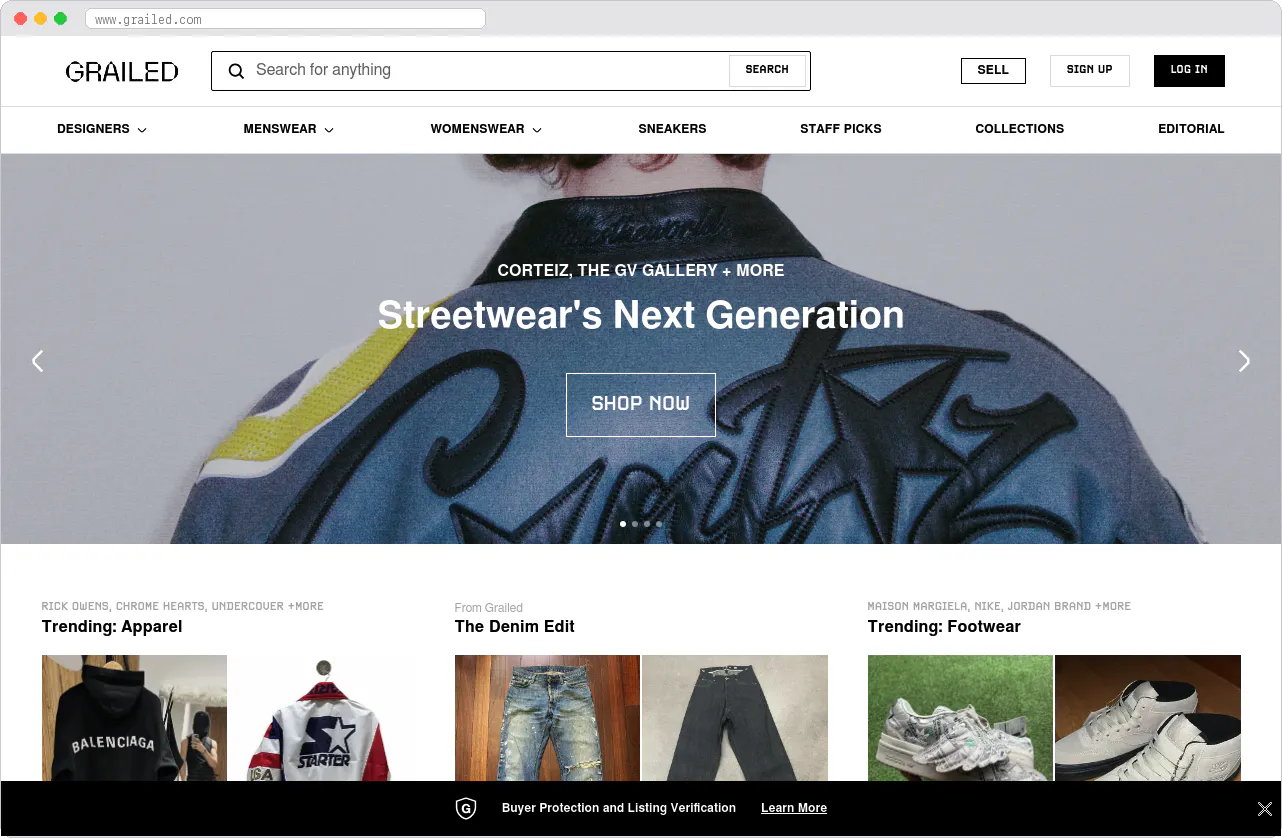
Grailed carved out a successful niche by focusing exclusively on men's streetwear, designer fashion, and sneakers. The platform attracts serious collectors willing to pay premium prices for rare or limited-edition items.
Grailed's curation process involves community moderation where experienced users help verify authenticity and appropriateness of listings. This creates higher quality inventory but raises barriers for casual sellers.
The platform's success demonstrates how focusing on a specific community can create competitive advantages that broader marketplaces can't replicate.
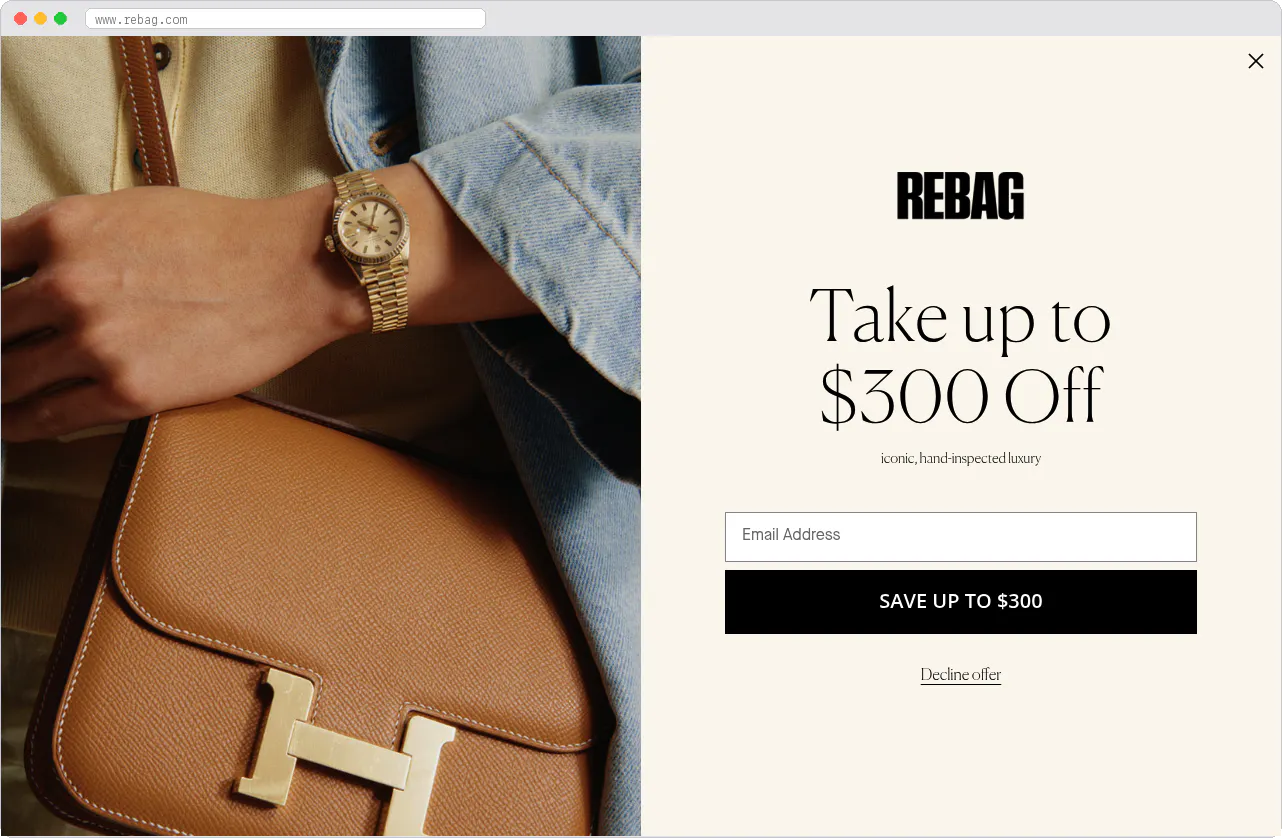
Rebag and Fashionphile
These luxury consignment platforms target high-end designer goods with professional authentication and condition assessment. They offer both peer-to-peer and direct purchase models, appealing to customers who want luxury items with retail-level service.
Their success shows opportunities for vertical marketplaces that serve specific price points or product categories better than horizontal platforms.
How to build a marketplace like Depop
Creating a successful fashion marketplace requires balancing technical execution with community building. Here's a proven approach:
Step 1: Define your niche and unique value proposition
Depop succeeded by focusing on Gen Z and millennial fashion enthusiasts rather than trying to serve everyone. Your marketplace needs a clear target audience and value proposition that differentiates it from existing platforms.
Consider focusing on specific verticals: sustainable fashion, plus-size clothing, luxury streetwear, or regional markets underserved by global platforms. Geographic focus can be particularly effective, a platform optimized for local fashion communities can offer faster shipping, easier returns, and cultural relevance that global platforms struggle to match.
Research your target audience's shopping behaviors, preferred price points, and pain points with existing platforms. Understanding whether they prioritize price, authenticity, sustainability, or social features helps you design appropriate functionality.
Step 2: Validate your concept with minimal investment
Before building a full marketplace, validate demand with lightweight approaches. Create social media accounts showcasing your concept and engage potential users to understand their needs. Consider launching as a curated selection or invitation-only community to test core assumptions.
Run small-scale experiments: host local fashion swap events, create Facebook groups for buying and selling, or partner with existing sellers to understand their challenges. These activities help you understand user behavior without significant technical investment.
Survey potential users about their current selling and buying habits. What platforms do they use? What frustrates them? What would make them switch to a new platform? This research informs your feature priorities and positioning.
Step 3: Build your minimum viable marketplace
Your first version should include core marketplace functionality without advanced features. Focus on enabling basic user flows: account creation, listing items, browsing and purchasing, and basic messaging.
Start with essential features that prove your concept works. Users need to be able to create profiles, list items with photos and descriptions, search and filter listings, communicate with each other, and complete transactions securely. Advanced social features can wait until you've validated basic marketplace mechanics.
Sharetribe provides an ideal foundation for this approach. You can launch a fully functional marketplace in days with built-in payment processing, user management, and messaging systems. The platform includes mobile-responsive design and essential e-commerce functionality without requiring custom development.
Step 4: Focus on supply-side growth first
Marketplaces need inventory before they can attract buyers. Start by recruiting sellers who already have items to sell and understand online selling basics. Fashion enthusiasts with overflowing closets, vintage collectors, and small boutique owners make ideal early sellers.
Personally recruit your first sellers through social media, fashion forums, local events, and existing networks. Offer incentives like reduced commissions, featured listings, or marketing support to attract quality sellers.
Help early sellers succeed by providing photography tips, pricing guidance, and listing optimization advice. Their success creates case studies that attract additional sellers while generating inventory that draws buyers.
Step 5: Build social features and community
Once basic marketplace functionality works, add social features that differentiate your platform from traditional e-commerce sites. Implement following systems, item likes, sharing functionality, and user-generated content features.
Create community guidelines that encourage authentic engagement while preventing spam and inappropriate content. Consider implementing community moderation where experienced users help maintain quality standards.
Host virtual events, styling challenges, and seller spotlights to build community engagement. These activities create content, drive platform usage, and help users form connections beyond individual transactions.
Step 6: Optimize for mobile usage
Fashion marketplace users primarily browse and purchase through mobile devices. Ensure your platform provides excellent mobile experiences for both buying and selling activities.
Mobile-optimized listing creation is crucial for seller success. Users should be able to photograph items, add descriptions, and publish listings entirely through mobile interfaces. Consider implementing features like automatic background removal or styling filters that help sellers create better listings.
Test your mobile experience regularly with real users. Fashion marketplace sessions tend to be browsing-heavy, so performance and visual quality matter significantly for user retention.
Step 7: Implement trust and safety measures
Peer-to-peer fashion marketplaces face unique trust challenges because item condition and authenticity matter significantly. Develop verification systems for seller identities, item descriptions, and transaction completion.
Create clear policies for returns, disputes, and prohibited items. Fashion marketplaces often need nuanced policies around item condition, authenticity, and sizing accuracy that differ from general e-commerce rules.
Consider implementing buyer and seller protection programs that cover common fashion marketplace issues: items not matching descriptions, sizing problems, or delivery issues.
Step 8: Scale and expand functionality
Once your core marketplace functions well, expand based on user feedback and growth opportunities. Consider adding features like:
- Advanced seller analytics and inventory management
- Integration with social media platforms for listing promotion
- Size recommendation systems based on user measurements
- Authentication services for luxury items
- Subscription services for frequent sellers
Expansion can also mean geographic growth, additional product categories, or new user segments. Each expansion should build on proven success in your initial market.
Development approaches for building your fashion marketplace
Choosing the right development approach depends on your budget, timeline, technical skills, and feature requirements. Here are your main options:
No-code marketplace builders
Platforms like Sharetribe let you launch quickly without technical expertise. You can create a functional marketplace in days with built-in payment processing, user management, search functionality, and mobile-responsive design.
No-code solutions work well for validating concepts and reaching initial success. As your business grows and requires unique features, you can extend no-code foundations with custom development rather than rebuilding entirely.
Sharetribe specifically supports fashion marketplaces with features like image-heavy listings, user profiles, social following, and commission-based payments. The platform handles complex marketplace requirements like payment splitting, dispute resolution, and tax compliance.
Custom development
Building from scratch provides complete control over features and design but requires significant time and budget investment. Fashion marketplaces need sophisticated image handling, search functionality, and mobile optimization that increase development complexity.
Custom development typically costs $100,000+ and takes 6-12 months for a complete marketplace with fashion-specific features. Ongoing maintenance, hosting, and feature development require continuous technical resources.
This approach makes sense for well-funded teams with specific technical requirements that existing platforms can't accommodate. However, most successful fashion marketplaces started with simpler approaches and invested in custom development after proving their business model.
Hybrid approaches
Many successful marketplaces combine no-code foundations with custom features. You can launch quickly with a platform like Sharetribe, then add unique functionality through custom development as your business grows.
This approach minimizes initial risk while preserving flexibility for future expansion. You avoid the high upfront costs of custom development while maintaining the ability to differentiate through unique features.
Sharetribe's Developer Platform specifically enables this approach, providing marketplace essentials through no-code tools while supporting custom feature development through APIs and webhooks.
Cost considerations for building a Depop-like marketplace
Building and operating a fashion marketplace involves several cost categories that vary significantly based on your approach:
Development costs
No-code platforms like Sharetribe start around $200-400 per month for full marketplace functionality, making them accessible for early-stage validation. Custom development typically requires $100,000-500,000 investment depending on feature complexity and development team location.
Hybrid approaches balance these extremes. You can launch with affordable no-code tools and invest in custom features as revenue grows, spreading development costs over time while maintaining platform functionality.
Operational expenses
Successful marketplaces require ongoing investment in customer acquisition, community management, trust and safety operations, and customer support. Fashion marketplaces typically need higher touch customer service due to sizing issues, condition disputes, and authenticity concerns.
Payment processing fees typically range from 2.9-3.5% plus transaction fees. If you're charging 8-10% commission like Depop, payment processing represents a significant portion of your margins that affects pricing strategy.
Marketing and growth costs
Fashion marketplaces rely heavily on visual marketing and influencer partnerships. Budget for professional photography, social media marketing, and potentially paying fashion influencers to showcase items from your platform.
User acquisition costs vary significantly by target market and competition. Niche fashion communities may have lower acquisition costs but smaller addressable markets, while broader targeting faces competition from established platforms.
Why Sharetribe works well for fashion marketplaces
Sharetribe provides several advantages specifically relevant to fashion marketplace founders:
Fast time to market: You can launch a fully functional marketplace in days rather than months, letting you validate your concept and start learning from real users immediately. This speed advantage is crucial in competitive fashion markets where timing matters.
Built-in fashion marketplace features: The platform includes image-heavy listing formats, user profiles with following systems, mobile-optimized browsing, and social features that fashion marketplaces need. You don't need to build these from scratch or configure complex integrations.
Scalable payment processing: Fashion marketplaces need commission-based payments with delayed payouts to protect both buyers and sellers. Sharetribe handles payment complexity through Stripe Connect integration, ensuring compliance with financial regulations.
Extensibility for unique features: As your marketplace grows, you can add custom functionality without rebuilding your entire platform. Fashion marketplaces often need unique features like size recommendation systems, authentication services, or specialized search filters that can be developed on top of Sharetribe's foundation.
Global capabilities with local flexibility: The platform supports multiple currencies, languages, and payment methods, enabling international expansion while maintaining local customization for specific markets.
The main trade-off is reduced flexibility compared to completely custom development. However, most fashion marketplace founders benefit more from fast iteration and learning than from maximum customization, especially in early stages.
Success strategies for your fashion marketplace
Building the technology is only part of creating a successful marketplace. Fashion platforms specifically require strong community building and brand development:
Curate your initial community carefully: The sellers and buyers you attract first set the tone for your entire platform. Focus on quality over quantity, recruiting sellers who understand your brand aesthetic and target audience.
Invest in content and education: Help sellers succeed through photography guides, pricing advice, styling tips, and marketing best practices. Successful sellers create better inventory and attract more buyers, growing your marketplace organically.
Build authentic brand identity: Fashion consumers care deeply about brand authenticity and values. Develop clear positioning around sustainability, community, or specific style aesthetics that resonates with your target audience.
Use social media integration: Fashion marketplaces benefit significantly from social media discovery and sharing. Make it easy for users to share listings, showcase purchases, and promote their seller profiles across social platforms.
Focus on mobile experience: Fashion browsing is inherently visual and mobile-first. Ensure your platform provides excellent mobile experiences for both casual browsing and serious shopping sessions.
Successful fashion marketplaces combine technology execution with community building, brand development, and user education. The technology enables the business, but community and brand differentiation drive long-term success.
Frequently asked questions
How much does it cost to build a marketplace like Depop?
Costs vary by approach: no-code platforms like Sharetribe start at $200-400/month, while custom development typically requires $100,000-500,000 upfront investment. Most successful fashion marketplaces start with affordable no-code solutions and invest in custom features as they grow.
What features does a fashion marketplace need to compete with Depop?
Essential features include visual-first item listings, user profiles with social following, mobile-optimized browsing, integrated messaging, commission-based payments with delayed payouts, and review systems. Advanced features like size recommendations and authentication services can be added as the platform grows.
How long does it take to launch a Depop competitor?
Timeline depends on your approach: no-code platforms enable launch in 1-2 weeks, while custom development typically takes 6-12 months. Most founders benefit from launching quickly with proven tools to validate their concept before investing in extensive custom development.
Can I build a fashion marketplace without coding experience?
Yes, no-code marketplace builders like Sharetribe provide all essential functionality for fashion marketplaces without requiring programming skills. You can launch, test your concept, and grow your business, then add custom features later through developers if needed.
What makes Depop different from other fashion marketplaces?
Depop combines social media features with peer-to-peer selling, creating an Instagram-like experience for fashion discovery. It focuses on Gen Z users, vintage/unique items, and personal seller branding rather than traditional e-commerce catalog browsing.
How do fashion marketplaces like Depop make money?
Most fashion marketplaces use commission-based models, charging 8-10% of each sale. Additional revenue comes from promoted listings, seller tools, and premium features. This model aligns platform success with user success while keeping barriers to entry low.
Start your 14-day free trial
Create a marketplace today!
- Launch quickly, without coding
- Extend infinitely
- Scale to any size
No credit card required