How to build a website like Poshmark: a complete guide to fashion resale marketplaces
Learn how Poshmark's social commerce model works and get a development roadmap to building your own fashion resale marketplace. Includes business model analysis, core features, and development approaches.
Published: Feb 27, 2026
Last updated: Mar 19, 2026
Poshmark changed secondhand fashion shopping by combining social media with marketplace commerce. Since launching in 2011, the platform has facilitated over $8 billion in sales and proven that peer-to-peer fashion resale can scale into a billion-dollar business.
Where typical classified sites or auction platforms, Poshmark created a social shopping experience where users follow each other, share listings, and build personal brands around their style. This approach turned casual sellers into engaged community members and made browsing feel more like scrolling through a curated Instagram feed than shopping on eBay.
Building a marketplace like Poshmark requires understanding both the technical infrastructure and the community dynamics that make social commerce work. This guide covers Poshmark's business model, key features, and provides a practical roadmap for launching your own fashion resale platform.
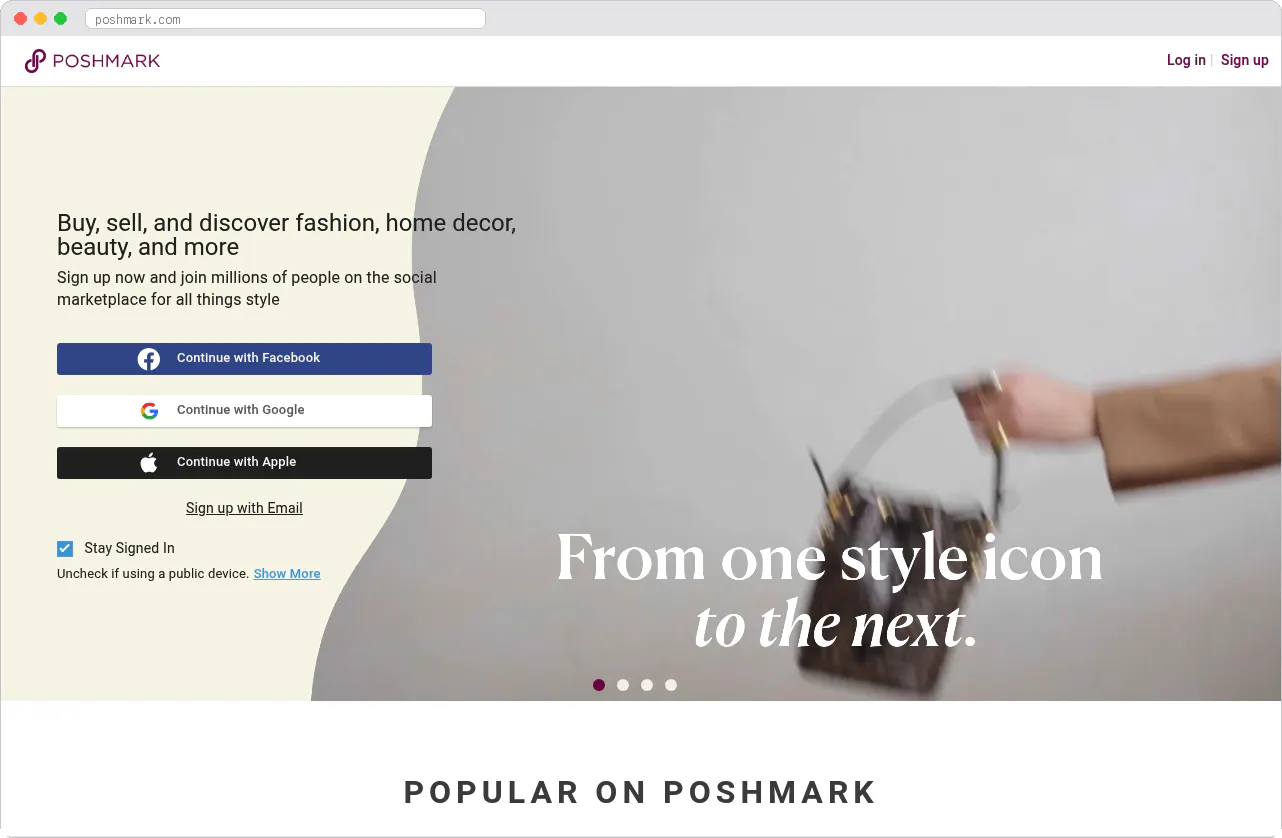
How does Poshmark work?
Poshmark operates as a two-sided marketplace connecting fashion sellers (called "Poshers") with buyers looking for discounted designer and brand-name clothing. The platform combines traditional marketplace functionality with social networking features to create what they call "social commerce."
The seller experience
Sellers photograph their items, write descriptions, and set prices. Unlike eBay's auction model, Poshmark uses fixed pricing with a "Make an Offer" feature for negotiations. Sellers can list anything from their personal closets to items they've sourced specifically for resale.
The social aspect differentiates Poshmark from competitors. Sellers build followings by sharing other users' listings, commenting on items, and participating in virtual "Posh Parties" – themed shopping events that happen multiple times per day. These parties feature specific categories like "Work Wardrobe" or "Date Night Picks" and help sellers get their items discovered.
When an item sells, the seller packages it and drops it off at any USPS location. Poshmark provides pre-paid shipping labels for all orders, simplifying logistics for casual sellers who might be intimidated by calculating shipping costs.
The buyer experience
Buyers browse listings through multiple discovery methods: following specific sellers, browsing category feeds, participating in Posh Parties, or using traditional search and filters. The social feed shows activity from people they follow – new listings, price drops, and shares.
The platform's "Love" feature lets buyers bookmark items they're interested in, and sellers often send private discount offers to users who've "loved" their listings. This creates a relationship between buyers and sellers that goes beyond single transactions.
Poshmark's authentication service, "Posh Authenticate," verifies luxury items over $500 automatically and items under $500 for a fee. This addresses the primary concern in secondhand luxury fashion: authenticity.
Transaction flow and trust mechanisms
When a buyer purchases an item, Poshmark holds the payment in escrow. The seller has three days to ship, and the buyer has three days after delivery to inspect the item and either "accept" or open a case for issues like damage or misrepresentation. If the buyer doesn't take action within three days, the sale automatically completes and the seller gets paid.
This system protects both parties while keeping transactions moving. For disputed cases, Poshmark's support team makes final decisions and can authorize returns or partial refunds from the company's own funds.
How does Poshmark make money?
Poshmark's revenue model centers on transaction fees, with additional income from premium services and partnerships.
Commission structure
Poshmark charges a flat 20% commission on all sales over $15. For sales under $15, they charge a flat $2.95 fee. This means on a $100 dress, Poshmark keeps $20 and the seller receives $80. On a $10 accessory, Poshmark keeps $2.95 and the seller receives $7.05.
This commission covers payment processing, customer support, shipping labels, and platform maintenance. The 20% rate is higher than many competitors but includes services that sellers would otherwise need to handle themselves.
Premium services
Poshmark offers several paid add-ons:
- Posh Authenticate: $15 fee for authenticating items under $500
- Promoted Closets: Paid advertising to boost seller visibility in search results
- Closet Tools: Analytics and management features for high-volume sellers
Revenue scale
As a public company (NASDAQ: POSH), Poshmark reports detailed financials. In 2023, they generated approximately $326 million in revenue from over $1.8 billion in gross merchandise value (GMV). This represents a take rate of about 16.7% of total transaction volume.
The company went public in January 2021 at a $3.5 billion valuation but was acquired by Naver Corporation in 2023 for approximately $1.2 billion, reflecting challenges in maintaining growth in the competitive resale market.
Additional revenue streams
While commissions represent the majority of revenue, Poshmark also generates income from:
- Brand partnerships and sponsored content
- Seller tools and premium features
- Cross-border expansion into markets like India and the UK
- Potential future advertising revenue from brands wanting to reach fashion-conscious consumers
What makes Poshmark successful?
Poshmark's success stems from several strategic decisions that differentiated it from existing secondhand fashion platforms.
Social commerce innovation
By 2011, when Poshmark launched, Facebook had proven the engagement power of social feeds, and Instagram was demonstrating the visual appeal of photo-sharing. Founders Manish Chandra, Tracy Sun, and Gautam Golwala recognized that fashion shopping was inherently social and visual.
The "sharing" mechanism became Poshmark's key innovation. When users share listings from others, those items appear in their followers' feeds, creating organic discovery without paid advertising. This turned every user into a potential marketing channel and gave sellers incentives to engage with the broader community.
Simplified selling process
Poshmark removed friction from casual selling by handling shipping logistics. Sellers don't calculate shipping costs, print labels, or choose carriers – everything ships via USPS Priority Mail for a flat $7.67 (as of 2024). This simplicity attracted millions of casual sellers who might have been overwhelmed by eBay's complexity.
The mobile-first design also recognized that most people take photos with their phones and prefer mobile interfaces for quick, casual interactions. While eBay was still primarily web-based in 2011, Poshmark launched as a mobile app.
Community building and gamification
Posh Parties create urgency and discovery around specific themes. These events happen multiple times daily and give sellers opportunities to get featured in category-specific feeds. The party format borrowed from social media events and home shopping shows, creating appointment viewing that increased daily active users.
The platform also introduced gamification elements like "Posh Ambassador" status for highly engaged users and "Host Picks" that featured select items during parties. These recognition systems encouraged participation and gave sellers aspirational goals beyond just making money.
Trust and safety infrastructure
Authentication services addressed the biggest barrier to online luxury resale: fraud. By guaranteeing authenticity on high-value items, Poshmark could capture luxury sales that buyers wouldn't risk on other platforms.
The three-day inspection period balanced buyer protection with seller confidence. Unlike eBay's lengthy dispute resolution process, Poshmark's system provided clear timelines and outcomes.
Network effects and market liquidity
As more sellers joined, buyers had more inventory to choose from. As more buyers joined, sellers had larger audiences for their items. The social features amplified these network effects – popular sellers could drive traffic to other sellers through sharing, creating value for the entire ecosystem.
The focus on brand-name fashion also created natural repeat usage. Fashion-conscious users both buy and sell on the platform, often using sale proceeds to fund new purchases. This dual-sided participation increases lifetime value and engagement.
Key features of a Poshmark-like marketplace
Building a successful fashion resale marketplace requires specific functionality that addresses the unique challenges of peer-to-peer clothing sales.
Mobile-optimized listing creation
Fashion sellers primarily use smartphones to photograph items, so the listing creation flow must be optimized for mobile. Essential components include:
- Multi-photo upload: Fashion items need multiple angles, close-ups of details, and shots of any flaws or wear
- Guided photography: Tips or overlays showing ideal photo composition, lighting recommendations
- Pre-filled brand and category suggestions: Auto-complete or AI-powered recognition to reduce typing
- Condition assessment tools: Standardized options (new with tags, like new, good, fair) with clear definitions
- Size and measurement guides: Size conversion charts, measurement instructions, fit descriptions
Social discovery and engagement features
The social layer differentiates fashion marketplaces from traditional classified sites:
- User following system: Buyers can follow favorite sellers and see their new listings in personalized feeds
- Sharing and resharing: Users can share listings to their followers, creating viral distribution
- Social feeds: Activity streams showing new listings, price drops, and social interactions from followed users
- Virtual shopping events: Themed browsing sessions organized by category, brand, or style
- Comments and interactions: Ability to comment on listings, ask questions, and build relationships
Advanced search and filtering
Fashion inventory requires complex filtering options:
- Brand recognition: Complete brand database with autocomplete and brand-specific categories
- Size normalization: Converting between different brands' sizing systems (a Medium in one brand equals Large in another)
- Color and pattern matching: Visual search capabilities and standardized color/pattern taxonomies
- Price and condition filters: Range sliders and condition-based browsing
- Personalization: Recommendations based on previous purchases, likes, and browsing behavior
Pricing and negotiation tools
Flexible pricing mechanisms accommodate different selling strategies:
- Make an Offer system: Structured negotiation with counteroffer capabilities
- Bundle discounts: Automatic pricing for multiple items from the same seller
- Price drop notifications: Alerts to interested buyers when prices decrease
- Market pricing insights: Suggested pricing based on similar sold items
- Promotional tools: Seller-controlled discount campaigns and flash sales
Authentication and trust systems
Authenticity concerns require strong verification processes:
- Photo-based authentication: AI-powered initial screening for obvious fakes
- Expert verification: Human authentication for high-value items
- Seller verification: Identity confirmation and reputation tracking
- Return and dispute handling: Clear policies with escrow payment protection
- Review and rating systems: Bilateral feedback after transactions
Streamlined logistics
Simplified shipping removes barriers for casual sellers:
- Prepaid shipping labels: Generated automatically with tracking numbers
- Packaging guidance: Instructions for safe fashion item packaging
- Shipping notifications: Automated updates to buyers about shipment status
- Return logistics: Prepaid return labels for disputed items
- International shipping: Cross-border capabilities with customs handling
Competitors and alternatives
The fashion resale market includes several established players, each with distinct positioning and features.
The RealReal
The RealReal focuses exclusively on authenticated luxury consignment. Unlike Poshmark's peer-to-peer model, The RealReal uses a consignment approach where the company takes possession of items, photographs them professionally, and handles all customer service.
This model allows for higher-quality listings and guaranteed authentication, but it requires more inventory management and warehousing. The RealReal takes 40-70% commission depending on item value, greatly higher than Poshmark's 20%, but provides white-glove service that appeals to luxury sellers.
The platform reported $318 million in revenue in 2023 but has struggled with profitability due to high operational costs for authentication, photography, and logistics.
Vestiaire Collective, based in France, operates globally with a focus on luxury fashion. Their model combines peer-to-peer selling with mandatory authentication – all items go through their authentication centers before reaching buyers.
This approach provides stronger buyer confidence than Poshmark's optional authentication, but it adds 1-2 weeks to delivery times and requires meaningful infrastructure investment. Vestiaire charges 10-15% commission plus authentication fees.
The company has raised over $500 million and operates in 80+ countries, demonstrating the global potential for authenticated fashion resale.
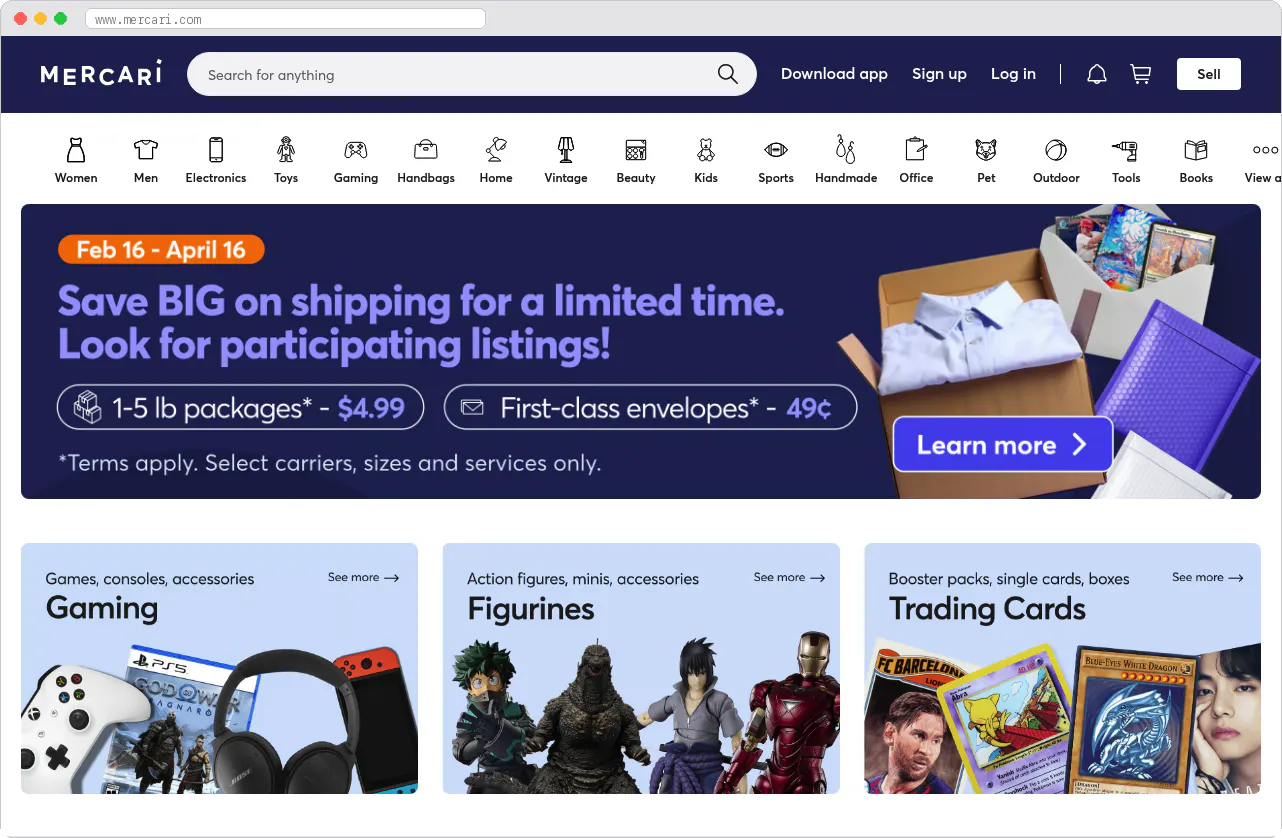
Mercari, originally from Japan, operates a general marketplace that includes major fashion volume. Unlike Poshmark's social features, Mercari focuses on simple, fast transactions with minimal social interaction.
Mercari charges a 10% commission across all categories and provides shipping integration similar to Poshmark. However, the lack of fashion-specific features means less refined search, sizing, and styling tools.
The platform went public in Japan and has expanded to the US market, though it faces challenges competing with category-specific platforms like Poshmark in fashion.
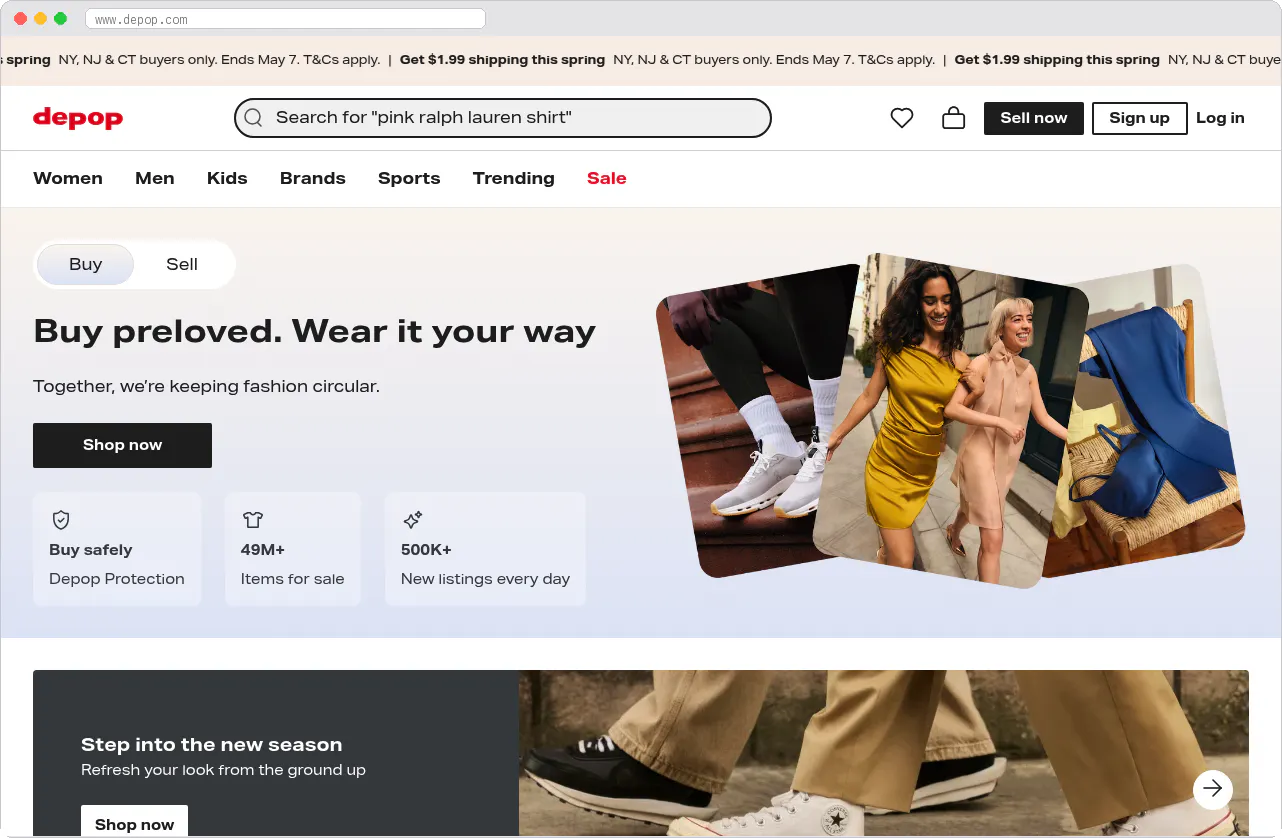
Depop targets younger demographics (Gen Z and millennial) with an Instagram-style interface and focus on vintage, streetwear, and independent brands. The platform emphasizes creative styling and personal branding over traditional retail presentation.
Depop charges 10% commission plus payment processing fees (around 2.9%), making it less expensive than Poshmark for sellers. However, the platform provides fewer seller tools and less customer support.
Etsy acquired Depop in 2021 for approximately $1.6 billion, recognizing its strength with younger consumers and unique fashion categories.
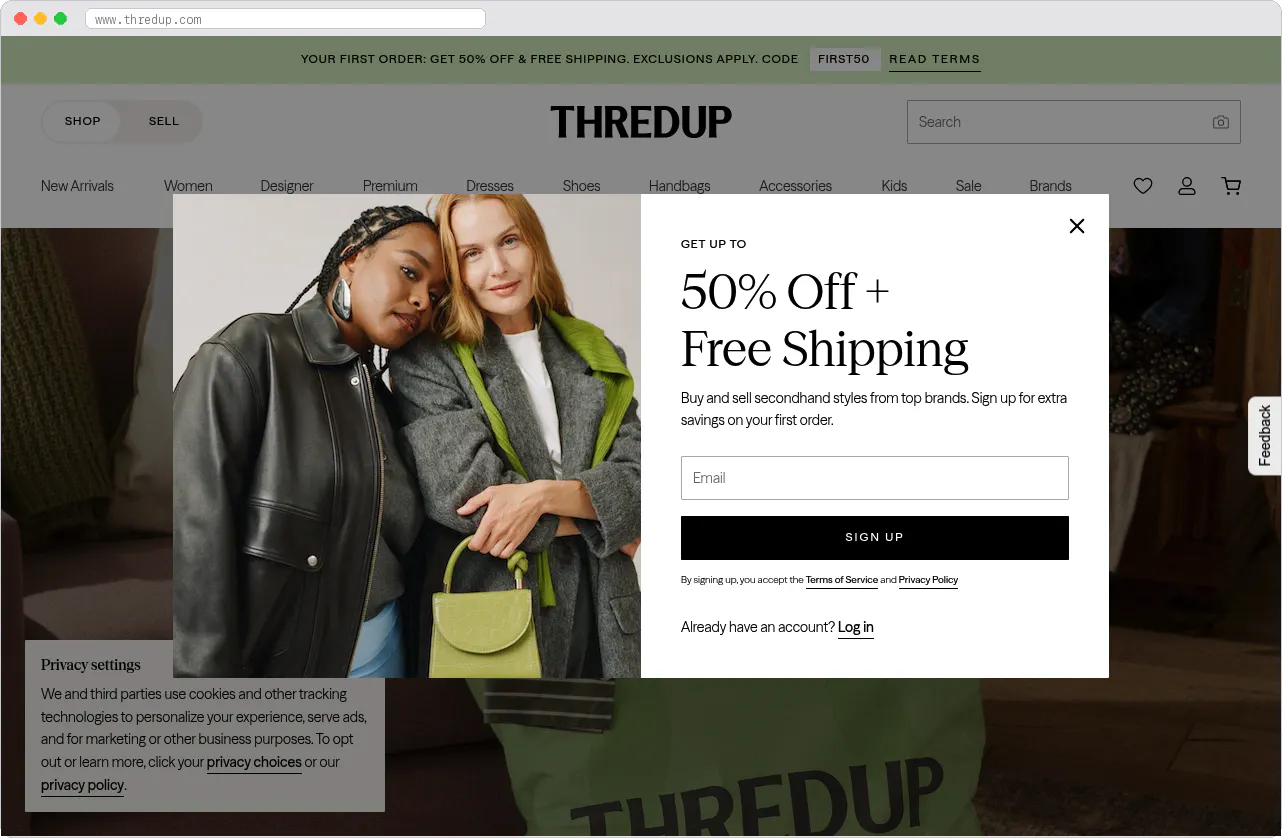
ThredUp
ThredUp operates a hybrid model combining peer-to-peer selling with their own inventory sourcing. Sellers can send items to ThredUp, which photographs and prices them, similar to traditional consignment but online.
The company also operates "ThredUp Luxe" for designer items and has partnerships with traditional retailers like Walmart and Macy's to sell secondhand items in physical stores.
ThredUp went public in 2021 and focuses heavily on sustainability messaging, appealing to environmentally conscious consumers.
How to build a marketplace like Poshmark
Creating a successful fashion resale marketplace requires careful planning around community building, technical infrastructure, and regulatory compliance.
Step 1: Define your niche and value proposition
Poshmark succeeded by focusing specifically on women's fashion with social features, but the market now supports more targeted approaches:
- Demographic focus: Target specific age groups (Gen Z vintage, professional women, plus-size fashion)
- Category specialization: Focus on specific item types (shoes, handbags, athletic wear, formal wear)
- Geographic targeting: Start with specific cities or regions where shipping costs and cultural preferences align
- Price point positioning: Target luxury items, fast fashion, or mid-tier brands specifically
Define what makes your platform different from existing options. This could be better authentication, lower fees, superior mobile experience, or unique community features.
Step 2: Validate demand through pre-launch research
Before building, validate your concept with potential users:
- Survey target sellers: Understand their current selling channels, pain points, and pricing sensitivity
- Interview potential buyers: Learn their shopping habits, trust concerns, and feature preferences
- Analyze competitor reviews: Identify common complaints about existing platforms
- Test marketing messaging: Run small ad campaigns to gauge interest in your value proposition
Create landing pages describing your planned platform and collect email signups to measure genuine interest.
Step 3: Choose your business model and pricing structure
Commission-based models like Poshmark's are most common, but consider alternatives:
- Flat fee per listing: Predictable costs for sellers but may discourage high-volume users
- Subscription model: Monthly fees for unlimited listings, appealing to professional resellers
- Freemium approach: Free basic listings with paid promotion and premium features
- Authentication fees: Charge for verification services while keeping base commissions lower
Consider your target market's price sensitivity and competition. Higher-end markets may accept higher fees in exchange for premium services.
Step 4: Build your minimum viable platform
Start with core marketplace functionality before adding social features:
Key features for launch:
- User registration and profile creation
- Photo upload and listing creation
- Basic search and category browsing
- Secure payment processing with escrow
- Messaging between buyers and sellers
- Order management and tracking
- Basic review system
Phase 2 additions:
- Social following and sharing
- Advanced search filters
- Mobile app development
- Bulk listing tools
- Promotional features
Phase 3 enhancements:
- Authentication services
- AI-powered recommendations
- Advanced seller analytics
- International expansion
- Brand partnership integrations
Step 5: Develop trust and safety systems
Fashion marketplaces face unique trust challenges requiring proactive solutions:
- Identity verification: Require phone number confirmation and consider ID verification for high-volume sellers
- Payment security: Use escrow systems that hold buyer payments until successful delivery
- Dispute resolution: Create clear policies for returns, damaged items, and misrepresented products
- Fraud detection: Monitor for fake listings, stolen photos, and suspicious account activity
- Quality standards: Establish guidelines for photo quality, descriptions, and acceptable item conditions
Step 6: Build your initial community
Marketplaces require both buyers and sellers to function, creating a chicken-and-egg problem:
Start with supply:
- Recruit fashion enthusiasts through social media and fashion forums
- Partner with fashion bloggers and influencers who already sell items
- Target college campuses where students regularly buy and sell clothing
- Offer promotional incentives like reduced fees for early adopters
Create initial demand:
- use sellers' existing social networks to bring their followers
- Use content marketing around fashion trends and styling tips
- Run targeted social media ads to fashion-conscious demographics
- Partner with fashion publications for visibility
Step 7: Optimize for mobile usage
Fashion resale is primarily mobile-driven, requiring mobile-first design:
- Fast photo upload: Optimize image compression and upload speeds
- Intuitive navigation: Simple category browsing and search interfaces
- One-handed operation: Design for single-thumb navigation
- Push notifications: Alert users to messages, price drops, and new followers
- Offline capabilities: Allow photo staging and draft listings without internet connection
Step 8: Scale operations and add advanced features
As your platform grows, invest in automation and advanced capabilities:
- AI-powered features: Automatic photo tagging, pricing suggestions, size recommendations
- Advanced analytics: Seller performance dashboards and market trend insights
- International expansion: Multi-currency support and cross-border shipping
- Partnership integrations: Authentication services, shipping providers, payment processors
- Professional seller tools: Bulk listing, inventory management, tax reporting
Cost and development considerations
Building a fashion marketplace involves substantial upfront investment and ongoing operational costs that vary greatly based on your approach.
Custom development approach
Building from scratch provides maximum control but requires substantial resources:
Development costs:
- MVP development: $75,000 to $150,000 for basic marketplace functionality
- Mobile apps: Additional $50,000 to $100,000 for iOS and Android apps
- Advanced features: $25,000 to $75,000 for social features, AI recommendations, and seller tools
- Authentication system: $15,000 to $40,000 for verification workflows and expert review processes
Ongoing operational costs:
- Hosting and infrastructure: $500 to $5,000+ monthly depending on scale
- Payment processing: 2.9% plus $0.30 per transaction typically
- Customer support: $3,000 to $15,000 monthly for dedicated support team
- Legal and compliance: $10,000 to $25,000 for terms of service, privacy policies, and regulatory compliance
- Marketing and user acquisition: $10,000 to $100,000+ monthly depending on growth goals
Timeline expectations:
- MVP launch: 6 to 12 months with dedicated development team
- Mobile apps: Additional 3 to 6 months
- Advanced features: Ongoing development cycles of 2 to 4 months per major feature set
**No-code marketplace platforms bring costs down to $99-399 per month in subscription fees, with no large upfront investment needed.
Frequently asked questions
How does Poshmark make money?
Poshmark charges a 20% commission on sales over $15 and a flat $2.95 fee on sales under $15. They also generate revenue from premium services like authentication ($15 for items under $500) and promoted listings for sellers.
What makes Poshmark different from other resale platforms?
Poshmark combines marketplace functionality with social media features, allowing users to follow each other, share listings, and participate in virtual shopping parties. This social commerce approach creates stronger community engagement than traditional classified sites.
How much does it cost to build a marketplace like Poshmark?
The full platform would cost $200,000-500,000+ to build from scratch. But you don't need to replicate every feature from day one. A no-code marketplace platform at $99-399/month lets you launch core functionality for a few thousand dollars in year one, then invest in custom development as revenue supports it.
What are the essential features for a fashion resale marketplace?
Key features include mobile-optimized listing creation with multi-photo upload, social following and sharing capabilities, advanced search with brand and size filters, secure payment processing with escrow, and authentication services for luxury items.
How long does it take to launch a platform like Poshmark?
Using no-code platforms, you can launch a basic marketplace in 2-6 weeks. Custom development takes 6-12 months for an MVP. However, building a successful community and reaching profitability typically requires 18-36 months regardless of development approach.
Who are Poshmark's main competitors?
Major competitors include The RealReal (luxury consignment), Vestiaire Collective (authenticated luxury), Depop (Gen Z focused), ThredUp (hybrid consignment), and Mercari (general marketplace with fashion). Each has different positioning around authentication, fees, and target demographics.
Start your 14-day free trial
Create a marketplace today!
- Launch quickly, without coding
- Extend infinitely
- Scale to any size
No credit card required