How to build a marketplace for antiques
Antique marketplaces like 1stdibs and Ruby Lane generate millions in transactions by connecting collectors with authenticated vintage pieces. This comprehensive guide shows you how to build your own antique marketplace, from validating your niche to launching with essential features like authentication and secure payments.
Published: Dec 21, 2023
Last updated: Mar 19, 2026
How does an antique marketplace work?
Antique marketplaces operate as curated platforms connecting collectors, dealers, and enthusiasts with authenticated vintage pieces. Unlike general e-commerce sites, antique marketplaces require specialized expertise to verify authenticity, assess condition, and provide detailed provenance information.
The business model centers on commission fees, typically ranging from 5-15% of transaction value. High-end platforms like 1stdibs charge premium commissions (up to 15%) while offering white-glove services including professional photography, condition reports, and shipping coordination. Volume-focused platforms like Etsy's vintage section operate on lower margins but higher transaction volumes.
Antique marketplaces face unique challenges compared to other marketplace types. Authentication becomes critical since buyers often purchase items worth thousands of dollars sight unseen. Condition assessment requires specialized knowledge, as terms like "excellent," "good," and "fair" have specific meanings in the antique world. Shipping presents complex logistics challenges, as many pieces require custom crating and specialized handling.
What makes antique marketplaces successful?
Successful antique marketplaces distinguish themselves through trust-building mechanisms and expertise rather than just technology. The most important factors include rigorous seller vetting, authentication processes, and detailed condition reporting.
Trust and authentication infrastructure forms the foundation of any successful antique marketplace. Buyers purchasing a $5,000 Victorian armoire or $20,000 Art Deco sculpture need confidence in authenticity and condition. 1stdibs addresses this through dealer verification programs requiring credentials and reputation history. They also provide detailed condition reports and professional photography standards that reveal imperfections clearly.
Specialized search and categorization helps buyers navigate complex inventory. Unlike product marketplaces where specifications are standardized, antiques require nuanced categorization by period, style, maker, and provenance. Ruby Lane excels at this with detailed filters for time periods, countries of origin, and specific manufacturers.
Educational content and expertise differentiate antique platforms from generic marketplaces. Chairish provides style guides and decorating advice that help buyers envision pieces in their homes. This content strategy serves dual purposes: it attracts organic traffic through SEO and builds authority that increases buyer confidence.
White-glove logistics and services become competitive advantages rather than operational burdens. High-value antiques often require custom shipping solutions, restoration services, or installation coordination. Platforms that facilitate these services capture higher transaction values and customer loyalty.
Key competitors and alternatives
Understanding the competitive landscape helps identify opportunities for differentiation in specific niches or geographic markets.
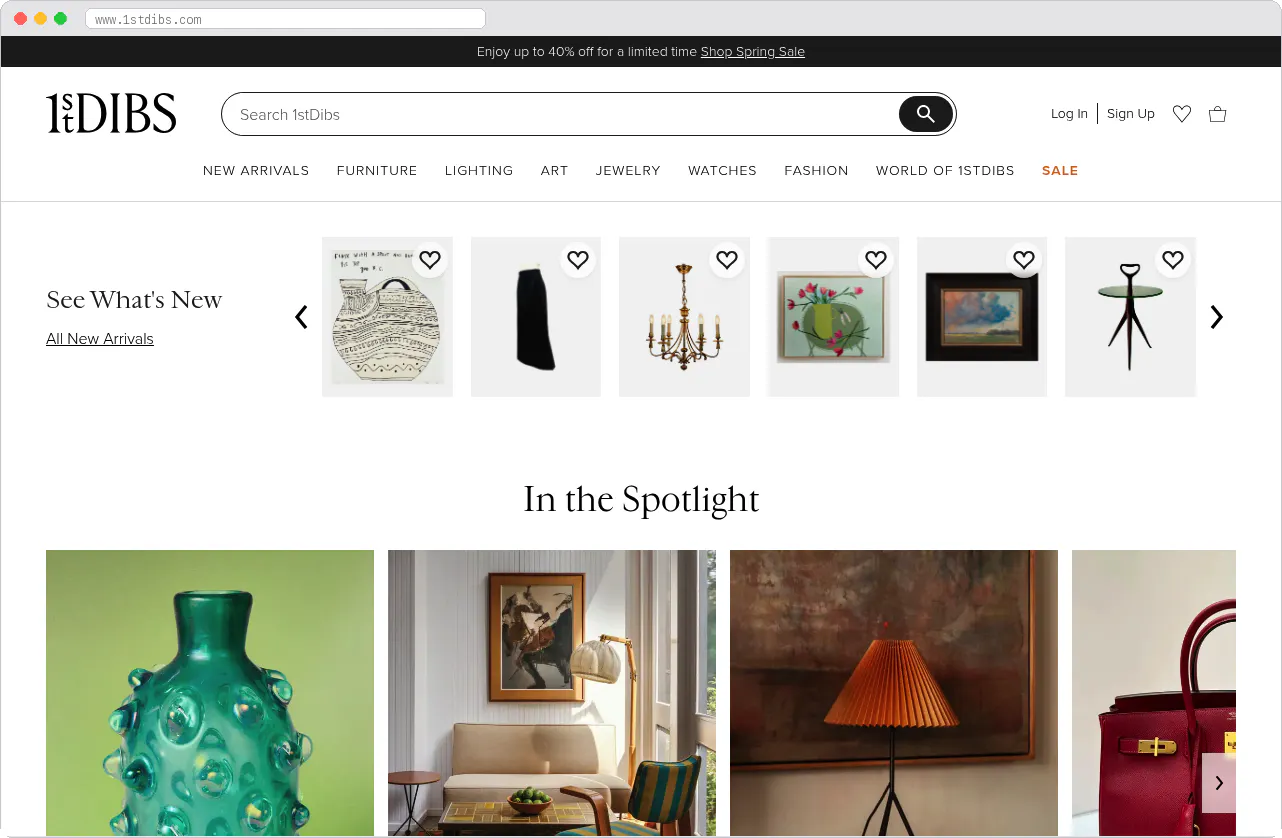
1stdibs operates as the luxury segment leader with over $500 million in annual gross merchandise value. Founded in 2001, the platform targets interior designers and affluent collectors with pieces typically priced above $1,000. Their business model emphasizes curation over volume, with strict dealer vetting and professional photography requirements. 1stdibs charges dealers monthly subscription fees plus commission rates up to 15%, but provides marketing reach to qualified buyers worldwide. Their weakness lies in accessibility for mid-market buyers and newer dealers who cannot meet their high barriers to entry.
Ruby Lane positions itself as the "antiques mall of the internet," hosting over 2,000 independent dealers selling everything from vintage jewelry to rare books. Unlike 1stdibs' curated approach, Ruby Lane operates more democratically, allowing smaller dealers to join with lower barriers to entry. Their strength lies in variety and dealer diversity, but the platform lacks the prestige and buyer demographics of luxury-focused competitors.
Etsy's vintage category uses the platform's massive user base (over 90 million active buyers) to reach collectors interested in more accessible price points. Sellers can list items over 20 years old in Etsy's vintage section, creating competition for dedicated antique platforms. Etsy's advantages include lower fees (5% transaction fee plus payment processing), built-in traffic, and familiar user experience. However, vintage items compete for attention with handmade goods, and the platform lacks antique-specific features like authentication or specialized shipping.
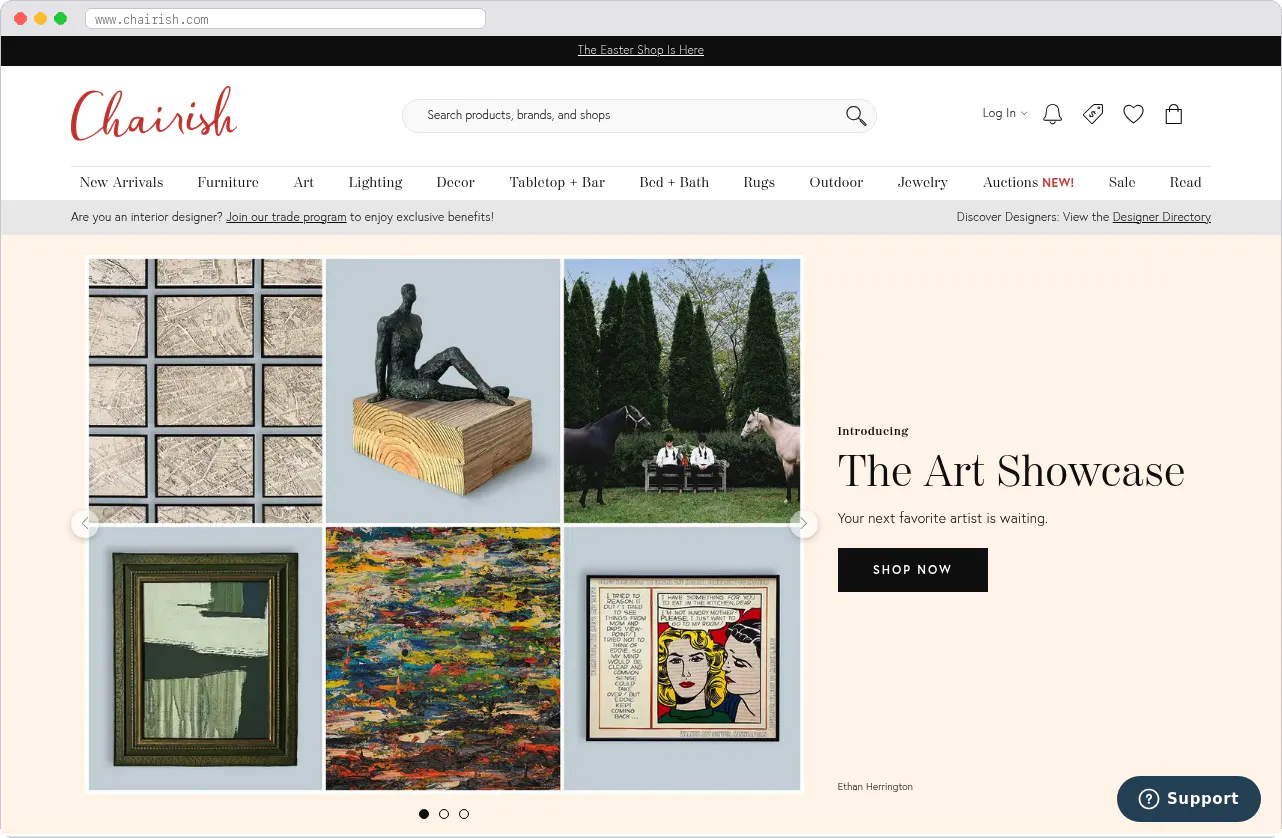
Chairish focuses on mid-century modern and contemporary vintage furniture and decor. Founded in 2013, they've raised over $50 million in funding and target millennial and Gen X buyers furnishing their homes. Chairish differentiates through editorial content, room visualization tools, and trade program discounts for interior designers. Their curated approach and modern aesthetic appeal to younger demographics but limit appeal to collectors of earlier periods or fine art.
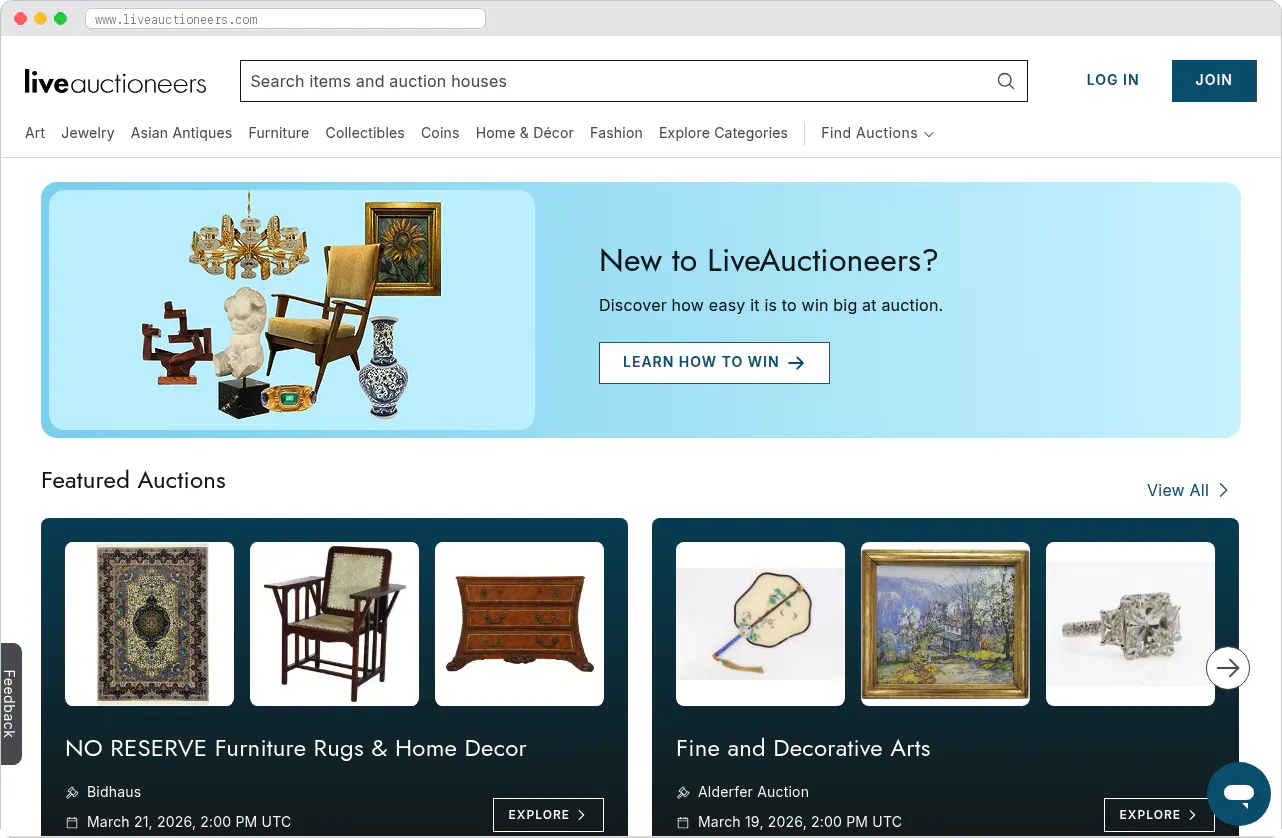
LiveAuctioneers operates on an auction model rather than fixed-price listings, connecting buyers to auction houses worldwide. With over 5,000 auction houses on the platform, they facilitate both live bidding and timed auctions. This model works well for estate sales and dealer liquidations but requires different buyer behavior than traditional marketplace browsing.
Regional and specialized platforms like Pamono (European mid-century design) or Incollect (fine art and antiques) serve specific geographic or category niches. These platforms often outperform generalists in their focus areas by offering localized expertise, language support, and specialized features.
Essential features for antique marketplaces
Antique marketplaces require specialized functionality beyond basic e-commerce features to address the unique needs of authentication, condition assessment, and high-value transactions.
Detailed listing creation with authentication support enables sellers to document provenance, condition, and historical context effectively. Successful platforms provide structured fields for period, style, maker, materials, dimensions, and condition notes. Photography requirements often mandate multiple angles, detail shots of any damage, and maker's marks or signatures. Some platforms like 1stdibs provide professional photography services to maintain consistent quality standards.
Advanced search and filtering capabilities help buyers navigate complex inventory efficiently. Beyond basic category and price filters, antique marketplaces need filters for time periods (Victorian, Art Deco, Mid-Century Modern), styles (Chippendale, Bauhaus, Arts & Crafts), materials, and geographic origins. Search functionality should support both novice buyers browsing by room or style and expert collectors searching for specific makers or periods.
Authentication and verification systems build buyer confidence in high-value purchases. This might include seller verification programs requiring credentials and references, expert authentication services for high-value items, or partnerships with appraisal professionals. Some platforms maintain databases of known fakes or problematic sellers to prevent fraud.
Condition reporting and grading standards provide consistent quality expectations across sellers. Many antique marketplaces adopt standardized condition grades (Excellent, Very Good, Good, Fair, Poor) with detailed definitions for each category. Professional condition reports might include detailed photographs, restoration history, and expert assessments for high-value pieces.
Specialized payment and escrow services protect both buyers and sellers in high-value transactions. Standard payment processing may not provide adequate protection for transactions exceeding $10,000. Some platforms offer extended escrow periods allowing buyers to authenticate items upon receipt, or provide insurance coverage for shipping damage.
Shipping and logistics coordination addresses the complex requirements of transporting fragile, valuable items. Features might include shipping cost calculators based on size and fragility, partnerships with specialized art shipping companies, or coordination services for white-glove delivery and installation.
Expert consultation and advisory services differentiate platforms from basic classified sites. This might include access to appraisers, restoration professionals, or historical experts who can provide authentication or valuation services. Some platforms maintain editorial teams producing educational content about collecting, history, or market trends.
Step-by-step guide to building your antique marketplace
Building a successful antique marketplace requires balancing technical development with deep understanding of collector needs and market dynamics.
Step 1: Define your niche and validate demand
The antique market encompasses everything from $50 vintage jewelry to $50,000 museum-quality furniture. Successful platforms focus on specific segments rather than trying to serve all collectors simultaneously.
Start by identifying underserved niches within the broader antique market. This might be geographic (American folk art, Scandinavian design), temporal (Art Deco, Mid-Century Modern), or categorical (vintage guitars, antique maps). Research existing platforms to identify gaps in coverage, pricing, or service quality.
Validate demand through direct engagement with potential users. Visit antique shows, estate sales, and dealer shops to understand current buying and selling processes. Join online collector forums and Facebook groups to observe pain points and unmet needs. Interview dealers about their current online selling challenges and what features would improve their businesses.
Consider the supply side carefully. Antique dealing often involves established relationships and regional networks that may resist new platforms. Identify potential early adopters who might benefit from expanded reach or improved selling tools.
Step 2: Choose your business model and pricing strategy
Antique marketplaces typically use commission-based models, but the specific structure varies significantly based on target market and value proposition.
Luxury platforms like 1stdibs command higher commission rates (10-15%) by providing premium services including professional photography, marketing support, and qualified buyer networks. Volume-focused platforms operate on lower margins (3-7%) but rely on higher transaction frequency.
Consider hybrid models combining multiple revenue streams. Monthly subscription fees provide predictable income while commission aligns incentives with seller success. Listing fees work well for platforms with high buyer traffic but can discourage new sellers from testing the platform.
Factor in the unique costs of operating an antique marketplace. Authentication services, specialized customer support, and educational content creation require ongoing investment that generic marketplaces don't face.
Step 3: Build your minimum viable platform
Start with core functionality that addresses the most critical pain points in antique buying and selling, rather than trying to build every feature immediately.
Your MVP should enable basic listing creation with photo upload, categorization, and detailed descriptions. Include essential search and filtering capabilities organized by categories relevant to your niche. Implement secure payment processing with appropriate protections for high-value transactions.
Focus on trust-building features from day one. This includes seller verification processes, clear return policies, and communication tools that maintain transaction history. Even in the MVP stage, establish quality standards for photos and descriptions to differentiate from casual selling platforms.
With Sharetribe, you can launch an antique marketplace with these essential features in 1-2 weeks without coding. The platform includes built-in payment processing through Stripe Connect, user messaging systems, and listing management tools that work well for antique sales. Custom fields allow you to capture antique-specific information like period, provenance, and condition details.
Step 4: Establish quality and authentication standards
Develop clear guidelines for listing quality, condition reporting, and seller verification before onboarding your first dealers.
Create detailed condition grading standards with photo examples showing what constitutes "Excellent," "Very Good," and other categories. Provide seller guidelines for photography including required angles, lighting standards, and detail shots of any damage or repairs.
Implement seller verification processes appropriate to your market segment. This might range from simple identity verification for lower-value items to credential requirements and references for high-end dealers.
Consider partnerships with authentication services or appraisal professionals who can provide expert opinions on questionable items. Even if you can't afford comprehensive authentication initially, establish relationships that allow expansion of these services as your platform grows.
Step 5: Recruit initial inventory and sellers
Building supply requires different strategies than most marketplaces because antique dealers often have established selling channels and may resist new platforms.
Start with dealers who have excess inventory or specialize in items that don't fit well on existing platforms. Estate sale companies often have diverse inventory that benefits from specialized categorization and search tools. Collectors downsizing their collections may appreciate platforms focused on their specific interests.
Attend regional antique shows and estate sales to meet potential sellers in person. Many dealers appreciate face-to-face relationship building and may be more willing to try a new platform after meeting the founders.
Consider offering launch incentives like reduced commission rates or free professional photography for early adopters. The goal is building initial inventory quality rather than quantity.
Step 6: Launch to buyers and iterate based on feedback
Once you have sufficient quality inventory, begin marketing to potential buyers while closely monitoring user behavior and feedback.
Use content marketing to attract buyers interested in your niche. Educational articles about collecting, market trends, or historical context can attract organic traffic while establishing expertise. SEO content targeting specific search terms like "authentic Art Deco furniture" or "Victorian jewelry buying guide" can drive qualified traffic.
Monitor key metrics including conversion rates, average transaction values, and repeat purchase rates. In antique marketplaces, these metrics often move more slowly than in other e-commerce categories due to higher consideration periods and transaction values.
Pay particular attention to trust indicators and user feedback about authentication, shipping, and dispute resolution. These areas often determine long-term success more than basic marketplace functionality.
Step 7: Scale through geographic or category expansion
Once you've achieved product-market fit in your initial niche, consider expansion strategies that use your established expertise and seller relationships.
Geographic expansion works well for categories with strong regional variations, like American folk art or European antiques. Sellers often have contacts in other regions who might join a successful platform.
Category expansion should build on related expertise and similar buyer demographics. A platform succeeding with Mid-Century Modern furniture might expand to vintage lighting or decorative objects from the same period.
Consider acquisition opportunities for complementary platforms or services. Successful antique marketplaces often acquire authentication services, shipping companies, or content publishers to build comprehensive service offerings.
Development options and cost considerations
Building an antique marketplace involves different cost considerations than typical e-commerce platforms due to specialized feature requirements and longer development timelines.
Custom development approach
Custom development provides complete control over specialized features like authentication workflows, condition reporting systems, and expert consultation tools. However, antique-specific features require deep domain knowledge that generic development teams may lack.
Expected costs for custom development typically start around $50,000-150,000 for a comprehensive antique marketplace with authentication features, specialized search, and payment handling. Ongoing maintenance costs often exceed $10,000 monthly due to complex feature requirements and security needs for high-value transactions.
Development timelines typically extend 6-12 months before launching even a basic version. This lengthy timeline delays crucial market learning and user feedback that drives successful marketplace strategies.
The main advantage lies in complete customization capability. You can build exactly the authentication workflows, expert consultation features, and specialized interfaces your target market requires. However, the opportunity cost of extended development time often outweighs these benefits for most marketplace concepts.
No-code marketplace platforms
Dedicated marketplace builders like Sharetribe offer much faster time to market while providing essential marketplace functionality out of the box.
Sharetribe enables launching an antique marketplace within 1-2 weeks with built-in payment processing, user messaging, listing management, and review systems. Custom fields support antique-specific information like period, maker, provenance, and detailed condition notes. The platform handles complex marketplace payments including commission structures and delayed payouts that protect both buyers and sellers.
Monthly costs start around $200-500 depending on transaction volume, representing significant savings compared to custom development. The platform scales automatically as transaction volume grows, eliminating infrastructure management overhead.
The main limitation involves customization constraints for highly specialized features. However, Sharetribe's Developer Platform allows adding custom features once you've validated your market and understand specific user needs. This hybrid approach lets you launch quickly while retaining expansion flexibility.
Many successful Sharetribe marketplaces begin with standard functionality and add custom features like authentication workflows, expert consultation systems, or specialized shipping calculators as their businesses grow and justify the additional investment.
Hybrid development strategies
Combining no-code platforms with custom integrations often provides optimal cost-effectiveness for antique marketplaces.
Start with a marketplace platform like Sharetribe for core functionality, then integrate specialized services for authentication, appraisal, or shipping coordination. This approach provides faster time to market while enabling specialized features that differentiate from generic platforms.
For example, you might integrate with authentication services like Entrupy for luxury handbags, partner with specialized shipping companies for art transport, or connect with appraisal networks for expert opinions. These integrations can often be built for $5,000-15,000 each, much less than developing equivalent functionality from scratch.
The Sharetribe Expert Network includes developers experienced in marketplace customizations who understand both technical requirements and marketplace business dynamics. This specialization often results in better solutions than generic development agencies attempting marketplace projects.
Marketing and growth strategies for antique marketplaces
Successful antique marketplaces require different marketing approaches than typical e-commerce platforms due to specialized buyer interests and established dealer networks.
Content marketing and SEO
Educational content attracts buyers researching purchases and establishes platform expertise. Antique buyers often spend weeks or months researching before purchasing, creating opportunities for content-driven customer acquisition.
Develop comprehensive guides covering collecting basics, market trends, authentication tips, and historical context for your focus areas. Target long-tail keywords like "how to authenticate Tiffany lamps" or "Mid-Century Modern furniture buying guide" that attract qualified prospects.
Partner with recognized experts, museum professionals, or established dealers to create authoritative content. Guest articles from respected authorities build platform credibility more effectively than anonymous content.
Consider video content showcasing pieces in detail, explaining authentication processes, or providing historical context. Many antique buyers appreciate seeing items from multiple angles and hearing expert commentary about significance or rarity.
Relationship building and industry partnerships
Antique markets rely heavily on personal relationships and reputation, making traditional digital marketing less effective than in other e-commerce categories.
Participate in industry events, antique shows, and collector gatherings to build relationships with both dealers and buyers. Many successful antique marketplace founders spend significant time at regional shows meeting potential users and understanding market dynamics.
Develop partnerships with complementary service providers like appraisers, restoration professionals, shipping companies, or auction houses. These partnerships provide referral opportunities while enhancing your platform's service capabilities.
Consider joining professional organizations like the Professional Numismatists Guild, Antiques Dealers' Association of America, or category-specific groups. Membership provides credibility and networking opportunities while demonstrating commitment to industry standards.
Leveraging social proof and community
Build trust through testimonials, success stories, and community features that highlight satisfied buyers and sellers.
Showcase successful transactions with before-and-after stories showing how buyers incorporated pieces into their homes or collections. Many antique buyers enjoy sharing their finds and decorating success stories.
Develop user-generated content programs encouraging buyers to share photos of purchases in their homes or collections. This content serves dual purposes of social proof and SEO-friendly images that attract similar buyers.
Consider community features like forums, expert Q&A sections, or virtual events that build engagement beyond transactions. Many collectors enjoy discussing their interests and sharing knowledge with fellow enthusiasts.
Next steps for launching your antique marketplace
Success in the antique marketplace space requires combining technological capability with deep market understanding and relationship building. Start by focusing on a specific niche where you can provide genuine value over existing solutions.
Begin with market validation through direct engagement with potential buyers and sellers. Understanding their current processes, pain points, and unmet needs guides feature priorities and differentiation strategies.
Choose development approaches that enable fast market entry and iterative improvement. Platforms like Sharetribe provide essential marketplace functionality while allowing custom feature additions as your understanding of user needs develops.
Prioritize trust-building features and quality standards from day one. Antique buyers make high-value purchases based on detailed descriptions and photographs, making quality control critical for long-term success.
Plan for gradual scaling rather than attempting to capture the entire antique market immediately. Successful platforms typically dominate specific niches before expanding to adjacent categories or geographic markets.
The antique marketplace opportunity continues growing as younger generations inherit collections and seek online solutions for buying and selling. Platforms that combine modern technology with traditional market expertise are well-positioned to capture this expanding market.
Frequently asked questions
How much does it cost to build an antique marketplace?
Custom development typically costs $50,000-150,000 with 6-12 month timelines. No-code platforms like Sharetribe allow launching for $200-500 monthly within 1-2 weeks, making them ideal for validating your market before major investments.
What features do antique marketplaces need that other marketplaces don't?
Antique platforms require authentication systems, detailed condition reporting, provenance documentation, specialized shipping coordination, and expert consultation features. These build buyer confidence in high-value purchases that generic marketplaces can't provide.
How do antique marketplaces handle authentication and prevent fraud?
Successful platforms combine seller verification, expert authentication services, detailed condition reporting with professional photography, and partnerships with appraisal professionals. Many also maintain databases of known fakes and problematic sellers.
What business model works best for antique marketplaces?
Commission-based models dominate, ranging from 3-7% for volume platforms to 10-15% for luxury markets. Higher-end platforms justify premium rates through white-glove services, professional photography, and qualified buyer networks.
How do I compete with established platforms like 1stdibs and Etsy?
Focus on underserved niches by geography, time period, or category. Provide superior expertise, authentication services, or user experience for specific collector segments rather than competing on breadth against established players.
How long does it take to build supply on an antique marketplace?
Building quality supply takes 3-6 months of relationship building with dealers, estate sale companies, and collectors. Start with underserved niches and offer launch incentives like reduced commissions to attract early adopters with quality inventory.
Start your 14-day free trial
Create a marketplace today!
- Launch quickly, without coding
- Extend infinitely
- Scale to any size
No credit card required