How to build a marketplace for selling vintage furniture
Vintage furniture marketplaces connect collectors and dealers with buyers seeking unique pieces. This guide shows you how to validate your concept, build essential features, and launch a profitable platform in the growing $30 billion vintage market.
Published: Dec 14, 2023
Last updated: Mar 19, 2026
How does a vintage furniture marketplace work?
A vintage furniture marketplace connects two distinct user groups: sellers offering unique pieces from past eras and buyers seeking authentic, character-rich furniture for their homes or businesses. These platforms operate as commission-based intermediaries, facilitating transactions while providing trust infrastructure, payment processing, and discovery tools.
The business model centers around transaction fees. Most platforms charge sellers a commission ranging from 3-12% of the sale price, with some adding buyer fees or listing charges. Unlike mass-produced furniture sold on traditional e-commerce sites, vintage pieces are one-of-a-kind items that require detailed authentication, condition reporting, and specialized shipping considerations.
The vintage furniture market has experienced remarkable growth, reaching approximately $30 billion globally in 2023. This expansion reflects changing consumer preferences toward sustainability, uniqueness, and quality craftsmanship. Millennials and Gen Z buyers increasingly value circular economy principles, preferring to purchase pre-owned items that reduce environmental impact while offering distinctive style.
What makes vintage furniture marketplaces successful?
Authenticity verification stands as the cornerstone of successful vintage furniture platforms. Buyers invest significant money in pieces they believe are genuine mid-century modern, Art Deco, or other period furniture. Platforms that develop robust authentication processes, whether through expert vetting, detailed provenance documentation, or seller verification, build the trust necessary for high-value transactions.
Detailed condition reporting separates professional platforms from casual selling sites. Vintage furniture often shows wear patterns, restoration work, or minor damage that affects both value and buyer satisfaction. Successful marketplaces require comprehensive condition descriptions, multiple high-resolution photos showing wear details, and clear policies about returns or disputes.
Specialized search and discovery tools help buyers navigate vast inventories of unique items. Unlike searching for identical products on Amazon, vintage furniture buyers need filters for era, style, material, condition, size, and price range. Location-based search becomes particularly important given shipping costs for large furniture pieces.
Curated presentation elevates vintage marketplaces beyond simple classified ads. Leading platforms invest in professional photography standards, detailed item descriptions, and editorial content about design history or collecting trends. This curatorial approach attracts serious buyers willing to pay premium prices for well-presented pieces.
Key competitors and alternatives in vintage furniture marketplaces
The vintage furniture marketplace landscape includes both generalist platforms and specialized players, each serving different market segments and user needs.
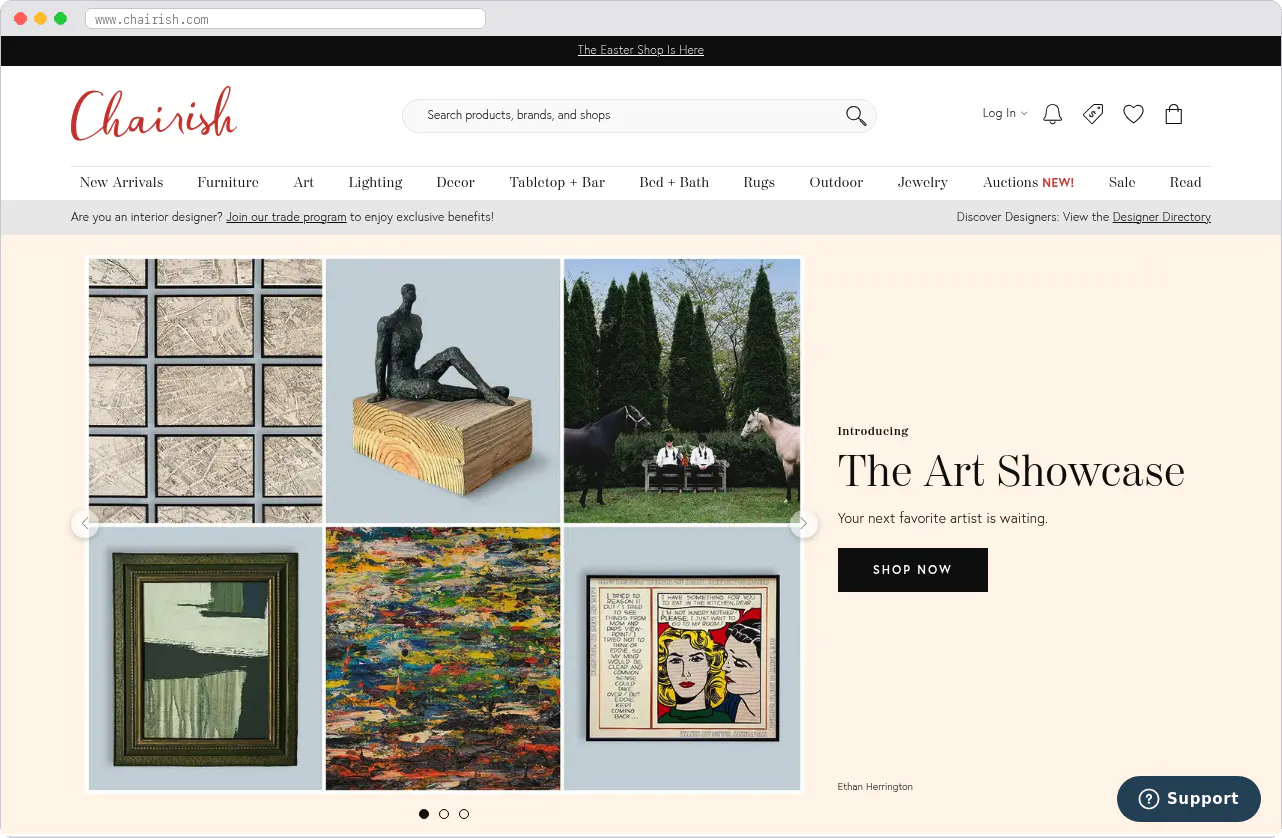
Chairish dominates the high-end vintage furniture market with over 300,000 listings from vetted sellers. The platform focuses on designer pieces and investment-quality furniture, charging sellers a sliding commission scale from 3-20% based on item value. Chairish provides white-glove delivery services for large purchases and employs in-house experts to authenticate high-value pieces. Their target audience consists of interior designers and affluent homeowners seeking statement pieces.
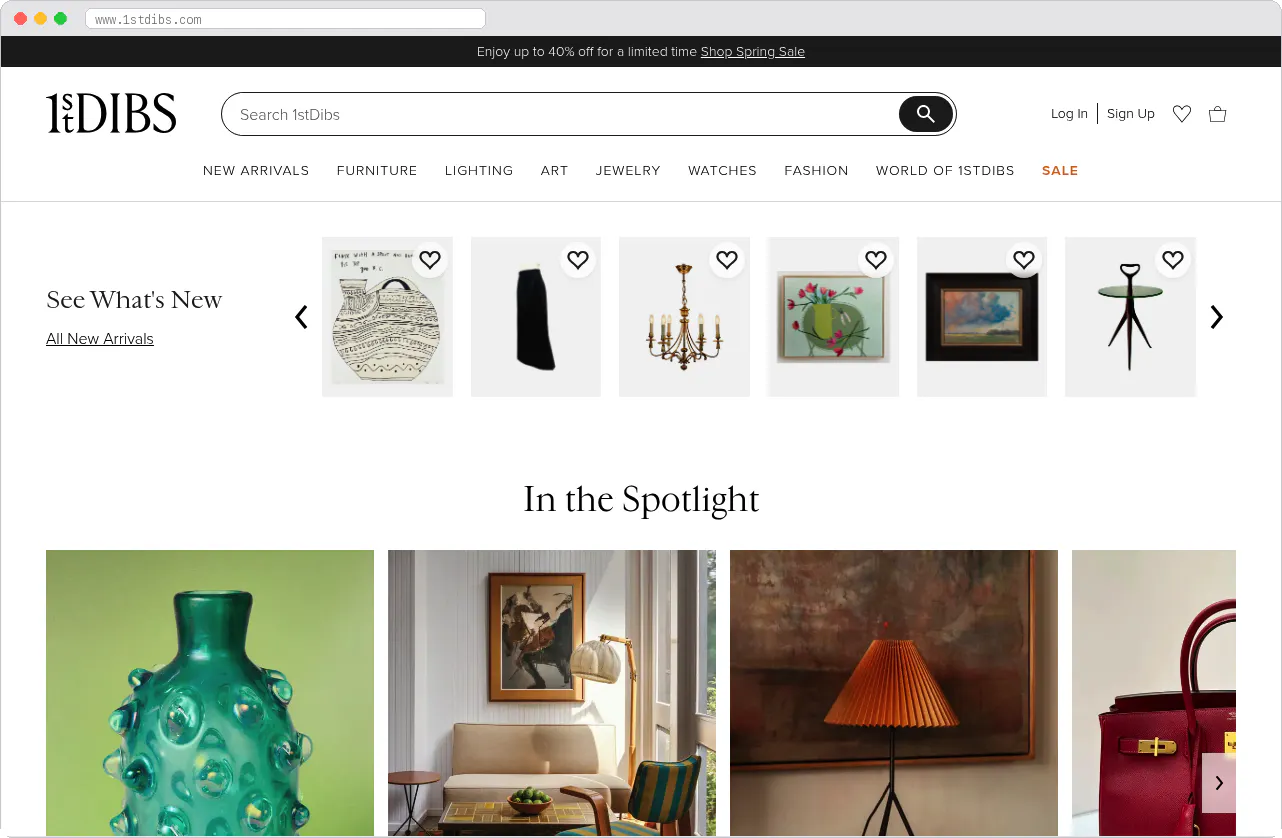
1stDibs operates at the luxury end of the market, featuring museum-quality antiques and designer furniture from established dealers and auction houses. The platform charges higher fees but provides concierge-level service, including global shipping coordination and insurance. Most items cost thousands of dollars, making 1stDibs unsuitable for casual buyers but essential for serious collectors and trade professionals.
Etsy allows vintage furniture sales within its broader handmade and vintage marketplace. While Etsy offers lower barriers to entry for sellers and more affordable pieces for buyers, its generic platform lacks furniture-specific features like detailed condition reporting or specialized shipping integration. Etsy works well for smaller vintage items but struggles with large furniture pieces requiring complex logistics.
Facebook Marketplace and Craigslist dominate local vintage furniture sales through their massive user bases and zero listing fees. However, these platforms lack authentication, secure payment processing, or seller verification. They work well for buyers comfortable with in-person transactions but offer limited discovery tools for specific vintage styles or periods.
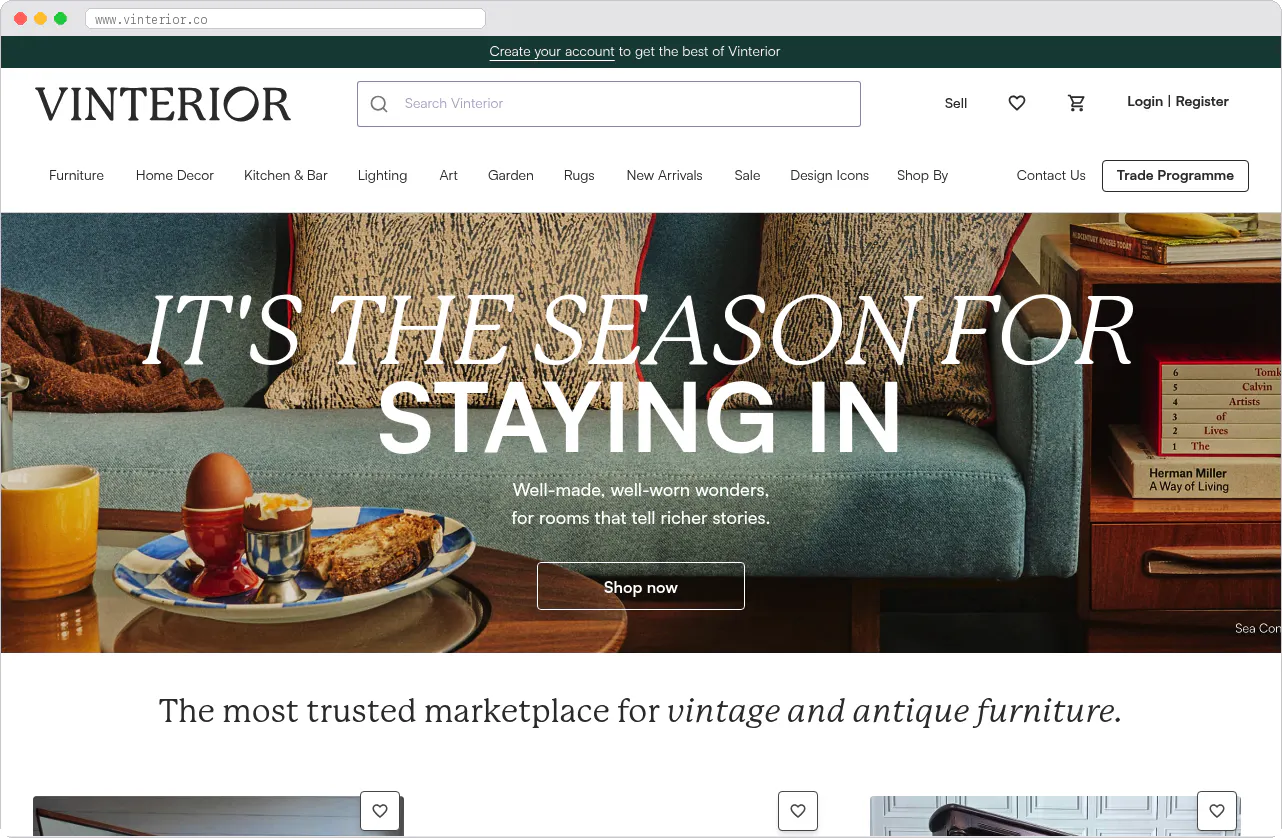
Vinterior (UK-focused) and Pamono (European) represent regional players serving specific geographic markets with localized shipping, currency, and customer service. These platforms demonstrate how geographic focus can create competitive advantages in markets with high shipping costs or regulatory complexity.
Essential features for a vintage furniture marketplace
Building a successful vintage furniture marketplace requires specific functionality that addresses the unique challenges of selling authentic, high-value, bulky items online.
Advanced listing creation tools must accommodate the complexity of vintage furniture descriptions. Sellers need structured fields for era, designer, materials, dimensions, condition details, and provenance information. Rich text editors allow detailed storytelling about each piece's history or significance. Multiple photo upload capabilities with zoom functionality help buyers examine grain patterns, wear marks, or construction details that affect value and authenticity.
Condition reporting deserves particular attention in vintage furniture marketplaces. Unlike new products with standardized conditions, vintage pieces exist on a spectrum from "museum quality" to "restoration project." Successful platforms develop clear condition terminology, require multiple condition photos, and may implement condition guarantees or return policies for misrepresented items.
Sophisticated search and filtering systems help buyers navigate large inventories of unique items. Standard e-commerce filters like price and category expand to include era-specific options (Mid-Century Modern, Art Deco, Victorian), designer names, materials, and size ranges. Location-based filtering becomes crucial for buyers wanting to inspect large pieces before purchase or arrange local pickup to avoid shipping costs.
Geographic search functionality specifically addresses vintage furniture's shipping challenges. Large armoires or dining tables cost hundreds of dollars to ship cross-country, making local discovery essential. Map-based search interfaces let buyers find pieces within driving distance, while seller location tags help set shipping expectations upfront.
Secure payment processing with escrow functionality protects both parties in high-value vintage furniture transactions. Buyers need confidence that their payment remains protected until they receive and approve their purchase. Sellers need assurance they'll receive payment after shipping expensive items to strangers. Platforms typically hold payments until delivery confirmation plus a brief inspection period.
Commission-based payment splitting requires integration with specialized marketplace payment providers like Stripe Connect. These services handle the complex regulatory requirements of holding funds, splitting payments between platform and seller, and managing tax documentation for professional dealers.
Messaging and negotiation tools facilitate the relationship-building necessary for vintage furniture sales. Unlike commodity purchases, vintage furniture transactions often involve questions about provenance, detailed condition discussions, or price negotiations. Built-in messaging systems with photo sharing capabilities let buyers and sellers communicate effectively while keeping transaction history within the platform.
Shipping integration and calculators address one of vintage furniture's biggest challenges. Large, heavy, or fragile pieces require specialized shipping through furniture delivery services rather than standard parcel carriers. Integration with companies like uShip, Shiply, or white-glove delivery services helps sellers provide accurate shipping quotes and professional handling for valuable items.
Authentication and verification systems build trust in a market where authenticity affects value significantly. While full expert authentication may be impractical for every listing, platforms can implement seller verification, authenticity guarantees for high-value items, or partnerships with appraisal services. Clear policies about authenticity disputes help buyers feel confident in their purchases.
Review and reputation systems adapted for vintage furniture's unique characteristics help buyers evaluate sellers beyond simple star ratings. Reviews should address authenticity accuracy, condition description honesty, packaging quality, and communication responsiveness. Given vintage furniture's high average order value, even a few detailed reviews can significantly impact seller credibility.
Step-by-step process to build a vintage furniture marketplace
Creating a successful vintage furniture marketplace follows a systematic approach that prioritizes rapid validation and iterative improvement over perfect initial features.
1. Validate your specific niche and value proposition
The vintage furniture market contains numerous sub-niches, each with different buyer behaviors, price points, and seller types. Rather than attempting to serve everyone, identify a specific segment you can dominate initially.
Research could reveal opportunities in mid-century modern furniture for urban millennials, affordable vintage finds for budget-conscious decorators, or high-end designer pieces for interior design professionals. Each market segment requires different platform features, pricing strategies, and marketing approaches.
Conduct interviews with potential buyers about their current vintage furniture shopping experiences. Ask about pain points with existing platforms, preferred price ranges, shipping concerns, and authenticity worries. Understanding your target audience's specific needs helps you design features that provide genuine value rather than generic marketplace functionality.
Similarly, engage with potential sellers including professional dealers, estate sale companies, vintage collectors, and casual sellers. Learn about their current sales channels, fee sensitivity, time investment preferences, and what features would convince them to try a new platform. Successful vintage marketplaces need committed sellers willing to create detailed listings and provide excellent customer service.
2. Choose your business model and pricing strategy
Commission-based pricing dominates vintage furniture marketplaces, but the specific structure affects both seller adoption and platform profitability. Consider these approaches:
Flat percentage commissions (typically 5-12%) provide predictable revenue but may discourage high-value listings if fees become substantial. Sliding scale commissions that decrease for higher-value items can attract professional dealers while maintaining profitability on smaller transactions.
Buyer fees or service charges can supplement seller commissions without increasing seller costs. However, buyer fees may reduce conversion rates if not clearly justified through superior service or buyer protection programs.
Listing fees work well for high-traffic platforms but can discourage sellers on new marketplaces without established buyer bases. Successful listing fee models typically offer free basic listings with premium options for enhanced visibility or features.
Membership or subscription models suit professional dealers who list items regularly but may exclude casual sellers who contribute unique inventory. Hybrid approaches combining low per-transaction fees with optional premium memberships can serve both seller types effectively.
3. Build your minimum viable platform
Your initial platform needs core functionality to facilitate vintage furniture transactions while remaining simple enough to launch quickly. Essential MVP features include:
User registration and profiles with basic verification to establish seller credibility. Even simple identity verification through social media accounts or phone numbers helps buyers feel more confident about unknown sellers.
Listing creation tools with structured fields for key vintage furniture information: era, style, designer, materials, dimensions, condition, and price. High-quality photo upload with multiple images becomes essential given vintage furniture's visual nature.
Basic search functionality filtering by category, location, price range, and key attributes like era or style. Advanced features can wait, but buyers must be able to find relevant listings efficiently.
Secure payment processing with commission collection capability. Integration with Stripe Connect or similar marketplace payment solutions handles the complex regulatory requirements of holding and splitting payments.
Simple messaging between buyers and sellers for questions, negotiations, or coordination. Built-in communication keeps transaction history within your platform and provides better customer support context.
Basic review system allowing buyers to rate sellers after transactions. Even simple star ratings provide crucial social proof for future buyers evaluating seller credibility.
4. Source your initial inventory through targeted outreach
Vintage furniture marketplaces require high-quality initial inventory to attract serious buyers. Unlike digital products or services, furniture photographs and descriptions take significant seller effort, making early supplier recruitment crucial.
Target professional vintage dealers and estate sale companies who already photograph and describe furniture professionally. These sellers have experience writing detailed condition reports and handling shipping logistics. Offer reduced commission rates or enhanced listing features to attract established sellers with quality inventory.
Connect with interior designers and decorators who frequently source vintage pieces for clients. These professionals understand furniture authenticity and condition assessment while having networks of trusted suppliers who might join your platform.
Reach out to vintage furniture collectors who may be ready to sell pieces from their collections. Collectors typically maintain detailed records about their items' provenance and condition, making them ideal early sellers who can help establish your platform's credibility.
Consider attending vintage furniture fairs, estate sales, or design events to meet potential sellers in person. Face-to-face conversations often convert better than cold outreach, particularly when explaining a new platform's benefits.
5. Launch with focused marketing to qualified buyers
Rather than broad consumer marketing, target buyers already interested in vintage furniture through specific channels and communities.
Content marketing about vintage furniture history, collecting tips, or design trends attracts qualified buyers while establishing your platform's expertise. Blog posts about "How to Authenticate Mid-Century Modern Furniture" or "Investment-Quality Vintage Pieces Under $500" bring organic traffic from motivated buyers.
Partner with interior design bloggers, vintage enthusiasts, or home renovation influencers who can introduce your platform to engaged audiences. Authentic recommendations from trusted sources convert better than general advertising.
Participate in online communities where vintage furniture buyers congregate. Reddit communities, Facebook groups, and specialized forums provide opportunities to share valuable content and subtle platform promotion when appropriate.
Local marketing through design districts, antique shops, or vintage stores can drive initial traffic in your launch market. Cross-promotion partnerships with complementary businesses expand your reach to qualified audiences.
6. Iterate based on user feedback and transaction data
Once transactions begin flowing through your platform, analyze both successful sales and abandoned processes to identify improvement opportunities.
Monitor which furniture categories, price ranges, or seller types generate the most activity. Double down on successful segments while investigating barriers in underperforming areas.
Track user behavior through the listing creation, search, and purchase processes. Where do users abandon their activities? What questions do they ask customer support most frequently? These patterns reveal friction points requiring attention.
Collect feedback from both buyers and sellers after completed transactions. What worked well? What caused confusion or frustration? How did your platform compare to their expectations and alternatives?
Use this feedback to prioritize feature development. Authentication tools might be crucial for high-value segments while shipping calculators matter more for bulky items. Let user needs drive development priorities rather than industry assumptions.
How much does it cost to build a vintage furniture marketplace?
Building a vintage furniture marketplace requires different investment levels depending on your approach, timeline, and feature requirements.
Custom development from scratch typically requires $50,000-$100,000 for a professionally built platform with essential vintage furniture features. This includes user management, listing creation, advanced search, payment processing, messaging, and basic mobile responsiveness. Additional costs include ongoing hosting ($200-1,000+ monthly), security maintenance, and feature updates. Development timelines usually span 6-12 months before launch.
Custom development provides complete control over features and design but requires significant upfront investment and technical management. Most vintage furniture marketplace founders lack the budget or timeline for this approach, particularly given the need to validate demand before major investment.
No-code marketplace builders like Sharetribe enable launching professional vintage furniture marketplaces in days rather than months. Sharetribe's platform includes built-in commission processing, user verification, advanced search, messaging, reviews, and mobile-optimized design specifically created for marketplace businesses.
A typical first-year budget using Sharetribe might include:
- Sharetribe subscription: $99-249/month depending on plan
- Custom design and branding: $2,000-8,000 for professional appearance
- Photography for initial listings: $1,000-3,000 to showcase inventory quality
- Marketing and advertising: $2,000-10,000 depending on geographic scope
- Legal setup and terms of service: $1,000-3,000 for compliance
Total first-year costs typically range from $15,000-35,000, substantially less than custom development while providing faster time to market and proven marketplace functionality.
Hybrid approaches combining no-code foundations with custom features offer flexibility as your marketplace grows. Sharetribe's developer platform allows adding specialized vintage furniture features like advanced condition reporting, authentication workflows, or specialized shipping integration while maintaining the reliable core marketplace infrastructure.
Why Sharetribe works well for vintage furniture marketplaces
Vintage furniture marketplaces face unique challenges that Sharetribe's platform addresses through purpose-built marketplace functionality.
Rapid validation and iteration become crucial when testing vintage furniture market demand in specific geographic areas or style segments. Sharetribe enables launching professional marketplaces in days, allowing founders to test concepts and gather user feedback before major investment. The 14-day free trial provides sufficient time to set up listings, configure payment processing, and begin seller outreach.
Commission-based payment processing through Stripe Connect integration handles the complex requirements of vintage furniture transactions. The platform automatically splits payments between sellers and marketplace operators while managing tax documentation and regulatory compliance. Escrow functionality holds buyer payments until delivery confirmation, providing security for high-value vintage pieces.
Advanced search and filtering capabilities help buyers navigate unique vintage inventory effectively. Location-based search addresses shipping cost concerns while era, style, and material filters enable precise discovery. Custom field options accommodate the detailed specifications important for vintage furniture authentication and valuation.
Built-in trust and safety features including user verification, review systems, and messaging functionality provide the confidence necessary for high-value vintage furniture transactions. Professional messaging keeps communication within the platform while photo sharing capabilities support detailed condition discussions.
Scalable expansion options support growth from local vintage marketplaces to national platforms. As successful marketplaces identify additional features needed for their specific vintage furniture niche, Sharetribe's developer platform enables custom additions while maintaining core marketplace reliability.
However, Sharetribe may not suit every vintage furniture marketplace concept. Highly specialized authentication workflows, extensive curatorial features, or complex auction functionality might require custom development. The platform works best for commission-based marketplaces focused on direct sales rather than auction or consignment models.
Launching your vintage furniture marketplace
The vintage furniture market's continued growth creates opportunities for focused marketplaces serving specific buyer segments, geographic regions, or price ranges better than generalist platforms.
Success requires understanding your target audience's specific needs rather than attempting to replicate existing platforms. Whether focusing on affordable mid-century modern pieces for urban millennials or investment-quality designer furniture for serious collectors, your platform must provide genuine value beyond what buyers can find elsewhere.
Start with a clearly defined niche, validate demand through direct customer research, and launch quickly to begin learning from real transactions. The faster you can connect quality vintage furniture sellers with motivated buyers, the sooner you'll identify the specific features and positioning that differentiate your marketplace in this growing industry.
The vintage furniture marketplace opportunity combines growing consumer interest in sustainable, unique products with the inefficiencies of existing sales channels. Platforms that successfully bridge this gap through trust, convenience, and specialized service can build sustainable businesses in this expanding market.
Frequently asked questions
How much does it cost to build a vintage furniture marketplace?
Costs vary by approach: Total first-year costs with a no-code marketplace platform typically run $2,000-5,000. No-code solutions enable faster validation and lower risk.
What features are essential for a vintage furniture marketplace?
Key features include detailed condition reporting, high-quality photo uploads, location-based search, secure payment processing with escrow, shipping integration, and authentication tools. Advanced search filtering by era, style, and materials is also crucial.
How do vintage furniture marketplaces make money?
Most use commission-based models, charging sellers 5-12% per transaction. Some add buyer fees or premium listing options. Sliding scale commissions that decrease for higher-value items help attract professional dealers.
What are the biggest challenges in vintage furniture marketplaces?
Authentication verification, accurate condition reporting, and shipping logistics for large items pose the biggest challenges. Building trust between strangers trading high-value unique pieces requires robust verification and review systems.
How long does it take to launch a vintage furniture marketplace?
Using no-code platforms like Sharetribe, you can launch in 1-2 weeks. Custom development typically takes 6-12 months. Faster launch enables quicker market validation and iteration based on real user feedback.
Who are the main competitors to new vintage furniture marketplaces?
Major competitors include Chairish (high-end), 1stDibs (luxury), Etsy (affordable), and Facebook Marketplace (local). Success comes from serving specific niches better than these generalist platforms through specialized features or curation.
Start your 14-day free trial
Create a marketplace today!
- Launch quickly, without coding
- Extend infinitely
- Scale to any size
No credit card required