How to build a marketplace for parking spaces
Parking marketplaces connect space owners with drivers seeking convenient spots. Learn how to validate your idea, build essential features, and launch a successful platform using proven strategies from successful parking marketplaces.
Published: Dec 21, 2023
Last updated: Mar 19, 2026
What is a parking space marketplace?
A parking space marketplace connects private property owners and businesses with drivers who need convenient, affordable parking. These platforms transform underutilized driveways, lots, and spaces into revenue-generating assets while solving parking challenges in dense urban areas.
The business model operates on commission-based revenue, typically charging 10-20% of each transaction. Property owners list their available spaces with details like location, availability windows, and pricing. Drivers search by location and time, book instantly, and pay through the platform. The marketplace handles payment processing, insurance coordination, and dispute resolution.
Parking marketplaces differ fundamentally from traditional parking operators. Instead of owning real estate, they use existing unused capacity. A homeowner's driveway sits empty during work hours. An office building's lot empties on weekends. A restaurant's parking area is available during off-peak hours. These idle assets become bookable inventory without the marketplace investing in property acquisition or development.
How parking marketplaces work
Successful parking marketplaces operate through a carefully orchestrated system that balances supply, demand, and trust. The core workflow involves property owners creating detailed listings with photos, availability calendars, access instructions, and pricing. Advanced platforms integrate with mapping services to show exact locations and walking distances to popular destinations.
Drivers typically search by entering their destination and desired timeframe. Results display available spaces with pricing, photos, and ratings from previous users. Many platforms offer instant booking, while others require owner approval for longer-term reservations. Payment processing happens upfront, with funds held in escrow until the parking session completes successfully.
The operational complexity increases significantly around access control and verification. Some marketplaces rely on honor systems with detailed access instructions. Others integrate smart locks, garage door openers, or mobile apps that unlock barriers. Premium platforms offer 24/7 customer support to handle access issues, disputes, and emergency situations.
Insurance and liability management represent critical operational components. Most successful marketplaces maintain comprehensive insurance policies covering property damage and liability incidents. They also implement verification processes for both space owners and drivers, including identity checks and vehicle registration validation.
Success stories: Learning from established parking marketplaces
The parking marketplace industry includes several successful platforms that demonstrate different approaches to the same fundamental problem. Understanding their strategies provides valuable insights for new entrants.
SpotHero dominates the North American market with over 8,000 locations across major cities. Founded in 2011, SpotHero focuses heavily on partnerships with commercial parking operators, hotels, and event venues. Their revenue model combines consumer bookings with B2B partnerships, generating about over $50 million annually. SpotHero's success stems from their focus on high-traffic areas and events where parking demand spikes predictably.
The platform excels at event-based parking, partnering with sports stadiums, concert venues, and convention centers. This strategy creates predictable demand surges that justify premium pricing. SpotHero also invested heavily in mobile apps and location-based marketing, capturing users at the moment they need parking most urgently.
ParkWhiz, acquired by EasyPark in 2019, built success through airport parking partnerships and subscription models for commuters. They pioneered the concept of guaranteed parking spots for regular commuters, reducing daily parking anxiety for urban workers. ParkWhiz's monthly parking subscriptions generated recurring revenue while solving long-term customer needs.
JustPark operates primarily in the UK with over 3 million registered users. Their model emphasizes peer-to-peer parking, encouraging homeowners to rent driveways and private spaces. JustPark succeeded by targeting residential areas near train stations, airports, and city centers where traditional parking options are scarce or expensive.
JustPark's marketing strategy focused on word-of-mouth growth and local community engagement. They provided marketing materials for space owners and incentivized referrals. This grassroots approach helped them build dense supply networks in specific neighborhoods, creating competitive moats against larger operators.
ParkopediaConnected, part of the Parkopedia ecosystem, operates globally across 75+ countries. They differentiate through comprehensive parking data integration, showing not just bookable spaces but all available parking options including street parking, rates, and restrictions. This information-rich approach attracts users seeking comprehensive parking intelligence rather than just bookable spots.
Essential features for parking marketplaces
Parking marketplaces require specific functionality that differs significantly from other rental platforms. The time-sensitive nature of parking needs, location-based search requirements, and access control challenges create unique feature requirements.
Location-based search and mapping forms the foundation of any parking marketplace. Users need precise location data, not general neighborhoods. Successful platforms integrate with Google Maps, Apple Maps, or specialized mapping services to show exact parking locations, walking distances to destinations, and real-time traffic conditions. Advanced search includes filters for covered parking, EV charging stations, oversized vehicle accommodation, and security features.
The search interface must handle various use cases: immediate parking needs ("I need a spot in 10 minutes"), planned parking for events or appointments, and recurring parking for commuters. Each scenario requires different user interfaces and booking flows.
Dynamic availability and calendar management addresses the complex scheduling needs of parking spaces. Unlike vacation rentals with day-long bookings, parking spaces often have hourly availability with different pricing for different times. A space might be available weekdays 9-5 for commuter parking, weekends for event parking, and evenings for restaurant customers.
Effective calendar systems allow space owners to set complex availability rules: different rates for different time periods, minimum and maximum stay durations, buffer times between bookings, and seasonal pricing adjustments. Integration with external calendar systems helps owners synchronize personal use with commercial availability.
Instant booking and payment processing reflects the urgent nature of parking needs. Drivers often search for parking while already en route to their destination. Platforms that require owner approval for bookings lose customers to competitors offering instant confirmation.
Payment processing must handle various scenarios: hourly rates, daily maximums, monthly subscriptions, and cancellation policies. Integration with payment providers like Stripe Connect enables automatic commission collection and split payments between the platform and space owners. Advanced platforms offer dynamic pricing based on demand, similar to ride-sharing surge pricing.
Access control and security features distinguish successful parking marketplaces from simple listing sites. Clear access instructions with photos and videos help drivers locate spaces and understand entry procedures. Integration with smart locks, garage door openers, and barrier systems enables keyless access for premium listings.
Security features include user verification for both drivers and space owners, vehicle registration tracking, and photo documentation of parking sessions. Some platforms require drivers to upload photos when parking and leaving to verify proper space usage and condition.
Two-way review and rating systems build trust between strangers sharing parking spaces. Reviews help future users assess space quality, accessibility, and owner reliability. Rating systems also help space owners evaluate driver behavior and parking etiquette.
Review systems for parking require different considerations than other marketplaces. Relevant factors include ease of finding the space, accuracy of photos and descriptions, cleanliness, safety of the area, and responsiveness of space owners to questions or issues.
Mobile-first design and notifications address the on-the-go nature of parking needs. Most parking bookings happen on mobile devices, often while driving or walking to destinations. Mobile apps must provide clear navigation to spaces, contact information for owners, and real-time support options.
Notification systems keep users informed about booking confirmations, access codes, upcoming reservations, and time reminders. Push notifications can alert space owners to new bookings and help drivers remember where they parked in large facilities.
Competitive landscape: Understanding your alternatives
The parking marketplace industry spans various business models and target markets. Understanding competitive approaches helps founders identify positioning opportunities and avoid overcrowded segments.
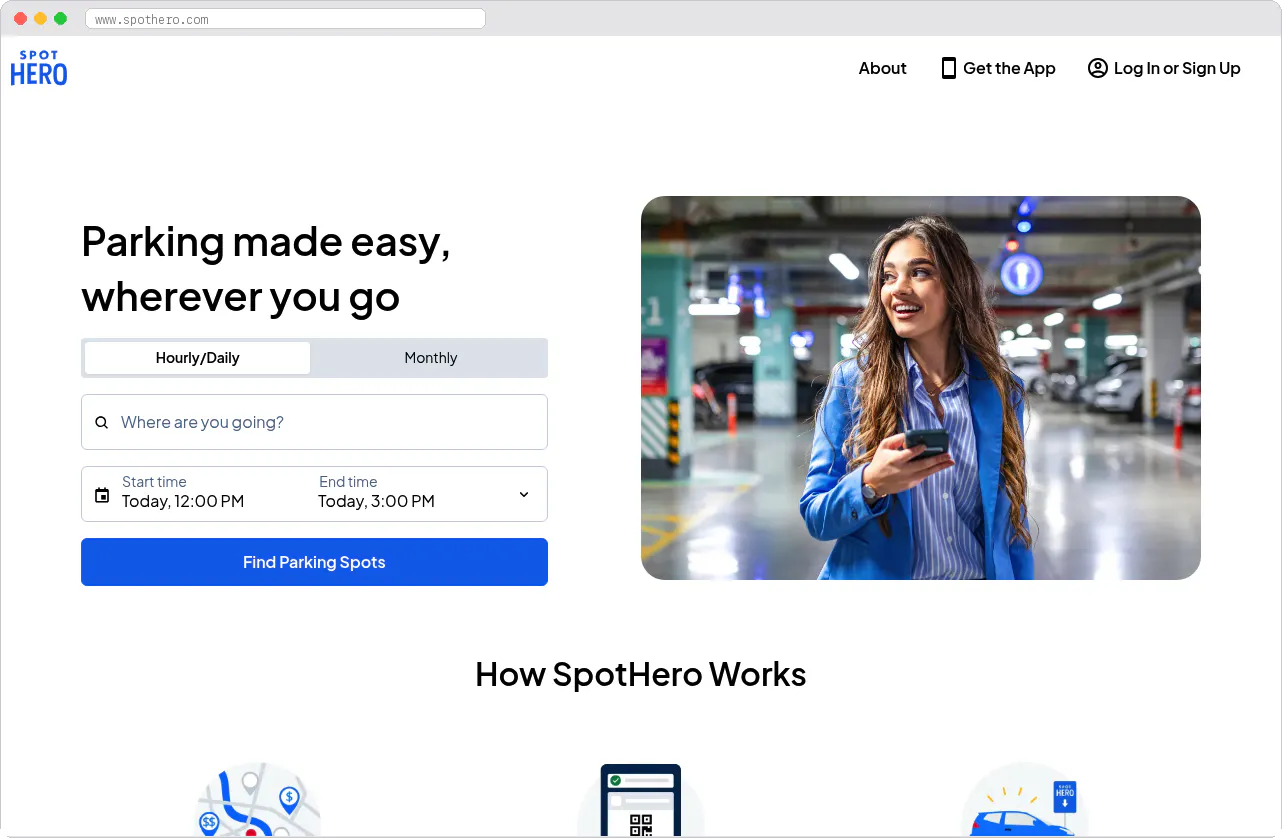
SpotHero and ParkWhiz dominate the event and airport parking segments in North America. They focus on partnerships with commercial operators rather than peer-to-peer listings. This approach provides reliability and professional service standards but limits inventory to traditional parking facilities. New entrants competing directly against these established players need significant capital for partnerships and marketing.
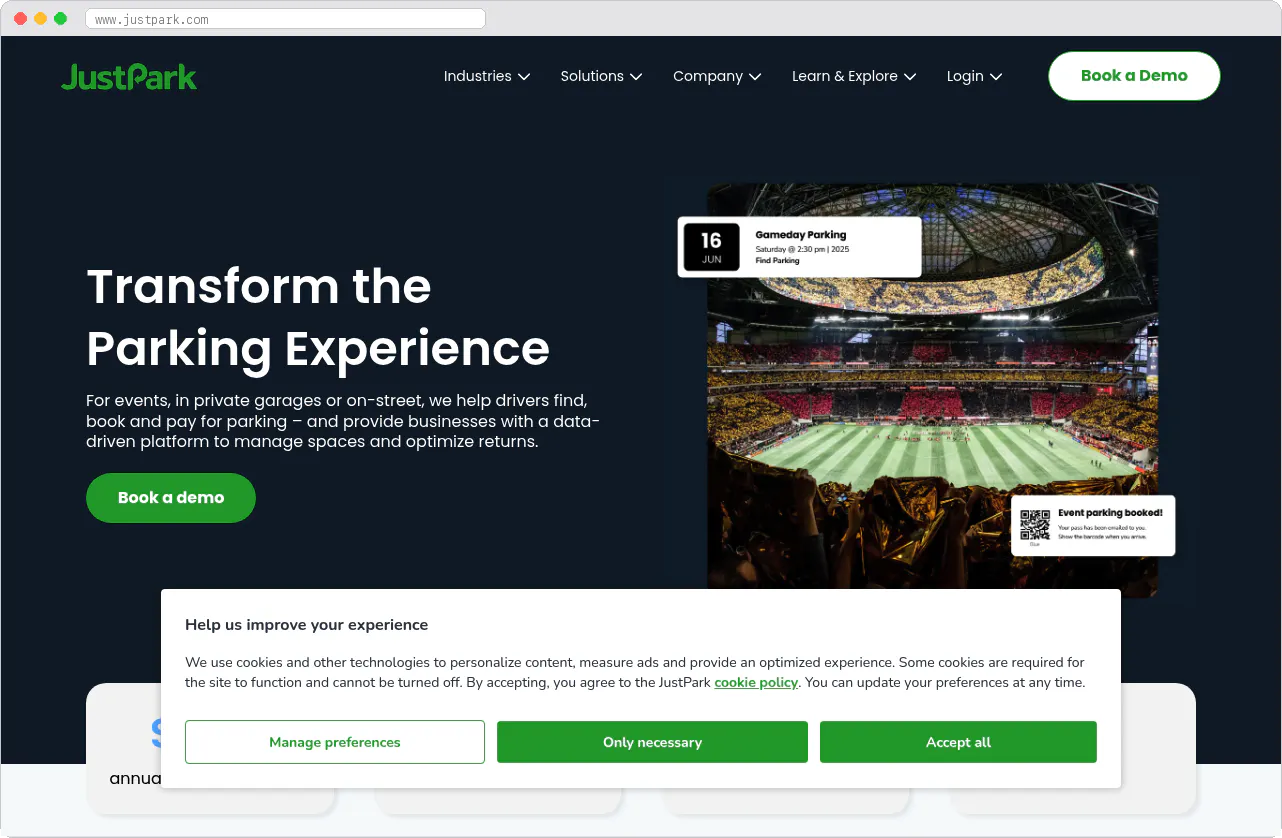
JustPark and YourParkingSpace in the UK emphasize peer-to-peer residential parking. They succeed by targeting areas where commercial parking is scarce or expensive. Their model works well in dense urban areas with limited parking supply but requires critical mass to provide comprehensive coverage.
Parkopedia differentiates through information rather than transactions. They aggregate parking data globally, showing rates, restrictions, and availability across all parking options. This information-rich approach attracts users but monetizes through advertising and data licensing rather than transaction commissions.
Traditional parking operators like ParkingSoft and ParkMobile focus on digitizing existing parking infrastructure. They partner with municipalities and commercial operators to add online booking and mobile payments to established parking systems. These platforms offer reliability but limited inventory expansion.
Niche specialized platforms serve specific segments like RV parking (Campendium, Harvest Hosts), boat storage (DockSharing), or event parking (ParkingPanda for specific venues). These focused approaches can succeed in underserved segments but limit growth potential.
For new marketplace founders, the competitive landscape suggests opportunities in underserved geographic markets, specialized vehicle types (motorcycles, RVs, commercial vehicles), or unique space types (covered parking, EV charging, security-focused spaces). Success often comes from geographic focus and superior local market understanding rather than feature innovation.
How to build a parking marketplace: Step-by-step process
Step 1: Validate your parking marketplace idea
Parking marketplace validation requires understanding both supply and demand dynamics in your target market. Start by researching parking pain points in your chosen geographic area. Walk or drive through neighborhoods, business districts, and event venues during peak times. Document parking availability, pricing, and user frustration points.
Interview potential space owners about their unused parking capacity. Homeowners near transit stations, airports, or downtown areas often have underutilized driveways or garages. Business owners with customer parking may have off-peak availability. Ask about their willingness to rent spaces and desired pricing.
Research local parking regulations and zoning laws. Some municipalities restrict commercial use of residential parking or require permits for parking businesses. Understanding regulatory constraints early prevents costly pivots later.
Analyze existing parking options in your target area. What are current rates? Where are supply gaps? When do shortages occur? Event venues, airports, and dense urban areas typically show the strongest demand signals.
Validate demand by surveying potential drivers about parking challenges, current spending, and willingness to try peer-to-peer parking. Social media groups, community forums, and local event attendees provide accessible research subjects.
Step 2: Choose your business model and initial focus
Most successful parking marketplaces start with geographic focus rather than trying to serve broad markets immediately. Choose a single city, neighborhood, or venue type where you can achieve supply density quickly.
Revenue models vary among parking platforms. Commission-based models (10-20% of transactions) align platform success with user success but require transaction volume to generate meaningful revenue. Subscription models work for commuter parking but limit growth to regular users. Listing fees provide immediate revenue but may discourage space owners from joining.
Many successful platforms start with commission-only models, avoiding upfront costs for space owners while building supply. As the platform matures, hybrid models incorporating subscriptions for frequent users or premium features for space owners can increase revenue per user.
Consider your initial target segment carefully. Airport parking offers high transaction values but requires partnerships and competition with established operators. Event parking provides predictable demand spikes but depends on venue relationships. Residential peer-to-peer parking has lower barriers to entry but requires community building and trust development.
Step 3: Build your minimum viable platform
Parking marketplaces require core functionality from launch due to the time-sensitive nature of parking needs. Unlike some marketplaces where manual processes can substitute for features initially, parking platforms need reliable search, booking, and payment systems from day one.
Your minimum viable platform should enable space owners to create detailed listings with photos, availability calendars, pricing, and access instructions. Location mapping must be precise, showing exact space locations rather than general addresses. Drivers need search functionality with location, time, and date filters plus instant booking capabilities.
Payment processing becomes essential immediately because parking transactions often happen remotely without face-to-face interaction. Integration with Stripe Connect or similar marketplace payment systems enables commission collection and secure fund handling.
Basic user profiles with verification features build initial trust. Require email verification, phone number confirmation, and photo uploads for both space owners and drivers. These simple steps significantly reduce fraud and increase user confidence.
Skip advanced features like smart lock integration, mobile apps, or dynamic pricing for your initial launch. Focus on proving that people will list spaces and book them through your platform. Manual processes can handle customer support, dispute resolution, and access issues initially.
Step 4: Onboard your first space owners
Parking marketplaces typically start by building supply before driving demand. Drivers abandon platforms without sufficient parking options, while space owners will list properties on platforms without immediate bookings if they believe demand will develop.
Target space owners near high-demand areas: airports, train stations, sports venues, convention centers, and dense urban districts. Homeowners with driveways near these locations often welcome additional income opportunities.
Direct outreach works effectively for initial supply building. Walk through target neighborhoods and leave door hangers or flyers explaining your platform and revenue potential. Local Facebook groups and neighborhood apps like Nextdoor help identify interested space owners.
Partnership approaches can accelerate supply building. Small businesses with customer parking often have off-peak availability. Restaurants busy during dinner hours may rent spaces during lunch or breakfast. Office buildings full during weekdays might offer weekend parking.
Provide marketing support for early space owners. Professional photos increase booking rates significantly. Detailed listing descriptions help drivers understand access procedures and space characteristics. Consider offering these services free for initial space owners to ensure high-quality listings.
Step 5: Launch to your first drivers
Once you have 20-30 quality parking spaces in your target area, begin attracting drivers strategically. Focus marketing on specific events, locations, or times when parking demand exceeds supply.
Event-based marketing provides concentrated demand opportunities. Concert venues, sports stadiums, and festival locations create predictable parking shortages. Partner with event promoters or purchase targeted ads around specific events.
Commuter-focused marketing targets regular parkers with consistent needs. Transit stations, downtown areas, and business districts generate daily parking demand. LinkedIn ads and local business partnerships help reach working professionals who park regularly.
Local SEO optimization helps drivers discover your platform when searching for parking in your area. Create location-specific landing pages for popular destinations and optimize for searches like "parking near [venue]" or "cheap parking [neighborhood]".
Referral programs incentivize early users to bring friends and family. Parking often involves group activities like concerts, sports events, or airport trips. Word-of-mouth recommendations from satisfied users provide high-quality customer acquisition.
Step 6: Achieve supply-demand balance
Successful parking marketplaces maintain careful balance between available spaces and booking demand. Too much supply dilutes individual space owner revenue. Insufficient supply frustrates drivers and reduces platform reliability.
Monitor key metrics like booking conversion rates (percentage of searches resulting in bookings), space utilization rates (percentage of available hours actually booked), and user retention for both sides of the marketplace.
Geographic density matters more than total listings. Ten spaces within two blocks of a venue provide better user experience than fifty spaces scattered across a city. Focus supply building efforts on areas where you already have some spaces rather than expanding too broadly.
Pricing guidance helps optimize marketplace dynamics. Space owners often underprice or overprice their listings without market data. Provide pricing recommendations based on location, time, amenities, and demand patterns. Dynamic pricing tools can automatically adjust rates based on demand signals.
Seasonal and event-based planning helps anticipate demand fluctuations. Sports seasons, concert tours, and holiday travel create predictable parking patterns. Work with space owners to adjust availability and pricing for these peak periods.
Step 7: Scale and expand strategically
Parking marketplace expansion typically happens geographically rather than through feature additions. Once you achieve success in one area, replicate the model in similar neighborhoods or cities.
Expansion priorities depend on your initial success factors. If event parking drove growth, target other cities with similar venues. If commuter parking succeeded, look for areas with comparable transit patterns and employment density.
Partnership strategies can accelerate expansion. Property management companies, commercial real estate firms, and business improvement districts control multiple parking assets across wide areas. Strategic partnerships provide instant supply in new markets.
Technology investments become worthwhile at scale. Mobile apps improve user experience and retention. Smart lock integration reduces friction and enables unattended parking. Dynamic pricing optimization increases revenue per space. Customer support automation handles routine inquiries.
Consider adjacant opportunities as your platform matures. EV charging station partnerships serve growing electric vehicle adoption. Valet services add premium options for high-end venues. Car wash and detailing services provide additional revenue streams for space owners.
Building approaches and costs
Parking marketplaces can be built using various approaches, each with different cost structures, timelines, and technical requirements.
Custom development provides complete control over features and user experience but requires significant investment. A basic parking marketplace with location search, booking, and payments typically costs $50,000-150,000 to develop professionally. This includes backend infrastructure, web platform, basic mobile apps, and payment integration.
Development timelines span 6-12 months for initial launch, with ongoing development costs for maintenance, updates, and new features. Custom development makes sense for well-funded startups targeting large markets or those requiring unique functionality not available in existing platforms.
No-code marketplace builders like Sharetribe enable rapid launch at lower cost. Sharetribe includes location-based search, calendar booking, payment processing, and user management functionality specifically designed for rental marketplaces. You can launch a functional parking marketplace in 1-2 weeks rather than months.
Sharetribe pricing starts at $149/month for live marketplaces, with transaction fees of 2-5% depending on your plan. This approach works well for testing market demand, building initial supply and demand, and validating business models before investing in custom development.
The platform supports customization through APIs and developer tools, enabling feature additions as your marketplace grows. Many successful parking marketplaces start with Sharetribe and add custom features once they've proven market fit and generated revenue for development investment.
WordPress and plugins provide a middle-ground option with moderate costs and customization flexibility. Marketplace plugins like WooCommerce Bookings or Ultimate Member create basic functionality, though significant customization is required for parking-specific features like location search and calendar availability.
This approach typically costs $5,000-25,000 including design, development, and plugin licenses. Timeline spans 2-6 months depending on customization requirements. WordPress works for founders with some technical skills who want more control than no-code platforms but can't afford custom development.
Hybrid approaches combine multiple tools to create comprehensive solutions. For example, using Sharetribe for core marketplace functionality while integrating specialized tools for mapping (Mapbox), payments (Stripe Connect), or communication (Twilio).
This approach provides flexibility to optimize individual components while maintaining reasonable costs and development timelines. Integration complexity increases maintenance requirements but enables best-of-breed solutions for each platform component.
Why Sharetribe works for parking marketplaces
Sharetribe's marketplace platform addresses the specific challenges parking marketplace founders face during launch and growth phases.
Speed to market enables testing ideas before competitors enter your market. Parking marketplaces benefit from first-mover advantages in specific geographic areas. Early entry allows you to build relationships with key space owners and establish brand recognition before competition intensifies.
Sharetribe includes essential parking marketplace features from launch: location-based search with map integration, availability calendars with hourly booking options, secure payment processing with commission handling, and user verification systems. These features typically require months of custom development but are available immediately with Sharetribe.
Location-based functionality handles the geographic requirements parking marketplaces need. Precise location mapping, radius-based search, and integration with mapping services provide professional user experience without custom development. Advanced search filters for parking-specific needs like covered spaces, EV charging, or size restrictions are configurable through the platform.
Booking and calendar management supports the complex scheduling requirements parking spaces create. Unlike vacation rentals with simple date ranges, parking spaces often have hourly availability, different rates for different times, and complex scheduling rules. Sharetribe's booking system handles these requirements while maintaining user-friendly interfaces for both space owners and drivers.
Payment processing and commission management addresses the financial complexity of parking marketplaces. Automatic commission collection, split payments between platform and space owners, and integration with Stripe Connect ensure compliant and reliable financial operations from day one.
Scalability and customization support growth without platform switching. As your parking marketplace succeeds, you can add custom features, integrate third-party services, and modify workflows while maintaining your existing user base and data. This eliminates the need to rebuild your platform as you grow, a common challenge with simple no-code tools.
Many successful marketplaces start with Sharetribe's no-code functionality and add custom features once they've validated their market and generated revenue. This approach minimizes upfront investment while ensuring scalability for growth.
Expert partner network provides development support when you need custom features. Sharetribe's certified expert partners understand marketplace dynamics and can add specialized functionality like smart lock integration, mobile apps, or advanced analytics without starting from scratch.
The limitations of Sharetribe include less control over core platform architecture compared to custom development and potential transaction fee costs as your marketplace scales. However, these tradeoffs are generally favorable for early-stage parking marketplaces focused on proving market demand rather than optimizing technical infrastructure.
Getting started with your parking marketplace
Parking marketplaces succeed through execution rather than innovation. The core concept is well-established, with successful examples across multiple markets. Your success depends on understanding local parking dynamics, building relationships with space owners, and providing reliable service to drivers.
Start by validating demand in your target market through direct research. Talk to potential space owners about their unused parking capacity and willingness to rent spaces. Survey drivers about parking challenges and current spending patterns. This research guides your initial focus and business model decisions.
Choose your building approach based on your technical skills, budget, and timeline. No-code platforms like Sharetribe enable rapid market entry and iteration, while custom development provides complete control at higher cost and longer timelines.
Focus on geographic density rather than broad coverage initially. Success in one neighborhood creates a foundation for expansion, while thin coverage across multiple areas satisfies neither space owners nor drivers effectively.
Plan for operational complexity beyond technology. Insurance, liability, access control, and customer support require ongoing attention. Partner with appropriate service providers and develop standard procedures for common issues.
Parking marketplaces reward founders who understand local markets, build strong relationships, and execute consistently. The technology enables the business, but success comes from understanding parking dynamics and serving users effectively.
Frequently asked questions
How much does it cost to build a parking marketplace?
Costs vary by approach: Sharetribe starts at $149/month for a no-code solution, WordPress with plugins costs $5,000-25,000, while custom development typically requires $50,000-150,000 for initial launch.
What features does a parking marketplace need?
Essential features include location-based search with mapping, availability calendars, instant booking, secure payments with commission handling, user verification, and mobile-responsive design for on-the-go parking needs.
How do parking marketplaces make money?
Most parking marketplaces use commission-based models, charging 10-20% of each transaction. Some also offer subscription models for frequent users or listing fees for premium placement.
How long does it take to launch a parking marketplace?
Timeline depends on your approach: no-code platforms like Sharetribe enable launch in 1-2 weeks, WordPress solutions take 2-6 months, while custom development requires 6-12 months minimum.
What are the main challenges of running a parking marketplace?
Key challenges include achieving supply-demand balance, managing access control and security, handling insurance and liability issues, and building trust between space owners and drivers who are strangers.
How do I find parking spaces for my marketplace?
Target homeowners near high-demand areas like airports and venues, partner with businesses that have off-peak parking availability, use direct outreach in neighborhoods, and use local social media groups.
Start your 14-day free trial
Create a marketplace today!
- Launch quickly, without coding
- Extend infinitely
- Scale to any size
No credit card required