How to build a website like Nextdoor
Learn how Nextdoor's hyperlocal community marketplace works, generates revenue through advertising and business services, and discover the step-by-step process to build your own neighborhood-focused platform.
Published: Feb 21, 2026
Last updated: Mar 19, 2026
Nextdoor reshaped neighborhood communication by creating the world's largest hyperlocal social network. With over 300,000 neighborhoods across 11 countries and more than 27 million weekly active users, the platform has proven that hyperlocal community engagement can scale into a billion-dollar business.
What started as a simple neighborhood directory in 2010 has evolved into a complete local marketplace where neighbors connect, share information, buy and sell items, find services, and build community. The platform's success demonstrates the power of combining social networking with local commerce in a trusted, verified environment.
Building a Nextdoor clone requires understanding both the technical infrastructure and the community dynamics that make hyperlocal platforms successful. This guide explores Nextdoor's business model, key features, and the practical steps to create your own neighborhood-focused marketplace.
How does Nextdoor work?
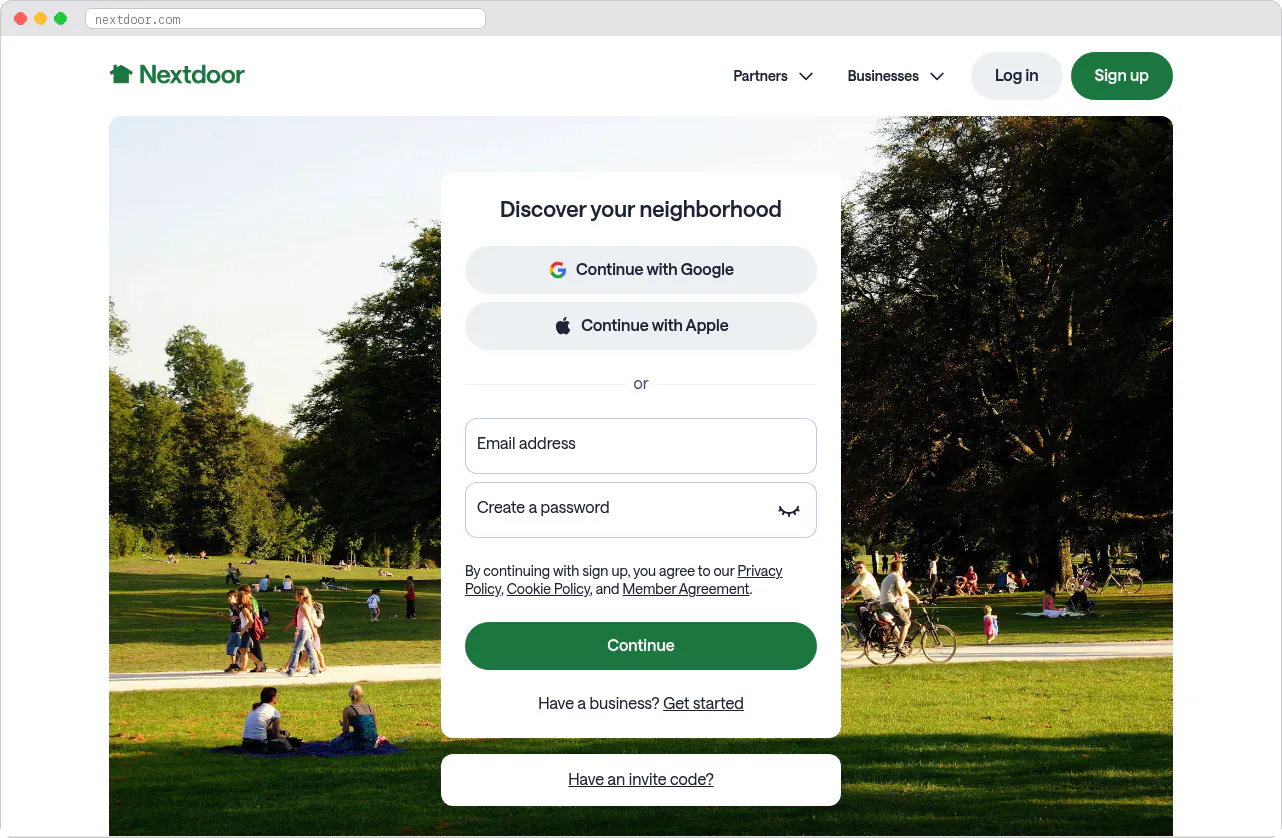
Nextdoor operates as a hyperlocal social network that combines community discussion with marketplace functionality. The platform creates private networks for verified neighborhoods where residents can communicate, share recommendations, and conduct local commerce.
The verification process is central to Nextdoor's model. Users must prove they live in a specific neighborhood through address verification via postcard, phone number, or credit card billing address. This creates trusted micro-communities where members know their interactions are with actual neighbors.
Once verified, residents can access their neighborhood's private network and nearby areas. The platform facilitates several types of interactions:
Community discussions and information sharing: Residents post about local events, safety concerns, lost pets, and neighborhood news. This content drives daily engagement and establishes the platform as an essential community resource.
Local business discovery and recommendations: Neighbors recommend contractors, restaurants, services, and professionals. These organic recommendations carry considerable weight because they come from trusted community members rather than anonymous reviewers.
Classified marketplace transactions: Users buy and sell items directly with neighbors, similar to Craigslist but within a verified local network. The proximity and verification reduce fraud risk and enable convenient pickup-based transactions.
Service provider connections: Local professionals like handymen, dog walkers, tutors, and cleaners create business profiles and connect with potential customers in their immediate area.
The two-sided nature emerges from residents who act as both content consumers and service seekers (demand side) and local businesses or service providers who want to reach these engaged neighborhood audiences (supply side). In contrast to typical marketplaces where transactions flow through the platform, Nextdoor primarily facilitates connections, with most payments and service delivery happening offline.
How does Nextdoor make money?
Nextdoor's revenue model centers on advertising and business services rather than transaction commissions. The platform generated approximately $200 million in revenue in 2021, with most income coming from local advertising and premium business features.
Local advertising revenue: Small and medium businesses pay to promote their services to specific neighborhoods. Nextdoor's hyperlocal targeting allows a plumber to advertise only to residents within their service area, making ad spend highly efficient. Business owners can sponsor posts, display banner ads, or promote their business profiles to appear in relevant neighborhood feeds.
Nextdoor Business and Premium subscriptions: Local businesses pay monthly fees for enhanced profiles, analytics, lead management tools, and increased visibility in search results. These subscriptions typically range from $30-100 per month depending on the business size and features included.
Sponsored content and partnerships: Nextdoor partners with larger brands and organizations to create sponsored content that feels native to neighborhood discussions. For example, a home security company might sponsor safety-related discussions, or a retail chain might sponsor local event listings.
Lead generation services: The platform connects service providers with residents seeking specific services, potentially taking a referral fee or charging providers for access to qualified leads.
The business model benefits from network effects: as more residents join a neighborhood network, it becomes more valuable for local businesses to advertise there. Similarly, business participation makes the platform more useful for residents, encouraging further growth.
Unlike transaction-based marketplaces that take 3-15% commissions, Nextdoor's advertising model allows the platform to grow without inserting itself into every transaction. This approach reduces friction for users while building sustainable recurring revenue from businesses that benefit from ongoing community access.
What makes Nextdoor successful?
Geographic verification and trust: Nextdoor's address verification system creates inherent trust that other platforms lack. When users know they're interacting with actual neighbors, they're more likely to engage authentically, make purchases, and provide honest recommendations. This verification barrier also reduces spam and fraud.
Hyperlocal focus solves real problems: The platform addresses genuine neighborhood needs that broader social networks don't serve well. Finding a reliable babysitter, reporting suspicious activity, or organizing a block party requires local knowledge and connections that only immediate neighbors can provide.
Network effects within geographic boundaries: Unlike social networks where connections can be scattered globally, Nextdoor's geographic constraints create dense, highly engaged local networks. A single neighborhood might have hundreds of active residents who regularly interact, creating strong community bonds and high platform stickiness.
Low competition barriers in individual markets: While building a global Nextdoor competitor is challenging, establishing dominance in specific neighborhoods or cities is more achievable. Once residents adopt a platform for local communication, switching costs are high because the entire community would need to migrate together.
Recurring engagement through daily utility: Residents check Nextdoor for practical reasons like finding recommendations, staying informed about local issues, or selling items. This utility-driven engagement creates habitual usage patterns that pure social platforms struggle to maintain.
Business-friendly revenue model: Local businesses appreciate Nextdoor's advertising model because it directly connects them with nearby customers who are actively seeking services. The hyperlocal targeting often delivers better ROI than broader digital advertising platforms.
The platform's success also stems from timing. Nextdoor launched when social media was established but hyperlocal communication was still fragmented across email lists, bulletin boards, and word-of-mouth. By digitizing and centralizing neighborhood communication, Nextdoor created a new category that larger platforms couldn't easily replicate.
Key features of a Nextdoor-like marketplace
Building a hyperlocal community platform requires specific functionality that balances social networking with local commerce and maintains community trust.
Address verification and neighborhood boundaries: Users must prove residency through multiple verification methods including mailed postcards, phone verification, or credit card address matching. The platform needs to define neighborhood boundaries accurately, often requiring integration with municipal data or geographic information systems.
Geographically-organized content feeds: Content should be organized by proximity, with residents seeing posts from their immediate neighborhood first, then expanding to nearby areas. Users need controls to adjust their geographic content radius while maintaining the local focus that defines the platform.
Multi-category posting and discussion system: Residents should be able to create posts in categories like safety alerts, recommendations, classifieds, lost and found, general discussion, and local events. Each category may require different features, such as item photos for classifieds or location mapping for safety posts.
Local business profiles and discovery: Service providers need full profiles with business information, customer reviews, photo galleries, and service area maps. The platform should include search and filtering tools that help residents find businesses by category, location, and availability.
Review and recommendation system: Neighbors need to rate and recommend local businesses, with reviews tied to verified user accounts. The system should distinguish between general recommendations in posts versus formal business reviews, giving different weight to each type of feedback.
Direct messaging and contact facilitation: Users must be able to contact each other privately while maintaining privacy and safety. This might include masked phone numbers, in-app messaging, or secure contact forms that don't reveal personal information until users choose to share it.
Event creation and RSVP management: Residents should be able to organize neighborhood events, block parties, or community meetings with RSVP tracking and automatic reminders. Event features might include photo sharing, post-event discussions, and recurring event support.
Safety and reporting tools: Community safety requires tools for reporting suspicious activity, sharing alerts, and coordinating with local law enforcement when appropriate. These features need careful design to encourage legitimate safety communication while preventing misuse or discrimination.
Mobile-responsive design and apps: Hyperlocal platforms depend on mobile usage as residents access them while walking around their neighborhood, at local businesses, or during community events. Push notifications for relevant local activity can drive engagement.
Moderation and community management tools: Platform administrators and volunteer community moderators need tools to manage content, resolve disputes, and maintain community standards. This includes automated content filtering, user reporting systems, and escalation procedures for sensitive issues.
Competitors and alternatives
Several platforms compete with Nextdoor in the hyperlocal community space, each with different approaches to neighborhood engagement and monetization.
Ring Neighbors (Amazon): Ring's neighborhood app focuses primarily on security and safety, using Ring doorbell and camera networks to create crime and safety alert systems. Unlike Nextdoor's broader community focus, Ring Neighbors centers on security incidents, suspicious activity reports, and safety discussions. The platform benefits from Ring's hardware ecosystem but lacks the thorough community features that drive daily engagement on Nextdoor.
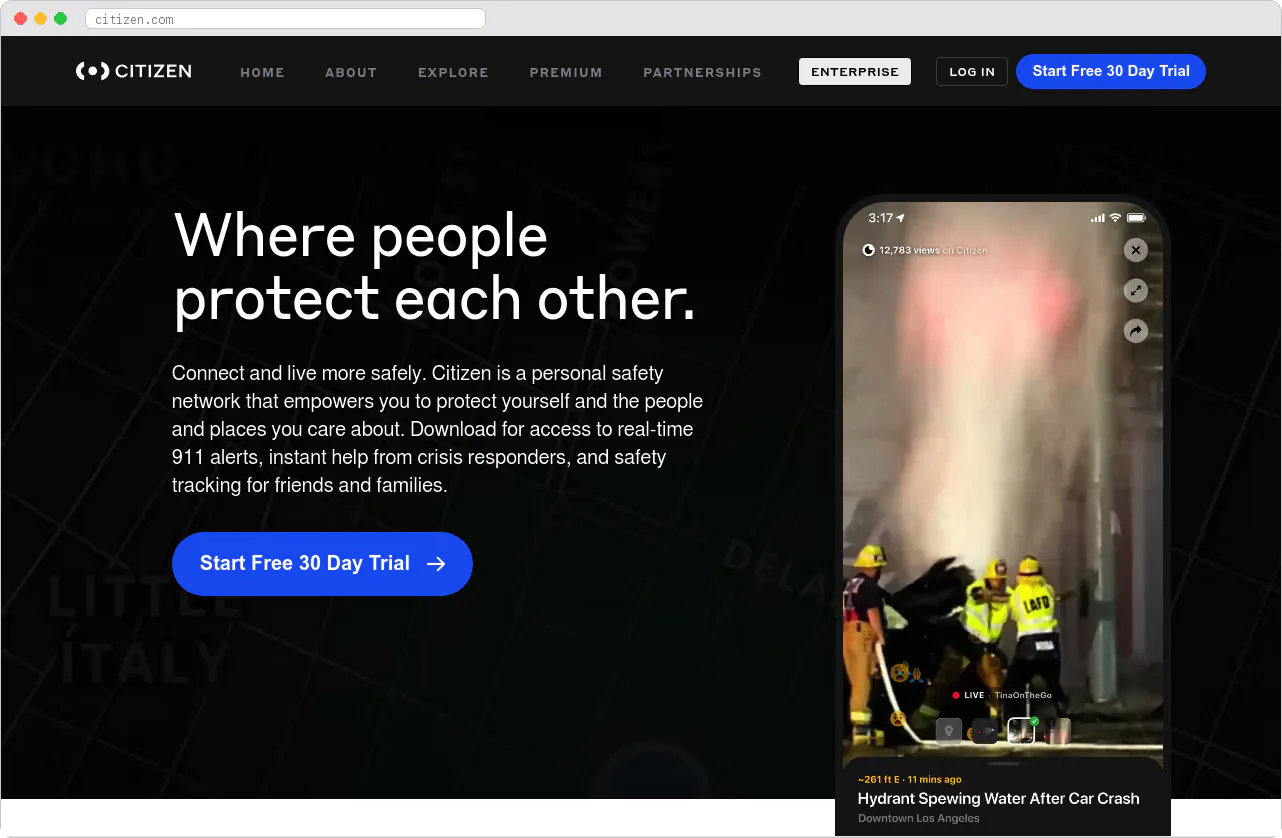
Citizen: Originally called Vigilante, Citizen provides real-time crime and emergency alerts based on 911 scanner data and user reports. The platform covers safety and emergency information but doesn't include marketplace functionality, local business discovery, or general community discussion. Citizen's focus on breaking news and alerts creates different engagement patterns than Nextdoor's community-building approach.
Facebook Groups and Local: Facebook offers neighborhood groups and local business pages, but these exist within the broader Facebook ecosystem rather than as dedicated hyperlocal platforms. Local Facebook groups can be active but often suffer from poor content organization, mixed geographic boundaries, and the distractions of Facebook's global social network. Facebook's advertising model also prioritizes broader reach over hyperlocal targeting.
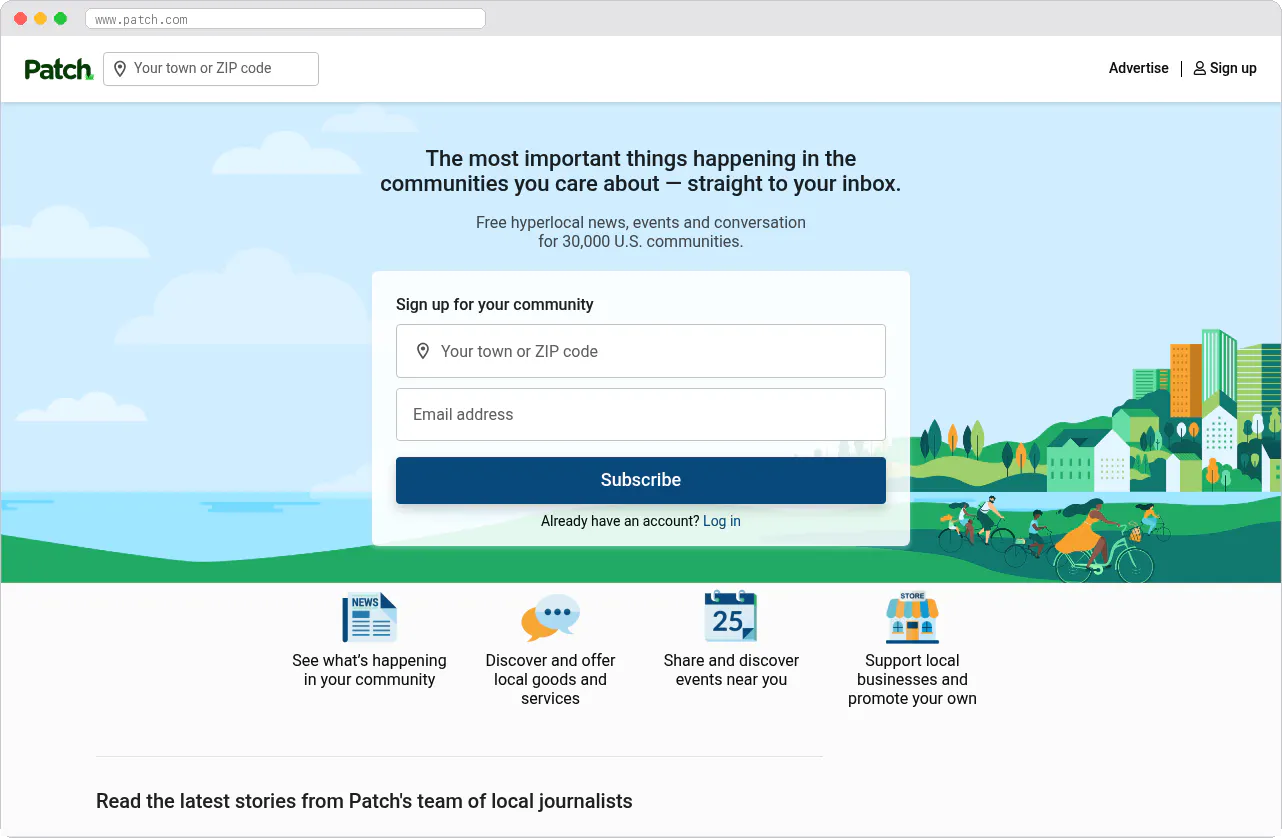
Patch: AOL's Patch network creates local news and information websites for specific communities, with some social features and local business directories. Patch focuses more on professional journalism and local news rather than peer-to-peer community interaction. The platform struggles with consistent coverage and community engagement compared to user-generated platforms like Nextdoor.
WhatsApp and Telegram neighborhood groups: Some communities organize through messaging apps, creating WhatsApp or Telegram groups for neighborhood communication. These solutions offer privacy and direct communication but lack the structured features, business integration, and content organization that dedicated platforms provide. Group management becomes difficult as membership grows beyond immediate acquaintances.
Each alternative has limitations that Nextdoor addresses: Ring focuses too narrowly on security, Facebook lacks hyperlocal optimization, Patch emphasizes professional content over community interaction, and messaging apps don't scale well for neighborhood-wide communication. This competitive landscape suggests opportunities for platforms that combine Nextdoor's community features with specialized focuses like environmental initiatives, local commerce, or specific demographic groups.
How to build a marketplace like Nextdoor
Creating a hyperlocal community platform requires balancing technical development with community building and geographic strategy.
Start with geographic focus and market research: Choose a specific city or region rather than attempting nationwide coverage immediately. Research local communication patterns, existing community groups, and neighborhood boundaries. Understanding how residents currently connect and what problems they face will inform your platform's initial features and positioning.
Analyze your target area's demographics, housing patterns, and community engagement levels. Suburban neighborhoods with high homeownership rates often engage more actively in hyperlocal platforms than transient urban areas. Look for communities with active homeowner associations, parent groups, or existing online neighborhood discussions.
Design and implement address verification: Build solid address verification that prevents fraud while remaining user-friendly. Multiple verification methods increase conversion rates since users can choose their preferred option. Integration with postal services, telecommunications providers, or credit reporting agencies can automate verification, but manual review processes may be necessary for edge cases.
Consider verification challenges like apartment buildings, new developments, or areas with non-standard addressing. Your verification system should handle these scenarios while maintaining security and preventing abuse.
Create intuitive content organization: Design category systems that match how residents naturally think about neighborhood topics. Test these categories with real community members before launch, as poor organization can kill engagement. Consider how posts will be discovered, whether through chronological feeds, category browsing, or algorithmic curation.
Implement geographic content distribution that shows relevant posts based on proximity while allowing users to expand their radius when needed. Content from immediate neighbors should be prioritized over posts from broader areas.
Build community moderation systems: Hyperlocal platforms face unique moderation challenges because conflicts between users often involve people who see each other regularly in real life. Design reporting systems, community guidelines, and dispute resolution processes that account for ongoing neighbor relationships.
Consider both automated content filtering and human moderation, potentially including volunteer community moderators who understand local context. Establish clear escalation procedures for serious issues like harassment, discrimination, or threats.
Develop local business integration: Create business profile systems that allow service providers to showcase their work, collect reviews, and connect with potential customers. Consider how businesses will be verified, how they'll be discovered by residents, and how the platform will prevent spam or low-quality business listings.
Design lead generation and communication tools that benefit both residents seeking services and businesses looking for customers, while maintaining user privacy and preventing unwanted solicitation.
Plan community seeding and growth strategies: Hyperlocal platforms require critical mass within specific neighborhoods to become useful. Develop strategies for seeding initial content and users, potentially through partnerships with local organizations, community leaders, or existing online groups.
Consider how you'll expand from neighborhood to neighborhood while maintaining engagement in existing areas. Geographic expansion requires ongoing community management and localized marketing efforts.
Address privacy and safety concerns: Hyperlocal platforms raise unique privacy concerns since users' general location is inherent to the service. Design privacy controls that let users share as much or as little personal information as they're comfortable with, while maintaining the trust and verification that makes the platform valuable.
Implement safety features like content reporting, user blocking, and integration with local law enforcement when appropriate. Consider how you'll handle sensitive situations like neighborhood conflicts, discrimination complaints, or safety threats.
Cost and development considerations
Building a hyperlocal community platform involves several cost factors that vary markedly based on your technical approach and geographic scope.
Custom development costs: Building a Nextdoor clone from scratch typically requires $75,000-150,000 for an initial version with core features. This includes user authentication, address verification, content management, business profiles, messaging systems, and mobile apps. Additional costs include ongoing hosting, maintenance, third-party integrations, and feature expansion as the platform grows.
Address verification integration with postal services or credit agencies can cost $1,000-5,000 monthly depending on volume. Geographic data and mapping services add $500-2,000 monthly for detailed neighborhood boundary data.
No-code and hybrid approaches: No-code marketplace platforms bring costs down to $99-399 per month in subscription fees, with no large upfront investment needed. Most no-code solutions lack the hyperlocal functionality that defines neighborhood platforms.
Hybrid approaches combining no-code foundations with custom-coded features for verification and geographic functionality typically cost $25,000-50,000 initially, with lower ongoing technical maintenance requirements than fully custom solutions.
Geographic expansion costs: Each new market requires community seeding, local partnerships, and ongoing community management. Budget $5,000-15,000 per major metropolitan area for initial market entry, including local marketing, community outreach, and market-specific content creation.
Community management and moderation: Hyperlocal platforms require more intensive human moderation than broader social networks due to the personal nature of neighbor conflicts and local issues. Budget for full-time community managers at $50,000-70,000 annually for every 10,000-20,000 active users, depending on engagement levels and community dynamics.
Legal and compliance considerations: Hyperlocal platforms face complex privacy regulations, especially with address verification and location data. Legal compliance costs range from $10,000-25,000 annually for privacy policy development, terms of service, and regulatory compliance review.
Consider liability issues related to safety posts, business recommendations, and user-generated content about local issues or individuals. Detailed legal review and insurance coverage may cost $15,000-30,000 annually depending on platform size and risk exposure.
Marketing and user acquisition: Hyperlocal platforms require neighborhood-by-neighborhood marketing rather than broad digital advertising. Community outreach, local partnerships, and grassroots marketing typically cost $10,000-25,000 per target neighborhood for initial user acquisition, with ongoing community management costs to maintain engagement.
The total investment for launching a Nextdoor-like platform in a major metropolitan area typically ranges from $100,000-250,000 for the first year, depending on technical approach, market size, and growth ambitions. Success requires sustained investment in community building and local market development rather than just technical development.
Frequently asked questions
How does Nextdoor make money?
Nextdoor generates revenue primarily through local advertising and business subscriptions. Local businesses pay to promote services to specific neighborhoods, while premium business accounts cost $30-100 monthly for enhanced profiles and lead management tools.
What is Nextdoor's business model?
Nextdoor operates as a hyperlocal social network that connects verified neighbors and local businesses. The platform makes money through advertising and business services rather than transaction commissions, allowing free community interaction while monetizing business connections.
How much does it cost to build a Nextdoor clone?
Building a hyperlocal platform like Nextdoor typically costs $75,000-150,000 for custom development or $25,000-50,000 for hybrid approaches. Total first-year investment including community building and marketing ranges from $100,000-250,000 per metropolitan area.
What makes Nextdoor successful compared to other social networks?
Nextdoor succeeds through address verification that creates trust, hyperlocal focus solving real neighborhood problems, and strong network effects within geographic boundaries. The platform becomes vital for daily community needs rather than just social interaction.
How do you verify users on a neighborhood platform?
Neighborhood platforms typically verify addresses through mailed postcards, phone number verification, or credit card billing address matching. Multiple verification options increase conversion while preventing fraud and maintaining community trust.
What features are essential for a hyperlocal community marketplace?
Important features include address verification, geographic content organization, multi-category discussions, local business profiles, review systems, direct messaging, event management, safety reporting tools, and mobile-responsive design with location-based notifications.
Start your 14-day free trial
Create a marketplace today!
- Launch quickly, without coding
- Extend infinitely
- Scale to any size
No credit card required