How to build a website like SpotHero
SpotHero transformed urban parking by connecting drivers with guaranteed spots through their marketplace platform. Learn how to build a parking marketplace using their proven model, essential features, and strategic approach to solving the $100 billion parking problem.
Published: Nov 27, 2023
Last updated: Mar 19, 2026
What is SpotHero?
SpotHero revolutionized urban parking by creating the first major marketplace connecting drivers with guaranteed parking spots. Founded in 2011 by Mark Lawrence and Jeremy Smith in Chicago, the platform emerged from a simple frustration: the founders were tired of circling blocks hunting for parking spots before important meetings.
The marketplace operates in over 300 cities across North America, facilitating millions of parking reservations annually. SpotHero has raised over $50 million in funding and partners with more than 8,000 parking facilities, from garage operators to event venues. The platform processes reservations ranging from hourly spots downtown to monthly parking subscriptions, serving everyone from daily commuters to tourists attending major events.
What makes SpotHero significant isn't just its scale, it's how the founders identified an enormous but overlooked market opportunity. The parking industry generates about over $100 billion annually in the United States alone, yet remained largely analog and inefficient. SpotHero digitized this fragmented market by creating a two-sided marketplace that benefits both drivers seeking convenience and parking operators looking to maximize revenue from underutilized spaces.
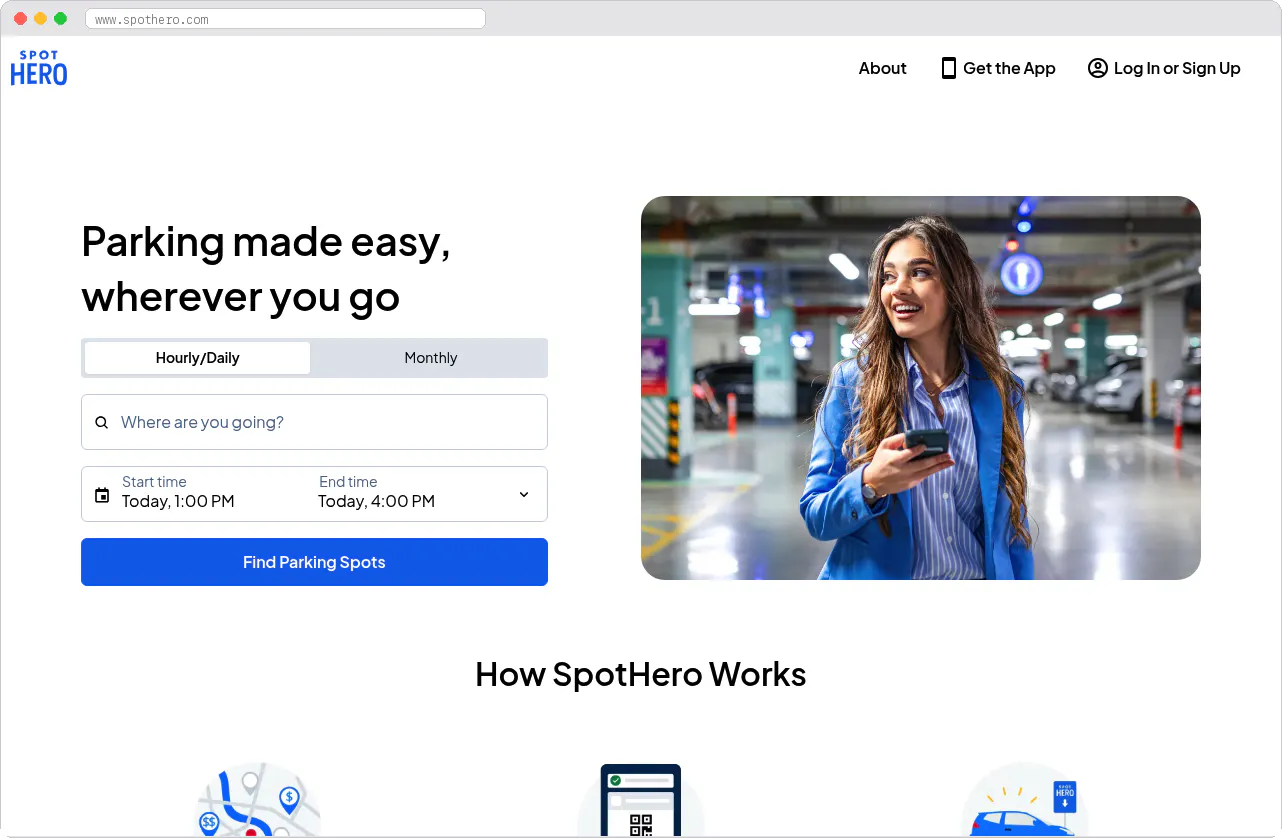
How SpotHero works
SpotHero operates as a location-based booking marketplace connecting drivers with parking space providers. The platform solves the coordination problem between supply (parking facilities with available spaces) and demand (drivers who need guaranteed parking).
For drivers, SpotHero functions like a hotel booking site for parking. Users enter their destination, select arrival and departure times, and browse available options filtered by price, distance, and amenities. They can book spots minutes before arrival or weeks in advance, receiving confirmation details and directions to their reserved space. The platform handles payment processing and provides customer support if issues arise.
Parking facility operators benefit from SpotHero's distribution network and demand forecasting. Rather than relying solely on walk-up traffic, operators can fill spaces during off-peak hours and optimize pricing based on demand patterns. SpotHero's technology integrates with facility management systems to automate space allocation and revenue reporting. Operators gain access to detailed analytics about usage patterns, helping them make informed decisions about pricing and capacity management.
The marketplace creates value through information transparency and transaction facilitation. Before SpotHero, drivers had limited visibility into available parking options and uncertain pricing. Facility operators struggled to reach potential customers beyond their immediate vicinity. SpotHero's platform bridges this information gap while handling the complex logistics of reservations, payments, and customer communications.
SpotHero's business model and revenue
SpotHero monetizes through a commission-based model, charging both transaction fees and subscription services. The platform typically collects 15-30% commission on each reservation, with rates varying based on the facility partnership agreement and booking volume. For a $20 daily parking reservation, SpotHero might retain $4-6 while passing $14-16 to the facility operator.
The commission structure aligns SpotHero's incentives with successful transactions. The platform only earns revenue when drivers actually complete bookings, encouraging continuous improvement in user experience and facility quality. Higher-volume partners often negotiate lower commission rates in exchange for exclusive arrangements or minimum booking guarantees.
Beyond transactional revenue, SpotHero offers subscription services for frequent users and enterprise solutions for corporate clients. Monthly parking subscriptions provide predictable revenue streams while serving commuters who need regular access to the same locations. Corporate partnerships with companies like Uber and event organizers create bulk booking opportunities that drive significant transaction volume.
The business model proves particularly resilient because parking demand remains relatively price-inelastic in dense urban areas. When drivers need guaranteed parking for important appointments or events, they're willing to pay premium rates for convenience and certainty. This dynamic allows SpotHero to maintain healthy margins while providing value to both sides of the marketplace.
Essential features for a parking marketplace
Building a successful parking marketplace like SpotHero requires specific functionality tailored to location-based, time-sensitive bookings. The core features enable discovery, reservation, and fulfillment of parking transactions while building trust between strangers.
Location-based search and mapping forms the foundation of any parking marketplace. Users need precise geolocation tools to find spaces near their destinations, with walking distance calculations and visual map representations. Advanced search should include filters for space type (garage, surface lot, valet), accessibility features, vehicle size restrictions, and pricing ranges. Real-time availability updates prevent double bookings and manage customer expectations effectively.
Flexible booking and scheduling systems accommodate the diverse needs of parking customers. Unlike hotel reservations, parking bookings often involve short durations and last-minute changes. The platform should support hourly, daily, and monthly reservations with different pricing structures for each. Automated calendar management prevents overbooking while allowing facility operators to block out spaces for maintenance or special events.
Secure payment processing with delayed payouts protects both drivers and facility operators. Payment should be collected upfront when reservations are made, but funds should be held until the parking period begins or the driver arrives at the facility. This escrow-like arrangement reduces fraud risk and provides recourse if facilities are unavailable or don't meet advertised standards. Integration with services like Stripe Connect enables compliant commission collection and automated payouts to facility partners.
Two-way communication and support systems help resolve issues that inevitably arise with location-based services. Drivers need to contact facilities about access procedures, while operators need ways to communicate about changes or restrictions. Built-in messaging, automated confirmation emails, and customer support ticketing ensure smooth experiences even when problems occur.
Trust and verification mechanisms establish credibility in a marketplace where quality can vary significantly between facilities. Driver profiles should include vehicle information and booking history, while facility listings need detailed photos, amenities descriptions, and access instructions. Review systems help future customers make informed decisions while providing feedback to facility operators.
Mobile optimization and accessibility are critical since most parking bookings happen on smartphones while people are actively traveling. The platform must function smoothly across devices with fast loading times and simplified booking flows. Location services integration helps users navigate to reserved spaces, while push notifications provide booking reminders and facility updates.
Major SpotHero competitors and alternatives
The parking marketplace space has attracted numerous competitors, each targeting different segments of the market or geographic regions. Understanding this competitive landscape helps founders identify opportunities for differentiation.
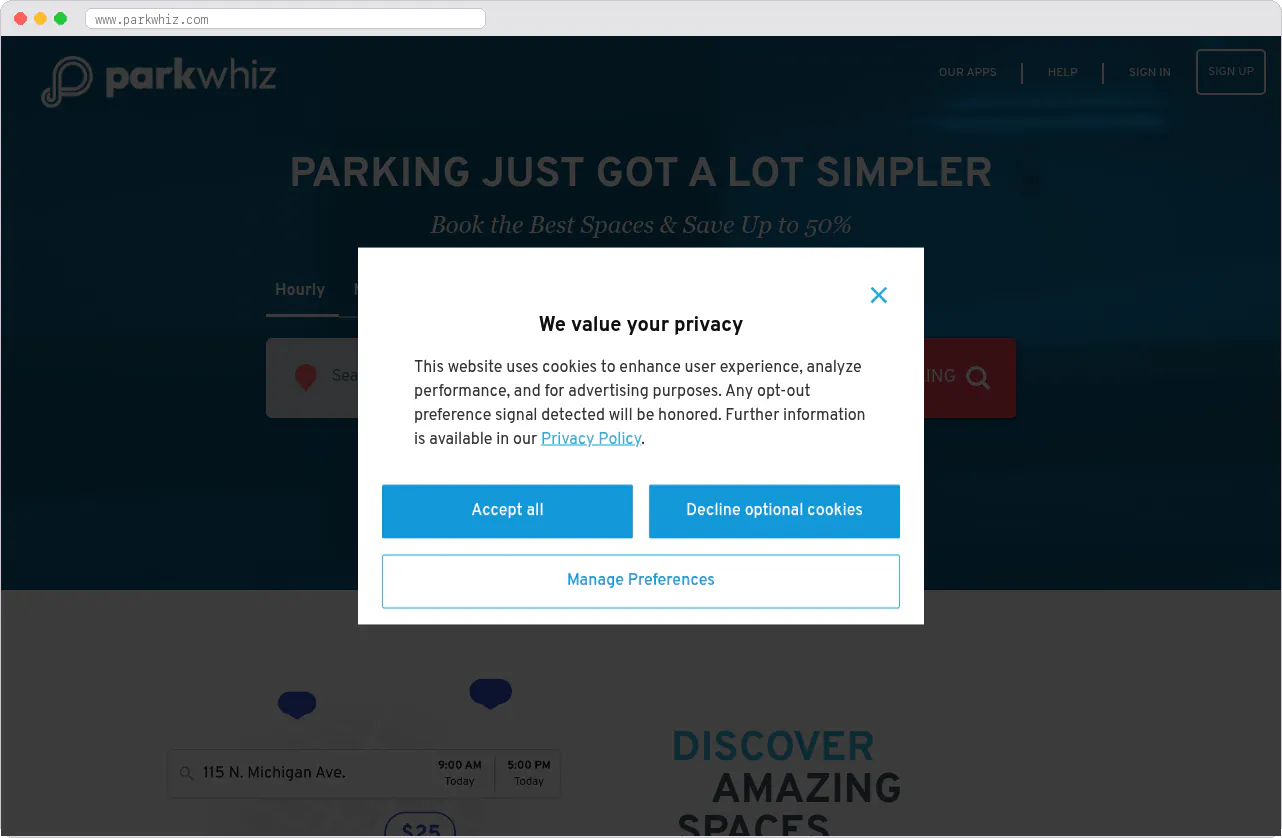
ParkWhiz represents SpotHero's most direct competitor in North America. Acquired by EasyPark in 2019, ParkWhiz operates in over 100 cities with a similar business model focused on advance reservations. The platform emphasizes event parking partnerships, securing exclusive arrangements with major sports venues and entertainment complexes. ParkWhiz differentiates through white-label solutions for large organizations and deeper integration with navigation apps like Waze.
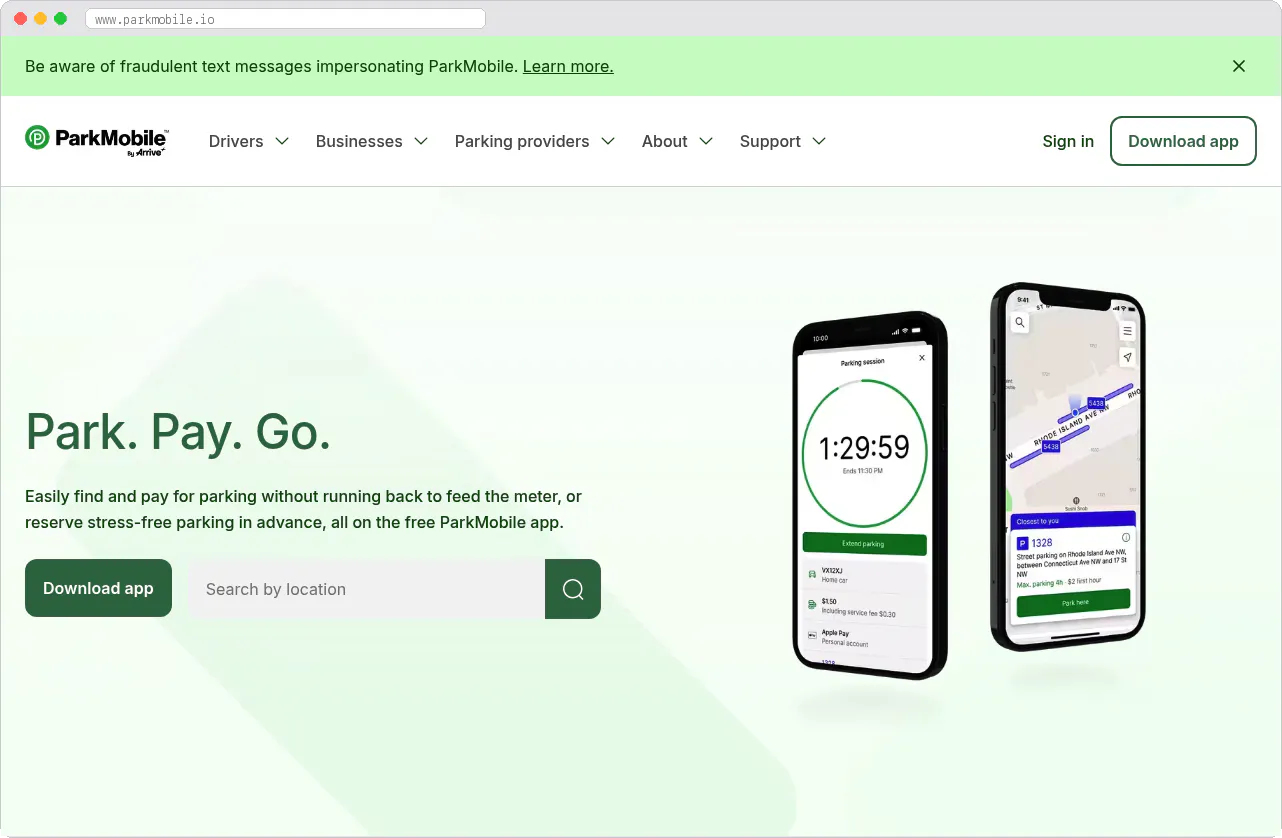
ParkMobile takes a different approach by focusing on on-street parking and pay-by-phone solutions. Rather than advance reservations, ParkMobile allows drivers to find and pay for metered parking through their smartphone app. This model works better for short-term parking needs but doesn't solve the availability guarantee problem that SpotHero addresses. ParkMobile has expanded through municipal partnerships, managing parking payments for entire cities.
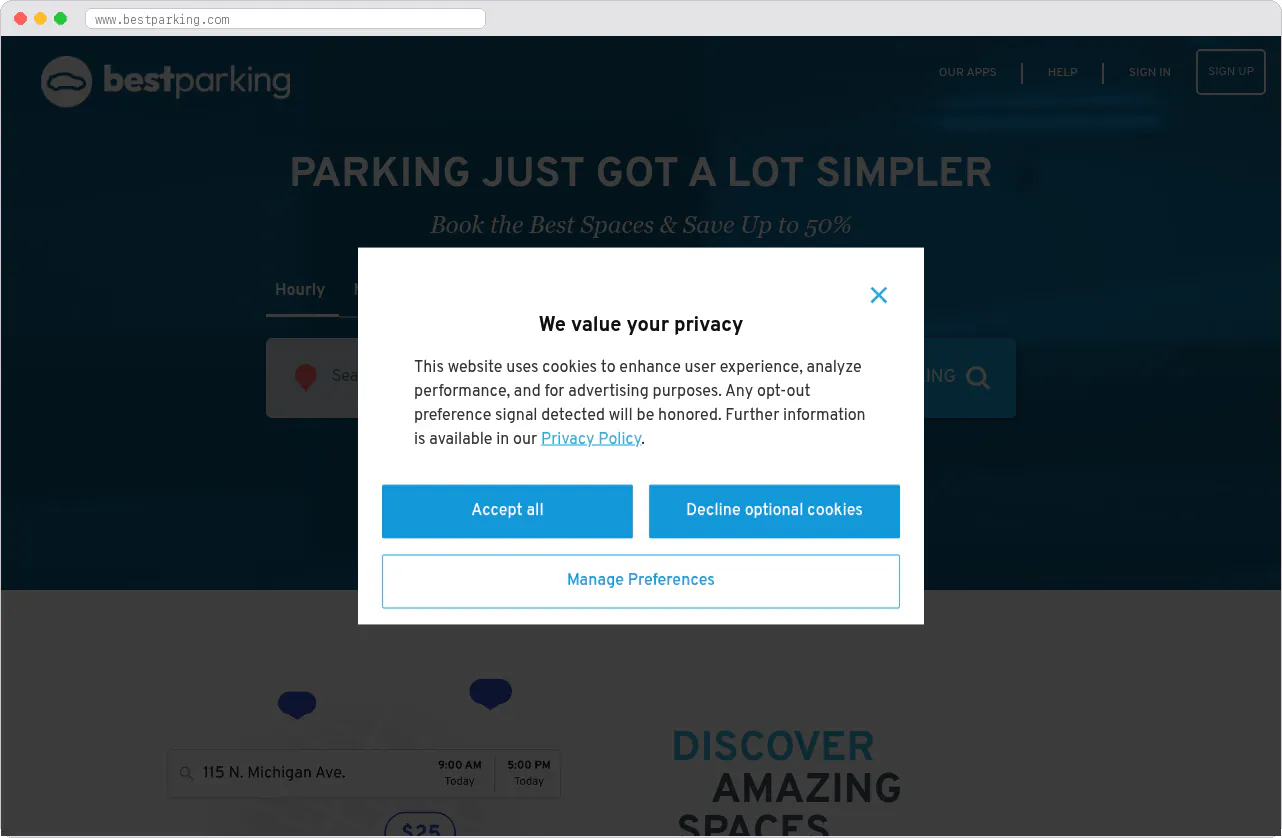
BestParking operates more as a parking discovery platform than a transactional marketplace. The service provides real-time information about parking availability and pricing across different facilities in major cities. While users can sometimes book through the platform, BestParking's primary value lies in aggregating parking information that helps drivers make informed decisions. This approach requires less complex technology but generates lower per-user revenue.
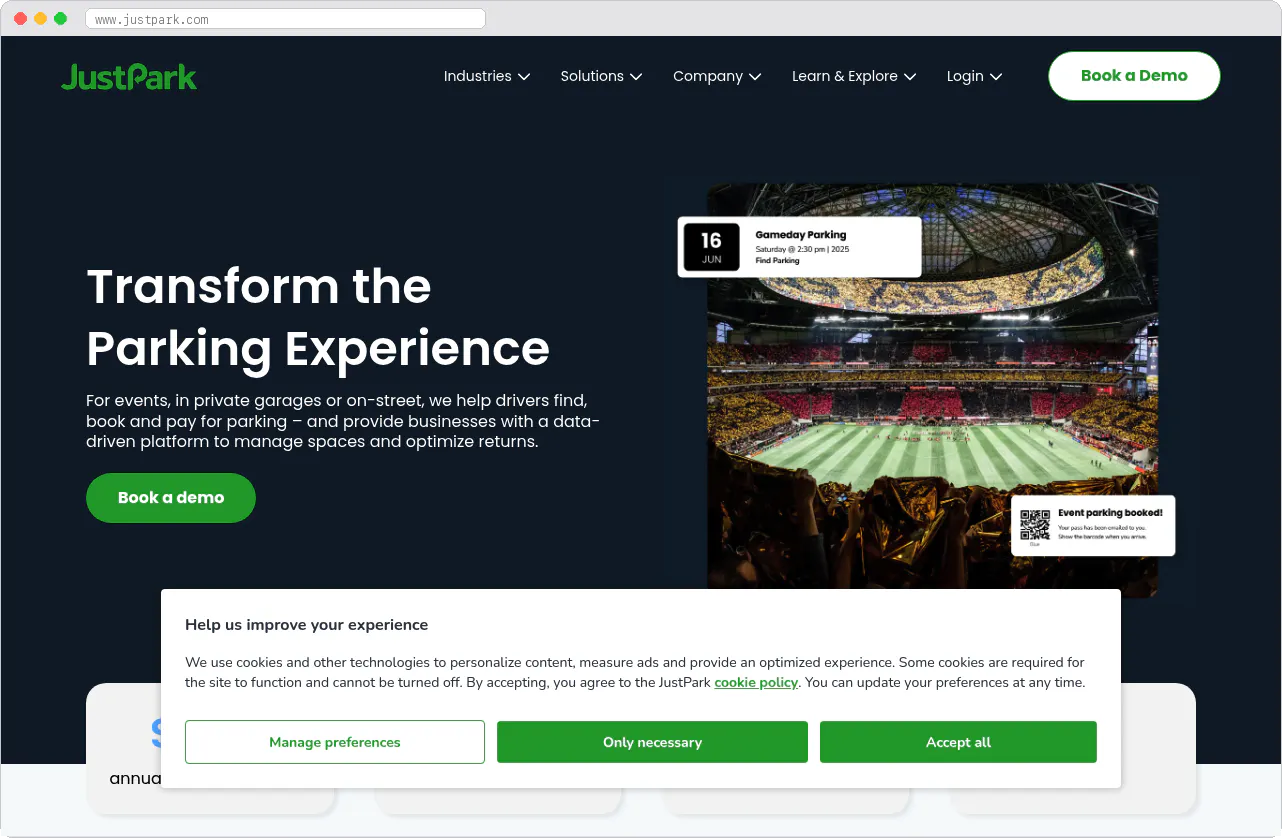
JustPark dominates the European parking marketplace, particularly in the United Kingdom. Founded as a peer-to-peer platform for private parking spaces, JustPark has evolved to include commercial facilities and street parking management. The platform's international expansion demonstrates how parking marketplace models can succeed across different regulatory environments and urban planning approaches.
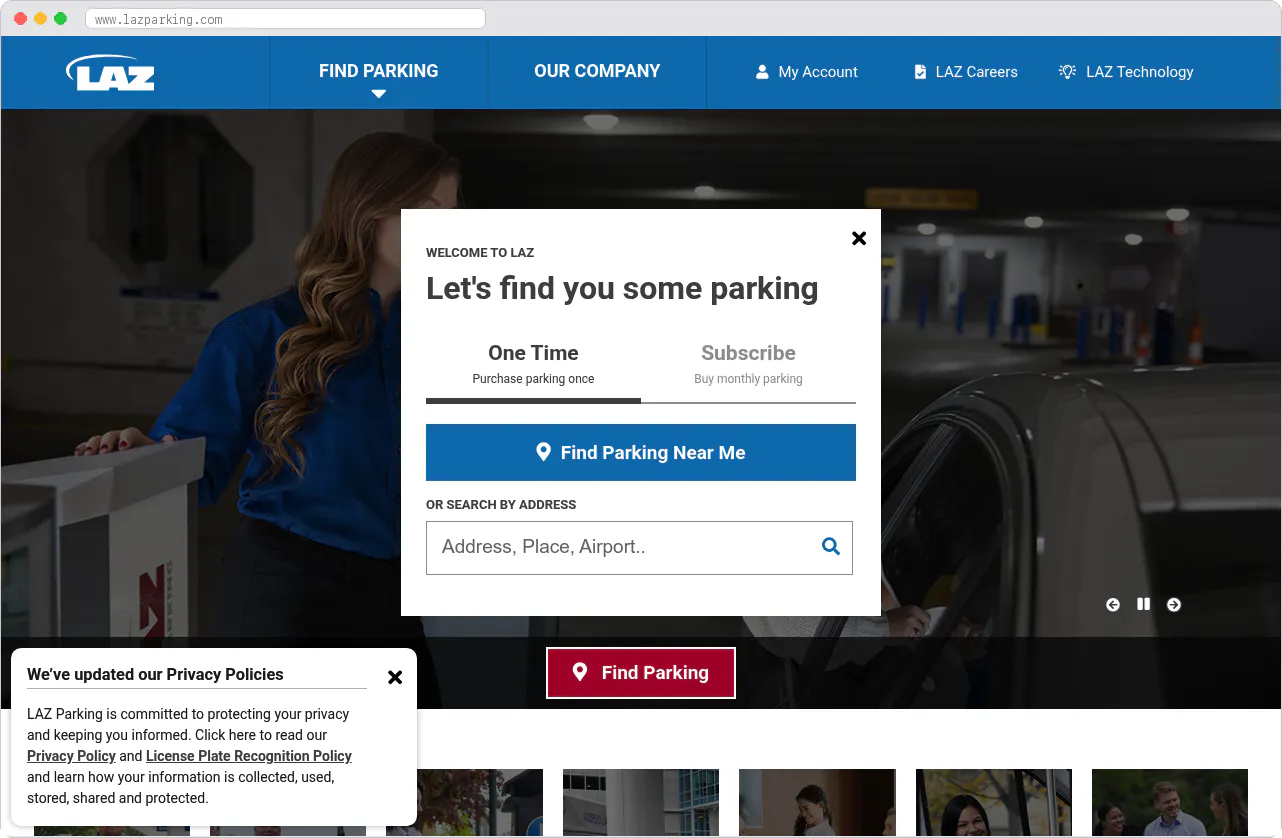
LAZ Parking and REEF represent large parking operators that have built their own booking platforms rather than relying solely on third-party marketplaces. These vertically integrated approaches offer more control over the user experience but limit inventory to facilities owned or managed by the operator. Some cities have also launched municipal parking apps that compete directly with private marketplaces.
The competitive dynamics reveal several strategic considerations for new entrants. Geographic focus often determines success, as parking markets remain highly localized despite digital platforms. Exclusive facility partnerships create competitive moats but require significant business development resources. Technology integration points, from navigation apps to corporate expense systems, can drive user acquisition and retention.
Building a parking marketplace: step-by-step approach
Creating a successful parking marketplace requires balancing rapid market entry with the complex operational requirements of location-based services. The most effective approach follows an iterative process that validates demand before investing heavily in technology development.
Start with market research and niche selection. Parking markets vary dramatically between cities based on factors like density, public transportation availability, and regulatory environment. Research specific pain points in your target market by talking to both potential drivers and facility operators. Consider focusing on a particular segment initially, airport parking, event venues, or downtown business districts, rather than trying to serve all parking needs immediately.
Validate demand through manual processes. Before building any technology, test your market hypothesis by manually connecting drivers with parking facilities. Create simple landing pages advertising parking availability for specific locations or events, then fulfill reservations through phone calls and email confirmations. This approach helps you understand user behavior, pricing sensitivity, and operational challenges without significant upfront investment.
Build your minimum viable platform (MVP) with essential features only. Your first technology platform should focus on core functionality: location search, basic booking, and payment processing. Resist the temptation to build advanced features like dynamic pricing or mobile apps until you've validated product-market fit. Many successful parking marketplaces started with simple websites that could facilitate transactions reliably.
Recruit your initial supply of parking facilities. Focus on facility operators who have underutilized capacity and clear incentives to try new distribution channels. Smaller independent operators often prove more flexible than large chains with established systems. Consider offering favorable commission rates or guaranteed minimum payments to secure your first facility partnerships. Document case studies that demonstrate value for early partners.
Launch in a focused geographic area. Choose a single city or neighborhood where you can achieve meaningful density rather than spreading efforts across multiple markets. This concentration allows for more effective marketing, better customer support, and stronger facility relationships. Success in one market provides credibility for expansion into new areas.
Iterate based on user feedback and operational learnings. Monitor key metrics like booking conversion rates, customer support tickets, and facility partner satisfaction. Common early-stage challenges include no-shows, access problems, and pricing disputes. Each issue provides opportunities to improve your platform and operational procedures.
Scale systematically into new markets and features. Once you've achieved consistent performance in your initial market, develop playbooks for expansion. This might involve targeting similar cities with comparable characteristics or adding new facility types within existing markets. Advanced features like mobile apps, dynamic pricing, and corporate sales can differentiate your platform as competition increases.
Technology approaches and cost considerations
Building a parking marketplace involves significant technical complexity, particularly around location services, real-time availability management, and payment processing. Founders have several options depending on their resources, timeline, and long-term goals.
Custom development from scratch provides maximum flexibility but requires substantial time and financial investment. A full-featured parking marketplace built by an experienced development team typically costs $100,000-$500,000 and takes 6-12 months to launch. This approach makes sense for well-funded startups with specific technical requirements or unique business models that existing platforms can't accommodate.
The technical challenges include real-time inventory management across multiple facility management systems, complex pricing logic for different reservation types and durations, location services integration with mapping and navigation platforms, and payment processing that handles commissions, taxes, and delayed payouts correctly. Mobile app development adds additional complexity and cost, though it's essential for user adoption in the parking market.
No-code marketplace builders like Sharetribe offer a middle ground between speed and customization. These platforms provide pre-built marketplace functionality that can be configured for parking-specific use cases without extensive coding. Sharetribe's booking marketplace template includes features like calendar availability, location-based search, and commission-based payments that work well for parking businesses.
The main advantages include launching in weeks rather than months, built-in compliance with payment regulations through Stripe Connect integration, proven marketplace mechanics like reviews, messaging, and user management, and the ability to add custom features as your business grows. Limitations include less control over the underlying architecture and dependency on the platform provider's roadmap for major feature additions.
Hybrid approaches combine no-code platforms for core marketplace functionality with custom development for differentiating features. Many successful parking marketplaces started with simple booking systems then added unique capabilities like dynamic pricing, facility management dashboards, or corporate billing as they grew. This approach minimizes initial risk while preserving options for future customization.
Regardless of the technical approach, parking marketplaces face ongoing operational costs beyond initial development. Customer support becomes critical as location-based services generate more issues than typical e-commerce. Marketing costs can be substantial given the local nature of parking demand. Facility partner management requires dedicated business development resources.
Why Sharetribe works for parking marketplaces
Sharetribe's marketplace platform addresses several specific challenges that parking marketplace founders face, particularly around rapid validation and iterative development.
Speed to market proves crucial in the parking industry because seasonal patterns and local events create time-sensitive opportunities. With Sharetribe, you can launch a functional parking marketplace in 1-2 weeks rather than waiting months for custom development. This speed advantage allows you to test your market hypothesis during peak parking demand periods and establish facility partnerships before competitors enter your market.
Built-in booking and calendar functionality handles the complex logic of time-based reservations without custom development. Parking bookings involve start times, end times, and availability windows that traditional product marketplaces don't address. Sharetribe's booking marketplace template includes these features with calendar views, automated availability management, and booking confirmation workflows.
Commission-based payment processing through Stripe Connect automatically handles the financial complexity of parking marketplaces. When drivers pay for reservations, Sharetribe collects your commission and transfers the remainder to facility operators on your chosen schedule. This eliminates the need to build custom payment splitting logic or manage complex merchant account arrangements.
Location-based search and mapping work out of the box for parking use cases. Users can search for spaces near specific addresses, filter by distance, and view options on interactive maps. This functionality typically requires significant development effort and ongoing maintenance when built from scratch.
Scalable infrastructure accommodates growth from initial validation through major market expansion. Whether you're handling 10 bookings per month or 10,000, Sharetribe manages the technical infrastructure so you can focus on business development and customer acquisition. The platform also includes admin tools for managing listings, users, and transactions as your marketplace grows.
Extensibility for custom features becomes important as parking marketplaces mature and need differentiation. Sharetribe's Developer Platform allows you to add custom functionality, dynamic pricing algorithms, facility management dashboards, mobile apps, while keeping the core marketplace infrastructure maintained by Sharetribe. Many successful parking marketplaces start with standard features then add unique capabilities as they understand their market better.
The main trade-offs involve customization depth and platform dependency. Highly specific features like integration with proprietary parking facility systems might require custom development regardless of platform choice. However, most parking marketplaces benefit more from fast market entry and proven marketplace mechanics than from technical uniqueness.
Launching and growing your parking marketplace
Successful parking marketplace launches require coordination between supply acquisition, demand generation, and operational excellence. The location-based nature of parking creates both challenges and opportunities compared to other marketplace types.
Supply development should begin before demand marketing. Focus on facility operators with clear pain points: underutilized spaces during specific time periods, limited marketing reach, or manual booking processes. Small and medium-sized operators often prove more responsive than large chains with established systems. Document success stories and financial benefits from early partners to support business development with additional facilities.
Demand generation benefits from highly targeted, location-specific marketing. Unlike e-commerce marketplaces that can serve customers anywhere, parking marketplaces need customers who will actually visit specific geographic areas. Local SEO, partnerships with businesses that generate parking demand (hotels, event venues, medical facilities), and targeted social media advertising work better than broad awareness campaigns.
Operational excellence becomes critical as parking involves real-world coordination between multiple parties. Develop clear procedures for handling common issues like facility access problems, vehicle size mismatches, and booking changes. Customer support response time matters more for parking than many other marketplace categories because users are often dealing with time-sensitive travel situations.
Geographic expansion should follow proven patterns rather than opportunistic growth. Successful parking marketplaces typically expand to cities with similar characteristics: comparable density, parking pricing levels, and regulatory environments. Establish consistent performance metrics in your initial market before attempting expansion, as operational complexity increases significantly across multiple locations.
Partnership development with businesses that generate parking demand can accelerate growth while reducing marketing costs. Corporate partnerships for employee parking, event organizer relationships for venue parking, and travel app integrations for visitor parking create recurring demand that supports facility partner recruitment.
Financial considerations and funding
Parking marketplaces present attractive unit economics once they achieve market density, but require substantial upfront investment in business development and operational systems. Understanding the financial dynamics helps founders plan appropriate funding strategies.
Revenue potential scales with transaction volume and average booking values. Parking reservations typically range from $5-50 depending on location and duration, with marketplace commissions of 15-30%. Dense urban markets can support higher pricing, while suburban locations compete more heavily on convenience than price. Monthly and corporate bookings generate higher lifetime values than occasional tourist transactions.
Customer acquisition costs vary significantly between marketing channels and geographic markets. Local SEO and partnerships often provide better return on investment than paid advertising, though paid channels can accelerate growth in competitive markets. Organic growth through word-of-mouth and repeat bookings becomes increasingly important as marketplaces mature.
Facility partner acquisition requires dedicated business development resources and often involves guaranteed payments or reduced commission rates for early adopters. Successful parking marketplaces typically invest 20-30% of early-stage resources in supply-side business development, higher than many other marketplace categories.
Operational costs include customer support, facility relationship management, and technology maintenance. Location-based services generate more support tickets than typical e-commerce due to access issues, navigation problems, and real-world coordination challenges. Many parking marketplaces employ local operations staff in major markets to handle facility relationships and customer issues.
Working capital requirements remain relatively low since payments are typically collected when reservations are made, while facility payouts can be delayed until after parking periods end. However, guarantee programs and refund policies may require cash reserves to handle edge cases and maintain customer satisfaction.
Successful parking marketplaces have raised funding ranging from bootstrapped growth to Series A rounds of $10-20 million. The capital requirements depend heavily on geographic expansion ambitions and competitive dynamics in target markets.
Conclusion
Building a website like SpotHero requires understanding both the technical requirements of marketplace platforms and the specific operational challenges of the parking industry. The most successful approach combines rapid market validation through simple technology with deep focus on facility partnerships and customer experience.
The parking marketplace opportunity remains significant, with most cities still relying on analog systems for parking coordination. However, success requires patience for business development, attention to operational details, and willingness to iterate based on real-world feedback from both drivers and facility operators.
Whether you choose custom development, no-code platforms like Sharetribe, or hybrid approaches, the key is starting with a clear understanding of your target market's specific pain points and building solutions that address real problems rather than perceived opportunities. The parking industry offers substantial rewards for founders who can navigate its complexity while maintaining focus on user experience and operational excellence.
Frequently asked questions
How much does it cost to build a parking marketplace like SpotHero?
Custom development typically costs $100,000-$500,000 and takes 6-12 months. No-code platforms like Sharetribe allow you to launch in weeks for under $200/month initially, making them ideal for validation before investing in custom features.
What features does a parking marketplace need?
Essential features include location-based search with mapping, real-time availability calendars, secure payment processing with commission handling, booking management for different durations, and two-way messaging between drivers and facility operators.
How does SpotHero make money?
SpotHero charges 15-30% commission on each reservation, collecting fees from both drivers and facility operators. They also offer subscription services for frequent users and enterprise solutions for corporate clients.
Who are SpotHero's main competitors?
Major competitors include ParkWhiz (advance reservations), ParkMobile (pay-by-phone for street parking), BestParking (parking discovery), and JustPark (European markets). Each focuses on different segments of the parking market.
How do you find parking facilities to partner with?
Target facility operators with underutilized spaces during off-peak hours. Start with smaller independent operators who are more flexible than large chains. Offer favorable commission rates initially and document success stories to attract additional partners.
Is the parking marketplace industry saturated?
Most cities still rely on analog parking systems, leaving significant opportunities for digital marketplaces. Success depends on geographic focus, facility partnerships, and solving specific local parking problems rather than competing directly with established players.
Start your 14-day free trial
Create a marketplace today!
- Launch quickly, without coding
- Extend infinitely
- Scale to any size
No credit card required