How to build a website like Neighbor
Neighbor transformed unused storage space into a $500M marketplace. Learn how to build your own peer-to-peer storage platform, from validating your niche to launching and scaling your marketplace business.
Published: Aug 9, 2024
Last updated: Mar 19, 2026
How Neighbor transformed storage into a marketplace opportunity
Neighbor launched in 2017 with a simple premise: millions of Americans pay $300+ per month for traditional self-storage while homeowners have unused garages, basements, and closets sitting empty. Founders Joseph Woodbury, Preston Alder, and Colton Gardner saw this inefficiency as a marketplace opportunity.
The Utah-based startup has raised over $100 million in funding and operates across 50+ states. By 2023, Neighbor had facilitated thousands of storage arrangements, with hosts earning an average of $200-400 per month from unused space. The platform charges hosts a 4.95% service fee and renters pay booking fees ranging from $4.95-29.95 depending on the rental value.
Neighbor's success stems from solving real problems for both sides of the market. Traditional storage facilities are expensive, inconvenient, and often located far from where people live or work. Meanwhile, millions of homeowners have unused space that could generate meaningful income. By connecting these two groups, Neighbor created a win-win dynamic that drives its marketplace liquidity.
How does a storage marketplace like Neighbor work?
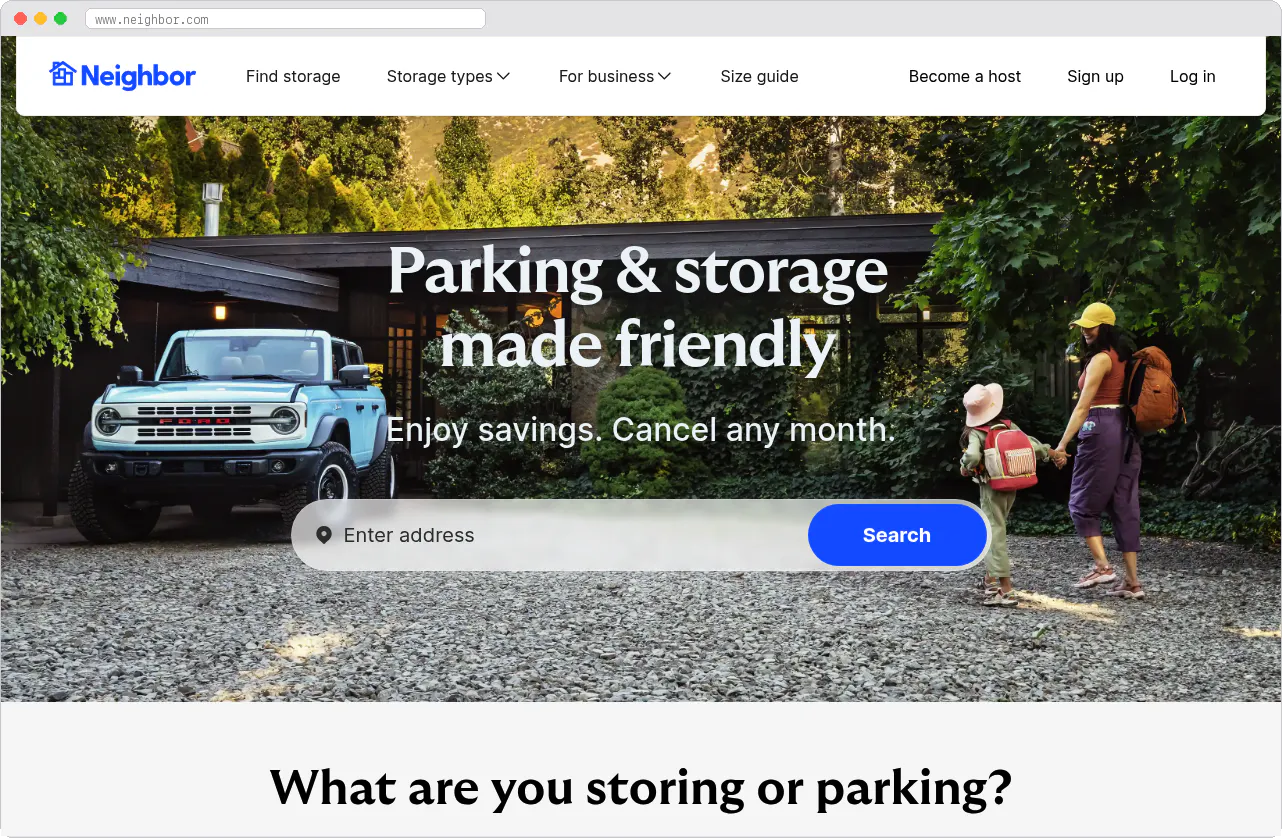
Neighbor operates as a peer-to-peer rental marketplace specifically designed for storage space. Unlike traditional self-storage companies that own and operate facilities, Neighbor acts as an intermediary connecting space owners with renters.
For space owners (hosts), the platform provides tools to list unused areas like garages, basements, sheds, or spare rooms. Hosts create detailed listings with photos, descriptions, dimensions, and pricing. They set their own rates and availability, with Neighbor providing guidance on competitive pricing based on local market data. The platform handles payment processing, insurance coverage up to $25,000 per stored item, and provides a framework for communicating with renters.
For renters, Neighbor offers an alternative to traditional storage that's often cheaper and more convenient. Users search for storage space by location, size, and price, then browse listings with photos and detailed descriptions. The booking process includes secure payment processing, clear terms for access and duration, and direct communication tools with hosts. Renters benefit from competitive pricing (often 30-50% less than traditional storage), flexible terms, and locations closer to their homes.
The transaction flow begins when a renter finds suitable space and submits a booking request. The host reviews the request and can approve or decline based on the items being stored and their comfort level. Once approved, payment is processed and both parties receive contact information and access details. Neighbor provides insurance coverage and dispute resolution support throughout the rental period.
This model creates network effects: more hosts attract more renters with better options and pricing, while more renters make hosting more profitable and attract additional hosts.
Essential features for a storage marketplace
A successful storage marketplace requires specific functionality that differs from other rental platforms. These features address the unique challenges of storing personal belongings in private spaces.
Detailed listing management forms the foundation. Storage listings need structured fields for dimensions (length, width, height), access details (frequency, hours, notice required), permitted items (restrictions on hazardous materials, vehicles, etc.), and environmental conditions (climate control, humidity, temperature). Photo galleries should showcase the space from multiple angles, including access routes and any relevant features like electrical outlets or shelving.
Location-based search with filtering capabilities enables renters to find suitable spaces. Unlike accommodation rentals where exact addresses can remain hidden until booking, storage rentals often need more specific location information during the search process. Users need filters for space size, price range, access type (24/7, scheduled, with host present), vehicle access, and permitted item categories.
Trust and safety features become critical when storing valuable possessions in private homes. This includes identity verification for both hosts and renters, background checks, detailed terms of service covering liability and insurance, and clear processes for handling disputes. Insurance integration or clear insurance requirements help protect both parties.
Communication tools facilitate the ongoing relationship between hosts and renters. Unlike a one-time accommodation booking, storage rentals often involve ongoing communication about access, additional items, or schedule changes. Built-in messaging with photo sharing capabilities helps coordinate logistics.
Booking and availability management must handle ongoing rentals rather than discrete date ranges. Storage bookings often start with a move-in date but continue month-to-month, requiring different calendar and billing logic than typical rental marketplaces.
With Sharetribe, you can launch with these essential features built in. The platform includes structured listing fields, location-based search with custom filters, secure messaging, and flexible booking management. The availability calendar can handle ongoing rentals, and payment processing supports recurring billing for monthly storage arrangements.
Steps to build your own storage marketplace
Building a successful storage marketplace follows a systematic process that prioritizes learning about your market over perfecting your technology.
Start with market validation before building anything. Storage markets vary significantly by geography, with different supply and demand dynamics in urban versus suburban areas. Research your target market by analyzing traditional storage pricing, occupancy rates, and wait lists. Survey potential hosts about their unused space and interest in earning rental income. Talk to renters about their storage frustrations and willingness to try peer-to-peer alternatives.
Choose your initial geographic focus carefully. Neighbor started in Utah and expanded market by market rather than launching nationwide immediately. Storage is inherently local, so success depends on achieving critical mass in specific areas. College towns, expensive urban markets, and areas with seasonal population fluctuations often present good initial opportunities.
Build your minimum viable platform with core functionality. Your first version needs listing creation and search, basic booking capabilities, payment processing with commission collection, and essential trust features like user profiles and messaging. Avoid complex features like dynamic pricing or advanced matching algorithms initially.
Start with supply-side growth to establish inventory. Storage marketplaces face a classic chicken-and-egg problem, but renters won't engage with an empty platform. Focus initial efforts on recruiting hosts through targeted outreach to homeowners with obvious unused space (large properties, garages visible from the street, areas with basement or attic space). Nextdoor, Facebook community groups, and direct mail in target neighborhoods can effectively reach potential hosts.
Launch demand generation once you have meaningful supply. With 20-30 quality listings in your initial market, begin marketing to renters through local online advertising, partnerships with moving companies, and content marketing targeting storage-related searches. Monitor your supply-demand balance closely and adjust marketing spend accordingly.
Iterate based on real user behavior and feedback. Early users will reveal which features matter most and which assumptions were wrong. Common areas for iteration include pricing guidance for hosts, search and filtering options for renters, insurance and safety concerns, and the booking and move-in process.
Scale geographically with proven playbooks. Once you achieve consistent supply-demand balance and positive unit economics in your initial market, expand to similar markets using documented processes for host recruitment, pricing guidance, and demand generation.
Competitor landscape and market positioning
Understanding the competitive landscape helps identify opportunities for differentiation and informs strategic positioning decisions.
Traditional self-storage companies like Public Storage, Extra Space Storage, and CubeSmart dominate the storage market with professionally managed facilities. These companies offer standardized security, climate control, and 24/7 access but at premium pricing. Their key advantages include brand recognition, consistent experience, and professional management. However, they're often inconveniently located, expensive, and require long-term commitments. A peer-to-peer platform can compete on price, convenience, and flexibility while accepting trade-offs in standardization and professional management.
Stow emerged as Neighbor's most direct competitor, offering a similar peer-to-peer storage model. Stow focuses on higher-end markets and emphasizes vetting and insurance coverage. The platform charges comparable fees but positions itself as more premium with stronger host screening. This creates an opportunity for platforms targeting different market segments or offering unique features like specialized storage types or enhanced technology.
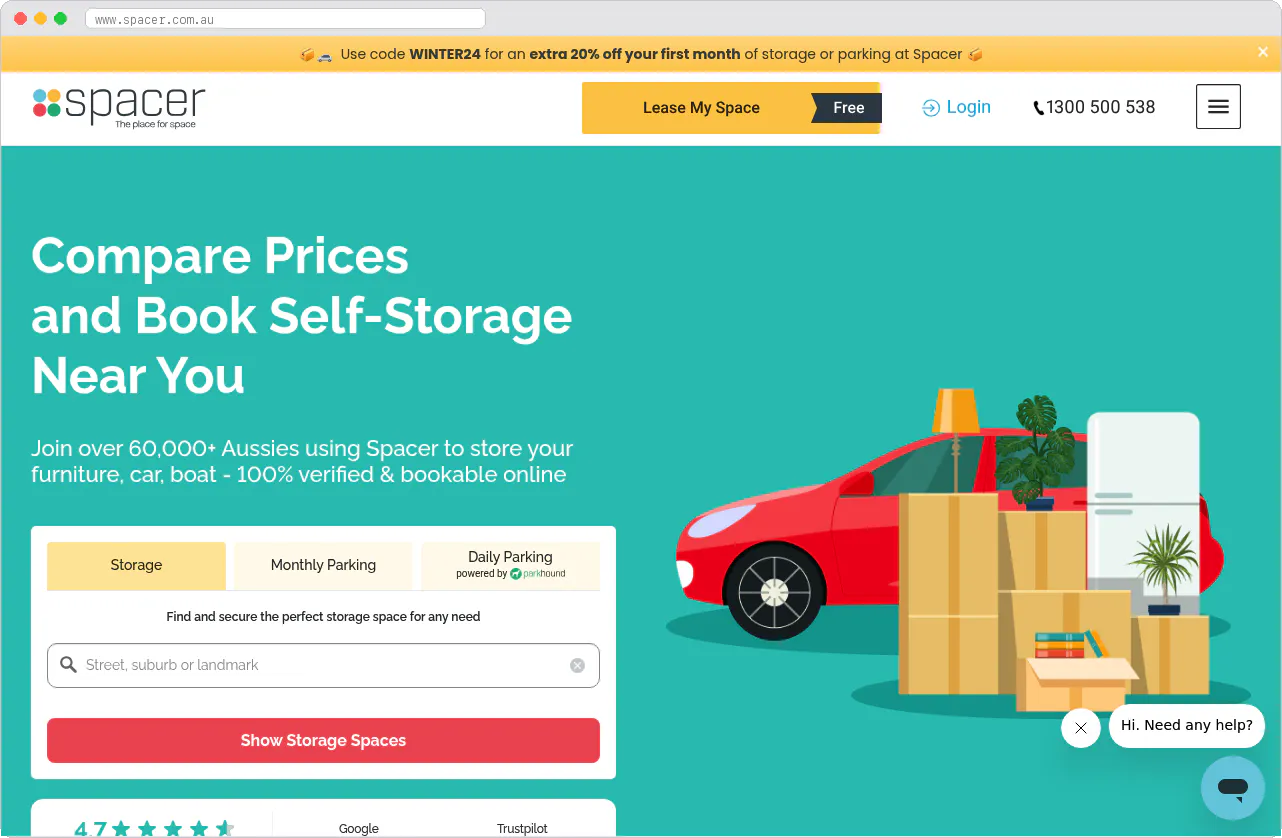
Spacer takes a hybrid approach, combining peer-to-peer storage with small commercial properties and dedicated storage facilities. This model offers more standardized experiences than pure peer-to-peer platforms while maintaining cost advantages over traditional self-storage. Spacer's approach suggests opportunities for platforms that blend different storage models or target specific property types.
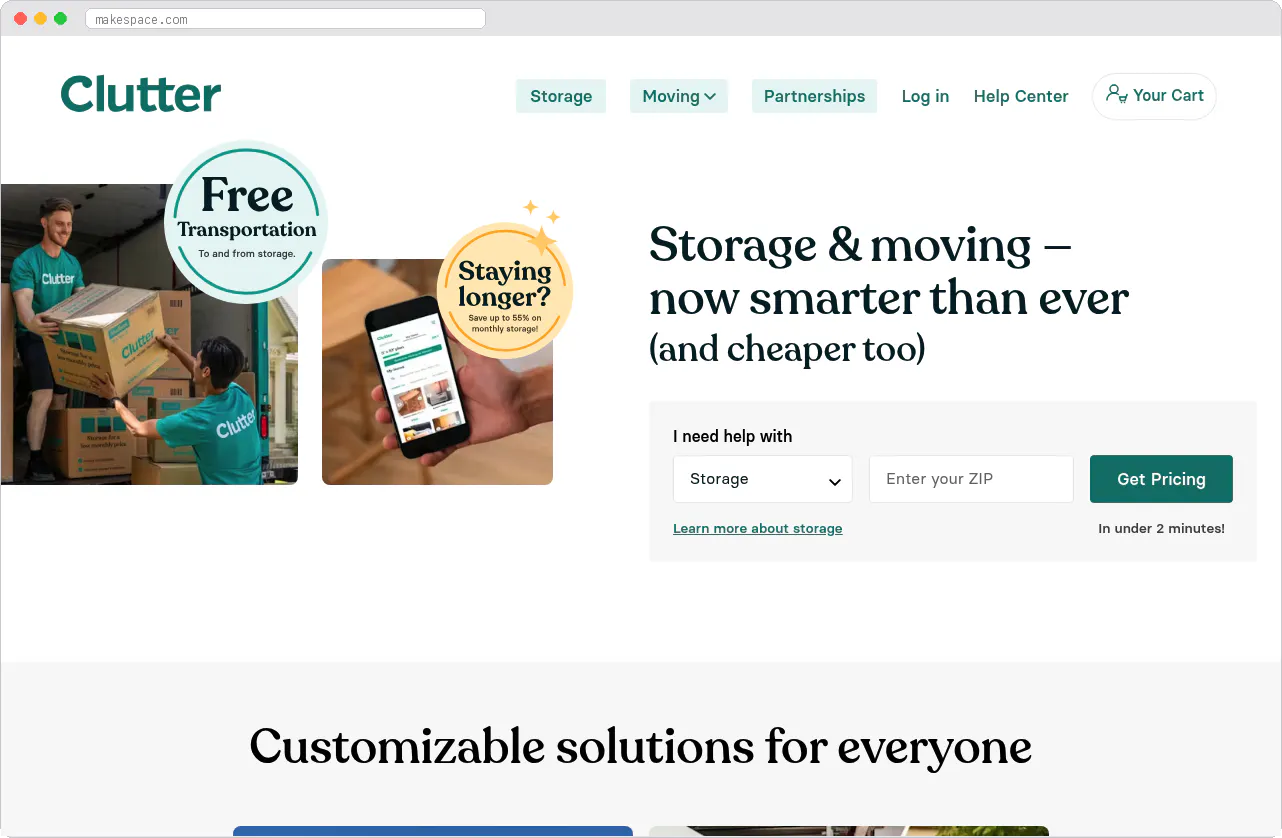
MakeSpace and similar full-service storage companies handle pickup, storage, and delivery for customers who never visit storage facilities. These services command premium pricing but serve customers who prioritize convenience over cost. They highlight the potential for differentiated service levels within storage marketplaces.
Industry-specific storage solutions serve niche markets like RV storage, boat storage, or document storage. These specialized platforms often achieve higher margins and customer loyalty by solving specific storage challenges. This suggests opportunities for marketplaces targeting particular item types, customer segments, or use cases.
The competitive analysis reveals multiple positioning opportunities: geographic focus, pricing strategy, service level, target customer segment, or specialization by item type. Successful new entrants typically choose one differentiation strategy and execute it consistently rather than trying to compete directly with established players across all dimensions.
Development approaches and costs
Creating a storage marketplace involves different cost and complexity considerations than building from scratch or using existing tools.
Custom development offers complete control but requires substantial investment and time. A professionally built storage marketplace typically costs $50,000-200,000 for initial development, with 6-12 months to launch. This includes user authentication, listing management, search and filtering, booking and payment processing, messaging systems, and basic administrative tools. However, ongoing maintenance, security updates, and feature additions require continued investment in development resources.
The storage marketplace model adds specific complexities that increase development costs. Recurring billing for month-to-month rentals requires sophisticated payment logic. Insurance integration or detailed liability frameworks need legal review and technical implementation. Geographic restrictions and local compliance requirements vary by market and require flexible system architecture.
No-code marketplace builders like Sharetribe provide a middle path that significantly reduces time to market and initial investment. With Sharetribe, you can launch a functional storage marketplace in 1-2 weeks rather than months, with monthly subscription costs starting around $79 instead of five-figure development budgets.
Sharetribe includes built-in functionality specifically relevant to storage marketplaces: structured listing fields for space details and restrictions, location-based search with custom filters, ongoing rental management with flexible billing, secure messaging with photo sharing, and payment processing with commission collection. The platform handles compliance, security, and hosting requirements that would otherwise require specialized expertise.
As your marketplace grows, Sharetribe supports custom development on top of the no-code foundation. This hybrid approach lets you validate your market quickly with standard functionality while adding unique features as you learn what matters to your specific audience. You can customize the user interface, integrate specialized tools, or build mobile applications without rebuilding core marketplace infrastructure.
Hybrid approaches using no-code tools for rapid prototyping followed by custom development for scaling can work well for storage marketplaces. Start with a platform like Sharetribe to validate your market and business model, then add custom features like dynamic pricing, advanced matching algorithms, or specialized insurance integrations once you've achieved product-market fit.
Why Sharetribe works for storage marketplaces
Sharetribe provides specific advantages for storage marketplace founders that address common challenges in this market.
Rapid market validation matters more than perfect features when starting a storage marketplace. Sharetribe lets you launch in weeks rather than months, so you can begin learning about your market immediately. This speed advantage is crucial because storage markets vary significantly by geography and customer segment. Early market feedback helps you adjust your positioning, pricing, and features before making large investments in custom development.
Flexible booking and billing models accommodate the ongoing nature of storage rentals. Unlike accommodation rentals with defined start and end dates, storage arrangements often begin with move-in dates and continue month-to-month. Sharetribe's booking system handles this complexity while supporting various billing models, from monthly recurring charges to custom arrangements negotiated between hosts and renters.
Built-in trust and safety infrastructure addresses storage-specific concerns without custom development. The platform includes user verification, secure messaging, payment protection, and dispute resolution frameworks. These features are essential for storage marketplaces where renters store valuable possessions in private homes, but building them from scratch would require significant legal and technical expertise.
Scalable commission processing through Stripe Connect integration handles the complex payment splitting required for marketplace business models. Storage marketplaces typically charge hosts service fees and renters booking fees, with different fee structures for different rental values. Sharetribe manages this complexity while ensuring compliance with payment processing regulations.
Geographic customization supports market-by-market expansion strategies common in storage marketplaces. You can customize pricing, features, and content for different markets while maintaining unified platform administration. This flexibility supports the focused expansion approach that successful storage marketplaces use to achieve critical mass in each market.
Cost considerations for storage marketplace founders
Understanding the total cost of launching and operating a storage marketplace helps in planning and budgeting decisions.
Initial development costs vary dramatically based on your chosen approach. With Sharetribe, you can launch for under $1,000 in the first year, including platform subscription, domain registration, and basic marketing tools. Custom development typically requires $50,000-200,000 before generating any revenue, plus ongoing hosting and maintenance costs.
Operational costs include payment processing fees, customer support, legal compliance, insurance (if provided), and marketing expenses. Storage marketplaces typically see payment processing costs of 3-5% of gross merchandise value, with additional costs for chargebacks and disputes. Customer support becomes important as storage arrangements involve ongoing relationships rather than one-time transactions.
Marketing and customer acquisition represents the largest ongoing expense for most storage marketplaces. Customer acquisition costs vary by market but typically range from $25-75 per acquired renter and $15-40 per acquired host. Geographic expansion requires repeated customer acquisition investment in each new market.
Legal and compliance costs include terms of service, privacy policies, liability frameworks, and potentially insurance arrangements. Storage marketplaces face unique legal considerations around bailment law, liability for stored items, and local zoning restrictions. Initial legal setup typically costs $5,000-15,000, with ongoing compliance requirements.
Using a platform like Sharetribe reduces many of these costs by providing pre-built functionality, handling compliance requirements, and including payment processing integration. This allows founders to focus their budgets on market development and customer acquisition rather than technical infrastructure.
Next steps for launching your storage marketplace
Successful storage marketplace founders follow a disciplined approach that prioritizes learning and market development over technical perfection.
Begin with thorough market research in your target geography. Analyze traditional storage pricing, occupancy rates, and customer satisfaction. Identify underserved segments or geographic areas where traditional options are limited or expensive. Survey potential hosts about their storage space and interest in earning rental income. Talk to renters about their current storage solutions and pain points.
Choose your initial market focus based on research findings rather than personal preference. Look for markets with high traditional storage costs, limited facility availability, suitable housing stock for peer-to-peer storage, and demographics comfortable with sharing economy platforms. College towns, expensive urban markets, and areas with seasonal population changes often provide good initial opportunities.
Launch your minimum viable platform quickly to begin market learning. Start with essential features: listing creation and search, basic booking, payment processing, and user messaging. Use Sharetribe or similar tools to minimize development time and focus on market development activities.
Develop supply first through targeted outreach to potential hosts. Use geographic data to identify properties with likely unused space, then reach out through direct mail, online community groups, or door-to-door marketing. Offer attractive initial terms or incentives to early hosts while building your initial inventory.
Generate demand through multiple channels once you have meaningful supply. Local online advertising, partnerships with moving companies, content marketing, and referral programs can effectively reach renters. Monitor your supply-demand balance and adjust marketing spend to maintain healthy utilization rates.
Measure key metrics from day one to guide decision-making. Track supply and demand growth rates, booking conversion rates, customer acquisition costs, lifetime value, and geographic concentration. Storage marketplaces require specific metrics like space utilization rates, average rental duration, and supply-demand ratios by market.
Scale systematically using proven playbooks rather than rapid geographic expansion. Document your processes for host recruitment, demand generation, and customer support, then replicate them in similar markets. This disciplined approach builds sustainable growth rather than unsustainable expansion.
Building a storage marketplace requires patience and systematic execution, but the market opportunity is significant. Americans spend over $32 billion annually on self-storage, with millions of homeowners having unused space. Success comes from understanding your specific market, building trust between hosts and renters, and providing superior value compared to traditional alternatives.
Frequently asked questions
How much does it cost to build a storage marketplace like Neighbor?
Costs range from under $1,000 annually using No-code marketplace platforms cost $99-399 per month, with total first-year costs of $2,000-5,000. Most founders start with affordable marketplace builders to validate their market before investing in custom features.
What features does a storage marketplace need?
Essential features include detailed space listings with dimensions and restrictions, location-based search, ongoing rental management, secure messaging, trust and safety tools, and flexible payment processing. Insurance integration and dispute resolution are also critical.
How do storage marketplaces make money?
Most storage marketplaces charge commission fees to hosts (typically 4-5%) and booking fees to renters ($5-30 depending on rental value). Some platforms also offer premium services, insurance products, or advertising opportunities for additional revenue.
Who are Neighbor's main competitors?
Traditional self-storage companies like Public Storage and Extra Space Storage, peer-to-peer platforms like Stow and Spacer, and full-service providers like MakeSpace. Each offers different trade-offs between price, convenience, and service level.
What makes storage marketplaces different from other rental platforms?
Storage marketplaces handle ongoing month-to-month relationships rather than discrete bookings, require detailed space specifications and restrictions, need stronger trust and safety features for valuable possessions, and must address unique legal considerations around bailment and liability.
How long does it take to launch a storage marketplace?
With no-code platforms like Sharetribe, you can launch in 1-2 weeks. Custom development typically takes 6-12 months. However, achieving meaningful supply and demand in your market usually takes 3-6 months regardless of your technical approach.
Start your 14-day free trial
Create a marketplace today!
- Launch quickly, without coding
- Extend infinitely
- Scale to any size
No credit card required