How to build a website like Getaround
Getaround transformed car sharing by connecting vehicle owners with renters through instant booking technology. This guide shows you how to build a similar peer-to-peer car rental marketplace, from validating your idea to launching a scalable platform.
Published: Mar 15, 2024
Last updated: Mar 19, 2026
What is Getaround and why build a website like it?
Getaround revolutionized urban transportation by turning every parked car into a potential rental. Founded in 2009 by Sam Zaid, Jessica Scorpio, and Elliot Kroo in San Francisco, the company started with a simple premise: millions of cars sit idle 95% of the time while people nearby need transportation.
The founders initially pitched their idea on TechCrunch50, where they demonstrated their "Getaround Instant" technology, a device that allowed renters to unlock and start cars without meeting the owner. This breakthrough solved the biggest friction point in peer-to-peer car sharing: the awkward key exchange between strangers.
By 2024, Getaround operates in over 300 cities across the United States and Europe, with hundreds of thousands of vehicles available on the platform. The company has facilitated millions of rentals and raised over $600 million in funding. Car owners on Getaround earn an average of $500-$1,000 per month by sharing their vehicles during idle hours.
Getaround's success demonstrates the massive opportunity in peer-to-peer car sharing. The global car-sharing market is projected to reach $16.5 billion by 2027, driven by urbanization, environmental concerns, and changing attitudes toward car ownership among younger generations. Building a marketplace like Getaround taps into these powerful trends while solving real problems for both car owners and renters.
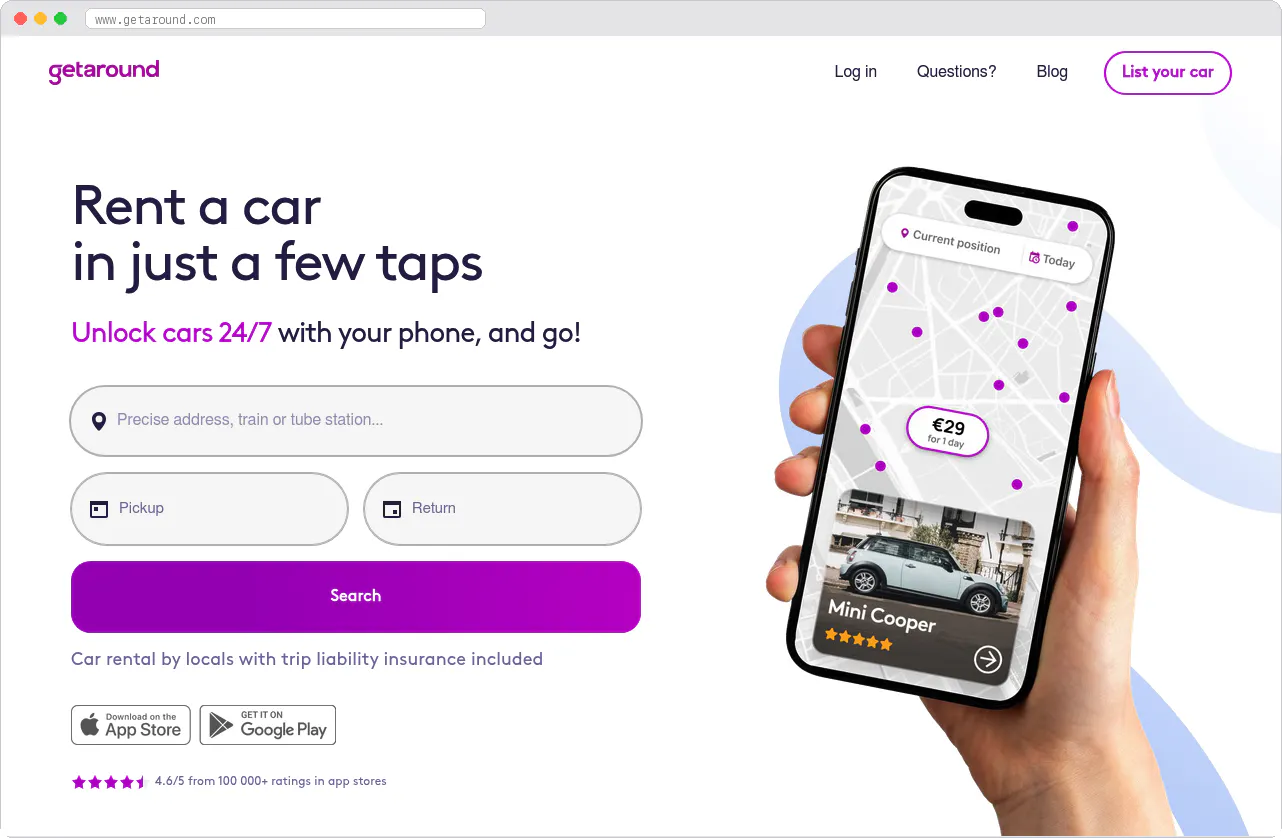
How does Getaround work?
Getaround operates as a location-based peer-to-peer rental marketplace that connects car owners with people who need temporary vehicle access. The platform handles the entire transaction process, from discovery to payment to vehicle access.
For car owners, Getaround provides a way to monetize idle vehicles. Hosts list their cars on the platform by providing photos, descriptions, and availability calendars. They set their own hourly and daily rates, though Getaround provides pricing recommendations based on local market data. The platform's insurance covers the vehicle during rentals, protecting owners from liability concerns.
For renters, Getaround offers instant access to nearby vehicles without the overhead of car ownership. Users can search for cars by location, vehicle type, and availability using the mobile app or website. Once they find a suitable vehicle, they can book it immediately and access the car using Getaround's technology without meeting the owner.
Getaround's business model centers on commission fees. The company typically takes 40% of the rental fee for trips under 24 hours and 35% for longer rentals. This covers insurance, customer support, technology infrastructure, and the company's profit margin. While this might seem high compared to other marketplaces, it reflects the complexity and risk involved in facilitating car sharing.
The platform also generates additional revenue through optional services like delivery (where cars are brought to renters), premium vehicle access, and late return fees. Some markets also offer monthly subscription options for frequent users.
Essential features for a car-sharing marketplace like Getaround
Building a successful car-sharing platform requires sophisticated functionality that goes well beyond basic marketplace features. Trust, safety, and smooth user experience are paramount when strangers are sharing expensive, potentially dangerous assets.
User verification and trust systems form the foundation of any car-sharing marketplace. Unlike platforms where users exchange digital goods or simple services, car sharing involves handing over valuable physical assets to strangers. Getaround requires extensive verification including government-issued ID, driving license validation, and background checks. The platform also uses facial recognition technology to verify that the person picking up the car matches their profile.
Renters must meet specific criteria: typically 18 or older (21 in some markets), clean driving record for the past three years, and valid credit card. The verification process can take 24-48 hours, which creates friction but builds essential trust in the marketplace.
Vehicle access technology differentiates modern car-sharing platforms from traditional rental companies. Getaround's "Connect" devices allow keyless entry and ignition through the mobile app. This hardware includes GPS tracking, cellular connectivity, and immobilizer technology that prevents unauthorized use.
The technology stack for vehicle access is complex and expensive. Each device costs hundreds of dollars and requires professional installation. The system must work reliably across different vehicle makes and models while maintaining security against hacking attempts. Alternative approaches include lockboxes with digital codes, though these provide less security and user experience.
Dynamic pricing and availability management help car owners maximize revenue while ensuring supply meets demand. Getaround's algorithm considers factors like local events, weather, historical booking patterns, and competitor pricing to suggest optimal rates. Owners can accept these recommendations or set their own prices.
Availability calendars must handle complex scenarios: recurring availability patterns, last-minute changes, buffer time between bookings for cleaning or maintenance, and integration with owners' personal schedules. The system needs to prevent double bookings while maximizing utilization.
Comprehensive insurance and damage handling addresses the biggest concern for both owners and renters. Getaround provides commercial insurance that covers up to $1 million in liability and collision damage during rentals. This insurance is primary, meaning it pays claims before the owner's personal auto insurance.
The platform also implements damage assessment protocols using photos before and after each trip, automated damage detection through AI, and streamlined claims processing. Clear documentation of vehicle condition protects both parties and reduces disputes.
Location-based search and logistics enable users to find nearby vehicles efficiently. The platform requires robust mapping functionality, distance calculations, and real-time availability updates. Search filters might include vehicle type, transmission, fuel efficiency, pet-friendly options, and instant book availability.
Logistics become complex in dense urban markets where parking is limited. Some platforms offer valet services or designated parking spots to improve convenience, though these add operational costs.
Payment processing and financial management must handle split payments, security deposits, and complex fee structures. The system holds payment from renters until trip completion, then distributes funds between the owner and platform after deducting fees and taxes.
Securit deposits typically range from $200-$500 depending on vehicle value and renter history. The platform must be able to process damage claims against these deposits quickly and transparently.
Getaround's competitors and the car-sharing landscape
The car-sharing market includes several distinct models, each with different value propositions and operational challenges. Understanding these alternatives helps identify opportunities for differentiation.
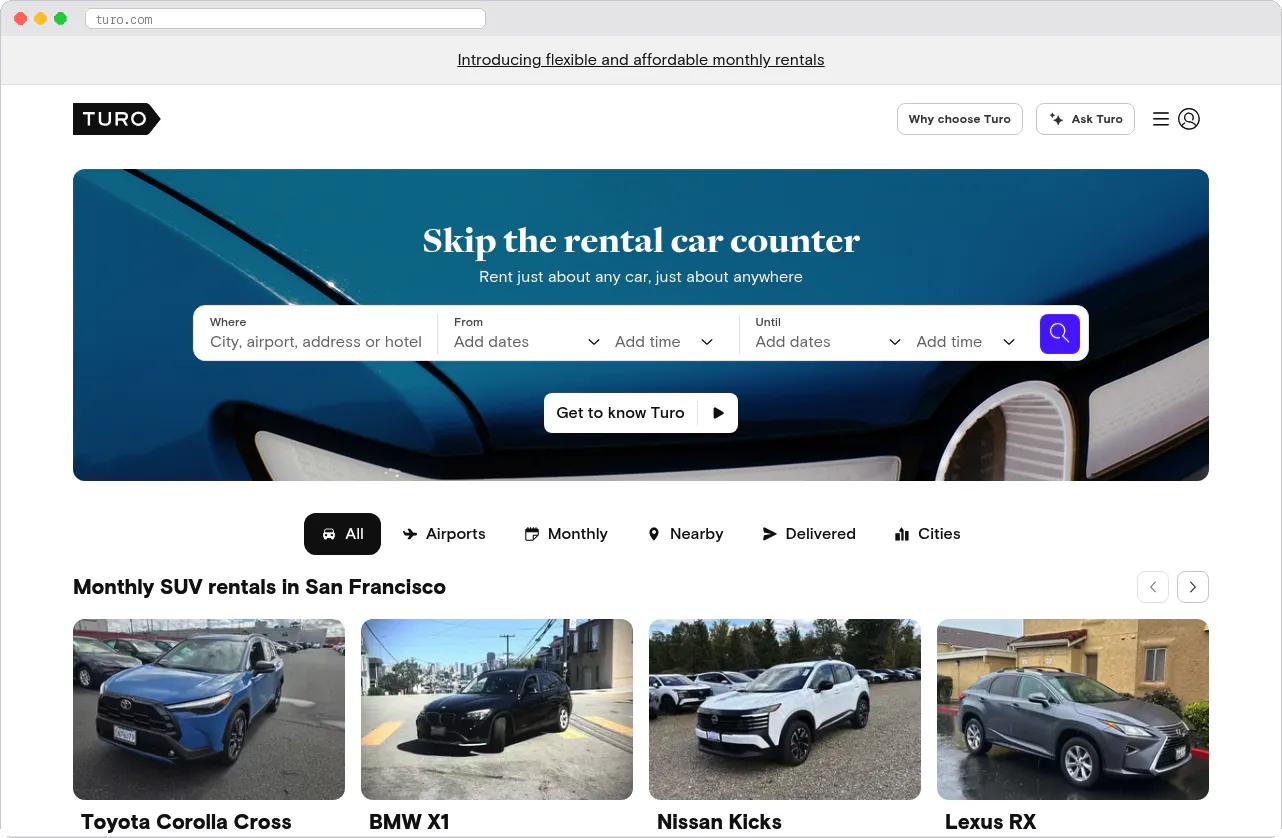
Turo represents Getaround's primary competitor in the peer-to-peer car-sharing space. While both platforms connect car owners with renters, they target different use cases. Turo focuses primarily on daily and weekly rentals, positioning itself as an alternative to traditional car rental companies for travel and vacation needs.
Turo's average rental length is 3-4 days compared to Getaround's emphasis on hourly and short-term bookings. This difference affects everything from pricing models to insurance coverage to user behavior. Turo also requires physical key exchange in most markets, though they're expanding keyless options.
Turo operates in more international markets than Getaround, with significant presence in the United Kingdom, Canada, and Australia. The company went public via SPAC in 2021 and has achieved greater scale, with over 14 million users and 450,000 vehicles listed.
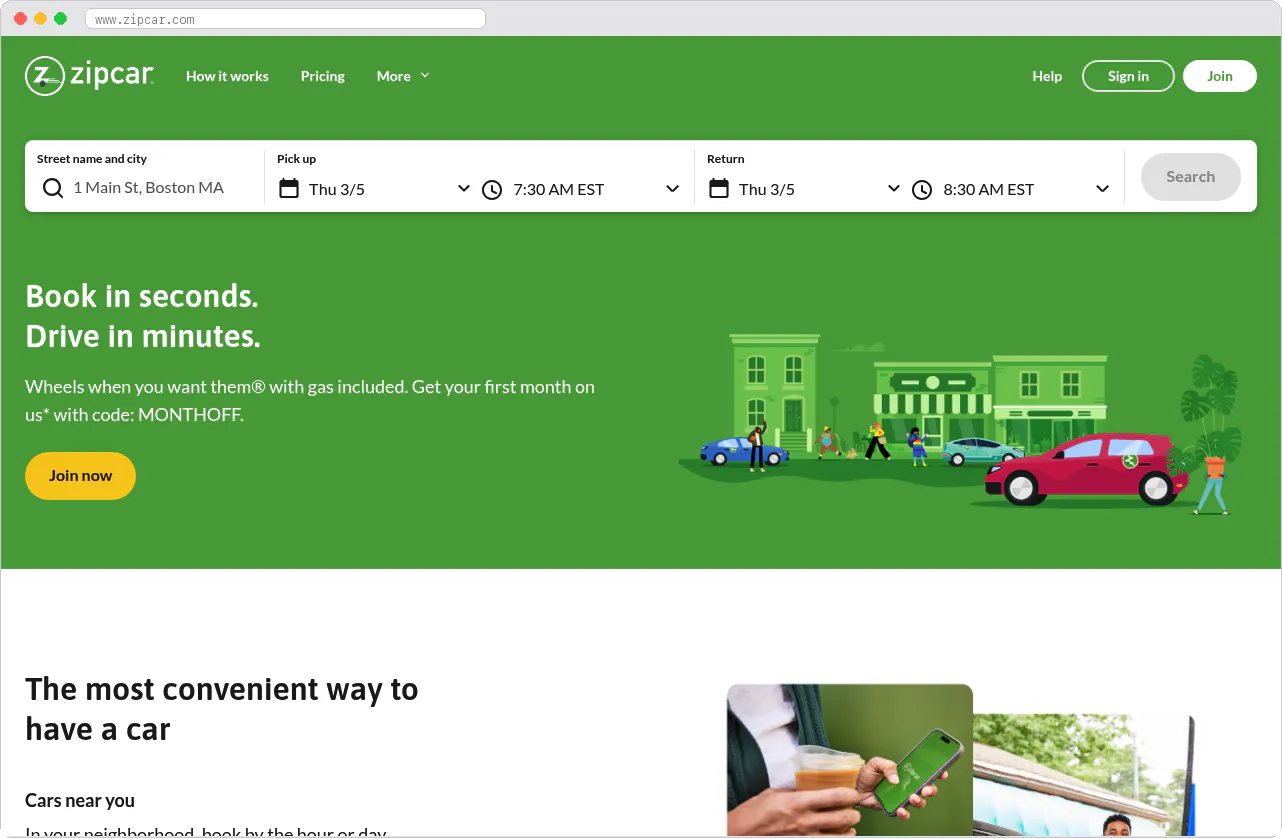
Zipcar pioneered the car-sharing concept but uses a different business model entirely. Instead of peer-to-peer sharing, Zipcar owns or leases its fleet and places vehicles in designated parking spots throughout cities. Users pay membership fees plus hourly rates to access vehicles.
Zipcar's approach offers more predictable availability and standardized vehicle condition, but limits supply to what the company can afford to purchase and maintain. The model works well in dense urban areas with high utilization but struggles in suburban markets where demand is more dispersed.
Maven was General Motors' attempt to enter car sharing through a corporate-owned fleet model similar to Zipcar. The platform launched in 2016 with backing from a major automaker but shut down in 2020, unable to achieve profitability despite significant investment.
Maven's failure illustrates the operational challenges of fleet-based car sharing. High vehicle acquisition costs, insurance expenses, and maintenance requirements create substantial fixed costs that require very high utilization to justify.
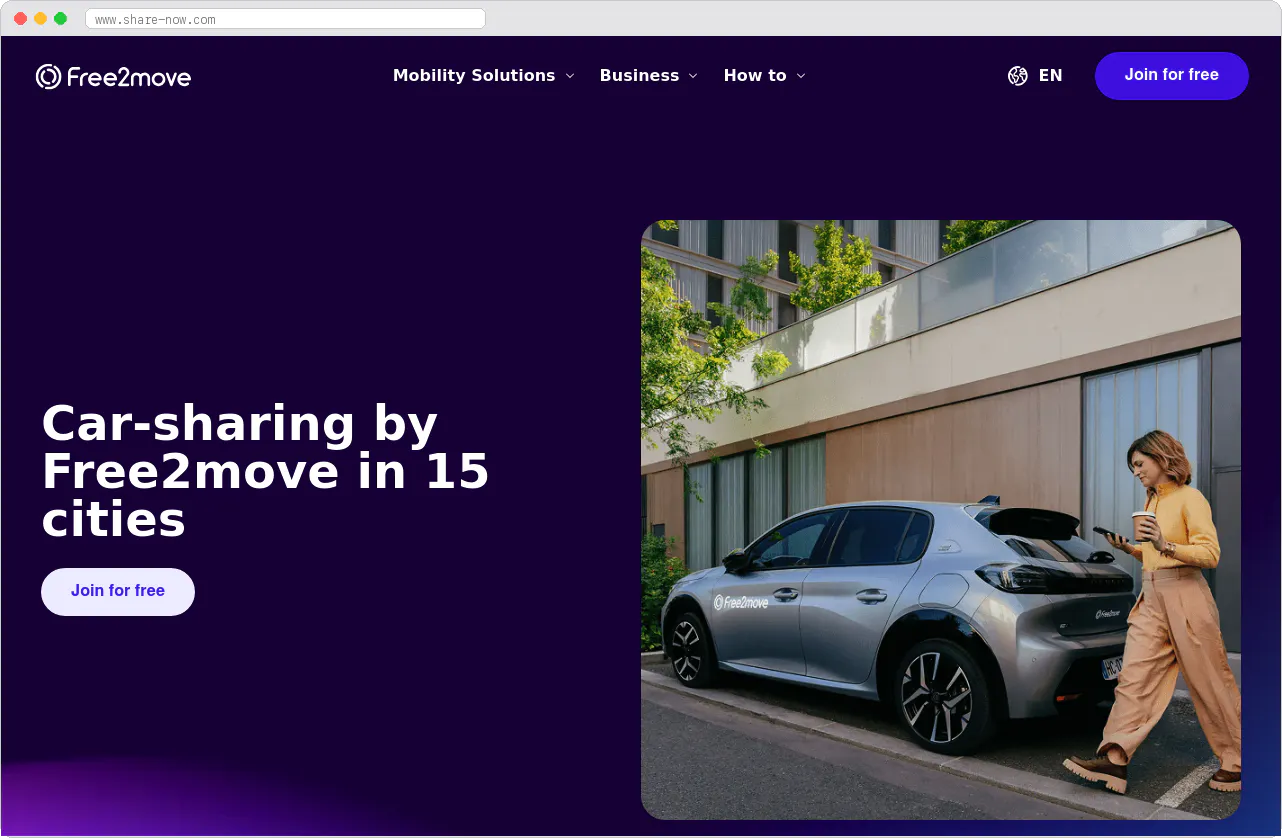
Car2Go (now SHARE NOW) offered a unique "free-floating" model where users could pick up and drop off vehicles anywhere within designated zones rather than returning to specific locations. This flexibility appealed to urban users making one-way trips.
However, the free-floating model created operational nightmares: vehicles accumulated in inconvenient locations, required constant redistribution, and faced parking challenges in cities with limited space. Car2Go exited the North American market in 2019, though the service continues in some European cities.
Traditional rental companies like Hertz, Enterprise, and Budget have launched their own hourly rental services to compete with car-sharing platforms. These "Hertz 24/7" and "Enterprise CarShare" offerings use existing fleet and insurance infrastructure but lack the convenience and pricing advantages of peer-to-peer models.
How to build a car-sharing marketplace like Getaround
Creating a successful car-sharing platform requires a systematic approach that addresses both the technical complexities and unique business challenges of facilitating vehicle sharing between strangers.
Step 1: Validate your car-sharing marketplace idea
Car sharing works best in specific market conditions that you should validate before building. The most successful car-sharing markets typically have high population density, limited parking availability, significant public transportation infrastructure, and demographics skewing younger and more environmentally conscious.
Start by researching your target market thoroughly. Analyze local transportation options, average car ownership costs, parking availability and costs, and commuting patterns. Cities with universities, high rental populations, or significant tourism often provide ideal conditions for car sharing.
Conduct interviews with potential car owners and renters to understand their transportation needs and pain points. Car owners might be motivated by offsetting vehicle expenses, reducing environmental impact, or maximizing asset utilization. Renters typically seek convenience, cost savings compared to car ownership, or access to specific vehicle types for particular trips.
The regulatory environment varies significantly by location and can make or break a car-sharing business. Research local laws around peer-to-peer car sharing, commercial insurance requirements, vehicle registration, and tax obligations. Some cities have embraced car sharing with supportive policies, while others have created barriers through restrictive regulations.
Step 2: Choose your business model and revenue streams
Commission-based revenue represents the most common monetization approach for car-sharing marketplaces, but the specific structure varies significantly. Getaround's 35-40% commission might seem high compared to other marketplaces, but it reflects the platform's comprehensive service including insurance, vehicle access technology, customer support, and payment processing.
Consider whether your platform will follow Getaround's technology-enabled model or a simpler approach with physical key exchange. The technology route requires significant upfront investment in hardware and installation but provides better user experience and operational efficiency. Key exchange models have lower startup costs but create friction and limit scalability.
Additional revenue opportunities include membership fees for frequent users, premium listing features for car owners, delivery services, and partnerships with insurance companies or automotive services. Some platforms also generate revenue through data licensing to urban planners or automotive companies.
Step 3: Start with a focused geographic scope
Car sharing exhibits strong network effects within specific geographic areas but doesn't scale linearly across markets. Success in San Francisco doesn't guarantee success in Dallas because the transportation dynamics, regulations, and user behavior differ significantly.
Choose a single city or neighborhood for your initial launch, preferably somewhere with favorable conditions for car sharing. Focus on achieving dense supply and demand in this limited area before expanding geographically. This approach allows you to refine operations, build local partnerships, and establish proof of concept with manageable complexity.
Getaround started in San Francisco's Mission District before expanding to other neighborhoods, then other cities. This gradual expansion allowed them to perfect their operational playbook and build the financial resources necessary for broader scaling.
Step 4: Build your minimum viable platform
Your initial platform needs to demonstrate the core value proposition while minimizing development time and costs. Essential functionality includes user registration and verification, vehicle listing and discovery, booking and payment processing, and basic communication tools.
For vehicle access, consider starting with a manual key exchange process or simple lockbox system before investing in sophisticated keyless technology. While this creates more friction, it allows you to validate demand and generate revenue while developing or procuring more advanced solutions.
Insurance represents a critical component that you cannot compromise on, even in the MVP stage. Partner with an insurance provider that offers commercial coverage for peer-to-peer car sharing, or work with a managing general agent (MGA) that specializes in sharing economy businesses. Attempting to operate without proper insurance coverage creates enormous liability risks.
Sharetribe provides an excellent foundation for building car-sharing marketplaces because it includes built-in functionality for location-based search, booking management, payment processing with Stripe Connect, and user verification tools. The platform's flexibility allows you to customize workflows specific to car sharing while avoiding the complexity of building marketplace infrastructure from scratch.
Step 5: Source your initial vehicle supply
Car owners represent the supply side of your marketplace and typically prove easier to recruit than renters, especially if you offer compelling financial incentives. Target demographics might include urban residents with reliable vehicles, people with extra cars, or those looking to offset vehicle expenses.
Develop clear supply onboarding processes that balance thoroughness with simplicity. Vehicle owners need to provide documentation including registration, insurance, photos, and basic vehicle information. Consider offering incentives like reduced commission rates or marketing support for early adopters.
Quality control becomes crucial as your supply grows. Establish minimum vehicle standards regarding age, condition, and equipment. Regular vehicle inspections help maintain platform quality and reduce negative experiences that could damage your brand.
Step 6: Build demand while ensuring balanced growth
Car sharing requires careful balance between supply and demand to maintain healthy utilization rates. Too many vehicles relative to demand leaves owners frustrated with low earnings, while insufficient supply disappoints potential renters.
Target renter acquisition through channels that align with your value proposition. Digital marketing might focus on cost comparisons with car ownership, environmental benefits, or convenience messaging. Partnerships with universities, employers, or transit agencies can provide access to audiences likely to embrace car sharing.
Monitor key metrics like booking rate (percentage of available hours that get booked), repeat usage, and customer satisfaction scores. These indicators help you understand whether your marketplace is achieving product-market fit or requires iteration.
Step 7: Scale operations and expand geographically
Once you've achieved stable operations and positive unit economics in your initial market, expansion becomes possible but requires careful planning. Each new market involves regulatory research, supply recruitment, demand generation, and operational setup.
Develop standardized playbooks for market entry while remaining flexible about local adaptations. What works in one city might not translate directly to another due to differences in transportation infrastructure, regulations, or user behavior.
Consider whether to expand organically or through partnerships with local operators. Organic expansion provides more control but requires significant capital and operational capacity. Partnerships can accelerate growth but may dilute control and economics.
Development approaches for building a car-sharing platform
The technical complexity of car-sharing platforms significantly exceeds that of typical marketplaces due to requirements for vehicle access technology, GPS tracking, insurance integration, and regulatory compliance.
Custom development from scratch provides maximum flexibility but requires substantial technical expertise and financial resources. A full-featured car-sharing platform might cost $100,000-$500,000 to develop initially, with ongoing maintenance and feature development requiring dedicated engineering teams.
The technical architecture must handle real-time GPS data, integration with telematics devices, complex booking algorithms, and high-availability requirements since users need reliable access to vehicles. Security considerations are also paramount given the physical assets and personal data involved.
No-code marketplace builders like Sharetribe offer a compelling middle ground for car-sharing entrepreneurs. While you won't get specialized vehicle access technology out of the box, you can launch quickly with core marketplace functionality and add custom integrations as your business grows.
Sharetribe's booking system handles complex availability scenarios, location-based search works well for vehicle discovery, and the platform's payment processing through Stripe Connect supports the split-payment models common in car sharing. You can integrate third-party telematics providers or develop custom vehicle access solutions on top of the platform.
Combination approaches using multiple no-code tools might include website builders like Webflow for marketing pages, Airtable for vehicle database management, Calendly for booking coordination, and Stripe for payments. While potentially cost-effective initially, this approach becomes unwieldy as complexity grows and lacks the cohesive user experience necessary for car sharing.
Cost considerations for building a car-sharing marketplace
Car-sharing platforms involve unique cost structures that differ significantly from typical marketplaces due to hardware requirements, insurance costs, and regulatory compliance needs.
Technology costs include not just platform development but also vehicle access hardware, GPS tracking devices, and cellular connectivity. Each vehicle might require $300-$800 in hardware plus installation costs. For a fleet of 100 vehicles, technology costs alone could exceed $50,000.
Insurance represents a substantial ongoing expense that can consume 15-25% of gross revenue. Commercial insurance for peer-to-peer car sharing costs significantly more than personal auto insurance due to increased risk exposure and regulatory requirements.
Regulatory and legal costs vary by market but typically include business licensing, insurance compliance, tax registration, and ongoing legal counsel. Markets with favorable regulations might require $10,000-$20,000 in initial legal setup, while complex jurisdictions could cost much more.
Using Sharetribe significantly reduces initial development costs while providing scalability for custom features later. A basic car-sharing marketplace built on Sharetribe might launch for under $5,000 in platform costs, with additional expenses for vehicle hardware, insurance, and marketing.
As your platform grows, you can invest in custom features like advanced telematics integration, AI-powered pricing, or mobile app development while maintaining the reliable core marketplace functionality.
Why car sharing represents a compelling marketplace opportunity
Car sharing addresses multiple trends shaping urban transportation: rising car ownership costs, environmental awareness, urbanization, and changing preferences among younger demographics. The total addressable market continues expanding as cities grow and transportation needs evolve.
Unlike digital marketplaces that face intense global competition, car sharing remains primarily local due to regulatory differences and operational requirements. This geographic segmentation creates opportunities for regional players to establish strong market positions.
The asset-heavy nature of car sharing also creates barriers to entry that protect successful platforms. Once a marketplace achieves critical mass in a market, competitors face significant challenges in recruiting both vehicle supply and renter demand simultaneously.
Successful car-sharing platforms can also expand into adjacent services like package delivery, moving services, or commercial vehicle sharing, using their technology infrastructure and user base to capture additional value.
Building a platform like Getaround requires significant planning and execution, but the market opportunity and defensive characteristics make it an attractive marketplace category for ambitious entrepreneurs willing to tackle the operational complexity.
Frequently asked questions
How much does it cost to build a car-sharing platform like Getaround?
Development costs vary significantly by approach. Custom development typically costs $100,000-$500,000 initially, while A no-code marketplace platform costs $99-399 per month, bringing total first-year costs to roughly $2,000-5,000. Additional costs include vehicle hardware ($300-$800 per car), insurance, and regulatory compliance.
What features are essential for a car-sharing marketplace?
Essential features include user verification systems, vehicle access technology (keyless entry or lockboxes), location-based search, booking management, payment processing, comprehensive insurance coverage, and damage reporting. GPS tracking and availability calendars are also critical.
How does Getaround make money?
Getaround charges commission fees of 35-40% on rentals, which covers insurance, technology, customer support, and profit. They also earn revenue from optional services like vehicle delivery, late return fees, and premium features for hosts and renters.
What are the biggest challenges in building a car-sharing platform?
Major challenges include regulatory compliance varying by location, comprehensive insurance requirements, vehicle access technology integration, trust and safety between strangers, and achieving balanced supply-demand in local markets. Each requires significant planning and resources.
How long does it take to launch a car-sharing marketplace?
Timeline depends on your approach. With Sharetribe, you can launch a basic platform in 2-4 weeks, though adding vehicle hardware and insurance partnerships takes additional time. Custom development typically requires 6-12 months minimum.
What markets work best for car-sharing platforms?
Successful car-sharing markets typically have high population density, limited parking, strong public transit, and younger demographics. University towns, urban centers with high rental populations, and cities with expensive parking often provide ideal conditions.
Start your 14-day free trial
Create a marketplace today!
- Launch quickly, without coding
- Extend infinitely
- Scale to any size
No credit card required