How to build a website like Zomato
Zomato transformed food delivery in India and globally, growing from a restaurant discovery platform to a $5 billion marketplace. Learn how their business model works, what features you need, and how to build a similar food delivery marketplace from scratch.
Published: Mar 4, 2026
Last updated: Mar 19, 2026
Zomato has reshaped how people discover and order food, growing from a simple restaurant listing website in 2008 to one of the world's largest food delivery platforms. Today, the company serves approximately 80 million monthly active users across 800+ cities in India, generating hundreds of millions in revenue through its multi-sided marketplace.
Founded by Deepinder Goyal and Pankaj Chaddah in Delhi, Zomato started as "Foodiebay" before rebranding in 2010. What began as a restaurant discovery platform evolved into a complete food ecosystem that connects restaurants, delivery partners, and hungry customers through technology.
The success of Zomato demonstrates the large opportunity in hyperlocal food marketplaces. But building a platform that matches restaurants with customers while coordinating thousands of delivery partners requires understanding the unique challenges of the food delivery business model.
This guide explores how Zomato works, how it generates revenue, and what it takes to build a similar marketplace. We'll cover the important features, competitive landscape, development approaches, and realistic cost considerations for creating your own food delivery platform.
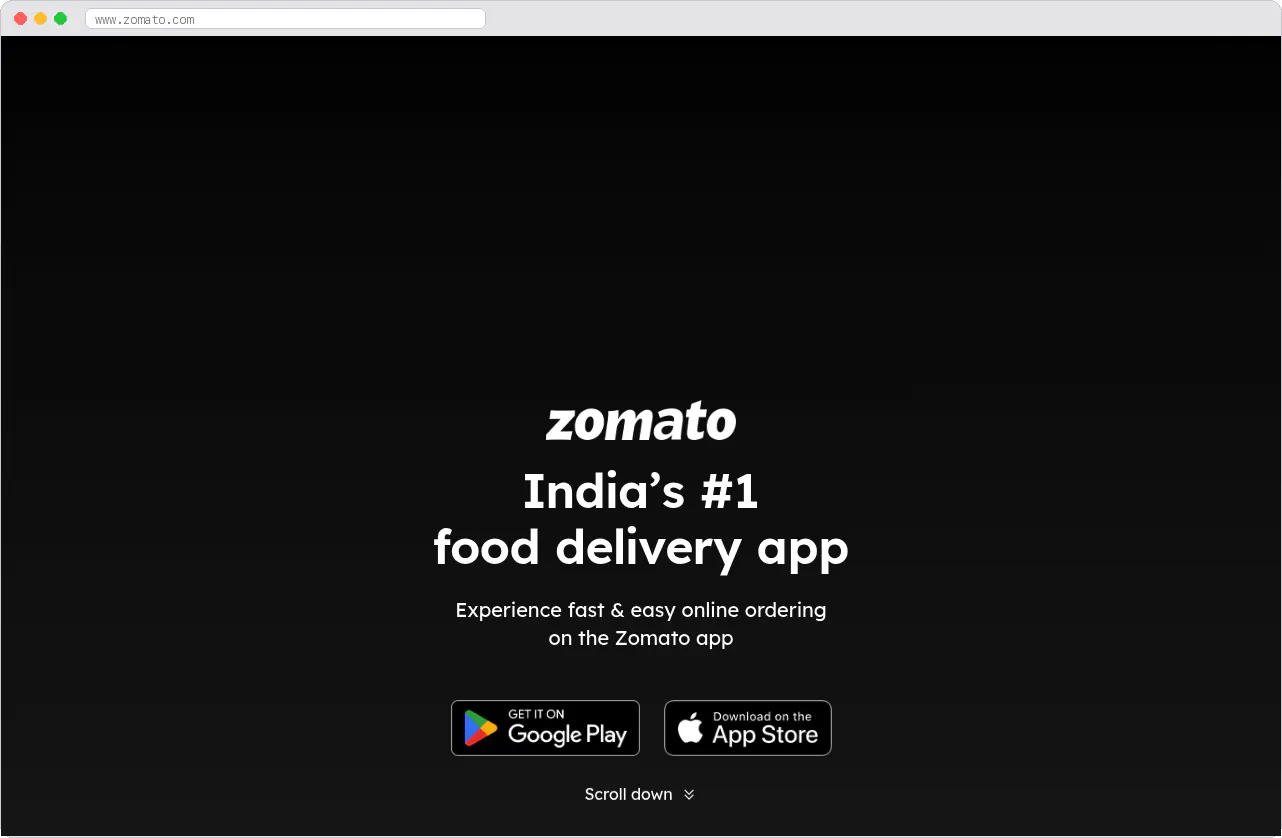
How does Zomato work?
Zomato operates as a three-sided marketplace connecting restaurants, customers, and delivery partners in a complex ecosystem that requires careful coordination to succeed.
On the supply side, restaurants join Zomato to access a broader customer base beyond their physical location. They create detailed profiles with menus, photos, operating hours, and delivery areas. Restaurants can choose different service levels, from basic listing and ordering to full-service delivery support where Zomato handles logistics entirely.
Customers discover restaurants through location-based search, filtering by cuisine type, price range, delivery time, ratings, and dietary preferences. They can browse menus, read reviews, and place orders for delivery or pickup. The platform handles payment processing and order tracking, providing real-time updates from kitchen to doorstep.
Delivery partners represent the third side of the marketplace. These independent contractors use Zomato's driver app to receive order assignments, navigate to restaurants and customers, and earn money based on deliveries completed. The platform's algorithm matches orders with nearby available drivers to optimize delivery times and costs.
The transaction flow begins when a customer places an order. Zomato immediately sends the order details to the restaurant's point-of-sale system or tablet. Simultaneously, the platform identifies and assigns a nearby delivery partner. As the restaurant prepares the food, the driver travels to the pickup location. Real-time tracking keeps customers informed throughout the process.
Zomato's marketplace model creates network effects that benefit all participants. More restaurants attract more customers, which in turn draws more delivery partners seeking income opportunities. Higher delivery partner density enables faster delivery times, improving the customer experience and encouraging more frequent orders.
The platform also handles complex operational challenges like demand forecasting, dynamic pricing during peak hours, quality control, customer support, and dispute resolution. This operational infrastructure is what transforms a simple ordering system into a scalable marketplace business.
How does Zomato make money?
Zomato generates revenue through multiple streams that capitalize on different aspects of its marketplace ecosystem. Understanding these revenue models is critical for anyone building a similar platform.
Commission fees represent Zomato's primary revenue source, typically ranging from 18-25% of each order value. This commission is charged to restaurants for access to customers and delivery services. The percentage varies based on factors like restaurant partnership level, order volume, and local market competition. In high-demand areas or during peak hours, commission rates may increase through surge pricing mechanisms.
Delivery fees paid by customers provide another substantial revenue stream. These fees typically range from $0.50 to $2.00 per order, depending on distance, time of day, and local market conditions. While some orders qualify for "free delivery" promotions, these costs are usually absorbed through higher commission rates or minimum order requirements.
Zomato Pro and Zomato Gold subscription programs generate recurring revenue from customers willing to pay for premium benefits. Subscribers receive perks like free delivery, exclusive discounts, priority customer support, and access to premium restaurants. Monthly subscription fees range from $2-5 in most markets, creating a predictable revenue base.
Advertising revenue comes from restaurants paying for prominent placement in search results, sponsored listings, and banner advertisements within the app. Restaurants can bid for featured positions during specific time periods or target particular customer segments. This performance marketing model allows restaurants to drive immediate visibility and orders.
Payment processing generates additional revenue through transaction fees, though this typically represents a smaller percentage of total revenue compared to commissions and delivery fees. Zomato also earns interest on funds held temporarily between order placement and restaurant payouts.
In FY2023, Zomato reported revenue of approximately $850 million, with the majority coming from food delivery operations. The company has achieved profitability in several key markets, demonstrating the viability of the hyperlocal marketplace model when executed effectively.
Cloud kitchen partnerships represent an emerging revenue stream where Zomato provides kitchen infrastructure, technology, and delivery services to restaurant brands focused exclusively on delivery. This model generates rental income, higher commission rates, and deeper restaurant partnerships.
What makes Zomato successful?
Zomato's success stems from several strategic advantages that create sustainable competitive moats in the highly competitive food delivery market.
Local market expertise drives much of Zomato's effectiveness. The platform adapts to regional food preferences, payment methods, delivery infrastructure, and cultural dining habits. In India, this meant integrating cash-on-delivery payments and optimizing for diverse cuisine types. In international markets, Zomato customizes restaurant categories, delivery times, and user interfaces to match local expectations.
Technology infrastructure provides operational advantages that smaller competitors struggle to match. Zomato's algorithm optimizes delivery routes, predicts demand patterns, manages inventory for cloud kitchens, and personalizes restaurant recommendations. Machine learning models analyze customer behavior, restaurant performance, and delivery partner efficiency to continuously improve the platform's effectiveness.
Data advantages create compounding returns over time. With millions of orders processed daily, Zomato accumulates detailed insights about customer preferences, restaurant performance, optimal pricing, and demand forecasting. This data informs strategic decisions about market expansion, restaurant partnerships, and feature development that smaller platforms cannot replicate easily.
Brand recognition and trust meaningfully impact customer acquisition and retention in food delivery. Zomato's established brand reduces customer hesitation about ordering from unfamiliar restaurants and provides credibility when entering new markets. Strong brand equity also attracts restaurant partners who view Zomato as a premium channel for reaching customers.
Financial resources enable aggressive market expansion and competitive responses. Zomato's ability to operate at losses while building market share, invest in technology development, and acquire competitors has helped establish dominant positions in key markets. These resources also support extensive marketing campaigns and promotional offers that drive user adoption.
Supply-side network effects create barriers to competition. Restaurants that integrate deeply with Zomato's systems, train staff on the platform, and optimize operations for delivery orders become less likely to switch to alternative platforms. Exclusive partnerships and preferential commission rates further strengthen restaurant relationships.
Delivery partner density enables superior customer experience through faster delivery times and higher order fulfillment rates. Markets with dense delivery partner networks create positive feedback loops where better service attracts more customers, which generates more orders and income opportunities for delivery partners.
Key features of a Zomato-like marketplace
Building a food delivery marketplace requires specific functionality that addresses the unique operational challenges of connecting restaurants, customers, and delivery partners in real-time.
Restaurant management system
Restaurants need full tools to manage their presence on the platform effectively. Menu management functionality allows restaurants to add items, update prices, mark items as unavailable, and create time-based availability (like breakfast-only items). Integration with existing point-of-sale systems streamlines order processing and inventory management.
Order management interfaces help restaurants track incoming orders, manage preparation times, and communicate with delivery partners. Real-time analytics provide insights into order patterns, peak hours, popular items, and customer feedback to help restaurants optimize their operations.
Location-based discovery and search
Customers need powerful search and filtering capabilities to find restaurants that serve their area and meet their preferences. GPS-based location detection automatically shows nearby restaurants within delivery range. Advanced filtering options include cuisine type, price range, delivery time, minimum rating, dietary restrictions, and payment methods accepted.
Real-time availability updates prevent customers from ordering from restaurants that are closed, too busy to accept orders, or outside delivery range. Dynamic delivery time estimates help customers make informed decisions about when their food will arrive.
Order tracking and communication
Thorough order tracking keeps all parties informed throughout the delivery process. Customers receive updates when restaurants confirm orders, when food preparation begins, when delivery partners pick up orders, and estimated arrival times. Push notifications and SMS updates ensure customers stay informed even when not actively using the app.
In-app messaging enables communication between customers, restaurants, and delivery partners to resolve issues, provide delivery instructions, or handle special requests without sharing personal contact information.
Payment processing and financial management
Secure payment processing supports multiple payment methods including credit cards, digital wallets, cash-on-delivery, and local payment systems popular in target markets. Split payment options allow customers to use multiple payment methods for a single order.
Escrow functionality holds payments until order completion, protecting both customers and restaurants from fraud or service failures. Automated settlement systems pay restaurants and delivery partners according to agreed schedules, minus applicable commissions and fees.
Delivery partner management
Delivery partner apps provide order assignments, navigation assistance, earnings tracking, and performance metrics. Intelligent routing algorithms optimize delivery sequences for partners handling multiple orders and suggest efficient routes to minimize delivery times.
Partner onboarding systems verify identity documents, vehicle information, and background checks where required by local regulations. Performance tracking monitors delivery times, customer ratings, and completion rates to identify top performers and partners who need additional support.
Review and rating system
Two-way rating systems allow customers to rate restaurants and delivery partners, while restaurants can rate customers and delivery partners can rate both restaurants and customers. This mutual accountability encourages good behavior from all marketplace participants.
Detailed review functionality enables customers to provide specific feedback about food quality, delivery experience, packaging, and overall service. Restaurants can respond to reviews, address concerns, and demonstrate commitment to customer satisfaction.
Analytics and reporting
Detailed analytics dashboards provide insights for all marketplace participants. Restaurants see order volumes, peak hours, popular items, customer ratings, and revenue trends. Delivery partners track earnings, delivery efficiency, customer ratings, and performance comparisons.
Marketplace operators need system-wide analytics covering demand patterns, supply-demand balance, operational efficiency, revenue metrics, and user behavior analysis to make strategic decisions about market expansion, pricing, and feature development.
Competitors and alternatives
The food delivery marketplace landscape includes several major players, each with distinct approaches to connecting restaurants with customers.
Swiggy
Swiggy represents Zomato's primary competitor in the Indian market, offering similar food delivery services with some strategic differences. Swiggy focuses heavily on hyperlocal delivery beyond just food, including grocery delivery through Instamart and package delivery through Swiggy Go. Their business model relies on similar commission structures but emphasizes faster delivery times and broader service categories.
Swiggy's competitive advantage lies in their logistics network and willingness to expand into adjacent markets quickly. They've invested heavily in cloud kitchens and exclusive restaurant partnerships to differentiate their food selection. However, their broader service focus sometimes dilutes their food delivery specialization compared to Zomato's restaurant-centric approach.
Uber Eats (now discontinued in India but active globally)
Uber Eats used Uber's existing driver network and location-based technology to enter food delivery markets worldwide. Their advantage was rapid market entry using established operational infrastructure and brand recognition. Uber Eats typically charged similar commission rates but offered more flexible delivery partner arrangements.
The platform's weakness was treating food delivery as an extension of ride-sharing rather than a specialized marketplace with unique requirements. This led to suboptimal restaurant onboarding experiences and less specialized features compared to dedicated food delivery platforms. Uber eventually sold their Indian operations to Zomato, recognizing the challenges of competing with specialized local players.
DoorDash
DoorDash dominates the North American food delivery market through aggressive expansion and acquisition strategies. Their business model includes higher commission rates (25-30%) but provides complete marketing and operational support to restaurant partners. DoorDash also emphasizes suburban and smaller city expansion where competition is less intense.
DoorDash's strength lies in market penetration and restaurant relationship management. They offer more hands-on support for restaurant partners and invest heavily in local market development. However, their higher commission rates can strain restaurant profitability, and their focus on North American markets limits global expansion insights.
Deliveroo
Deliveroo focuses on premium restaurant partnerships and higher-quality food delivery experiences in European and Asian markets. Their business model emphasizes partnerships with established restaurants rather than broad marketplace inclusion. Commission rates typically range from 20-35%, justified by premium positioning and marketing support.
Deliveroo's competitive advantage includes stronger restaurant relationships and focus on food quality over delivery speed alone. Their Deliveroo Editions (cloud kitchen) concept provides additional revenue streams and exclusive restaurant access. However, their premium positioning limits market size and makes expansion into price-sensitive markets challenging.
Regional players
Numerous regional players compete effectively by focusing on local market needs and cultural preferences. Platforms like Foodpanda (in Asia), Just Eat Takeaway (Europe), and iFood (Latin America) succeed through deep local market understanding, partnerships with local restaurants, and payment methods that match regional preferences.
These regional competitors often outperform global platforms by offering better customer service in local languages, supporting preferred payment methods, and understanding local food culture and delivery expectations.
How to build a marketplace like Zomato
Building a successful food delivery marketplace requires careful planning, strategic execution, and deep understanding of the unique challenges inherent in three-sided marketplace businesses.
Start with market research and validation
Begin by identifying underserved geographic markets or customer segments where existing platforms have gaps. Conduct extensive research on local food culture, dining habits, payment preferences, delivery infrastructure, and regulatory requirements. Interview potential restaurant partners, customers, and delivery partners to understand their pain points with existing solutions.
Validate your concept through pilot programs or limited launches before investing heavily in technology development. Test core assumptions about demand patterns, pricing sensitivity, and operational feasibility through small-scale experiments.
Choose your initial focus and scope
Successful food delivery marketplaces typically start with narrow geographic focus and gradually expand. Choose a specific city or region where you can achieve sufficient density of restaurants, customers, and delivery partners to create network effects. Starting too broadly dilutes resources and makes achieving liquidity in any single market more difficult.
Decide whether to focus on specific restaurant types (premium dining, quick service, ethnic cuisine) or customer segments (office workers, families, students) initially. Specialization helps differentiate from established competitors and allows deeper understanding of target market needs.
Build core marketplace functionality
Develop key features that enable basic marketplace operations: restaurant onboarding and menu management, customer ordering and payment processing, delivery partner assignment and tracking, and basic communication between all parties.
Prioritize mobile-first development since food delivery is predominantly a mobile experience. Ensure core functionality works reliably before adding advanced features like AI recommendations or smart analytics.
Establish restaurant supply
Begin building restaurant partnerships before launching to customers. Approach restaurants directly with clear value propositions about increased customer reach, especially during off-peak hours. Offer favorable commission rates initially to encourage adoption and gather feedback on platform functionality.
Focus on onboarding restaurants that can fulfill orders consistently and maintain quality standards. Poor initial experiences with unreliable restaurants damage platform reputation and customer trust.
Recruit and manage delivery partners
Develop delivery partner recruitment strategies that attract reliable drivers while managing operational costs. Create clear earnings structures, performance incentives, and support systems that encourage consistent service quality.
Invest in delivery partner training programs covering food safety, customer service, and platform technology usage. Strong delivery partner performance directly impacts customer satisfaction and repeat order rates.
Launch to customers strategically
Begin customer acquisition with targeted marketing in specific neighborhoods or customer segments where you have strong restaurant and delivery partner coverage. Use local marketing channels, social media, and referral programs to build initial user base cost-effectively.
Monitor key metrics closely during early launch phases: order fulfillment rates, delivery times, customer satisfaction scores, and repeat order percentages. Address operational issues quickly before scaling marketing efforts.
Iterate based on market feedback
Collect detailed feedback from all marketplace participants and iterate rapidly based on real-world usage patterns. Restaurant partners provide insights into operational efficiency, order volumes, and platform usability. Customer feedback reveals pain points in discovery, ordering, and delivery experiences.
Use data analytics to identify patterns in successful orders, optimal delivery times, popular restaurant categories, and customer behavior that inform platform improvements and market expansion decisions.
Scale geographically
Expand into new markets only after achieving strong unit economics and operational excellence in initial markets. Develop standardized processes for market entry, restaurant onboarding, delivery partner recruitment, and customer acquisition that can be replicated efficiently.
Consider partnerships with local restaurant associations, delivery companies, or marketing agencies to accelerate expansion while maintaining service quality standards.
Cost and development considerations
Building a food delivery marketplace involves major upfront investment and ongoing operational costs that vary sharply based on development approach, target market size, and feature complexity.
Custom development costs
Developing a Zomato-like platform from scratch typically requires $200,000 to $500,000 in initial development costs, depending on feature complexity and development team location. This includes building customer-facing mobile apps, restaurant management interfaces, delivery partner apps, administrative dashboards, and backend infrastructure.
Ongoing development costs range from $20,000 to $50,000 monthly for platform maintenance, feature updates, security patches, and technical support. Additional costs include cloud hosting infrastructure ($2,000-$10,000 monthly), third-party integrations, payment processing fees, and compliance requirements.
Custom development provides maximum flexibility and control but requires substantial technical expertise, longer time to market (8-12 months minimum), and substantial ongoing maintenance investment.
No-code platform approach
No-code marketplace platforms cost $99-399 per month in subscription fees, enabling launch timelines of 4-8 weeks with no large upfront investment. Total first-year costs typically run $2,000-5,000 including domain and basic design.
No-code solutions include built-in payment processing, mobile responsiveness, basic analytics, and customer support tools. However, they may lack specialized food delivery features like real-time tracking, advanced routing algorithms, or deep restaurant POS integrations.
This approach works well for market validation, testing business model assumptions, and building initial user base before investing in custom development.
Hybrid development model
Many successful food delivery platforms begin with no-code or low-code solutions for rapid market entry, then gradually add custom features as the business grows and revenue supports additional development investment.
This approach balances speed to market with long-term flexibility. Initial costs range from $10,000 to $100,000, with custom development added incrementally based on specific market needs and competitive requirements.
Operational cost considerations
Beyond technology development, food delivery marketplaces require substantial operational investment. Customer acquisition costs in competitive markets range from $10 to $50 per new user through paid marketing channels. Organic acquisition through referral programs and local marketing can reduce these costs meaningfully.
Regulatory compliance varies by market but may include food safety certifications, business licenses, insurance requirements, and employment law compliance for delivery partners. Legal and compliance costs typically range from $5,000 to $25,000 annually.
Customer support infrastructure becomes critical as transaction volume grows. Support costs range from $2-5 per customer monthly, depending on service level and automation capabilities.
Payment processing fees typically range from 2.5-3.5% of transaction volume, while additional banking and settlement fees may apply for multi-party marketplace payments.
Return on investment timeline
Food delivery marketplaces typically require 18-36 months to achieve positive unit economics in individual markets, with overall profitability taking 3-5 years as fixed costs are spread across larger transaction volumes.
Successful platforms focus on achieving strong metrics in limited geographic areas before expanding, as premature scaling can extend the path to profitability markedly. Key performance indicators include average order value, customer lifetime value, delivery partner retention, and restaurant satisfaction scores.
Frequently asked questions
How does Zomato make money?
Zomato generates revenue through commission fees (18-25% from restaurants), delivery fees from customers ($0.50-$2.00 per order), subscription programs like Zomato Pro, and advertising revenue from restaurants paying for featured placement.
How much does it cost to build a Zomato clone?
Custom development of a platform this complex typically costs $150,000-500,000+ for the initial build, with $10,000-50,000 monthly in ongoing development. A no-code marketplace platform ($99-399/month) can replicate the core marketplace mechanics at a fraction of the cost, though highly specialized features like real-time tracking or complex algorithms may need custom work later.
What features are essential for a food delivery app?
Core features include restaurant menu management, location-based search, real-time order tracking, secure payment processing, delivery partner management, two-way rating systems, and full analytics for all marketplace participants.
Who are Zomato's main competitors?
Zomato's primary competitors include Swiggy (India), DoorDash (North America), Deliveroo (Europe/Asia), and regional players like Foodpanda, Just Eat Takeaway, and iFood in their respective markets.
How long does it take to build a food delivery marketplace?
Custom development takes 8-12 months minimum, no-code solutions can launch in 4-8 weeks, and hybrid approaches typically require 2-4 months for initial launch with ongoing custom development over time.
What makes a food delivery marketplace successful?
Success factors include local market expertise, strong technology infrastructure, data advantages for optimization, brand recognition and trust, sufficient financial resources for market expansion, and achieving supply-side network effects with restaurants and delivery partners.
Start your 14-day free trial
Create a marketplace today!
- Launch quickly, without coding
- Extend infinitely
- Scale to any size
No credit card required