How to build a marketplace for camping sites
Learn how to build a camping marketplace that connects outdoor enthusiasts with unique camping experiences. This guide covers everything from validating your idea to launching and scaling your platform, with real examples from successful camping marketplaces like Hipcamp and Tentrr.
Published: Dec 18, 2023
Last updated: Mar 19, 2026
What is a marketplace for camping sites?
A camping marketplace is a platform that connects property owners with available outdoor spaces to travelers seeking unique camping experiences. Unlike traditional campgrounds managed by a single entity, these marketplaces aggregate thousands of individual properties ranging from basic tent sites on private farmland to luxury glamping accommodations in remote wilderness areas.
The model works similarly to vacation rental platforms, but with a focus on outdoor experiences rather than indoor accommodations. Property owners list their available camping spots with detailed descriptions, photos, amenities, and pricing. Travelers search by location, dates, and preferences to find and book sites that match their outdoor adventure goals.
These platforms handle the entire transaction process, from initial search and booking to payment processing and post-stay reviews. They typically monetize through commission fees charged to hosts, guests, or both parties for each successful booking.
How camping marketplaces work
Camping marketplaces operate on a three-sided model connecting property owners, outdoor enthusiasts, and the platform itself. Property owners include private landowners, farmers, ranchers, and small campground operators who want to monetize their outdoor spaces without the overhead of traditional hospitality businesses.
Guests range from weekend car campers seeking unique locations near cities to serious outdoor enthusiasts looking for remote backcountry experiences. Unlike hotel bookings where the primary consideration is often location and price, camping marketplace users prioritize experience quality, natural settings, available activities, and authentic connections with nature.
The platform facilitates trust through detailed property descriptions, high-quality photography, transparent pricing, guest reviews, and secure payment processing. Many camping marketplaces also provide additional services like equipment rentals, local experience bookings, and educational content about outdoor activities and Leave No Trace principles.
Payment timing is particularly important for camping marketplaces. Unlike hotels where guests typically pay upon arrival, camping bookings often require upfront payment with funds held in escrow until after checkout. This protects both hosts and guests while ensuring hosts are compensated for confirmed reservations.
Examples of successful camping marketplaces
Hipcamp pioneered the camping marketplace model and remains the category leader. Founded in 2013 by Alyssa Ravasio after she struggled to find campsite availability in California state parks, Hipcamp has grown to list over 300,000 campsites across the United States, Canada, and Australia. The platform processed millions of nights booked and raised over $57 million in funding by 2023.
Hipcamp's success stems from solving real supply constraints in outdoor recreation. With many state and national park campgrounds booking months in advance, Hipcamp unlocked private land inventory that was previously inaccessible to the general public. The platform emphasizes conservation and land stewardship, with many hosts using camping income to fund habitat restoration and sustainable land management practices.
Tentrr takes a different approach by providing standardized camping experiences. Rather than letting individual hosts manage their own setups, Tentrr installs and maintains pre-equipped canvas tent campsites on partner properties. Founded in 2016, Tentrr focuses on "glamping" experiences that appeal to less experienced campers who want outdoor adventures without gear investments or setup complexity.
This model reduces barriers for both hosts and guests. Property owners don't need to invest in camping infrastructure or manage guest interactions, while travelers get consistent, Instagram-worthy experiences with minimal planning required. Tentrr handles site setup, maintenance, and customer service, taking a larger revenue share in exchange for higher service levels.
The Dyrt started as a campground review platform before expanding into bookings. Often called the "Yelp of camping," The Dyrt built a community of 40+ million campers sharing photos, reviews, and tips about campgrounds nationwide. Their transition into booking services leveraged this existing user base and comprehensive campground database.
The Dyrt's competitive advantage lies in user-generated content and community engagement. Their app includes detailed campground maps, real-time availability, and crowd-sourced information about cell phone coverage, road conditions, and seasonal considerations that official campground websites rarely provide.
Why build a camping marketplace?
The outdoor recreation economy reached around $887 billion in annual consumer spending in 2022, with camping representing one of the fastest-growing segments. Several trends make camping marketplaces particularly attractive business opportunities.
Millennial and Gen Z consumers increasingly prioritize experiences over material possessions, driving demand for unique outdoor adventures. Social media has amplified interest in photogenic camping experiences, creating willingness to pay premium prices for distinctive locations and setups. The COVID-19 pandemic accelerated outdoor recreation adoption, with many new participants maintaining camping habits as pandemic restrictions lifted.
Supply constraints in traditional camping infrastructure create marketplace opportunities. Most state and national parks maintain fixed campground capacity despite growing demand, leading to booking difficulties and frustrated travelers. Private landowners possess millions of acres of suitable camping land but lack efficient ways to connect with potential guests.
Technology adoption in outdoor recreation has lagged other industries, creating opportunities for platforms that improve discovery, booking, and payment processes. Many small campgrounds still rely on phone-based reservations and cash payments, making marketplace platforms valuable for both modernizing operations and reaching broader audiences.
Benefits for camping guests include access to unique properties unavailable through traditional channels, detailed information and reviews to support booking decisions, and simplified search and booking processes. Guests often discover exceptional locations through marketplace platforms that they never would have found otherwise.
Benefits for property owners include new revenue streams from underutilized land, access to broader guest audiences without marketing investments, and automated booking and payment processing. Many hosts appreciate connecting with like-minded outdoor enthusiasts and sharing their special places with responsible travelers.
Benefits for marketplace operators include commission-based revenue that scales with transaction volume, relatively low marginal costs for adding new inventory, and strong network effects as both supply and demand attract each other. Successful camping marketplaces often expand into related services like equipment rentals, activity bookings, and outdoor education.
Essential features for camping marketplaces
Camping marketplaces require specialized functionality beyond basic booking platforms. The outdoor focus and diverse property types create unique feature requirements.
Property listings and rich media form the foundation of any camping marketplace. Outdoor properties demand comprehensive visual storytelling, as each camping spot has unique characteristics that photos and descriptions must capture effectively. Unlike hotels with standardized rooms, camping sites vary dramatically in terrain, views, privacy levels, and natural features.
Successful listings typically include 10-20 high-quality photos showing the camping area, surrounding landscape, available amenities, and access routes. Property descriptions need structured fields for essential camping information like site type (tent, RV, cabin), capacity, available amenities (bathrooms, showers, fire pits), permitted activities (hiking, fishing, pets), and access requirements (4WD vehicle, hiking distance).
Availability calendars must account for seasonal considerations unique to outdoor properties. Many camping sites are weather-dependent, with hosts needing to block dates due to mud seasons, fire restrictions, or wildlife activity. Dynamic pricing based on demand, seasonality, and local events helps hosts optimize revenue while maintaining accessibility.
Advanced search and filtering capabilities are fundamental for helping guests find suitable camping experiences. Location-based search is essential, but outdoor marketplaces require more sophisticated filtering than typical accommodation platforms. Campers need to filter by experience type (tent camping, RV sites, cabins, glamping), amenities (bathrooms, showers, kitchens), activities (hiking, fishing, swimming), accessibility features, and pet policies.
Map-based search interfaces work particularly well for camping marketplaces, allowing users to explore regions and discover nearby attractions, parks, and activity opportunities. Integration with weather data, local event calendars, and traffic information helps guests plan complete outdoor experiences rather than just finding places to sleep.
Booking and availability management must handle the complexities of outdoor hospitality. Many camping sites have minimum stay requirements, especially on weekends or during peak seasons. Some properties offer multiple site types (tent spots, RV hookups, cabins) with different pricing and availability patterns.
Hosts need tools to manage seasonal closures, maintenance periods, and weather-related cancellations. Automated availability updates prevent double-bookings when hosts use multiple platforms or accept direct bookings. Booking confirmation processes should include essential guest information like arrival instructions, property rules, and emergency contact details.
Trust and safety features are particularly important for camping marketplaces, where guests visit remote properties and interact closely with hosts. Two-way review systems help build reputation and accountability on both sides. Identity verification for both hosts and guests reduces fraud risks and increases booking confidence.
Property verification processes ensure listings accurately represent available amenities and experiences. Many platforms require hosts to provide detailed site information, photos, and local contact details. Some marketplaces conduct on-site inspections or work with local ambassadors to verify property quality and safety standards.
Payment processing with escrow functionality protects both parties in camping transactions. Unlike hotels where payment occurs at check-in, camping bookings typically require upfront payment due to remote locations and limited on-site staff. Escrow systems hold guest payments until after successful check-in or completion of stays.
Commission-based pricing models work well for camping marketplaces, though commission rates vary significantly. Host-focused platforms often charge guests booking fees while taking smaller percentages from hosts, while guest-focused platforms may charge hosts higher commissions to keep guest costs lower.
Communication tools facilitate coordination between hosts and guests for logistics that don't exist in traditional hospitality. Guests often need specific directions to remote properties, guidance on road conditions, or information about seasonal considerations. Hosts may need to coordinate arrival times, provide gate codes, or share last-minute updates about weather or wildlife activity.
In-app messaging systems with photo sharing capabilities help hosts provide detailed arrival instructions and guests share their experiences. Automated messaging sequences can deliver essential information at appropriate times before arrival, reducing manual communication overhead for hosts.
Mobile-optimized experiences are crucial for camping marketplaces, as many guests research and book trips while traveling or spending time outdoors. Mobile apps often include offline functionality for viewing booking details, maps, and contact information in areas with limited cell coverage.
GPS integration helps guests navigate to remote properties that may not appear in standard mapping applications. Some platforms provide detailed driving directions, parking instructions, and hiking trail information to reach specific camping areas.
How to build a camping marketplace: 10 essential steps
Building a successful camping marketplace requires balancing technology development with marketplace dynamics. The following ten steps provide a framework for launching and growing your platform.
1. Validate your camping marketplace concept
Before building anything, validate that your specific camping marketplace idea addresses real market needs. The outdoor recreation space includes numerous sub-segments with different requirements, from luxury glamping to primitive backcountry camping.
Conduct interviews with potential hosts to understand their current challenges reaching guests, managing bookings, and handling payments. Many private landowners have considered offering camping but lack knowledge about regulations, pricing, or guest management. Others may already host campers informally and want more efficient booking systems.
Interview potential guests about their current camping planning processes, booking frustrations, and unmet needs. Many campers struggle with limited availability at popular public campgrounds, unclear booking processes at private campgrounds, or difficulty finding unique experiences that match their interests.
Analyze existing solutions in your target market to identify service gaps or underserved customer segments. Even in markets with established players like Hipcamp, opportunities exist for specialized platforms serving specific regions, property types, or guest demographics.
2. Define your niche and target market
Successful camping marketplaces often start with focused niches before expanding to broader markets. Geographic focus makes particular sense for camping platforms, as guests typically search within specific regions and hosts need localized support and community.
Consider specializing by property type, such as farm stays, luxury glamping, RV-friendly sites, or primitive camping. Different camping styles attract distinct guest demographics with varying price sensitivities and service expectations. Focusing initially on one property type simplifies host onboarding and guest education.
Regional specialization allows deeper market understanding and more effective marketing. Starting with areas that have supply constraints in public camping, strong outdoor recreation economies, and tech-savvy property owners often provides the best foundation for marketplace growth.
3. Choose your business model and pricing strategy
Most camping marketplaces use commission-based models charging percentages of booking values to hosts, guests, or both. Commission rates typically range from 3-15% depending on service levels and market positioning.
Host-paid commissions work well when platforms provide significant value through marketing reach, booking management, and payment processing. Guest-paid service fees are common when platforms offer extensive search functionality, verified property information, and customer support.
Some platforms combine commission and subscription models, offering premium host memberships with reduced commission rates, enhanced listing visibility, or additional marketing tools. This approach can improve unit economics while providing scaling options for successful hosts.
Consider seasonal pricing adjustments that reflect demand patterns in outdoor recreation. Many camping markets have distinct peak seasons with significantly higher demand and pricing power.
4. Build your minimum viable platform
Start with essential functionality that enables core transactions while minimizing development time and costs. Your initial platform should allow hosts to create listings with photos, descriptions, and availability, enable guests to search and book properties, and facilitate secure payments with appropriate commission handling.
Focus on mobile-responsive design given the prevalence of mobile usage in travel planning and booking. Ensure your platform works well on smartphones and tablets, as many potential guests discover camping opportunities while already traveling or planning spontaneous trips.
Prioritize user experience over feature breadth in your MVP. A simple platform that handles core booking flows smoothly will serve you better than a feature-rich platform with usability issues. Plan to iterate based on user feedback rather than trying to anticipate all requirements upfront.
Sharetribe enables camping marketplace launches within weeks rather than months. The platform includes built-in booking management, availability calendars, payment processing through Stripe Connect, and mobile-responsive design templates. You can customize the user interface, add camping-specific fields and categories, and integrate maps for location-based search without any coding requirements.
5. Recruit your initial host supply
Building marketplace liquidity starts with recruiting quality hosts who can attract your first guests. Focus on property owners who already have some experience hosting campers or strong motivation to start, as they'll be more likely to provide positive early experiences.
Local farmer networks, agritourism associations, and rural property owner groups often include potential hosts interested in additional income streams. Many farmers have suitable camping areas and appreciate opportunities to showcase their operations to urban visitors.
Existing short-term rental hosts may be interested in expanding into camping, especially if they have outdoor spaces that complement their indoor accommodations. These hosts often have experience with online booking platforms and hospitality best practices.
Provide comprehensive onboarding support for early hosts, including guidance on pricing, photography, property descriptions, and guest communication. Your initial hosts' success determines whether subsequent hosts will view your platform as a valuable opportunity.
6. Launch with focused marketing
Initial marketing should target both hosts and guests in your chosen niche and geographic area. Content marketing works particularly well for camping marketplaces, as outdoor enthusiasts actively seek information about new destinations, camping tips, and gear recommendations.
Build relationships with outdoor recreation communities, camping bloggers, and local tourism organizations. Many outdoor enthusiasts are active in online forums, social media groups, and local clubs where authentic recommendations carry significant weight.
Search engine optimization provides long-term guest acquisition benefits, but requires consistent content creation and technical optimization. Focus on location-based keywords, camping-related topics, and outdoor activity searches that align with your target market.
Paid advertising can accelerate growth but requires careful targeting to achieve profitable customer acquisition costs. Social media advertising works well for camping platforms given the visual nature of outdoor experiences and strong social sharing behaviors among outdoor enthusiasts.
7. Build trust and community
Trust is fundamental to camping marketplace success, as guests visit unfamiliar properties in remote locations and hosts welcome strangers onto their land. Invest heavily in review systems, host verification, and community building from the early stages.
Detailed host profiles with photos, property descriptions, and host stories help guests feel confident about their bookings. Many successful camping hosts share their passion for outdoor recreation, land stewardship, or local history, creating connections that go beyond transactional relationships.
Guest verification through identity confirmation, profile completeness, and review history helps hosts feel comfortable accepting bookings. Some platforms require guests to complete profiles with outdoor experience levels, group compositions, and camping preferences.
Community features like host forums, guest trip sharing, and educational content create engagement beyond individual bookings. Many outdoor enthusiasts appreciate platforms that contribute to camping culture and environmental stewardship rather than just facilitating transactions.
8. Optimize operations and automation
As transaction volume grows, automate repetitive processes to maintain service quality while controlling operational costs. Booking confirmations, payment processing, and basic guest communications can be largely automated without losing personal touches.
Host support systems should address common questions about pricing optimization, seasonal planning, property improvements, and guest management. Many hosts appreciate educational resources about hospitality best practices, outdoor recreation trends, and legal considerations.
Guest support often involves trip planning assistance, booking modifications, and problem resolution. Self-service options through comprehensive FAQ sections and help centers can handle routine inquiries while preserving human support for complex situations.
Data analytics become increasingly valuable for optimizing pricing recommendations, marketing effectiveness, and product development priorities. Understanding seasonal demand patterns, popular property features, and guest booking behaviors informs strategic decisions.
9. Expand strategically
Growth strategies for camping marketplaces often involve geographic expansion, property type diversification, or service additions. Geographic expansion works well when you've achieved strong marketplace liquidity in your initial market and understand replication requirements.
Property type expansion allows serving broader guest demographics while using existing operational capabilities. Many camping marketplaces successfully add glamping, cabin rentals, or RV sites after establishing core tent camping supply.
Service additions like equipment rentals, activity bookings, or camping packages can increase transaction values and guest engagement. These services often have higher margins than basic booking commissions while providing additional value to both hosts and guests.
Partnership opportunities with outdoor gear companies, activity providers, and tourism organizations can accelerate growth while providing revenue diversification. Many camping marketplaces develop affiliate relationships or co-marketing arrangements that benefit all parties.
10. Scale operations and technology
Successful marketplace scaling requires both operational and technical evolution. Customer support, host success programs, and quality assurance processes need systematic approaches as transaction volumes grow beyond what small teams can handle manually.
Technology infrastructure must handle increased traffic, booking volumes, and data processing requirements. Payment processing, search functionality, and mobile performance become critical competitive factors as markets mature and alternatives emerge.
Sharetribe's scalable architecture supports marketplace growth from initial launch through millions of transactions. The platform handles infrastructure scaling automatically while enabling custom feature development as requirements evolve. Whether you need advanced search algorithms, integration with property management systems, or mobile app development, Sharetribe's developer platform supports customization without rebuilding core functionality.
International expansion often requires localization of language, currency, and payment methods. Different regions may have varying regulations for short-term rentals, camping permits, or taxation that affect platform operations.
Competitive landscape and alternatives
Understanding the competitive landscape helps identify opportunities for differentiation and positioning in camping marketplace development.
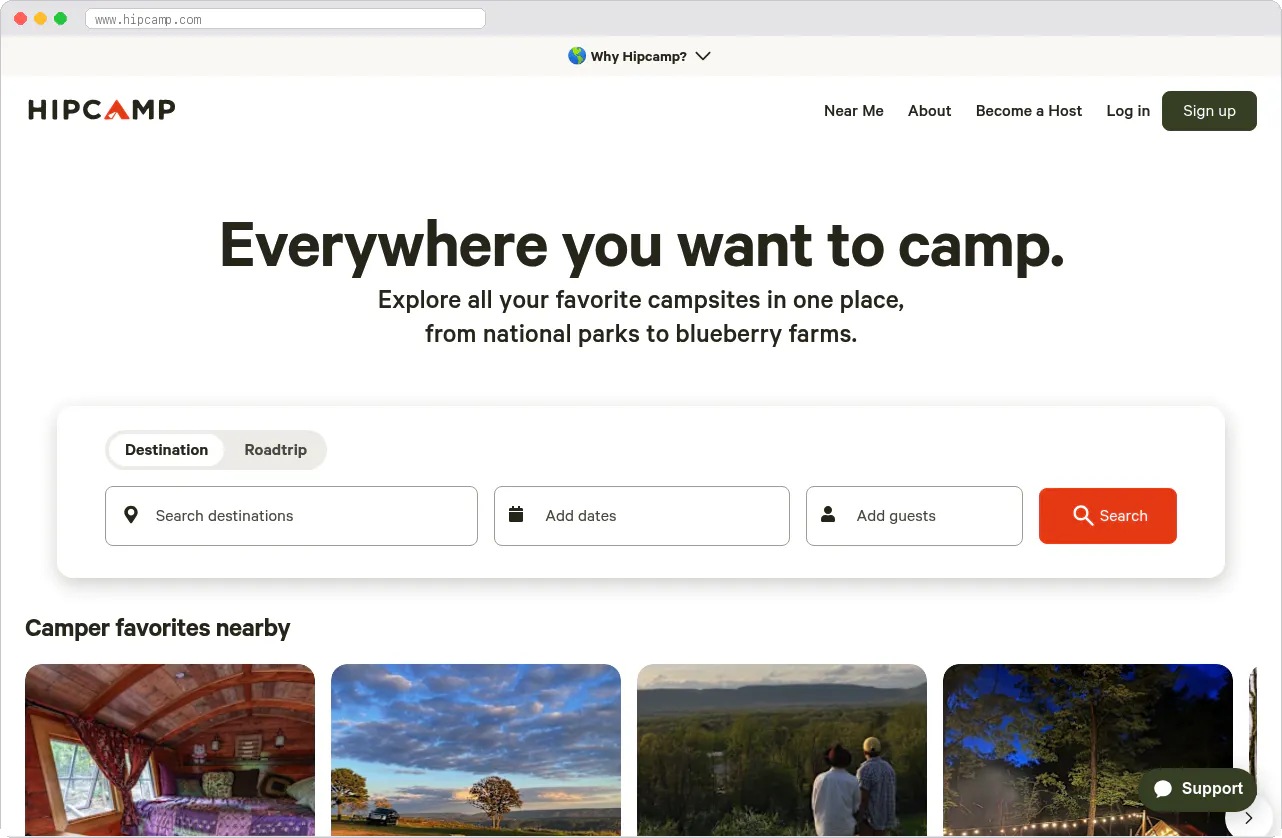
Hipcamp dominates the camping marketplace category with the largest inventory and strongest brand recognition. Their competitive advantages include first-mover positioning, substantial funding for marketing and expansion, and established relationships with conservation organizations. However, their broad focus creates opportunities for specialized platforms serving specific niches or regions more effectively.
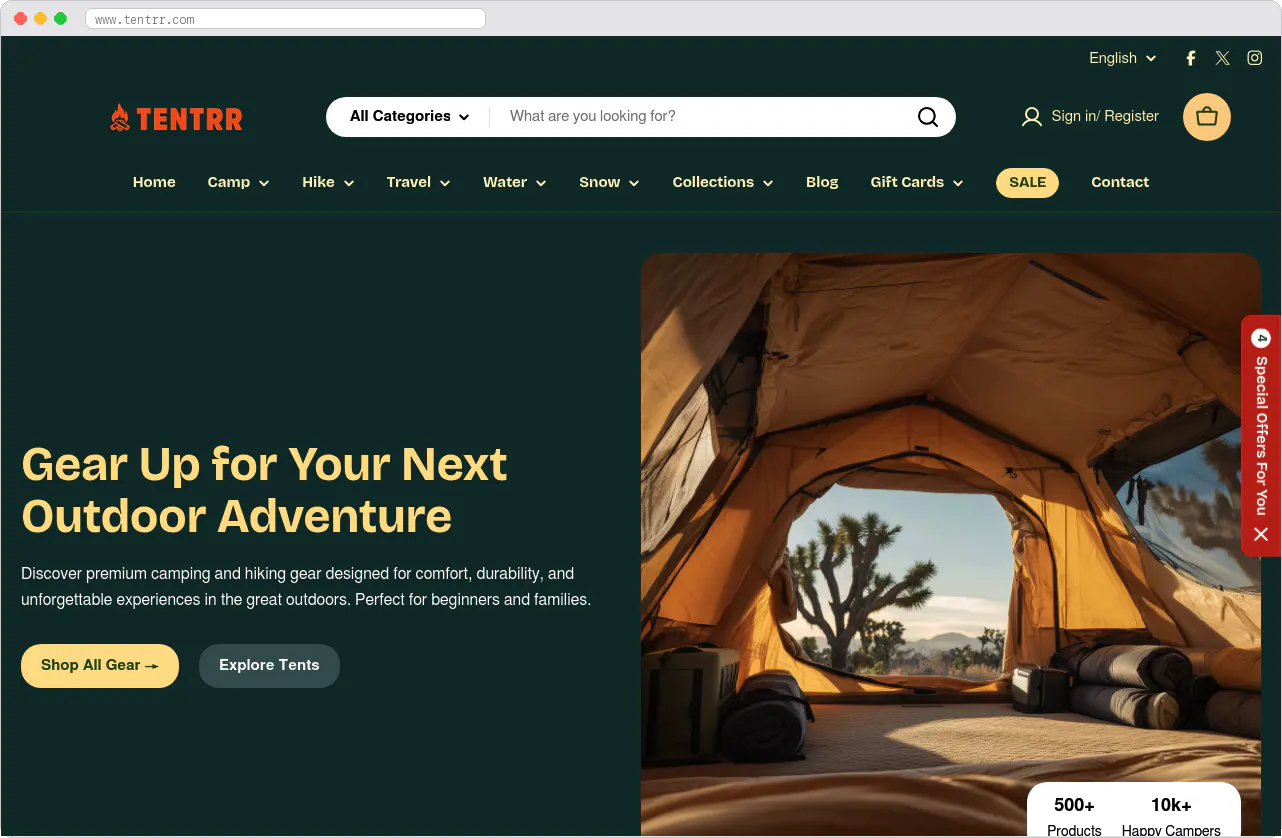
Tentrr competes through standardized experiences rather than inventory breadth. Their model appeals to inexperienced campers who want outdoor experiences without gear investments or planning complexity. This approach limits scalability but creates defensible differentiation through operational excellence rather than network effects.
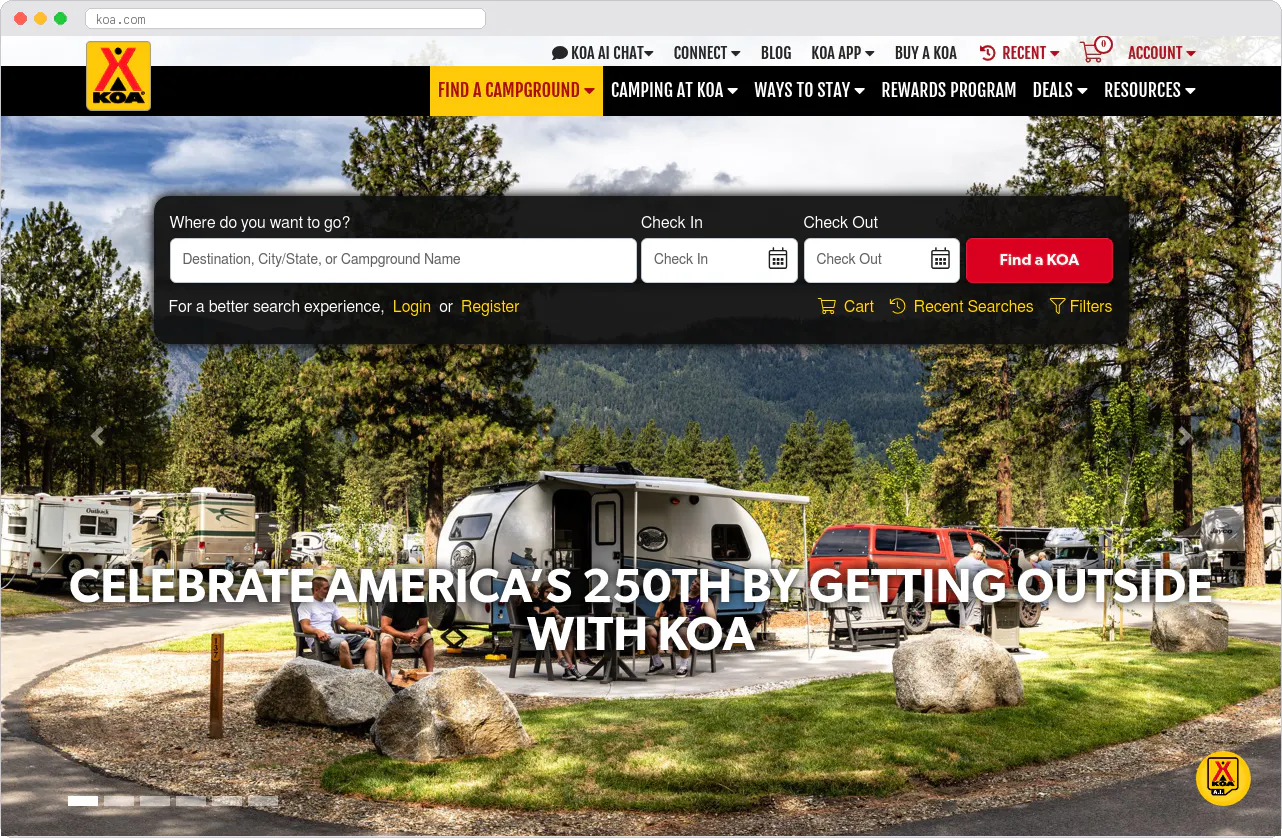
KOA (Kampgrounds of America) operates an integrated model combining owned campgrounds with franchise locations and online booking services. Their strength lies in brand consistency and established locations, but they primarily serve RV travelers and traditional campground experiences rather than unique private property access.
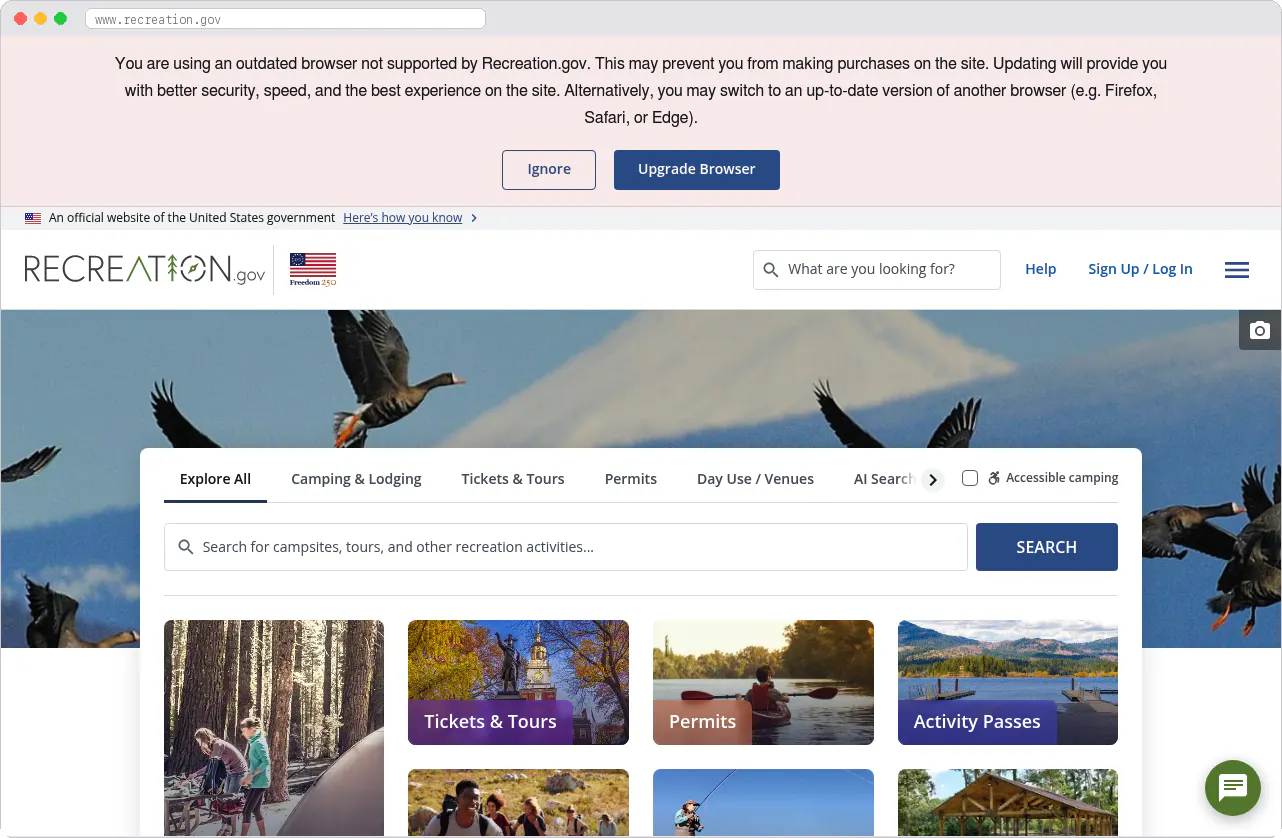
Recreation.gov manages bookings for federal campgrounds and recreation areas. While not a marketplace, they represent significant competition for camping booking volume. Their limitations include rigid booking windows, limited property types, and government operational constraints that create opportunities for more flexible private platforms.
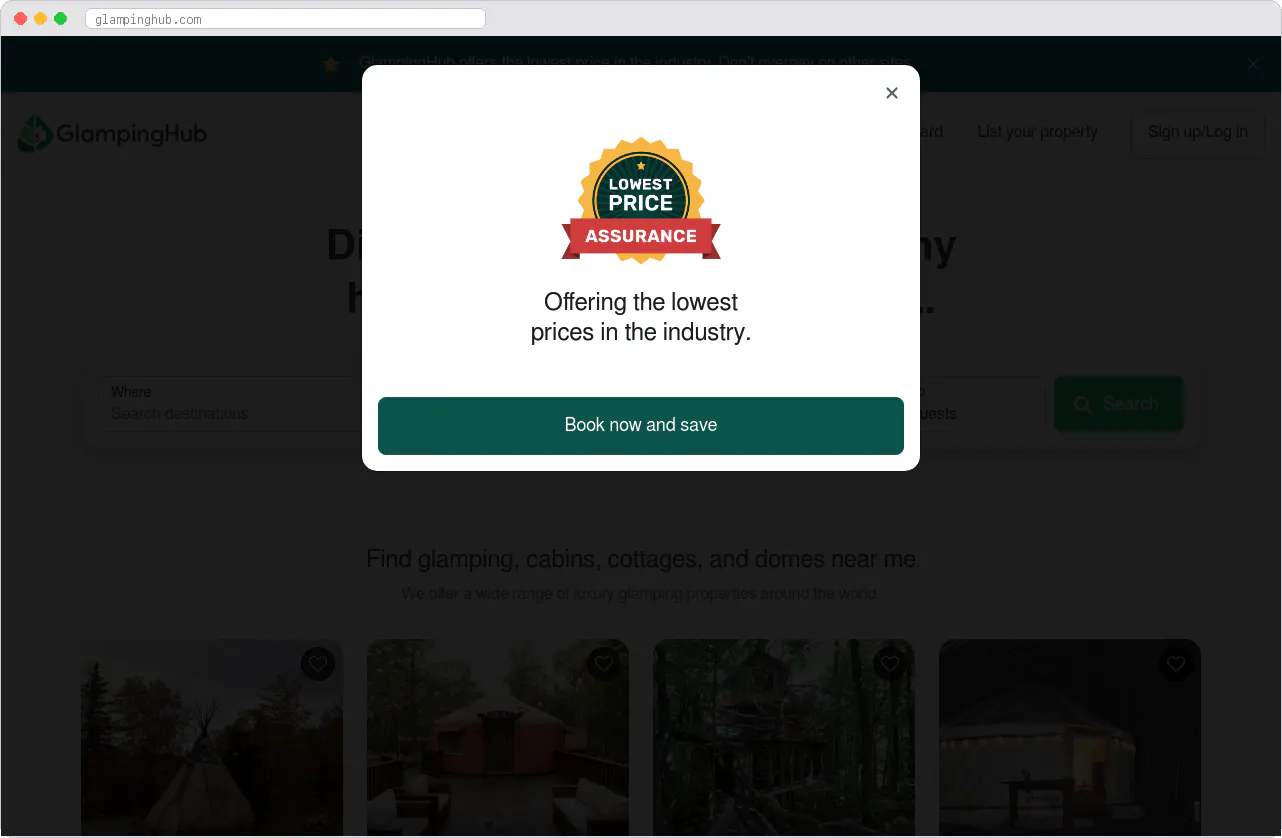
Glamping Hub focuses on luxury outdoor accommodations with higher price points and full-service experiences. They compete more directly with traditional hospitality than primitive camping, representing potential expansion opportunities for camping marketplaces that want to move upmarket.
Regional and local platforms often provide strong competition in specific geographic areas through local knowledge, community relationships, and specialized property types. Many successful camping marketplaces start regionally before expanding, suggesting opportunities for new platforms that serve underserved areas effectively.
Development approaches and costs
The complexity of camping marketplace functionality influences development approach decisions and associated costs.
Custom development provides maximum flexibility but requires significant time and financial investments. Building camping marketplace functionality from scratch typically requires 6-12 months and $60,000-$90,000+ in development costs, depending on feature scope and development team rates.
Custom development makes sense for well-funded companies with specific technical requirements or integration needs that existing platforms cannot accommodate. The approach requires ongoing maintenance, security updates, and infrastructure scaling as transaction volumes grow.
No-code marketplace builders enable rapid deployment at much lower costs but with reduced customization flexibility. Sharetribe represents the leading no-code option for camping marketplaces, with built-in booking systems, payment processing, and hosting-specific features like availability calendars and location-based search.
Sharetribe's camping marketplace template includes essential features like property listings with photo galleries, advanced search and filtering, booking management with availability calendars, secure payments with commission handling, two-way review systems, and mobile-responsive design. You can launch a functional camping marketplace within 1-2 weeks and customize extensively as requirements evolve.
Hybrid approaches combine no-code foundations with custom development for specialized features. This strategy minimizes initial costs and launch timelines while preserving flexibility for unique functionality. Many successful marketplaces start with platforms like Sharetribe and add custom features as their businesses grow and requirements clarify.
WordPress and plugin combinations offer low-cost entry points but typically lack marketplace-specific functionality like commission-based payments, availability management, and trust systems. While possible to assemble camping marketplace functionality through multiple plugins, the resulting platforms often have integration issues and scalability limitations.
Why Sharetribe works for camping marketplaces
Sharetribe addresses common camping marketplace challenges through purpose-built functionality and scalable architecture.
Rapid time to market enables testing camping marketplace concepts without major upfront investments. You can validate demand, recruit initial hosts, and process real bookings within weeks rather than months. This speed advantage is particularly valuable in competitive markets where timing affects success.
Built-in outdoor recreation features include availability calendars that handle seasonal restrictions, location-based search with map integration, and booking flows designed for experience-based transactions rather than just accommodation bookings. These features address specific camping marketplace requirements that generic booking platforms often lack.
Flexible customization options allow adaptation to specific camping niches without rebuilding core functionality. Whether you focus on RV sites, primitive camping, glamping, or regional specialization, Sharetribe's customization capabilities support differentiation while maintaining operational efficiency.
Commission-based payment processing through Stripe Connect handles the complex financial flows required for marketplace business models. The system manages host payouts, commission collection, and tax reporting automatically, reducing operational overhead while ensuring regulatory compliance.
Scalable infrastructure supports growth from initial launch through high-volume operations without requiring platform migrations or rebuilds. Many marketplace builders face expensive transitions as they grow, but Sharetribe's architecture scales smoothly while preserving customization investments.
Developer platform capabilities enable custom feature addition as requirements evolve. Whether you need integration with property management systems, advanced analytics, or mobile applications, Sharetribe's extensibility supports long-term platform evolution without abandoning your initial investment.
The combination of rapid deployment, outdoor recreation functionality, and long-term scalability makes Sharetribe particularly well-suited for camping marketplace development compared to generic no-code tools or expensive custom development approaches.
Getting started with your camping marketplace
Building a successful camping marketplace requires balancing technology capabilities with marketplace dynamics and outdoor recreation industry knowledge. Focus on solving real problems for both property owners and camping guests rather than just replicating existing platforms.
Start with clear niche definition and geographic focus to achieve marketplace liquidity more efficiently. Whether you specialize in luxury glamping, primitive camping, RV sites, or specific regions, focused positioning often outperforms broad approaches in competitive markets.
Validate your concept through direct conversations with potential hosts and guests before significant development investments. Understanding their current challenges and unmet needs guides feature prioritization and positioning strategies that generic market research cannot provide.
Choose development approaches that minimize time to market while preserving future flexibility. Sharetribe enables camping marketplace launches within weeks while supporting extensive customization as your business evolves. This approach reduces risk while maximizing learning opportunities that inform strategic decisions.
The outdoor recreation economy continues growing rapidly, creating opportunities for platforms that serve specific needs better than broad-market alternatives. Success depends more on understanding your target market and executing consistently than on having the most advanced technology or largest feature set.
Whether you're passionate about connecting people with nature, helping landowners generate sustainable income, or building technology that improves outdoor recreation access, camping marketplaces offer meaningful opportunities to create value while building profitable businesses.
Frequently asked questions
How much does it cost to build a camping marketplace?
Costs vary significantly by approach. Total first-year costs with a no-code marketplace platform typically run $2,000-5,000.
What features are essential for a camping marketplace?
Essential features include property listings with rich media, availability calendars, location-based search with maps, secure booking and payment processing, two-way reviews, and mobile-responsive design optimized for outdoor use.
How do camping marketplaces make money?
Most camping marketplaces use commission-based models, charging 3-15% of booking values to hosts, guests, or both. Some also offer premium host memberships or additional services like equipment rentals.
Is there still room to compete with Hipcamp?
Yes, opportunities exist through geographic specialization, specific property types (luxury glamping, RV sites, primitive camping), or underserved regions. Many successful camping platforms started with focused niches before expanding.
How long does it take to launch a camping marketplace?
Timeline depends on your approach. No-code platforms like Sharetribe enable launches in 1-2 weeks, while custom development typically takes 6-12 months. Speed to market is crucial for testing concepts and building liquidity.
What legal considerations apply to camping marketplaces?
Key considerations include short-term rental regulations, camping permits, liability insurance, tax collection, data privacy compliance, and terms of service. Requirements vary significantly by location and should be reviewed with legal experts.
Start your 14-day free trial
Create a marketplace today!
- Launch quickly, without coding
- Extend infinitely
- Scale to any size
No credit card required