How to build a website like Hipcamp
Hipcamp transformed outdoor recreation by connecting campers with private landowners, reaching 300,000 sites across four countries. Learn how to build a similar outdoor marketplace, from validating your niche to launching and scaling your platform.
Published: Nov 10, 2023
Last updated: Mar 19, 2026
What is Hipcamp and why build a similar marketplace?
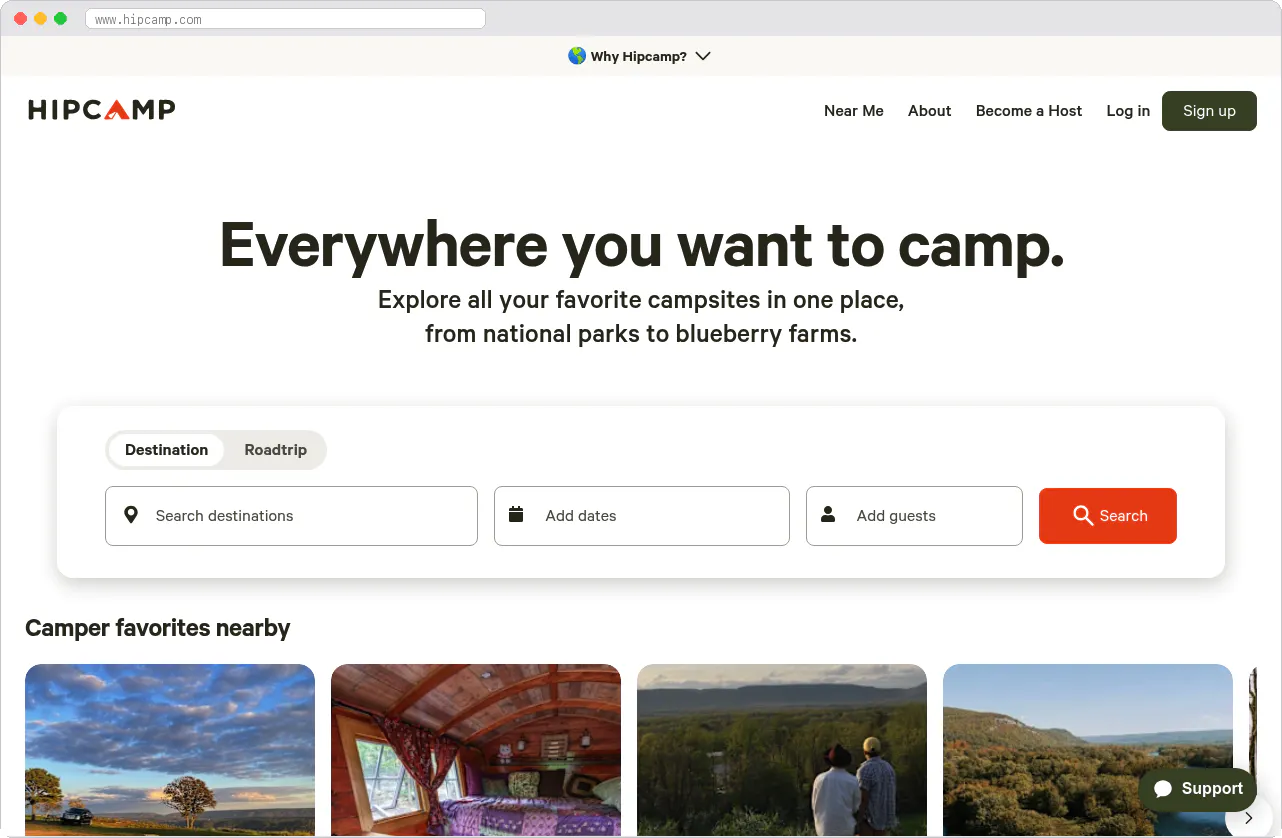
Hipcamp transformed outdoor recreation by solving a fundamental problem: most land in America is private, making it difficult for people to access unique outdoor experiences. Founded in 2013 by Alyssa Ravasio, the platform connects outdoor enthusiasts with private landowners who have underutilized property perfect for camping, glamping, and outdoor activities.
The marketplace now hosts over 300,000 unique sites across the United States, Canada, Australia, and the United Kingdom. These range from simple tent camping spots to luxury glamping experiences, working farms, and remote wilderness areas. Hipcamp has processed millions of bookings and raised over $57 million in funding, demonstrating the massive demand for outdoor experiences beyond traditional campgrounds.
Hipcamp succeeded by identifying a clear market gap. Traditional campgrounds often fill up quickly, especially in popular areas, and many offer cookie-cutter experiences. Private landowners, meanwhile, had beautiful properties sitting unused while struggling with property taxes and maintenance costs. By connecting these two groups, Hipcamp created a win-win marketplace that expanded outdoor access while providing landowners with additional revenue streams.
The platform's growth accelerated dramatically during the pandemic as people sought socially-distanced outdoor activities. Bookings increased by over 4,000% in some regions during 2020, proving the model's resilience and the underlying demand for unique outdoor experiences.
How does a Hipcamp-like marketplace work?
A marketplace like Hipcamp operates as a three-sided platform connecting campers, landowners, and the marketplace operator. Understanding each side's motivations and needs is crucial for building a successful outdoor marketplace.
For campers, the platform solves discovery and booking challenges. Instead of calling individual campgrounds or driving around looking for available spots, campers can search by location, amenities, activities, and experience type. They can view detailed photos, read reviews from previous guests, and book instantly with secure payment processing. The platform also provides customer support, trip insurance options, and dispute resolution services.
Campers value unique experiences that aren't available through traditional booking channels. This might include camping on working farms, staying in treehouses, or accessing private hiking trails. The platform's search filters help them find exactly what they're looking for, whether that's pet-friendly sites, RV hookups, or wilderness camping without facilities.
For landowners, the marketplace provides a revenue stream from underutilized property. Many hosts are farmers, ranchers, or rural property owners dealing with rising property taxes and maintenance costs. Others are outdoor enthusiasts who want to share their favorite spots while covering property expenses.
Landowners can create listings showcasing their property's unique features, set their own pricing and availability, and communicate directly with potential guests. The platform handles payment processing, guest screening, and provides insurance coverage for qualifying bookings. This removes many barriers that prevent landowners from monetizing their property independently.
The marketplace operator generates revenue primarily through commission fees charged to both sides of the transaction. Hipcamp typically charges hosts around 10% per booking and guests a service fee ranging from 5-15% depending on the booking value. Additional revenue streams include premium listing features, insurance products, and partnerships with outdoor gear companies.
Key features needed for an outdoor marketplace like Hipcamp
Building a successful outdoor marketplace requires specific functionality that differs significantly from other marketplace types. These features address the unique challenges of outdoor bookings, trust between strangers sharing private property, and the location-dependent nature of camping experiences.
Property listings and rich media form the foundation of any outdoor marketplace. Unlike hotels with standardized rooms, each camping spot has unique characteristics that photos and descriptions must capture effectively. Successful listings typically include 10-20 high-quality photos showing the campsite, surrounding landscape, facilities, and access routes.
Property descriptions need structured fields for essential camping information like site type (tent, RV, cabin), capacity, available amenities (bathrooms, showers, fire pits), permitted activities (hiking, fishing, pets), and access requirements (4WD necessary, walking distance from parking). Many guests also want to know about nearby attractions, grocery stores, and cell phone coverage.
Advanced search and filtering capabilities are crucial for outdoor marketplaces. Location-based search is fundamental, but outdoor marketplaces require more sophisticated filtering than typical accommodation platforms. Campers need to filter by experience type (tent camping, RV sites, cabins, glamping), amenities (bathrooms, showers, kitchens), activities (hiking, fishing, swimming), group size, pet policies, and accessibility features.
Map-based search becomes even more critical for outdoor experiences since proximity to specific natural features (lakes, mountains, trails) often drives booking decisions. Integration with mapping services helps guests understand the terrain, nearby attractions, and driving directions to remote locations.
Availability management and booking systems must handle the complexity of outdoor bookings. Unlike hotels with identical rooms, each campsite is unique and can't be overbooked. The system needs to track availability by specific site, handle multi-night stays, and manage seasonal closures or weather-related restrictions.
Booking confirmation should include detailed directions to the property, emergency contact information, and check-in procedures. Many outdoor sites lack traditional reception areas, so clear communication about arrival processes is essential for guest satisfaction.
Trust and safety features become particularly important when strangers are camping on private property, often in remote locations. Two-way review systems allow hosts and guests to build reputation and provide feedback about experiences. Identity verification helps establish credibility, while secure messaging systems enable hosts and guests to communicate about specific needs or concerns before arrival.
Insurance integration provides peace of mind for both parties. Host protection insurance can cover property damage, while guest travel insurance helps with trip cancellations due to weather or emergencies.
Payment processing with delayed payouts protects both parties in outdoor bookings. Guests pay when booking, but hosts receive payment only after the stay begins or completes. This ensures guests receive refunds for no-shows or significantly misrepresented properties while protecting hosts from fraudulent chargebacks.
Commission-based fee structures require sophisticated payment splitting between guests, hosts, and the platform. Integration with platforms like Stripe Connect handles the complex regulatory and technical requirements of marketplace payments.
Mobile-responsive design is essential since many users research and book outdoor experiences while traveling. Mobile apps can also provide offline access to booking details, GPS coordinates, and emergency contacts when camping in areas with poor cell coverage.
Weather integration and seasonal considerations help manage outdoor-specific challenges. The platform might integrate weather forecasting to help guests prepare appropriately or enable hosts to communicate about access road conditions during winter months.
Building an outdoor marketplace: step-by-step approach
Creating a successful outdoor marketplace like Hipcamp follows a proven process that prioritizes speed to market and iterative learning over feature completeness.
Step 1: Validate your specific outdoor niche
While Hipcamp covers general camping and outdoor experiences, successful new marketplaces often start with more focused niches. Consider specializing in specific activities (rock climbing access, fishing spots, photography locations), property types (working farms, vineyards, private beaches), or geographic regions underserved by existing platforms.
Talk to potential users in outdoor forums, social media groups, and at camping/hiking meetups. Ask about their current booking frustrations and what experiences they can't easily find through existing platforms. Many successful outdoor marketplaces started by solving problems founders experienced themselves as outdoor enthusiasts.
Step 2: Build relationships with initial landowners
Supply-side acquisition is typically the biggest challenge for outdoor marketplaces. Unlike Airbnb where urban property owners are easy to find, rural landowners may be less digitally savvy and require more personal outreach.
Start by identifying landowners in your target area through agricultural associations, rural tourism boards, and local outdoor recreation groups. Many farmers markets, county fairs, and outdoor gear stores can connect you with landowners interested in additional revenue streams.
Offer to help create their first listings personally, including taking professional photos and writing compelling descriptions. This hands-on approach builds trust and ensures high-quality initial supply that will attract your first customers.
Step 3: Launch your MVP with core booking functionality
Your minimum viable platform needs to handle the essential transaction: helping campers find and book outdoor experiences. This requires property listings with photos and descriptions, search functionality, booking management, and payment processing.
Resist the temptation to build advanced features before validating basic demand. Many successful outdoor marketplaces started with simple websites that manually processed bookings and gradually automated processes as volume increased.
Step 4: Focus on one geographic market initially
Even if your long-term vision is national or international, concentrate on achieving liquidity in one specific region first. This allows you to build relationships with local landowners, understand regional outdoor preferences, and create marketing messages that resonate with local outdoor communities.
Your initial market should have sufficient outdoor enthusiasm to support regular bookings, landowners willing to participate, and be manageable for you to support personally. Many successful platforms started by serving their founder's local outdoor community before expanding.
Step 5: Build community and trust mechanisms
Outdoor marketplaces rely heavily on community and trust since guests are often camping in remote locations on private property. Implement review systems, photo verification, and clear communication tools early in your platform's development.
Consider creating content that helps both hosts and guests succeed. This might include hosting guidelines, property photography tips, camping etiquette resources, and local outdoor activity guides. Educational content builds trust while improving the quality of experiences on your platform.
Step 6: Scale with additional features and markets
Once you've achieved consistent bookings and positive feedback in your initial market, you can expand geographically and add advanced features. These might include mobile apps, weather integration, gear rental partnerships, or specialized booking types for group events or long-term stays.
Expansion should be data-driven, focusing on markets with demonstrated demand and supply-side interest. Many outdoor marketplaces find success expanding along natural corridors like hiking trails, scenic drives, or outdoor recreation regions.
Competitors and alternatives to Hipcamp
Understanding the competitive landscape helps identify opportunities for differentiation and market positioning. The outdoor accommodation space includes several established players, each serving slightly different segments or taking different approaches to the same underlying problem.
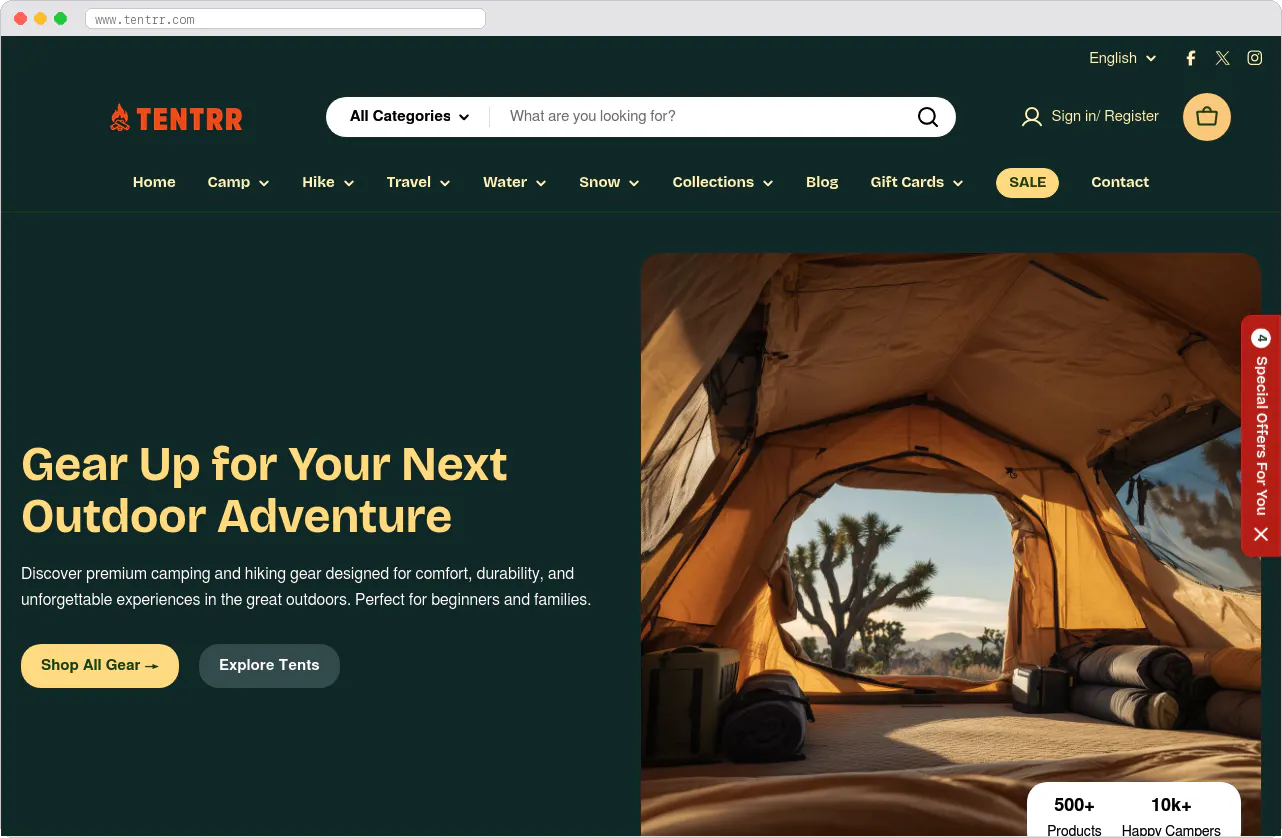
Tentrr offers glamping experiences with pre-installed canvas tents on private land. Unlike Hipcamp's marketplace model where hosts provide their own accommodations, Tentrr standardizes the experience by installing and maintaining identical tent setups across properties. This reduces variability but limits hosts to Tentrr's specific glamping model. Hosts receive a higher revenue share (up to 80%) but must commit to Tentrr's equipment and operational standards.
The Dyrt positions itself as the "Yelp of camping," focusing primarily on campground discovery and reviews rather than bookings. Users can find and research campgrounds through detailed reviews and photos, but bookings typically happen through external systems. The Dyrt covers both private and public campgrounds, making it useful for research but less streamlined for actual reservations.
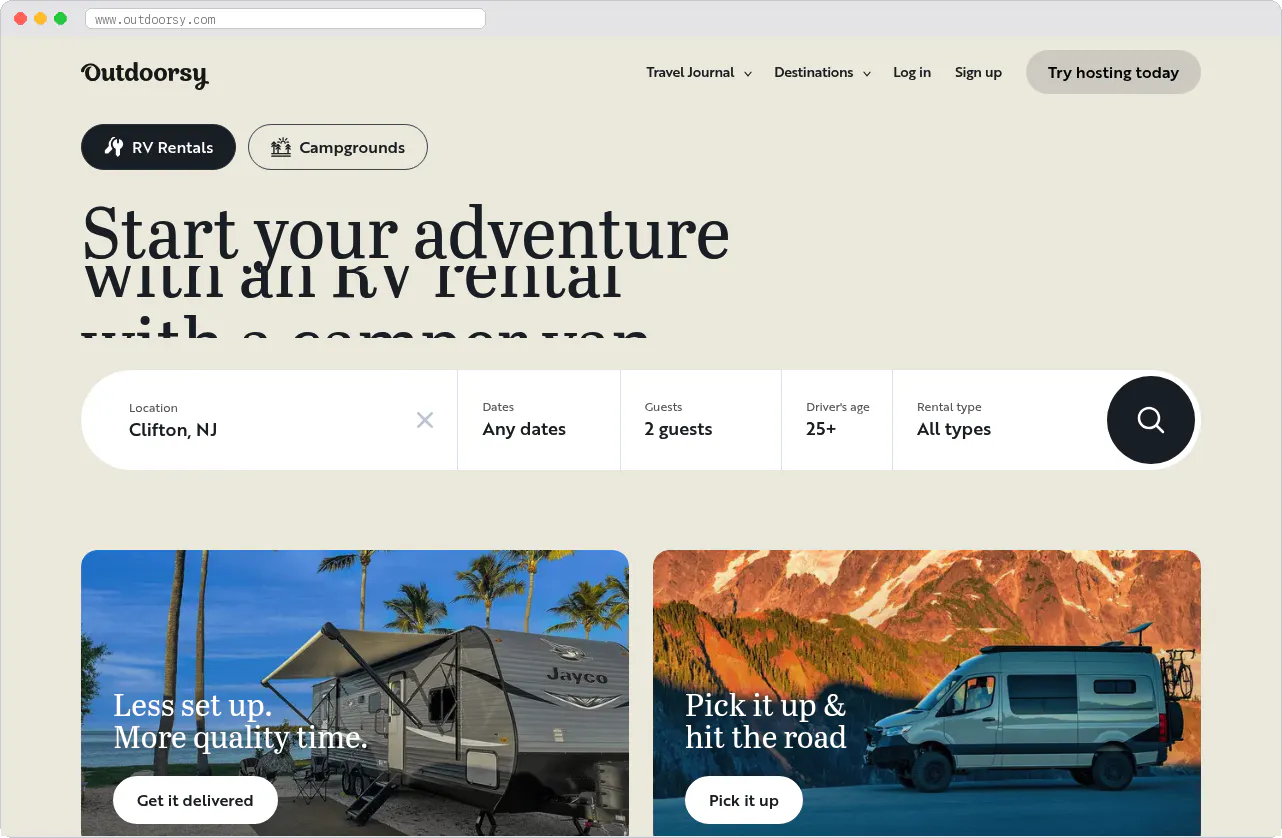
Outdoorsy specializes in RV and campervan rentals rather than campsites themselves. RV owners can rent out their vehicles to travelers, creating a different type of sharing economy around outdoor recreation. While complementary to campsite marketplaces, Outdoorsy serves travelers who prefer mobile accommodation over fixed camping locations.
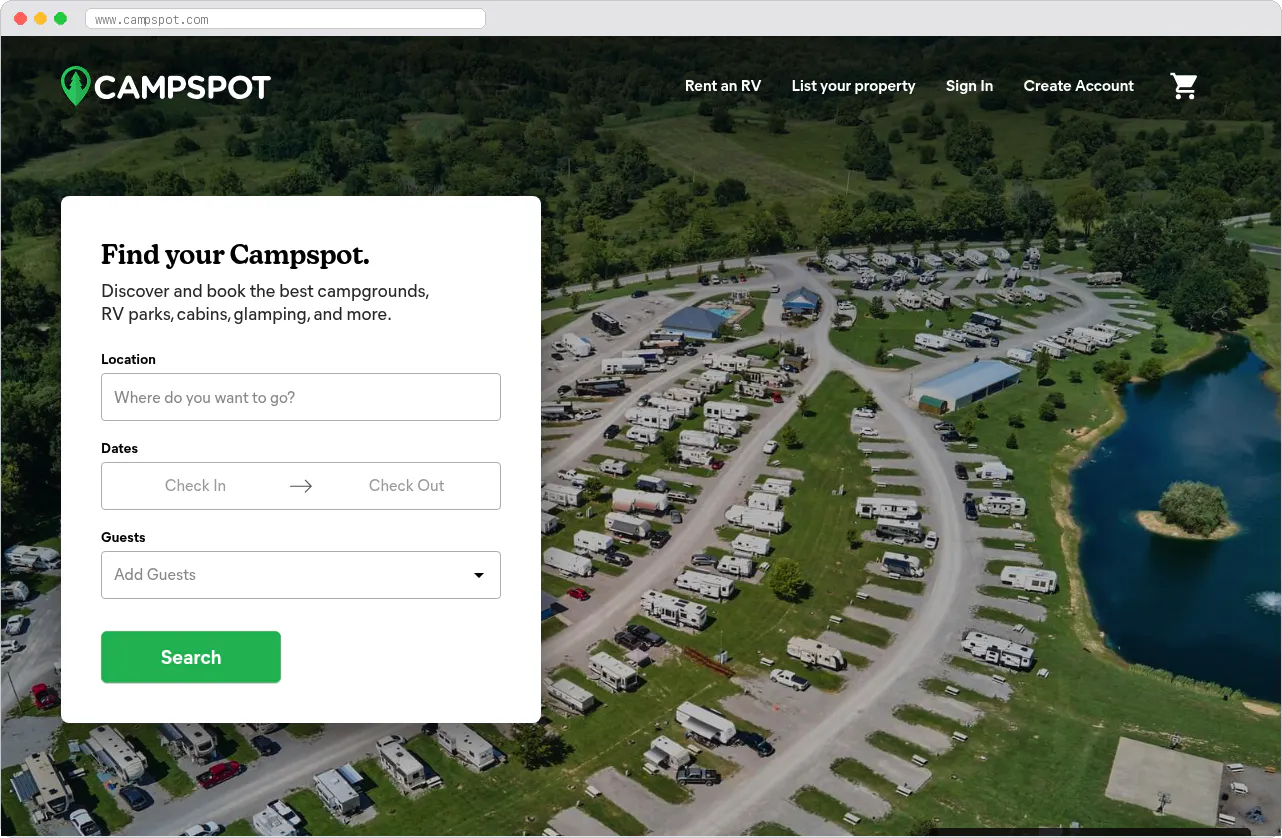
Campspot focuses on established campgrounds and RV parks rather than private land. Their platform helps traditional campgrounds modernize their booking systems and reach new customers online. This B2B2C model serves campground operators rather than individual landowners, targeting a more established but less flexible supply base.
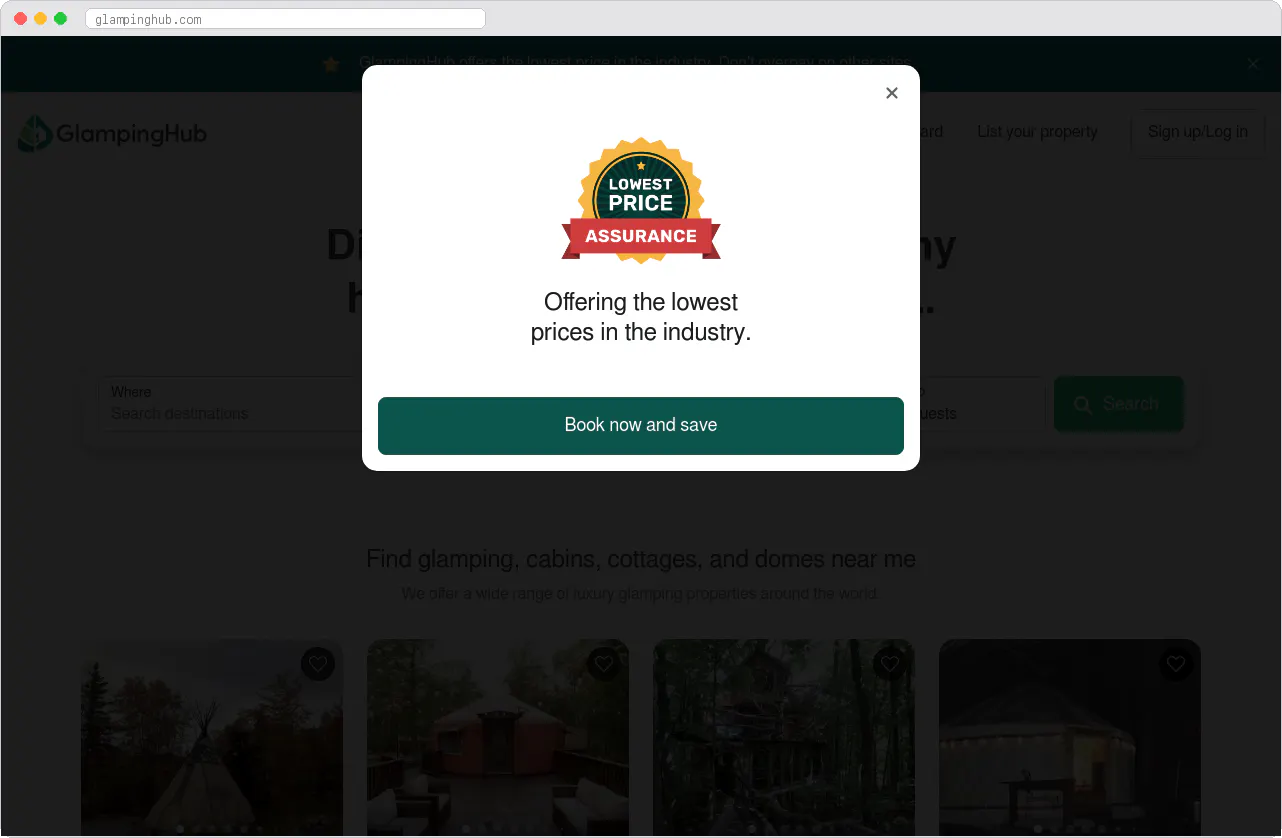
Glamping Hub curates luxury camping experiences worldwide, including treehouses, yurts, and high-end camping resorts. Their model emphasizes curation and luxury over accessibility, serving travelers willing to pay premium prices for unique accommodations. This creates less competition for budget camping but overlaps with Hipcamp's higher-end offerings.
Regional players often serve specific geographic markets with deep local knowledge. Examples include Campnab for Canadian camping, Pitchup for European camping, and various state-specific platforms. These competitors often succeed through superior local supply relationships and market knowledge rather than advanced technology.
The competitive landscape suggests several opportunities for new entrants. Specialization by activity type (fishing, hunting, rock climbing), accommodation style (van life, primitive camping, luxury glamping), or geographic focus can create defensible market positions. Many successful outdoor marketplaces started by serving niche communities ignored by larger platforms.
Development approaches and costs for outdoor marketplaces
Building an outdoor marketplace involves several technical and business considerations that affect both development approach and ongoing costs. The approach you choose should align with your technical skills, budget constraints, and speed-to-market requirements.
Custom development from scratch provides maximum flexibility but requires significant time and financial investment. A basic outdoor marketplace with core booking functionality typically requires 6-12 months of development time and budgets starting around $100,000 for professional development.
Custom development becomes particularly complex for outdoor marketplaces due to specialized requirements like map integration, weather API connections, insurance provider integrations, and mobile-responsive design for users in remote locations. Payment processing for commission-based marketplaces adds regulatory compliance requirements that increase development complexity.
Ongoing maintenance costs include hosting infrastructure, security updates, payment processing compliance, and feature development. These costs typically run $5,000-$15,000 monthly for established platforms, making custom development most suitable for well-funded startups or experienced technical teams.
No-code marketplace builders offer the fastest path to market for most outdoor marketplace founders. Platforms like Sharetribe provide pre-built marketplace functionality including user management, listing creation, search and filtering, booking systems, payment processing, and administrative tools.
Sharetribe specifically supports outdoor marketplaces through features like availability management, location-based search, commission-based payments, and mobile-responsive designs. The platform's Web Template provides a starting point designed for rental and booking marketplaces, which can be customized for outdoor-specific needs.
Using Sharetribe, founders can launch functional outdoor marketplaces within days rather than months. The platform handles technical infrastructure, security compliance, and payment processing complexity while allowing customization of branding, workflows, and user experience.
Hybrid approaches combine no-code foundations with custom development for unique features. Sharetribe's Developer Platform enables this approach by providing marketplace essentials through API while supporting custom frontend development and third-party integrations.
This approach works well for outdoor marketplaces needing specialized features like weather integration, gear rental partnerships, or activity booking systems while maintaining the speed and reliability of proven marketplace infrastructure.
WordPress with marketplace plugins offers a middle ground between fully custom and no-code solutions. Plugins like WC Vendors or Dokan add marketplace functionality to WordPress sites, providing more customization than pure no-code tools but requiring more technical knowledge.
This approach can work for content-heavy outdoor marketplaces that prioritize SEO and content marketing, but typically struggles with complex booking workflows and payment processing requirements common in outdoor marketplaces.
Why Sharetribe works well for outdoor marketplaces
Sharetribe addresses many challenges specific to building outdoor marketplaces, combining rapid deployment with the flexibility needed for outdoor-specific features and workflows.
Speed to market remains crucial for outdoor marketplaces since seasonality affects many outdoor activities. Sharetribe enables launching functional marketplaces within days, allowing founders to capture bookings during peak outdoor seasons rather than missing entire seasons due to development delays.
The platform includes built-in booking management, payment processing, and map search functionality essential for outdoor marketplaces. Availability calendars handle multi-night stays and seasonal closures, while location-based search helps guests find sites near desired outdoor activities.
Commission-based payments work smoothly through Sharetribe's Stripe Connect integration. The platform automatically handles payment splitting between guests, hosts, and marketplace operators while managing tax reporting and regulatory compliance requirements.
Delayed payouts protect both parties in outdoor bookings where guests may discover significantly misrepresented properties upon arrival. Hosts receive payment after check-in or completion, reducing disputes while ensuring guests can receive refunds for legitimate issues.
Scalability without rebuilding supports outdoor marketplaces through growth phases. Founders can start with no-code functionality and add custom features like weather integration, insurance partnerships, or mobile apps without rebuilding their entire platform.
Sharetribe's Expert Network includes developers experienced with outdoor marketplace requirements who can add specialized features while maintaining platform stability and security.
Mobile optimization comes built-in, crucial for outdoor users researching and booking while traveling. The platform's responsive design works across devices, while booking confirmations include essential details like GPS coordinates and emergency contacts needed for remote locations.
Trust and safety features include two-way reviews, secure messaging, and identity verification systems that help establish credibility between strangers sharing private property. These features become particularly important for outdoor marketplaces where guests may be camping in isolated locations.
Launching and growing your outdoor marketplace
Successful outdoor marketplace launches require balancing supply and demand while building trust within outdoor communities. Unlike urban marketplaces where users might be anonymous, outdoor communities often value recommendations and reputation highly.
Start with quality over quantity when building initial supply. Ten well-presented, unique properties with professional photos generate more bookings and positive reviews than fifty poorly presented listings. Focus on helping your first hosts create compelling listings that showcase their property's unique outdoor opportunities.
Many successful outdoor marketplaces began by personally visiting every property to take photos, write descriptions, and ensure listings met quality standards. This hands-on approach builds relationships with hosts while ensuring guests receive experiences that match their expectations.
Use outdoor community networks for early marketing and user acquisition. Outdoor enthusiasts often participate in online forums, social media groups, and local clubs focused on specific activities like hiking, fishing, or photography.
Participate authentically in these communities by sharing valuable content about outdoor access, conservation, or activity-specific tips rather than directly promoting your marketplace. Build relationships first, then introduce your platform as a solution to access problems community members already discuss.
Content marketing works particularly well for outdoor marketplaces since outdoor enthusiasts actively research destinations, activities, and planning information online. Create resources about outdoor activities in your target regions, camping tips, gear recommendations, and destination guides.
This content builds SEO authority while attracting potential guests who discover your marketplace through helpful information rather than direct advertising. Guest posts on outdoor blogs, partnerships with outdoor gear companies, and collaborations with outdoor influencers can expand your content reach.
Seasonal considerations affect both marketing timing and feature development for outdoor marketplaces. Plan marketing campaigns around outdoor activity seasons, ensuring you capture bookings during peak demand periods for your target activities.
Consider features that address seasonality like weather integration for winter access updates, seasonal pricing recommendations for hosts, or off-season content that maintains engagement during slower booking periods.
Geographic expansion should follow natural outdoor recreation patterns rather than arbitrary geographic boundaries. Expand along outdoor activity corridors like hiking trails, scenic byways, or recreation regions where existing guests might want additional destination options.
Many outdoor marketplaces find success expanding from initial markets to adjacent outdoor recreation areas, building on existing supply relationships and brand recognition within outdoor communities.
Getting started with your outdoor marketplace
Building a successful outdoor marketplace requires understanding both the business dynamics of two-sided marketplaces and the specific needs of outdoor communities. Start by identifying a specific outdoor niche or geographic market where existing solutions don't adequately serve user needs.
Focus on building high-quality initial supply through personal relationships with landowners who share your vision for improving outdoor access. These early partnerships form the foundation for attracting guests and building the trust essential for marketplace success.
Choose development approaches that prioritize speed to market over feature completeness. Sharetribe enables launching functional outdoor marketplaces quickly while maintaining the flexibility to add specialized features as your understanding of user needs develops.
Success in outdoor marketplaces comes from serving outdoor communities authentically rather than simply replicating existing platforms. Focus on solving real access problems while building sustainable relationships between outdoor enthusiasts and landowners who want to share their properties.
The outdoor recreation market continues growing as people seek authentic experiences and connection with nature. Well-executed outdoor marketplaces create value for all participants while supporting conservation and rural economic development goals that benefit entire communities.
Frequently asked questions
How much does it cost to build a marketplace like Hipcamp?
Costs vary by approach. Using Sharetribe, you can launch for under $200/month. Custom development typically starts around $100,000 plus ongoing maintenance of $5,000-15,000 monthly. No-code solutions offer the fastest, most cost-effective path to market.
What features does an outdoor booking marketplace need?
Essential features include property listings with rich media, location-based search with maps, availability calendars, secure booking and payment processing, two-way reviews, and mobile-responsive design. Advanced features include weather integration and insurance partnerships.
How do I find landowners for my outdoor marketplace?
Start with agricultural associations, rural tourism boards, farmers markets, and outdoor recreation groups. Offer to help create initial listings personally, including professional photos and descriptions. Focus on building relationships rather than just collecting listings.
What makes outdoor marketplaces different from other booking platforms?
Outdoor marketplaces require location-specific features, weather considerations, remote access information, and stronger trust mechanisms since guests often camp on private property in isolated locations. They also need seasonal availability management and activity-specific search filters.
How long does it take to launch an outdoor marketplace?
Timeline depends on your approach. Sharetribe enables launching in 1-2 weeks with core booking functionality. Custom development typically takes 6-12 months. Focus on launching quickly to start learning from real users and iterating based on feedback.
Can I compete with established platforms like Hipcamp?
Yes, through specialization. Focus on specific outdoor niches (rock climbing, fishing, photography), accommodation types (primitive camping, luxury glamping), or underserved geographic regions. Many successful platforms started by serving communities ignored by larger competitors.
Start your 14-day free trial
Create a marketplace today!
- Launch quickly, without coding
- Extend infinitely
- Scale to any size
No credit card required