How to build a marketplace for renting boats
The boat rental market is worth billions globally, driven by growing demand for water experiences without boat ownership costs. Learn how to build a successful boat rental marketplace from idea validation to launch.
Published: Dec 19, 2023
Last updated: Mar 19, 2026
The boat rental marketplace opportunity
The recreational boating industry generates roughly over $47 billion annually in the United States alone, yet most boats sit idle 95% of the time. This massive inefficiency creates a compelling opportunity for marketplace founders to connect boat owners with renters seeking water experiences.
Boat rental marketplaces have emerged as a solution to unlock this idle capacity while meeting growing consumer demand for experience-based spending over ownership. GetMyBoat, the largest player in this space, has facilitated over $200 million in bookings across 9,500+ destinations worldwide since launching in 2013.
The appeal is clear for all parties involved. Boat owners can monetize expensive assets that otherwise drain their finances through maintenance, storage, and depreciation. Renters access diverse watercraft options without the substantial upfront costs and ongoing responsibilities of ownership. Meanwhile, marketplace operators earn commission fees on transactions that can range from $200 day trips to $20,000+ weekly yacht charters.
How boat rental marketplaces work
Boat rental marketplaces operate on a three-sided model connecting boat owners, renters, and often licensed captains. The platform facilitates discovery, booking, and payment processing while providing trust and safety mechanisms for high-value transactions involving expensive assets and potential safety risks.
Unlike accommodation marketplaces where the primary risk is property damage, boat rentals involve additional complexities around maritime safety, licensing requirements, insurance coverage, and weather dependencies. These factors significantly influence the platform's feature requirements and business model.
Most successful boat rental marketplaces use a commission-based revenue model, typically charging 6-15% from renters and 3-10% from boat owners per transaction. Some platforms like Boatsetter also generate revenue through mandatory insurance products, captain referrals, and premium listing features.
The booking flow typically involves several steps unique to boat rentals. Renters search by location, dates, and boat type, then communicate with owners about specific requirements, experience levels, and local conditions. Many bookings require additional verification steps, insurance documentation, and safety briefings before confirmation.
Key features for boat rental marketplaces
Building a successful boat rental marketplace requires specific functionality that addresses the unique challenges of marine transactions. These features go beyond basic marketplace capabilities to handle safety, compliance, and operational complexity.
Advanced search and filtering
Location-based search is fundamental, but boat rental marketplaces require sophisticated filtering that reflects how people actually choose watercraft. Renters need to filter by boat type (sailboat, motorboat, yacht, pontoon, jet ski), capacity, experience level required, and whether a captain is included or required.
Unlike hotel bookings where location is the primary factor, boat renters often prioritize the type of water experience they want. A marketplace might need separate search flows for fishing trips, party boats, sailing adventures, or luxury yacht experiences. Each use case involves different boat types, durations, and additional services.
Geographic complexity also matters more than in typical marketplaces. Boat locations involve marinas, launch points, and navigable waters with varying access restrictions, weather patterns, and seasonal availability. Your search functionality needs to account for tides, weather windows, and local boating regulations that affect availability.
Detailed listings with marine-specific information
Boat listings require extensive information beyond basic specifications. Renters need to understand the vessel's condition, included equipment, fuel policies, cleaning requirements, and any restrictions on usage areas or activities.
Successful listings typically include 15-25 high-quality photos showing exterior views, interior spaces, cockpit layout, and equipment details. Videos showcasing the boat in motion and walkthroughs of key systems provide additional confidence for renters unfamiliar with the specific vessel type.
Listing information must cover safety equipment (life jackets, flares, radio), navigation tools (GPS, charts, depth finder), and comfort amenities (head, galley, sound system). Many platforms require owners to specify fuel arrangements, cleaning protocols, and insurance requirements upfront to prevent booking disputes.
Availability management and weather integration
Boat availability extends beyond simple calendar blocking to include weather dependencies, maintenance schedules, and seasonal storage. Owners need flexible tools to block dates for repairs, winter storage, or personal use while maintaining accurate availability for potential renters.
Weather integration becomes crucial for boat rentals in ways that don't apply to indoor accommodations. Platforms should provide weather forecasts, wind conditions, and sea state information to help renters make informed decisions. Some advanced marketplaces automatically suggest rebooking options when weather makes original dates unsuitable.
Maintenance scheduling features help owners block availability for haul-outs, engine service, or safety inspections. These planned unavailability periods often follow seasonal patterns that smart calendar systems can learn and suggest.
Insurance and liability management
Boat rental transactions involve significant liability risks that require sophisticated insurance integration. Most platforms mandate insurance coverage that protects both owners and renters, with policies often costing $200-500 per week depending on vessel value and location.
Platforms typically partner with marine insurance providers to offer on-demand coverage that activates during rental periods. This insurance integration needs to handle vessel valuations, coverage limits, deductible structures, and claims processing. Some marketplaces like Boatsetter make insurance purchases mandatory and build the cost into their commission structure.
Liability waivers and safety acknowledgments require careful legal structuring that varies by jurisdiction. Renters might need to acknowledge their boating experience level, agree to specific usage restrictions, and confirm they understand local navigation rules.
Captain and crew booking
Many boat rentals require or offer professional captain services, creating a three-sided marketplace dynamic. Platforms need systems to match qualified captains with boat owners and renters based on vessel type, location, and experience requirements.
Captain management involves licensing verification, insurance confirmation, background checks, and ongoing performance tracking. Captains typically charge $300-800 per day plus gratuities, representing a significant additional revenue stream for marketplaces that facilitate these connections.
Some platforms allow boat owners to specify their preferred captain network, while others maintain centralized captain pools that serve multiple vessel owners. The booking flow needs to coordinate availability between boats and captains while handling separate payment streams.
Communication and trip planning
Boat rentals require extensive communication between owners and renters to coordinate details that don't apply to other rental categories. Conversations typically cover pickup procedures, fuel expectations, local navigation tips, and emergency protocols.
Trip planning tools help renters understand local conditions, suggest routes and anchorages, and identify fuel, food, and supply options. Some marketplaces integrate with marine chart providers to offer route planning directly within the platform.
Real-time messaging during trips becomes important for safety and coordination. Renters might need to communicate with owners about mechanical issues, weather changes, or itinerary modifications. Platforms should provide reliable communication channels that work in areas with limited cellular coverage.
Boat rental marketplace competitors and alternatives
The boat rental marketplace landscape includes several established players with different positioning strategies, business models, and geographic focus. Understanding these competitors helps founders identify market opportunities and differentiation strategies.
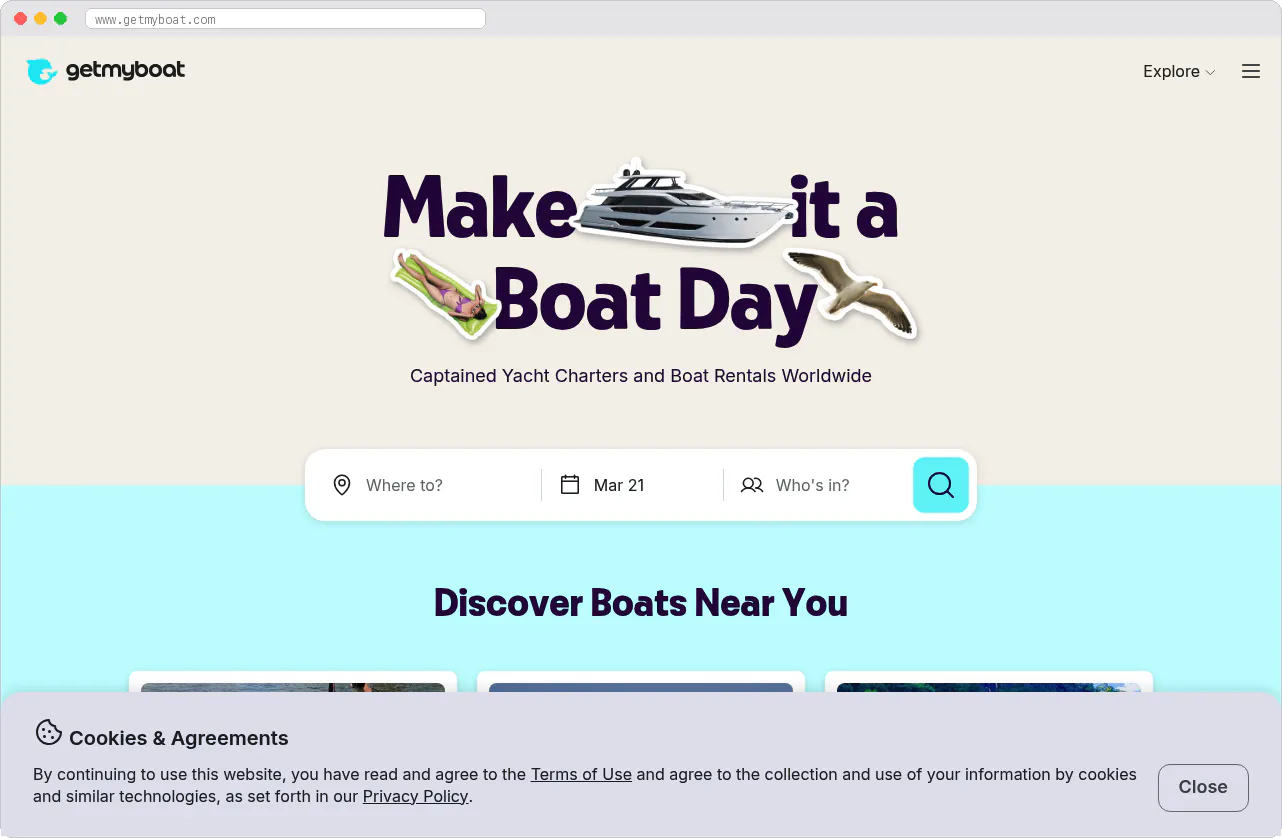
GetMyBoat
GetMyBoat operates as the largest global boat rental marketplace with over 130,000 boats across 9,500+ destinations. Founded in 2013, the platform has facilitated hundreds of millions in bookings by focusing on breadth over specialization.
The platform charges renters a service fee of 6-12% plus payment processing, while boat owners pay 6-10% commission. GetMyBoat differentiates through comprehensive coverage, supporting everything from jet ski rentals to superyacht charters in destinations worldwide.
GetMyBoat's weakness lies in its broad approach, which can make finding the right boat overwhelming for casual users. The platform serves both experienced boaters and first-timers, sometimes creating user experience friction as these groups have very different needs and comfort levels.
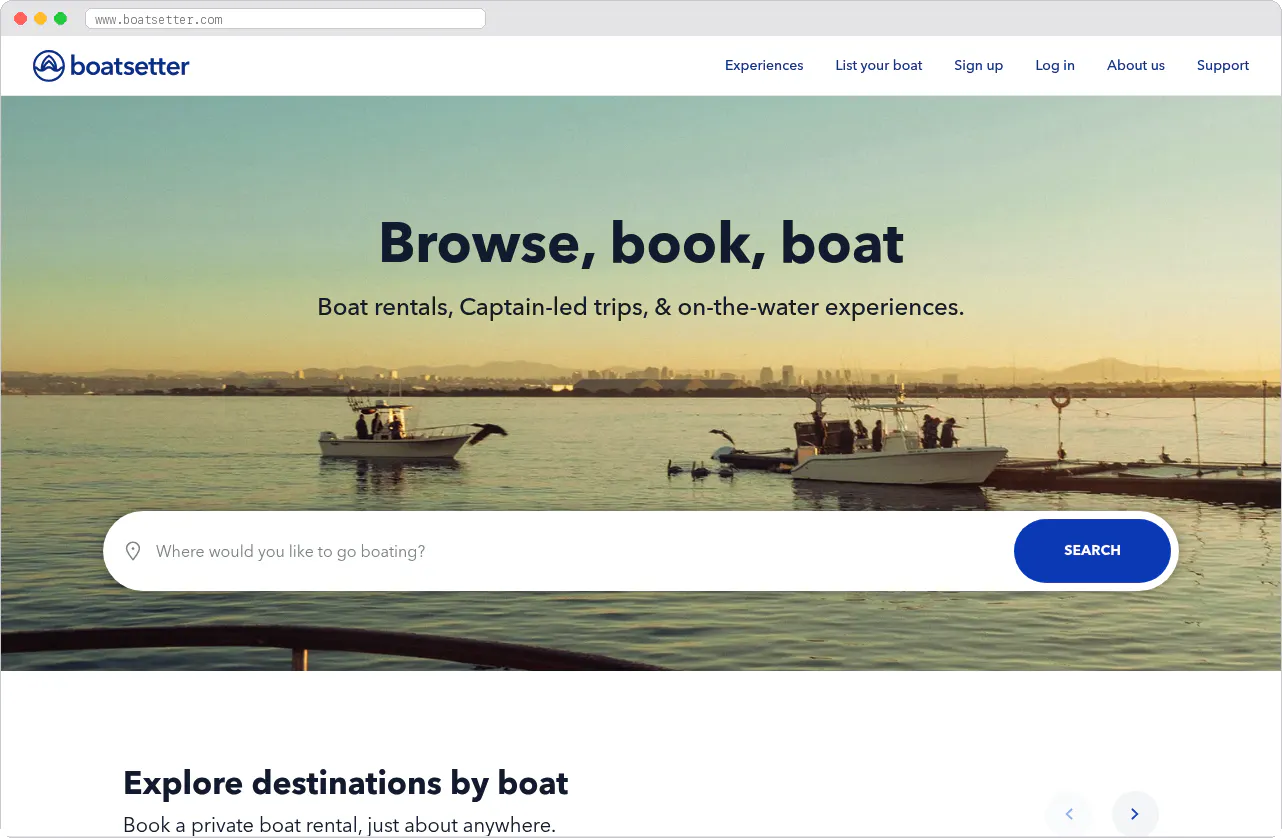
Boatsetter
Boatsetter positions itself as the premium option with mandatory insurance and captain services for most rentals. Launched in 2012, the platform emphasizes safety and full-service experiences, particularly for luxury vessels and nervous first-time renters.
The company generates revenue through rental commissions plus mandatory insurance products that cost $200-500 per trip. Boatsetter's insurance integration provides higher coverage limits and more comprehensive protection than competitors, justifying premium pricing.
Boatsetter's focus on safety and insurance creates barriers to casual boat owners who want simple rental arrangements. The platform works well for expensive yachts and inexperienced renters but may be overkill for straightforward powerboat or sailboat rentals between experienced boaters.
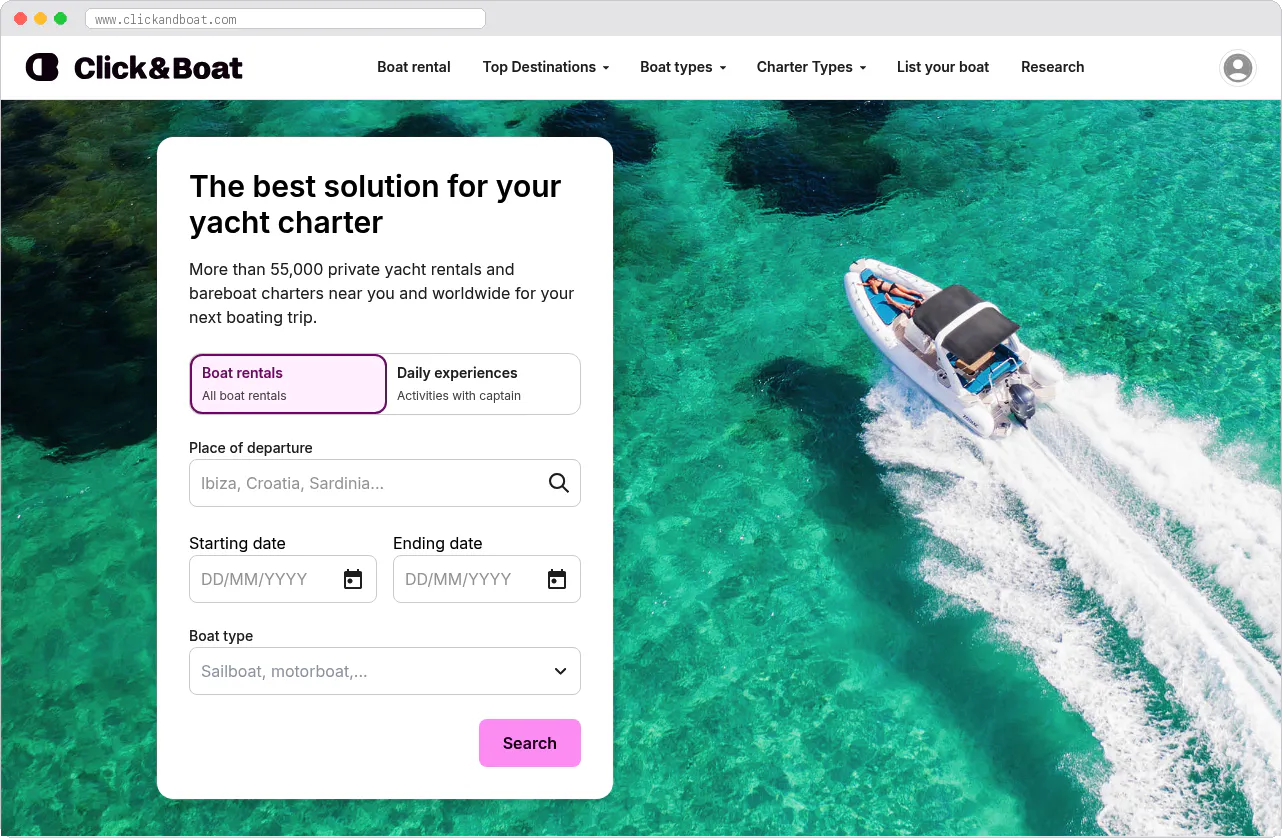
Click&Boat
Click&Boat operates as Europe's leading boat rental platform with strong presence in Mediterranean and Caribbean markets. The French-founded company emphasizes peer-to-peer rentals with less emphasis on professional captain services than American competitors.
The platform uses a freemium model where basic listings are free but owners pay for premium placement and additional features. Click&Boat charges renters a service fee while keeping owner costs low to encourage inventory growth.
Click&Boat's European focus creates opportunities in underserved markets like Asia-Pacific, where boat rental marketplaces remain underdeveloped despite significant recreational boating activity in countries like Australia, Thailand, and Japan.
Sailo
Sailo focuses specifically on sailing experiences, targeting sailing enthusiasts and educational charters rather than general boat rentals. The platform connects sailors with skippered charters and sailing instruction, creating a niche community around sail-powered vessels.
The company differentiates through sailing expertise and educational content rather than broad inventory. Sailo offers sailing courses, skippered charters, and bareboat rentals primarily in the Caribbean and Mediterranean.
Sailo's narrow focus limits growth potential but creates strong community engagement among sailing enthusiasts. The platform demonstrates how specialization can succeed against broader competitors by serving specific user needs exceptionally well.
Regional and specialty competitors
Numerous smaller platforms serve specific geographic regions or boat types. Nautal operates in Europe and Latin America, while Float serves the Pacific Northwest. These regional players often understand local regulations, seasonal patterns, and boating culture better than global platforms.
Specialty platforms like Antlos focus on fishing charters, while others emphasize luxury yachts or specific activities like wakeboarding. These niche approaches can succeed by providing superior user experiences for targeted segments.
Steps to build a boat rental marketplace
Building a successful boat rental marketplace requires a systematic approach that addresses both technical development and business challenges unique to marine rentals. The following steps reflect lessons learned from successful platforms and the specific requirements of boat rental transactions.
Validate your market opportunity
Before building anything, research your target market's specific characteristics and unmet needs. Boat rental markets vary dramatically by geography, with different seasonal patterns, regulatory environments, and customer preferences.
Visit local marinas, boat shows, and sailing clubs to understand the existing boat rental landscape. Many areas have informal rental arrangements or small operators who aren't well-served by existing platforms. These gaps represent opportunities for a new marketplace to add value.
Interview potential boat owners about their current rental experiences, pricing strategies, and operational challenges. Owners often struggle with marketing, payment processing, insurance coordination, and renter screening, all problems a marketplace can solve.
Survey potential renters about their booking preferences, budget ranges, and concerns about boat rentals. First-time renters often worry about safety, insurance, and operational complexity, while experienced boaters prioritize selection, pricing, and booking convenience.
Choose your business model and focus
Successful boat rental marketplaces typically start with geographic focus rather than trying to serve global markets immediately. Choose a specific region where you can build dense inventory and understand local market dynamics deeply.
Decide whether to focus on specific boat types, experience levels, or use cases. Fishing charters, luxury yachts, sailing instruction, and party boats represent different markets with distinct customer needs, pricing models, and operational requirements.
Commission-based revenue models work well for boat rentals because transaction values are typically high enough to support meaningful marketplace fees. Plan for 6-15% total commission split between renters and boat owners, with additional revenue from insurance partnerships, captain referrals, or premium features.
Consider whether to require insurance, captain services, or other safety measures from day one. Mandatory safety features reduce liability and improve user confidence but also increase complexity and cost for simple rentals.
Build your minimum viable platform
Your first version should focus on core marketplace functionality without complex features like captain booking or insurance integration. Priority features include boat listings with photo galleries, location-based search, availability calendars, secure messaging, and payment processing.
Booking management becomes more complex than typical rentals because boats often require pickup coordination, safety briefings, and equipment inspections. Build simple workflows that accommodate these pre-rental activities without over-engineering the process.
Payment processing needs to handle security deposits, fuel charges, cleaning fees, and potential damage assessments. Consider using delayed payouts that hold funds until after the rental period to protect against disputes and damage claims.
Trust and safety features matter more for boat rentals than many marketplace categories due to high asset values and safety risks. Implement user verification, photo requirements for listings, and two-way review systems from launch.
Source initial boat inventory
Building supply for boat rental marketplaces requires different approaches than other rental categories. Start with boat owners who already rent their vessels informally or through classified ads rather than trying to convince casual owners to become commercial operators.
Marina partnerships can provide access to boat owners who already understand rental operations and have appropriate insurance coverage. Many marinas have bulletin boards or informal rental networks that represent potential initial inventory.
Boat clubs, sailing associations, and yacht clubs often have members interested in offsetting ownership costs through rentals. These communities provide access to experienced boat owners who understand the responsibilities of sharing their vessels with strangers.
Consider partnering with boat dealers or charter companies who want additional distribution channels for their inventory. These professional operators provide high-quality, well-maintained boats that create positive early experiences for platform users.
Launch with focused demand generation
Boat rental demand is often seasonal and weather-dependent, requiring marketing strategies that align with local boating patterns. Time your launch to coincide with peak boating season in your target market to maximize early traction.
Content marketing around local boating destinations, safety tips, and boat selection guides can attract organic traffic from people researching boat rental options. Partner with tourism boards, hotels, and activity booking sites that serve visitors interested in water activities.
Paid advertising works well for boat rentals because search intent is typically high-value and specific. Target keywords around boat rentals, fishing charters, and yacht bookings in your geographic market rather than competing nationally against established platforms.
Partner with complementary businesses like waterfront restaurants, dive shops, or fishing guides who can refer customers seeking boat access. These partnerships provide qualified leads from businesses that already serve your target customers.
Scale operations and expand features
As booking volume grows, add features that automate manual processes and improve user experiences. Insurance integration, captain booking, and weather notifications become valuable once you have consistent transaction volume.
Customer service becomes crucial as boat rentals involve more operational complexity than typical marketplace transactions. Build processes for handling weather cancellations, mechanical issues, damage disputes, and emergency situations.
Expand geographically only after achieving strong market penetration in your initial area. Dense local inventory creates better user experiences and stronger network effects than thin coverage across multiple markets.
Consider adding complementary services like boat cleaning, maintenance referrals, or equipment rentals that generate additional revenue while improving owner experiences. These services can differentiate your platform from pure marketplace competitors.
Cost considerations for building a boat rental marketplace
Building a boat rental marketplace involves different cost structures than simpler rental categories due to insurance requirements, safety features, and operational complexity. Understanding these costs helps founders plan appropriate budgets and pricing strategies.
Custom development costs
Custom development for a boat rental marketplace typically requires 6-12 months and $50,000-200,000 in development costs depending on feature complexity and team location. Marine-specific features like weather integration, insurance APIs, and captain booking systems require specialized knowledge that increases development time and cost.
Ongoing maintenance costs run higher than typical marketplaces because boat rental platforms need regular updates for insurance partnerships, regulatory compliance, and seasonal operational changes. Budget 15-25% of initial development costs annually for maintenance and updates.
Third-party integrations for insurance, weather data, and payment processing add $500-2,000 monthly in API fees depending on transaction volume. These costs scale with usage but provide essential functionality that's impractical to build internally.
Legal and compliance costs for boat rental marketplaces can reach $10,000-25,000 annually due to maritime law complexity, insurance requirements, and liability considerations that vary by jurisdiction. These costs increase when expanding to new geographic markets with different regulatory frameworks.
No-code development alternatives
Sharetribe provides boat rental marketplace functionality without custom development, allowing founders to launch functional platforms in days rather than months. The platform includes built-in availability management, payment processing, and communication tools that handle most boat rental requirements.
No-code approaches reduce initial development costs to under $3,000 annually while providing professional marketplace functionality. This cost structure allows founders to test market demand and refine their business model before investing in expensive custom development.
Customization options through Sharetribe's API allow adding boat-specific features like weather integration, insurance partnerships, or captain booking systems as the business grows. This approach provides development cost predictability while maintaining flexibility for future expansion.
The trade-off involves less control over user experience details and dependence on the platform provider's roadmap for new features. However, most boat rental marketplace requirements align well with standard marketplace functionality, making this a practical choice for most founders.
Operational cost considerations
Insurance costs for marketplace operators vary significantly based on liability coverage, geographic scope, and business model choices. General liability insurance for marketplace operators typically costs $2,000-10,000 annually, with additional coverage for boat-specific risks.
Customer service costs run higher for boat rentals than simpler marketplace categories due to operational complexity, weather dependencies, and safety considerations. Plan for 2-3x typical customer service staffing compared to accommodation or product marketplaces.
Marketing costs in boat rental markets tend to be seasonal, with 60-80% of annual spending concentrated during peak boating season. This concentration requires careful cash flow management and marketing budget planning to maximize return on investment during high-demand periods.
Why Sharetribe works for boat rental marketplaces
Sharetribe's marketplace platform addresses many challenges specific to boat rental businesses while providing the flexibility to add custom features as marketplaces grow and evolve.
Built-in rental marketplace features
Sharetribe includes availability management, booking workflows, and payment processing designed for rental transactions. These features handle the complexity of boat rental scheduling, including multi-day bookings, seasonal availability, and maintenance blocking.
The platform's commission-based payment system works well for boat rentals, automatically splitting transaction amounts between boat owners and the marketplace while handling security deposits and additional fees. Integration with Stripe Connect ensures compliance with payment processing regulations across multiple jurisdictions.
Two-way review systems and user verification features help build trust between boat owners and renters, addressing safety and security concerns that are particularly important for high-value marine assets.
Customization for marine-specific needs
As boat rental marketplaces grow, they typically need features like weather integration, insurance partnerships, or captain booking systems. Sharetribe's API and developer platform allow adding these capabilities without rebuilding core marketplace functionality.
Custom field options accommodate boat-specific information like vessel specifications, safety equipment, fuel policies, and usage restrictions. These details help renters make informed decisions while providing boat owners with tools to communicate requirements clearly.
Geographic customization supports local compliance requirements, seasonal patterns, and regional boating cultures that vary significantly between markets. Marketplaces can adapt user experiences for different locations while maintaining consistent core functionality.
Scalability and growth support
Sharetribe handles backend infrastructure, security, and maintenance, allowing boat rental marketplace founders to focus on business development rather than technical operations. This support becomes particularly valuable as transaction volumes grow and operational complexity increases.
The platform scales automatically with marketplace growth, eliminating the need to manage server capacity, database optimization, or security updates as booking volumes increase during peak seasons.
Integration capabilities support connections with marina management systems, insurance providers, and other marine industry tools that become important as marketplaces establish partnerships and expand services.
Getting started with your boat rental marketplace
The boat rental marketplace opportunity continues growing as consumers shift toward experience-based spending and boat owners seek ways to offset ownership costs. Success requires understanding the unique challenges of marine transactions while building trust and providing value to both boat owners and renters.
Start by researching your local boat rental market, identifying gaps in current offerings, and validating demand through conversations with potential users. Focus on a specific geographic area where you can build dense inventory and understand market dynamics deeply.
Choose development approaches that allow rapid iteration and learning rather than trying to build comprehensive solutions immediately. Sharetribe provides an ideal balance of functionality and flexibility for boat rental marketplaces, enabling quick launches while supporting long-term customization and growth.
Remember that successful marketplaces are built through understanding user needs and iterating based on real market feedback rather than trying to predict all requirements upfront. Launch quickly, learn constantly, and expand thoughtfully based on proven demand and operational capabilities.
Frequently asked questions
How much does it cost to build a boat rental marketplace?
Custom development typically costs $50,000-200,000 and takes 6-12 months, while no-code solutions like Sharetribe allow launching for under $3,000 annually. Additional costs include insurance, legal compliance, and operational support.
What features are essential for a boat rental marketplace?
Essential features include location-based search, availability calendars, detailed boat listings with photos, secure messaging, payment processing with deposits, insurance integration, and two-way reviews for safety and trust.
How do boat rental marketplaces make money?
Most use commission-based models charging 6-15% total fees split between renters and boat owners. Additional revenue comes from mandatory insurance products, captain referrals, premium listings, and booking fees.
Who are the main competitors in boat rental marketplaces?
GetMyBoat leads globally with 130,000+ boats, Boatsetter focuses on premium experiences with mandatory insurance, Click&Boat dominates Europe, and Sailo specializes in sailing. Regional players serve specific markets.
What makes boat rental marketplaces different from other rentals?
Boat rentals involve higher liability risks, weather dependencies, captain requirements, complex insurance needs, safety equipment verification, and seasonal availability patterns that don't apply to typical accommodation or product rentals.
How do I find boat owners for my marketplace?
Start with marina partnerships, boat clubs, sailing associations, and existing informal rental networks. Target owners already renting their boats through classified ads or word-of-mouth rather than trying to convert casual owners.
Start your 14-day free trial
Create a marketplace today!
- Launch quickly, without coding
- Extend infinitely
- Scale to any size
No credit card required