How to build a website like RVshare
RVshare connects RV owners with travelers in a $50+ billion industry. This guide shows how to build your own RV rental marketplace, from validating your niche to launching and scaling your platform.
Published: Nov 27, 2023
Last updated: Mar 19, 2026
RVshare has transformed how Americans access recreational vehicles, creating a $50+ billion marketplace connecting RV owners with adventure-seeking travelers. Founded in 2013 by Joel Clark and Jeff Cavins in Austin, Texas, the platform now hosts over 100,000 RVs across North America and has facilitated millions in bookings.
The founders identified a massive inefficiency: millions of RVs sitting idle in driveways while travelers paid premium prices at traditional rental companies. By 2024, RVshare had processed over $1 billion in bookings, proving that peer-to-peer RV rentals could reshape an entire industry.
Building a marketplace like RVshare is more accessible today than when Clark and Cavins started. Marketplace builders like Sharetribe let you launch with essential features in weeks rather than years. The real challenge isn't the technology, it's understanding the unique dynamics of the RV rental market and building the trust infrastructure that makes strangers comfortable sharing expensive recreational vehicles.
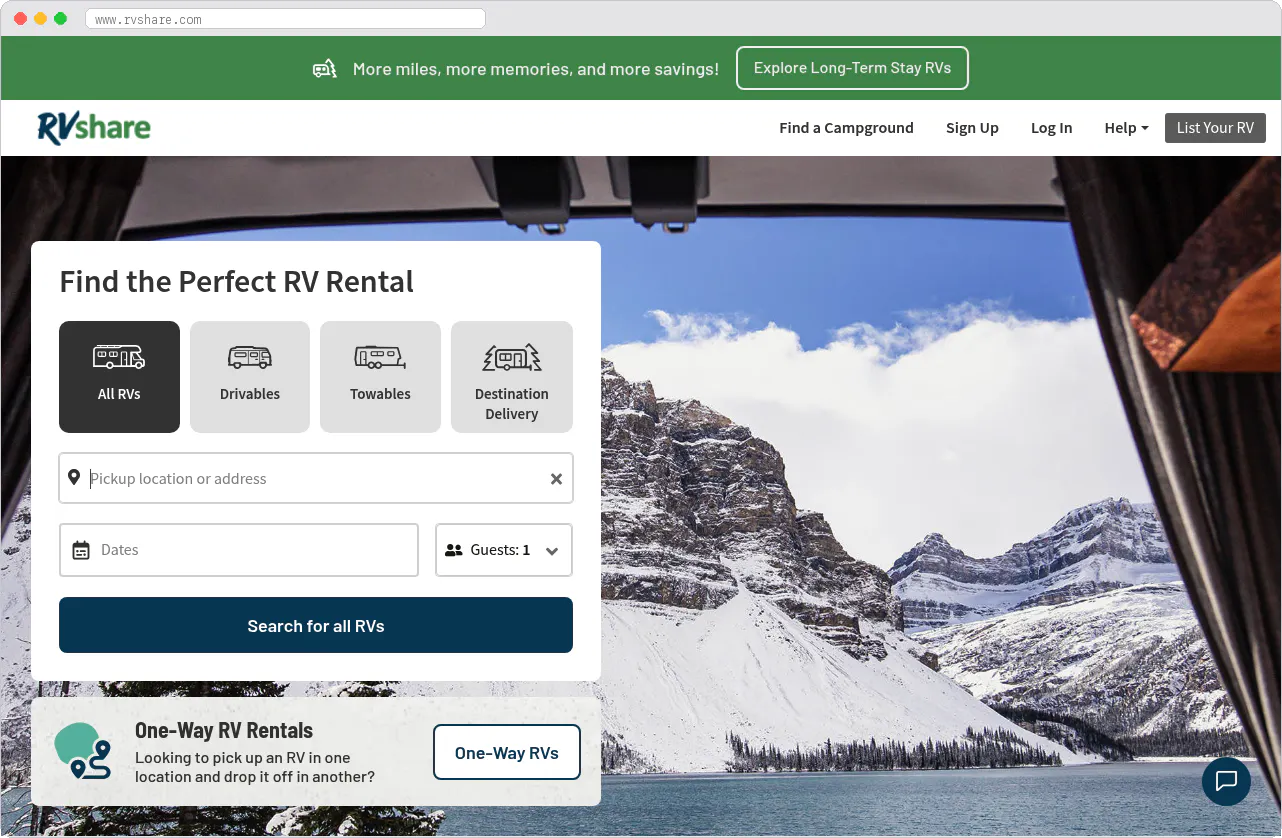
How does RVshare work?
RVshare operates as a two-sided marketplace connecting RV owners (hosts) with travelers (guests) who want to rent recreational vehicles. The platform handles the entire transaction process, from initial search and booking to payment processing and insurance coverage.
For RV owners, RVshare provides a way to monetize expensive assets that typically sit unused most of the year. The average RV costs $35,000-$300,000 but is used only 18-20 days annually. Owners create detailed listings with professional photos, set their pricing and availability, and manage bookings through the platform. RVshare provides $1 million liability insurance coverage and handles all payment processing, taking the complexity out of peer-to-peer rentals.
For travelers, RVshare offers access to a vast inventory of RVs at prices typically 30-50% below traditional rental companies. Guests can search by location, dates, RV type, and specific amenities like pet-friendly options or solar panels. The platform's review system and verified profiles help build trust, while 24/7 roadside assistance provides peace of mind during trips.
The marketplace model works because it solves problems for both sides. RV owners earn an average of $10,000-$20,000 annually by renting out vehicles that would otherwise depreciate unused. Travelers get access to unique RVs in locations where traditional rental companies don't operate, plus the personal touch of dealing directly with passionate RV enthusiasts.
RVshare's business model and revenue
RVshare uses a commission-based revenue model, charging both sides of each transaction. The platform typically collects a 15-25% service fee from guests and a 5-10% fee from hosts, though exact percentages vary based on booking value and other factors.
The company generates additional revenue through insurance products, roadside assistance services, and partnerships with RV-related businesses. RVshare has also expanded into adjacent services like RV delivery, where professional drivers transport rented RVs to customers' desired locations.
This diversified approach has proven successful. RVshare has raised over $100 million in funding from investors including Bessemer Venture Partners and has achieved profitability in many markets. The platform processes thousands of bookings monthly, with average rental values ranging from $150-$400 per night depending on RV type and location.
Essential features for an RV rental marketplace
Building a successful RV rental marketplace requires specific functionality that addresses the unique challenges of this asset category. Unlike apartment rentals or car sharing, RV rentals involve expensive, mobile assets with complex operational requirements.
Comprehensive listing management forms the foundation of any RV marketplace. Owners need tools to showcase their vehicles effectively, including support for 20+ high-quality photos, detailed specifications (length, weight, sleeping capacity, amenities), and availability calendars that can handle multi-day bookings. RV listings require more technical detail than typical accommodation platforms because renters need to understand towing requirements, generator capabilities, water tank capacities, and other operational specifications.
The listing creation process should guide owners through documenting everything from basic specifications to unique features like solar panels, outdoor kitchens, or pet policies. Successful RV marketplaces often provide photography tips or professional photography services, as high-quality images dramatically improve booking rates.
Location-based search with delivery options addresses the reality that RVs can be both picked up at fixed locations or delivered to renters. Your search functionality needs to handle both scenarios, showing pickup locations on maps while also displaying delivery radius options. Many successful bookings happen because an RV owner offers delivery within 50-100 miles of their location.
Advanced filtering becomes crucial given the diversity of RV types. Renters need to filter by vehicle class (Class A, B, C), length restrictions (important for campground compatibility), sleeping capacity, pet policies, and specific amenities. The search should also integrate with campground databases to help renters understand where different RV sizes are welcome.
Robust booking and calendar management handles the complexity of multi-day rentals with buffer periods for cleaning and maintenance. Unlike nightly accommodation rentals, RV bookings typically involve 3-7 day minimums and require preparation time between rentals. Your calendar system needs to handle these constraints while allowing owners to block dates for personal use or maintenance.
The booking flow should calculate total costs including base rates, cleaning fees, mileage charges, generator usage fees, and any delivery costs. Transparent pricing prevents disputes and improves conversion rates.
Trust and safety infrastructure becomes critical when strangers are exchanging keys to expensive vehicles. Your platform needs identity verification for both sides, including driver's license validation for renters and vehicle registration verification for owners. Many platforms require renters to complete RV-specific safety courses before their first booking.
Damage protection and security deposits require careful handling. Successful platforms typically hold security deposits ($500-$2,500) until after the rental period and have clear processes for documenting and resolving damage claims. Photo documentation workflows help both parties document vehicle condition before and after rentals.
Two-way review systems work differently in RV rentals than in accommodation marketplaces. Reviews need to cover vehicle condition, cleanliness, owner responsiveness, and renter responsibility. The review system should encourage detailed feedback about mechanical issues, cleanliness standards, and communication quality.
Insurance integration and claims management addresses one of the biggest concerns in peer-to-peer RV rentals. Your platform needs partnerships with insurance providers who understand recreational vehicle risks and can offer comprehensive coverage. This includes liability coverage, comprehensive and collision protection, and coverage for personal belongings.
Claims processing becomes complex because RV damage can range from minor scrapes to major mechanical failures. Your platform needs workflows for documenting incidents, coordinating with insurance providers, and managing repair processes that might take weeks.
Messaging and communication tools facilitate the detailed coordination RV rentals require. Unlike simple accommodation bookings, RV rentals involve extensive communication about pickup procedures, operational instructions, problem-solving during trips, and return logistics. Your messaging system should support photo sharing for damage documentation and integration with customer support.
Payment processing with holds and splits handles the financial complexity of RV rentals. You need to collect payments from renters, hold security deposits, split commissions, and handle various fees (cleaning, mileage, generator usage). The system should release payments to owners after successful rental completion while maintaining dispute resolution capabilities.
Mobile optimization and offline functionality addresses the reality that RV travel often involves areas with poor internet connectivity. Your platform needs mobile apps that can handle basic functions offline and sync when connectivity returns. GPS integration helps with pickup logistics and emergency assistance.
Successful RVshare competitors and alternatives
The RV rental marketplace has attracted numerous competitors, each with different approaches to the same fundamental opportunity. Understanding this competitive landscape helps identify positioning opportunities for new entrants.
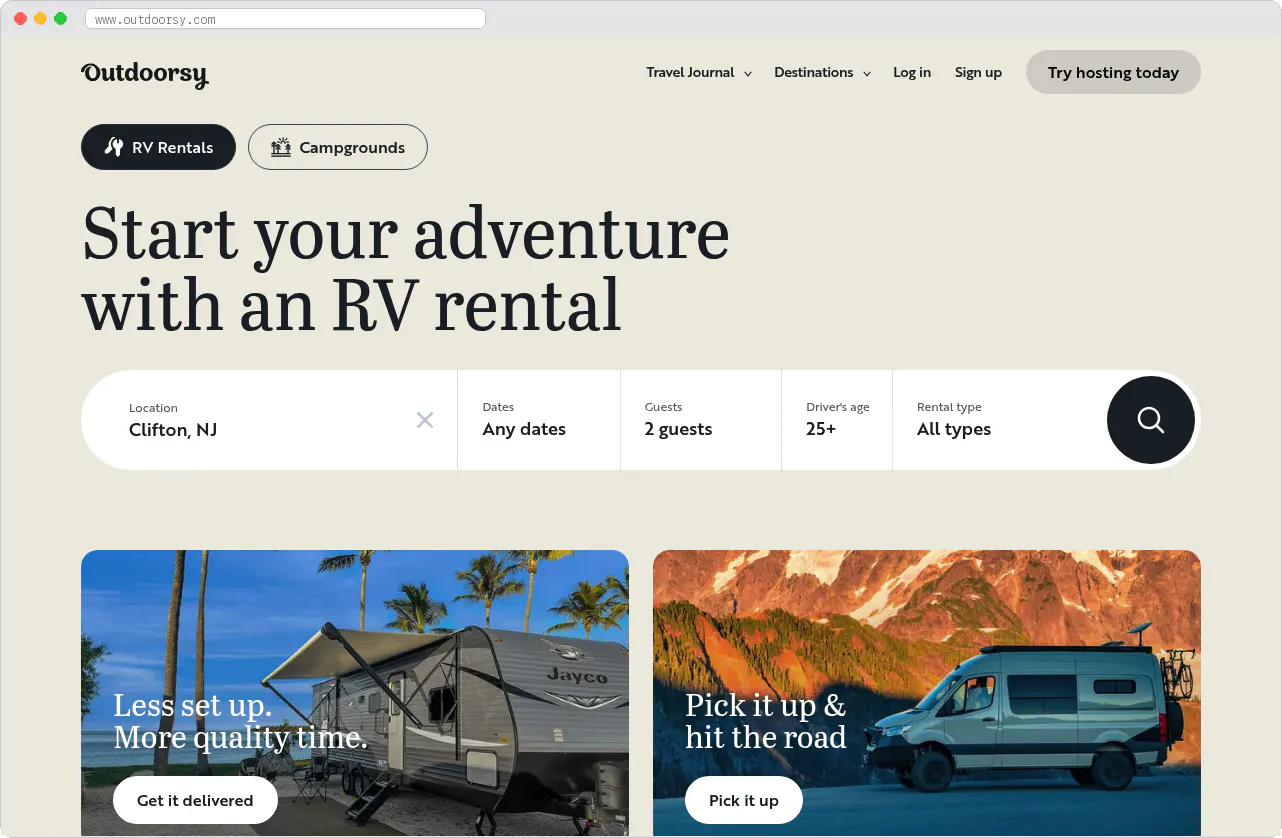
Outdoorsy represents RVshare's primary competitor, launched in 2015 with over $180 million in funding. Outdoorsy differentiates itself through broader inventory including campervans, travel trailers, and even boats and adventure gear. The platform emphasizes the outdoor lifestyle aspect and has built stronger international presence, operating in Canada, Australia, and parts of Europe.
Outdoorsy's advantage lies in its comprehensive approach to outdoor recreation rentals and more sophisticated owner tools, including dynamic pricing recommendations and professional photography programs. However, this broader focus can dilute the RV-specific expertise that some users prefer.
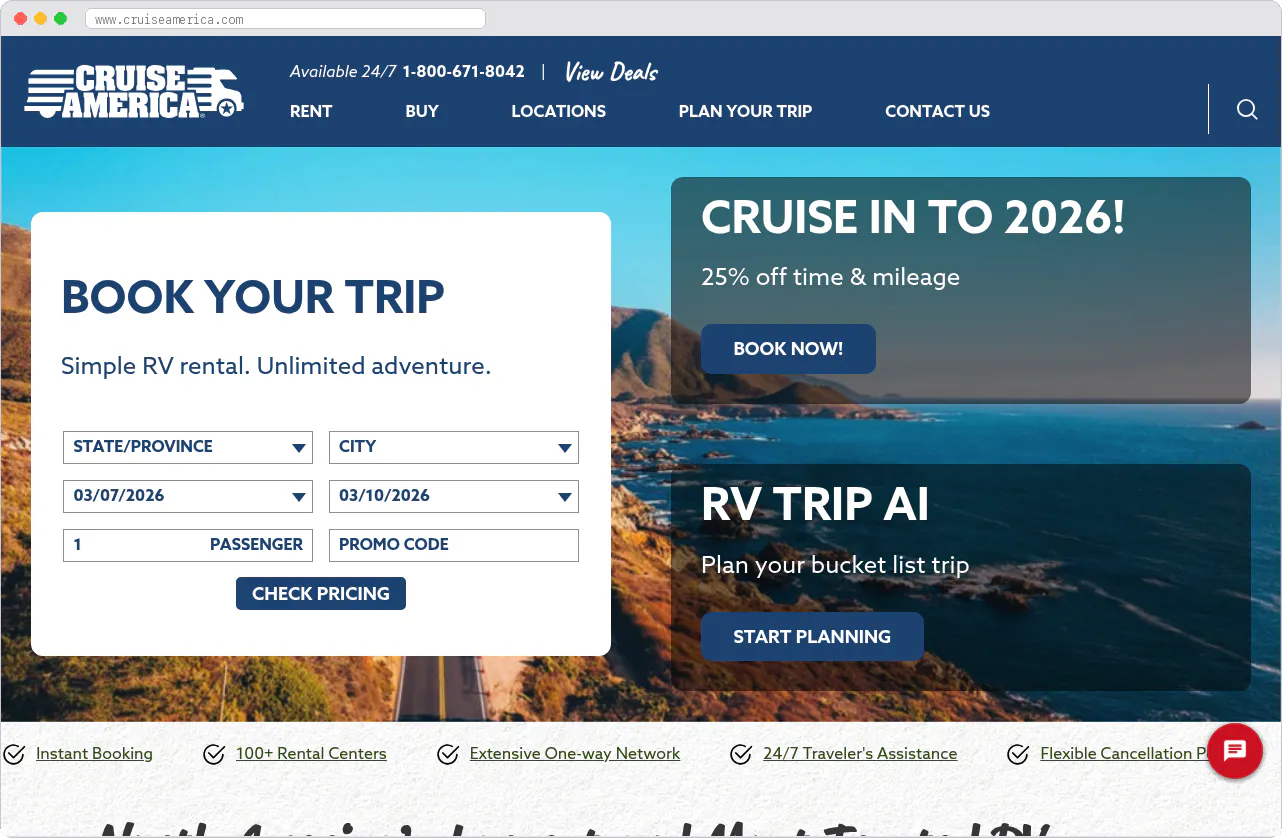
Cruise America takes a completely different approach as a traditional rental company with over 130 locations across North America. Rather than facilitating peer-to-peer rentals, Cruise America owns and maintains its entire fleet of standardized RVs. This model offers consistency and reliability but at higher prices and with less variety.
Cruise America's strength is predictability, renters know exactly what to expect from vehicle condition and features. The weakness is limited availability in popular destinations and higher prices that can be 50-100% above peer-to-peer options.
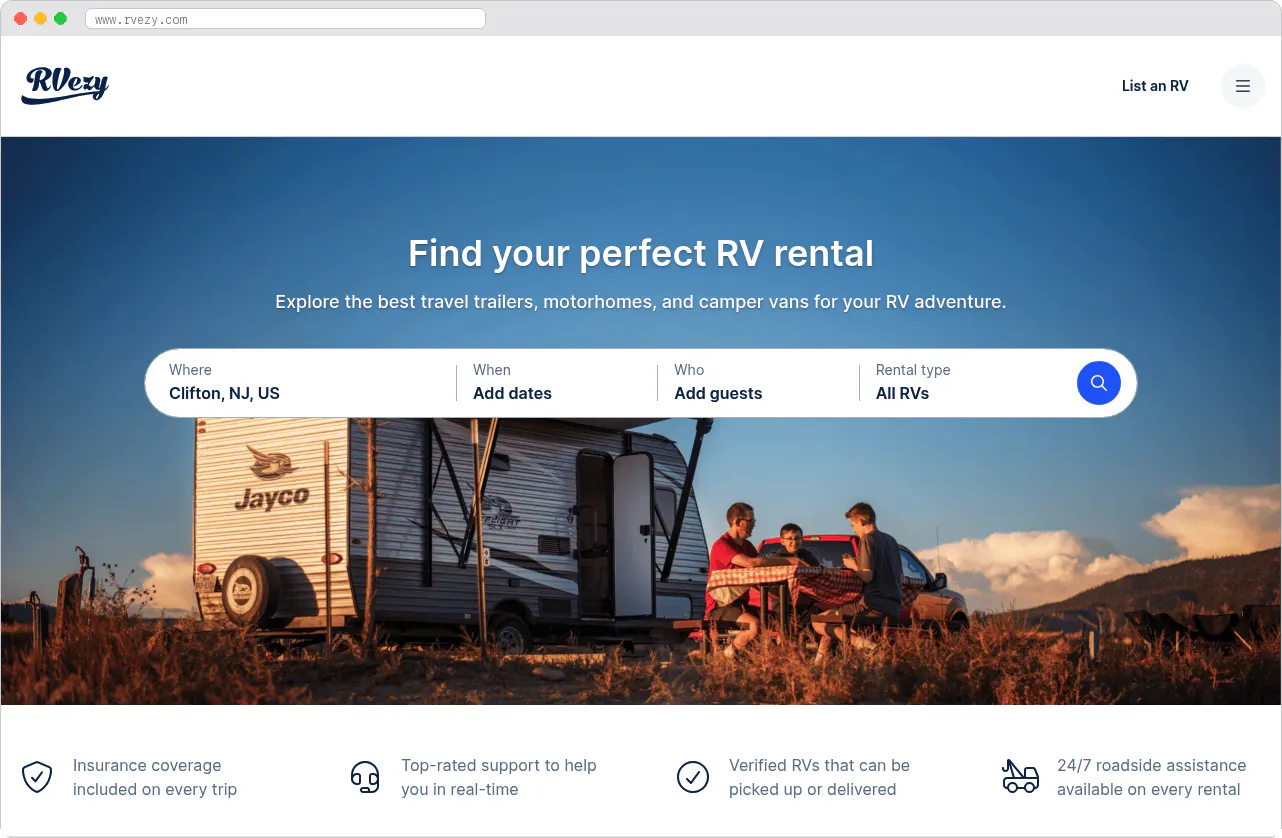
RVezy focuses primarily on the Canadian market and emphasizes comprehensive insurance coverage and damage protection. The platform has built strong partnerships with Canadian insurance providers and offers more extensive coverage options than many competitors. RVezy also provides more detailed owner education and support programs.
RVezy's approach works well in Canada's different regulatory environment but limits global expansion opportunities. The platform's insurance focus attracts risk-averse users but may increase costs compared to simpler alternatives.
GoCamp targets the premium segment with curated, high-end RV rentals and concierge services. The platform screens vehicles more rigorously and offers services like pre-trip grocery stocking and custom itinerary planning. This approach commands higher prices but serves affluent travelers seeking luxury experiences.
GoCamp's weakness is limited inventory since the curation process excludes many potential listings. The premium positioning also limits market size compared to platforms serving budget-conscious travelers.
Peer-to-peer alternatives include general platforms like Turo (which allows RV listings alongside cars) and Facebook Marketplace (where many informal RV rentals happen). These platforms lack RV-specific features but offer broader reach and lower fees.
Traditional rental companies like El Monte RV and Road Bear RV compete on reliability and support but with higher prices and less variety. These companies are expanding into peer-to-peer models to compete with marketplace platforms.
The competitive landscape reveals several positioning opportunities. Many platforms struggle with supply quality control, international expansion, or serving specific niches like luxury RVs or budget-conscious families. Understanding these gaps helps new entrants identify differentiation strategies.
Step-by-step process to build an RV rental marketplace
Creating a successful RV rental marketplace follows a structured process that prioritizes learning and iteration over perfect initial execution. Based on successful marketplace launches we've supported, here's the proven approach.
Step 1: Validate your specific niche
The RV rental market contains numerous underserved segments. Rather than competing directly with established players across all categories, identify a specific niche where you can provide superior value. Successful approaches include geographic focus (serving specific states or regions), vehicle type specialization (luxury motorhomes, vintage trailers, or off-grid capable rigs), or demographic targeting (families, adventure travelers, or digital nomads).
Validation involves talking directly to potential RV owners and renters in your chosen niche. RV owners are often passionate enthusiasts who participate in online communities, RV shows, and camping groups. These communities provide excellent validation opportunities if approached respectfully with genuine curiosity about their challenges.
Common validation questions for RV owners include how they currently handle private rentals, what concerns them most about renting to strangers, what tools they use for marketing their RVs, and what percentage of potential rental income they lose due to booking gaps. For potential renters, explore their current rental experiences, decision-making factors, and frustrations with existing platforms.
Step 2: Start with focused geographic scope
Even large platforms like RVshare started regionally before expanding nationally. Choose an initial market where you can achieve meaningful supply density, typically a metropolitan area with high RV ownership and strong tourism demand.
Ideal initial markets combine several factors: high RV ownership rates (often found in warmer climates and outdoor recreation areas), strong tourism infrastructure that attracts RV travelers, limited competition from established platforms, and personal connections that help with early user acquisition.
Texas, Florida, California, and Colorado represent strong RV markets, but within these states, focusing on specific metropolitan areas or tourism corridors provides more manageable scope. Austin-San Antonio, Denver-Boulder, or Phoenix-Tucson corridors offer sufficient scale while remaining geographically focused.
Step 3: Build your minimum viable platform
Your initial platform needs core functionality without expensive custom development. The MVP should handle basic listing creation, search and discovery, booking management, secure payments, and user communication. Advanced features like dynamic pricing, professional photography programs, or mobile apps can wait until you've validated market fit.
Sharetribe provides an excellent foundation for RV marketplace MVPs because it includes built-in availability calendars, location-based search, secure payment processing with commission handling, user messaging, and review systems. The platform's RV-friendly features include support for detailed custom fields (RV specifications), photo galleries, and multi-day booking management.
The key is launching quickly with essential features rather than spending months building advanced functionality that users might not need. Many successful marketplace founders launch their MVPs within 2-4 weeks using no-code tools, then iterate based on user feedback.
Step 4: Recruit initial RV owners strategically
RV marketplaces require supply-side focus initially because demand won't engage with empty platforms. Successful approaches include attending RV shows and camping events, partnering with RV dealerships and service centers, engaging in online RV communities, and using personal networks.
Many RV owners already consider private rentals but lack convenient platforms or worry about insurance and liability issues. Positioning your marketplace as solving these specific problems, rather than just providing another listing platform, improves conversion rates.
Incentivizing early adopters with reduced commission rates, free professional photography, or premium listing features helps build initial supply. However, avoid long-term commitments that constrain future pricing flexibility.
Step 5: Generate initial demand through content and community
RV rental demand often comes from people planning specific trips or considering RV travel for the first time. Content marketing addressing trip planning, RV basics, and destination guides attracts potential customers while building authority in the space.
Successful content approaches include comprehensive RV buying vs. renting guides, destination-specific travel itineraries, RV size and type selection guides, and first-time renter education content. This content serves dual purposes: attracting organic search traffic and providing value that builds trust with potential customers.
Partnerships with campgrounds, tourism boards, and travel bloggers can provide additional demand generation channels. Many campgrounds struggle with recommending reliable RV rental sources to visitors, creating partnership opportunities.
Step 6: Optimize for trust and safety
RV rentals involve higher stakes than many marketplace categories due to asset values and liability concerns. Building comprehensive trust infrastructure early prevents problems that could damage your platform's reputation.
Effective trust measures include mandatory identity verification, driver's license validation, security deposit collection, comprehensive insurance partnerships, pre-rental orientation requirements, and clear damage documentation processes. These measures should feel supportive rather than bureaucratic.
Partnership with insurance providers specializing in recreational vehicles becomes crucial. Companies like National General, Progressive, or Good Sam offer marketplace-specific products that provide comprehensive coverage while protecting your platform from liability.
Step 7: Scale systematically into adjacent markets
Once you've achieved liquidity in your initial market, typically 80%+ of searches returning relevant results and regular booking volume, consider expansion. Geographic expansion works well for RV marketplaces because travel patterns often follow predictable corridors.
Expanding along popular RV travel routes (like I-10 from California to Florida or I-70 from Utah to Colorado) provides natural growth paths. RV travelers often plan multi-destination trips, creating demand for rentals in multiple connected markets.
Systematic expansion involves replicating successful supply acquisition and demand generation strategies in new markets while adapting to local conditions. Each new market should achieve basic liquidity before adding another expansion target.
Development approaches and cost considerations
Building an RV rental marketplace involves several development paths, each with different cost, timeline, and capability implications. The right choice depends on your technical skills, budget, and growth timeline.
No-code marketplace builders like Sharetribe offer the fastest path to launch with marketplace-specific features built in. For RV marketplaces, this approach provides availability calendars, location-based search, multi-photo listings, secure payments with commission handling, user messaging, and review systems within days rather than months.
Sharetribe's annual pricing starts around $3,000 for comprehensive marketplace functionality, making it accessible for bootstrapped founders while providing scalability for high-growth businesses. The platform handles hosting, security updates, payment compliance, and infrastructure scaling automatically.
The main limitation is reduced flexibility compared to custom development, though Sharetribe's developer platform allows custom feature additions as businesses grow. This hybrid approach lets founders validate their marketplace quickly, then add unique functionality based on actual user needs rather than assumptions.
Custom development provides maximum flexibility but requires significant investment and timeline. Building marketplace functionality from scratch typically costs $60,000-$100,000 and takes 6-12 months for initial launch.
Custom development makes sense for well-funded teams with specific technical requirements or when existing solutions can't support the intended business model. However, the opportunity cost is substantial, months spent building basic marketplace infrastructure can't be spent understanding customers and building competitive advantages.
Hybrid approaches using no-code foundations with custom additions often provide the best of both worlds. Starting with a platform like Sharetribe for core functionality, then adding custom features like advanced pricing algorithms, mobile apps, or third-party integrations allows faster initial launch while preserving long-term flexibility.
WordPress and plugin combinations can create basic marketplace functionality at lower cost but typically lack the sophisticated features RV marketplaces require. Availability management, commission handling, and trust infrastructure become complex to implement and maintain using general-purpose tools.
Essential integrations for RV marketplaces
Successful RV rental marketplaces require several third-party integrations that address industry-specific needs beyond basic marketplace functionality.
Insurance partnerships are critical for platform viability. Companies like National General, Outdoorsy (which white-labels insurance), and Progressive offer marketplace-specific products. These partnerships typically involve revenue sharing but provide comprehensive coverage that protects all parties while reducing platform liability.
Insurance integration should be smooth from the user perspective, with automatic coverage activation for confirmed bookings and clear claims processes for damage incidents. Many platforms collect additional insurance fees from renters to fund comprehensive coverage while maintaining competitive base pricing.
Payment processing requires specialized solutions that can handle security deposits, commission splits, and refund management. Stripe Connect provides excellent marketplace payment capabilities, while platforms like Sharetribe include pre-built Stripe integrations that handle the technical complexity automatically.
RV rentals often involve complex pricing with base rates, mileage charges, generator fees, cleaning charges, and delivery costs. Your payment system needs to calculate these accurately while providing transparent breakdowns to users.
Background check services like Checkr or Persona provide identity verification and driving record validation for renters. Many RV owners require these checks before approving bookings, making smooth integration essential for user experience.
The verification process should balance security with user experience, providing quick approval for qualified renters while maintaining thorough screening standards that protect RV owners.
Roadside assistance partnerships with companies like Good Sam or AAA provide added value for renters while reducing support burden on your platform. Many RV travelers have limited mechanical experience, making professional roadside assistance valuable for peace of mind.
Campground and RV park databases help renters plan trips and understand where different RV sizes are welcome. Partnerships with platforms like Campspot, Recreation.gov, or KOA can provide valuable trip planning tools while generating affiliate revenue.
Scaling and growth strategies
RV marketplaces face unique scaling challenges due to seasonality, geographic distribution requirements, and the need for balanced supply and demand growth. Successful scaling requires systematic approaches that address these industry-specific factors.
Geographic expansion should follow RV travel patterns rather than random market entry. Popular routes like the Pacific Coast Highway, Route 66, or the Great Lakes Circle Tour create natural expansion corridors where supply in one market creates demand in connected destinations.
Effective expansion involves establishing supply clusters in destination markets before generating demand, ensuring visitors find available RVs when they search. This supply-first approach works well because RV owners in tourist destinations often understand the rental opportunity and are motivated to participate.
Seasonal optimization addresses the reality that RV demand peaks during spring and summer months while dropping significantly in winter. Successful platforms develop strategies for maintaining engagement during off-seasons, including promoting winter destinations, targeting full-time RV travelers, and developing complementary services.
Year-round engagement might involve content marketing about winter RV travel, partnerships with warm-weather destinations, or adjacent services like RV storage marketplace functionality during off-seasons.
Supply quality management becomes crucial as marketplaces scale beyond personal oversight capability. Automated quality scoring based on reviews, response times, and booking success rates helps maintain standards while identifying top performers for promotional opportunities.
Many successful platforms implement tiered service levels, giving high-performing owners additional visibility or reduced commission rates while providing improvement coaching for underperforming listings.
Demand diversification reduces dependence on leisure travelers by targeting additional segments like business travelers, insurance replacement rentals, or special event accommodations. These segments often have different seasonal patterns and price sensitivity, providing revenue stability.
Relocation rentals represent an emerging opportunity as remote work enables location flexibility. Marketing to digital nomads or seasonal workers provides demand during traditional off-peak periods.
Technology advancement should focus on areas that provide competitive advantages rather than basic feature parity. Dynamic pricing algorithms, predictive availability management, or enhanced mobile experiences can differentiate mature platforms from newer entrants.
Investment in proprietary technology makes most sense after achieving market validation and generating revenue that can fund development costs. Early-stage platforms often achieve better results by focusing on user acquisition and satisfaction rather than technical sophistication.
Building with Sharetribe: practical advantages
For founders considering an RV rental marketplace, Sharetribe provides specific advantages that address industry requirements while accelerating time to market.
Built-in calendar and availability management handles the complexity of multi-day RV bookings with automatic availability updates, buffer period management, and owner override capabilities. This functionality typically requires weeks of custom development but comes pre-built with marketplace-specific features like seasonal rate adjustments and bulk availability updates.
Location-based search with map integration supports both pickup locations and delivery radius searches, essential for RV marketplaces where location flexibility significantly impacts booking rates. The search system handles geographic queries efficiently while supporting the detailed filtering RV renters require.
Secure payment processing with commission management includes Stripe Connect integration that handles security deposits, commission splits, and complex pricing calculations automatically. This infrastructure typically costs thousands to develop while requiring ongoing compliance maintenance that Sharetribe handles automatically.
Custom field support accommodates the detailed specifications RV listings require, from sleeping capacity and length restrictions to specific amenities like solar panels or pet policies. These custom fields integrate with search filtering and display appropriately in listing templates.
Review and messaging systems provide the communication infrastructure RV rentals require, including photo sharing for damage documentation and integration with customer support workflows. These systems handle the higher communication volume RV rentals generate compared to simpler marketplace categories.
Mobile optimization ensures functionality across devices without requiring separate mobile app development. RV travelers often make last-minute booking changes or need to communicate with owners while traveling, making mobile functionality essential.
Sharetribe's developer platform allows custom feature additions as businesses grow, providing an upgrade path that preserves initial speed to market while supporting long-term competitive positioning. This approach lets founders validate their market quickly, then invest in custom development based on actual user needs rather than assumptions.
The platform handles infrastructure scaling, security updates, and compliance requirements automatically, allowing founders to focus on building supply, generating demand, and optimizing user experience rather than managing technical infrastructure.
Success factors and common pitfalls
RV marketplace success requires understanding industry-specific dynamics that differ from other marketplace categories. Common success factors include geographic focus, supply quality emphasis, trust infrastructure investment, and seasonal optimization strategies.
Geographic density matters more in RV marketplaces than platforms serving shipped goods because travelers need local pickup or reasonable delivery distances. Successful platforms achieve supply density in specific markets before geographic expansion, ensuring demand generates viable search results.
Many failed platforms spread too thin geographically, creating poor user experience when searches return limited or distant options. Concentrated geographic focus initially provides better user experience and more efficient marketing spend.
Supply quality control impacts marketplace reputation significantly because RV condition directly affects vacation experiences. Platforms that allow unlimited listing creation often struggle with quality issues that damage customer confidence and review scores.
Successful approaches include listing approval processes, minimum photo requirements, detailed condition documentation, and proactive owner education about maintenance and presentation standards. These measures feel supportive rather than restrictive when positioned as helping owners maximize rental income.
Insurance and liability management requires specialized attention in RV marketplaces due to asset values and travel risks. Platforms that underinvest in comprehensive coverage often face claims that exceed their financial capacity, while overcomplicated insurance processes deter user participation.
Effective insurance integration provides comprehensive coverage smoothly within the booking flow while maintaining competitive pricing through group purchasing power or revenue sharing arrangements with insurance providers.
Seasonal demand management challenges platforms that don't plan for RV travel seasonality. Summer booking surges can overwhelm unprepared platforms while winter demand drops strain revenue models based on consistent transaction volume.
Successful platforms develop year-round engagement strategies, promote winter destinations, target full-time RV travelers, and potentially diversify into complementary services during off-seasons.
Trust building between strangers requires more attention in RV rentals than lower-stakes marketplace categories. Vehicle handovers involve significant personal interaction, asset responsibility, and potential for disputes over condition or operational issues.
Effective trust infrastructure includes identity verification, experience-based reputation systems, clear communication tools, and dispute resolution processes that feel fair to both parties. Many successful platforms invest heavily in user education and support rather than relying solely on automated systems.
Avoid common pitfalls including underestimating insurance complexity, launching without supply density, neglecting mobile experience, and underinvesting in customer support. RV rentals generate more customer service needs than many marketplace categories due to operational complexity and travel-related urgencies.
Next steps for aspiring RV marketplace founders
Starting an RV rental marketplace requires systematic validation, focused execution, and realistic timeline expectations. Begin by identifying your specific niche and target market, then validate demand through direct customer research rather than assumptions about market opportunity.
Choose development approaches that prioritize speed to market over perfect initial functionality. Platforms like Sharetribe provide marketplace-essential features immediately, allowing focus on user acquisition and market validation rather than technical development.
Plan for iterative improvement based on user feedback rather than attempting comprehensive feature development before launch. RV marketplace needs often differ from founder assumptions, making user learning critical for product-market fit.
Consider Sharetribe's 14-day free trial to explore marketplace functionality hands-on and understand how quickly you can launch your initial version. The experience provides concrete timelines and capability understanding that inform strategic decisions about development approaches and resource allocation.
The RV rental marketplace opportunity continues growing as outdoor recreation demand increases and traditional rental company limitations become more apparent. Success requires understanding industry-specific dynamics, building appropriate trust infrastructure, and maintaining focus on user needs rather than technical complexity.
RV marketplace businesses can provide substantial returns while serving the growing community of outdoor recreation enthusiasts. The combination of high asset values, strong demand growth, and improved marketplace tools creates favorable conditions for new entrants who understand the market and execute systematically.
Frequently asked questions
How much does it cost to build an RV rental marketplace like RVshare?
Using a no-code platform like Sharetribe costs around $3,000 annually for a professional marketplace. Custom development typically costs $60,000-$100,000 and takes 6-12 months. Most successful founders start with no-code solutions to validate their market quickly.
What features does an RV rental marketplace need?
Essential features include detailed listing management with RV specifications, location-based search, availability calendars, secure payments with commission handling, insurance integration, identity verification, two-way reviews, and messaging systems. Mobile optimization is crucial since RV travelers often book on-the-go.
How does RVshare make money?
RVshare uses a commission model, typically charging 15-25% from guests and 5-10% from hosts per booking. They also generate revenue through insurance products, roadside assistance, delivery services, and partnerships with RV-related businesses.
What are the main competitors to RVshare?
Major competitors include Outdoorsy (broader outdoor recreation focus), Cruise America (owned fleet model), RVezy (Canada-focused), and GoCamp (premium segment). Each has different positioning - Outdoorsy emphasizes variety, while Cruise America offers consistency through owned vehicles.
How long does it take to launch an RV rental marketplace?
With no-code platforms like Sharetribe, you can launch in 1-2 weeks. Custom development takes 6-12 months minimum. The key is starting with essential features quickly to validate your market, then adding advanced functionality based on user feedback.
Do I need special insurance for an RV rental marketplace?
Yes, RV rentals require specialized insurance due to high asset values and liability risks. Companies like National General and Progressive offer marketplace-specific products. Comprehensive coverage typically costs 10-15% of rental value but is essential for platform viability and user trust.
Start your 14-day free trial
Create a marketplace today!
- Launch quickly, without coding
- Extend infinitely
- Scale to any size
No credit card required