How to build a website like Zocdoc
Zocdoc revolutionized healthcare appointment booking by connecting 12 million patients with doctors through real-time scheduling. Learn how to build a similar healthcare marketplace, from validating your niche to launching a scalable platform.
Published: Mar 15, 2024
Last updated: Mar 19, 2026
How Zocdoc transformed healthcare booking
Zocdoc fundamentally changed how patients find and book medical appointments. Founded in 2007 by Cyrus Massoumi, Dr. Oliver Kharraz, and Nick Ganju, the platform emerged from a frustrating personal experience when Massoumi ruptured his eardrum and couldn't find available doctors who accepted his insurance.
Today, Zocdoc serves over 12 million patients monthly and has facilitated more than 200 million appointments. The platform operates in all 50 US states and connects patients with over 200,000 healthcare providers across 2,000+ specialties. In 2021, the company raised $220 million at a $1.8 billion valuation, demonstrating the massive market opportunity in digital healthcare booking.
Zocdoc's success lies in solving a universal healthcare problem: the friction between patients who need care and doctors who have appointment slots to fill. Before Zocdoc, booking a doctor's appointment often meant calling multiple offices, navigating complex phone trees, and waiting on hold. Zocdoc eliminated this friction by creating a two-sided marketplace that benefits both patients and healthcare providers.
The platform's timing was perfect. Healthcare digitization was accelerating, patient expectations for online booking were rising, and healthcare providers needed better tools to manage their schedules and reduce no-shows. Zocdoc positioned itself at the intersection of these trends and built a platform that made healthcare more accessible and efficient.
How does a Zocdoc-style marketplace work?
Zocdoc operates as a booking marketplace specifically designed for healthcare services. Unlike general service marketplaces, healthcare booking platforms must handle unique requirements like insurance verification, medical specialties, appointment types, and regulatory compliance.
Patients use Zocdoc to search for healthcare providers based on location, specialty, insurance acceptance, and available appointment times. The platform displays real-time availability, allowing patients to book appointments instantly without phone calls. Each provider has a detailed profile showing their credentials, patient reviews, accepted insurance plans, and office information.
Healthcare providers benefit from Zocdoc's patient acquisition capabilities and scheduling efficiency. Doctors pay subscription fees to list their practices and access Zocdoc's patient base. The platform helps providers fill cancellations, reduce no-shows through automated reminders, and manage their online reputation through patient reviews.
Zocdoc's business model relies primarily on subscription fees from healthcare providers. Doctors typically pay between $300 to $3,000 per month depending on their specialty and location. This SaaS model creates predictable revenue while keeping the platform free for patients, encouraging widespread adoption.
The platform also generates revenue through premium services like enhanced profile features, priority placement in search results, and advanced analytics tools. Some providers pay additional fees for services like patient communication tools and integration with electronic health records (EHR) systems.
Essential features for a healthcare booking marketplace
Building a successful healthcare marketplace requires specific functionality that addresses the unique needs of medical appointment booking. These features go beyond basic booking systems and must handle the complexity of healthcare delivery.
Advanced search and filtering capabilities form the foundation of any healthcare booking platform. Patients need to search by medical specialty, specific conditions, treatment types, and provider credentials. Location-based search is critical, with options for distance radius, neighborhood boundaries, and transportation accessibility. Insurance filtering is essential since patients must find in-network providers to avoid surprise billing.
The search functionality should support complex queries like "dermatologists who treat acne and accept Blue Cross Blue Shield within 10 miles of downtown Chicago." This requires sophisticated database design and search algorithms that can handle multiple parameters simultaneously.
Real-time appointment scheduling represents the core value proposition for patients. The system must integrate with providers' existing scheduling systems to show accurate availability and prevent double-bookings. This requires APIs that can communicate with various practice management software platforms.
Booking workflows need to accommodate different appointment types, from routine check-ups to urgent care visits. Some specialties require specific preparation instructions, intake forms, or pre-appointment requirements that the platform must communicate clearly to patients.
Provider profiles and credentialing build trust and help patients make informed decisions. Each provider profile should display medical school education, residency training, board certifications, hospital affiliations, and years of experience. Patient reviews and ratings provide social proof, but healthcare marketplaces must carefully moderate these to ensure accuracy and compliance with privacy regulations.
Verification systems ensure only licensed healthcare providers can join the platform. This typically involves checking medical licenses, malpractice insurance, and professional certifications through state medical boards and other official databases.
Insurance verification and billing integration address one of patients' biggest pain points: understanding their coverage and out-of-pocket costs. The platform should verify insurance eligibility, check benefits, and provide cost estimates before booking. This requires integration with insurance verification services and clearinghouses.
Some advanced platforms include price transparency features that show estimated costs for common procedures based on the patient's insurance plan and the provider's contracted rates.
Telehealth capabilities became essential during the COVID-19 pandemic and remain important for ongoing care delivery. The platform needs video conferencing functionality, secure messaging, and digital prescription capabilities where legally permitted.
Telehealth features must comply with state licensing requirements, which vary by location and specialty. Some states require providers to be licensed in the patient's location, while others have reciprocity agreements or special telehealth licensing provisions.
Automated communication and reminder systems reduce no-shows and improve patient experience. The platform should send appointment confirmations, reminders 24-48 hours before appointments, and follow-up messages for post-appointment care or review requests.
Communication must be HIPAA-compliant and offer multiple channels like email, SMS, and phone calls based on patient preferences.
Zocdoc competitors and market alternatives
The healthcare booking market includes several established players, each with different approaches to connecting patients and providers. Understanding these competitors helps identify opportunities for differentiation and improvement.
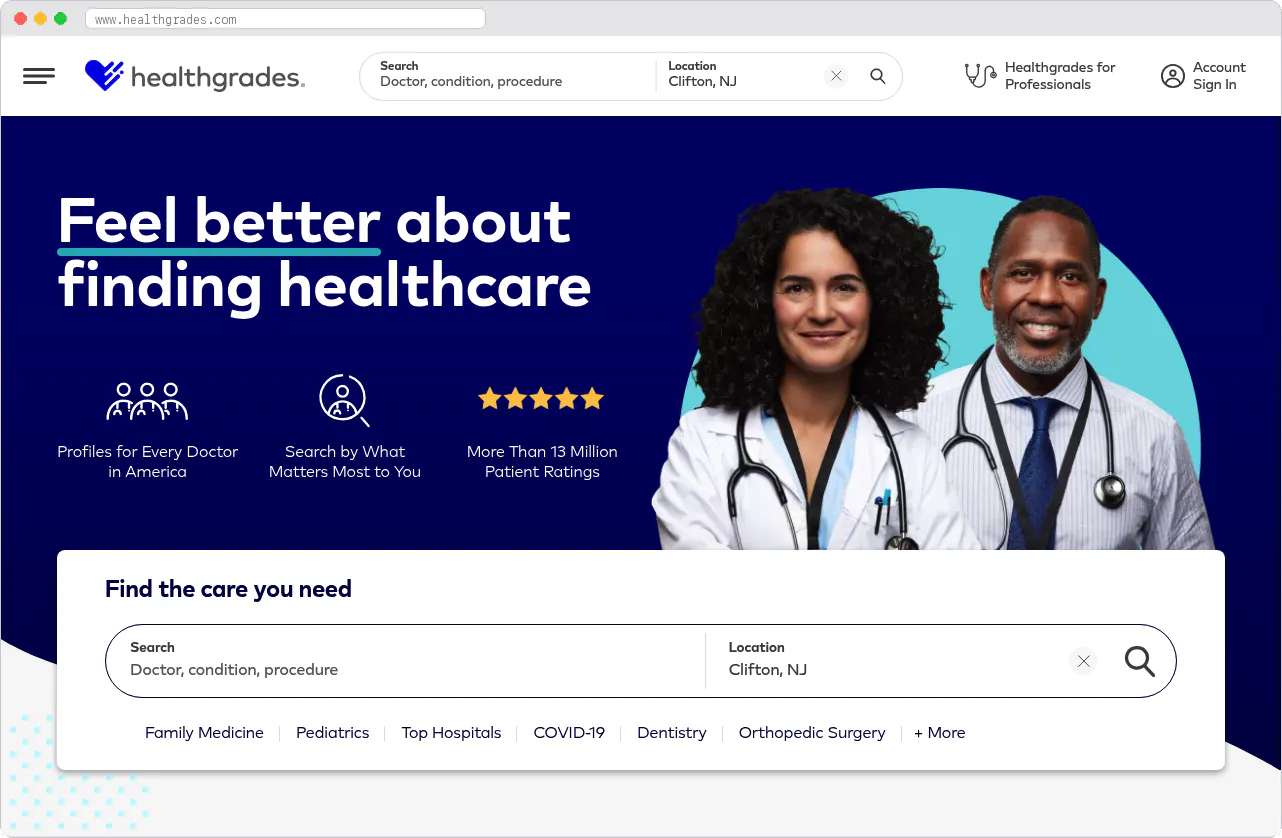
Healthgrades focuses primarily on provider reviews and reputation management rather than appointment booking. The platform aggregates patient reviews, provider credentials, and quality ratings to help patients research doctors. While Healthgrades offers some booking capabilities, its strength lies in comprehensive provider information and patient feedback.
Healthgrades differentiates itself through extensive provider databases and detailed quality metrics. The platform includes information about hospital affiliations, patient satisfaction scores, and clinical quality indicators that go beyond basic booking functionality.
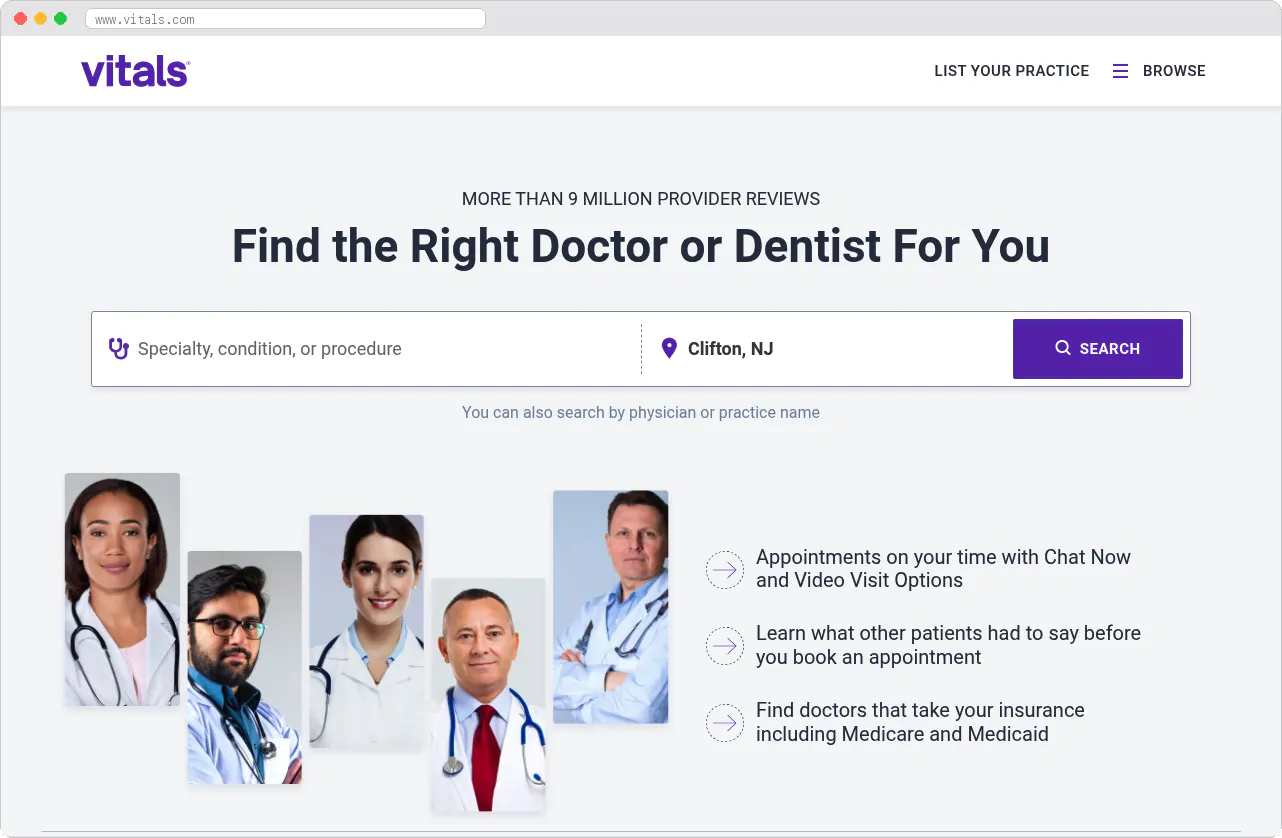
Vitals combines provider reviews with appointment booking, similar to Zocdoc's approach. However, Vitals emphasizes its patient rewards program, which incentivizes users to leave reviews after appointments. This gamification strategy helps build a larger review database while encouraging patient engagement.
The platform also offers more detailed provider background information, including education details, professional associations, and peer reviews from other healthcare professionals.
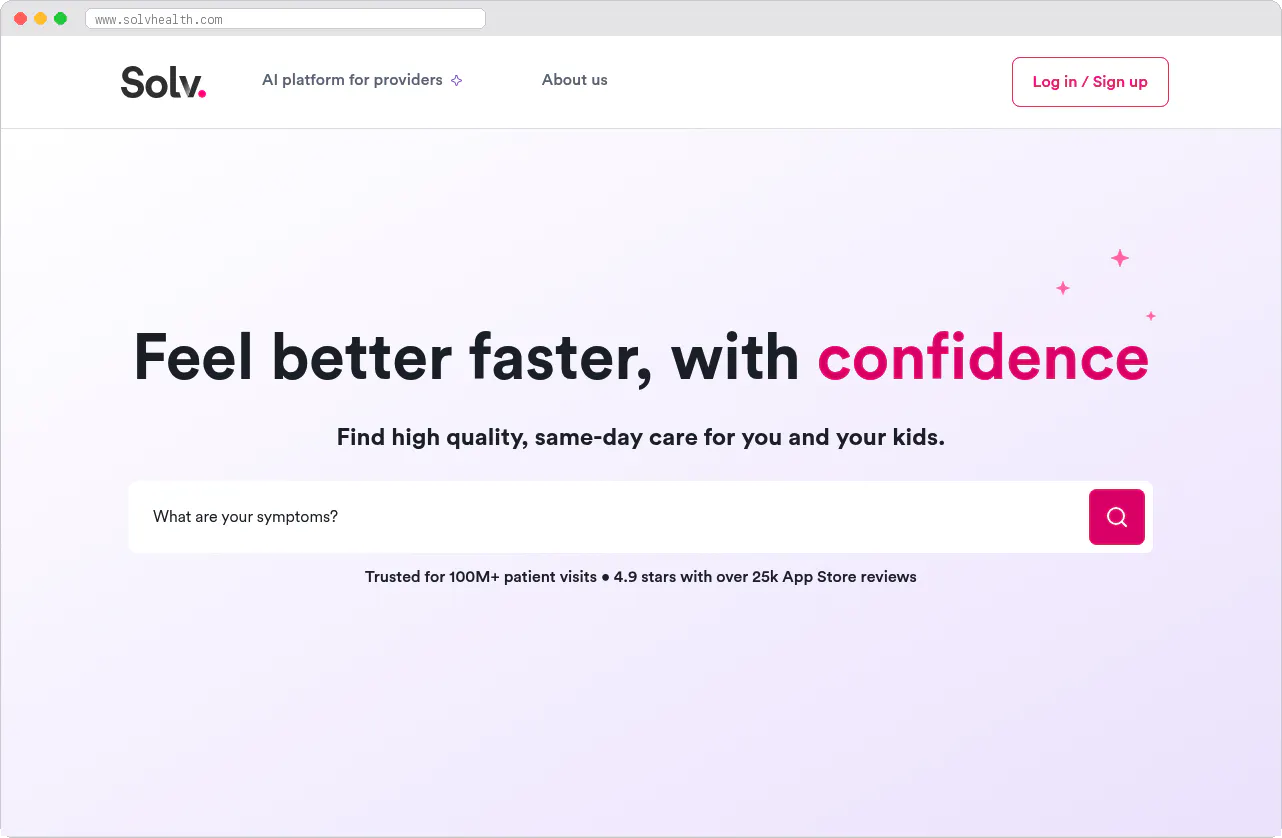
Solv specializes in urgent care and same-day appointment booking, targeting a specific niche within healthcare booking. The platform focuses on immediate care needs rather than routine appointments, partnering primarily with urgent care centers, walk-in clinics, and retail health locations.
Solv's mobile-first approach and emphasis on speed make it particularly effective for patients who need care within hours rather than days or weeks. The platform's streamlined interface prioritizes booking speed over comprehensive provider information.
Practo operates internationally, particularly strong in markets like India, Southeast Asia, and Latin America. The platform offers a broader range of services than Zocdoc, including telemedicine consultations, diagnostic test bookings, medicine delivery, and health record storage.
Practo's comprehensive approach makes it more of a healthcare ecosystem than a pure booking platform. This broader scope allows for multiple revenue streams but also increases operational complexity.
Regional and specialty-focused platforms serve specific geographic markets or medical specialties. For example, platforms like ZocDoc competitors in specific cities or states, or specialized booking systems for dental care, mental health services, or cosmetic procedures.
These niche platforms often provide more specialized features and local market knowledge than broad national platforms. They may offer better integration with local healthcare systems or more detailed specialty-specific functionality.
Steps to build a healthcare booking marketplace
Creating a successful healthcare marketplace requires a systematic approach that addresses both technical complexity and regulatory requirements. The following steps provide a roadmap for building a platform that can compete with established players like Zocdoc.
1. Research and validate your healthcare niche
Healthcare is highly regulated and competitive, making niche selection critical for success. Broad platforms like Zocdoc require significant resources to compete effectively, but specialized markets offer opportunities for focused solutions.
Consider targeting specific medical specialties that are underserved by existing platforms. Mental health, dermatology, and cosmetic procedures often have unique booking requirements that general platforms don't address well. Geographic niches also work well, particularly in areas where national platforms have limited provider coverage.
Validate your niche by researching patient pain points and provider needs. Interview potential users to understand their current booking challenges and willingness to adopt new solutions. This research should cover both sides of your marketplace: patients who would book appointments and providers who would list their services.
2. Navigate healthcare regulations and compliance
Healthcare marketplaces must comply with numerous regulations that don't apply to other industries. HIPAA (Health Insurance Portability and Accountability Act) governs how patient health information can be collected, stored, and transmitted. Even basic appointment booking involves protected health information that requires specific security measures.
State licensing requirements affect which providers can offer services to patients in different locations. These regulations become particularly complex for telehealth services, where providers may need licenses in multiple states.
Consult with healthcare attorneys early in your development process to understand compliance requirements for your specific platform and target markets. Building compliance into your platform from the beginning is much easier than retrofitting it later.
3. Choose your business model and pricing strategy
Zocdoc's subscription model works well because it aligns platform success with provider success. Providers pay monthly fees but only when they're actively using the platform to attract patients. This creates sustainable revenue while keeping the platform free for patients.
Consider alternative monetization approaches based on your target market. Commission-based models work for some healthcare services, particularly elective procedures or cash-pay specialties. Lead generation fees might work for high-value services where providers are willing to pay per qualified patient referral.
Pricing strategy should reflect the value you provide to healthcare providers. Research what competing platforms charge and what providers currently spend on patient acquisition through other channels like advertising or referral programs.
4. Build your minimum viable platform
Start with core functionality that enables basic appointment booking and provider discovery. Your initial platform should allow patients to search for providers, view availability, and book appointments while enabling providers to manage their schedules and patient communications.
Healthcare platforms require more sophisticated initial functionality than many other marketplace types. Insurance verification, provider credentialing, and appointment confirmation systems are essential from day one rather than nice-to-have features you can add later.
Sharetribe's booking marketplace template provides a solid foundation for healthcare booking platforms. The template includes calendar management, real-time availability, user profiles, and payment processing that can be customized for healthcare-specific needs.
You can extend Sharetribe's base functionality with healthcare-specific features like insurance verification APIs, provider credentialing workflows, and HIPAA-compliant messaging systems. This approach lets you launch quickly with proven marketplace fundamentals while building specialized healthcare features on top.
5. Recruit healthcare providers strategically
Provider recruitment requires understanding healthcare practice economics and decision-making processes. Unlike many marketplace suppliers, healthcare providers are often busy professionals who need clear value propositions and minimal setup friction.
Start with providers who already have capacity constraints or patient acquisition challenges. Solo practitioners and small group practices are often more willing to try new patient acquisition channels than large healthcare systems with established marketing departments.
Offer compelling onboarding incentives like free trial periods, setup assistance, or guaranteed patient volume. Many successful healthcare platforms provide hands-on onboarding support to help providers optimize their profiles and manage their first patient bookings.
6. Acquire patients through targeted marketing
Healthcare marketing requires sensitivity to patient privacy concerns and regulatory restrictions. Focus on educational content marketing that helps patients understand their healthcare options and the benefits of online booking.
Search engine optimization works particularly well for healthcare booking platforms because patients often search for specific medical needs and locations. Create content that addresses common health concerns and local healthcare options while naturally incorporating your booking platform.
Partner with local healthcare organizations, insurance plans, or employee wellness programs to reach potential patients through trusted channels. These partnerships can provide credible endorsements while expanding your reach beyond purely digital marketing.
Building approaches and cost considerations
Healthcare booking platforms can be built using various approaches, each with different cost, time, and capability trade-offs. Understanding these options helps you choose the approach that best fits your resources and goals.
Custom development from scratch provides maximum flexibility but requires significant investment. Building a healthcare booking platform from scratch typically costs $100,000 to $500,000 or more, depending on feature complexity and regulatory compliance requirements.
Custom development timelines often extend 12 to 24 months for a fully functional platform with all necessary healthcare-specific features. This approach makes sense for well-funded teams with specific technical requirements that existing solutions can't address.
The ongoing costs of custom development include hosting, security compliance, regular updates, and feature development. Healthcare platforms require particularly robust security infrastructure due to HIPAA compliance requirements.
No-code marketplace builders offer the fastest path to market for healthcare booking platforms. Sharetribe enables launching a functional booking marketplace within weeks rather than months, with built-in features like calendar management, payment processing, and user management.
Total first-year costs with a no-code marketplace platform typically run $2,000-5,000. This dramatic cost difference allows more resources to be dedicated to provider recruitment and patient acquisition rather than technical development.
Sharetribe's extensibility means you're not locked into basic functionality long-term. As your platform grows, you can add custom features for insurance verification, provider credentialing, or specialized healthcare workflows while maintaining the stable foundation of proven marketplace functionality.
Hybrid approaches combine no-code foundations with custom development for healthcare-specific features. This strategy allows rapid initial launch while building specialized functionality over time as revenue and user feedback guide development priorities.
For example, you might launch with Sharetribe's booking functionality while developing custom integrations for insurance verification or electronic health record systems. This approach balances speed to market with the flexibility to build unique competitive advantages.
Why Sharetribe works for healthcare marketplaces
Sharetribe provides several advantages specifically relevant to healthcare booking platforms. The platform's booking-focused features align well with appointment-based healthcare services, while its extensibility supports the specialized features healthcare platforms require.
Built-in booking management handles the complex scheduling requirements common in healthcare. The platform supports recurring appointments, appointment types with different durations, and automated availability management that prevents double-bookings.
Sharetribe's calendar integration capabilities work with popular scheduling systems that healthcare providers already use. This reduces friction for provider onboarding since they don't need to abandon their existing workflows entirely.
Trust and safety features address the credibility concerns that are particularly important in healthcare. The platform includes user verification, review systems, and messaging capabilities that can be configured to maintain appropriate professional boundaries between patients and providers.
Provider profiles can be customized to highlight medical credentials, certifications, and specialties in ways that build patient confidence. The review system can be configured to encourage constructive feedback while preventing inappropriate or potentially defamatory content.
Payment processing flexibility accommodates the complex billing requirements of healthcare services. The platform supports various payment models including deposits, full payment at booking, or payment at the time of service.
For cash-pay specialties or elective procedures, Sharetribe's commission-based payment processing can handle percentage-based marketplace fees. For insurance-based services, the platform can be configured to handle co-pay collection while integrating with practice management systems for claims processing.
Scalable infrastructure ensures your platform can grow from a local pilot to a regional or national service without requiring architectural changes. Sharetribe handles the technical scalability challenges so you can focus on building provider networks and serving patients.
The platform's API-based architecture supports integration with healthcare-specific services like insurance verification systems, electronic health records, and telehealth platforms. These integrations can be added as your platform matures without disrupting core functionality.
Conclusion: Building the future of healthcare booking
Zocdoc proved that patients want convenient, transparent access to healthcare providers, while doctors need efficient tools to manage their practices and attract patients. The market opportunity remains significant, with plenty of room for specialized platforms that serve specific niches better than broad generalist solutions.
Success in healthcare marketplace building requires understanding both the technical challenges and the unique needs of healthcare delivery. Regulatory compliance, trust building, and integration with existing healthcare systems are all critical factors that don't exist in other marketplace verticals.
Starting with a focused niche, validated through direct research with patients and providers, offers the best path to building a sustainable healthcare booking platform. Whether you're targeting specific medical specialties, geographic regions, or underserved patient populations, the key is solving real problems better than existing solutions.
Sharetribe provides the marketplace foundation that lets you focus on healthcare-specific challenges rather than rebuilding basic booking functionality. With the technical infrastructure handled, you can dedicate resources to provider recruitment, patient acquisition, and building the specialized features that create competitive advantages in your chosen healthcare niche.
Frequently asked questions
How much does it cost to build a healthcare booking platform like Zocdoc?
Custom development typically costs $100,000-$500,000 and takes 12-24 months. Using Sharetribe, you can launch for under $10,000 in the first year with professional booking features and healthcare-specific customizations.
What legal requirements must healthcare booking platforms follow?
Healthcare marketplaces must comply with HIPAA for patient data protection, state licensing requirements for providers, and various healthcare advertising regulations. Consult healthcare attorneys early in development to ensure compliance.
How does Zocdoc make money from their platform?
Zocdoc primarily uses a subscription model, charging healthcare providers $300-$3,000 monthly to list their services. They also offer premium features like enhanced profiles and priority search placement for additional fees.
What features are essential for a healthcare booking marketplace?
Core features include advanced search by specialty and insurance, real-time appointment booking, provider profiles with credentials, insurance verification, patient reviews, and automated appointment reminders. HIPAA-compliant messaging is also critical.
How do I recruit healthcare providers to my booking platform?
Start with solo practitioners and small practices who need patient acquisition help. Offer free trials, hands-on onboarding support, and clear value propositions showing how the platform will bring them qualified patients.
Can I build a healthcare marketplace without coding experience?
Yes, platforms like Sharetribe enable launching healthcare booking marketplaces without coding. You get essential booking features built-in and can add healthcare-specific customizations as your platform grows.
Start your 14-day free trial
Create a marketplace today!
- Launch quickly, without coding
- Extend infinitely
- Scale to any size
No credit card required