How to build a marketplace for event venues
Event venue marketplaces connect planners with unique spaces, from warehouses to rooftops. This guide covers the business model, essential features, development approaches, and costs to launch your own platform.
Published: Dec 19, 2023
Last updated: Mar 19, 2026
Event venue marketplaces are transforming the events industry
The global events industry generates approximately over $1.1 trillion annually, yet finding the right venue remains one of the biggest pain points for event planners. Traditional venue booking relies on word-of-mouth, outdated directories, and time-consuming phone calls. Event venue marketplaces solve this by connecting venue owners with event planners through searchable, bookable platforms.
Event venue marketplaces are location-based booking platforms where property owners list unique spaces, from industrial warehouses to luxury mansions, and event planners book them for occasions ranging from corporate meetings to wedding receptions. These platforms handle the entire transaction, from discovery through payment processing, while taking a commission on each booking.
The model has proven successful across different market segments. Peerspace, founded in 2014, has facilitated millions of bookings and expanded to over 300 cities. Splacer has raised over $35 million in funding to build what they call "Airbnb for creative spaces." Even smaller players like VenueBook have carved out profitable niches by focusing on specific event types or geographic regions.
How event venue marketplaces work
Event venue marketplaces operate on a three-sided model connecting venue owners, event planners, and the platform itself. Venue owners list their spaces with photos, descriptions, availability calendars, and pricing. Event planners search and filter venues based on location, capacity, amenities, and budget, then book directly through the platform.
The booking process typically involves inquiry-based or instant booking systems. Inquiry-based bookings require venue owner approval, while instant booking allows immediate confirmation for pre-approved requests. Most platforms use a combination, with instant booking available for smaller, simpler events and inquiry systems for larger or more complex bookings.
Revenue comes primarily from commission fees charged to venue owners, typically ranging from 5% to 15% per booking. Some platforms also charge booking fees to event planners or offer premium listing features for additional revenue. Payment processing usually involves holding funds in escrow until the event occurs, protecting both parties and enabling dispute resolution.
Trust and safety mechanisms are crucial given the high-value nature of event bookings. Platforms verify venue ownership, require insurance certificates, and implement review systems where both venue owners and event planners rate each other. Many also offer additional services like event insurance, cancellation protection, and customer support to facilitate smooth transactions.
Key competitors and market positioning
The event venue marketplace space includes several established players, each with different positioning and target markets.
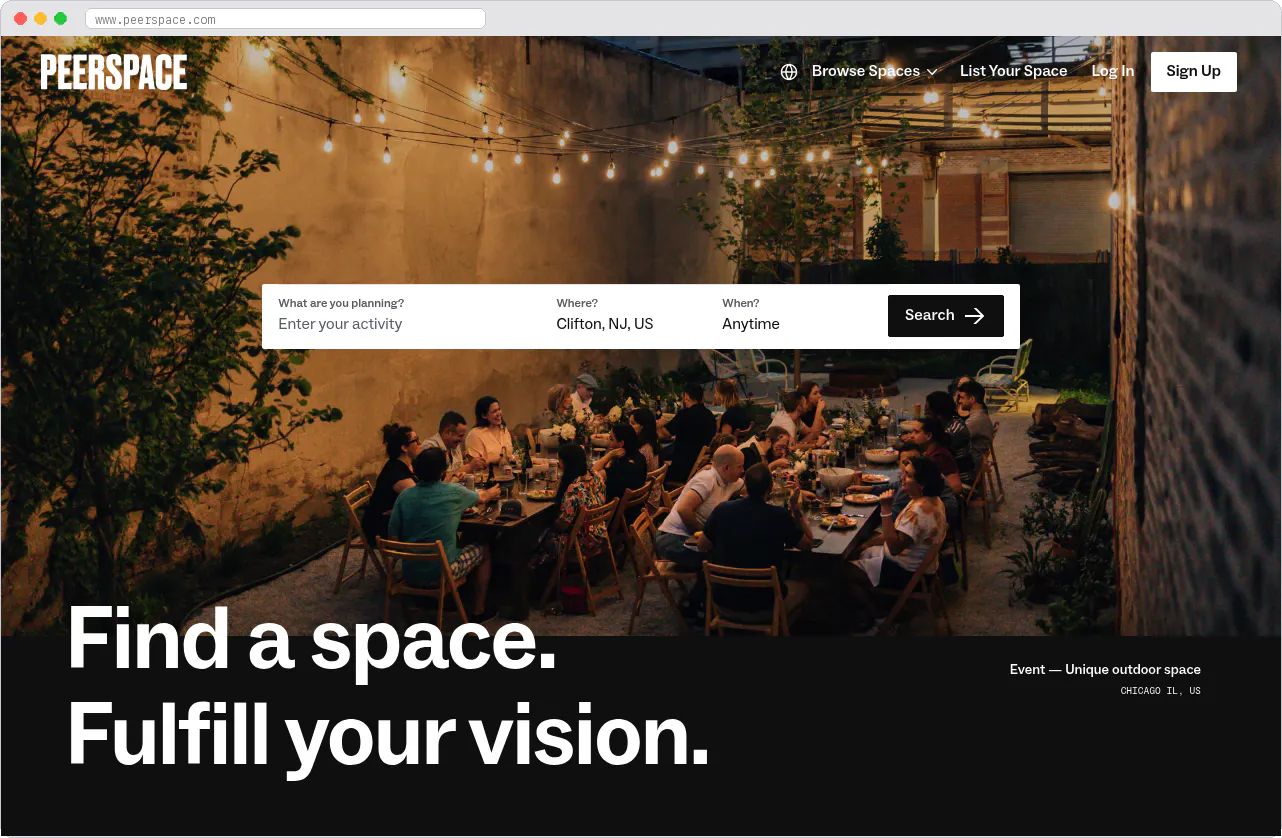
Peerspace leads the market with the broadest selection of unique venues. Founded by Matt Bendett and Rony Chammas, Peerspace started by focusing on creative professionals needing distinctive spaces for photo shoots and film productions. The platform has since expanded to serve corporate events, private parties, and meetings across 300+ cities. Peerspace's strength lies in its vast inventory of unusual spaces, from art galleries to rooftop gardens, that traditional venues can't match. Their instant booking system and professional photography program help venue owners maximize bookings.
Splacer positions itself as a premium platform for creative and corporate events. Founded in Israel and now based in New York, Splacer emphasizes design-forward venues and has expanded internationally more aggressively than competitors. They focus on larger events and higher-value bookings, with stronger vetting processes for both venues and events. Splacer's approach targets corporate clients willing to pay premium prices for distinctive spaces.
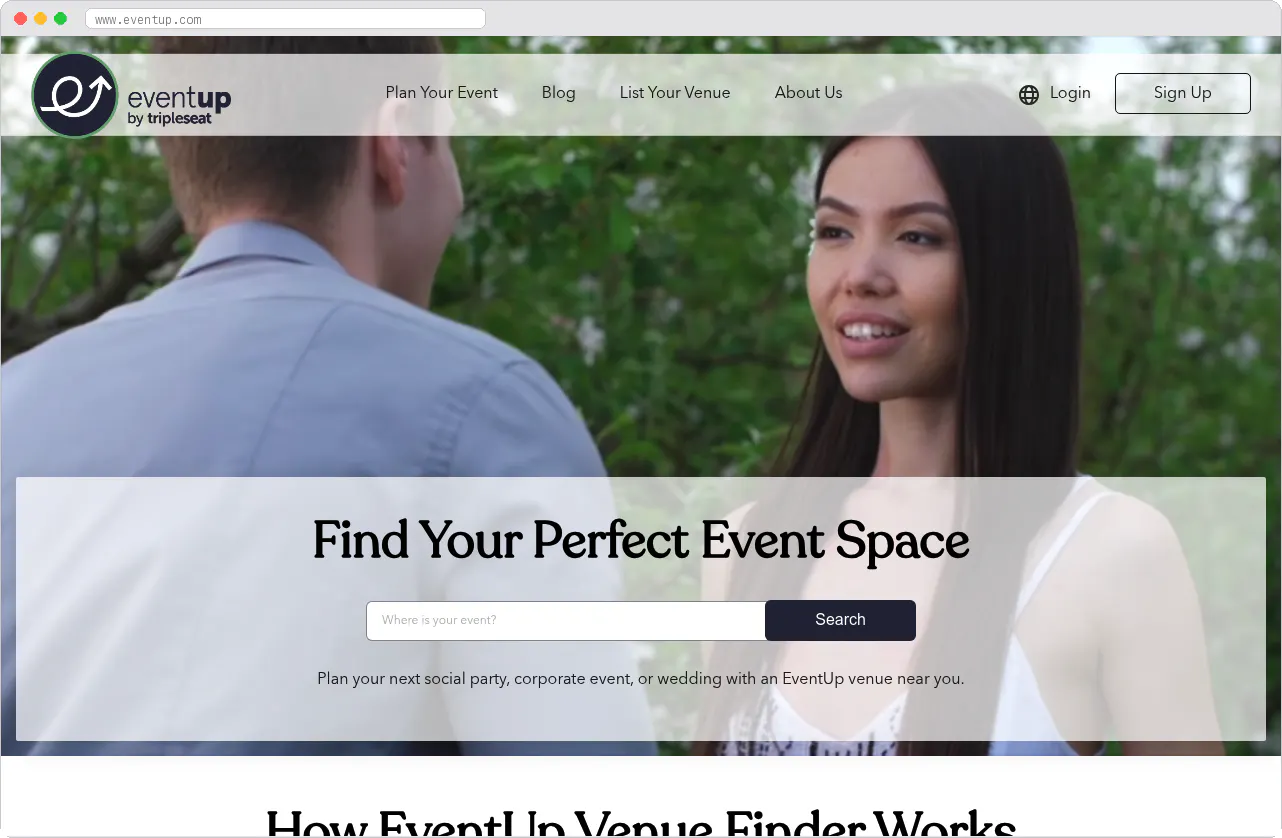
Eventup operates more like a traditional venue directory with booking capabilities. While not purely a marketplace, it connects planners with venues through a lead-generation model rather than direct bookings. This approach works well for complex events requiring significant customization and negotiation between planners and venues.
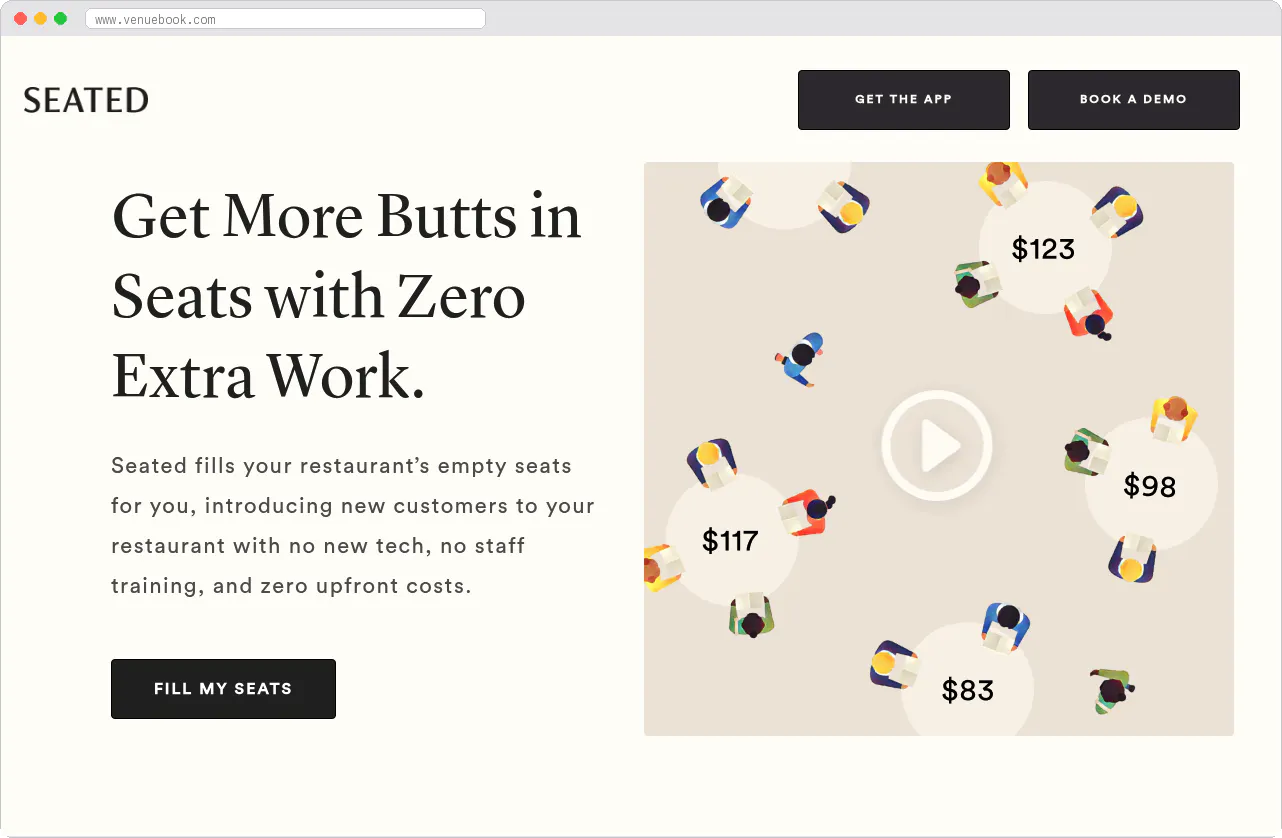
VenueBook focuses specifically on meeting and conference spaces, targeting corporate clients who need traditional business venues rather than unique creative spaces. Their strength lies in detailed venue specifications important to corporate planners, like AV capabilities, catering options, and business amenities.
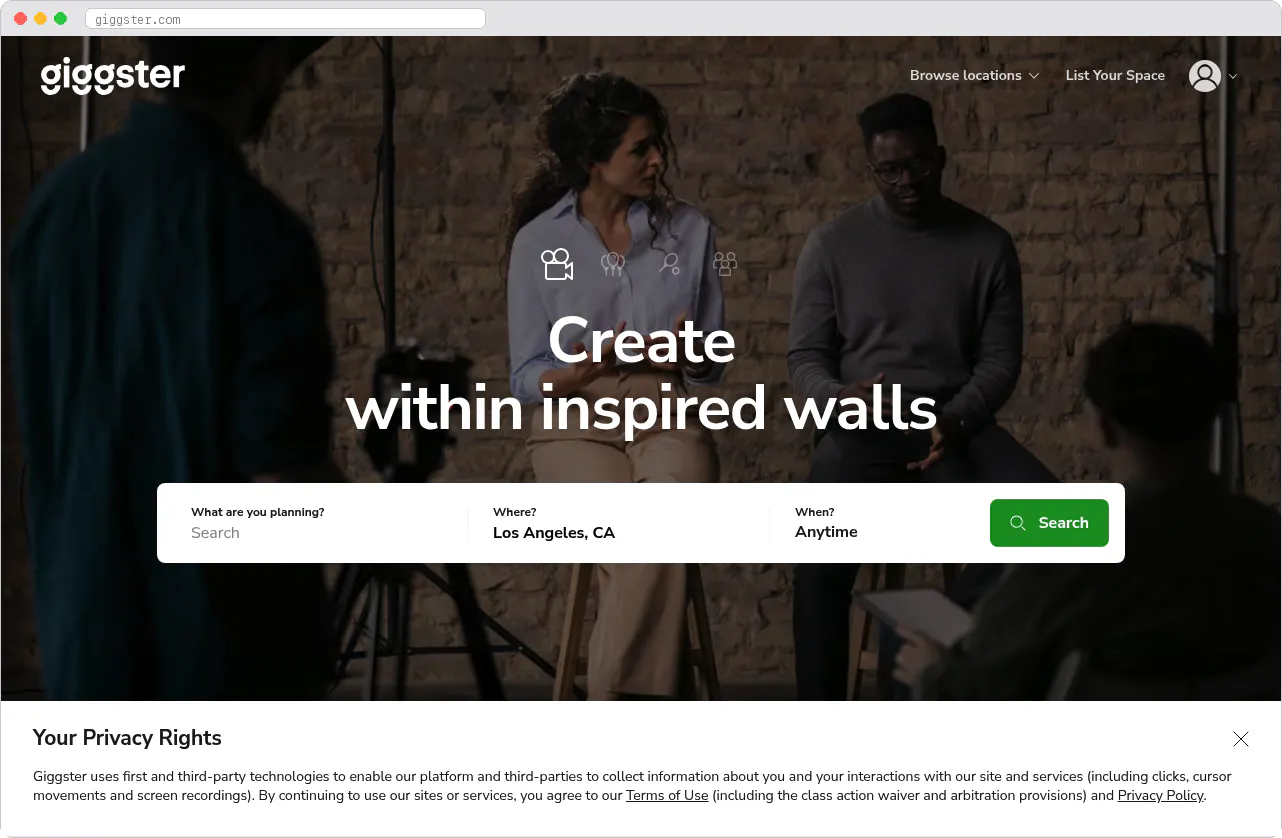
Giggster carved out a niche in film and photo shoot locations before expanding to events. Their platform emphasizes visual storytelling with high-quality photography and detailed technical specifications important to creative professionals. Giggster's success demonstrates how focusing on a specific use case can create a strong foundation for broader market expansion.
The competitive landscape reveals several positioning strategies. Some platforms compete on inventory breadth, while others focus on specific event types or premium experiences. Geographic focus also varies, with some concentrating on major metropolitan areas while others attempt broader coverage. Understanding these different approaches helps new entrants identify underserved niches or differentiation opportunities.
Essential features for event venue marketplaces
Event venue marketplaces require sophisticated functionality to handle the complexity of venue bookings while maintaining user-friendly experiences for both venue owners and event planners.
Advanced search and filtering capabilities form the foundation of any venue marketplace. Event planners need to search by location with map integration, filter by capacity ranges, specify required amenities like parking or AV equipment, set budget parameters, and check availability for specific dates. The search experience must be fast and intuitive, as planners often browse multiple venues before making decisions. Location-based search requires robust mapping integration with accurate venue positioning and neighborhood information.
Comprehensive venue profiles provide the detailed information planners need to make booking decisions. Each listing should include high-quality photos showcasing the space from multiple angles, detailed descriptions highlighting unique features, comprehensive amenity lists, capacity information for different event types, pricing structures with any additional fees, and availability calendars showing real-time booking status. Floor plans and 360-degree virtual tours can significantly improve conversion rates by giving planners better spatial understanding.
Booking management systems handle the complex workflows of venue reservations. This includes availability calendar management that prevents double bookings, inquiry and approval workflows for venues requiring owner confirmation, instant booking capabilities for pre-approved requests, automated confirmation and reminder emails, and integration with external calendar systems. The booking system must accommodate different pricing models, from hourly rates to daily packages with setup and breakdown time.
Communication tools facilitate coordination between venue owners and event planners. Built-in messaging systems allow secure communication within the platform, file sharing capabilities enable document exchange like contracts or floor plans, notification systems keep both parties informed of booking status changes, and integration with email systems ensures important communications aren't missed. Many successful platforms also offer phone support for high-value bookings or complex events.
Payment processing and financial management requires sophisticated systems given the high transaction values typical in venue bookings. Secure payment processing with PCI compliance handles credit card transactions safely, escrow systems hold funds until events complete successfully, automated commission calculation and distribution manages platform revenue, invoicing and receipt generation provides necessary documentation, and multi-currency support enables international bookings. Split payment functionality allows event planners to handle deposits and final payments separately.
Review and rating systems build trust between marketplace participants. Two-way review systems where both venue owners and planners rate each other create accountability, verified reviews ensure authenticity, response systems allow venue owners to address feedback, and aggregate scoring helps users quickly assess venue quality. Review systems must balance transparency with fairness, preventing unfair negative reviews while maintaining honest feedback.
Trust and safety features address the inherent risks in high-value venue transactions. Identity verification systems confirm user authenticity, insurance verification ensures venues carry appropriate coverage, damage deposit handling protects venue owners from property damage, dispute resolution processes manage conflicts between parties, and fraud prevention systems detect suspicious activity. Background checks for venue owners and event planners may be necessary for premium platforms.
Mobile optimization ensures usability across devices, as many event planners research venues on mobile devices. Responsive design adapts to different screen sizes, mobile-specific features like one-touch calling to venues, location services for finding nearby venues, and mobile payment processing accommodate on-the-go booking behavior.
Analytics and reporting tools help venue owners optimize their listings and platform operators understand marketplace dynamics. Venue owners need booking analytics, revenue reporting, competitor pricing insights, and performance metrics for their listings. Platform operators require transaction volume tracking, user behavior analytics, revenue reporting, and market trend analysis.
Development approaches and timeline considerations
Building an event venue marketplace involves choosing between different development approaches based on technical skills, budget constraints, and time-to-market priorities.
Custom development from scratch offers maximum flexibility but requires significant investment. A typical custom-built venue marketplace takes 6-12 months to develop and costs $100,000-$500,000 depending on feature complexity and development team location. This approach makes sense for well-funded ventures with specific technical requirements that existing solutions can't accommodate. Custom development allows complete control over user experience, proprietary features that create competitive advantages, and unlimited scalability potential.
However, custom development involves substantial ongoing costs beyond initial building. Hosting infrastructure for a venue marketplace with high-resolution images and video content requires robust servers and CDN services. Security maintenance becomes critical given the financial transaction processing and personal data storage. Regular updates and feature additions require dedicated development resources. Customer support systems need integration with the platform's technical architecture.
No-code marketplace builders like Sharetribe enable much faster launch timelines while providing essential venue marketplace functionality. With Sharetribe, you can launch a functional venue marketplace in 1-2 weeks rather than months. The platform includes built-in booking management with availability calendars, location-based search with map integration, secure payment processing through Stripe Connect, user profiles and messaging systems, review and rating functionality, and mobile-responsive design.
Sharetribe's approach particularly suits venue marketplaces because it handles the complex technical requirements of booking systems and payment processing while allowing customization as the business grows. You can start with the no-code foundation and add custom features through Sharetribe's developer platform or Expert Network partners. This iterative approach lets you validate your market and business model before investing heavily in custom development.
WordPress with marketplace plugins represents a middle ground but often lacks the specialized functionality venue marketplaces require. While plugins like WP Property or Events Calendar can provide basic venue listing capabilities, they typically can't handle complex booking workflows, availability management, or commission-based payment processing without extensive customization. The result often requires nearly as much development work as building from scratch while limiting future scalability.
Combination of no-code tools can work for testing marketplace concepts but creates operational complexity. Using Airtable for venue database management, Calendly for booking scheduling, Stripe for payment processing, and Webflow for the website frontend might cost less initially but requires manual coordination between systems. This approach works for validating demand with a small number of venues but becomes unsustainable as the marketplace scales.
The timeline differences between approaches are significant. Custom development requires comprehensive planning phases, extended development cycles, extensive testing periods, and gradual rollout processes. No-code solutions eliminate most of these delays, allowing immediate focus on market validation and user acquisition rather than technical development.
Cost analysis and budget planning
Launching an event venue marketplace involves different cost structures depending on the chosen development approach and growth timeline.
No-code marketplace with Sharetribe offers the most cost-effective path to market. The first year operating costs include Sharetribe subscription fees starting at $99/month for the Pro plan, domain registration around $15 annually, and basic business expenses like email marketing tools. Additional costs might include professional photography for featured venues, graphic design for branding and marketing materials, and legal consultation for terms of service. Total first-year costs typically range from $2,000-$10,000 depending on marketing investment and customization needs.
As the marketplace grows, additional costs emerge. Transaction fees for payment processing typically run 2.9% + $0.30 per transaction through Stripe. Customer support tools like Intercom or Help Scout add $50-200 monthly. Marketing expenses for venue acquisition and planner outreach can range from hundreds to thousands monthly depending on growth goals. Professional services for custom development or design work vary widely based on specific requirements.
Custom development requires substantially higher upfront investment. Initial development costs range from $100,000-$500,000 depending on feature complexity and team location. Ongoing costs include hosting infrastructure ($500-5000+ monthly for robust systems), development team salaries or contractor fees for maintenance and updates, customer support staff, marketing and user acquisition budgets, and legal compliance costs for payment processing and data privacy regulations.
The hidden costs of custom development often exceed initial estimates. Security audits and compliance maintenance can cost $10,000-50,000 annually. Mobile app development adds $50,000-200,000 to project costs. Integration with third-party services like payment processors, mapping APIs, and communication tools requires ongoing subscription and maintenance fees.
Return on investment calculations help justify marketplace development costs. Event venue bookings typically range from $500-10,000 per transaction, with platform commissions of 5-15%. A marketplace processing 100 bookings monthly with an average transaction value of $2,000 and 10% commission generates $20,000 monthly revenue. Subtracting operational costs, a successful venue marketplace can achieve profitability within 12-18 months using no-code solutions or 24-36 months with custom development.
Market size considerations affect investment decisions. Major metropolitan areas might support higher marketing investments and custom development given larger potential customer bases. Smaller markets might require leaner approaches focusing on operational efficiency over feature richness.
Building marketplace liquidity in the venue space
Event venue marketplaces face the classic chicken-and-egg problem: venues won't join without event demand, and planners won't use platforms without venue inventory. Successful venue marketplace launches typically focus on supply-side acquisition first, building an attractive venue inventory before major marketing to event planners.
Venue owner acquisition requires understanding what motivates property owners to list their spaces. Many venue owners struggle with inconsistent booking rates and high customer acquisition costs through traditional marketing methods. Marketplaces offer access to new customer segments, automated booking management, and additional revenue from underutilized spaces. Successful acquisition strategies include direct outreach to existing event venues, partnerships with property management companies, and referral programs offering financial incentives for successful venue additions.
Local market knowledge becomes crucial for venue acquisition. Different cities have different venue supply characteristics and event planning cultures. San Francisco's startup ecosystem creates demand for creative corporate spaces, while Nashville's music industry needs performance and recording venues. Miami's tourism economy requires different venue types than Detroit's automotive corporate sector. Understanding these local dynamics helps prioritize venue acquisition efforts and craft targeted messaging.
Quality over quantity matters more in venue marketplaces than many other marketplace types. A small selection of high-quality, well-photographed venues with complete information performs better than a large inventory of mediocre listings. This means investing in venue onboarding processes that ensure professional photography, complete amenity information, accurate pricing, and responsive venue owner behavior. Some platforms provide professional photography services to ensure listing quality meets standards.
Event planner acquisition strategies vary based on target market segments. Corporate event planners respond to different messaging than wedding planners or creative professionals. B2B marketing through LinkedIn, industry publications, and event planning associations works well for corporate segments. Social media marketing and influencer partnerships can reach private party planners. Creative professionals often discover venues through word-of-mouth and industry networks.
Geographic expansion in venue marketplaces requires careful market selection and resource allocation. Starting with one metropolitan area allows focused venue acquisition and market education before expanding to new cities. Each new market requires local venue outreach, market-specific marketing strategies, and often different venue types and pricing models. Successful platforms often expand to markets where they have personal connections or existing venue relationships rather than purely population-based expansion strategies.
Operational excellence becomes increasingly important as marketplaces scale. Venue owners expect quick response times to booking inquiries, transparent payment processing, and effective customer support. Event planners need reliable booking confirmations, clear communication channels, and resolution processes for issues that arise. Building operational systems that maintain service quality while scaling transaction volume requires significant attention to process design and technology systems.
Regulatory and insurance considerations
Event venue marketplaces operate in a complex regulatory environment involving property liability, business licensing, tax obligations, and insurance requirements that vary significantly by jurisdiction.
Liability and insurance requirements create the most significant regulatory challenges. Most venues require general liability insurance, and many require additional event-specific coverage. Platforms must determine whether they facilitate insurance or require users to obtain independent coverage. Some successful marketplaces partner with insurance providers to offer integrated coverage options, while others require proof of insurance before allowing bookings. The liability question of platform responsibility for venue safety or event incidents remains legally complex and varies by jurisdiction.
Business licensing and tax obligations vary dramatically between municipalities. Some cities require event planners to obtain permits for certain event types regardless of venue. Others regulate short-term venue rentals similar to short-term housing rentals. Sales tax collection and remittance responsibilities may fall on venues, event planners, or marketplace platforms depending on local regulations. Platforms must build systems to handle these varying requirements or restrict operations to jurisdictions with clearer regulatory frameworks.
Zoning and permit compliance affects which properties can legally host certain event types. Residential properties may have restrictions on commercial events, while commercial properties might require special permits for after-hours events or alcohol service. Platforms must decide whether to verify zoning compliance or place responsibility on venue owners. Some markets require event permits regardless of venue type, creating additional compliance burdens for users.
Data privacy and security regulations apply to all marketplace platforms collecting personal and payment information. GDPR compliance for European users, CCPA compliance in California, and other regional privacy laws require specific data handling processes, user consent mechanisms, and deletion procedures. Payment processing regulations like PCI DSS compliance add additional security requirements for handling financial transactions.
Navigating these regulatory requirements often requires legal consultation and ongoing compliance monitoring. Successful platforms typically start with clear terms of service that allocate responsibility between the platform, venues, and event planners, then build processes to support compliance rather than guarantee it. This approach protects the platform while providing guidance to users on their obligations.
Success factors and common pitfalls
Event venue marketplaces succeed or fail based on their ability to create value for both venue owners and event planners while building operational systems that scale efficiently.
Trust building emerges as the most critical success factor given the high-value, high-stakes nature of event bookings. Unlike product marketplaces where return policies can address issues, event venues can't be "returned" if they don't meet expectations. Successful platforms invest heavily in venue verification processes, detailed listing requirements, professional photography standards, and responsive customer support. Review systems must balance transparency with fairness, as negative reviews can significantly impact venue bookings.
Market education requires significant investment in many geographic markets where venue owners and event planners aren't familiar with online booking platforms. Traditional venue booking relies on personal relationships and referrals, making it challenging to convince users to try digital alternatives. Successful platforms often partner with local event planning organizations, provide educational content about online booking benefits, and offer incentives for early adopters.
Pricing strategy complexity creates ongoing challenges as venue pricing varies dramatically based on event type, duration, season, and specific requirements. Unlike hotel bookings with standardized nightly rates, event venues might charge differently for corporate meetings versus wedding receptions in the same space. Successful platforms provide flexible pricing tools while maintaining search and comparison functionality that helps planners understand value propositions.
Seasonal demand fluctuations affect both venue owner satisfaction and platform revenue. Wedding venues see peak demand in spring and summer, while corporate venues have strong weekday demand but weaker weekends. Platforms must help venue owners optimize for these patterns while maintaining year-round engagement. Some successful platforms diversify across venue types and event categories to smooth seasonal variations.
Common pitfalls include underestimating the importance of venue quality over quantity, inadequate investment in customer support systems, insufficient focus on mobile experience optimization, and premature geographic expansion before achieving market density. Many failed venue marketplaces launched with impressive venue counts but poor listing quality, leading to disappointed event planners and negative word-of-mouth that destroyed marketplace credibility.
Technology maintenance becomes increasingly expensive as marketplaces scale. High-resolution venue photos and videos require substantial storage and bandwidth. Real-time availability systems must handle complex booking workflows without conflicts. Payment processing systems need robust security and compliance maintenance. Many platforms underestimate these ongoing technical costs and find themselves struggling to maintain service quality as they grow.
Next steps for launching your venue marketplace
Building a successful event venue marketplace requires balancing speed to market with long-term scalability planning. The most successful approach typically involves starting with a focused geographic market and venue type, then expanding systematically based on market response and operational learning.
Begin by validating your specific market opportunity through direct conversations with both venue owners and event planners in your target area. Understanding their current pain points and willingness to try digital solutions helps refine your value proposition and feature priorities. This research phase should take 2-4 weeks and directly inform your platform development decisions.
Choose your development approach based on your technical skills, budget, and time-to-market priorities. Sharetribe offers the fastest path to launch with all essential venue marketplace functionality included, allowing you to focus on market development rather than technical development. The platform handles complex booking workflows, payment processing, and user management while providing customization options as your business grows.
Plan your launch strategy around venue acquisition first, focusing on 20-50 high-quality venues in your initial market before significant event planner marketing. This supply-first approach ensures planners find attractive options when they discover your platform, creating positive first impressions that drive word-of-mouth growth.
Develop operational processes for venue onboarding, customer support, and quality control before launch rather than trying to build them reactively. These processes become much harder to implement after users develop expectations around service levels. Successful platforms often start with higher-touch approaches that don't scale but provide learning about user needs and efficient process design.
Monitor key marketplace metrics from launch day, including venue inquiry rates, booking conversion rates, user retention patterns, and transaction values. These metrics guide product development priorities and marketing optimization much more effectively than vanity metrics like user registrations or page views.
The venue marketplace opportunity continues growing as more property owners recognize unused space potential and event planners seek alternatives to traditional venue booking processes. Success requires patience for marketplace liquidity development, investment in operational excellence, and continuous focus on creating value for both sides of the marketplace rather than just maximizing transactions.
Frequently asked questions
How much does it cost to build an event venue marketplace?
Costs vary by approach: No-code marketplace platforms cost $99-399 per month, with total first-year costs of $2,000-5,000.
What features do event venue marketplaces need?
Essential features include location-based search with maps, availability calendars, booking management, secure payments with escrow, venue profiles with photos, messaging systems, and two-way reviews.
How do event venue marketplaces make money?
Most platforms charge commission fees of 5-15% on bookings, typically paid by venue owners. Some also charge booking fees to event planners or offer premium listing features for additional revenue.
How long does it take to build a venue marketplace?
Timeline depends on development approach: no-code platforms like Sharetribe launch in 1-2 weeks, while custom development takes 6-12 months before launch.
What are the biggest challenges in venue marketplaces?
Key challenges include building marketplace liquidity (balancing venue supply with event demand), establishing trust between users, handling complex booking workflows, and managing seasonal demand fluctuations.
Who are the main competitors to Peerspace?
Major competitors include Splacer (premium creative spaces), VenueBook (corporate meeting venues), Eventup (venue directory with bookings), and Giggster (film locations expanding to events).
Start your 14-day free trial
Create a marketplace today!
- Launch quickly, without coding
- Extend infinitely
- Scale to any size
No credit card required