How to build a website like Mindbody
Mindbody transformed wellness business management by pairing fitness studios, spas, and salons with customers through a thorough booking and management platform. Learn how their marketplace model works and how to build a similar wellness service marketplace.
Published: Feb 28, 2026
Last updated: Mar 19, 2026
Mindbody upended the wellness industry by creating a platform that links fitness studios, spas, salons, and wellness practitioners with customers seeking health and beauty services. Founded in 2001 by Rick Stollmeyer and Blake Beltram in San Luis Obispo, California, Mindbody has grown into a publicly traded company serving tens of thousands of businesses worldwide and facilitating millions of bookings annually.
What started as a simple scheduling software for yoga studios has evolved into a dominant marketplace that processes billions of dollars in transactions each year. Mindbody's success demonstrates how specialized vertical marketplaces can capture entire industries by solving specific operational challenges while connecting supply and demand.
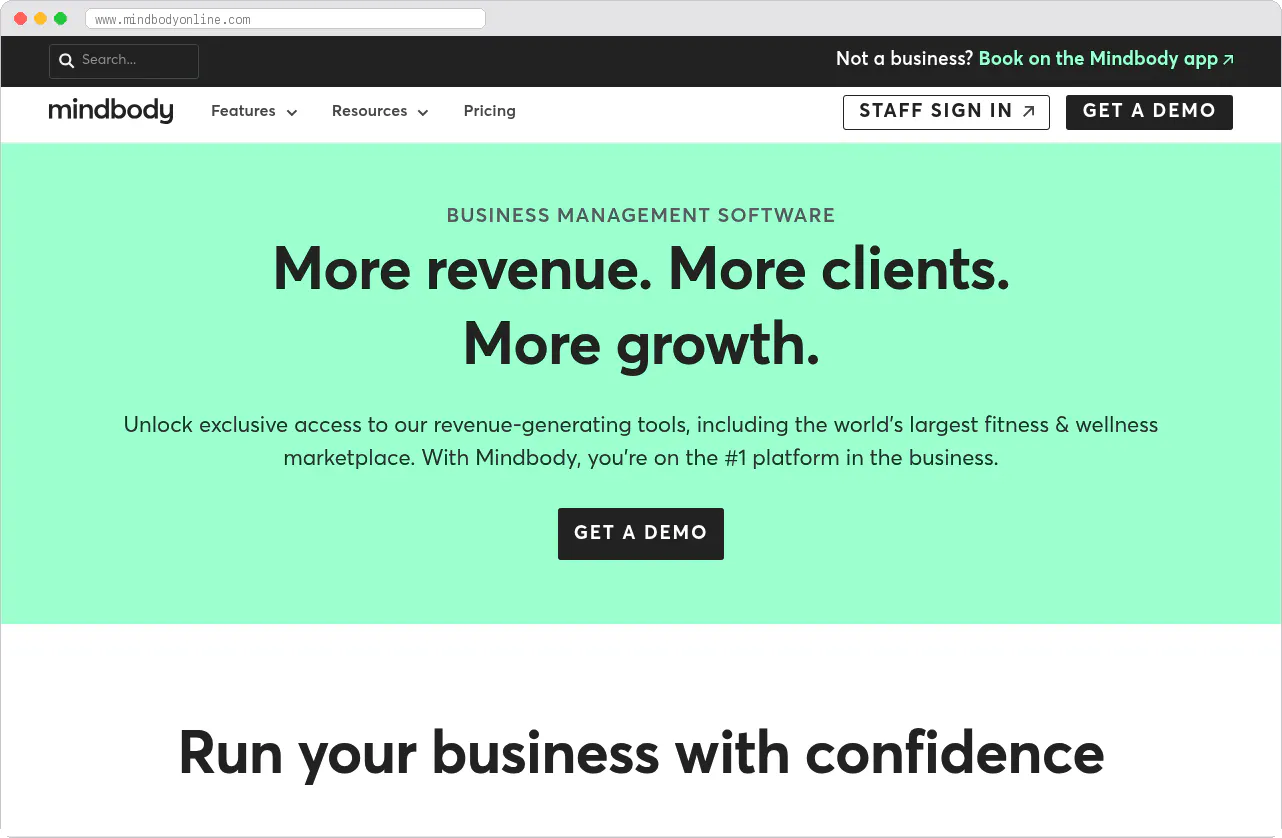
How does Mindbody work?
Mindbody operates as a two-sided marketplace that serves both wellness businesses (supply) and consumers seeking wellness services (demand). The platform combines business management software with consumer-facing booking tools, creating a complete ecosystem for the wellness industry.
On the business side, Mindbody provides studios, spas, and salons with tools to manage their operations: class scheduling, staff management, payment processing, customer relationship management, inventory tracking, and marketing automation. These businesses pay monthly subscription fees for access to the software platform.
On the consumer side, Mindbody offers a discovery and booking platform where users can find and book fitness classes, spa treatments, salon appointments, and wellness services in their area. The consumer app and website allow users to search by location, service type, price, and availability, then book and pay for services directly through the platform.
The transaction flow works as follows: a customer discovers a service through Mindbody's consumer platform, books an appointment or class, and pays through the platform. Mindbody processes the payment, takes its commission, and transfers the remainder to the business after the service is completed. The platform also handles cancellations, refunds, and customer communications.
What makes Mindbody unique is its deep integration with business operations. Unlike simple booking platforms, Mindbody becomes the central nervous system for wellness businesses, managing everything from payroll to inventory. This creates strong switching costs and network effects, as businesses become progressively dependent on the platform for daily operations.
The marketplace generates value for both sides: businesses get a complete management solution plus access to new customers, while consumers get a unified way to discover and book wellness services with consistent payment and booking experiences across different providers.
How does Mindbody make money?
Mindbody employs a multi-revenue stream model that combines subscription fees, transaction processing, and additional services. This diversified approach has helped the company build a business that is estimated to generate hundreds of millions in annual revenue (exact figures unavailable since going private in 2019).
The primary revenue source is monthly subscription fees from wellness businesses. These fees range from $129 to $349 per month depending on the plan, with enterprise clients paying considerably more for custom solutions. With over 58,000 active subscribers globally, subscription revenue forms the foundation of Mindbody's business model.
Transaction processing represents another major revenue stream. Mindbody charges processing fees on all payments made through its platform, typically 2.9% plus $0.30 per transaction for credit card payments. Given that the platform processes billions of dollars in transactions annually, these fees contribute substantially to overall revenue.
Mindbody also generates revenue through consumer booking fees. When customers book services through the Mindbody consumer app, they pay a convenience fee that typically ranges from $1 to $3 per booking, depending on the service price. This fee is in addition to the service cost and goes directly to Mindbody.
Additional revenue streams include:
- Marketing services: Mindbody offers paid advertising and promotion services to help businesses reach more customers through the platform
- Equipment and retail sales: The company sells point-of-sale hardware, fitness equipment, and retail products to business customers
- Professional services: Implementation, training, and consulting services for larger enterprise clients
- Third-party integrations: Revenue sharing from partnerships with complementary software providers
The subscription model provides predictable recurring revenue, while transaction-based fees scale with customer success. This combination creates a sustainable business model where Mindbody's revenue grows as its customers' businesses grow.
What makes Mindbody successful?
Mindbody's success stems from several key strategic advantages that have allowed it to dominate the wellness marketplace space and fend off competitors.
Deep vertical integration sets Mindbody apart from generic booking platforms. Rather than building a horizontal solution that works across industries, Mindbody focused specifically on wellness businesses and built features tailored to their unique needs: class capacity management, instructor scheduling, membership tracking, retail inventory, and compliance with health regulations. This specialization makes the platform notably more valuable to wellness businesses than generic alternatives.
Strong network effects create competitive moats. As more businesses join the platform, it becomes more valuable to consumers who can find and book more services in one place. Conversely, as the consumer base grows, businesses benefit from increased visibility and customer acquisition opportunities. This virtuous cycle makes it difficult for competitors to gain traction once Mindbody establishes dominance in a market.
High switching costs lock in business customers. Once a wellness business builds its customer database, class schedules, and operational processes around Mindbody, switching to an alternative becomes extremely costly and disruptive. The platform becomes integral to daily operations, making businesses reluctant to change even if competitors offer lower prices.
First-mover advantage in the wellness technology space allowed Mindbody to establish relationships with businesses before competitors emerged. Starting in 2001, the company had nearly a decade to build market share before serious competition appeared. This early start enabled Mindbody to refine its product and build a full feature set that competitors struggle to match.
International expansion has given Mindbody global scale advantages. The company operates in over 40 countries, allowing it to spread development costs across a larger user base and offer international customers a consistent experience when traveling. This global presence also makes it harder for regional competitors to challenge Mindbody's dominance.
Continuous product innovation keeps the platform ahead of competitors. Mindbody consistently adds new features like AI-powered marketing tools, advanced analytics, mobile payment solutions, and integration with popular fitness tracking apps. This innovation pace requires major R&D investment that smaller competitors cannot match.
The combination of these factors has created a defensible market position that allows Mindbody to maintain pricing power and customer loyalty even as new competitors enter the market.
Key features of a Mindbody-like marketplace
Building a successful wellness service marketplace requires implementing features that serve both business operators and end consumers while facilitating smooth transactions between them.
Business management dashboard forms the core of the platform for service providers. This includes class and appointment scheduling with capacity management, staff scheduling and payroll integration, customer relationship management with detailed profiles and booking history, automated marketing tools for email campaigns and promotions, financial reporting and analytics, and inventory management for retail products and supplies.
Consumer booking interface must provide intuitive search and discovery functionality. Users need location-based search with map integration, filtering by service type, price range, availability, and ratings, detailed business profiles with photos, descriptions, and reviews, real-time availability checking, and secure payment processing with stored payment methods for repeat bookings.
Mobile applications are essential since both businesses and consumers frequently access the platform on mobile devices. Business apps need features for managing appointments on the go, checking in customers, processing payments, and communicating with staff. Consumer apps require easy browsing, quick booking, appointment reminders, and loyalty program integration.
Payment processing and financial management capabilities must handle complex wellness industry requirements. This includes membership billing with recurring payments, class packages and credits, gift card functionality, refund and cancellation management, split payments for group bookings, and integration with popular payment methods including digital wallets.
Review and rating system builds trust and helps consumers make informed decisions. Two-way reviews allow businesses to rate customers for no-shows or problematic behavior, while customers rate service quality, cleanliness, and overall experience. Verified reviews from confirmed bookings increase credibility.
Communication tools facilitate coordination between businesses and customers. Automated reminders for appointments via email and SMS, two-way messaging for questions or special requests, waitlist management for popular classes, and emergency notifications for schedule changes or closures.
Analytics and reporting help businesses understand their performance and optimize operations. Key metrics include booking conversion rates, customer lifetime value, popular services and time slots, staff utilization rates, and revenue trends. Advanced analytics might include predictive modeling for demand forecasting.
Integration capabilities allow the platform to connect with other tools businesses use. Common integrations include accounting software like QuickBooks, email marketing platforms, social media scheduling tools, fitness tracking apps, and point-of-sale systems for retail sales.
Multi-location support enables franchise and chain businesses to manage multiple locations through a single dashboard while maintaining location-specific scheduling, pricing, and staff management.
Compliance and security features address industry-specific requirements such as health information privacy, liability waivers, age restrictions for certain services, and local business licensing requirements.
Competitors and alternatives
The wellness service marketplace space includes several substantial competitors, each with different approaches and target markets.
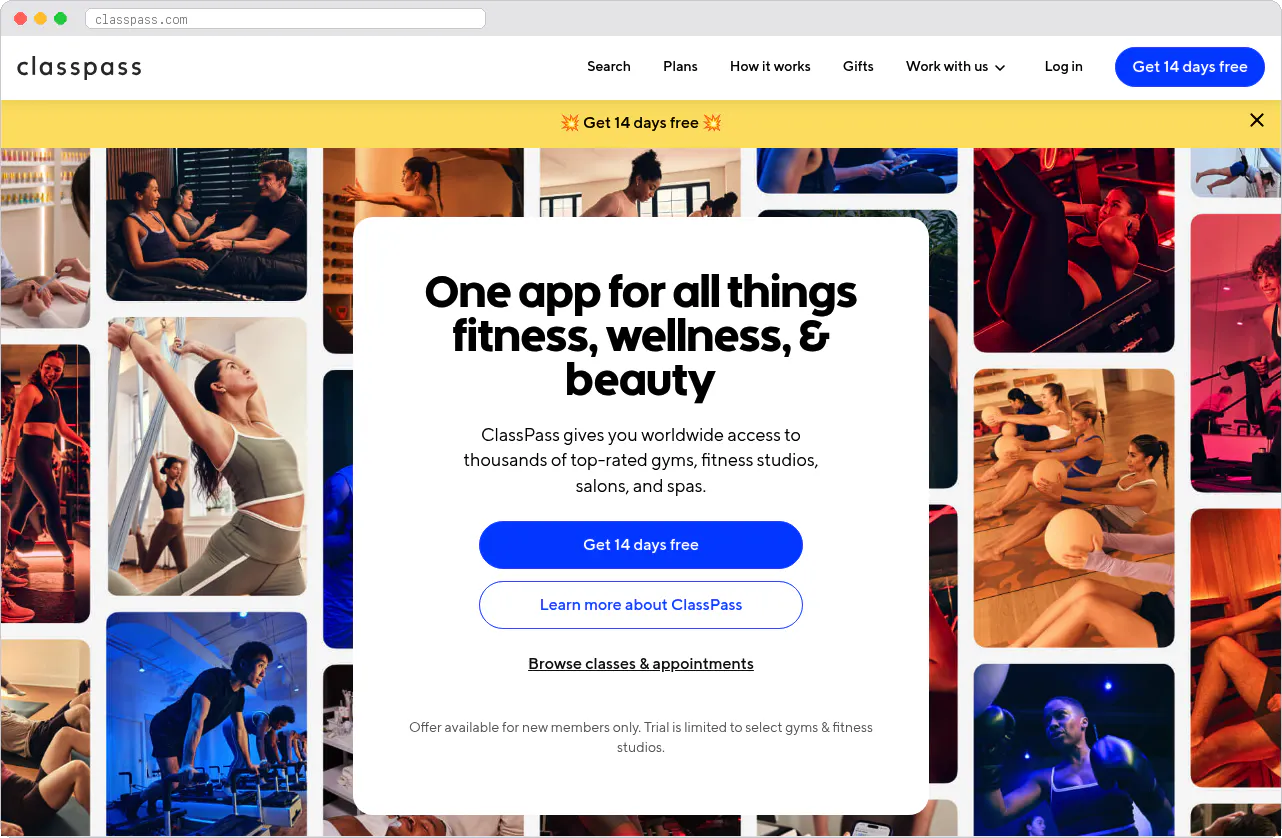
ClassPass represents the most direct consumer-facing competition to Mindbody's marketplace. Founded in 2013, ClassPass operates a subscription model where consumers pay a monthly fee for credits to book fitness classes across participating studios. Unlike Mindbody's individual booking model, ClassPass focuses on variety and discovery, allowing users to try different studios and workout types. The platform has over 30,000 partner locations globally and has raised notable venture funding to fuel expansion. ClassPass differentiates itself through its credit-based subscription model and strong mobile-first user experience, but it primarily serves fitness rather than the broader wellness market that Mindbody addresses.
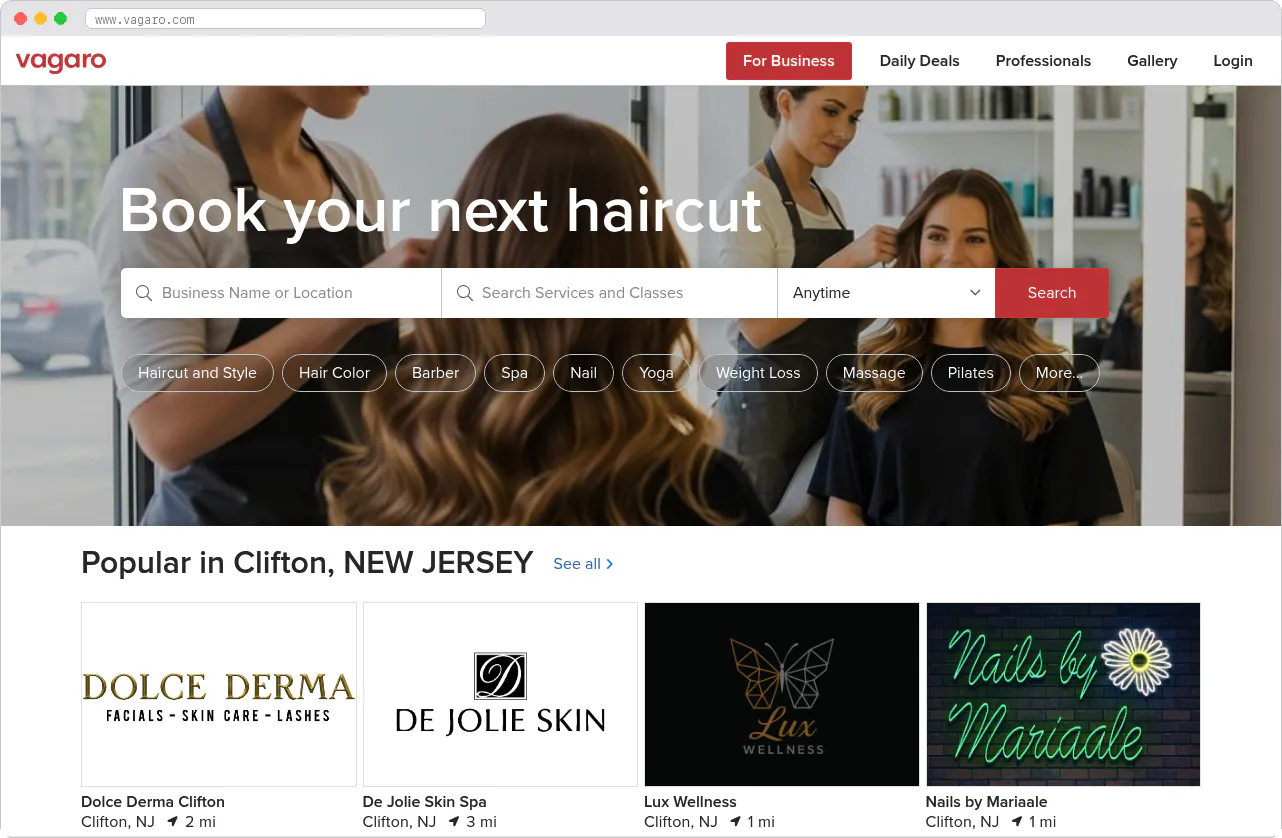
Vagaro targets the beauty and wellness industry with a focus on salons, spas, and barbershops. Founded in 2009, Vagaro offers business management software combined with consumer booking capabilities, similar to Mindbody's model. However, Vagaro emphasizes the beauty industry specifically, with features like service menus for hair and nail services, product inventory management, and stylist commission tracking. The platform serves over 50,000 businesses and offers more competitive pricing than Mindbody, with plans starting around $25 per month. Vagaro's strength lies in its industry-specific features for beauty businesses, but it lacks Mindbody's breadth across the entire wellness sector.
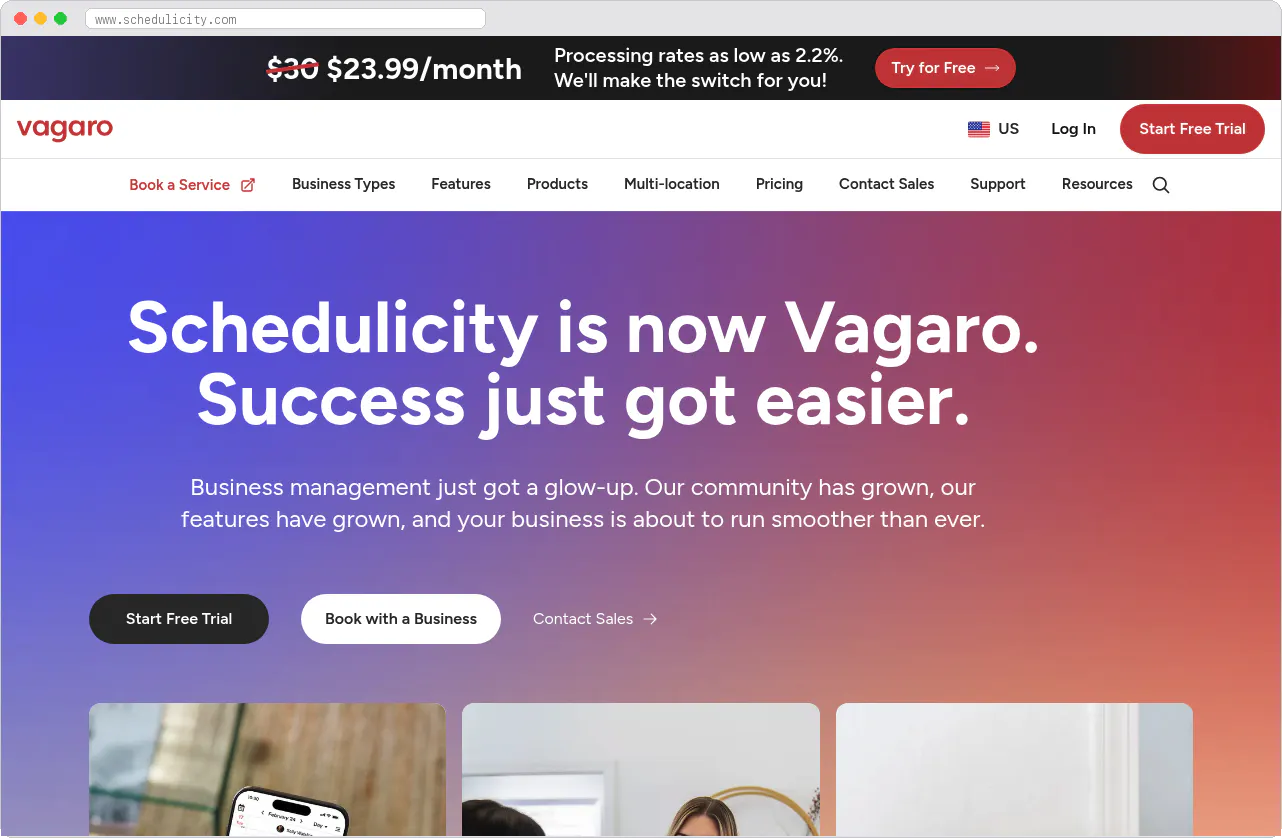
Schedulicity (now part of MINDBODY after acquisition) originally competed as a simpler, more affordable alternative focused on appointment scheduling. Before its acquisition, Schedulicity offered basic booking functionality for service businesses at lower price points than Mindbody's complete platform. The platform emphasized ease of use and quick setup, appealing to smaller businesses that found Mindbody too complex or expensive.
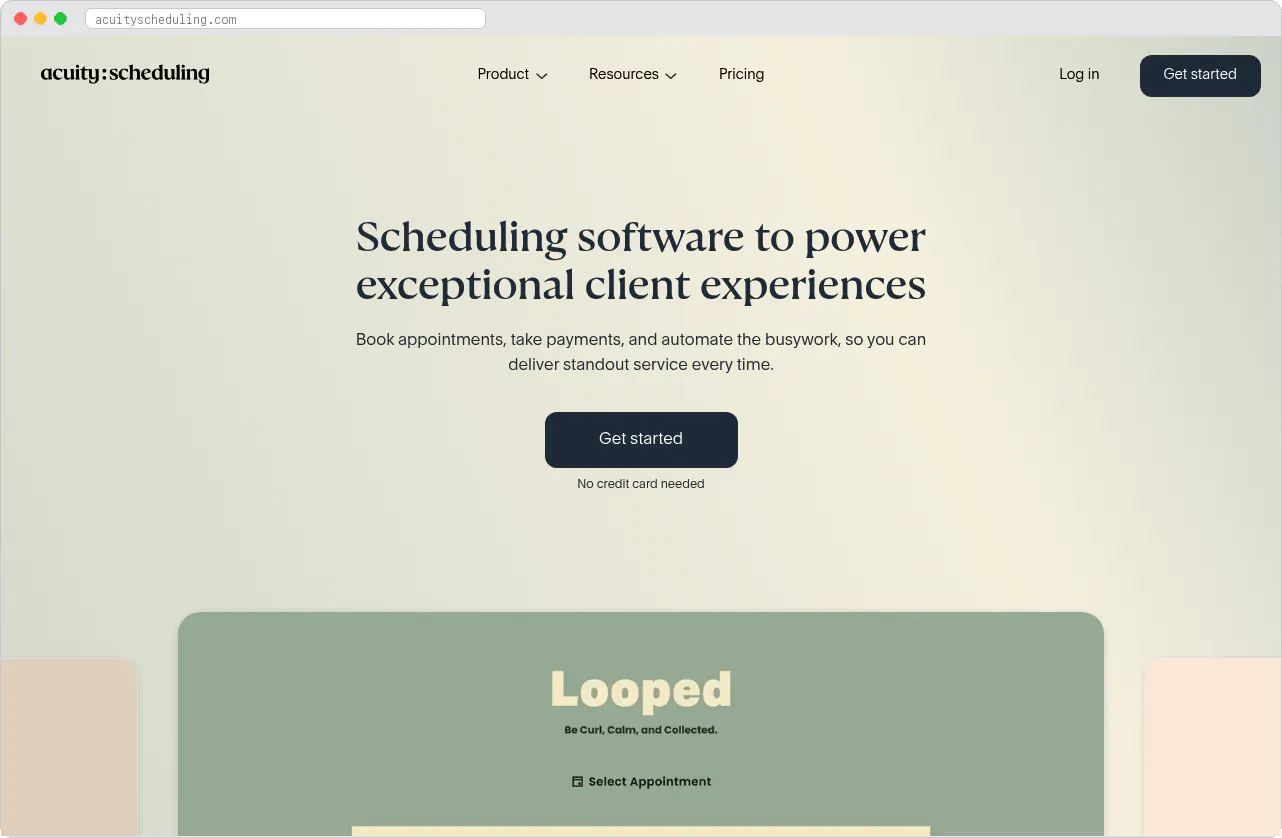
Acuity Scheduling (acquired by Squarespace) serves a broader market of appointment-based businesses beyond just wellness. The platform offers scheduling tools that integrate with websites and other business tools, targeting solo practitioners and small businesses across various service industries. Acuity differentiates itself through simplicity and integration capabilities, but lacks the industry-specific features and marketplace components that make Mindbody valuable to wellness businesses.
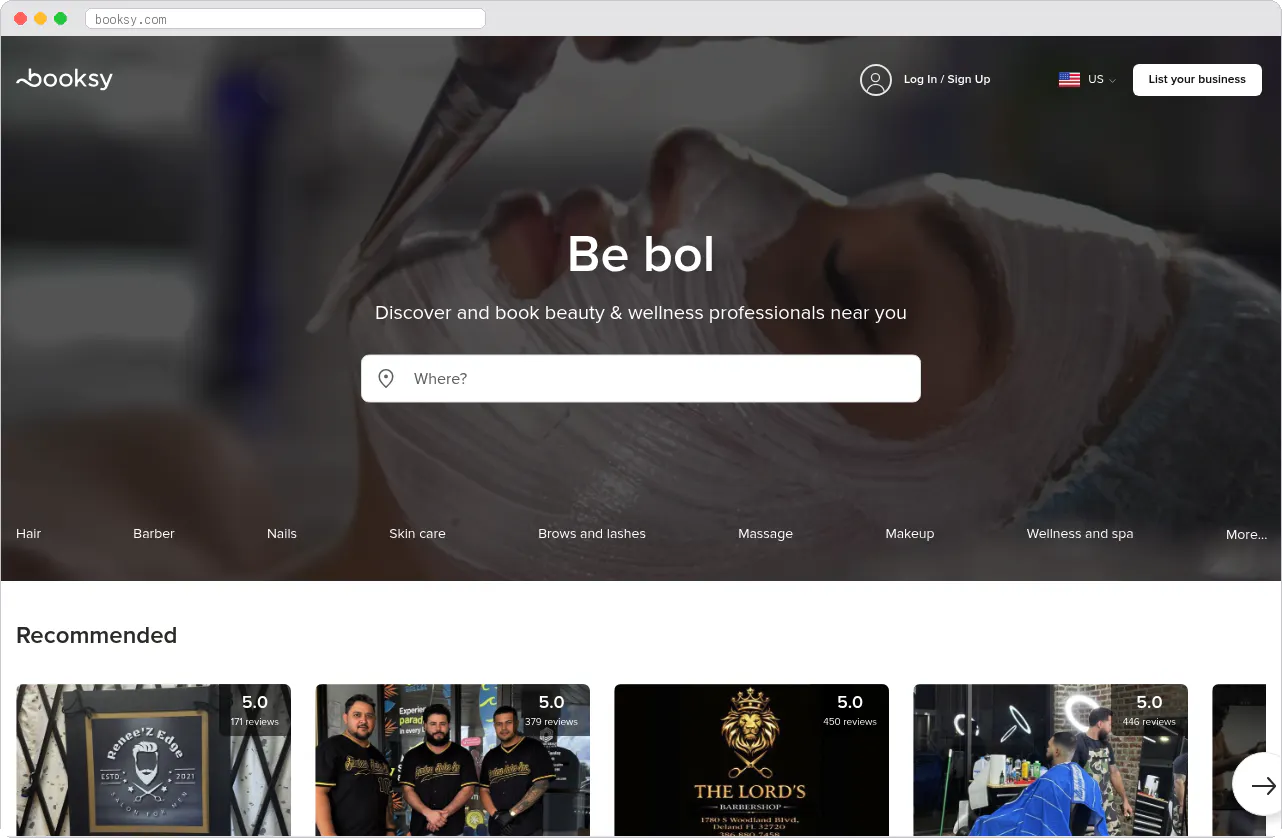
Booksy focuses specifically on beauty and personal care services, offering both business management tools and a consumer marketplace. The platform has gained traction in the barbershop and salon market through aggressive marketing and a mobile-first approach. Booksy's strength lies in its user experience and marketing to younger demographics, but it serves a narrower market than Mindbody's thorough wellness focus.
Each competitor has found success by focusing on specific niches or offering different value propositions, but none has achieved Mindbody's scale and detailed feature set across the entire wellness industry. The competitive landscape shows that while alternatives exist, building a truly complete Mindbody alternative requires notable investment and deep industry expertise.
How to build a marketplace like Mindbody
Creating a successful wellness service marketplace requires careful planning, substantial resources, and deep understanding of the industry's unique challenges. The process involves multiple phases, each with specific considerations and potential pitfalls.
Market research and niche identification should be your starting point. Mindbody succeeded by initially focusing on yoga studios before expanding to the broader wellness market. Identify a specific segment within wellness where existing solutions fall short. This might be mental health services, alternative therapy practices, outdoor fitness activities, or specialized wellness services like acupuncture and massage therapy. Conduct interviews with business owners in your target niche to understand their operational challenges, current software solutions, and unmet needs.
Business model validation comes next. Test your assumptions about pricing, commission structures, and value propositions before building anything. Create landing pages describing your proposed solution and gauge interest from potential business customers. Consider starting with a subscription-only model before adding marketplace features, as this provides more predictable revenue and is easier to implement initially.
Technical architecture planning requires careful consideration of scalability and security requirements. A wellness marketplace handles sensitive customer data, payment information, and must comply with various regulations. Plan for real-time scheduling synchronization, high availability during peak booking times, and reliable data backup and security measures. Consider using established payment processors that handle compliance requirements rather than building payment processing from scratch.
MVP development should focus on core scheduling and booking functionality for a single wellness category. Start with core features: business profile creation, service listing, availability calendar management, basic booking flow, and simple payment processing. Avoid complex features like marketing automation, advanced analytics, or multi-location support in the initial version. The goal is to validate that businesses and consumers will use your platform for basic transactions.
Initial customer acquisition requires a deliberate supply-first strategy. Wellness businesses are more likely to try new software than consumers are to use incomplete marketplaces. Focus on onboarding 20-50 businesses in your target market before heavily promoting the consumer side. Offer free or discounted subscriptions during the beta period in exchange for feedback and testimonials. Consider providing white-glove onboarding support to ensure early customers have successful experiences.
Consumer marketplace launch should happen only after you have sufficient supply to provide value to customers. A marketplace with few options creates poor user experiences and damages your brand. Start with targeted marketing in your initial geographic area rather than broad consumer advertising. Focus on quality over quantity in early consumer acquisition.
Feature expansion and optimization based on user feedback and usage data. Monitor which features businesses use most, where consumers drop off in the booking process, and what support requests reveal about missing functionality. Prioritize features that increase transaction volume and customer retention over nice-to-have additions.
Geographic and vertical expansion should be methodical and data-driven. Mindbody's success came from deep market penetration before expanding to new areas. Establish strong market presence in one city or region before moving to new markets. When expanding to new wellness verticals, ensure you understand industry-specific requirements and regulations.
Common pitfalls to avoid include underestimating the complexity of scheduling systems, trying to serve too many market segments simultaneously, neglecting mobile user experience, inadequate customer support for business users, insufficient payment security and compliance measures, and scaling marketing spend before achieving product-market fit.
The key to success lies in solving real operational problems for wellness businesses while creating genuine value for consumers. This requires ongoing investment in product development, customer success, and market education that many startups underestimate.
Cost and development considerations
Building a marketplace like Mindbody requires large investment in technology, compliance, and ongoing operations. The costs vary notably depending on your development approach and target market scope.
Custom development represents the most expensive but flexible option. Building a full wellness marketplace from scratch typically costs $200,000 to $500,000 for initial development, with ongoing maintenance and feature development requiring $50,000 to $100,000 annually. This includes backend infrastructure, web applications, mobile apps for both iOS and Android, payment processing integration, and basic administrative tools.
The development timeline for custom solutions typically spans 12 to 18 months for a minimum viable platform, with additional time required for testing, compliance verification, and market launch preparation. You'll need a development team including backend engineers, frontend developers, mobile app developers, UI/UX designers, and quality assurance specialists.
No-code and low-code platforms offer faster time-to-market at lower initial costs. These platforms cost $99-399 per month in subscription fees, with total first-year costs of $2,000-5,000. Custom design or integration work is additional. Development timelines can be as short as 2 to 6 months for basic marketplace functionality.
However, no-code solutions may lack industry-specific features that wellness businesses require, such as class capacity management, instructor scheduling, or membership billing. Customization options might be limited, and you may face scalability challenges as your user base grows.
Hybrid approaches combine pre-built marketplace platforms with custom development for industry-specific features. This typically costs $50,000 to $150,000 initially, with development timelines of 6 to 12 months. This approach allows you to use existing marketplace infrastructure while building wellness-specific functionality.
Ongoing operational costs include hosting and infrastructure ($1,000 to $10,000 monthly depending on scale), payment processing fees (typically 2.9% plus $0.30 per transaction), customer support staffing, compliance and security audits, and continuous feature development.
Regulatory and compliance costs are particularly important in the wellness industry. Budget for legal consultation on health information privacy, liability insurance, payment card industry compliance, and state-specific business licensing requirements. These costs can range from $10,000 to $50,000 annually depending on your market scope.
Marketing and customer acquisition costs should not be underestimated. Expect to spend 30-50% of revenue on marketing during the growth phase. B2B customer acquisition for wellness businesses might cost $500 to $2,000 per customer, while consumer acquisition costs vary widely by market and competition level.
Team and expertise requirements go beyond technical development. You'll need team members who understand the wellness industry, business operations, customer success, and regulatory requirements. Plan for hiring specialized roles like business development representatives familiar with wellness businesses, customer success managers who can train business users, and compliance specialists who understand health and payment regulations.
The total investment to build and operate a Mindbody alternative typically ranges from $300,000 to $1 million in the first year, with break-even potentially achievable within 2-3 years if you successfully acquire and retain customers. Success requires not just building the technology, but also developing deep industry expertise and strong customer relationships that take time and consistent investment to achieve.
Frequently asked questions
What is Mindbody's business model and how does it make money?
Mindbody operates a multi-revenue stream model combining monthly subscription fees ($129-$349/month), transaction processing fees (2.9% + $0.30), and consumer booking fees ($1-$3 per booking). The company is estimated to generate hundreds of millions in annual revenue (exact figures unavailable since going private in 2019) serving 58,000+ wellness businesses globally.
How much does it cost to build a marketplace like Mindbody?
Building from scratch costs $200,000-500,000+ and takes 12-18 months. No-code marketplace platforms ($99-399/month) let you launch the core marketplace model in weeks for under $5,000 in the first year. You won't replicate every feature of a billion-dollar platform, but you can validate whether the business model works in your market.
What are the main competitors to Mindbody?
Key competitors include ClassPass (subscription-based fitness marketplace), Vagaro (beauty-focused platform), Booksy (mobile-first beauty services), and Acuity Scheduling (general appointment booking). Each serves specific niches but none matches Mindbody's detailed wellness industry coverage.
What features are essential for a wellness service marketplace?
Must-have features include business management dashboards with scheduling and CRM, consumer booking interfaces with search and payments, mobile apps for both sides, payment processing with membership billing, review systems, automated communications, analytics, and compliance tools for health industry regulations.
How long does it take to build a Mindbody alternative?
Custom development typically takes 12-18 months for an MVP, no-code solutions 2-6 months, and hybrid approaches 6-12 months. However, achieving market traction and feature parity with established platforms often requires 2-3 years of continuous development and refinement.
Why is Mindbody successful in the wellness marketplace?
Mindbody's success stems from deep vertical integration in wellness, strong network effects between businesses and consumers, high switching costs for business customers, first-mover advantage since 2001, and continuous product innovation. These factors create competitive moats that are difficult for new entrants to overcome.
Start your 14-day free trial
Create a marketplace today!
- Launch quickly, without coding
- Extend infinitely
- Scale to any size
No credit card required