How to build a website like Care.com
Care.com transformed childcare and home services by connecting families with vetted caregivers, generating roughly $676 million in revenue by 2023. This guide shows you how to build a similar care marketplace, from understanding the business model to launching your MVP in weeks.
Published: Mar 15, 2024
Last updated: Mar 19, 2026
Care.com transformed how families find reliable childcare, elder care, and home services by creating the first comprehensive marketplace for care providers. Founded in 2006 by Sheila Lirio Marcelo, the platform now serves over 35 million members globally and generated $676 million in revenue in 2023 before being acquired by IAC.
The platform's success demonstrates the massive opportunity in care marketplaces. Unlike general service platforms, care marketplaces address one of families' most sensitive needs: trusting strangers with their children, elderly parents, or homes. This creates unique challenges around safety, vetting, and building trust that successful platforms must solve.
Building a care marketplace like Care.com requires understanding both the technical requirements and the business dynamics that make care services different from other marketplace categories. This guide walks you through both, showing you how to create a platform that connects care seekers with providers while building the trust and safety features essential for success.
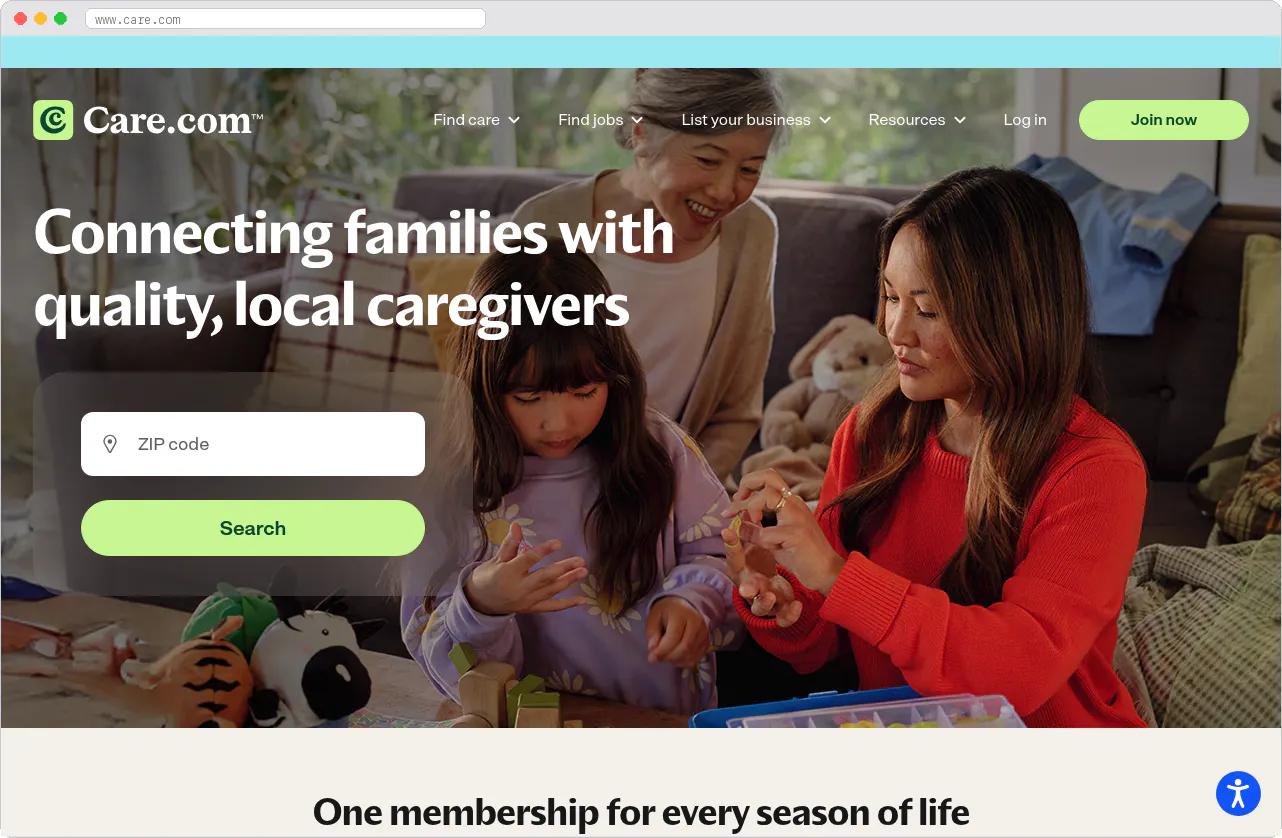
How does Care.com work?
Care.com operates as a subscription-based marketplace that connects families seeking care services with individual caregivers and service providers. The platform covers four main categories: childcare (babysitters, nannies, daycare), senior care (companions, home health aides), pet care (dog walkers, pet sitters), and housekeeping services.
For care seekers, the process starts with creating a detailed profile that outlines their specific needs, schedule, and preferences. Families can search through caregiver profiles, filter by experience level, availability, and rates, and review background check results and references. The platform facilitates initial contact through its messaging system, allowing families to interview potential caregivers before meeting in person.
Caregivers create comprehensive profiles showcasing their experience, certifications, and availability. They can upload photos, describe their approach to care, and set their hourly rates. The platform offers various tools to help providers market themselves, including the ability to purchase premium visibility that places their profiles higher in search results.
What sets Care.com apart from general service marketplaces is its focus on ongoing relationships rather than one-time transactions. Many families hire the same babysitter weekly or find a long-term nanny through the platform. This creates different dynamics around trust-building, scheduling, and payment processing compared to task-based marketplaces.
Care.com's business model relies primarily on subscription fees rather than transaction commissions. Basic membership is free, but premium subscriptions unlock key features like the ability to contact caregivers directly, access detailed background checks, and apply to posted jobs. This model works because care services often involve ongoing relationships where a single subscription can lead to months or years of employment arrangements.
What makes Care.com successful?
Care.com's success stems from solving the fundamental trust problem in care services. When families need someone to watch their children or care for aging parents, they need more than just availability and competitive rates. They need confidence that their caregiver is reliable, trustworthy, and qualified.
The platform addresses this through multiple layers of verification and trust-building features. Background checks, reference verification, and detailed reviews create transparency that helps families make informed decisions. The platform also provides educational resources, safety tips, and interview guides that help both sides navigate the hiring process more effectively.
Another key success factor is Care.com's comprehensive approach to care services. Rather than specializing in just childcare or senior care, the platform serves as a one-stop solution for all household care needs. This creates stronger user retention as families return for different services over time and refer the platform to others facing similar challenges.
The subscription model also contributes to success by aligning Care.com's incentives with positive outcomes for users. Since revenue comes from ongoing subscriptions rather than per-transaction fees, the platform benefits when users successfully find long-term care arrangements. This encourages investment in features that improve match quality and relationship success.
Essential features for a Care.com-like marketplace
Building a successful care marketplace requires specific functionality that addresses the unique challenges of connecting families with care providers. Unlike product marketplaces or general service platforms, care marketplaces must prioritize safety, trust-building, and ongoing relationship management.
Detailed user profiles form the foundation of trust on care platforms. Caregiver profiles need comprehensive sections for experience, certifications, specializations, and availability. Photos, personal statements, and detailed service descriptions help families assess fit before initial contact. Care seeker profiles should capture specific needs, household details, and preferences to enable better matching.
The most critical feature for care marketplaces is robust background checking and verification systems. This typically includes criminal background checks, identity verification, reference checking, and in some cases, professional license verification. The platform needs to present this information clearly while respecting privacy and legal requirements around background check data.
Secure messaging systems enable families and caregivers to communicate safely before sharing personal contact information. This protects both sides' privacy while allowing for the detailed conversations necessary to assess fit for care services. The messaging system should support photo sharing for caregivers to send updates during jobs and allow scheduling coordination.
Review and rating systems in care marketplaces differ from those in other marketplace categories because they typically cover multiple dimensions of service quality. Reviews might assess reliability, communication, interaction with children or elderly clients, and adherence to specific care instructions. Two-way reviews help maintain accountability on both sides.
Advanced search and filtering capabilities are essential because care needs are highly specific. Families need to filter by age groups served, special needs experience, language spoken, availability windows, and proximity. The search algorithm should also support soft matching factors like personality fit and care philosophy.
Scheduling and calendar management tools help coordinate ongoing care relationships. Many care arrangements involve regular weekly schedules or recurring appointments, so the platform should support both one-time bookings and recurring arrangements with automated scheduling features.
Payment processing for care marketplaces presents unique challenges because many arrangements involve ongoing employment relationships rather than simple service transactions. The platform may need to support various payment structures including hourly rates, weekly salaries, and benefits administration. Some platforms also offer payroll services to handle tax withholding and reporting requirements.
Care marketplace competitors and alternatives
The care services market has attracted numerous competitors, each taking different approaches to connecting families with caregivers. Understanding the competitive landscape helps identify opportunities for differentiation and innovation.
Sittercity focuses specifically on childcare services, positioning itself as the specialist alternative to Care.com's broader approach. The platform emphasizes personalized matching and offers more granular filtering for childcare-specific needs like experience with twins, special dietary requirements, or developmental delays. Sittercity's narrower focus allows deeper specialization in child-related safety protocols and caregiver training resources.
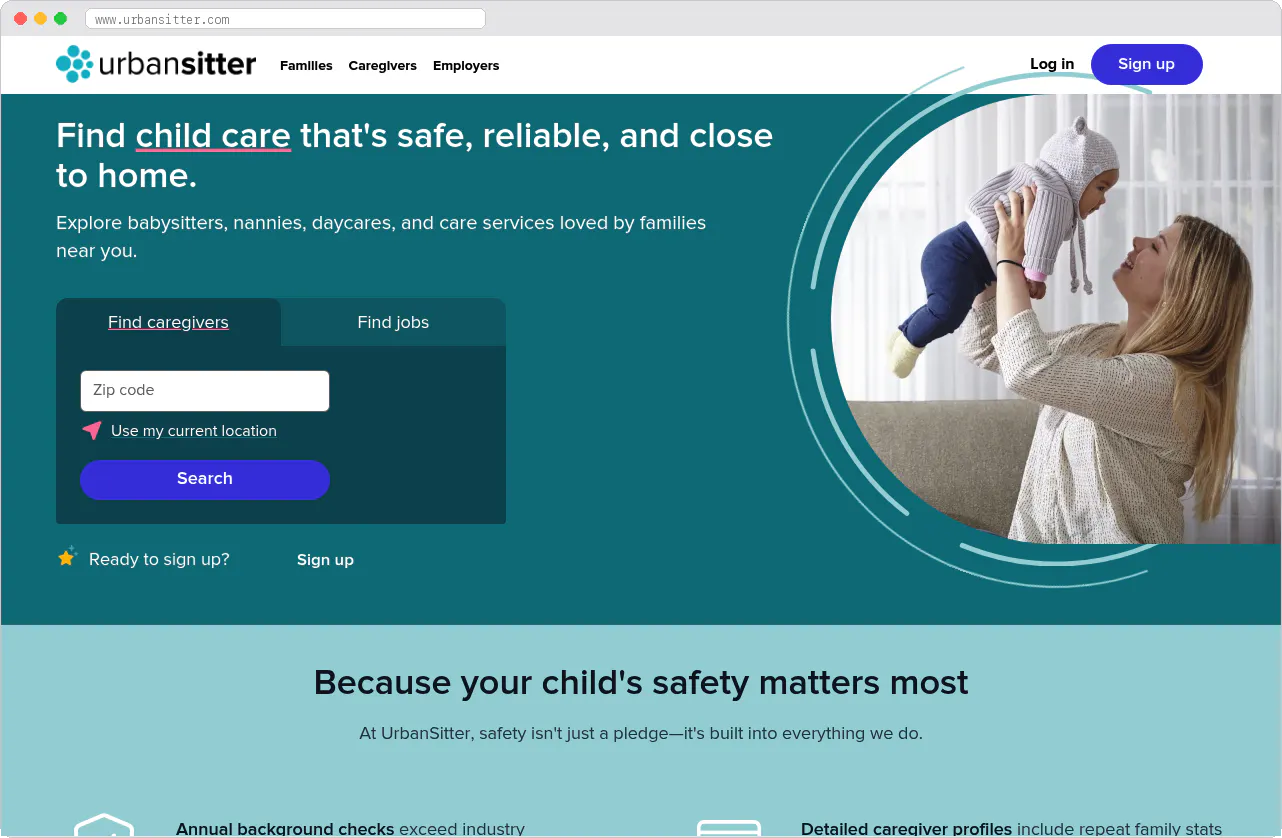
UrbanSitter takes a social networking approach to childcare by integrating with Facebook and using social connections for caregiver recommendations. Parents can see which babysitters their friends use and trust, creating a trust layer based on social proof rather than just platform verification. The platform also offers last-minute booking features designed for parents needing immediate childcare solutions.
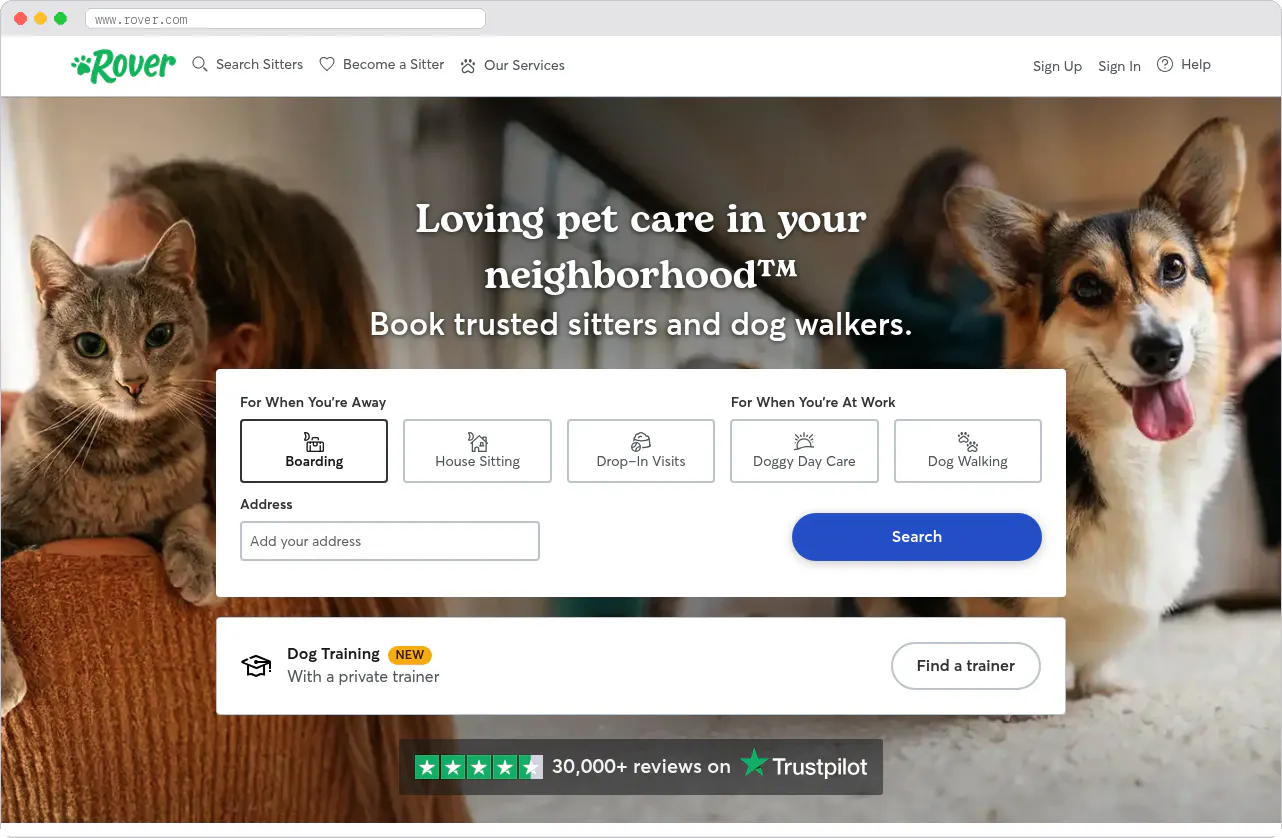
Rover has become the dominant player in pet care services by focusing exclusively on dog walking, pet sitting, and boarding. While Care.com includes pet care as one service category, Rover's specialization allows for features like GPS tracking of dog walks, detailed pet profiles, and breed-specific care expertise that general platforms cannot match.
A Place for Mom operates in the senior care space but takes a consultative approach rather than a self-service marketplace model. The platform provides free advisor services to help families navigate senior care options, from in-home care to assisted living facilities. This high-touch model addresses the complexity and emotional difficulty of senior care decisions.

TaskRabbit competes indirectly in the household services space by connecting people with "Taskers" who can handle cleaning, furniture assembly, and home maintenance. While not focused specifically on care services, TaskRabbit's model demonstrates alternative approaches to trust-building through skills-based verification and task-specific ratings.
HomecareAssist.com targets the professional home healthcare market, focusing on certified healthcare providers rather than general caregivers. This approach serves families needing medical care or specialized support for disabilities or chronic conditions, representing the higher-end segment of the care services market.
Each competitor demonstrates different strategic choices around specialization versus breadth, self-service versus consultation, and casual versus professional care providers. These differences create opportunities for new entrants to carve out specific niches or improve upon existing approaches.
Building your care marketplace: 8 essential steps
Creating a successful care marketplace requires following a structured approach that validates your concept while building the trust and safety features essential for this sensitive service category.
The first step involves identifying your specific niche within the care services market. While Care.com succeeded with a broad approach, today's competitive landscape often rewards specialization. You might focus on a specific type of care (like special needs childcare), a particular demographic (like busy professionals), or a geographic area underserved by existing platforms. This focused approach makes it easier to understand your users deeply and build features that serve their specific needs.
Market research and validation come next, but care marketplaces require particularly thorough research because trust and safety concerns vary significantly between different user groups. Interview potential caregivers about their biggest challenges finding work and families about their pain points with existing solutions. Pay special attention to safety concerns, pricing sensitivity, and the decision-making process for hiring caregivers.
Choosing your business model requires understanding the economics of care services in your target market. Subscription models work well when users need ongoing relationships, while commission models might suit platforms focusing on one-time or occasional services. Consider hybrid approaches where basic features are free but premium safety features, enhanced profiles, or priority placement require paid subscriptions.
Building your minimum viable platform should prioritize core trust and safety features from day one. Unlike other marketplace categories where you can launch with basic functionality and add safety features later, care marketplaces need robust verification and background checking capabilities from the start. This might mean higher initial development costs, but it's essential for user adoption and legal compliance.
Supply-side acquisition typically comes first in care marketplaces because caregivers are generally more motivated to join new platforms than families are to trust them with their care needs. Focus on recruiting a small number of high-quality caregivers who can provide excellent early experiences for your first customers. Quality matters more than quantity in the early stages.
Your launch strategy should emphasize trust and safety messaging while targeting a narrow geographic area where you can provide strong customer support. Care marketplaces benefit from word-of-mouth marketing, so focus on creating exceptional experiences for early users rather than broad marketing campaigns.
Scaling requires maintaining quality standards while expanding your caregiver network and geographic coverage. This is particularly challenging in care marketplaces because background checking and verification processes don't easily automate. Plan for ongoing operational costs related to user verification and customer support.
Legal compliance becomes increasingly complex as you grow, particularly around employment law, background check regulations, and insurance requirements. Different jurisdictions have varying rules about how care platforms can operate, what verification is required, and what liability the platform assumes. Consulting with legal experts familiar with care services is essential before launch and during expansion.
Technology approaches for building your care platform
The technical approach you choose for building your care marketplace significantly impacts your timeline, budget, and ability to iterate based on user feedback. Care marketplaces have specific technical requirements that influence these decisions.
Custom development from scratch offers complete control over features and user experience but requires substantial time and budget investment. A fully custom care marketplace typically costs $100,000-300,000 and takes 6-12 months to build, depending on the feature set and team location. This approach makes sense if you have significant funding, specific technical requirements not supported by existing platforms, or a development team with marketplace experience.
The main advantage of custom development is flexibility to build exactly the features your market needs, including complex verification workflows, specialized matching algorithms, or unique payment structures. However, the opportunity cost is significant because you'll spend months building basic marketplace functionality instead of learning from users and iterating on your value proposition.
No-code marketplace builders like Sharetribe allow launching sophisticated care marketplaces in weeks rather than months. These platforms include essential marketplace features like user profiles, search and filtering, messaging, reviews, and payment processing built-in. For care marketplaces specifically, Sharetribe supports background check integrations, detailed profile customization, and subscription-based monetization models.
The speed advantage of no-code platforms is particularly valuable for care marketplaces because trust-building happens through real user interactions, not just feature development. Getting your platform live quickly allows you to start the crucial process of attracting high-quality caregivers and gathering feedback from families about what safety features and matching criteria matter most.
Sharetribe also supports custom development on top of the no-code foundation, addressing the common concern about platform limitations. As your marketplace grows and you identify unique feature requirements, you can add custom functionality while keeping the reliable core platform intact. This hybrid approach provides both speed to market and long-term flexibility.
Combining multiple tools represents a middle ground between custom development and dedicated marketplace platforms. You might use a website builder like Webflow for your marketing site, Airtable for managing caregiver applications, Calendly for scheduling, and Stripe for payments. This approach offers flexibility but requires significant time to integrate tools and creates ongoing maintenance complexity.
The main challenge with multi-tool approaches is ensuring data consistency and user experience quality across different platforms. Care marketplaces particularly benefit from integrated experiences because users need confidence that their sensitive personal information is handled securely throughout their journey.
Cost considerations for care marketplace development
Building a care marketplace involves several cost categories that vary significantly based on your technical approach and feature requirements. Understanding these costs helps with planning and fundraising decisions.
Development costs represent the largest upfront investment. Custom development typically starts around $100,000 for a basic care marketplace with essential features like profiles, search, messaging, and basic payment processing. Adding sophisticated features like background check integrations, advanced matching algorithms, and mobile apps can easily double or triple this cost.
No-code platforms dramatically reduce development costs while providing professional-quality results. Sharetribe's pricing starts at $39/month during the building phase and scales with your transaction volume and feature needs. This approach allows launching a fully functional care marketplace for under $10,000 in the first year, including design customization, content creation, and initial marketing.
Ongoing operational costs include background check services, payment processing fees, hosting, customer support, and legal compliance. Background checks typically cost $10-50 per caregiver depending on the comprehensiveness and geographic coverage. Payment processing fees vary by provider but generally range from 2.9-3.5% plus fixed per-transaction costs.
Marketing costs for care marketplaces often exceed those for other marketplace categories because trust-building requires more touchpoints and higher-quality content. Families research care providers extensively, so content marketing, SEO, and reputation management become critical investments. Budget at least $2,000-5,000 monthly for marketing once you launch.
Legal and compliance costs continue throughout your marketplace's growth because regulations around care services, background checks, and employment law evolve regularly. Plan for ongoing legal consultation and potential compliance system updates, typically $5,000-15,000 annually depending on your geographic coverage and services offered.
Insurance costs protect against liability risks inherent in care services. General liability insurance, professional liability coverage, and cyber liability insurance are common requirements, with costs varying based on your business model and coverage needs.
Launching and scaling your care marketplace
Successful care marketplace launches require different strategies than other marketplace categories because trust-building cannot be rushed and safety concerns create higher barriers to initial user adoption.
Your launch strategy should focus on recruiting a small number of exceptional caregivers who can provide outstanding experiences for early families. Quality matters more than quantity because negative early experiences can permanently damage your platform's reputation. Consider offering reduced fees or enhanced profile features to attract experienced caregivers with strong references and clean background checks.
Geographic focus is particularly important for care marketplaces because most services are location-dependent and local reputation effects are strong. Rather than launching broadly, concentrate on one metropolitan area where you can provide responsive customer support and address any safety or quality issues quickly.
Content marketing plays a crucial role in care marketplace growth because families extensively research before trusting new platforms with their care needs. Publishing helpful guides about interviewing caregivers, safety checklists, and care tips positions your platform as a trusted resource while improving search engine visibility for relevant queries.
Partnership opportunities exist with complementary businesses like pediatrician offices, senior centers, pet stores, and family-oriented retailers. These partnerships can provide credible referral sources and help establish your platform's reputation in the community.
Scaling requires maintaining quality standards while expanding your user base and potentially adding new service categories. This is particularly challenging because each new caregiver requires individual background checking and verification, and customer support needs remain high throughout growth.
International expansion for care marketplaces faces significant regulatory and cultural challenges because background check requirements, employment laws, and care standards vary between countries. Many successful care platforms remain focused on single countries or regions rather than pursuing global expansion.
Why Sharetribe works well for care marketplaces
Care marketplaces have specific requirements that make choosing the right platform particularly important. Sharetribe addresses many of these needs through both built-in functionality and extensibility options.
The platform includes sophisticated user profile capabilities that support the detailed information sharing essential for care services. Caregivers can showcase their experience, certifications, and specializations while families can specify their needs, household details, and preferences. Custom fields allow tailoring profiles to specific care categories like special needs expertise or language requirements.
Sharetribe's search and filtering capabilities support the complex matching requirements common in care services. Families can filter by availability, experience level, specific skills, and location while the platform supports soft matching factors through detailed profile information and preference settings.
Payment processing flexibility accommodates the various pricing structures common in care services, from hourly rates to weekly salaries to one-time fees. The platform supports both transaction-based and subscription-based monetization, allowing you to choose the model that best fits your market.
Background check integration capabilities allow connecting with third-party verification services while maintaining user experience quality. This addresses one of the most critical technical requirements for care marketplaces without requiring custom development of compliance-heavy verification systems.
The platform's extensibility means you can launch quickly with built-in features and add custom functionality as you learn what your specific market needs. This might include specialized scheduling tools, automated reference checking, or integration with payroll services.
Mobile responsiveness and progressive web app capabilities ensure your platform works well on all devices, which is particularly important for caregivers who often access platforms while traveling between jobs or during downtime.
Sharetribe's hosting and security infrastructure handles the technical requirements for storing sensitive personal information and payment data, reducing your compliance burden and ongoing technical maintenance needs.
Conclusion: Building trust in care services
Creating a successful care marketplace requires understanding that you're not just connecting service providers with customers – you're facilitating relationships that involve trust, safety, and often ongoing personal connections. This fundamental difference shapes every aspect of your platform, from initial feature development to long-term scaling strategies.
The most successful care marketplaces solve the trust problem through multiple complementary approaches: thorough verification processes, transparent reviews and ratings, educational resources, and responsive customer support. Technology enables these solutions, but the underlying focus must always be on creating genuine confidence between families and caregivers.
Starting with a focused niche, building core trust features from day one, and prioritizing quality over rapid growth gives you the best chance of creating a platform that families will trust with their most important needs. The care services market offers significant opportunities for entrepreneurs who understand these unique dynamics and build platforms designed specifically for this sensitive service category.
Frequently asked questions
How much does it cost to build a website like Care.com?
Costs vary significantly by approach. Custom development typically starts around $100,000-300,000, while No-code marketplace platforms cost $99-399 per month, with total first-year costs of $2,000-5,000. The choice depends on your budget, timeline, and specific feature requirements.
What features are essential for a care marketplace like Care.com?
Essential features include detailed user profiles, background check integration, secure messaging, advanced search and filtering, review systems, scheduling tools, and flexible payment processing. Trust and safety features are particularly critical from day one.
How do care marketplaces like Care.com make money?
Care.com primarily uses subscription-based pricing where users pay monthly or annual fees for premium features like contacting caregivers and accessing background checks. Some platforms also use commission models or hybrid approaches combining subscriptions with transaction fees.
What are the biggest challenges in building a care marketplace?
The main challenges are building trust between strangers, implementing robust background checking and verification, ensuring legal compliance with care service regulations, and maintaining quality while scaling. Trust-building cannot be rushed and requires ongoing operational investment.
How long does it take to launch a care marketplace?
Timeline depends on your development approach. No-code platforms like Sharetribe allow launching in 2-4 weeks, custom development typically takes 6-12 months, and combined tool approaches fall somewhere in between. Care marketplaces need extra time for verification system setup.
Can I compete with established players like Care.com?
Yes, by focusing on specific niches, geographic areas, or underserved user groups. Many successful care platforms specialize in particular types of care, offer superior user experiences, or serve markets where existing platforms have gaps in coverage or features.
Start your 14-day free trial
Create a marketplace today!
- Launch quickly, without coding
- Extend infinitely
- Scale to any size
No credit card required