How to build a website like Rover
Rover connects pet owners with trusted pet sitters and dog walkers, growing to $2.3 billion valuation. Learn to build your own pet care marketplace with the right features, business model, and launch strategy.
Published: Feb 28, 2024
Last updated: Mar 19, 2026
The pet care industry transformed by Rover
The pet care industry was ripe for disruption when Greg Gottesman couldn't find reliable pet care for his yellow labrador, Ruby, in 2011. Traditional pet boarding facilities were expensive, impersonal, and often booked solid during peak travel times. Independent pet sitters existed but were difficult to find, vet, and trust with beloved family pets.
Gottesman's solution became Rover, an online marketplace connecting pet owners with trusted pet sitters and dog walkers. What started as a local Seattle operation expanded to all 50 states within a year, acquired its largest competitor DogVacay in 2017, and was ultimately acquired by private equity firm Blackstone for $2.3 billion in 2023.
Rover's success demonstrates the power of solving a real problem for both sides of a marketplace. Pet owners gained access to affordable, personalized care from vetted providers, while pet sitters could monetize their love of animals with flexible scheduling. The platform processed over 10 million bookings by 2023, with more than 400,000 active pet sitters across multiple countries.
Today, building a pet care marketplace like Rover is more accessible than ever. No-code marketplace builders like Sharetribe enable launching a fully functional platform in weeks rather than years, letting founders focus on building trust and growing their user base instead of wrestling with complex technical infrastructure.
How Rover works: A two-sided pet care marketplace
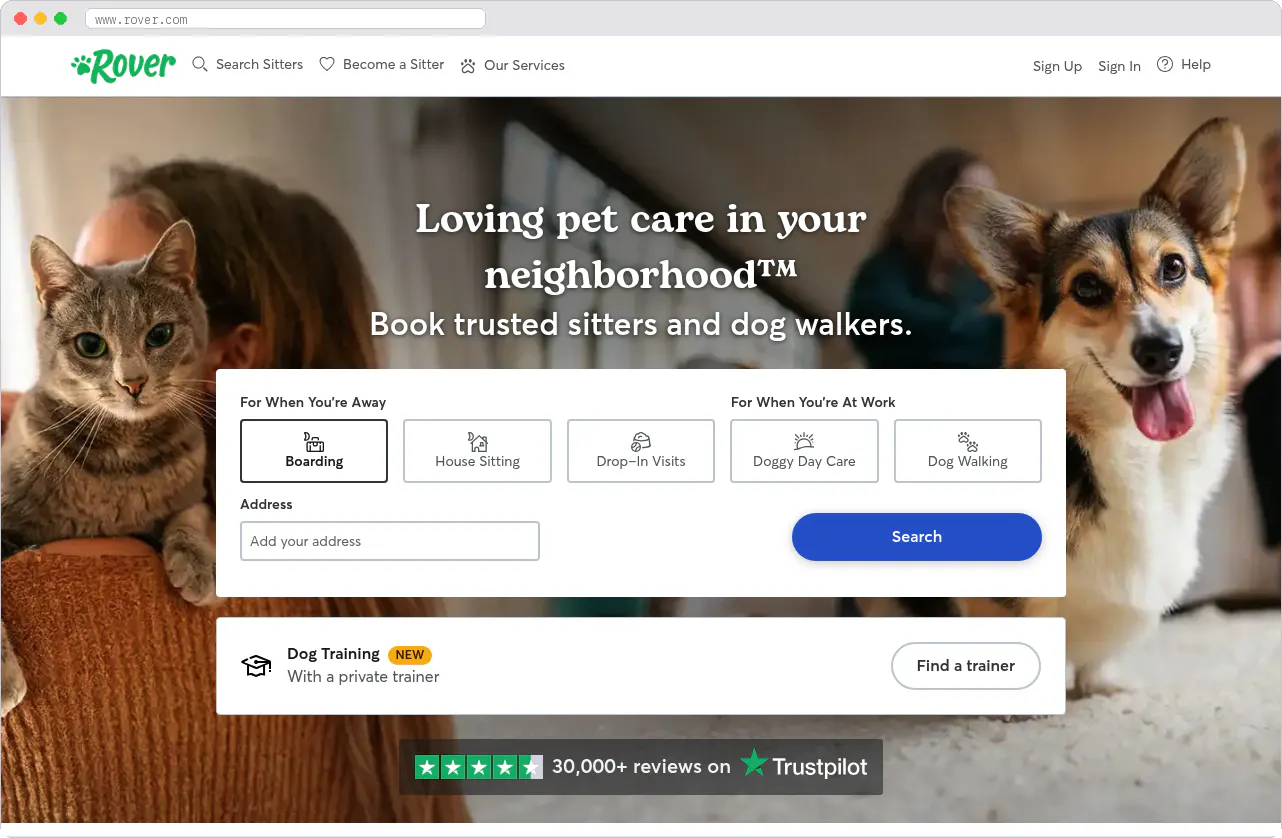
Rover operates as a location-based service marketplace connecting pet owners (buyers) with pet care providers (sellers) in their local area. Unlike product marketplaces where items can be shipped anywhere, pet care requires physical proximity and personal interaction.
For pet owners, Rover functions as a searchable directory of local pet sitters, dog walkers, and pet daycare providers. They can filter by services offered (overnight boarding, daily walks, drop-in visits), location, availability, and price. Each provider has a detailed profile showing photos, experience, services offered, reviews from previous clients, and response time. Pet owners can message providers directly, arrange meet-and-greets, and book services through the platform.
For pet care providers, Rover serves as a customer acquisition and business management tool. They create profiles showcasing their experience with animals, upload photos of themselves and previous pet clients, set their service rates and availability, and manage bookings through the platform. Rover handles payment processing, provides insurance coverage during bookings, and offers 24/7 customer support for both parties.
The platform generates revenue primarily through service fees charged on each booking. Pet owners pay a booking fee (typically around 5-7% of the booking total), while pet sitters pay a service fee (typically 15-20% of earnings) that covers payment processing, insurance, customer support, and platform maintenance.
Rover's key features and what makes them work
Rover's success stems from features specifically designed for the pet care market's unique challenges: building trust between strangers, managing location-based services, and handling the emotional stakes of pet care.
Detailed profiles and verification systems form the foundation of trust on Rover. Pet sitters upload multiple photos, write detailed descriptions of their experience, list the types of pets they're comfortable caring for, and specify their home environment (apartment, house with yard, other pets present). Rover verifies phone numbers and email addresses, and sitters can opt into background checks for an additional trust signal.
The review and rating system operates differently from typical marketplaces. Both pet owners and sitters rate each other after each service, but reviews focus heavily on pet-specific details: how well the sitter followed care instructions, photo updates provided during service, how comfortable the pet seemed, and communication quality. This creates accountability for both parties while helping future matches.
Location-based search and availability management address the logistical challenges of pet care services. Pet owners can search by distance from their location or specific neighborhoods, while sitters set their service radius. The calendar system lets sitters block unavailable dates and manage recurring services like daily dog walks or weekly pet sitting.
Secure messaging and photo sharing enable ongoing communication during services. Pet owners can provide detailed care instructions, emergency contact information, and specific pet behavioral notes. Sitters send photo updates during services, providing peace of mind for pet parents and demonstrating active engagement with their pets.
Payment processing with delayed payouts protects both parties. Pet owners pay upfront when booking, but sitters only receive payment after service completion. This ensures services are delivered as promised while giving pet owners recourse if issues arise.
Insurance coverage through Rover's partnership with major insurers protects against accidents or injuries during bookings. This addresses one of the biggest barriers to trusting strangers with pets and differentiates professional platforms from informal arrangements.
Rover's business model: Commission-based marketplace
Rover operates on a commission-based business model, taking a percentage of every transaction processed through the platform. This aligns Rover's incentives with user success. Rover only makes money when pet owners and sitters successfully complete bookings.
The revenue structure includes service fees from both sides of the marketplace. Pet owners pay a booking fee of approximately 5-7% on top of the sitter's listed rate, while pet sitters pay a service fee of 15-20% of their earnings. These fees cover payment processing, insurance coverage, customer support, background check services, and platform maintenance.
Additional revenue streams include premium services for pet sitters. Rover Pro offers enhanced profile visibility, priority customer support, and business management tools for a monthly subscription fee. The company also generates revenue through partnerships with pet product companies and referral fees from related services like pet insurance.
This model proved highly scalable, generating roughly over $1 billion in gross booking value by 2021 before the acquisition. The commission structure also naturally filters for quality, providers who deliver poor service receive fewer bookings and generate less revenue for both themselves and Rover.
Rover's competitors and the pet care marketplace landscape
The pet care marketplace space includes several established players, each with different approaches to connecting pet owners with care providers.
Wag positions itself as the "Uber for dog walking" with on-demand booking and professional dog walkers. Unlike Rover's focus on building relationships between pet owners and individual sitters, Wag emphasizes quick, reliable service from a network of background-checked walkers. Wag handles walker recruitment, training, and scheduling more directly than Rover's marketplace model. The platform works well for busy professionals needing regular dog walking services but lacks the personalized pet sitting and boarding options that make Rover comprehensive.
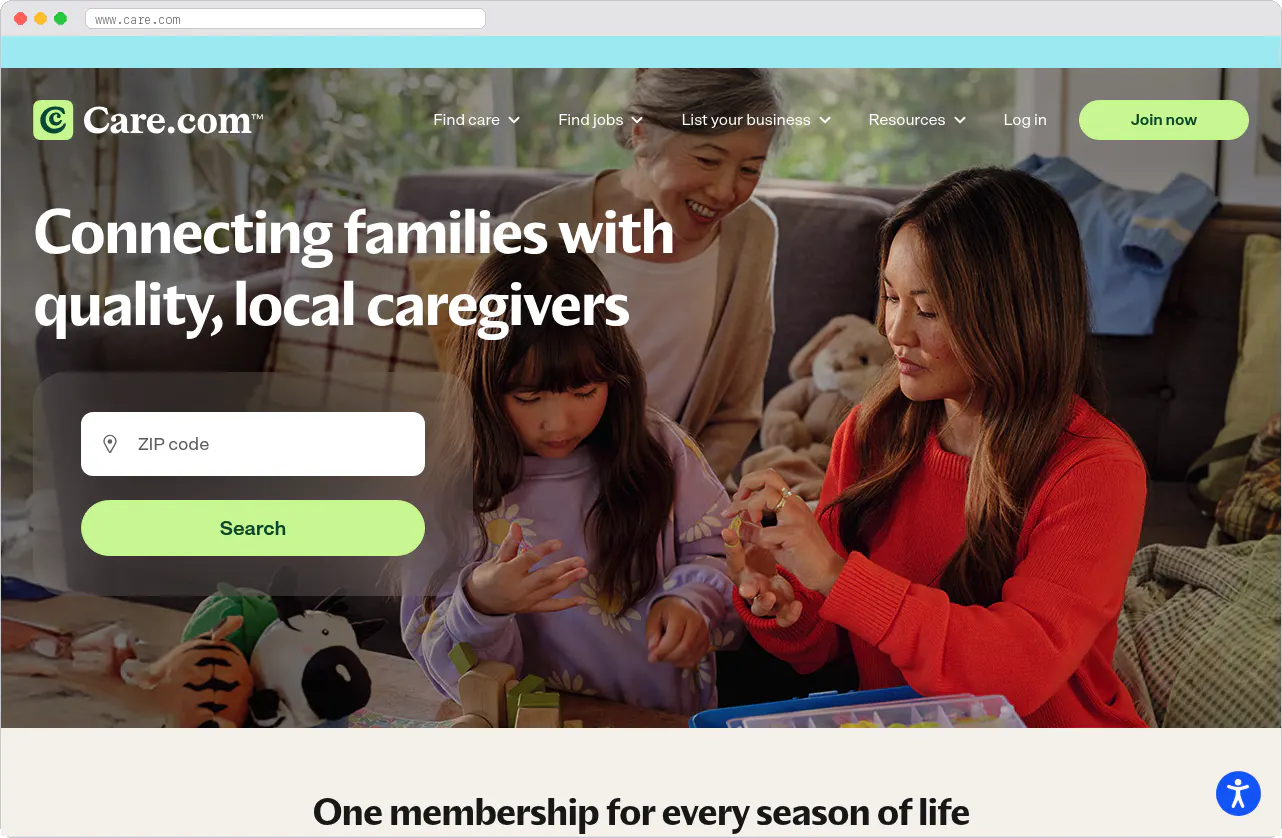
Care.com operates a broader caregiving marketplace that includes pet care alongside childcare, senior care, and housekeeping services. This diversification gives Care.com a larger user base and more revenue streams, but pet care represents just one category rather than the specialized focus Rover provides. Pet owners on Care.com often find fewer pet care options and less pet-specific functionality compared to dedicated platforms.
Fetch! Pet Care takes a franchise approach, offering professional pet care services through independently owned locations. This model ensures consistent service quality and standardized pricing but sacrifices the variety and personalization of marketplace models. Pet owners work with business employees rather than individual pet lovers, which appeals to some customers but lacks the personal connection that drives Rover's success.
Petsitter.com operates more like a classified directory, allowing pet sitters to create profiles without the comprehensive vetting, insurance, and payment processing that Rover provides. While this reduces fees for both parties, it also places more burden on users to verify credentials, handle payments independently, and resolve disputes without platform support.
Local and regional competitors exist in many markets, often focusing on specific geographic areas or pet types. These platforms may offer more personalized service and local market knowledge but typically lack the resources for comprehensive insurance, background checks, and customer support that national platforms provide.
The competitive landscape shows room for specialized marketplaces focusing on specific niches within pet care: exotic pet sitting, overnight care for pets with medical needs, dog training services, or premium pet concierge services in affluent areas.
Essential features for building a pet care marketplace
Building a successful pet care marketplace requires features that address the specific challenges of connecting pet owners with care providers: establishing trust, managing location-based services, handling emotional stakes, and ensuring pet safety.
User profiles and verification systems
Comprehensive profiles serve as the foundation for trust in pet care marketplaces. Pet sitters need space to showcase their experience with animals, upload multiple photos of themselves and their home environment, describe their approach to pet care, and list specific services offered. Pet owner profiles should capture information about their pets' needs, behavioral quirks, medical requirements, and care preferences.
Verification systems build credibility beyond basic profiles. Phone and email verification prevents fake accounts, while optional background checks provide additional assurance for pet owners. Some platforms verify pet sitter experience through references or certification programs, though this must be balanced against barriers to entry for new providers.
Location-based search and booking
Pet care services require physical proximity, making robust location functionality essential. Search tools should let pet owners filter by distance, specific neighborhoods, or service radius. Map displays help visualize provider locations relative to pet owners' homes, work locations, or travel destinations.
Availability management prevents double bookings and manages complex scheduling scenarios. Pet sitters need calendar tools to block unavailable dates, set recurring availability for services like dog walking, and handle last-minute booking requests. The system should automatically prevent bookings during unavailable periods while allowing sitters to update availability in real-time.
Secure messaging and instruction sharing
Direct communication between pet owners and sitters enables detailed care coordination. Pet owners need to share specific instructions about feeding schedules, medication requirements, behavioral considerations, emergency contacts, and house rules. Sitters should provide updates during service, including photos and notes about activities, meals, and pet behavior.
Message history creates accountability and helps resolve disputes by providing a record of agreed-upon care instructions and service delivery. Some platforms add structure to this communication through care instruction templates and update reminders.
Payment processing with escrow functionality
Secure payment processing protects both parties while enabling commission collection. Pet owners should pay upfront when booking services, but payment should be held in escrow until service completion. This ensures sitters complete services as promised while giving pet owners recourse for unsatisfactory service.
The payment system must handle various pricing structures: hourly rates for dog walking, daily rates for pet sitting, and flat fees for drop-in visits. Automatic commission calculation and collection eliminates manual processing while ensuring marketplace revenue.
Review and rating systems
Two-way reviews create accountability for both pet owners and sitters. Reviews should focus on pet-specific criteria: following care instructions, communication quality, pet comfort level, photo updates provided, and overall service delivery. Star ratings provide quick quality indicators, while written reviews offer detailed feedback for future matches.
Review timing and prompts encourage participation. Automatic review requests sent after service completion increase response rates, while review requirements for continued platform access maintain review volume.
Trust and safety features
Insurance coverage addresses the biggest barrier to trusting strangers with beloved pets. Partnerships with insurance providers can offer coverage for accidents, injuries, or property damage during bookings. Clear policy information and claims processes provide peace of mind for both parties.
Emergency support systems handle urgent situations that arise during pet care services. 24/7 customer support, emergency contact protocols, and clear escalation procedures ensure problems are resolved quickly when pets' wellbeing is at stake.
How to build a pet care marketplace: Step-by-step approach
Building a successful pet care marketplace follows a similar pattern to other location-based service marketplaces, with specific considerations for the emotional stakes and trust requirements of pet care.
Step 1: Define your niche and target market
The pet care market offers multiple opportunities for specialization. General pet sitting and dog walking represent the largest market segments, but specialized niches may offer less competition and higher margins. Consider focusing on exotic pets, pets with special medical needs, overnight boarding in sitters' homes, or premium pet concierge services.
Geographic focus provides another dimension for specialization. Starting in a single city or region allows deeper market understanding and easier quality control. Urban markets typically offer more potential users but also more competition, while suburban and rural areas may have fewer providers but also fewer pet owners seeking services.
Market research validates your chosen niche and geographic focus. Interview potential pet owners about their current pet care challenges, how they find and evaluate pet sitters, and what features would make them trust a new platform. Survey potential pet sitters about their existing client acquisition methods, pricing strategies, and biggest business challenges.
Step 2: Choose your business model and pricing strategy
Commission-based models align platform incentives with user success but require robust payment processing and may face resistance from price-sensitive users. Subscription models provide predictable revenue but create barriers to entry for new users. Listing fees generate revenue from supply-side users but may limit the number of available providers.
Most successful pet care marketplaces use commission models with fees split between pet owners and sitters. This approach reduces barriers to initial signup while ensuring platform sustainability through transaction volume. Fee structures should account for local market conditions and competitor pricing while covering platform costs including insurance, customer support, and payment processing.
Step 3: Build your minimum viable platform
Your initial platform should focus on core functionality rather than comprehensive features. Pet owners must be able to search for providers, view profiles, send messages, and book services. Pet sitters need profile creation tools, availability management, message responses, and payment receipt.
Payment processing and commission collection should be included from launch to validate your revenue model and provide professional service. Insurance coverage, even basic policy options, builds trust and differentiates your platform from informal arrangements.
Sharetribe enables launching this MVP quickly without coding. The platform includes location-based search, user profiles, messaging, booking management, and payment processing with commission support. Built-in insurance partnerships and customer support tools address pet care marketplace specific needs.
Step 4: Build initial supply before demand
Pet sitters typically join new platforms more readily than pet owners because they're actively seeking new customer sources. Focus initial efforts on recruiting high-quality sitters in your target geographic area before marketing to pet owners.
Recruit sitters through social media groups, local pet events, veterinary office partnerships, and existing networks of pet care providers. Offer incentives for early adopters, such as reduced commission rates for initial bookings or featured profile placement.
Quality over quantity drives early success. A small number of excellent, responsive sitters generates positive reviews and word-of-mouth marketing that attracts both additional sitters and pet owners. Poor initial experiences can permanently damage platform reputation in tight-knit pet owner communities.
Step 5: Launch to initial pet owners
Once you have reliable supply, begin targeted marketing to pet owners in your area. Focus on engaged pet owner communities: social media groups, dog parks, pet stores, veterinary offices, and local pet events. Personal recommendations and word-of-mouth drive adoption better than broad advertising in pet care markets.
Offer launch promotions that benefit both sides: discounted first bookings for pet owners and bonus payments for sitters. Track early booking success rates and user feedback closely to identify platform improvements needed before broader marketing.
Step 6: Iterate based on user feedback
Pet care marketplaces require continuous refinement based on real usage patterns. Monitor successful booking rates, user complaints, and abandonment points in your booking flow. Pet owners may need more detailed sitter information than initially provided, while sitters might require better tools for managing multiple bookings.
Trust-building features often need enhancement after launch. Additional verification options, more comprehensive insurance coverage, or improved dispute resolution processes may become necessary as the platform handles more bookings and edge cases arise.
Step 7: Scale to additional markets
Expansion should be methodical rather than rapid. Each new geographic market requires local supply development, market-specific marketing, and potentially different competitive dynamics. Urban markets may support specialized services like same-day booking, while rural areas might require longer booking windows and different pricing structures.
Operational scaling includes customer support expansion, payment processing for multiple regions, and potentially different insurance requirements across jurisdictions. Maintaining service quality during growth requires systems for monitoring and managing remote markets.
Development approaches: Building your pet care platform
Choosing the right development approach depends on your technical skills, budget, timeline, and long-term scalability needs. Each option offers different trade-offs between speed, cost, customization, and maintenance requirements.
Custom development from scratch
Building a pet care marketplace from scratch provides complete control over features, design, and functionality but requires significant time and financial investment. A basic marketplace with essential features typically requires 6-12 months of development time and budgets starting around $100,000 for professional development.
Custom development makes sense for experienced technical founders with specific vision requirements that existing solutions cannot accommodate. This approach also provides maximum flexibility for future feature development and integration with specialized pet care tools or services.
However, the opportunity cost of custom development often outweighs the benefits for marketplace founders. The months spent building basic marketplace functionality could instead be used for market research, user acquisition, and business model validation.
No-code marketplace builders
Dedicated marketplace builders like Sharetribe enable launching professional platforms without coding knowledge. These solutions include essential marketplace features, user profiles, search and filtering, messaging, booking management, payment processing, and commission handling, configured specifically for marketplace businesses.
Sharetribe's pet care marketplace template includes features particularly relevant to pet services: location-based search, calendar availability management, photo sharing for service updates, and integration with insurance providers. The platform handles technical infrastructure, security updates, and payment compliance while allowing customization of branding, workflows, and additional features.
This approach enables launching within weeks rather than months while maintaining professional quality and scalability. The main trade-off is less flexibility for highly specialized features, though most pet care marketplaces find standard marketplace functionality sufficient for initial launch and growth.
Hybrid approaches: No-code foundation with custom extensions
Advanced marketplace builders support custom development on top of no-code foundations. Sharetribe's Developer Platform provides marketplace essentials through the no-code builder while allowing unlimited custom features, integrations, and design modifications through APIs and webhooks.
This hybrid approach offers the best of both worlds: fast time to market with standard features plus flexibility for specialized requirements. Pet care marketplaces might add custom features like pet medical record management, veterinary integrations, or specialized insurance products while maintaining the robust foundation for core marketplace functionality.
Cost considerations for building a pet care marketplace
Pet care marketplaces require specific cost considerations beyond basic marketplace development, including insurance partnerships, customer support for emotional situations, and trust-building features that require ongoing investment.
No-code marketplace builder costs
Using Sharetribe for a pet care marketplace includes platform subscription fees, transaction processing costs, and optional add-on services. Monthly subscription costs start around $99 for basic plans and scale with transaction volume and feature requirements.
Transaction fees typically range from 1-3% of booking value for payment processing, plus any commission fees charged to users. Insurance partnerships may add additional per-transaction costs but provide essential trust-building and risk management benefits.
Additional costs include domain registration, custom design work, content creation, and marketing expenses. The total first-year cost for a Total first-year costs with a no-code marketplace platform typically run $2,000-5,000.
Custom development cost breakdown
Custom pet care marketplace development requires significant upfront investment across multiple cost categories. Development costs for basic functionality typically range from $30,000-$80,000, including user management, location search, booking systems, payment processing, and mobile responsiveness.
Additional costs include ongoing maintenance and hosting (typically $1,000-$5,000 monthly), insurance integration development, customer support infrastructure, and compliance with payment processing regulations. Security audits and updates add further ongoing costs.
The total cost of ownership for custom development often exceeds $100,000 in the first year when including development, infrastructure, maintenance, and operational costs.
Revenue model implications
Commission-based models require robust payment processing and escrow functionality but generate revenue that scales with platform success. Subscription models provide predictable revenue but may limit initial user adoption in competitive markets.
Insurance costs represent a significant ongoing expense for pet care marketplaces but provide essential differentiation from informal pet sitting arrangements. These costs typically range from $1-$5 per booking depending on coverage levels and risk factors.
Customer support represents another ongoing cost consideration, particularly important in pet care markets where emotional stakes run high and situations may require immediate attention. Budget for 24/7 support capabilities as the platform scales.
Why Sharetribe works well for pet care marketplaces
Pet care marketplaces have specific requirements that align well with Sharetribe's marketplace-focused feature set and development philosophy.
The location-based nature of pet care services maps directly to Sharetribe's built-in location search and mapping functionality. Pet owners can search for providers within specific distances or neighborhoods, while providers set their service areas and manage availability across multiple locations.
Booking and scheduling complexity requires robust calendar management and availability tools. Sharetribe's booking system handles complex scheduling scenarios common in pet care: recurring services like daily dog walks, multi-day pet sitting bookings, and last-minute scheduling changes.
Trust-building features essential for pet care marketplaces are built into Sharetribe's platform. User verification, secure messaging, review systems, and payment escrow functionality address the specific trust challenges of connecting pet owners with care providers.
Payment processing with commission handling eliminates the complex development required for marketplace-specific payment flows. Sharetribe's integration with Stripe Connect ensures compliance with payment regulations while automatically calculating and collecting commission fees.
Scalability becomes important as successful pet care marketplaces grow beyond initial local markets. Sharetribe's infrastructure handles traffic spikes, multiple geographic markets, and high transaction volumes without requiring additional technical management from marketplace operators.
Customization options allow differentiation as pet care marketplaces mature. The Developer Platform enables adding specialized features like pet medical record management, veterinary integrations, or custom insurance products while maintaining the robust marketplace foundation.
Next steps: Launching your pet care marketplace
Building a successful pet care marketplace requires balancing speed to market with features that build trust between strangers caring for beloved pets. The fastest path to learning what your market needs is launching a functional platform and iterating based on real user feedback.
Start by clearly defining your target market and geographic focus. Research existing solutions in your area and identify gaps or underserved segments. Survey potential users to validate demand and understand their specific requirements.
Choose a development approach that matches your skills, budget, and timeline. For most founders, no-code marketplace builders provide the best balance of speed, functionality, and cost-effectiveness for initial launch.
Focus initial efforts on supply-side recruitment and quality control. A small number of excellent pet sitters generates better results than a large number of unvetted providers. Build demand gradually while maintaining high booking success rates and customer satisfaction.
The pet care industry continues growing as pet ownership increases and pet owners seek personalized, convenient care options. Success requires understanding the emotional dynamics of pet care relationships while building robust systems that support trust, safety, and business growth.
With the right approach and tools, building a pet care marketplace like Rover becomes an achievable goal rather than an insurmountable technical challenge. Focus on solving real problems for pet owners and care providers, and the technology will follow.
Frequently asked questions
How much does it cost to build a pet care marketplace like Rover?
Costs vary by approach. A no-code marketplace platform costs $99-399 per month, bringing total first-year costs to roughly $2,000-5,000.
What are the essential features for a pet sitting marketplace?
Key features include location-based search, detailed user profiles, booking/scheduling systems, secure messaging, payment processing with escrow, two-way reviews, and insurance integration.
How does Rover make money?
Rover uses a commission model, charging pet owners a booking fee (5-7%) and pet sitters a service fee (15-20%) on each transaction, plus revenue from premium services and partnerships.
How long does it take to launch a pet care marketplace?
Timeline depends on your approach. No-code platforms like Sharetribe enable launching in 1-2 weeks, while custom development typically requires 6-12 months.
What makes pet care marketplaces different from other service marketplaces?
Pet care requires higher trust levels, insurance coverage, detailed care instructions, photo updates during service, and emotional considerations since pets are family members.
Who are Rover's main competitors?
Major competitors include Wag (on-demand dog walking), Care.com (broader caregiving platform), Fetch! Pet Care (franchise model), and PetsitterCom (classified-style directory).
Start your 14-day free trial
Create a marketplace today!
- Launch quickly, without coding
- Extend infinitely
- Scale to any size
No credit card required