How to build a marketplace for storage space
Storage marketplaces are transforming unused spaces into revenue streams by connecting property owners with people needing storage. This guide shows how to build a successful storage marketplace from idea validation to scaling your platform.
Published: Dec 15, 2023
Last updated: Mar 19, 2026
How storage space marketplaces work
Storage space marketplaces connect people with unused space to those needing storage, creating a peer-to-peer economy around idle assets. Property owners list spare rooms, garages, basements, driveways, or even commercial spaces, while customers browse, compare, and book storage solutions that fit their needs and budget.
The model works because it solves problems for both sides. Space owners monetize assets that would otherwise generate no income, while customers access affordable, convenient storage without the overhead of traditional self-storage facilities. The marketplace facilitates transactions, handles payments, provides insurance options, and builds trust through reviews and verification systems.
Unlike traditional storage companies that require significant real estate investments and facility management, peer-to-peer storage marketplaces scale by expanding their network of individual space providers. This asset-light model allows for rapid geographic expansion and flexible pricing based on local market conditions.
Why storage space marketplaces are growing
The self-storage industry generates an estimated over $24 billion annually in the United States alone, with the average American spending $1,000-$2,000 per year on storage. Traditional facilities face challenges including high overhead costs, limited accessibility, and standardized offerings that don't match diverse customer needs.
Peer-to-peer storage addresses these pain points through several advantages. Customers access storage closer to home or work, often at 30-50% lower costs than commercial facilities. Space owners generate passive income from otherwise unused areas, with some hosts earning $200-$800 monthly per space. The flexibility appeals to both sides: customers can find short-term or long-term storage, while hosts control their availability and pricing.
Urbanization drives demand as city dwellers face space constraints and higher living costs. The sharing economy's mainstream adoption, proven by platforms like Airbnb and Uber, has normalized peer-to-peer transactions involving personal property. Additionally, changing consumer behaviors, including more frequent moves and the growth of e-commerce requiring package storage, create ongoing demand for flexible storage solutions.
Storage marketplace competitors and alternatives
Understanding the competitive landscape helps identify opportunities and positioning for your marketplace.
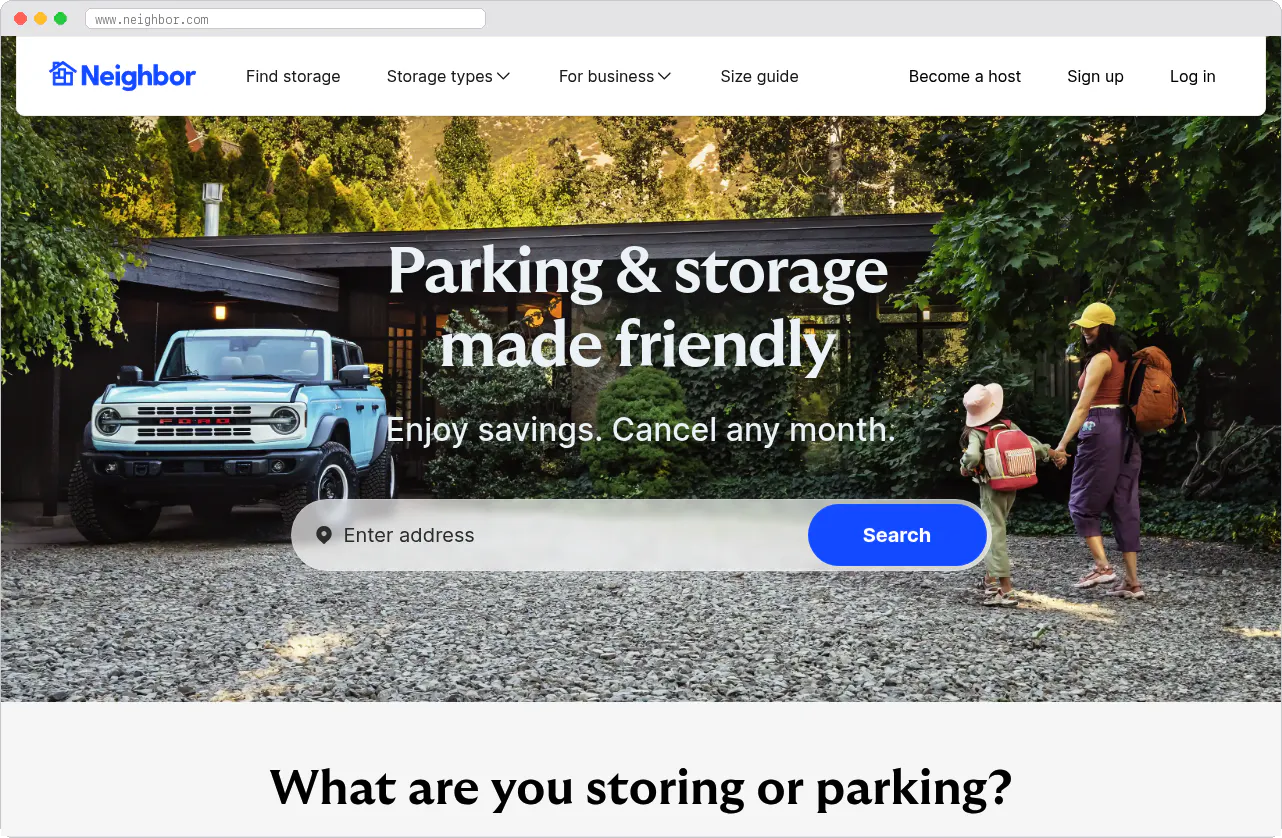
Neighbor launched in 2017 and has become the largest peer-to-peer storage marketplace in North America. The platform focuses on residential storage, connecting homeowners with unused garage, basement, or shed space to people needing storage. Neighbor emphasizes safety through $1 million insurance coverage and background checks for hosts. Their business model charges hosts 4.9% plus payment processing fees, while renters pay no service fees.
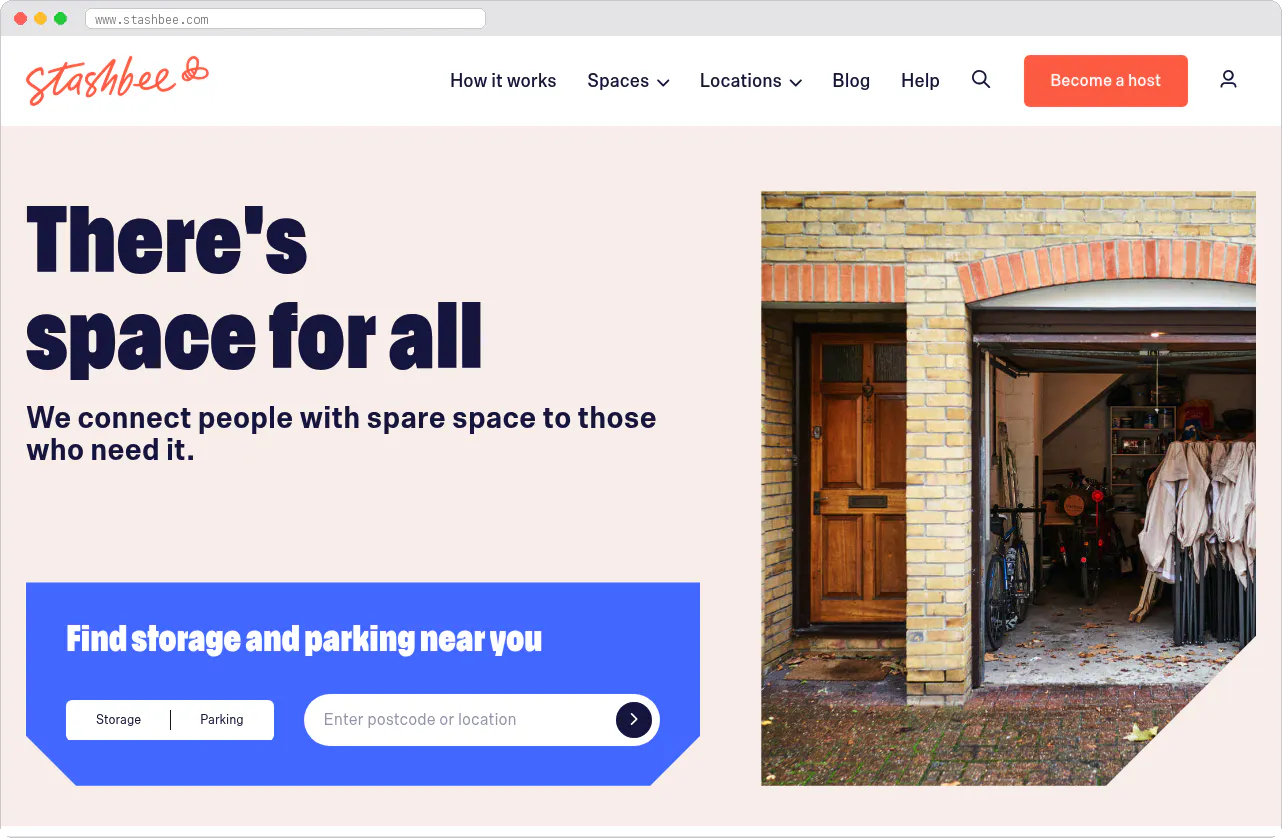
Stashbee operates primarily in the UK and European markets, offering both peer-to-peer storage and partnerships with commercial storage facilities. What differentiates Stashbee is their hybrid model combining individual hosts with professional storage providers, giving customers more options while maintaining quality standards. They charge hosts a 15% commission and provide £1,000 insurance coverage.
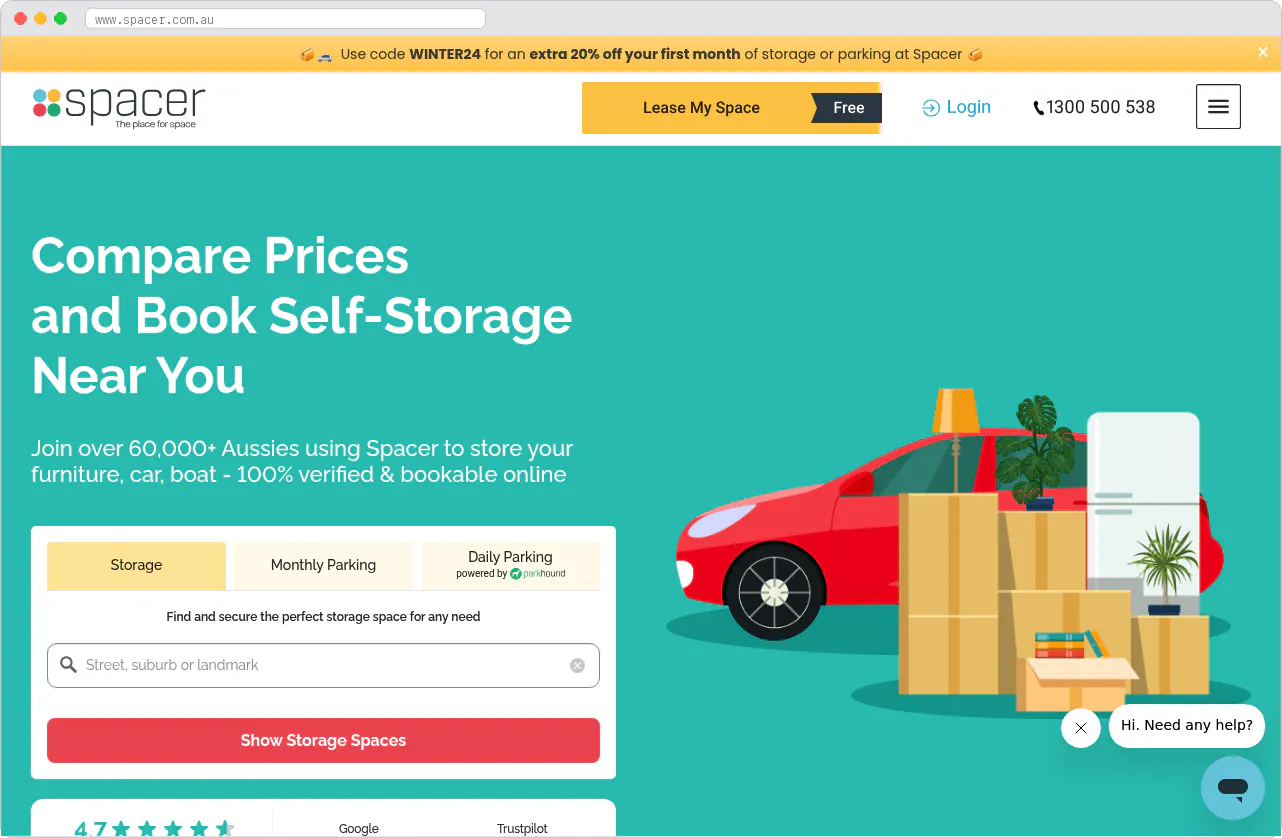
Spacer focuses on the Australian and UK markets with a broader definition of storage, including parking spaces, boat storage, and commercial storage options. Their platform emphasizes immediate booking capabilities and mobile-first design. Spacer charges hosts a 17.5% service fee and provides comprehensive insurance coverage.
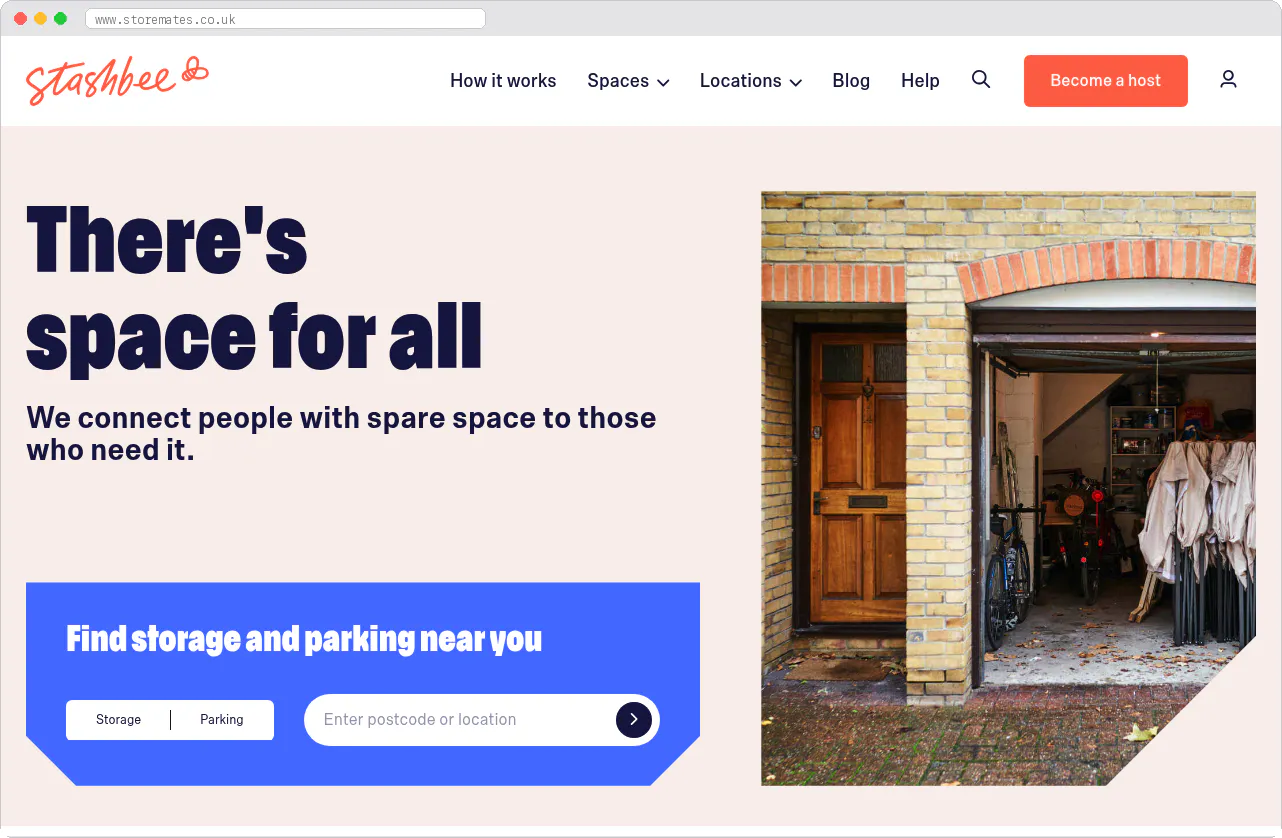
Storemates targets the UK market with emphasis on local community connections and environmentally friendly storage solutions. They charge a 15% commission to hosts and position themselves as a more personal, community-focused alternative to larger platforms.
Traditional self-storage companies like Public Storage and CubeSmart are developing their own marketplace features and acquiring smaller peer-to-peer platforms. These established players have brand recognition and customer bases but often lack the flexibility and pricing advantages of pure peer-to-peer models.
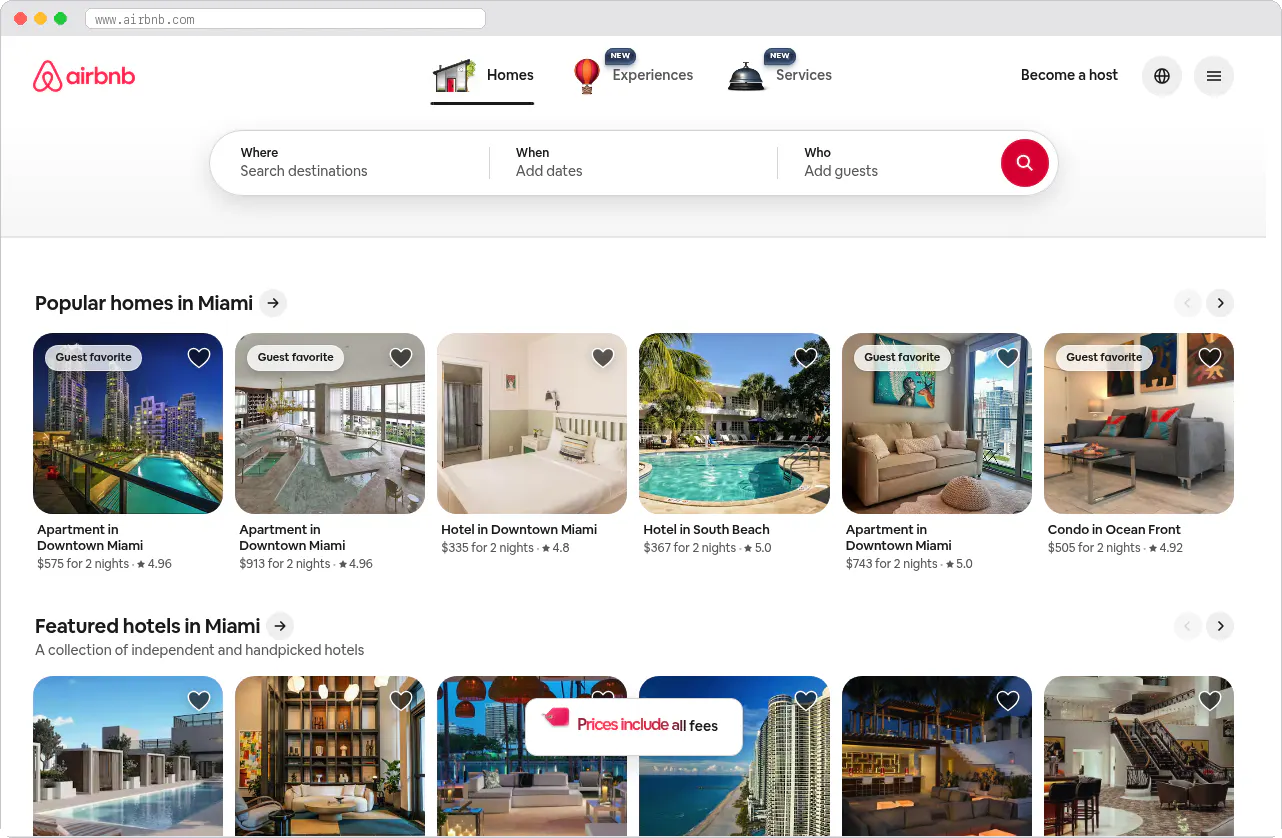
Airbnb technically allows storage listings but doesn't focus on this use case. Some hosts list storage spaces, but the platform lacks storage-specific features like item inventory management, access scheduling, or storage-focused insurance.
The competitive landscape suggests opportunities in underserved geographic markets, specialized storage categories (like vehicle storage or business inventory), or improved user experiences around trust, pricing transparency, or access management.
Essential features for storage marketplaces
Building a successful storage marketplace requires specific functionality that addresses the unique challenges of peer-to-peer storage transactions.
Location-based search and mapping forms the foundation of any storage marketplace. Customers prioritize proximity to their home, work, or frequently visited locations. The platform needs robust search capabilities with radius-based filtering, map integration showing available spaces, and the ability to search by specific neighborhoods or landmarks. Storage is inherently local, so geographic search accuracy directly impacts booking conversion rates.
Detailed listing creation and management enables space owners to showcase their storage effectively. Hosts need tools to upload multiple photos, specify dimensions and access details, list available amenities (lighting, security cameras, climate control), set pricing for different durations, and manage availability calendars. The platform should guide hosts through creating compelling listings that address common customer concerns about security, accessibility, and space condition.
Flexible booking and reservation systems accommodate storage's unique transaction patterns. Unlike accommodation bookings with fixed check-in dates, storage often involves ongoing rental periods with flexible start dates and varying durations. The system needs to handle short-term storage (days or weeks) and long-term rentals (months or years), allow for recurring payments, and provide clear terms for access, termination, and deposit handling.
Trust and safety infrastructure addresses the inherent risks of storing personal belongings in private spaces. This includes identity verification for both hosts and renters, photo verification of storage spaces, background check options, clear insurance coverage explanations, and robust dispute resolution processes. Reviews and ratings help build trust, but the platform needs mechanisms to verify authentic experiences and handle conflicts fairly.
Secure payment processing with escrow functionality protects both parties during transactions. The platform should collect security deposits, handle monthly payments automatically, provide clear invoicing, and manage deposit returns. Some marketplaces hold payments in escrow until the renter confirms access to their stored items, similar to how vacation rental platforms hold payments until check-in.
Communication and coordination tools help hosts and renters manage ongoing storage relationships. This includes messaging systems, access scheduling tools (for shared spaces or restricted access hours), inventory management features (allowing renters to track stored items), and notification systems for payment reminders, access requests, or space availability changes.
Insurance and liability management represents a critical yet complex feature area. Storage marketplaces need clear policies about liability for stored items, insurance coverage limits, claim processes, and host responsibilities. The platform should integrate with insurance providers to offer smooth coverage options and handle claims efficiently.
Mobile accessibility supports the on-the-go nature of storage needs. Customers often search for storage while moving or need quick access to host contact information when picking up items. Mobile apps should include all core functionality with particular emphasis on messaging, directions to storage locations, and access management.
Building your storage marketplace: step-by-step approach
Step 1: Validate your storage marketplace idea
Before building anything, validate demand and supply in your target market. Research local storage costs, vacancy rates, and customer pain points with existing solutions. Talk to potential hosts about their unused space and willingness to rent it out. Survey potential customers about their storage needs, current solutions, and what would motivate them to try a peer-to-peer platform.
Focus your initial research on a specific geographic area and storage type. For example, target college towns where students need seasonal storage, or urban areas with high moving rates and limited space. This focused approach makes validation more manageable and increases your chances of achieving meaningful market penetration.
Examine existing competitors in your target market. What are customers saying in reviews? What features seem missing? How is pricing structured? Use this research to identify your positioning and initial feature set.
Step 2: Choose your business model and pricing strategy
Most successful storage marketplaces use commission-based models, charging hosts a percentage of each transaction. Commission rates typically range from 5% to 20%, depending on the value provided and competitive landscape. Some platforms charge renters service fees as well, particularly for premium features like insurance or enhanced support.
Consider your monetization timeline carefully. Many marketplaces start with lower commission rates to attract initial supply and demand, then gradually increase rates as they provide more value. Some platforms offer free listings initially and introduce fees once the marketplace gains traction.
Alternative models include listing fees (charging hosts to post spaces), subscription models (monthly fees for hosts or premium features for renters), or lead generation fees (charging for introducing hosts to potential renters). However, commission models align your revenue with successful transactions and provide the best long-term scalability.
Step 3: Define your minimum viable platform (MVP)
Your MVP should enable the core transaction: hosts listing spaces and renters booking them. Essential MVP features include basic listing creation with photos and descriptions, location-based search, messaging between hosts and renters, booking management, and payment processing.
Start with manual processes for complex features. For example, handle insurance questions through customer support initially rather than building automated insurance workflows. Focus on proving that demand exists and transactions happen before investing in advanced automation.
Prioritize trust-building features even in your MVP. Basic identity verification, clear terms of service, and simple review systems help establish credibility from launch. However, avoid over-engineering complex verification processes that could slow your time to market.
Step 4: Build your initial supply base
Storage marketplaces typically struggle more with supply than demand, so focus on building a strong host base before marketing to renters. Identify property owners with unused space through local networking, real estate investment groups, college housing providers, or small business owners with extra warehouse space.
Create compelling host onboarding materials that clearly explain earning potential, time commitment, and platform benefits. Provide tools and guidance for creating attractive listings, including photography tips, pricing guidance, and examples of successful listings.
Consider offering incentives for early hosts, such as reduced commission rates, featured listing placement, or referral bonuses. However, ensure any promotional pricing doesn't undermine long-term unit economics.
Step 5: Launch to initial customers
Once you have quality supply in your target area, begin attracting renters. Focus marketing on specific use cases and customer segments rather than broad storage needs. Target college students during move-out periods, small businesses needing inventory storage, or residents of high-rent areas looking for affordable storage alternatives.
Test multiple customer acquisition channels with small budgets: local Facebook groups, Craigslist ads, Google Ads for storage-related keywords, partnerships with moving companies or real estate agents, and content marketing addressing common storage questions.
Monitor key metrics closely during launch: booking conversion rates, host response times, customer support volume, and early user feedback. Use this data to identify and fix friction points quickly.
Step 6: Iterate based on user feedback
Collect feedback systematically from both hosts and renters through surveys, interviews, and usage analytics. Common early-stage issues include pricing confusion, access coordination problems, trust concerns, and payment processing difficulties.
Prioritize fixes that improve transaction success rates and user retention over feature additions. A simple platform that facilitates smooth transactions outperforms a feature-rich platform where transactions frequently fail.
Pay particular attention to safety and trust issues, as these can quickly damage your marketplace's reputation. Address any incidents transparently and use them to strengthen your policies and processes.
Step 7: Scale and expand strategically
Once your initial market demonstrates consistent transaction volume and positive unit economics, consider expansion strategies. Geographic expansion often makes sense for storage marketplaces, as the model can replicate across different cities.
Alternatively, expand storage categories within your existing market. Add vehicle storage, business inventory storage, or seasonal item storage if demand exists. Each category may require slight feature modifications but uses your existing user base and brand recognition.
Invest in automation and advanced features as you scale. Automated payment processing, dynamic pricing tools, enhanced search algorithms, and mobile app development become worthwhile as transaction volume increases.
Development approaches and costs
Building a storage marketplace involves several technical and business considerations that affect both timeline and budget.
Custom development from scratch provides maximum flexibility but requires significant investment. A full-featured storage marketplace with essential functionality typically costs $50,000 to $100,000 to build, depending on feature complexity and development team location. This approach makes sense for well-funded startups with specific technical requirements or existing development teams.
Custom development timelines usually span 6-12 months for an initial launch, with ongoing development needed for feature additions and maintenance. This approach requires managing hosting, security, payment processing integration, and regulatory compliance independently.
Marketplace SaaS platforms like Sharetribe offer faster time-to-market with lower upfront costs. These platforms provide essential marketplace functionality out-of-the-box, including user management, booking systems, payment processing, and mobile-responsive design. Storage marketplace founders can launch within 2-4 weeks using Sharetribe's no-code builder.
Sharetribe's pricing starts at $39/month for building and testing, with transaction-based pricing for live marketplaces. The platform handles hosting, security, payment compliance, and feature updates, allowing founders to focus on user acquisition and business development rather than technical infrastructure.
The platform's flexibility enables customization as needs evolve. Storage marketplace founders can add custom features like inventory management, access scheduling, or specialized insurance integrations using Sharetribe's developer tools or partner network.
Hybrid approaches combine marketplace platforms with custom development for specialized features. Many successful storage marketplaces start with platforms like Sharetribe for core functionality, then add custom features for competitive differentiation as they grow.
WordPress marketplace plugins provide another option but typically lack the specialized features storage marketplaces need. While plugins exist for basic marketplace functionality, features like location-based search, calendar booking, and commission processing often require significant customization.
No-code tool combinations using services like Bubble, Webflow, or Airtable can work for simple marketplaces but become complex when handling storage-specific requirements like recurring payments, calendar availability, and location-based matching.
Revenue model and unit economics
Successful storage marketplaces typically use commission models charging hosts 5-20% of gross bookings. Higher commission rates are justified by additional services like insurance, marketing, or premium support.
Customer acquisition costs (CAC) for storage marketplaces vary significantly by channel and market maturity. Digital marketing CACs typically range from $20-100 per new customer, while referral programs often achieve lower costs. Host acquisition often costs more initially but generates higher lifetime value through multiple bookings.
Lifetime value (LTV) calculations must consider both host and renter retention. Successful storage relationships often continue for months or years, creating high LTV ratios. However, seasonality affects retention, with college markets showing predictable annual churn patterns.
Unit economics improve as marketplaces mature and achieve better supply-demand matching. Early-stage marketplaces often operate at negative contribution margins while building network effects, but mature marketplaces typically achieve 20-40% contribution margins after payment processing and customer acquisition costs.
Regulatory and legal considerations
Storage marketplaces operate in a complex regulatory environment that varies by jurisdiction. Key considerations include business licensing requirements, insurance regulations, data privacy compliance, and liability frameworks.
Most jurisdictions treat peer-to-peer storage as informal arrangements between private parties rather than commercial storage operations. However, this classification can change as transaction volumes grow or regulations evolve.
Insurance represents the most critical legal consideration. Marketplaces need clear policies about liability for stored items, host responsibilities, and insurance coverage limits. Many platforms require hosts to maintain homeowner's or renter's insurance and provide additional coverage through third-party providers.
Data privacy regulations like GDPR affect how marketplaces collect, store, and use customer information. Storage marketplaces handle sensitive data including addresses, stored item descriptions, and payment information, requiring robust privacy policies and data security measures.
Tax compliance varies by jurisdiction and business model. Marketplaces may need to collect and remit sales taxes on transactions, provide tax reporting to hosts, and comply with international tax regulations for cross-border transactions.
Marketing and growth strategies
Storage marketplaces succeed through effective two-sided growth strategies that balance supply and demand acquisition.
Content marketing works particularly well for storage marketplaces because customers often search for storage solutions when facing specific life events like moving, downsizing, or starting businesses. Creating helpful content around these topics builds organic search traffic and establishes expertise.
Local partnerships provide efficient customer acquisition channels. Real estate agents, moving companies, property managers, and college housing offices can refer customers in exchange for commissions or reciprocal referrals.
Seasonal marketing aligns with natural storage demand patterns. College move-out periods, holiday decoration storage, and spring cleaning seasons provide concentrated customer acquisition opportunities.
Host referral programs use existing supply to expand geographic coverage. Satisfied hosts often know other property owners who could benefit from listing space.
Digital advertising works best when targeted to specific use cases and geographic areas. Generic storage ads compete with established self-storage companies, but targeted ads for specific situations (college storage, business inventory, vehicle storage) often achieve better conversion rates.
Community building through social media, local events, or user-generated content helps establish trust and local brand recognition. Storage transactions involve significant trust, so community engagement often outperforms purely transactional marketing approaches.
Why Sharetribe works for storage marketplaces
Sharetribe provides specialized advantages for storage marketplace founders beyond generic marketplace features.
Built-in calendar and booking management handles the complex scheduling needs of storage spaces. The platform manages availability calendars, prevents double bookings, and supports both short-term and long-term rentals with flexible pricing options.
Location-based search and mapping integration enables the geographic focus essential for storage marketplaces. Customers can search by radius, neighborhood, or specific addresses, with integrated mapping showing available spaces and distances.
Flexible payment processing through Stripe Connect handles the recurring payment patterns common in storage rentals. The system manages security deposits, monthly recurring payments, and commission collection automatically while maintaining regulatory compliance.
Mobile-responsive design ensures accessibility for customers who often search for storage while moving or need quick access to host information when accessing stored items.
Customization capabilities allow storage marketplaces to add specialized features as they grow. Whether integrating insurance providers, adding inventory management tools, or developing mobile apps, Sharetribe's developer platform supports custom extensions.
Expert partner network provides access to developers and agencies experienced in marketplace development, reducing the risk and cost of customization projects.
The platform's iterative development approach aligns with successful marketplace building strategies. Founders can launch quickly to validate demand, then add sophisticated features based on user feedback and business growth.
Alternatives like custom development offer more flexibility but require significantly more time and investment before achieving market validation. Generic website builders lack marketplace-specific features like user management, booking systems, and commission processing that storage platforms require.
No-code combinations can work for simple validation but become unwieldy when handling storage marketplaces' complex requirements around recurring payments, calendar management, and location-based matching.
For storage marketplace founders, Sharetribe offers the fastest path to market validation while maintaining the flexibility to build sophisticated features as the business grows. This approach maximizes learning opportunities while minimizing initial investment, improving the odds of finding product-market fit in competitive storage markets.
Frequently asked questions
How much does it cost to build a storage marketplace like Neighbor?
Costs vary by approach: Sharetribe enables launch for under $100/month, while custom development typically costs $40,000-$120,000. Most successful storage marketplaces start with affordable platforms and invest in custom features as they grow.
What features are essential for a peer-to-peer storage marketplace?
Essential features include location-based search, booking calendars, secure payments with escrow, host/renter messaging, reviews, insurance integration, and mobile accessibility. Advanced features like inventory management can be added later.
How do storage marketplaces make money?
Most charge commission fees to hosts ranging from 5-20% per booking. Some also charge service fees to renters or offer premium features. Commission models align revenue with successful transactions and scale naturally.
Is there still opportunity in the storage marketplace space?
Yes, especially in underserved geographic markets, specialized storage types, or with improved user experiences. The $24 billion self-storage industry has room for peer-to-peer alternatives offering better pricing and convenience.
How long does it take to launch a storage marketplace?
Timeline depends on approach: 2-4 weeks with Sharetribe, 2-6 weeks combining no-code tools, or 6-12 months for custom development. Faster launch enables quicker market validation and user feedback.
What are the biggest challenges for storage marketplace startups?
Key challenges include building initial supply, establishing trust between strangers, managing insurance and liability issues, and competing with established storage companies. Success requires strong local market focus and clear value propositions.
Start your 14-day free trial
Create a marketplace today!
- Launch quickly, without coding
- Extend infinitely
- Scale to any size
No credit card required