How to build a website like Fever
Fever transformed event discovery by curating unique experiences in 450+ cities worldwide. Learn how to build your own event booking marketplace with features like dynamic pricing, location-based search, and commission-based revenue models.
Published: Mar 28, 2024
Last updated: Mar 19, 2026
What is Fever and how does it work?
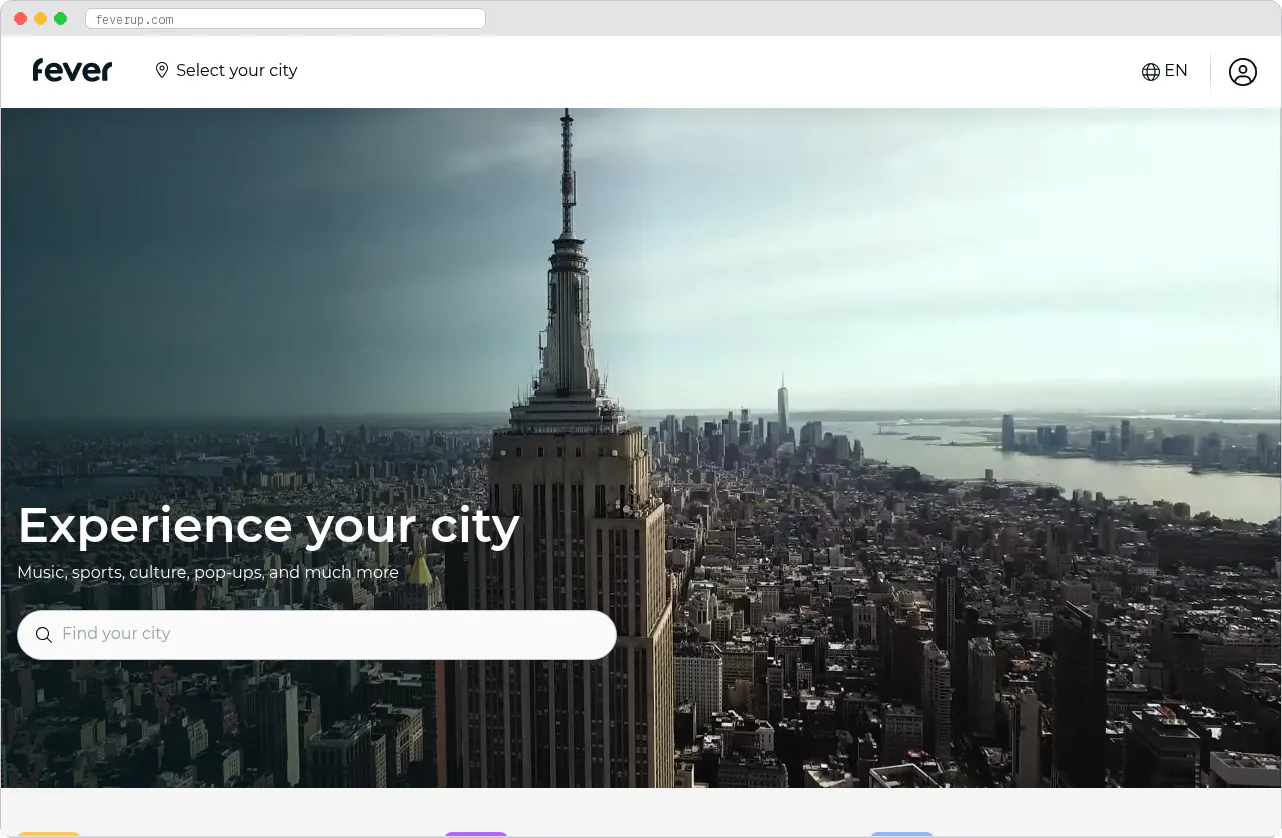
Fever has revolutionized how people discover and book experiences in their cities. Founded in Madrid in 2014 by Alexandre Perez Casares, the marketplace now operates in over 450 cities worldwide, generating roughly more than $500 million in annual revenue as of 2024.
Unlike traditional event ticketing platforms that simply list whatever organizers submit, Fever takes a highly curated approach. The company employs local teams in each market to identify, develop, and promote unique experiences that align with current trends and local culture. This curation strategy has helped Fever achieve a remarkable 95% customer satisfaction rate and build a loyal user base of over 50 million registered users.
Fever's success stems from solving a specific problem: the overwhelming choice paralysis people face when trying to find interesting things to do. Rather than scrolling through hundreds of random events, users discover carefully selected experiences that Fever's local teams have vetted for quality, uniqueness, and Instagram-worthiness.
How Fever works for users
For buyers, Fever functions as a discovery engine first and booking platform second. Users browse featured experiences on the homepage, which are personalized based on location, past bookings, and browsing behavior. Each experience includes professional photography, detailed descriptions, user reviews, and clear pricing.
The booking process is streamlined: users select their preferred date and time slot, choose the number of tickets, and complete payment through Fever's secure checkout. They receive digital tickets via email and the Fever mobile app, which includes features like event reminders and GPS directions to venues.
For experience creators and venue partners, Fever offers both a marketplace platform and production services. Established event organizers can list their experiences directly through Fever's partner portal. However, Fever's unique value proposition lies in its "Fever Originals" program, where the company collaborates with local venues and creators to develop entirely new experiences based on market research and trending interests.
Fever's business model
Fever operates on a commission-based revenue model, typically charging 15-30% commission on ticket sales. However, their approach differs significantly from traditional marketplaces. For Fever Originals experiences, the company often acts as co-producer, sharing both investment risk and revenue upside with venue partners.
The platform also generates revenue through premium placements and advertising. Event organizers can pay for featured positioning, while brands sponsor curated collections or experiences. For example, a luxury hotel chain might sponsor Fever's "Romantic Date Ideas" collection, with their rooftop bar featured prominently.
Fever's dynamic pricing model adjusts ticket prices based on demand, time until event, and historical booking patterns. Popular experiences often start at lower "early bird" prices that increase as the event date approaches or as capacity fills up.
Essential features for an event marketplace like Fever
Building a successful event discovery and booking platform requires sophisticated functionality that goes beyond basic e-commerce. Here are the core features that make platforms like Fever successful:
Location-based discovery and search
Location is fundamental to event marketplaces. Users need to find experiences happening near them, whether they're locals looking for weekend activities or travelers seeking unique experiences in a new city.
Effective location-based search includes multiple layers: city-level browsing for travelers, neighborhood filtering for locals, and distance-based results for users willing to travel further for special experiences. The search should integrate with mapping services to show venue locations, provide directions, and estimate travel times.
Fever's success with location-based discovery comes from their local market expertise. Each city has dedicated teams who understand local transportation patterns, popular neighborhoods, and cultural preferences, informing both the experiences they promote and how they present location information.
Dynamic event calendars and availability
Event marketplaces face unique inventory challenges. Unlike rental platforms where a property might be available for months, events have fixed dates and limited capacity. Your platform needs sophisticated calendar management that handles recurring events, multiple time slots, capacity limits, and waitlists.
Dynamic availability display becomes crucial during high-demand periods. Users should see real-time seat counts, multiple date options for recurring experiences, and clear information about sold-out events with waitlist options.
Fever's calendar system excels at showing temporal scarcity without creating fake urgency. They display how many tickets remain at the current price level and when prices will increase, helping users make informed booking decisions.
Rich media and experience presentation
Event experiences are inherently visual and aspirational. Your marketplace needs to showcase experiences in ways that inspire bookings. This means supporting high-quality photo galleries, video content, virtual tours, and detailed descriptions that help users visualize the experience.
User-generated content becomes particularly valuable for event marketplaces. Past attendees' photos and videos provide social proof and help set accurate expectations. Integration with social media platforms can automatically surface user posts tagged with your events.
Fever invests heavily in professional photography and videography for their curated experiences. They understand that the quality of media directly impacts conversion rates and helps justify premium pricing.
Reviews and social proof systems
Trust is critical when people are booking experiences they've never tried before. Your platform needs robust review systems that capture both quantitative ratings and qualitative feedback about different aspects of the experience.
Effective review systems for events should address timing (did the event start on time?), venue quality, value for money, and whether the experience matched expectations. Some platforms also allow reviews of specific time slots, as the same experience might vary significantly between afternoon and evening sessions.
Fever's review system encourages detailed feedback by prompting users with specific questions about different aspects of their experience. They also highlight reviews from verified attendees and use review data to improve future iterations of recurring experiences.
Secure payment processing with event-specific features
Event bookings require payment processing that handles the unique challenges of the events industry. This includes support for group bookings, partial refunds for cancelled events, dynamic pricing changes, and complex fee structures.
Refund policies become particularly important for event marketplaces. Users need clear information about cancellation policies, which often vary based on how far in advance they cancel and whether the event is weather-dependent.
Fever processes payments immediately upon booking but structures their refund policies to balance user flexibility with organizer needs. They offer full refunds for events cancelled by organizers and partial refunds for user cancellations within specified timeframes.
Mobile-first design and functionality
Event discovery often happens spontaneously, making mobile optimization crucial. Users might browse experiences while commuting, book last-minute activities, or check event details while already en route to a venue.
Mobile functionality should include location-based recommendations, easy ticket access, push notifications for event reminders and last-minute deals, and smooth sharing to social media platforms.
Fever's mobile app includes features like "happening now" filters for spontaneous users, GPS-based check-ins at venues, and the ability to transfer tickets to friends directly through the app.
Fever's competitive landscape
Understanding Fever's competitors helps illustrate different approaches to event marketplace business models and positioning:
Eventbrite: The democratized approach
Eventbrite operates as an open platform where anyone can create and promote events. This democratized model creates massive inventory diversity but requires users to filter through varying quality levels. Eventbrite excels at serving professional event organizers, nonprofits, and corporate events with robust organizer tools and analytics.
Eventbrite's strength lies in its comprehensive event management features: custom registration forms, attendee management, promotional tools, and detailed reporting. However, this complexity can overwhelm casual users seeking simple event discovery.
Where Fever curates experiences for consumers, Eventbrite empowers organizers to reach audiences directly. This fundamental difference affects everything from user interface design to revenue optimization strategies.
Ticketmaster: The venue partnership model
Ticketmaster dominates large-venue events through exclusive partnerships with stadiums, theaters, and major entertainment venues. Their business model relies on controlling primary ticket distribution for high-demand events, allowing them to charge significant service fees.
Ticketmaster's scale enables advanced features like verified resale marketplaces, dynamic pricing for major events, and integration with venue loyalty programs. However, their focus on large events leaves gaps in the unique, intimate experiences that Fever specializes in.
The competitive dynamic between platforms like Fever and Ticketmaster illustrates the "riches in niches" principle. While Ticketmaster owns mainstream entertainment, smaller platforms can succeed by serving underserved experience categories.
Airbnb Experiences: Platform expansion strategy
Airbnb Experiences launched in 2016 as an extension of Airbnb's accommodation marketplace. Leveraging their existing host community, Airbnb enables locals to offer tours, workshops, and unique activities to travelers.
Airbnb's approach emphasizes authentic, local experiences hosted by residents. This peer-to-peer model creates inventory that traditional tour companies can't replicate but requires extensive host onboarding and quality control.
The integration with Airbnb's accommodation platform provides cross-selling opportunities but also limits the addressable market primarily to travelers rather than locals seeking entertainment.
GetYourGuide: The tourism focus
GetYourGuide specializes in tourism activities and attractions, serving travelers seeking tours, museum tickets, and destination experiences. Their business model combines marketplace commissions with direct partnerships with tourism operators.
GetYourGuide's strength lies in their comprehensive destination coverage and integration with travel booking workflows. They excel at serving tourists who are planning trips and want to book activities alongside flights and hotels.
However, GetYourGuide's tourism focus means they don't address the local entertainment market that represents a significant portion of Fever's business.
How to build a marketplace like Fever
Building a successful event marketplace requires understanding both the technical platform requirements and the business model challenges unique to the events industry. Here's a practical approach based on proven marketplace development strategies:
Step 1: Define your marketplace niche
Fever's success comes from their clear positioning: curated, Instagram-worthy experiences for urban millennials and Gen Z users. Your marketplace needs equally clear positioning to avoid competing directly with established players across all categories.
Successful event marketplace niches might include corporate team building activities, family-friendly experiences, outdoor adventures, food and drink experiences, wellness and self-care activities, or culturally specific events for particular communities.
The key is identifying underserved audiences or experience types where you can provide superior value compared to existing platforms. This might mean better curation, more convenient booking processes, or serving geographic markets that larger platforms overlook.
Step 2: Start with supply-side validation
Event marketplaces face a chicken-and-egg challenge, but starting with supply typically works better than starting with demand. Event organizers and venue owners are often eager to find new distribution channels, especially if you can offer them access to audiences they're not currently reaching.
Begin by identifying 10-15 high-quality experience providers in your target market. This might include independent tour guides, cooking instructors, wellness practitioners, or venue owners with interesting spaces. Focus on providers who already have some customer base but struggle with marketing or booking management.
Validate your concept by manually facilitating bookings between these providers and your initial users. This approach lets you test your value proposition without building complex platform features.
Step 3: Build your minimum viable platform
Your initial platform should focus on essential booking functionality rather than advanced features like dynamic pricing or complex recommendation algorithms. Core requirements include user registration and profiles, experience listing creation with photos and descriptions, calendar-based availability management, secure payment processing with commission structure, basic search and filtering, and booking confirmation and communication systems.
Trust and safety features become critical even in early versions. This includes identity verification for experience providers, clear cancellation and refund policies, customer support contact methods, and basic review systems.
Sharetribe provides an ideal foundation for event marketplace MVPs because it includes booking calendars, location-based search, commission-based payments, and mobile-responsive design out of the box. You can launch a functional event marketplace in days rather than months, letting you focus on supply acquisition and user experience optimization.
Step 4: Focus on local market penetration
Fever's expansion strategy emphasizes deep market penetration before geographic expansion. Apply this approach by becoming the go-to platform for your category in a single city or region before expanding elsewhere.
Local market penetration requires understanding cultural preferences, seasonal patterns, transportation logistics, and competitive landscapes specific to your market. This knowledge helps you curate better experiences and market more effectively than platforms trying to serve all markets generically.
Build relationships with local event organizers, venue owners, tourism boards, and community organizations. These partnerships provide both inventory sources and marketing distribution channels.
Step 5: Implement advanced features based on user feedback
Once you've validated your basic concept and achieved initial liquidity, invest in features that differentiate your platform and improve unit economics. This might include dynamic pricing based on demand patterns, personalized recommendations using browsing and booking history, waitlist management for sold-out experiences, group booking functionality with discounts, integration with social media for sharing and discovery, or mobile apps with location-based notifications.
Fever's success with premium features like VIP experiences and exclusive access illustrates how event marketplaces can increase average order values through product differentiation.
Step 6: Scale through geographic expansion
Geographic expansion for event marketplaces requires more than simply turning on your platform in new cities. Each new market needs local supply development, marketing partnerships, and operational support.
Successful expansion typically involves hiring local market managers who understand regional preferences and can build supplier relationships. This investment in local expertise differentiates successful event platforms from those that fail to gain traction in new markets.
Development approaches for building an event marketplace
The approach you choose for building your event marketplace significantly impacts your time to market, development costs, and long-term scalability. Here's a realistic assessment of your options:
Custom development from scratch
Custom development gives you complete control over features, design, and technical architecture but requires significant time and financial investment. Event marketplaces need complex functionality including calendar management, dynamic pricing, payment processing with marketplace compliance, mobile optimization, and integration with mapping and communication services.
Development timelines typically range from 8-18 months for a comprehensive platform, with costs often exceeding $100,000 when including design, development, testing, and deployment. Ongoing maintenance and feature development require dedicated technical resources.
Custom development makes sense if you have unique technical requirements that existing platforms can't accommodate, significant funding to support extended development timelines, or technical expertise within your founding team.
No-code marketplace builders
No-code platforms like Sharetribe enable rapid marketplace development without programming skills. For event marketplaces specifically, look for platforms that include calendar booking functionality, location-based search capabilities, mobile-responsive design, commission-based payment processing, and review and rating systems.
Sharetribe's event marketplace template includes features specifically designed for experience bookings: time-slot management, capacity limits, location-based discovery, and mobile-optimized booking flows. You can launch a functional marketplace in 1-2 weeks and customize design, workflow, and features based on user feedback.
The no-code approach works well for validating your marketplace concept quickly and cost-effectively. As your business grows, you can add custom features through Sharetribe's development APIs or migrate to a fully custom solution if needed.
Hybrid approach: No-code foundation with custom features
Many successful marketplaces start with no-code platforms and add custom functionality as they grow. This approach provides fast time to market while maintaining flexibility for future development.
Sharetribe's architecture specifically supports this hybrid approach. You can launch with the standard booking and payment features, then add custom integrations with social media platforms, advanced analytics dashboards, API connections to external services, or custom mobile applications.
This strategy lets you invest development resources in features that provide competitive advantages rather than rebuilding standard marketplace functionality.
Cost considerations for building an event marketplace
Event marketplace development costs vary dramatically based on your approach and feature requirements. Here's a realistic breakdown:
No-code marketplace with Sharetribe
First year operating costs:
- Sharetribe subscription: $3,588 annually (Pro plan)
- Domain and basic branding: $500
- Professional photography for featured experiences: $2,000
- Email marketing platform: $600
- Customer support tools: $1,200
- Total first-year costs: $7,888
This budget assumes you're handling content creation, marketing, and customer support yourself. Transaction fees are additional but only apply when you're generating revenue.
Custom development approach
Development and first-year costs:
- Initial development (8-12 months): $80,000-150,000
- Design and user experience: $15,000-25,000
- Cloud hosting and infrastructure: $6,000-12,000 annually
- Third-party service integrations: $3,600 annually
- Ongoing maintenance and updates: $24,000-48,000 annually
- Total first-year investment: $128,600-238,600
Custom development costs can escalate quickly, especially when you factor in the need for ongoing technical maintenance and feature development.
Revenue considerations
Event marketplaces typically achieve profitability through commission structures ranging from 10-30% of ticket sales. Fever's average commission is approximately 20%, with higher rates for exclusive experiences they help develop.
Breakeven analysis should consider your customer acquisition costs, average order values, and repeat booking rates. Successful event marketplaces often see 40-60% of users book multiple experiences within their first year, improving unit economics significantly.
Why Sharetribe works well for event marketplaces
Sharetribe's platform addresses the specific challenges that event marketplace founders face:
Speed to market advantage
Event marketplaces benefit enormously from rapid iteration and user feedback. Sharetribe enables you to launch a functional booking platform in days rather than months, letting you start learning about your market immediately.
This speed advantage is particularly valuable in the events industry, where seasonal patterns, cultural trends, and competitive dynamics change quickly. The sooner you can start testing different experience categories and pricing models, the faster you can identify what works in your specific market.
Built-in booking and calendar management
Managing event availability, capacity limits, and booking conflicts requires sophisticated calendar functionality that's expensive and time-consuming to develop from scratch. Sharetribe includes this functionality as a core platform feature, handling complex scenarios like recurring events, multiple time slots, and capacity management automatically.
Commission-based payment processing
Event marketplaces need payment processing that supports commission-based business models while complying with marketplace payment regulations. Sharetribe's integration with Stripe Connect handles the complex technical and legal requirements automatically, including proper fund holding, commission splitting, and tax reporting.
Mobile-optimized experience
Event discovery and booking increasingly happen on mobile devices, especially for spontaneous activities and last-minute bookings. Sharetribe's responsive design and mobile-optimized booking flows ensure your marketplace works smoothly across all devices without additional development work.
Scalability without technical complexity
As your event marketplace grows, you'll need features like advanced search, personalized recommendations, and integration with third-party services. Sharetribe's architecture supports these additions through custom development while maintaining the core platform automatically.
Successful Sharetribe customers like Biketribe and Rentals United started with the no-code platform and added custom features as they grew, avoiding the need to rebuild their entire platform.
Next steps for building your event marketplace
Building a successful event marketplace requires balancing speed to market with long-term scalability. Here's a practical action plan:
- Week 1-2: Market validation
Identify your target niche and geographic market. Interview potential experience providers about their current distribution challenges and booking processes. Survey potential users about how they currently discover and book experiences. - Week 3-4: Build your MVP
Set up your marketplace using Sharetribe's free trial. Create initial experience listings with high-quality photos and descriptions. Test the booking flow with friends and early supporters. - Month 2-3: Early supplier onboarding
Recruit 10-15 high-quality experience providers in your target market. Help them create compelling listings and set competitive pricing. Start facilitating bookings and gathering user feedback. - Month 4-6: Local market development
Focus on achieving liquidity in your initial market before expanding. Build partnerships with local tourism boards, hotels, and community organizations for cross-promotion. Implement review systems and customer support processes. - Month 6+: Scale and optimize
Add custom features based on user feedback and competitive needs. Consider geographic expansion to similar markets. Explore partnership opportunities with complementary platforms.
The event marketplace industry continues growing rapidly, driven by consumer preference for experiences over material goods and the recovery of the events industry post-pandemic. With the right approach and platform, there's significant opportunity to build a successful business serving underserved experience categories or geographic markets.
Remember that your success will depend more on understanding your market and serving your users exceptionally well than on having the most technically sophisticated platform. Start simple, launch fast, and iterate based on real user feedback.
Frequently asked questions
How much does it cost to build an event marketplace like Fever?
Costs vary by approach. Using Sharetribe, you can launch for under $8,000 in the first year. Custom development typically costs $80,000-150,000 initially plus ongoing maintenance. No-code solutions offer the fastest, most affordable path to market validation.
What business model does Fever use and how profitable is it?
Fever uses a commission-based model, charging 15-30% on ticket sales with an average of 20%. They also co-produce exclusive experiences, sharing both investment and revenue. The company generates around over $500 million annually across 450+ cities.
What are the essential features needed for an event booking marketplace?
Core features include location-based search, calendar booking with availability management, secure payment processing with commissions, mobile-responsive design, review systems, and rich media support for showcasing experiences.
How long does it take to launch an event marketplace like Fever?
Timeline depends on your approach. With Sharetribe, you can launch in 1-2 weeks. Custom development takes 8-18 months. The key is starting simple and iterating based on user feedback rather than building complex features upfront.
How does Fever compete with Eventbrite and Ticketmaster?
Fever focuses on curated, unique experiences rather than open event listings (Eventbrite) or large venue events (Ticketmaster). Their local teams select Instagram-worthy experiences, creating a premium discovery platform rather than a general ticketing service.
What makes event marketplaces successful compared to other marketplace types?
Success requires strong local market knowledge, high-quality curation, mobile optimization for spontaneous bookings, and trust-building through reviews and clear policies. The time-sensitive nature of events makes user experience and reliability crucial.
Start your 14-day free trial
Create a marketplace today!
- Launch quickly, without coding
- Extend infinitely
- Scale to any size
No credit card required