How to build a website like Vrbo
Vrbo connects vacation rental owners with travelers, generating $3+ billion annually through commissions. This guide shows you how to build a similar rental marketplace platform, from validating your niche to launching your MVP and scaling your business.
Published: Mar 20, 2024
Last updated: Mar 19, 2026
Why Vrbo became the vacation rental giant
Vrbo (Vacation Rentals by Owner) has become one of the world's largest vacation rental marketplaces, facilitating millions of bookings annually and generating roughly over $3 billion in revenue for parent company Expedia Group. What started in 1995 as a simple classified site for vacation rental owners has evolved into a sophisticated platform connecting property owners with travelers in 190+ countries.
Vrbo's success stems from its laser focus on whole-home vacation rentals rather than shared spaces. While competitors like Airbnb expanded into experiences and shared rooms, Vrbo maintained its identity as the platform for families and groups seeking entire properties. This positioning has proven remarkably durable, even as the vacation rental market has exploded, Vrbo continues to capture significant market share by serving travelers who prioritize space, privacy, and amenities over novelty.
The platform's staying power also reflects smart business decisions made early on. Vrbo pioneered annual subscription models for hosts alongside pay-per-booking options, giving property managers flexibility in how they engage with the platform. Their integration into Expedia's broader travel ecosystem provides distribution advantages that standalone competitors struggle to match.
For aspiring marketplace founders, Vrbo represents a compelling case study in niche focus. Rather than trying to be everything to everyone, Vrbo identified a specific segment, whole-home vacation rentals, and built the best possible platform for that market. Today's founders can apply similar thinking to underserved niches within the broader vacation rental space.
How Vrbo's marketplace works
Vrbo operates as a classic two-sided marketplace connecting vacation rental owners with travelers seeking accommodations. Property owners create detailed listings showcasing their homes, apartments, cabins, or other rental properties. These listings include professional photos, comprehensive descriptions, availability calendars, house rules, and local area information.
Travelers search Vrbo's inventory using location-based filters, refining results by dates, property type, amenities, and budget. The platform's search algorithm considers factors like property ratings, response times, and booking conversion rates to surface the most relevant and reliable listings.
When travelers find a suitable property, they can message the owner directly through Vrbo's platform or submit a booking request. Vrbo facilitates the entire transaction, processing payments securely and holding funds until after check-in. This escrow-like system protects both parties and reduces the risk of fraud or disputes.
After the stay, both guests and hosts can leave reviews, building the reputation system that helps future users make informed decisions. This two-way accountability creates a self-regulating community where quality hosts and respectful guests are rewarded with better visibility and more bookings.
Vrbo's revenue model centers on commissions charged to both property owners and travelers. Property owners typically pay between 5-15% of the booking value depending on their subscription plan, while travelers pay a service fee that varies by booking amount and length of stay. This dual-sided commission structure ensures Vrbo profits from successful transactions while keeping barriers to entry relatively low.
Essential features for a Vrbo-like marketplace
Building a successful vacation rental marketplace requires specific functionality that differs significantly from standard e-commerce platforms. These features address the unique challenges of location-based, high-value bookings between strangers.
Property listings with rich media
Vacation rentals are experience-driven purchases where visual storytelling makes or breaks booking decisions. Property listings need comprehensive photo galleries, detailed descriptions, and structured information about amenities, house rules, and local attractions. Unlike product marketplaces where standardized specifications work, vacation rental listings require flexibility to showcase each property's unique character and selling points.
Successful listings typically include 15-25 high-quality photos covering every room, outdoor spaces, and neighborhood highlights. Property descriptions should be optimized for both search engines and human readers, incorporating local keywords while painting a vivid picture of the guest experience.
Advanced search and location mapping
Location-based search is fundamental to vacation rental platforms, but effective implementation requires more sophistication than simple radius searches. Users need to filter by specific neighborhoods, proximity to landmarks, or even drawing custom boundaries on maps to define their ideal location.
Search functionality should support date-based availability filtering, ensuring users only see properties available for their travel dates. Advanced filters for property type, guest capacity, amenities, and price ranges help users narrow down options efficiently. Map-based search results with pricing overlays give users immediate visual context for their options.
Availability management and booking calendars
Real-time availability management prevents double-bookings and reduces friction in the booking process. Property owners need intuitive calendar interfaces to block dates, set seasonal pricing, and manage minimum stay requirements. The system should automatically update availability across all channels when bookings are confirmed.
Calendar synchronization with other platforms (like Airbnb or direct booking sites) helps property managers avoid conflicts and maximize occupancy. However, this feature requires careful implementation to prevent sync errors that could result in overbookings.
Secure payment processing with escrow
Vacation rental transactions involve significant amounts of money and extended periods between booking and service delivery. Payment systems need to handle various scenarios: full payment at booking, deposit plus balance due before arrival, and damage deposit collection.
Escrow functionality protects both parties by holding funds until check-in is confirmed. This builds trust for travelers making large payments to unfamiliar hosts while ensuring property owners receive payment for confirmed stays. The system should also handle cancellations, refunds, and dispute resolution according to platform policies.
Two-way messaging and communication
Unlike commodity purchases, vacation rentals require significant communication between hosts and guests. Built-in messaging systems allow users to ask questions, coordinate check-in procedures, and address issues without exposing personal contact information.
Message threads should be accessible through both web and mobile interfaces, with push notifications ensuring timely responses. Integration with booking details allows users to reference specific reservations within conversations.
Review and reputation systems
Trust between strangers is the foundation of vacation rental marketplaces. Two-way review systems allow both guests and hosts to rate their experiences, creating accountability and helping future users make informed decisions.
Review systems should prevent manipulation through verified booking requirements and timing restrictions. Reviews typically cover cleanliness, accuracy of listing descriptions, communication quality, and overall experience. Aggregate scores and detailed feedback help establish reputation over time.
Mobile optimization and app functionality
Vacation rental bookings increasingly happen on mobile devices, especially for last-minute trips or travelers researching destinations on the go. Mobile interfaces need to prioritize search, booking, and communication features while maintaining the visual appeal that drives booking decisions.
Mobile apps can enhance the experience with features like offline access to booking details, GPS-based property location, and push notifications for messages and booking updates.
10 steps to build a vacation rental marketplace like Vrbo
Creating a successful vacation rental marketplace follows a strategic process that balances speed to market with sustainable business fundamentals.
1. Identify your niche and validate demand
Vrbo succeeded by focusing on whole-home vacation rentals rather than competing directly with hotels across all accommodation types. Today's founders need even more specific positioning to compete effectively.
Consider niches like luxury vacation rentals, pet-friendly properties, accessible accommodations, or location-specific markets underserved by major platforms. For example, Vacasa built a significant business focusing on professional property management services, while Plum Guide curates high-end homes with rigorous quality standards.
Validate your niche by researching existing supply and demand. Look for gaps in current platforms where travelers struggle to find what they need or property owners feel underserved. Conduct interviews with potential users to understand their pain points with existing solutions.
2. Choose your business model and pricing strategy
Vrbo offers property owners two main options: annual subscriptions (around $499/year) for unlimited bookings or pay-per-booking fees (typically 5% of booking value). Travelers pay service fees ranging from 6-15% depending on booking amount and length of stay.
Your business model should align with your target market's preferences and booking patterns. High-frequency hosts may prefer subscription models, while occasional listers favor pay-per-booking. Consider your competitive position when setting rates, new platforms often need to offer better value than established players to attract initial users.
3. Start with a focused geographic market
Even global platforms like Vrbo benefit from geographic focus during launch phases. Concentrating initial efforts on a specific city, region, or destination type allows you to build market density and understand local dynamics.
Choose markets where you have personal knowledge, existing connections, or identified underserved demand. Success in one market creates a foundation for expansion and provides case studies to attract users in new locations.
4. Build your minimum viable platform (MVP)
Your initial platform should demonstrate core marketplace functionality without overwhelming complexity. Essential MVP features include property listing creation, search and filtering, basic booking functionality, secure payments, and user messaging.
Focus on user experience fundamentals: clean design, intuitive navigation, and reliable functionality. Trust signals like professional design and clear policies matter more at this stage than advanced features. Your MVP should feel legitimate and trustworthy even if it lacks sophisticated functionality.
5. Recruit initial property owners (supply side)
Marketplaces need supply before they can attract demand. Start by identifying property owners in your target market and understanding their current challenges with existing platforms or direct marketing.
Reach out through property management companies, vacation rental associations, Craigslist, and social media groups. Offer compelling reasons to try your platform: lower fees, better marketing tools, or superior customer service. Consider incentives like free trial periods or reduced commissions for early adopters.
6. Launch to travelers (demand side)
Once you have quality inventory, begin attracting travelers through targeted marketing. Focus on channels where your ideal customers spend time: travel forums, social media groups, or local tourism websites.
Content marketing can be particularly effective for vacation rental platforms. Create destination guides, travel tips, or local event calendars that attract organic traffic and establish your expertise in your target markets.
7. Optimize for conversion and user experience
Monitor how users interact with your platform and identify friction points in key workflows: search, booking, and communication. Use analytics to understand where users drop off and test improvements iteratively.
Pay special attention to mobile experience, as many vacation rental bookings happen on smartphones. Page load speed, image optimization, and streamlined booking flows significantly impact conversion rates.
8. Implement trust and safety measures
As booking volume grows, invest in verification systems, fraud prevention, and customer support. Identity verification for both hosts and guests reduces risk and increases platform trustworthiness.
Develop clear policies for cancellations, disputes, and property issues. Consistent, fair policy enforcement builds user confidence and reduces platform liability.
9. Scale marketing and expand geographically
Once you've achieved product-market fit in your initial market, develop systematic approaches to enter new locations. Create playbooks for supply recruitment, demand generation, and local partnerships that can be replicated across markets.
Invest in SEO to capture organic search traffic for destination-based queries. Vacation rental searches often include location keywords, making SEO a cost-effective long-term acquisition channel.
10. Add advanced features and differentiation
As your platform matures, add features that differentiate your offering from competitors. This might include professional photography services, revenue management tools for hosts, or curated collections of unique properties.
Consider features that increase switching costs and platform stickiness: integrated channel management, detailed analytics for hosts, or loyalty programs for frequent travelers.
Major Vrbo competitors and what they do differently
Understanding the competitive landscape helps founders identify opportunities for differentiation and position their platforms effectively.
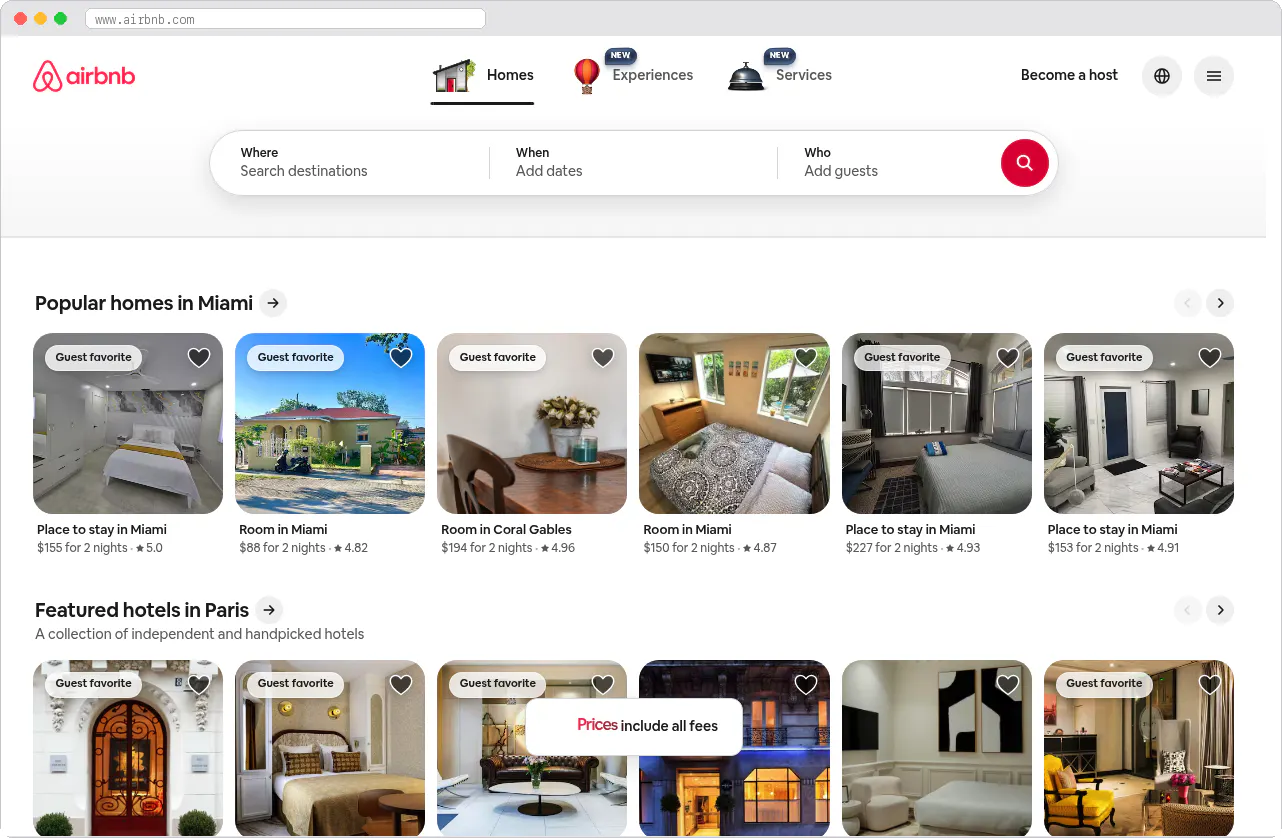
Airbnb: The experience-focused giant
Airbnb is Vrbo's largest direct competitor, with a broader scope that includes shared spaces, unique accommodations, and experiences beyond lodging. While Vrbo focuses exclusively on whole-home vacation rentals, Airbnb offers everything from shared rooms to castles to local tours and activities.
Airbnb's host community tends to be more diverse, including both professional property managers and occasional home-sharers. Their platform emphasizes personal connection and unique experiences over standardized accommodations. For founders, Airbnb represents the risk of platform scope creep but also demonstrates the potential of community-driven growth.
Booking.com: The hotel platform expanding into rentals
Booking.com has aggressively expanded into vacation rentals, using its massive hotel booking audience to cross-sell vacation rental inventory. Their approach focuses on integrating rental options into existing travel booking workflows rather than creating dedicated vacation rental experiences.
Booking.com's strength lies in distribution and marketing scale, but their vacation rental experience often feels secondary to their core hotel business. This creates opportunities for dedicated vacation rental platforms to offer superior specialized experiences.
Vacasa: The professional management focus
Vacasa built a business around professional property management services, offering full-service management including cleaning, maintenance, and guest services. Rather than just connecting property owners with travelers, Vacasa provides comprehensive property management solutions.
This approach appeals to property owners who want passive income without operational involvement. Vacasa's model requires more capital and operational complexity but creates stronger relationships with property owners and higher-quality guest experiences.
RedAwning and other niche players
Several smaller platforms serve specific niches within the vacation rental market. RedAwning focuses on family-friendly properties with detailed amenity filtering. Others specialize in luxury rentals, pet-friendly accommodations, or specific geographic regions.
These niche platforms demonstrate that successful vacation rental businesses don't require global scale. Focused positioning and superior service within specific segments can create sustainable competitive advantages.
How much does it cost to build a Vrbo-like platform?
Development costs vary significantly based on your approach, feature requirements, and technical complexity. Understanding different cost structures helps founders choose appropriate development paths.
Custom development from scratch
Building a vacation rental marketplace from scratch typically costs $30,000-$90,000+ for initial development, depending on feature complexity and development team rates. This includes basic listing management, search functionality, booking systems, payment processing, and user accounts.
Ongoing costs include hosting (typically $500-$5,000+ monthly depending on traffic), third-party service integrations, security monitoring, and developer maintenance. Many founders underestimate these ongoing operational costs when budgeting for custom development.
No-code marketplace builders
Platforms like Sharetribe allow launching vacation rental marketplaces without custom development. Sharetribe's pricing starts at $99/month for basic plans, with transaction fees of $0.99 per transaction on higher-tier plans.
This approach dramatically reduces upfront costs and development time while providing professional functionality from day one. The trade-off is less customization flexibility, though many platforms offer API access for custom integrations as businesses grow.
Hybrid approaches
Many successful marketplaces start with no-code solutions and add custom development as they scale. This approach validates business models quickly while preserving the option to add differentiated features later.
For example, you might launch with Sharetribe's standard features and later add custom integrations for professional photography services, dynamic pricing tools, or specialized property management workflows.
Why Sharetribe works well for vacation rental marketplaces
Sharetribe's platform addresses many challenges specific to vacation rental marketplaces, allowing founders to focus on business development rather than technical implementation.
Built-in vacation rental functionality
Sharetribe includes availability management, booking calendars, location-based search, and escrow payments designed specifically for rental marketplaces. These features work together smoothly without requiring custom integration work.
The platform handles complex rental-specific workflows like availability blocking, seasonal pricing, and cancellation processing that would require significant custom development on generic platforms.
Scalable payment processing
Vacation rental transactions involve large amounts, complex fee structures, and various payment timing scenarios. Sharetribe's integration with Stripe Connect handles these complexities while ensuring regulatory compliance across different markets.
The platform supports various fee structures (commission, subscription, listing fees) and automatically calculates and distributes payments to property owners after deducting platform fees.
Mobile-optimized user experience
Sharetribe's templates are designed for mobile-first user experiences, crucial for vacation rental platforms where many bookings happen on smartphones. The responsive design adapts to different screen sizes while maintaining visual appeal and functionality.
Extensibility for growth
As your marketplace grows, Sharetribe's API allows adding custom features without rebuilding core functionality. Many successful Sharetribe marketplaces start with standard features and add differentiating custom development as they scale.
This approach provides speed to market initially while preserving flexibility for future customization based on user feedback and competitive positioning.
Common challenges building vacation rental marketplaces
Understanding typical challenges helps founders prepare for obstacles and make informed decisions about platform development.
Supply-demand chicken-and-egg problem
Marketplaces need both property owners and travelers to create value, but neither group will join without the other already present. This challenge is particularly acute in vacation rentals where travelers expect substantial inventory for their specific dates and locations.
Successful founders solve this through creative bootstrapping: becoming early suppliers themselves, partnering with existing property managers, or focusing on such specific niches that even small inventory creates value.
Trust and safety at scale
Vacation rental platforms facilitate high-value transactions between strangers involving physical property access. Building trust requires sophisticated verification systems, clear policies, and consistent enforcement.
Platforms need to balance safety measures with user experience friction. Too much verification deters signups; too little creates safety issues that damage platform reputation.
Seasonal demand fluctuations
Most vacation rental markets experience significant seasonal variation, creating challenges for hosts' revenue stability and platform growth predictability. Successful platforms help hosts optimize for seasonal patterns through dynamic pricing tools and marketing support during slower periods.
Regulatory compliance across markets
Vacation rental regulations vary significantly by location and change frequently as governments respond to housing affordability concerns. Platforms need systems to track and enforce local compliance requirements while supporting hosts who may be unfamiliar with applicable regulations.
Building your vacation rental marketplace: next steps
Creating a successful vacation rental marketplace requires balancing speed to market with sustainable business fundamentals. The platforms that succeed focus relentlessly on user value rather than feature complexity.
Start by identifying a specific niche where you can provide superior value to both property owners and travelers. Validate demand through direct conversations with potential users before investing significant time or money in development.
Choose development approaches that allow rapid iteration based on user feedback. Whether using no-code tools like Sharetribe or custom development, prioritize launching quickly with core functionality over building comprehensive features that may not match user needs.
Focus early efforts on building trust and demonstrating value rather than scaling marketing spend. Word-of-mouth growth from satisfied users provides more sustainable growth than paid acquisition for early-stage marketplaces.
Remember that successful marketplaces are built on user value, not just technology. Vrbo's success comes from consistently serving vacation rental hosts and travelers better than alternatives, not from having the most sophisticated platform features.
With the right approach, today's founders can build meaningful businesses in the vacation rental space by serving specific niches better than generalist platforms. The technology to build great marketplace experiences is more accessible than ever, the challenge lies in understanding your users and delivering exceptional value.
Frequently asked questions
How much does it cost to build a website like Vrbo?
Costs vary by approach: no-code platforms like Sharetribe start around $99/month, while custom development typically costs $30,000-$90,000+ initially. Ongoing costs include hosting, maintenance, and third-party integrations.
What features does a vacation rental marketplace need?
Essential features include property listings with photos, location-based search, availability calendars, secure payment processing with escrow, two-way messaging, and review systems. Advanced features include dynamic pricing and professional photography services.
How do vacation rental marketplaces make money?
Most use commission-based models, charging property owners 5-15% and travelers 6-15% per booking. Alternative models include annual subscriptions for hosts or listing fees for property advertisements.
What makes Vrbo different from Airbnb?
Vrbo focuses exclusively on whole-home vacation rentals for families and groups, while Airbnb includes shared spaces, unique stays, and experiences. Vrbo targets privacy-seeking travelers rather than experience-focused ones.
How long does it take to launch a vacation rental marketplace?
Timeline depends on approach: no-code builders allow launching in 1-2 weeks, custom development takes 6+ months. Most successful founders prioritize quick launches with core features over comprehensive initial builds.
Can I compete with Vrbo and Airbnb as a new marketplace?
Yes, by focusing on underserved niches like luxury rentals, pet-friendly properties, or specific geographic markets. Success comes from serving specific user segments better than generalist platforms.
Start your 14-day free trial
Create a marketplace today!
- Launch quickly, without coding
- Extend infinitely
- Scale to any size
No credit card required