How to build a website like Tutor.com
Tutor.com connects students with professional tutors across 40+ subjects, processing millions of sessions annually. This guide shows how to build a similar tutoring marketplace, from validating your niche to launching and scaling your platform.
Published: Aug 9, 2024
Last updated: Mar 19, 2026
What is Tutor.com?
Tutor.com revolutionized online education by creating the first major platform to connect students with professional tutors for real-time, one-on-one learning sessions. Founded in 1998 by George Cigale and Manny Escudero, the platform began as a simple chat-based tutoring service and evolved into a comprehensive educational marketplace serving millions of students worldwide.
Today, Tutor.com operates as a subscription-based tutoring platform offering help across more than 40 subjects, from elementary math to advanced college coursework. The platform processes over 2 million tutoring sessions annually and maintains partnerships with thousands of libraries, schools, and organizations that provide free access to their students. What sets Tutor.com apart is its focus on instant availability, students can connect with qualified tutors 24/7 without scheduling appointments in advance.
The platform's success stems from solving a fundamental problem in education: the gap between when students encounter academic challenges and when help becomes available. Traditional tutoring requires scheduling, travel, and often significant expense. Tutor.com eliminated these barriers by creating an on-demand marketplace where students can get immediate help from vetted professionals at any time.

How Tutor.com works as a marketplace
Tutor.com operates as a service marketplace connecting two distinct user groups: students seeking academic help and professional tutors providing educational services. Unlike peer-to-peer tutoring platforms where anyone can become a tutor, Tutor.com maintains strict quality standards through a comprehensive vetting process.
For students, the platform provides instant access to subject-matter experts through a simple interface. Students log in, select their subject area, describe their specific question or topic, and get matched with an available tutor within minutes. Sessions take place in a virtual classroom environment featuring shared whiteboards, document sharing, and text chat. Students can work through homework problems, prepare for exams, or get help understanding difficult concepts in real-time.
For tutors, Tutor.com represents a flexible employment opportunity with professional oversight. Tutors must pass subject-specific tests, background checks, and mock tutoring sessions before joining the platform. Once approved, they can log in during their preferred hours and help students on a first-come, first-served basis. The platform handles all payment processing, session management, and quality assurance, allowing tutors to focus solely on teaching.
The marketplace model creates value for both sides: students get immediate, professional help without the hassle of scheduling or traveling, while tutors gain access to a steady stream of students without having to market themselves or handle business operations.
Tutor.com's business model and revenue
Tutor.com operates primarily on a subscription-based business model, though it also offers pay-per-session options for individual users. Most revenue comes from institutional partnerships with libraries, schools, and organizations that purchase bulk access for their students. This B2B2C approach provides predictable recurring revenue while reducing customer acquisition costs.
Individual consumers can purchase monthly subscriptions starting around $39.99 per month for unlimited sessions, or buy session packages ranging from single sessions to multi-session bundles. The platform also offers specialized services like essay review and standardized test preparation at premium pricing tiers.
Tutors are paid on an hourly basis, typically earning between $10-22 per hour depending on their qualifications and the subjects they teach. Tutor.com retains the difference between what customers pay and what tutors earn, plus subscription fees from customers who don't fully utilize their allotted session time.
The institutional partnership model is particularly powerful because it creates a win-win-win scenario: educational institutions can offer additional support to their students without hiring full-time staff, students get free access to professional tutoring, and Tutor.com enjoys stable, large-scale contracts that often span multiple years.
Essential features for a tutoring marketplace
Building a successful tutoring marketplace requires specific functionality that differs significantly from product-based marketplaces or even other service platforms. The real-time, interactive nature of tutoring creates unique technical and user experience requirements.
Real-time matching and availability system
Unlike appointment-based tutoring services, platforms like Tutor.com need sophisticated systems to match students with available tutors instantly. This requires real-time tracking of tutor availability, subject expertise, and queue management to ensure students never wait more than a few minutes for help. The matching algorithm must consider factors like tutor specialization, current workload, and student preferences while maintaining quality standards.
The system needs to handle peak demand periods, such as exam seasons or homework deadlines, when hundreds of students might request help simultaneously. Smart queue management and load balancing become critical to maintain service levels during high-traffic periods.
Virtual classroom technology
Tutoring sessions require robust virtual classroom functionality that goes beyond basic video conferencing. Essential components include shared whiteboards for working through problems visually, document sharing for reviewing assignments, screen sharing for software tutorials, and reliable text chat as a backup communication method.
The virtual classroom must work smoothly across devices and browsers, with minimal technical barriers for students who may not be tech-savvy. Session recording capabilities allow students to review explanations later, while integrated tools for drawing, highlighting, and annotating create an interactive learning environment.
Tutor vetting and quality management
Maintaining educational quality requires comprehensive tutor screening and ongoing performance monitoring. This includes subject-matter testing to verify expertise, background checks for safety, communication assessments to ensure tutors can explain concepts effectively, and continuous quality monitoring through session recordings and student feedback.
The platform needs systems to track tutor performance metrics like session completion rates, student satisfaction scores, and subject-specific expertise ratings. Automated alerts can flag tutors who need additional training or review, while high-performing tutors can be incentivized with better scheduling options or higher pay rates.
Subject matter organization and expertise matching
Tutoring platforms must organize knowledge domains effectively to ensure students reach tutors with the right expertise. This goes beyond simple subject categories to include grade levels, specific topics, and even teaching methodologies. For example, a calculus tutor might specialize in AP Calculus BC, while another focuses on remedial college calculus.
The platform needs flexible tagging and categorization systems that allow for precise matching while remaining simple for students to navigate. Advanced platforms might use machine learning to improve matching over time based on session outcomes and student feedback.
Session management and scheduling
While many tutoring sessions happen on-demand, platforms also need robust scheduling functionality for planned sessions. This includes calendar integration, automated reminders, rescheduling capabilities, and time zone management for global platforms.
Session management extends to handling cancellations, no-shows, and technical difficulties gracefully. Students shouldn't lose session credits due to technical problems, and tutors should be compensated fairly when students don't appear for scheduled sessions.
Progress tracking and reporting
Educational platforms benefit from showing students their learning progress over time. This might include topics covered, time spent on different subjects, improvement trends, and goal tracking. For institutional customers, aggregate reporting on student usage and outcomes helps demonstrate the platform's educational impact.
Parents and teachers often need access to student progress reports, requiring careful privacy controls and customizable sharing settings.
Tutor.com's competitors and alternatives
The online tutoring space has evolved significantly since Tutor.com's early dominance, with competitors taking different approaches to serve various market segments. Understanding the competitive landscape helps founders identify opportunities and differentiation strategies.
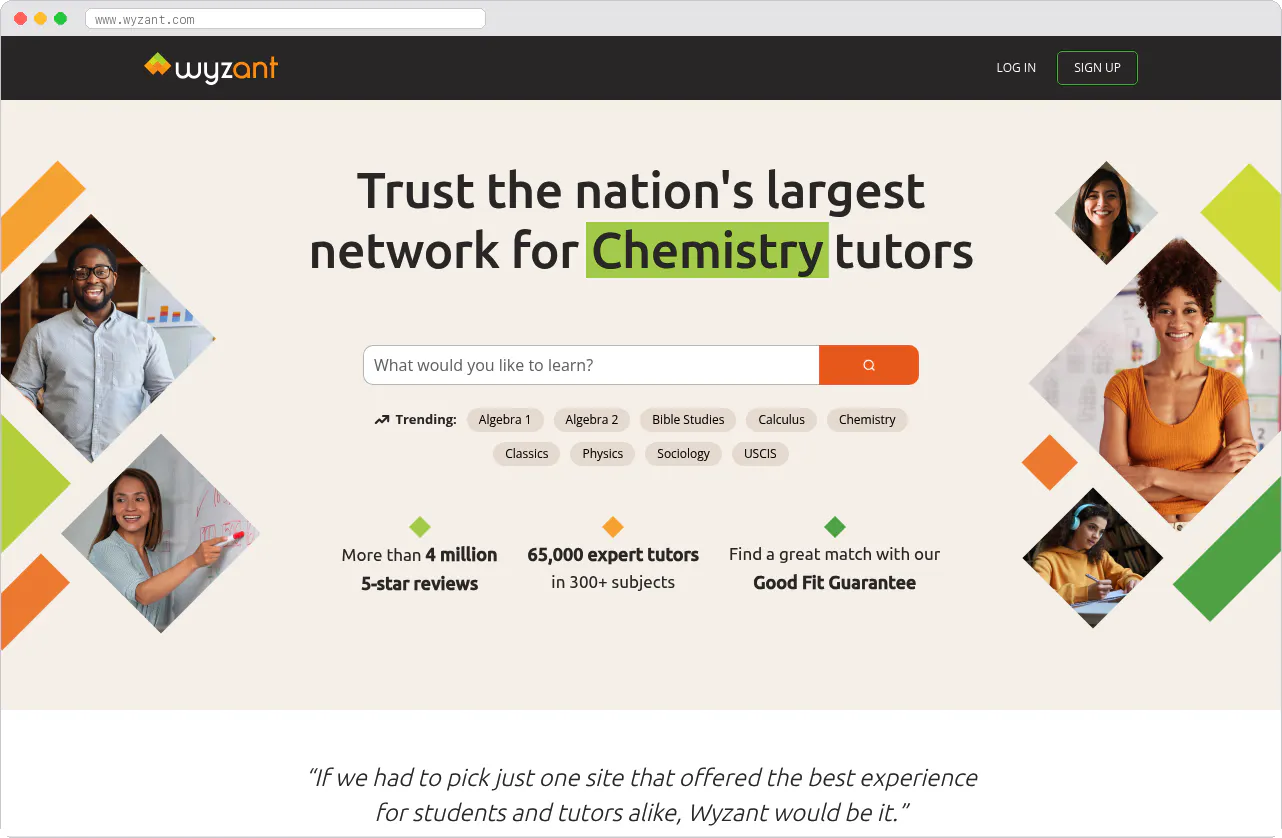
Wyzant operates as a peer-to-peer tutoring marketplace where students browse tutor profiles, compare rates, and book sessions directly. Unlike Tutor.com's instant matching system, Wyzant emphasizes student choice and relationship building between tutors and students. Tutors set their own rates (typically $30-80+ per hour) and can offer both online and in-person sessions.
The platform appeals to students who want to choose their specific tutor and build ongoing relationships, particularly for long-term subjects or test preparation. However, this model sacrifices the convenience of instant availability that makes Tutor.com attractive for quick homework help.
Chegg Tutors (now integrated into Chegg Study)
Chegg built its tutoring service as part of a broader educational ecosystem that includes textbook rentals, homework help, and study resources. The platform offered on-demand tutoring similar to Tutor.com but leveraged Chegg's existing student base and brand recognition in higher education.
Chegg's integration strategy created cross-selling opportunities, students using Chegg for textbooks could easily access tutoring services. However, the platform eventually shifted focus toward automated homework help and AI-powered study tools rather than live tutoring, suggesting challenges in the on-demand tutoring model's economics.
Varsity Tutors
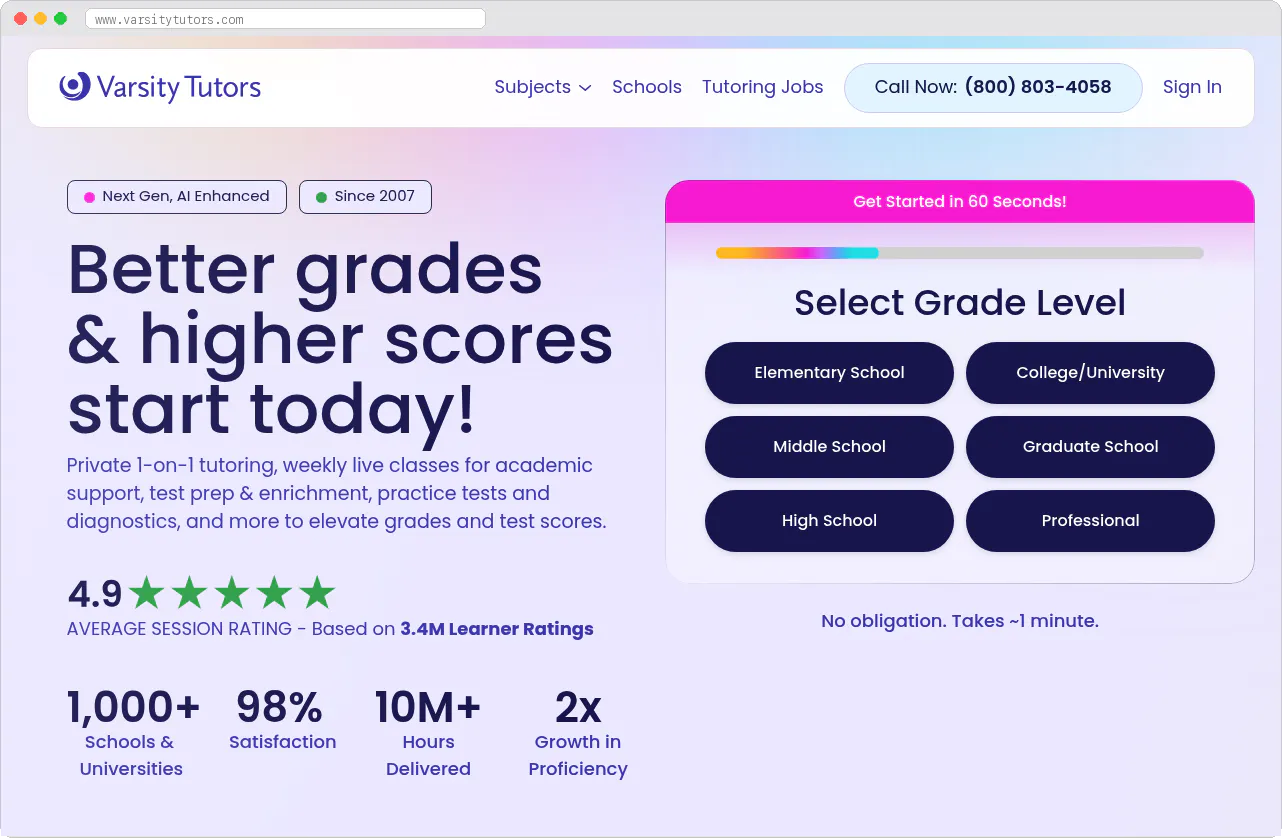
Varsity Tutors combines marketplace functionality with more structured educational programs. While students can book individual tutoring sessions, the platform also offers small group classes, test prep courses, and even full-curriculum programs for homeschooling families.
This hybrid approach allows Varsity Tutors to serve both the immediate help market (like Tutor.com) and the structured learning market (like traditional education companies). The diversity of offerings provides multiple revenue streams but creates a more complex user experience compared to Tutor.com's focused approach.
Preply
Preply focuses primarily on language learning, connecting students with native speakers and certified language teachers. The platform uses a marketplace model where students browse tutor profiles and book lessons, but with specialized features for language instruction like pronunciation tools and structured curriculum tracking.
Preply's success in the language learning niche demonstrates how vertical specialization can compete effectively against horizontal platforms like Tutor.com. By focusing deeply on one subject area, Preply can offer features and user experiences specifically optimized for language learning.
Khan Academy
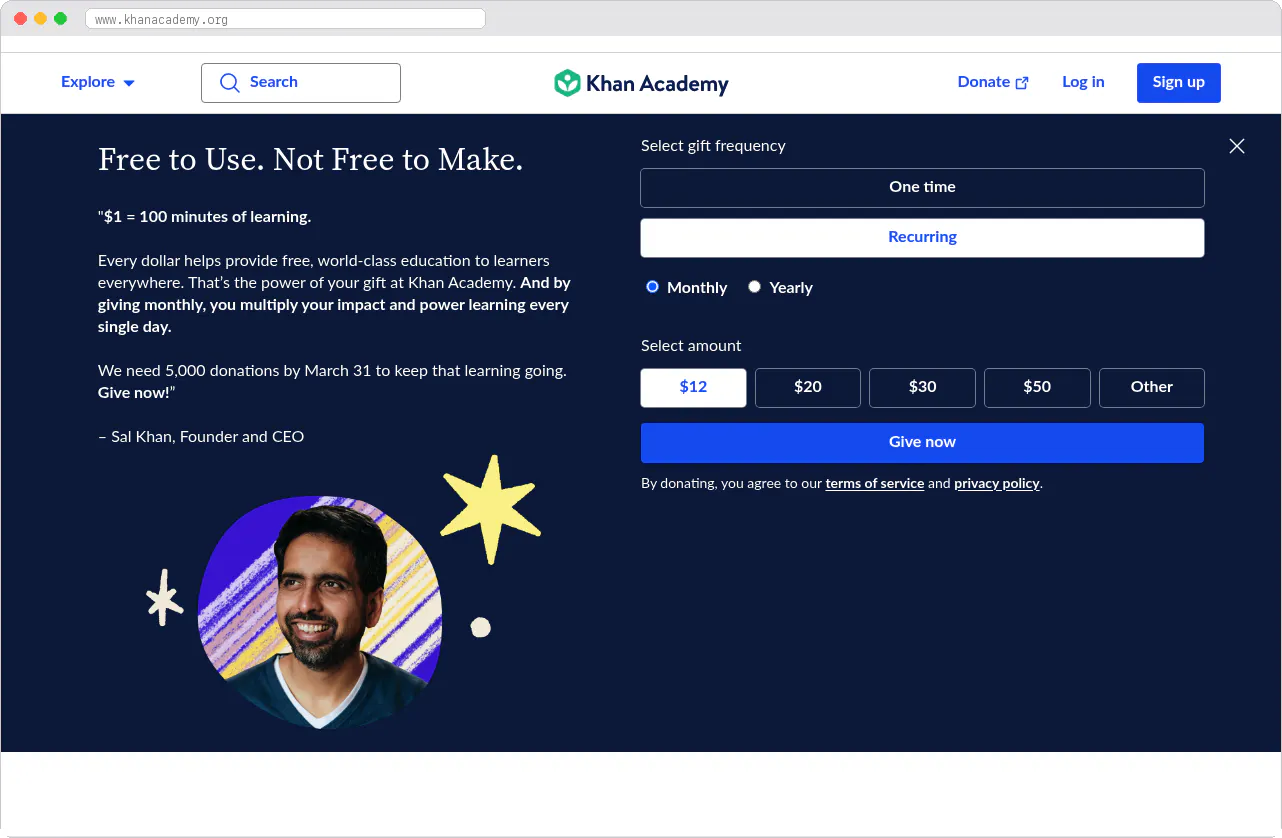
While not a tutoring marketplace, Khan Academy represents the free, self-paced alternative to paid tutoring services. The platform offers comprehensive video lessons, practice exercises, and personalized learning dashboards across K-12 subjects and some college-level topics.
Khan Academy's free model makes it attractive to price-sensitive students, but lacks the personalized, real-time help that tutoring marketplaces provide. Many students use Khan Academy for initial learning and turn to tutoring platforms when they need additional explanation or help with specific problems.
10 steps to build a tutoring marketplace like Tutor.com
Creating a successful tutoring marketplace requires both technical execution and deep understanding of educational needs. These steps outline a practical approach to building and launching your platform.
Step 1: Identify your tutoring niche
The online tutoring market is crowded, so successful new platforms typically focus on specific segments rather than competing directly with established players across all subjects. Consider opportunities like specialized subjects (coding, creative writing, music theory), specific demographics (adult learners, homeschool families, international students), unique teaching methods (visual learning, project-based instruction), or underserved languages and regions.
Research your chosen niche thoroughly by talking to potential students and tutors. What frustrations do they have with existing platforms? Are there gaps in subject coverage or teaching approaches? Can you provide better matching, more convenient scheduling, or specialized tools that general platforms don't offer?
Successful niche platforms often expand into adjacent areas once they've established credibility and market presence in their core segment.
Step 2: Choose your business model
Tutoring marketplaces typically use one of several revenue models, each with different implications for your platform design and go-to-market strategy.
Subscription models work well for platforms offering unlimited or frequent tutoring sessions, similar to Tutor.com's approach. Students pay monthly fees for access to tutoring services, providing predictable revenue but requiring sufficient tutor supply to meet demand.
Commission-based models take a percentage of each tutoring session fee, similar to how Wyzant operates. This aligns your revenue with successful transactions but may encourage tutors to move relationships off-platform to avoid fees.
Lead generation models charge tutors for student contacts or verified leads, working well for platforms that connect students with tutors for longer-term relationships. However, this model requires careful lead qualification to justify the fees.
Hybrid approaches combine multiple revenue streams, such as basic marketplace functionality with premium features, institutional partnerships, or specialized services like curriculum development.
Step 3: Validate your concept
Before building your platform, validate demand through direct outreach to potential users. Join online communities where your target students gather, such as subject-specific forums, study groups, or parent communities. Ask about their current tutoring experiences, pain points, and willingness to try new solutions.
On the supply side, connect with potential tutors through teaching communities, job boards, or professional associations. Understand their motivations, income expectations, and preferences for working conditions. Many successful platforms start by manually matching a small group of students and tutors to validate the core value proposition before building technology.
Consider running a simple landing page experiment where you describe your planned platform and collect email signups from interested users. This provides early validation and a launch audience without significant development investment.
Step 4: Build your minimum viable platform
Your initial platform should focus on core functionality rather than comprehensive features. Essential components include user registration and profiles for both students and tutors, basic matching or browsing capability, scheduling and session management, integrated payment processing, and simple communication tools.
For tutoring platforms, the virtual classroom is often the most complex component. Consider starting with proven third-party solutions like Zoom with screen sharing rather than building custom whiteboard and collaboration tools immediately. You can always upgrade to custom solutions once you validate demand and understand specific feature requirements.
Sharetribe provides an excellent foundation for tutoring marketplaces because it includes built-in user management, booking systems, and payment processing while allowing custom development of specialized features like virtual classrooms or subject-matter matching algorithms.
Step 5: Recruit and vet your initial tutors
Tutor quality determines your platform's success more than any technical feature. Develop clear standards for subject expertise, teaching ability, and communication skills before recruiting begins. Create assessment processes that test both knowledge and teaching capability, knowing a subject and being able to explain it effectively are different skills.
Consider starting with a small group of exceptional tutors rather than trying to build large supply immediately. A few excellent tutors who provide outstanding experiences will generate positive word-of-mouth and reviews that attract more students and additional high-quality tutors.
Recruit through education-focused job boards, university career centers, teaching communities, and referrals from your initial tutors. Experienced teachers transitioning to online work or subject-matter experts seeking flexible income opportunities often make excellent tutors.
Step 6: Launch with a focused student base
Rather than opening to all students immediately, consider launching with a specific student community where you can provide exceptional service and gather feedback. This might be students at a particular school, members of a homeschool community, or learners in a specific subject area.
Focused launches allow you to optimize your tutor supply for specific demand patterns, gather detailed feedback from a manageable user base, and create success stories that attract broader audiences. They also help you understand peak usage times, common technical issues, and feature requests before scaling.
Step 7: Optimize matching and user experience
As students and tutors use your platform, you'll discover patterns in successful matches and sessions. Use this data to improve your matching algorithms, whether automated or manual. Track metrics like session completion rates, student satisfaction scores, and repeat usage to identify what works.
Pay close attention to the first-time user experience for both students and tutors. Simplify onboarding processes, provide clear instructions for using virtual classroom tools, and offer technical support during early sessions. Many potential users will abandon platforms that feel confusing or unreliable during their first interaction.
Step 8: Develop quality assurance processes
Educational platforms require ongoing quality monitoring to maintain standards and identify improvement opportunities. This includes regular review of session recordings or feedback, performance tracking for individual tutors, student satisfaction surveys, and mechanisms for handling complaints or disputes.
Develop clear policies for common issues like session cancellations, technical problems, or unsatisfactory tutoring experiences. Fair, transparent policies build trust with both students and tutors while protecting your platform's reputation.
Step 9: Scale your tutor network strategically
As demand grows, you'll need more tutors while maintaining quality standards. Develop standardized recruitment and vetting processes that can handle larger volumes without compromising standards. Consider creating different tiers of tutors based on experience and qualifications, with corresponding rate differences.
Track supply and demand patterns by subject and time to guide recruitment efforts. You might need more math tutors during homework hours but additional test prep specialists during exam seasons. Data-driven tutor recruitment prevents supply shortages that frustrate students.
Step 10: Expand and diversify your offerings
Successful tutoring platforms often expand beyond one-on-one sessions once they establish market presence. This might include group tutoring sessions for popular topics, structured courses or bootcamps, educational content and resources, or specialized services like college admissions consulting.
Expansion should align with your core value proposition and user needs rather than chasing every possible revenue opportunity. Students who love your platform for immediate homework help might also value test preparation or study skills coaching, but probably don't need textbook rentals or social networking features.
Development approaches for tutoring marketplaces
Choosing the right development approach depends on your technical skills, budget, timeline, and long-term vision for your platform. Each approach has distinct advantages and limitations for tutoring marketplace development.
Custom development from scratch
Building a tutoring platform from scratch provides maximum flexibility but requires significant technical expertise and development time. Custom development makes sense if you have unique feature requirements that existing solutions can't accommodate, substantial funding to support a long development timeline, experienced developers on your team or budget to hire them, and plans for advanced features like AI-powered matching or custom virtual classroom tools.
Custom development typically costs $100,000+ and takes 6-12 months for a basic platform. The virtual classroom component alone can require months of development to achieve reliability and cross-browser compatibility. However, custom platforms can differentiate through unique user experiences and specialized functionality.
No-code marketplace builders
Platforms like Sharetribe allow rapid development of tutoring marketplaces without coding knowledge. This approach works well for validating concepts, launching quickly with professional functionality, and iterating based on user feedback without major development costs.
Sharetribe includes essential marketplace features like user management, booking systems, payment processing, and messaging, while allowing custom development of specialized features like virtual classrooms or advanced matching algorithms. You can launch a basic tutoring marketplace in days or weeks, then add custom functionality as your platform grows.
The main limitations involve customization constraints for highly specialized requirements, though Sharetribe's developer platform addresses this by allowing custom code alongside no-code functionality.
Hybrid approaches
Many successful tutoring platforms combine no-code foundations with custom-developed components for specialized features. For example, you might use Sharetribe for user management and booking while integrating custom virtual classroom software or specialized matching algorithms.
This approach balances speed to market with customization flexibility, allowing you to validate your concept quickly while building competitive advantages through custom features.
Cost considerations for tutoring marketplace development
Tutoring platforms require different investments depending on your chosen development approach and feature requirements. Understanding these costs helps founders make informed decisions about platform development and funding needs.
No-code development with Sharetribe
Building a tutoring marketplace with Sharetribe requires minimal upfront investment beyond platform subscription costs. Essential expenses include Sharetribe subscription (starting at $39/month during development), domain registration and basic branding materials, and third-party integrations for virtual classroom functionality if needed.
Total first-year costs typically range from $2,000-5,000 including platform subscriptions, basic marketing, and operational expenses. This approach allows founders to validate their concept and generate revenue before making larger investments in custom development.
Custom development costs
Building a tutoring platform from scratch involves substantial development costs that vary based on feature complexity and developer rates. Basic platforms with essential marketplace functionality typically cost $50,000-$90,000, while comprehensive platforms with custom virtual classrooms, AI-powered matching, and mobile apps can exceed $100,000.
Ongoing maintenance, hosting, and feature updates add $10,000-30,000 annually depending on platform complexity and user volume. These costs don't include marketing, legal compliance, or operational expenses necessary for platform success.
Operational costs
Regardless of development approach, tutoring platforms incur ongoing operational costs including customer support for technical issues and user disputes, quality assurance and tutor management, payment processing fees (typically 2.9% + $0.30 per transaction), legal and compliance costs for educational services, and marketing and user acquisition expenses.
Successful platforms typically spend 15-25% of revenue on these operational costs, though efficient operations and automation can reduce these percentages over time.
Why Sharetribe works for tutoring marketplaces
Sharetribe provides several advantages specifically relevant to tutoring marketplace development, addressing both technical requirements and business needs of educational platforms.
Rapid validation and iteration
Tutoring marketplaces succeed through iterative improvement based on user feedback rather than perfect initial launches. Sharetribe's no-code foundation allows rapid testing of different user flows, pricing models, and feature sets without expensive development cycles.
You can launch with basic scheduling and payment functionality, then add specialized features like subject-matter matching or group session booking based on actual user needs rather than assumptions.
Built-in marketplace essentials
Tutoring platforms require sophisticated user management, booking systems, and payment processing that would take months to develop from scratch. Sharetribe includes these features out-of-the-box, allowing founders to focus on educational content and user experience rather than basic marketplace functionality.
Features like automated booking confirmations, payment holding until session completion, and dispute resolution tools are essential for tutoring platforms but complex to implement correctly.
Flexible customization options
While no-code development has limitations, Sharetribe's developer platform allows custom code integration for specialized requirements. This means you can start with standard marketplace functionality and add custom virtual classroom tools, AI-powered tutor matching, or specialized reporting as your platform grows.
This approach provides the best of both worlds: rapid initial development with room for sophisticated customization based on proven demand.
Scalable infrastructure
Educational platforms experience unpredictable usage patterns, with demand spiking during exam periods or homework deadlines. Sharetribe's infrastructure automatically scales to handle traffic increases without additional development or server management work from founders.
This reliability is crucial for tutoring platforms where technical failures during critical study sessions can damage user trust and satisfaction.
Marketing and growth strategies for tutoring marketplaces
Successful tutoring marketplaces require different marketing approaches than product-based marketplaces, focusing on trust building, educational value demonstration, and community development.
Content marketing and SEO
Educational content attracts students searching for help with specific topics while demonstrating your platform's expertise. Create comprehensive study guides, problem-solving tutorials, and educational resources that rank for subject-specific search terms.
This content serves multiple purposes: attracting potential students through search engines, showcasing tutor expertise to build platform credibility, and providing value that encourages sharing and referrals.
Partnership development
Educational institutions, libraries, and community organizations often seek additional resources for their students. Developing partnerships that provide free or discounted tutoring access creates win-win relationships while generating user volume.
These partnerships also provide credibility and trust signals that individual marketing efforts can't match, particularly important for parents making decisions about their children's educational resources.
Community building
Educational platforms benefit from fostering communities around learning and academic success. This might include student forums for sharing study tips, tutor communities for professional development, or parent groups for discussing educational challenges.
Active communities provide network effects that increase platform stickiness while generating content and engagement that attracts new users.
Conclusion: Building your tutoring marketplace
Tutor.com's success demonstrates the power of connecting students with immediate, professional educational help through technology. However, the competitive landscape has evolved significantly, creating opportunities for focused, niche platforms that serve specific student populations or subjects better than broad horizontal platforms.
The key to success lies in understanding your specific audience deeply, providing exceptional educational experiences, and building trust between students and tutors. Technology enables these relationships but doesn't replace the fundamental need for effective teaching and learning.
Whether you choose custom development or no-code solutions like Sharetribe, focus on validating your concept quickly and iterating based on real user feedback. The most successful tutoring platforms solve specific problems for well-defined audiences rather than trying to replicate Tutor.com's broad approach in today's competitive market.
Start small, focus on quality over quantity, and build systems that scale as you grow. With the right approach, there's significant opportunity to create valuable educational platforms that help students succeed while building sustainable businesses for founders and income opportunities for educators.
Frequently asked questions
How much does it cost to build a tutoring website like Tutor.com?
Costs vary by approach: A no-code marketplace platform costs $99-399 per month, bringing total first-year costs to roughly $2,000-5,000.
What features are essential for a tutoring marketplace?
Core features include real-time tutor matching, virtual classroom tools (whiteboard, screen sharing), robust vetting systems, subject matter organization, scheduling/booking management, and quality assurance through ratings and session monitoring.
How do tutoring marketplaces make money?
Common models include subscriptions (like Tutor.com's unlimited access), commission fees per session, lead generation fees to tutors, and institutional partnerships with schools and libraries for bulk access.
How long does it take to launch a tutoring platform?
With no-code tools like Sharetribe, you can launch in 1-2 weeks. Custom development typically takes 6-12 months for basic functionality. The key is starting simple and iterating based on user feedback.
What makes Tutor.com different from competitors like Wyzant?
Tutor.com focuses on instant, on-demand matching with vetted professional tutors, while Wyzant is a marketplace where students browse and choose tutors. Tutor.com emphasizes immediate availability over student choice.
How do I compete with established tutoring platforms?
Focus on specific niches like specialized subjects, demographics, or teaching methods rather than competing broadly. Successful new platforms often serve underserved markets better than horizontal platforms like Tutor.com.
Start your 14-day free trial
Create a marketplace today!
- Launch quickly, without coding
- Extend infinitely
- Scale to any size
No credit card required