How to build a website like CourseHero
CourseHero transformed student resources by creating a marketplace for study materials, reaching millions of users and generating hundreds of millions in revenue. This guide shows you how to build a similar educational marketplace using proven strategies and modern tools.
Published: Nov 16, 2023
Last updated: Mar 19, 2026
What is CourseHero?
CourseHero transformed how students access and share educational materials. Founded in 2006 by Andrew Grauer at Cornell University, the platform began as a simple file-sharing site where students could upload and access study documents. Today, it operates as a comprehensive educational marketplace serving over 60 million registered users across more than 30 countries, with estimated annual revenue exceeding $200 million.
The company's growth story reflects the power of solving a real student problem. Grauer recognized that valuable study materials like lecture notes, practice exams, and study guides were trapped in individual students' folders, creating inefficiencies where everyone recreated similar resources. CourseHero's marketplace model unlocked this trapped value by connecting students who had useful materials with those who needed them.
What makes CourseHero particularly interesting is how it evolved from a peer-to-peer document sharing platform into a comprehensive educational ecosystem. The company now offers subscription-based access to millions of study documents, 24/7 homework help from tutors, textbook solutions, and AI-powered study tools. This transformation demonstrates how successful marketplaces expand beyond their initial value proposition to capture more of their users' needs.
How does CourseHero work?
CourseHero operates as a two-sided marketplace connecting students who need academic resources with those who can provide them. The platform facilitates three main types of interactions: document sharing, tutoring services, and homework assistance.
For students seeking resources, CourseHero functions as a vast academic library. Users search through millions of uploaded documents including lecture notes, study guides, practice exams, and textbook solutions. The platform's search algorithm considers factors like course name, professor, university, and document type to surface relevant materials. Students can preview documents before deciding to unlock them, ensuring they find exactly what they need.
The platform uses a credit-based system combined with subscription plans. Free users earn credits by uploading their own study materials that other students find valuable. These credits can then be spent to unlock documents from other users. Alternatively, students can purchase subscriptions starting at $9.95 per month for unlimited access to the document library, plus additional features like expert tutoring and textbook solutions.
On the supply side, CourseHero incentivizes content creation through its contributor program. Students earn money when their uploaded documents generate revenue for the platform. Top contributors can earn substantial amounts, some make hundreds or even thousands of dollars monthly from their study materials. The platform also employs subject matter experts to create premium content like detailed textbook solutions and comprehensive study guides.
CourseHero's business model combines subscription revenue with transaction-based tutoring services. The subscription fees provide predictable recurring revenue, while the on-demand tutoring operates on a per-session basis. This hybrid approach helps the company capture value from both casual users who need occasional help and power users who rely on the platform regularly.
CourseHero's key success factors
CourseHero's success stems from solving multiple interconnected problems within education. The platform addresses the inefficiency of isolated knowledge creation, where thousands of students create similar study materials independently. By centralizing these resources, CourseHero eliminates redundant work while improving quality through peer review and ratings.
The company built strong network effects into its platform. As more students upload documents, the library becomes more valuable to all users. Students are motivated to contribute high-quality materials because they earn credits and potentially money from their uploads. This creates a virtuous cycle where platform value increases with user participation.
Trust and quality control represent another crucial success factor. CourseHero implements content moderation to prevent copyright violations and maintain academic integrity. The platform removes materials that violate publisher copyrights or constitute academic dishonesty. User ratings and reviews help surface the most useful documents while flagging low-quality content.
CourseHero also succeeded by expanding beyond its initial document-sharing model. The addition of expert tutoring services, textbook solutions, and study tools created a comprehensive educational ecosystem that increases user retention and lifetime value. Students who initially come for document access often become regular users of multiple platform features.
Essential features for a CourseHero-like marketplace
Building an educational resource marketplace requires specific functionality that addresses both the academic context and marketplace dynamics. These features must support content sharing, quality control, monetization, and user engagement.
Document management and search
The foundation of any CourseHero alternative is robust document management. Users need to upload files in various formats including PDFs, Word documents, PowerPoints, and images. The platform must automatically extract metadata like course information, academic institution, and document type to enable effective searching.
Advanced search functionality becomes critical when dealing with millions of academic documents. Users should be able to filter by course name, professor, university, document type, and academic level. The search algorithm must understand academic terminology and course naming conventions. For example, searches for "Organic Chemistry" should surface results for "CHEM 3311" if that's how the course is listed at specific universities.
Document preview capabilities help users evaluate content before committing credits or payment. The preview should show enough content to assess relevance and quality while protecting the creator's intellectual property. CourseHero typically shows the first few pages of documents along with user ratings and comments.
Credit and payment systems
Educational marketplaces often struggle with monetization because students have limited budgets. CourseHero's credit system elegantly solves this by allowing users to earn access through contributions. Students who upload valuable documents earn credits that can be spent on accessing other materials.
Implementing a credit system requires careful balance. Credits must be awarded based on document quality and usage, not just upload volume. Popular documents that help many students should generate more credits for their creators. The platform needs algorithms to track document views, downloads, and user ratings to fairly distribute credits.
Payment processing for educational marketplaces has unique requirements. Many students prefer subscription models over per-document purchases because they provide predictable costs. The platform should support multiple subscription tiers with different access levels. International payment support is crucial since educational marketplaces often serve global audiences.
Quality control and moderation
Maintaining content quality while respecting academic integrity requires sophisticated moderation systems. Automated tools can detect potential copyright violations by comparing uploaded content against known textbook materials and publisher databases. However, human moderators remain necessary for nuanced decisions about fair use and educational exceptions.
User-generated quality signals help scale moderation efforts. Rating systems allow students to evaluate document usefulness, accuracy, and relevance. Comment systems enable users to point out errors or provide additional context. The platform should prominently display these quality indicators to help users make informed decisions.
Plagiarism detection represents a delicate balance for educational marketplaces. While the platform shouldn't facilitate academic dishonesty, legitimate study materials like practice exams and study guides serve important educational purposes. Clear community guidelines and proactive moderation help maintain this balance.
User profiles and reputation
Reputation systems build trust between users who don't interact face-to-face. Top contributors should have prominent profiles showcasing their expertise, contribution history, and user ratings. These profiles help students identify reliable sources of high-quality study materials.
Badges and achievement systems gamify the contribution process, encouraging users to upload more and better content. Badges might recognize expertise in specific subjects, consistent high ratings, or milestone achievements like "100 documents uploaded" or "1000 students helped."
Transparency in user statistics builds confidence. Profiles should display metrics like total uploads, average document rating, number of students helped, and earnings from contributions. This information helps users assess the credibility of content creators.
Mobile accessibility
Students increasingly access educational resources on mobile devices, especially while studying in libraries, coffee shops, or between classes. Mobile apps must support document viewing with good readability on small screens. Features like offline download become valuable when students want to study without reliable internet access.
Mobile upload functionality enables students to quickly capture and share materials like handwritten notes or whiteboard photos from lectures. The app should include basic editing tools to crop, rotate, and enhance image quality before upload.
Push notifications can drive engagement by alerting users when new materials are available for their courses or when their uploaded documents receive ratings and comments.
CourseHero competitors and alternatives
The educational technology space includes numerous platforms competing with CourseHero, each offering different approaches to student resource sharing and academic support.
Chegg
Chegg represents CourseHero's most direct competitor, with a broader focus on student services beyond document sharing. Founded in 2005, Chegg began as a textbook rental service before expanding into homework help, tutoring, and study resources. The company went public in 2013 and generates around over $700 million in annual revenue.
Chegg's homework help service, Chegg Study, provides step-by-step solutions to textbook problems across thousands of titles. This differs from CourseHero's user-generated content model by employing subject matter experts to create comprehensive solution libraries. Chegg also offers real-time tutoring through Chegg Tutors, connecting students with verified experts for live help sessions.
The competitive advantage Chegg holds over CourseHero lies in its official partnerships with textbook publishers. These relationships allow Chegg to legally provide complete textbook solutions without copyright concerns. However, CourseHero's strength comes from its vast user-generated content library, which often includes materials not available through traditional publisher channels.
Quizlet
Quizlet focuses specifically on flashcard-based learning and study tools. Founded in 2005 by a high school student, the platform has grown to serve over 60 million monthly active users. Quizlet allows users to create and share digital flashcards, take practice quizzes, and play learning games.
While Quizlet doesn't directly compete with CourseHero's document sharing model, it addresses similar student needs for effective study materials. Quizlet's strength lies in its interactive learning tools and mobile-first design. The platform's machine learning algorithms adapt to individual learning patterns, providing personalized study recommendations.
Quizlet operates on a freemium model with Quizlet Plus subscriptions offering ad-free experiences and advanced features. The platform generates additional revenue through Quizlet Go subscriptions and institutional licensing to schools and universities.
StudyBlue (now acquired by Chegg)
StudyBlue operated as a social learning platform where students could create and share study materials including flashcards, notes, and practice quizzes. The platform emphasized collaborative learning through study groups and social features. Chegg acquired StudyBlue in 2018, integrating its features into the broader Chegg ecosystem.
Before its acquisition, StudyBlue differentiated itself through strong mobile apps and social learning features. Students could follow classmates, join study groups, and receive notifications about new materials from their network. This social approach created stronger engagement than CourseHero's more transactional model.
Scribd
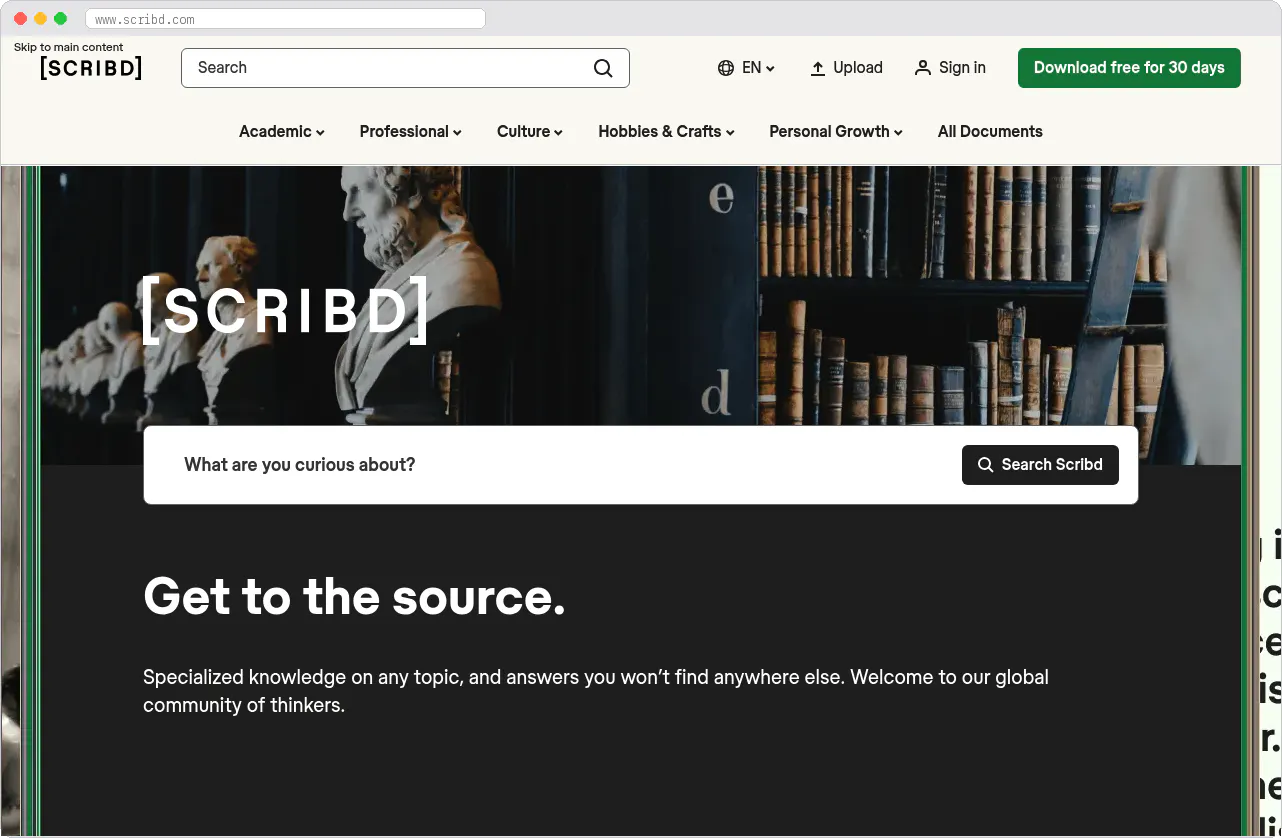
Scribd operates as a general-purpose document sharing platform that includes substantial educational content. Founded in 2007, Scribd functions as the "Netflix for books and documents," offering unlimited access to millions of documents, audiobooks, and magazines for a monthly subscription fee.
While Scribd serves broader audiences beyond students, its document library includes substantial academic content. Users upload research papers, textbooks, study guides, and educational materials alongside general interest content. Scribd's strength lies in its massive content library and high-quality reading experience across devices.
Scribd differs from CourseHero by serving general audiences rather than focusing specifically on student needs. The platform lacks course-specific organization and academic search features that make CourseHero more useful for students seeking materials for specific classes.
Khan Academy
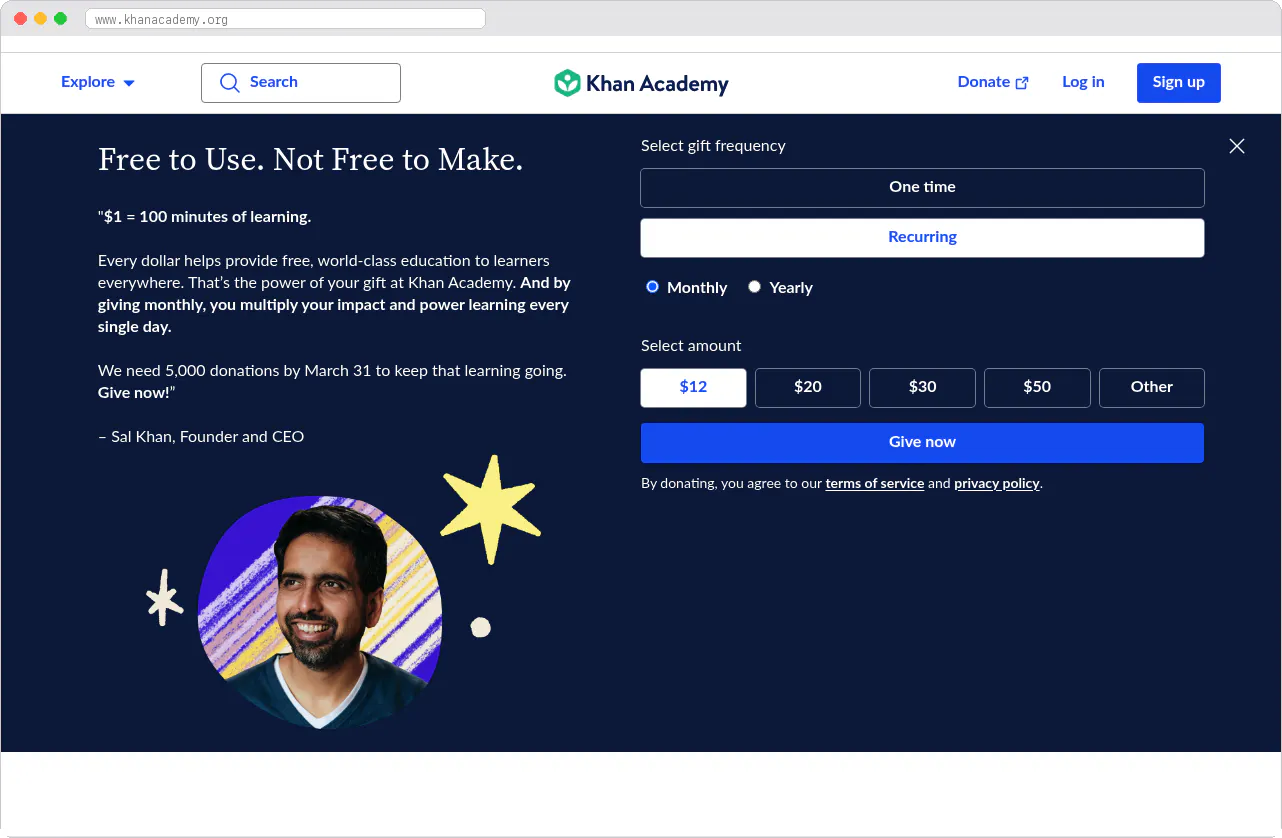
Khan Academy approaches educational content from a completely different angle, providing free, structured courses rather than user-generated study materials. Founded by Salman Khan in 2008, the nonprofit organization offers comprehensive courses in subjects ranging from elementary math to advanced economics and computer programming.
Khan Academy's content model contrasts sharply with CourseHero's marketplace approach. Instead of relying on user uploads, Khan Academy employs educators and subject matter experts to create high-quality instructional videos, practice exercises, and assessments. This ensures consistent quality but limits coverage to topics the organization prioritizes.
The platform's strength lies in its systematic approach to learning, with courses designed to build knowledge progressively. Students can track their progress, earn badges, and receive personalized recommendations based on their performance. However, Khan Academy cannot match the breadth and specificity of CourseHero's user-generated content library.
Niche and specialized competitors
Several smaller platforms serve specific academic niches that CourseHero addresses broadly. Academia.edu focuses on research papers and academic publications, serving graduate students and researchers more than undergraduates. ResearchGate operates similarly, emphasizing scholarly networking and research collaboration.
SparkNotes specializes in literature study guides and book summaries, providing detailed analysis of commonly assigned books. While limited in scope compared to CourseHero, SparkNotes maintains strong brand recognition and high-quality content in its focus area.
Course-specific platforms also compete in targeted areas. For example, programming education platforms like Codecademy and FreeCodeCamp serve computer science students, while language learning apps like Duolingo address foreign language courses.
Steps to build an educational marketplace like CourseHero
Creating a successful educational marketplace requires understanding both marketplace dynamics and the specific needs of academic communities. The process involves validating your concept, building essential features, attracting initial users, and scaling thoughtfully.
1. Identify your niche and validate demand
CourseHero succeeded by starting broad and then refining their focus based on user behavior. However, new entrants today face much stiffer competition and may benefit from targeting specific niches initially. Consider focusing on particular academic levels, subject areas, or geographic regions where existing solutions fall short.
Research potential niches by engaging directly with students and educators. Attend university events, join academic social media groups, and conduct surveys to understand pain points with current study resource options. Look for gaps in CourseHero's coverage such as specialized technical subjects, international curricula, or specific professional certification programs.
Validation should include testing willingness to pay and contribute content. Students might express interest in better study resources, but converting that interest into paying subscriptions or active content contribution requires deeper commitment. Create simple landing pages describing your proposed marketplace and measure sign-up rates and user feedback.
2. Choose your business model carefully
Educational marketplaces face unique monetization challenges because students typically have limited budgets and strong price sensitivity. CourseHero's hybrid model combining subscriptions with credit-earning opportunities addresses this constraint by providing multiple pathways to access content.
Consider whether to prioritize subscription revenue, transaction-based fees, or advertising models. Subscription models provide predictable revenue but require substantial content libraries to justify monthly fees. Transaction-based models align revenue with value delivery but may limit accessibility for budget-conscious students.
The contributor compensation structure significantly impacts content quality and quantity. Some platforms pay contributors based on downloads or views, while others use revenue sharing models. Higher contributor compensation attracts better content but increases your costs and reduces margins.
3. Build essential marketplace features
Start with core functionality that enables basic marketplace operations: user accounts, document upload and management, search and discovery, and payment processing. Resist the temptation to build advanced features before validating core user workflows.
Document management requires careful attention to file formats, sizes, and metadata extraction. Students use diverse software and devices, so your platform must handle various file types gracefully. Automatic metadata extraction from uploaded documents saves users time and improves search functionality.
Search functionality must understand academic contexts and terminology. Course names vary between institutions, and students may search using different terms than document creators used. Implement fuzzy matching, synonym handling, and institutional-specific course catalogs to improve search results.
Payment processing for educational marketplaces often involves complex scenarios like partial refunds, subscription management, and international transactions. Choose payment providers that support your specific business model requirements and compliance needs.
4. Develop content acquisition strategies
Successful educational marketplaces require substantial content libraries before attracting significant user bases. This creates a classic chicken-and-egg problem where students won't join without content, but content creators won't contribute without students.
CourseHero initially solved this by manually seeding their platform with content and aggressively recruiting early contributors. Modern marketplace builders can employ similar strategies by partnering with student organizations, offering attractive early contributor programs, or purchasing initial content libraries.
Consider targeting specific universities or courses where you can achieve critical mass quickly. Focusing on large introductory courses like Psychology 101 or Calculus I provides opportunities to serve many students with relatively focused content acquisition efforts.
Quality control becomes crucial from day one. Establish clear content guidelines, implement basic moderation tools, and create processes for handling copyright complaints and academic integrity concerns. Early quality problems can permanently damage your reputation in academic communities.
5. Navigate legal and ethical considerations
Educational marketplaces operate in complex legal environments involving copyright law, academic integrity policies, and student privacy regulations. Develop clear terms of service that address intellectual property rights, content ownership, and acceptable use policies.
Copyright compliance requires ongoing attention as users may upload materials that violate publisher rights or institutional policies. Implement systems for responding to DMCA takedown requests and consider proactive content screening to identify potential violations before they become legal issues.
Academic integrity concerns arise when study materials cross the line into facilitating cheating or plagiarism. Establish clear community guidelines about acceptable content types and work with educational institutions to understand their policies and concerns.
Student privacy protection is both legally required and crucial for building trust. Implement appropriate data protection measures, clearly communicate privacy policies, and provide users control over their personal information and contributions.
6. Launch and iterate based on user feedback
Launch with a focused user base rather than trying to serve all students immediately. Partner with specific universities, academic programs, or student organizations to build initial traction. This focused approach allows you to gather detailed feedback and refine your platform before broader expansion.
Track key metrics including user registration, content uploads, document downloads, subscription conversions, and user retention. Educational marketplaces often show seasonal usage patterns that align with academic calendars, so monitor trends over full semester cycles.
Gather qualitative feedback through user interviews, surveys, and support interactions. Students can provide valuable insights about missing features, usability problems, and content gaps that quantitative metrics might not reveal.
Iterate rapidly based on feedback while maintaining platform stability. Educational users have little tolerance for broken functionality during critical periods like exam weeks, so balance feature development with reliability.
7. Scale geographically and vertically
CourseHero's expansion strategy involved both geographic growth and vertical integration into adjacent services like tutoring and textbook solutions. Consider similar approaches once you've achieved product-market fit in your initial market.
Geographic expansion requires understanding local educational systems, languages, and cultural factors. Course structures, grading systems, and academic calendars vary significantly between countries and education systems.
Vertical expansion might include tutoring services, career resources, or study tools that complement your core document sharing platform. These additions can increase user lifetime value and create stronger competitive moats.
Partnership opportunities with educational institutions, publishers, or other ed-tech companies can accelerate growth and provide access to official content or user bases. However, maintain focus on your core value proposition while exploring these opportunities.
Development approaches for CourseHero-like platforms
Building an educational marketplace involves complex technical requirements including document management, search functionality, user-generated content moderation, and payment processing. Several development approaches can address these needs with different trade-offs in cost, time, and flexibility.
Custom development from scratch
Building a CourseHero competitor from scratch provides maximum flexibility but requires significant technical expertise and financial investment. Custom development allows you to optimize every aspect of the user experience and implement unique features that differentiate your platform.
The technical complexity of educational marketplaces should not be underestimated. Document processing requires handling multiple file formats, extracting metadata, generating previews, and optimizing storage and delivery. Search functionality must understand academic terminology and support complex filtering across multiple dimensions.
Payment processing complexity increases with features like subscription management, credit systems, and contributor payouts. Implementing these features correctly requires deep understanding of payment regulations, tax compliance, and international transaction handling.
Cost estimates for custom development typically start around $100,000 for basic functionality and can easily exceed $500,000 for comprehensive platforms. Development timelines often extend 12-18 months before launching even basic versions, during which you're not learning from real users or generating revenue.
No-code marketplace builders
No-code platforms like Sharetribe offer faster time-to-market with essential marketplace features built-in. These solutions handle complex technical requirements like payment processing, user management, and basic search functionality without requiring custom development.
For educational marketplaces, no-code builders provide document upload and management capabilities, user profiles, subscription handling, and admin tools. While you may not get educational-specific features like course catalogs or academic search optimization, you can launch and validate your concept quickly.
The main limitation of no-code approaches is reduced flexibility in implementing unique features that differentiate your platform. However, some platforms like Sharetribe allow custom development on top of the no-code foundation, providing a hybrid approach that combines speed-to-market with eventual customization capabilities.
Cost for no-code solutions typically ranges from $100-500 per month for basic plans, making them much more accessible for bootstrapped entrepreneurs. You can launch within weeks rather than months and start learning from real users immediately.
Hybrid approaches
Hybrid development combines no-code foundations with custom development for unique features. This approach allows you to launch quickly with essential marketplace functionality while adding specialized features as your business grows and requirements become clearer.
Sharetribe's Developer Platform exemplifies this hybrid approach. You get essential marketplace features including user management, payment processing, and basic search without coding. As your needs evolve, you can add custom features like specialized academic search, document processing tools, or integration with learning management systems.
This approach optimizes for learning speed and capital efficiency. You avoid spending months building basic marketplace features that provide no competitive advantage while preserving flexibility to add unique capabilities later.
WordPress and plugin combinations
WordPress with marketplace plugins represents a middle-ground option that's more customizable than pure no-code but easier than custom development. Plugins like WooCommerce combined with marketplace extensions can create functional educational resource platforms.
The WordPress ecosystem provides access to thousands of plugins for features like document management, user profiles, and payment processing. However, integrating multiple plugins often creates compatibility issues and maintenance overhead.
Performance and scalability concerns arise as WordPress wasn't designed for marketplace-specific requirements like complex search functionality or high-volume document processing. Security also requires careful attention when handling user-generated content and payments.
Cost analysis: Building your CourseHero alternative
Development costs vary dramatically based on your chosen approach, feature requirements, and quality standards. Understanding these cost factors helps you choose the right development strategy for your situation and budget.
No-code marketplace development costs
Launching with a no-code platform like Sharetribe minimizes upfront costs while providing essential marketplace functionality. Here's a realistic first-year budget for a no-code educational marketplace:
Year One Operating Costs
- Sharetribe Pro subscription: $2,388 (annual billing)
- Domain and basic branding: $200
- Email marketing platform: $500
- Basic content creation and marketing: $2,000
- Total first year: $5,088
This budget assumes you handle most tasks yourself including content creation, user acquisition, and platform management. Additional costs might include paid advertising, professional design services, or legal consultation for terms of service and privacy policies.
The no-code approach allows you to validate your concept and achieve initial revenue before making larger investments. Many successful marketplaces generate enough revenue in their first year to fund subsequent development and marketing efforts.
Custom development costs
Building an educational marketplace from scratch requires substantial upfront investment with no guarantee of success. Custom development costs depend heavily on feature complexity and development team location and experience.
Minimum Viable Product Development
- Backend development (6 months): $60,000
- Frontend development (4 months): $40,000
- Document processing system: $20,000
- Payment integration: $15,000
- Quality assurance and testing: $10,000
- Total MVP development: $145,000
These estimates assume working with experienced developers familiar with marketplace requirements. First-time marketplace builders often encounter unexpected complexity that extends timelines and increases costs significantly.
Ongoing operational costs include hosting infrastructure, payment processing fees, content delivery networks, and maintenance. These costs scale with usage but typically add $5,000-20,000 annually even for modest user bases.
Hybrid development progression
The hybrid approach using platforms like Sharetribe allows you to start with minimal costs and invest in custom development as your business proves viable and requirements become clearer.
- Phase 1: No-code launch (Months 1-6)- Platform subscription: $300
- Basic setup and content: $1,000
- User acquisition: $2,000
- **Phase 1 total: $3,300** - Phase 2: Custom features (Months 7-12)- Advanced search development: $15,000
- Mobile app development: $25,000
- Content moderation tools: $10,000
- **Phase 2 total: $50,000**
This progression allows you to validate your concept cheaply before investing in expensive custom development. Many marketplace ideas fail in the first six months, making the hybrid approach much more capital-efficient for uncertain ventures.
How Sharetribe supports educational marketplace development
Sharetribe provides marketplace-specific functionality that addresses many challenges educational platforms face, from content management to payment processing. The platform combines no-code accessibility with extensibility for custom features.
Built-in marketplace essentials
Sharetribe includes core marketplace features that would take months to develop from scratch. User management handles registration, profiles, and authentication with built-in security best practices. The transaction engine supports various pricing models including subscriptions, one-time purchases, and credit-based systems.
Document handling capabilities allow users to upload and share files with automatic metadata extraction and search indexing. The platform generates document previews and handles file storage and delivery optimization automatically.
Payment processing integration with Stripe Connect handles complex marketplace payment scenarios including subscription billing, contributor payouts, and international transactions. This integration addresses regulatory compliance and tax handling requirements that plague custom developments.
Customization and extensibility
Sharetribe's developer platform allows custom feature development on top of the no-code foundation. Educational marketplaces often need specialized features like course catalogs, academic institution integration, or advanced content moderation that generic platforms don't provide.
The API-first architecture enables integration with external services like learning management systems, academic databases, or plagiarism detection tools. These integrations help educational marketplaces provide comprehensive solutions that extend beyond basic document sharing.
Custom user interfaces allow you to create educational-specific workflows and designs while maintaining the underlying marketplace infrastructure. This flexibility helps differentiate your platform while avoiding the complexity of building marketplace basics from scratch.
Expert network support
Sharetribe's expert network provides access to developers and agencies experienced with marketplace development. These experts understand common marketplace challenges and can implement features efficiently without the learning curve of first-time marketplace developers.
For educational marketplaces, expert support helps navigate specific requirements like academic integrity compliance, copyright handling, and educational institution integration. This expertise accelerates development while reducing risk of costly mistakes.
The expert network also provides ongoing support as your marketplace grows and requirements evolve. Rather than hiring full-time developers immediately, you can access specialized expertise as needed.
Conclusion: Building your educational marketplace
CourseHero's success demonstrates the potential for educational marketplaces to serve real student needs while building sustainable businesses. However, replicating this success requires understanding both marketplace dynamics and the specific challenges of educational communities.
The key to success lies in starting focused, launching quickly, and iterating based on real user feedback. CourseHero began with simple document sharing and evolved into a comprehensive educational ecosystem over many years. Your marketplace can follow a similar path by solving specific problems well before expanding into adjacent areas.
Modern marketplace builders have significant advantages over CourseHero's 2006 launch including sophisticated no-code tools, established payment processors, and proven growth strategies. These advantages allow you to reach market faster and more efficiently than earlier pioneers.
Choose your development approach based on your specific situation rather than following generic advice. No-code solutions work well for testing concepts and serving focused niches, while custom development makes sense for well-funded teams targeting large markets. Hybrid approaches offer flexibility to start small and scale as opportunities become clear.
Focus on building genuine value for both content creators and consumers rather than simply copying CourseHero's features. The educational technology landscape continues evolving, creating opportunities for platforms that serve specific needs better than broad-purpose solutions.
Success in educational marketplaces requires patience and persistence. Academic communities change slowly and trust builds gradually. However, platforms that earn student and educator trust can build strong competitive moats and sustainable revenue streams.
Start building your educational marketplace today, but remember that technology is only part of the solution. Understanding your users, creating valuable content experiences, and building sustainable business models matter more than perfect features or advanced functionality.
Frequently asked questions
How much does it cost to build a website like CourseHero?
Costs vary dramatically by approach. No-code platforms like Sharetribe cost around $5,000 for the first year, while custom development typically starts at $145,000 for basic functionality. The hybrid approach lets you start with minimal costs and invest in custom features as your business grows.
What features does an educational marketplace need?
Essential features include document upload and management, advanced academic search, user profiles and ratings, subscription and credit systems, content moderation tools, and mobile accessibility. You'll also need payment processing, copyright protection, and quality control systems.
How does CourseHero make money?
CourseHero uses a hybrid model combining subscription fees ($9.95+ monthly) with transaction-based tutoring services. They also pay contributors when their uploaded documents generate revenue, creating incentives for high-quality content creation.
Who are CourseHero's main competitors?
Major competitors include Chegg (broader student services), Quizlet (flashcard-based learning), Scribd (general document sharing), and Khan Academy (structured free courses). Each serves different aspects of student needs with varying business models.
Is it legal to build a CourseHero alternative?
Yes, but you must carefully handle copyright compliance, academic integrity policies, and student privacy regulations. Implement systems for DMCA takedown requests, establish clear content guidelines, and work with legal experts to ensure proper compliance.
How long does it take to build an educational marketplace?
Timeline depends on your approach. No-code platforms allow launching in 1-2 weeks, custom development takes 12-18 months, and hybrid approaches let you launch quickly then add custom features over 6-12 months as needs become clearer.
Start your 14-day free trial
Create a marketplace today!
- Launch quickly, without coding
- Extend infinitely
- Scale to any size
No credit card required