How to build a website like Outschool
Outschool revolutionized children's education by creating a marketplace where independent teachers offer live online classes. This guide shows you how to build your own educational marketplace using their proven business model.
Published: Nov 27, 2023
Last updated: Mar 19, 2026
What is Outschool and how did it transform online education?
Outschool began in 2015 when founders Amir Nathoo and Miriam Altman recognized a fundamental gap in children's education: kids weren't getting access to the diverse, passionate teachers they needed to explore their interests. Traditional schools couldn't offer classes in everything from Minecraft coding to marine biology, but somewhere out there, passionate educators could.
The company launched as a marketplace connecting children ages 3-18 with independent teachers offering live, interactive online classes. What started as a platform for supplemental learning exploded during the COVID-19 pandemic when parents desperately needed educational alternatives. By 2021, Outschool had raised over $110 million in funding and was valued at approximately $3 billion, serving millions of learners worldwide.
Outschool's success stems from solving a real problem on both sides of the marketplace. Parents struggle to find engaging, specialized classes for their children, especially in niche subjects or for kids with specific learning needs. Meanwhile, qualified educators often can't find traditional teaching opportunities that match their expertise or schedule preferences. Outschool bridges this gap by letting anyone with teaching skills create and sell classes directly to families.
The platform's growth accelerated dramatically during the pandemic, with revenue jumping from $20 million in 2019 to over $130 million in 2021. This wasn't just pandemic opportunism. Outschool had built a genuinely valuable two-sided marketplace that solved real problems for both learners and educators.
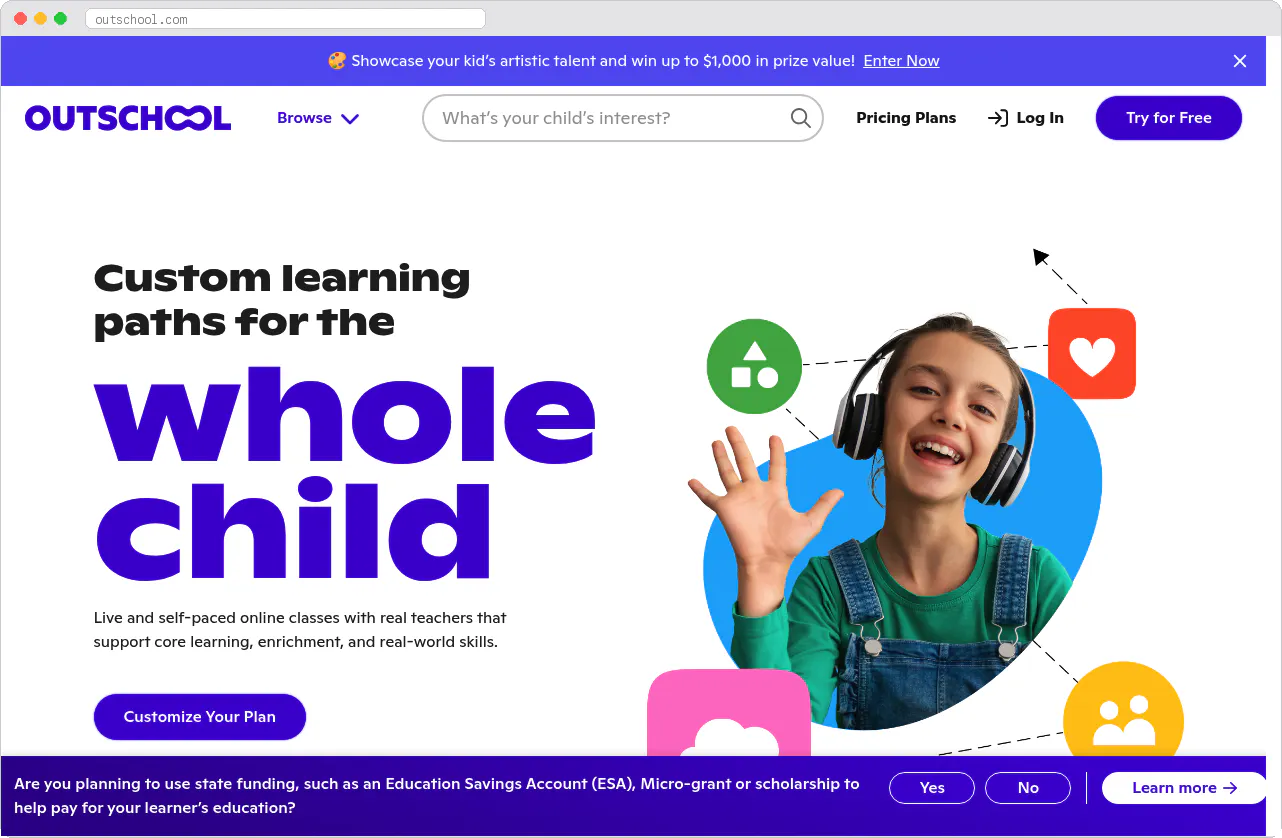
How does an educational marketplace like Outschool work?
Outschool operates as a classic two-sided marketplace with some unique characteristics that reflect the nature of educational services. Unlike traditional marketplaces selling physical products, educational marketplaces deal with time-based services, require trust between strangers and children, and must balance educational quality with accessibility.
For families (the demand side), Outschool provides a searchable catalog of live online classes. Parents can filter by age, subject, schedule, price, and class format. Each listing includes detailed course descriptions, learning objectives, teacher credentials, and reviews from other families. The booking process is straightforward: select a class, choose specific dates or ongoing sessions, pay online, and receive Zoom links and class materials.
The platform goes beyond simple transactions by providing ongoing support throughout the learning experience. Families receive automated reminders, can message teachers directly, and access post-class resources. The review system is particularly important, parents can rate both the class content and teaching quality, helping other families make informed decisions.
For educators (the supply side), Outschool provides tools to create, market, and deliver classes without the overhead of running an independent tutoring business. Teachers set their own prices, schedules, and curricula while Outschool handles payments, marketing reach, customer service, and platform technology. This is particularly valuable for educators who excel at teaching but don't want to manage the business side.
The platform accommodates different teaching styles and subjects through flexible class formats. Some classes are one-time workshops, others are multi-week courses, and many are ongoing groups that meet weekly. Teachers can offer live classes, small group sessions, or even one-on-one tutoring, depending on the subject matter and their teaching preference.
Outschool's business model and revenue strategy
Outschool monetizes through a commission-based model, taking approximately 30% of each transaction. This percentage covers payment processing, platform hosting, customer acquisition, safety measures, and ongoing support for both teachers and families. While 30% might seem high compared to other marketplaces, it reflects the significant value Outschool provides in marketing, trust-building, and operational support.
The commission structure aligns incentives well. Outschool only makes money when teachers successfully deliver classes and families are satisfied enough to book again. This encourages the platform to invest in teacher success tools, quality control measures, and family satisfaction initiatives.
Outschool also generates revenue through premium features and services. Teachers can pay for promoted listings to increase visibility, access advanced analytics, or receive priority customer support. The company has experimented with subscription models and corporate partnerships, particularly as demand for remote learning solutions has grown beyond individual families to include schools and educational organizations.
The platform's unit economics work because educational services typically command higher prices than many marketplace transactions. Classes often cost $15-50 per session, with some specialized courses priced even higher. This allows Outschool to generate meaningful revenue per transaction while still providing good value to families and fair compensation to teachers.
Essential features for an educational marketplace like Outschool
Building a marketplace similar to Outschool requires specific functionality that addresses the unique challenges of educational services. Unlike product marketplaces, educational platforms must handle scheduling, live interactions, safety considerations, and quality assurance.
Class listing and discovery system
Educational marketplaces need robust course creation tools that help teachers present their offerings effectively. This includes structured fields for learning objectives, age ranges, prerequisites, materials needed, and detailed course descriptions. Teachers should be able to upload sample videos, course outlines, and supplementary materials.
The discovery system must be more sophisticated than typical product search. Families need to filter by multiple criteria simultaneously: child's age, specific learning goals, time zones, class size, ongoing versus one-time sessions, and teaching style. The search needs to account for the fact that parents are often browsing for their children's interests, not their own.
Scheduling and calendar management
Unlike product purchases, educational services happen at specific times. Your platform needs integrated calendar functionality that handles different time zones, recurring sessions, makeup classes, and schedule changes. Teachers need tools to set their availability, block out vacation time, and communicate schedule updates to enrolled families.
The scheduling system must also handle different class formats. Some courses are drop-in style where families can join any session, others require attending from the beginning, and some are private sessions scheduled individually. Your platform needs flexibility to accommodate these different models without confusing users.
Video integration and virtual classroom tools
Educational marketplaces require smooth integration with video conferencing platforms. Most successful platforms integrate directly with Zoom, providing automatic meeting room creation, participant management, and recording capabilities when appropriate. Some platforms build their own virtual classroom tools, but integration is usually more practical and reliable.
The video integration needs to handle safety requirements specific to children's classes. This includes waiting rooms where teachers can verify participants, recording policies that comply with privacy regulations, and easy-to-use controls that work for both tech-savvy and less technical families.
Trust and safety infrastructure
Educational marketplaces involving children require extensive safety measures. Teacher verification goes beyond typical marketplace checks, you need background screening, credential verification, and often ongoing monitoring of class interactions. Your platform should provide clear policies about appropriate teacher-student interaction and tools for reporting concerns.
Parents need visibility into who their children are learning from, including teacher profiles with credentials, teaching philosophy, and reviews from other families. The review system should specifically address teaching quality, communication skills, and appropriateness for the stated age range.
Payment handling with educational considerations
Educational services often involve more complex payment scenarios than typical marketplace transactions. Families might pay for single classes, multi-session courses, or ongoing weekly groups. Your payment system needs to handle prorated refunds when students join ongoing classes mid-session, makeup class credits, and family-friendly refund policies.
The delayed payout model is particularly important for educational marketplaces. Holding teacher payments until after class completion protects families from no-show instructors and provides use to ensure quality delivery.
Communication and support tools
Educational marketplaces require more communication infrastructure than typical platforms. Teachers and families need ways to share materials, discuss learning progress, and coordinate logistics. Your platform should provide secure messaging, file sharing, and possibly discussion forums for ongoing classes.
Customer support becomes more complex when dealing with educational services. Issues can range from technical problems joining classes to concerns about teaching quality or child safety. Your support team needs training on educational issues and clear escalation procedures.
Competitive landscape: Understanding Outschool's alternatives
The educational marketplace space includes several established players, each with different approaches to connecting learners and educators. Understanding these alternatives helps founders identify market gaps and differentiation opportunities.
Udemy and Coursera
Udemy and Coursera represent the pre-recorded course model that dominated online education before live interaction became popular. Udemy allows anyone to create and sell courses, similar to Outschool's open marketplace approach, but focuses on adult learners and self-paced content. Coursera partners with universities and corporations to offer more structured, credential-bearing programs.
The key difference is interaction model. Outschool's live classes create accountability and social learning that recorded courses can't match, particularly important for younger learners who need more guidance and engagement. However, pre-recorded courses can reach unlimited students simultaneously, making them more scalable and often more affordable.
Khan Academy and educational nonprofits
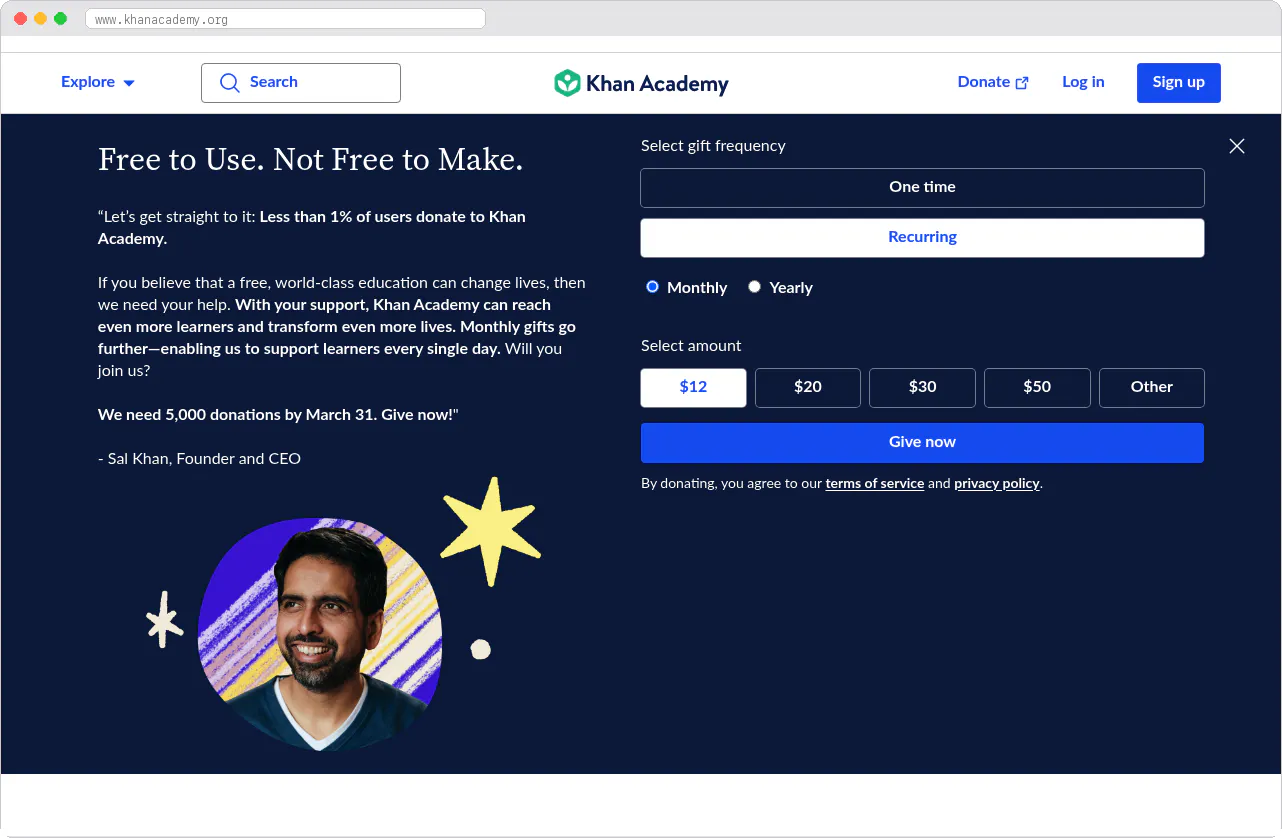
Khan Academy provides free, high-quality educational content covering standard academic subjects. As a nonprofit, it doesn't compete directly with Outschool's marketplace model but offers an alternative for families seeking structured, curriculum-aligned learning.
The nonprofit model allows Khan Academy to focus entirely on educational outcomes rather than revenue optimization. However, it limits their ability to offer specialized subjects, live interaction, or personalized attention that many families value. Outschool's marketplace model enables much more diverse offerings because individual teachers can afford to serve smaller, specialized audiences.
Skillshare and creative learning platforms
Skillshare focuses on creative skills for adult learners, offering both live and recorded classes in areas like design, photography, and writing. Their subscription model provides unlimited access to their course library, different from Outschool's pay-per-class approach.
The adult focus allows Skillshare to use different engagement strategies and safety protocols. Adult learners can participate in peer feedback, longer-form projects, and community features that would be inappropriate for children's classes. However, this also means they miss the large and growing market of families seeking enrichment activities for their children.
Preply and language learning marketplaces
Preply connects students with private tutors for language learning, operating more like a tutoring marketplace than a class marketplace. Students book individual sessions with verified teachers, similar to Outschool's one-on-one offerings but focused specifically on language acquisition.
The specialized focus allows Preply to optimize their entire platform for language learning, specialized search filters, proficiency assessments, and progress tracking tools. However, this specialization limits their addressable market compared to Outschool's broad subject coverage.
Corporate training platforms
Platforms like MasterClass and LinkedIn Learning target professional development and adult enrichment. They typically use subscription models and feature celebrity instructors or industry experts rather than independent teachers.
The corporate market provides higher customer lifetime values and more predictable revenue streams. However, it's also more competitive and requires different content strategies. These platforms need to constantly acquire high-profile instructors and maintain professional production quality, while Outschool's model allows authentic, passionate teachers to succeed without celebrity status.
Step-by-step guide to building your educational marketplace
Creating a successful educational marketplace like Outschool requires balancing technical platform development with community building and trust establishment. The process differs significantly from building product marketplaces because educational services involve ongoing relationships, safety considerations, and quality assurance.
Step 1: Define your educational niche and target audience
Outschool succeeded by focusing initially on supplemental education for homeschooling families and children whose interests weren't served by traditional schools. Your marketplace needs similar focus to achieve initial traction and build a reputation for quality.
Consider specializing by age group, subject area, or learning approach. Some successful niches include adult professional development, creative arts for teenagers, STEM enrichment for elementary students, or language learning for business professionals. The key is choosing a niche large enough to sustain a marketplace but specific enough that you can build expertise and reputation.
Research your target audience's current solutions and pain points. Traditional tutoring might be expensive and hard to find, school enrichment programs might be limited or poorly timed, or existing online options might lack quality control. Understanding these frustrations helps you position your marketplace as a superior alternative.
Step 2: Validate demand through direct outreach
Educational marketplaces require validation on both sides, you need teachers willing to offer classes and families willing to pay for them. Start by identifying and talking to potential users in online communities, local meetups, or existing educational platforms.
For the demand side, reach out to parents in homeschooling groups, gifted education forums, or special interest communities. Ask about their current struggles finding quality educational opportunities and what they would value in an ideal solution. Pay particular attention to price sensitivity, scheduling preferences, and quality concerns.
For the supply side, connect with independent tutors, retired teachers, subject matter experts, or creative professionals who might enjoy teaching. Understand their motivations, pricing expectations, and concerns about online teaching. Many excellent potential teachers hesitate to start independent tutoring because of the business management overhead.
Step 3: Build your minimum viable platform focusing on core transactions
Your first version should enable the essential flow: teachers can create class listings, families can discover and book classes, payments are processed securely, and classes can be delivered successfully. Avoid building advanced features until you've proven the core marketplace concept works.
The MVP should include basic teacher profiles, simple class creation tools, search and filtering functionality, secure payment processing, and integration with a reliable video platform like Zoom. You'll also need fundamental safety measures like teacher verification and clear policies about appropriate conduct.
Focus on making the booking experience as smooth as possible. Families should be able to understand what they're purchasing, complete the transaction quickly, and receive clear instructions for accessing their class. Teachers should receive their class roster, payment confirmation, and any necessary class materials or platform access.
Step 4: Recruit your initial teacher community
Educational marketplaces typically launch supply-first because families won't engage with a platform that has limited class options. Start by recruiting 10-20 high-quality teachers who can offer classes consistently and represent the quality level you want your platform known for.
Look for teachers in online communities, local educational organizations, or among independent tutors already working directly with families. Emphasize the value proposition: access to new students, automated booking and payment handling, and platform marketing support. Consider offering reduced commission rates or promotional support to early teachers willing to help establish your marketplace.
Quality matters more than quantity in the early stages. A few excellent teachers offering engaging classes will generate positive reviews and word-of-mouth referrals. A large number of mediocre teachers will damage your platform's reputation before it has a chance to establish trust with families.
Step 5: Launch to your target families with focused marketing
Once you have consistent class offerings, begin targeted outreach to families likely to value your specific approach. This might include homeschooling communities, gifted education groups, parents of children with specific interests, or families in areas with limited local educational options.
Content marketing works particularly well for educational marketplaces. Create resources that help parents with educational decisions, highlight interesting classes available on your platform, or feature success stories from early users. This approach builds trust and demonstrates your platform's value before asking families to make a purchase.
Referral programs can be powerful in educational markets because parents often discuss learning opportunities with other families. Consider offering class credits for successful referrals or family discounts for multiple enrollments.
Step 6: Iterate based on user feedback and operational learnings
Educational marketplaces involve more complex interactions than typical platforms, so expect to learn significant lessons about user behavior, operational challenges, and feature needs once real classes start happening. Pay close attention to both teacher and family feedback about platform usability, class quality, and support needs.
Common early learnings include scheduling complexity (families often need makeup classes or want to switch time slots), communication needs (teachers and families want more ways to share materials and coordinate), and quality assurance challenges (establishing clear expectations and handling disputes).
Use this feedback to prioritize feature development and operational improvements. The goal is creating a platform that both teachers and families prefer over alternatives, not just one that works adequately.
Development approaches and cost considerations
Building an educational marketplace involves several technical and operational complexities that affect development approach decisions. The choice between custom development, no-code tools, or marketplace platforms depends on your specific requirements, timeline, and long-term goals.
Custom development approach
Custom development provides maximum flexibility but requires significant time and budget. Educational marketplaces need integration with video platforms, complex scheduling systems, payment processing with educational-specific features, and robust safety and verification tools. Building these from scratch typically costs $50,000-200,000 and takes 6-12 months minimum.
The main advantages include complete control over features, user experience, and data. You can optimize specifically for your target audience and educational approach. Custom development also provides unlimited scalability and the ability to integrate with any third-party tools your market requires.
However, the opportunity cost is substantial. Spending months on platform development delays learning about your actual market needs. Many educational startups discover their initial assumptions about features and user behavior were wrong, making extensive upfront development risky.
No-code and hybrid approaches
No-code tools can work for testing educational marketplace concepts, but most general-purpose platforms lack educational-specific functionality. You might combine website builders like Webflow with booking tools like Calendly, payment processors like Stripe, and communication tools like Slack to create a functional MVP.
This approach can work for validation but typically requires rebuilding as you scale. Educational marketplaces need tight integration between scheduling, payments, communication, and safety features that's difficult to achieve with separate tools. The result often feels disconnected to users and creates operational complexity for you.
Some entrepreneurs use this approach successfully for highly specialized niches where standard marketplace functionality isn't necessary. If you're connecting families with local tutors for informal sessions, simple booking and payment tools might suffice.
Marketplace platform solutions
Dedicated marketplace platforms like Sharetribe offer a middle path between custom development and no-code tools. These platforms provide marketplace essentials (user accounts, listings, search, payments, messaging) while allowing customization for educational-specific needs.
Sharetribe includes features particularly valuable for educational marketplaces: calendar integration for scheduling, delayed payments that protect families from no-show teachers, built-in review systems, and flexible commission structures. The platform handles technical infrastructure, security compliance, and payment processing complexity while allowing you to focus on building your teacher and family communities.
The development timeline shrinks from months to weeks, and initial costs are measured in hundreds rather than tens of thousands of dollars. You can validate your marketplace concept quickly, then add custom features as you learn what your specific market needs.
Ongoing operational considerations
Regardless of development approach, educational marketplaces require ongoing operational investment beyond platform maintenance. You need customer support trained on educational issues, safety monitoring and verification processes, and quality assurance systems to maintain platform reputation.
Teacher onboarding and training becomes a significant operational component. Unlike product sellers who can list items independently, many potential teachers need guidance on online instruction, class structure, and platform usage. Successful educational marketplaces often provide resources, training sessions, and ongoing support to help teachers succeed.
Trust and safety operations scale with platform growth and require specialized expertise. Background checks, credential verification, and incident response procedures need consistent application as your teacher network expands.
Building trust and safety in educational marketplaces
Educational marketplaces face unique trust and safety challenges because they involve children, learning relationships, and often one-on-one interactions. Building comprehensive safety infrastructure isn't optional, it's fundamental to operating a successful platform.
Teacher verification and screening
Comprehensive background checking goes beyond typical marketplace verification. Educational platforms typically require criminal background checks, verification of teaching credentials or relevant experience, and reference checks from previous teaching positions. Some markets also require specific certifications or training in online instruction.
The verification process needs to balance thoroughness with accessibility. Overly complex requirements might exclude excellent teachers who lack formal credentials but have valuable expertise. Outschool's approach includes both verified credentials and community reviews, allowing different types of teachers to build credibility through different paths.
Ongoing monitoring matters as much as initial screening. Successful platforms implement systems for reviewing teacher performance, handling complaints appropriately, and maintaining quality standards as they scale.
Student safety protocols
Child safety requires specific platform features and policies. Classes should use waiting rooms where teachers can verify participants before starting, recording policies should be clearly disclosed and comply with privacy regulations, and reporting mechanisms should be easily accessible to both parents and students.
Communication policies need clear boundaries about appropriate teacher-student interaction. Most successful platforms restrict private messaging between teachers and children, require parent involvement in communications, and provide guidance on professional boundaries.
Quality assurance and dispute resolution
Educational services involve subjective quality judgments that require different dispute resolution approaches than product marketplaces. Families might be dissatisfied with teaching style, class content not matching descriptions, or their child's lack of engagement, issues that require nuanced evaluation.
Successful platforms develop clear quality standards, provide mechanisms for families to report concerns, and maintain consistent policies for refunds or credits. The goal is protecting families from genuinely poor experiences while avoiding abuse of refund policies.
Scaling strategies for educational marketplaces
Educational marketplaces face unique scaling challenges because they depend on live human interaction and quality maintenance. Unlike product marketplaces where inventory can scale automatically, educational platforms must carefully balance growth with quality control.
Geographic expansion considerations
Online education allows global reach, but different regions have varying educational cultures, pricing expectations, and regulatory requirements. Some subjects translate across cultures easily (coding, art, music) while others require local knowledge or language adaptation.
Time zone coordination becomes increasingly complex as you expand globally. Teachers and students need to find compatible scheduling, which becomes challenging when serving multiple continents. Some successful platforms focus initially on serving specific time zones well rather than attempting global coverage.
Subject area and age group expansion
Expanding into new educational areas requires understanding different audience needs and teacher qualifications. Teaching young children online requires different skills and platform features than adult professional development. STEM subjects might need specialized tools and materials that creative arts don't require.
Successful expansion often happens organically as existing teachers propose new class types or families request specific subjects. This approach ensures demand exists before investing in new category development.
Building network effects and community
Educational marketplaces benefit from strong network effects when families and teachers form ongoing relationships. Students who enjoy one teacher's class often enroll in multiple offerings, and successful teachers attract following of families who trust their educational approach.
Platforms can strengthen these effects by highlighting teacher specialties, enabling families to follow favorite educators, and creating pathways for students to progress through related classes. Some successful platforms develop course sequences or learning paths that keep families engaged over longer periods.
Why Sharetribe works well for educational marketplaces
Sharetribe's platform architecture addresses many challenges specific to educational marketplaces while providing flexibility to customize for your particular market needs.
Built-in scheduling and booking functionality
Educational services require sophisticated calendar management that goes beyond simple availability checking. Sharetribe's booking system handles recurring sessions, time zone coordination, and schedule modifications, essential features for ongoing classes or regular tutoring sessions.
The platform integrates calendar booking with payment processing, automatically handling deposits, session-by-session payments, or course packages depending on your pricing model. This integration eliminates the complexity of coordinating separate booking and payment systems.
Flexible payment and commission structures
Educational marketplaces often need more complex payment arrangements than simple product sales. Teachers might offer single sessions, multi-week courses, or ongoing groups with different pricing structures. Sharetribe's commission system accommodates these variations while providing the delayed payout functionality that protects families from no-show instructors.
The platform handles payment complexity including refunds, credits, and proration when students join ongoing classes mid-session. This automation reduces operational overhead while providing the flexibility educational services require.
Trust and verification infrastructure
Sharetribe includes user verification systems that can be customized for educational requirements. You can implement background check workflows, credential verification processes, and approval systems for new teachers while maintaining a smooth onboarding experience.
The platform's review and rating system supports educational marketplaces' need for detailed feedback about teaching quality, communication skills, and age-appropriateness. Parents can make informed decisions based on other families' experiences.
Customization and integration capabilities
While Sharetribe provides marketplace essentials out-of-the-box, educational platforms often need specialized features like integration with learning management systems, custom safety reporting tools, or specialized communication features. Sharetribe's API and customization options allow adding these features without rebuilding the entire platform.
The platform grows with your marketplace, you can start with standard functionality and add custom features as you learn what your specific market needs. This approach reduces initial development time and cost while providing scalability for future growth.
Getting started with your educational marketplace
Building an educational marketplace like Outschool requires balancing platform development with community building and trust establishment. Success depends more on understanding your target audience and delivering value to both teachers and families than on building the most technically sophisticated platform.
Start by identifying a specific educational niche where you can provide clear value over existing alternatives. Validate demand through direct outreach to potential users, understanding their current frustrations and willingness to pay for better solutions.
Focus your initial platform development on core marketplace functionality, teacher profiles, class listings, booking and payment processing, and basic safety features. Sharetribe provides these essentials quickly, allowing you to concentrate on building your teacher community and attracting your first families.
Quality matters more than quantity in the early stages. A small number of excellent teachers offering engaging classes will generate the positive reviews and word-of-mouth referrals essential for marketplace growth. Prioritize teacher support and quality assurance over rapid expansion.
Remember that educational marketplaces are ultimately about human relationships and learning outcomes, not just platform features. The most successful platforms focus on facilitating great educational experiences rather than optimizing purely for transaction volume.
Frequently asked questions
How much does it cost to build a marketplace like Outschool?
Costs vary significantly by approach. Using Sharetribe, you can launch for under $200/month initially. Custom development typically costs $50,000-200,000 and takes 6-12 months. Most successful educational marketplaces start with marketplace software and add custom features as they grow.
What are the most important features for an educational marketplace?
Essential features include teacher profiles with verification, class scheduling and calendar integration, secure payment processing with delayed payouts, video platform integration, search and discovery tools, review systems, and comprehensive safety measures for child protection.
How do educational marketplaces like Outschool make money?
Most use commission-based models, typically taking 20-30% of each transaction. This covers platform costs, payment processing, marketing, customer support, and safety verification. Some also offer premium features like promoted listings or advanced analytics for additional revenue.
How can I compete with established platforms like Outschool?
Focus on a specific niche that's underserved by larger platforms, particular age groups, subjects, teaching methods, or geographic regions. Provide superior teacher support, better quality control, or unique features that address specific pain points your target audience experiences with existing options.
What safety measures do educational marketplaces need?
Key safety requirements include comprehensive background checks for teachers, credential verification, clear communication policies, class recording protocols, easy reporting mechanisms, waiting rooms for video classes, and ongoing quality monitoring. Child safety isn't optional, it's fundamental to platform success.
How long does it take to launch an educational marketplace?
Timeline depends on your approach. With marketplace software like Sharetribe, you can launch an MVP in 2-4 weeks. Custom development takes 6-12 months minimum. However, building the platform is just the beginning, developing your teacher community and establishing trust takes additional months of focused effort.
Start your 14-day free trial
Create a marketplace today!
- Launch quickly, without coding
- Extend infinitely
- Scale to any size
No credit card required