How to build a website like Udemy: the complete guide
Udemy processes millions of course enrollments annually through its marketplace bringing together instructors and learners. Learn how Udemy's business model works, what makes it successful, and how to build your own online learning marketplace.
Published: Mar 3, 2026
Last updated: Mar 19, 2026
Udemy has upended online education by democratizing learning and teaching. Founded in 2010, the platform now hosts over 210,000 courses taught by more than 75,000 instructors to over 62 million students worldwide. In 2023, Udemy reported revenue of approximately $729 million, making it one of the most successful educational marketplaces ever built.
The company's success stems from solving a fundamental problem: matching subject matter experts who want to teach with learners seeking affordable, accessible education. While standard educational institutions, Udemy's marketplace model allows anyone to become an instructor and learners to access courses on virtually any topic at any time.
This guide explores how Udemy's business model works, what drives its success, and provides a roadmap for building your own online learning marketplace. Whether you're targeting professional skills, creative arts, or niche expertise, understanding Udemy's approach offers valuable insights for marketplace founders.
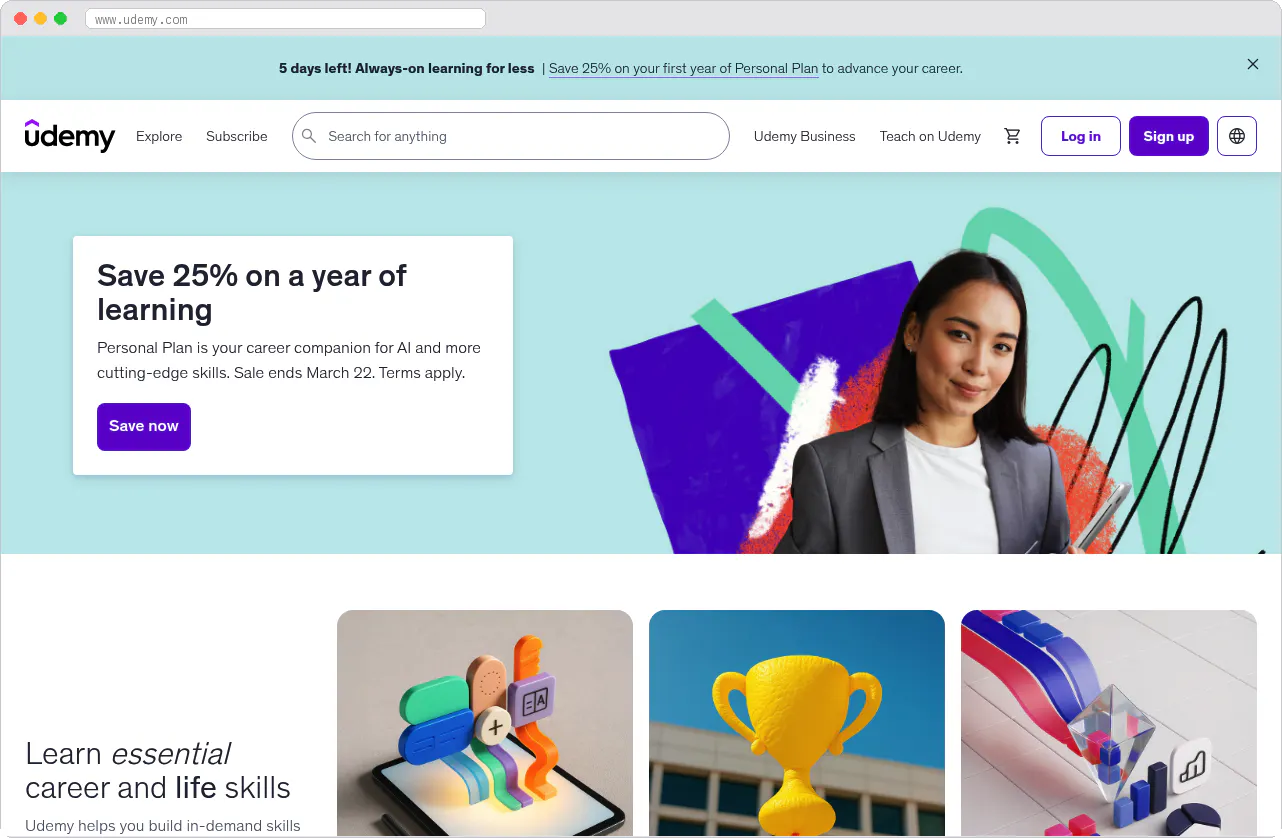
How does Udemy work?
Udemy operates as a two-sided marketplace connecting course instructors (supply) with students (demand). The platform facilitates the entire learning transaction, from course discovery to completion, while taking a commission on each sale.
The instructor side of the marketplace includes subject matter experts, professionals, educators, and entrepreneurs who create video-based courses. Instructors upload course content, set pricing, and market their offerings to Udemy's global student base. The platform provides tools for course creation, including video uploading, quiz builders, and curriculum organizers.
On the student side, learners browse courses by category, search for specific skills, read reviews, and purchase access to course materials. Once enrolled, students can access courses indefinitely, progress at their own pace, and receive certificates of completion. The platform supports multiple learning formats including video lectures, downloadable resources, quizzes, and assignments.
The transaction flow follows this pattern: students discover courses through search or recommendations, preview free content, purchase full access, and begin learning. Instructors receive payment (minus Udemy's commission) typically 30 days after the sale. This delayed payout structure helps prevent fraud while ensuring student satisfaction.
Udemy's marketplace model creates network effects where more instructors attract more students, and more students incentivize additional instructors to join. The platform handles payment processing, content delivery, customer support, and marketing, allowing instructors to focus on course creation while students enjoy a consistent learning experience.
How does Udemy make money?
Udemy's revenue model centers on commission-based fees from course sales, supplemented by subscription services and enterprise offerings. Understanding this diversified approach reveals why the platform has achieved sustained profitability.
The core revenue stream comes from course marketplace commissions. When students purchase courses directly through Udemy's platform (organic traffic), instructors keep 97% of the revenue while Udemy takes 3%. However, when Udemy drives the sale through its marketing efforts, advertising, or promotional campaigns, the revenue split shifts considerably: instructors receive 50% while Udemy keeps 50%.
This dual commission structure incentivizes instructors to build their own marketing channels while compensating Udemy for customer acquisition efforts. Since most course sales come through Udemy's marketing (search rankings, email campaigns, affiliate partnerships), the majority of transactions follow the 50/50 split.
Udemy Business represents the company's fastest-growing revenue segment. This subscription service targets organizations with team learning needs, charging annual fees ranging from $360 per user for small teams to custom enterprise pricing for large corporations. Udemy Business provides access to a curated subset of courses, analytics dashboards, and administrative tools.
The platform also generates revenue through promotional partnerships and affiliate marketing. When external partners drive course sales, Udemy shares commission revenue while maintaining its relationship with both instructors and students.
Advertising revenue comes from promoted course placements and sponsored content within search results. Instructors can pay to boost their course visibility, creating an additional revenue stream while improving course discoverability.
Udemy's pricing flexibility allows instructors to set course prices from $19.99 to $199.99, though the platform frequently runs promotional sales offering courses for $9.99 to $49.99. These promotions drive volume while maintaining attractive unit economics for both Udemy and instructors.
What makes Udemy successful?
Udemy's success stems from strategic decisions that address key marketplace challenges while building sustainable competitive advantages. Several factors differentiate Udemy from competitors and educational institutions.
The platform's open instructor model democratizes teaching by allowing anyone to create courses without traditional credentials or approval processes. This approach generates an enormous content library covering virtually every conceivable topic, from mainstream business skills to highly specialized technical subjects. Traditional educational institutions cannot match this breadth or speed of content creation.
Udemy's global reach and localization strategy enables instructors to access worldwide audiences while students learn from international experts. The platform supports multiple languages, currencies, and payment methods, making education accessible across geographic and economic boundaries.
The company's investment in search and discovery technology helps students find relevant courses among hundreds of thousands of options. Machine learning algorithms power personalized recommendations, trending course identification, and dynamic pricing optimization. These systems improve conversion rates while enhancing user experience.
Lifetime access to purchased courses creates strong value perception among students and reduces churn. Unlike subscription models where content disappears, Udemy students own their courses permanently, encouraging higher initial purchase prices and positive reviews.
Quality assurance through student reviews and ratings creates a self-regulating ecosystem. Poor courses receive low ratings and fewer sales, while high-quality content rises in search rankings and generates more revenue. This peer review system maintains content standards without heavy platform moderation.
Udemy's instructor support infrastructure includes marketing tools, analytics dashboards, and educational resources teaching course creation best practices. Successful instructors become platform advocates, creating high-quality content and encouraging peers to join.
The platform's mobile learning capabilities allow students to learn anywhere, increasing course completion rates and student satisfaction. Downloaded content enables offline learning, addressing connectivity constraints in developing markets.
Strategic partnerships with corporations, government agencies, and educational institutions expand Udemy's market reach beyond individual learners. These B2B relationships provide predictable subscription revenue while validating the platform's educational effectiveness.
Key features of a Udemy-like marketplace
Building a successful online learning marketplace requires specific functionality that supports both instructors and students throughout the teaching and learning journey. These features form the foundation of any Udemy-like platform.
Course creation and management tools
Instructors need full course building capabilities including video uploading, curriculum organization, and content structuring. Key features include lecture sequencing, section organization, quiz and assignment creation, and resource attachment functionality. Video processing capabilities should support multiple formats while optimizing file sizes for streaming.
Progress tracking tools allow instructors to monitor student engagement, completion rates, and quiz performance. Analytics dashboards should display revenue metrics, student demographics, and course performance data to help instructors optimize their content and pricing strategies.
Student learning experience
The learning interface must support video playback with speed controls, note-taking capabilities, and bookmark functionality. Students should access downloadable resources, participate in discussions, and track their progress through course materials. Mobile optimization ensures learning continuity across devices.
Course preview functionality lets students sample free lectures before purchasing, improving conversion rates and student satisfaction. Search and filtering tools help learners discover relevant courses by topic, skill level, rating, and price range.
Payment and commission processing
Secure payment processing must handle multiple payment methods, currencies, and tax calculations. The system should support flexible pricing models, promotional discounts, and bulk purchase options for corporate clients.
Commission calculation and payout systems require careful design to handle different revenue sharing models based on traffic source and instructor agreements. Automated payment processing should include fraud detection, chargeback handling, and financial reporting.
Review and rating system
Two-way reviews build trust and maintain quality standards. Students rate courses and instructors, while instructors can respond to feedback and build relationships with learners. Review aggregation and display systems help prospective students evaluate course quality.
Moderation tools should flag inappropriate content while allowing genuine feedback to guide platform improvements.
Communication and support
Messaging systems enable instructor-student communication for questions, clarifications, and feedback. Discussion forums or Q&A sections allow students to help each other while building learning communities around courses.
Support ticket systems should handle technical issues, payment problems, and content disputes efficiently. Self-service help centers reduce support costs while improving user experience.
Content delivery and security
Solid content delivery networks ensure fast video streaming worldwide while preventing unauthorized downloads. Digital rights management protects instructor intellectual property while maintaining legitimate student access.
Course completion certificates add value for students while protecting against fraudulent credential claims.
Competitors and alternatives
The online learning marketplace space includes several established players, each with distinct positioning and business models. Understanding these alternatives helps identify market opportunities and differentiation strategies.
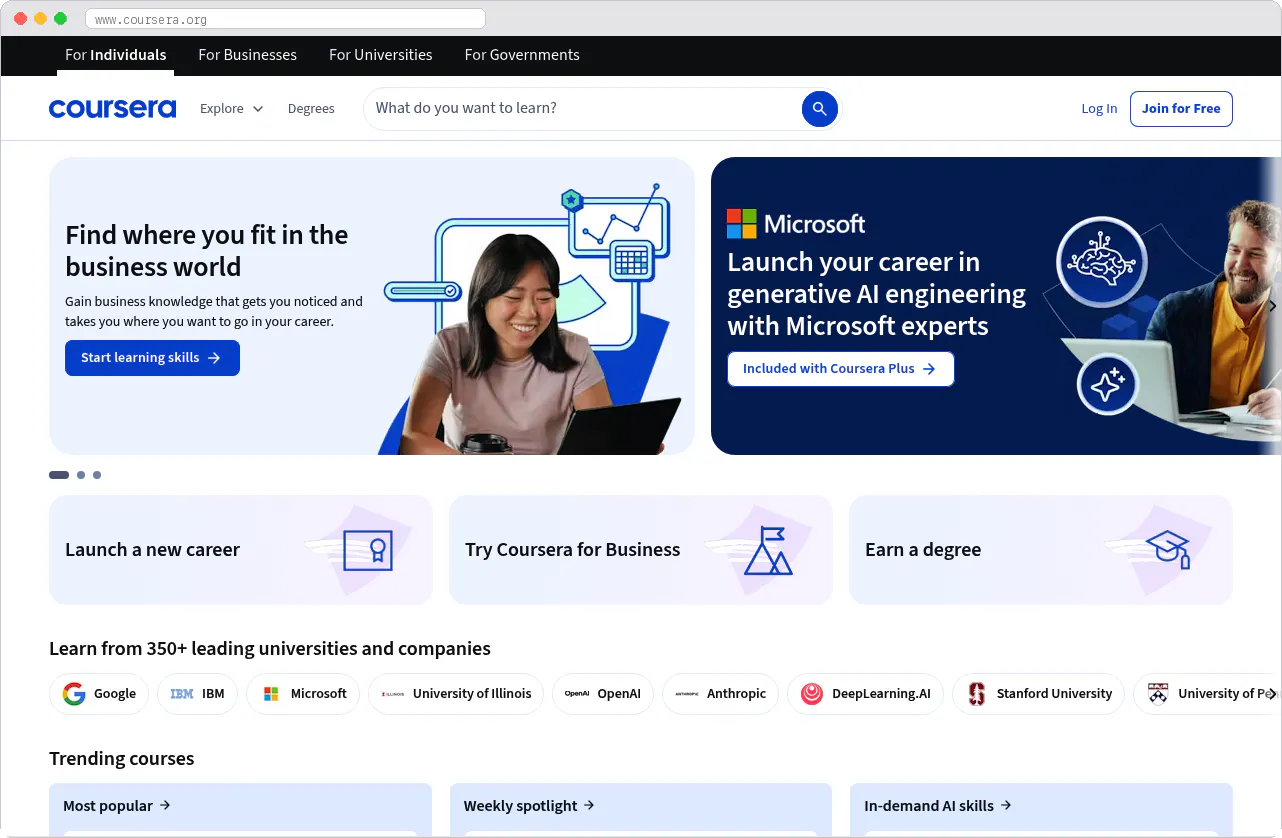
Coursera
Coursera partners with universities and corporations to offer accredited courses, specializations, and degree programs. Unlike Udemy's open instructor model, Coursera maintains strict quality control through institutional partnerships. The platform charges monthly subscription fees for unlimited access to course catalogs, contrasting with Udemy's individual course purchases.
Coursera's academic credibility appeals to learners seeking recognized credentials, while Udemy's practical focus serves professionals wanting immediate skill development. Coursera courses often require weeks or months to complete, while Udemy courses can be consumed quickly.
Skillshare targets creative professionals with project-based learning focused on design, photography, writing, and artistic skills. The platform uses a subscription model providing unlimited access to all courses for a monthly fee. This approach differs from Udemy's individual course sales and appeals to learners who consume multiple courses regularly.
Skillshare's community features encourage project sharing and peer feedback, creating stronger social connections than Udemy's more individual learning experience. However, Skillshare's narrower focus limits course variety compared to Udemy's thorough catalog.
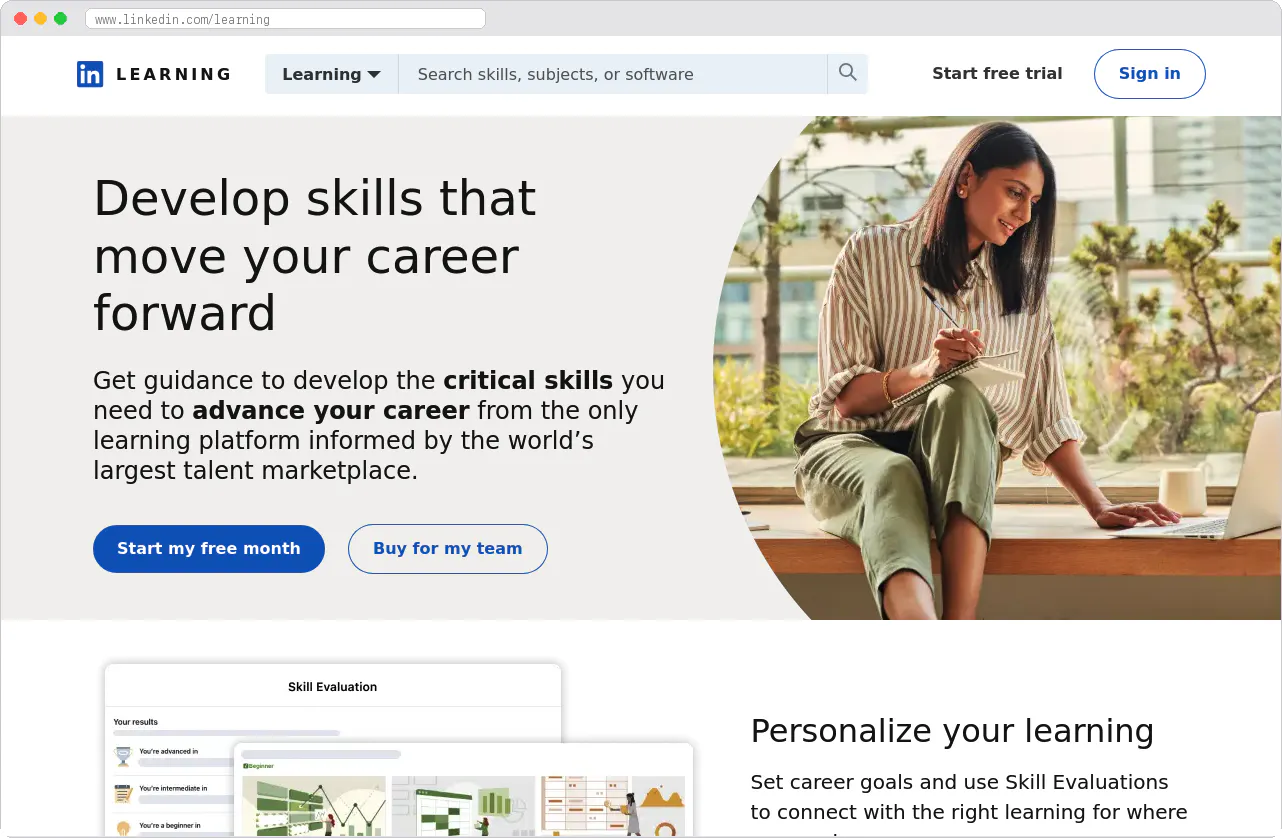
LinkedIn Learning
LinkedIn Learning integrates professional development with career networking through LinkedIn's platform. The service offers subscription-based access to business and technology courses, often tied to LinkedIn skill assessments and profile enhancements.
The platform's career integration provides unique value by connecting learning achievements with professional opportunities. However, course creation is limited to selected expert instructors, reducing content diversity compared to Udemy's open model.
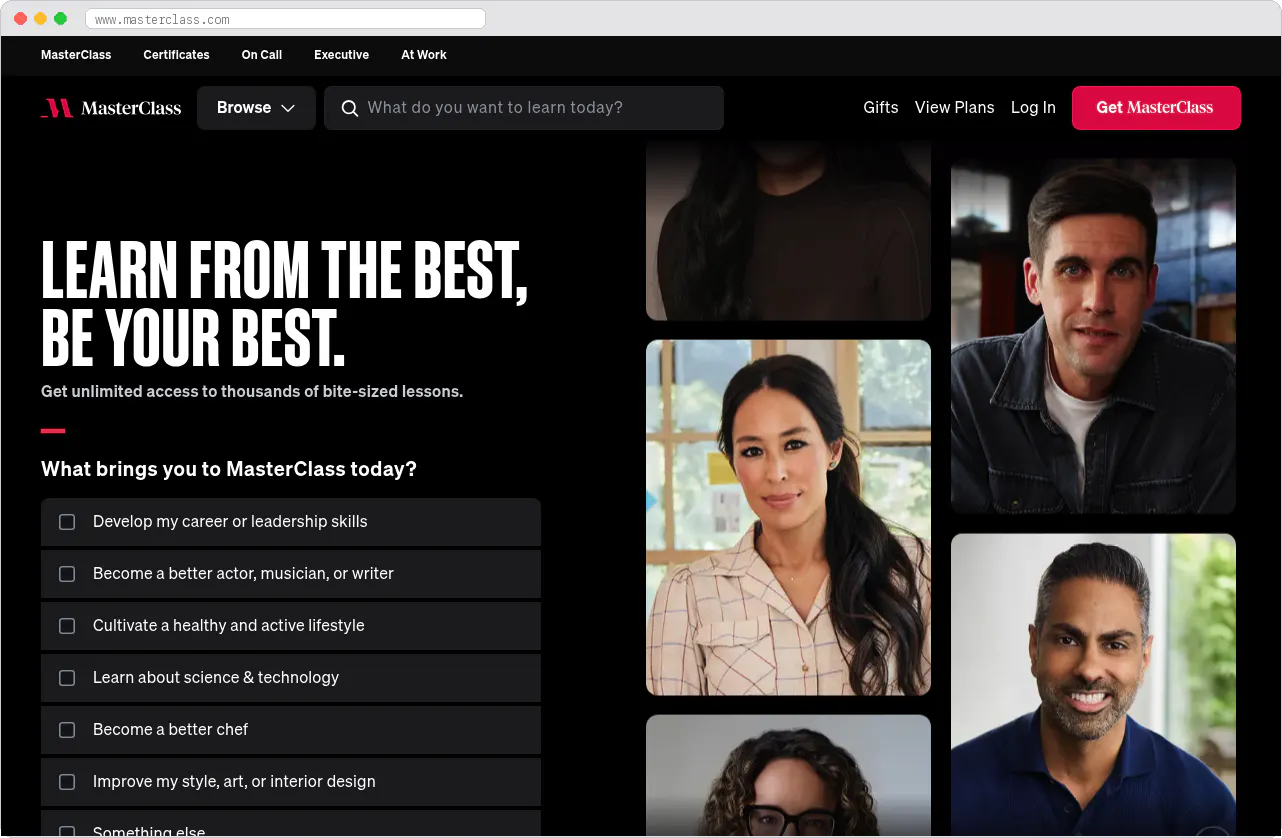
MasterClass
MasterClass features celebrity instructors teaching courses in their areas of expertise, from cooking and writing to business and sports. The platform charges premium subscription fees for high-production-value content that emphasizes inspiration alongside instruction.
MasterClass courses focus on storytelling and personal insights rather than practical skill building, appealing to different learning motivations than Udemy's skill-focused approach. The exclusive instructor model creates scarcity and premium positioning but limits content volume.
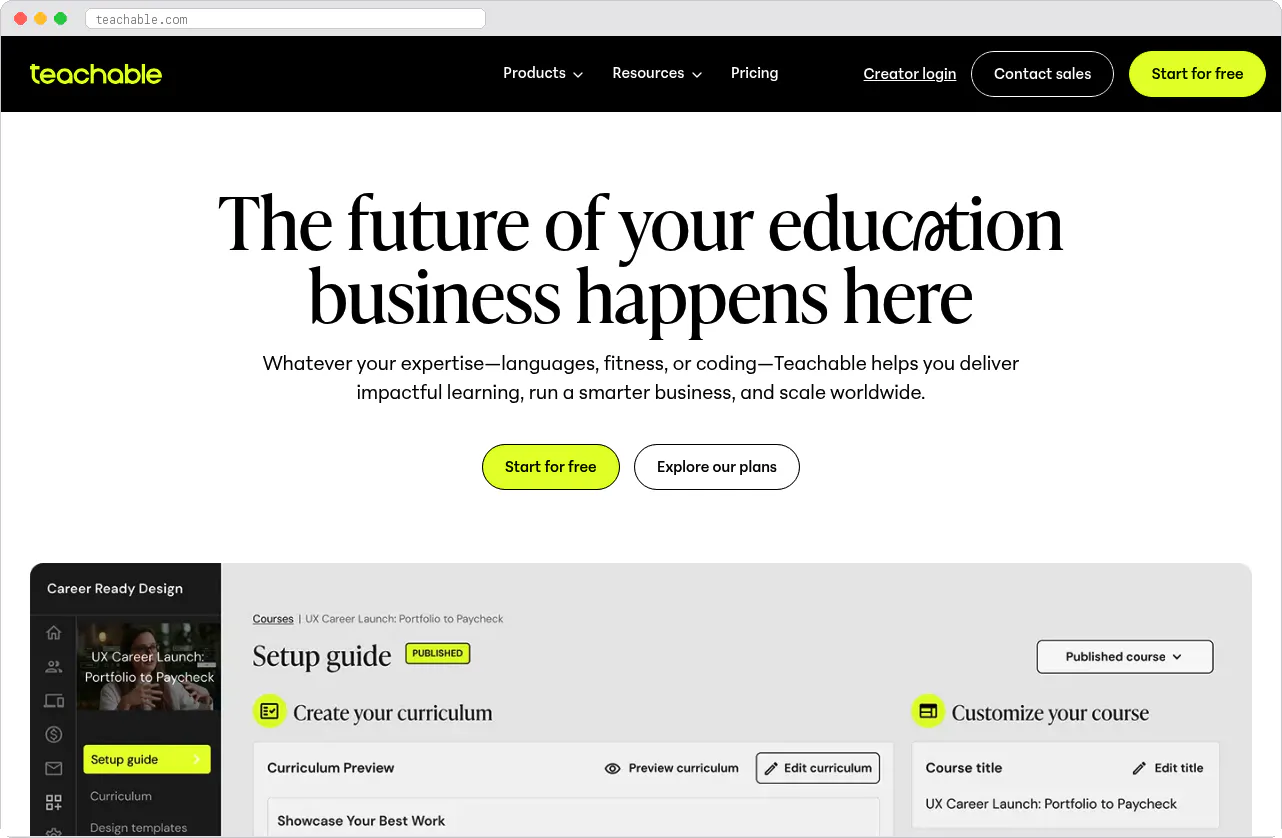
Teachable
Teachable provides course creation tools for individual instructors and small businesses to build their own learning platforms. Rather than operating a marketplace, Teachable offers white-label solutions allowing instructors to maintain direct customer relationships.
This model appeals to established educators who want brand control and higher profit margins. However, individual instructors must handle their own marketing and customer acquisition, unlike Udemy's built-in student base.
How to build a marketplace like Udemy
Creating a successful online learning marketplace requires careful planning, strategic execution, and iterative improvement. The following steps provide a roadmap based on proven marketplace development principles.
Step 1: Define your niche and target market
While Udemy covers broad educational categories, new platforms often succeed by focusing on specific niches or underserved markets. Consider targeting particular industries (healthcare, finance, manufacturing), learning formats (hands-on workshops, certification prep), or geographic regions where local language and cultural preferences matter.
Research your target instructors and students through surveys, interviews, and market analysis. Understand their current pain points with existing platforms, preferred learning styles, and willingness to pay for educational content. This research guides feature prioritization and business model decisions.
Step 2: Choose your revenue model
Decide between commission-based, subscription, or hybrid models based on your target market's preferences and competitive landscape. Commission models work well for diverse course catalogs where students make selective purchases. Subscription models suit audiences that consume multiple courses regularly.
Consider instructor incentives carefully. Higher instructor revenue shares attract quality content creators but reduce platform profitability. Test different commission structures during your beta phase to find the optimal balance.
Step 3: Build your minimum viable platform
Start with core features that enable basic marketplace transactions: course creation tools, student enrollment, video hosting, payment processing, and basic search functionality. Avoid feature bloat that delays launch and increases development costs.
Focus on user experience fundamentals: fast video loading, intuitive navigation, and reliable payment processing. These core capabilities matter more than advanced features during early validation phases.
Step 4: Recruit initial instructors
Begin with the supply side by identifying potential instructors in your target niche. Reach out directly through professional networks, industry forums, and social media platforms. Offer favorable terms, marketing support, and technical assistance to early adopters.
Consider creating some initial content yourself or partnering with subject matter experts to seed your platform with high-quality courses. This content attracts early students and demonstrates your platform's value to potential instructors.
Step 5: Launch to students
Once you have 10-20 quality courses, begin marketing to your target student audience. Use content marketing, social media, and targeted advertising to drive initial enrollments. Monitor user behavior closely to identify friction points and improvement opportunities.
Implement feedback systems early to collect student and instructor input. This data guides platform improvements and feature development priorities.
Step 6: Iterate and improve
Use data and feedback to continuously improve your platform. Track key metrics like course completion rates, instructor retention, and student satisfaction. A/B test pricing strategies, course recommendations, and user interface changes.
Build community features gradually as your user base grows. Discussion forums, instructor Q&A sessions, and student project galleries increase engagement and differentiation.
Step 7: Scale and expand
After achieving product-market fit in your initial niche, consider expansion strategies. Add new course categories, geographic markets, or learning formats based on user demand and competitive opportunities.
Invest in marketing automation, personalized recommendations, and instructor support tools to scale efficiently without proportional increases in operational costs.
Cost and development considerations
Building an online learning marketplace involves meaningful upfront investment and ongoing operational costs. Understanding these financial requirements helps founders plan realistic budgets and fundraising strategies.
Custom development approach
Building a detailed learning platform from scratch typically requires 12-18 months of development time and costs ranging from $150,000 to $500,000 depending on feature complexity and team location. Core development needs include:
- Video streaming infrastructure and content delivery networks
- Payment processing with complex commission calculations
- User management systems for students and instructors
- Course creation tools and content management systems
- Search and recommendation engines
- Mobile applications for iOS and Android
Ongoing costs include hosting ($1,000-$10,000+ monthly depending on scale), third-party service integrations, security monitoring, and development team salaries. Video hosting and bandwidth costs can become substantial as your platform grows.
**No-code marketplace platforms bring costs down to $99-399 per month in subscription fees, with no large upfront investment needed. These platforms typically include:
- Built-in course creation and student management tools
- Integrated payment processing with commission handling
- Content delivery and video streaming capabilities
- Mobile-responsive designs and basic customization options
Monthly subscription costs for no-code marketplace platforms range from $99-399 depending on the plan. While less flexible than custom development, no-code solutions allow faster market validation and iterative improvement.
Hybrid approach considerations
Many successful platforms combine no-code foundations with custom development for unique features and improved user experiences. This approach balances speed to market with long-term flexibility, though it requires careful technical planning to ensure smooth integration.
Additional cost considerations
Beyond platform development, budget for essential business operations:
- Legal compliance including terms of service, privacy policies, and payment regulations
- Content moderation and quality assurance processes
- Customer support systems and staffing
- Marketing and instructor acquisition programs
- Insurance and liability protection
- Accounting and financial management systems
Successful learning marketplaces also invest heavily in instructor support, including educational resources, marketing tools, and community building initiatives that improve content quality and creator retention.
Plan for scalability challenges including video bandwidth costs, customer support volume, and payment processing complexity as your platform grows. These operational expenses often exceed initial development costs over time.
Frequently asked questions
How does Udemy make money from its marketplace?
Udemy makes money primarily through commission fees on course sales. When students find courses through Udemy's marketing, the platform takes 50% commission. When instructors drive their own sales, Udemy takes only 3%. The company also generates revenue from Udemy Business subscriptions and advertising.
What is Udemy's business model?
Udemy operates as a two-sided marketplace connecting course instructors with students. Instructors create and upload courses while students browse, purchase, and access content. The platform facilitates payments, handles content delivery, and provides tools for both creators and learners.
How much does it cost to build a platform like Udemy?
The full platform would cost $200,000-500,000+ to build from scratch. But you don't need to replicate every feature from day one. A no-code marketplace platform at $99-399/month lets you launch core functionality for a few thousand dollars in year one, then invest in custom development as revenue supports it.
What features are essential for an online learning marketplace?
Must-have features include course creation tools, video hosting and streaming, payment processing with commission handling, student progress tracking, review and rating systems, search and discovery functionality, and mobile optimization. Communication tools and content security are also critical.
Who are Udemy's main competitors?
Udemy's main competitors include Coursera (university partnerships), Skillshare (creative focus with subscriptions), LinkedIn Learning (professional integration), MasterClass (celebrity instructors), and Teachable (white-label solutions for individual creators). Each platform serves different market segments and learning preferences.
How do instructors make money on Udemy?
Instructors earn revenue from course sales minus Udemy's commission. They keep 97% when driving their own sales but only 50% when Udemy's marketing generates the sale. Top instructors can earn six-figure annual incomes, though most earn modest supplemental income.
Start your 14-day free trial
Create a marketplace today!
- Launch quickly, without coding
- Extend infinitely
- Scale to any size
No credit card required