How to build a home cleaning marketplace
The home services market reached about $429 billion in 2023, with cleaning services representing the largest segment. Learn how to build a successful home cleaning marketplace with the right features, monetization model, and strategy to connect homeowners with professional cleaners.
Published: Dec 14, 2023
Last updated: Mar 19, 2026
How home cleaning marketplaces work
Home cleaning marketplaces connect homeowners who need cleaning services with professional cleaners in their area. These platforms operate as three-sided marketplaces, facilitating transactions between customers seeking cleaning services, independent cleaning professionals or companies, and the marketplace owner who provides the infrastructure.
The business model relies primarily on commission-based revenue. When a customer books a cleaning service through the platform, the marketplace typically charges a service fee to both parties. Customers pay a booking fee (usually 5-15% of the service cost), while cleaning professionals pay a commission on completed jobs (typically 15-25% of the transaction value).
Unlike traditional cleaning companies that employ cleaners directly, these marketplaces enable independent contractors to build their own businesses while providing customers with greater choice and competitive pricing. The platform handles payment processing, dispute resolution, insurance coordination, and customer support, allowing cleaners to focus on service delivery.
The timing-sensitive nature of cleaning services creates unique operational challenges. Customers often need same-day or next-day service, requiring sophisticated scheduling systems and real-time availability management. The local nature of the service means marketplaces must build dense supply in each geographic market to ensure reliable coverage.
Why home cleaning marketplaces represent a strong business opportunity
The home services industry has experienced dramatic growth, reaching $429 billion globally in 2023, with cleaning services representing the largest segment at approximately $46 billion. This growth is driven by demographic trends including dual-income households, aging populations, and urbanization patterns that increase demand for time-saving services.
Demographic shifts create sustained demand for cleaning marketplaces. Millennials and Gen Z consumers demonstrate strong preferences for on-demand services and are willing to pay premiums for convenience. As these generations enter peak earning years, their spending on home services increases significantly. Additionally, an aging population creates demand for regular cleaning services as mobility becomes more challenging.
The fragmented nature of the cleaning industry presents marketplace opportunities. Traditional cleaning companies typically serve limited geographic areas and lack sophisticated booking technology. Most cleaners still rely on phone calls, word-of-mouth referrals, and basic websites. A well-designed marketplace can aggregate this fragmented supply while providing superior customer experience through features like instant booking, transparent pricing, and verified reviews.
Recurring revenue potential sets cleaning marketplaces apart from one-time service platforms. Unlike handyman or moving services, cleaning naturally creates repeat customers. Successful platforms often see 60-80% of customers book multiple services, with many establishing weekly or monthly recurring schedules. This predictable revenue stream attracts both investors and cleaning professionals.
Essential features for home cleaning marketplaces
Home cleaning marketplaces require specialized functionality beyond basic marketplace features. The service-oriented nature, local delivery requirements, and trust considerations create unique technical demands.
Service provider profiles and verification
Detailed cleaner profiles serve as the foundation for customer trust. Each profile should include professional photos, years of experience, services offered, pricing structure, and availability schedule. Background check verification badges, insurance documentation, and professional certifications help differentiate qualified cleaners from casual providers.
Customer reviews and ratings must be prominent and detailed. Unlike product reviews, service reviews should cover punctuality, thoroughness, professionalism, and trustworthiness. Photo reviews showing before-and-after cleaning results provide additional credibility. Two-way rating systems allow cleaners to rate customers, helping identify problematic clients.
The verification process needs multiple layers. Identity verification through government-issued ID, background checks for criminal history, and insurance verification protect both customers and the platform. Some successful platforms also require in-person interviews or trial cleanings before approving new cleaners.
Advanced booking and scheduling system
Cleaning services demand sophisticated scheduling capabilities beyond simple calendar booking. Customers need to specify service duration, frequency (one-time, weekly, bi-weekly, monthly), and specific requirements. The system must handle recurring bookings automatically while allowing easy modifications.
Real-time availability management prevents double-booking conflicts. When cleaners update their schedules, the system should immediately reflect changes in customer-facing booking interfaces. Buffer time between appointments accounts for travel and setup requirements.
Same-day booking capability addresses emergency cleaning needs. The system should prioritize available cleaners based on proximity, ratings, and pricing to provide instant matches. Push notifications to nearby cleaners can fill last-minute requests quickly.
Detailed service customization
Home cleaning requirements vary significantly between customers and properties. The booking system needs flexible customization options including home size (square footage or room count), service type (standard, deep, move-in/move-out), specific focus areas, and add-on services like inside oven cleaning or garage organization.
Pricing calculators should provide instant quotes based on customer selections. Dynamic pricing can account for factors like property size, service complexity, cleaner experience level, and demand patterns. Transparent pricing builds trust and reduces booking abandonment.
Special instructions fields allow customers to communicate specific needs, pet considerations, access instructions, or areas requiring extra attention. Photo uploads help cleaners understand the space before arrival.
Secure payment processing with escrow
Payment security requires more than basic credit card processing. Escrow-style payment holding protects both parties by collecting payment at booking but releasing funds only after service completion and customer approval. This arrangement reduces payment disputes and provides recourse for service quality issues.
Multiple payment methods accommodate different customer preferences including credit cards, debit cards, PayPal, and digital wallets. Automatic payment for recurring services improves customer retention and reduces administrative overhead.
Tip functionality allows customers to reward exceptional service. Tips should be processed separately from base payments to ensure cleaners receive the full amount quickly.
Communication and coordination tools
In-app messaging enables secure communication between customers and cleaners without exposing personal phone numbers. Message history provides documentation for dispute resolution. Automated messages can handle routine communications like appointment confirmations and arrival notifications.
Photo sharing capabilities allow cleaners to document completed work and customers to highlight specific problem areas. Before-and-after photos serve as quality verification and marketing content.
GPS tracking and arrival notifications keep customers informed about cleaner location and estimated arrival time. This feature reduces missed appointments and improves customer satisfaction.
Quality assurance and dispute resolution
Service guarantee policies protect customers from unsatisfactory cleaning. Clear standards for cleaning quality, with photo documentation requirements, provide objective evaluation criteria. Money-back guarantees or free re-cleaning options address legitimate complaints.
Dispute resolution workflows should handle common issues like property damage, missed appointments, or incomplete cleaning. Automated systems can resolve simple disputes while escalating complex cases to human support staff.
Insurance coordination becomes critical when property damage occurs. The platform should facilitate insurance claims processing and provide clear liability frameworks.
Major home cleaning marketplace competitors
Understanding the competitive landscape helps identify market opportunities and differentiation strategies. The home cleaning marketplace space includes both large platforms with multiple service categories and specialized cleaning-focused platforms.
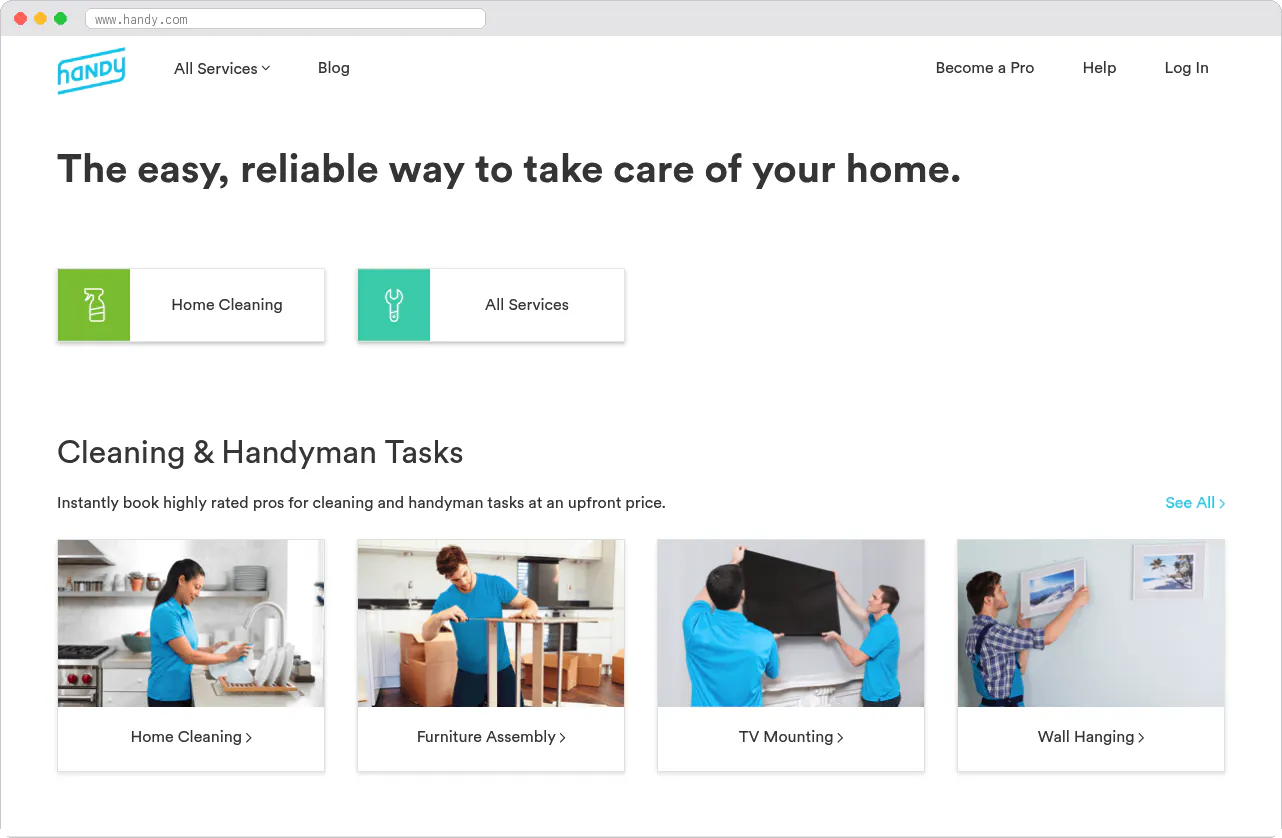
Handy operates as a comprehensive home services platform with cleaning as its primary service category. Founded in 2012, the company has processed millions of bookings across major US cities and expanded internationally to the UK and Canada. Handy's business model combines marketplace functionality with some employment relationships, creating a hybrid approach to worker classification.
The platform emphasizes vetted professionals with background checks and skill assessments. Handy provides insurance coverage and customer support, positioning itself as a premium option. Pricing tends to be higher than competitors, but the platform offers more comprehensive customer protections.
Handy's weakness lies in cleaner satisfaction and retention. Many cleaners report low pay after Handy's commission, leading to high turnover and inconsistent service quality. The platform also faces ongoing legal challenges regarding worker classification in various jurisdictions.
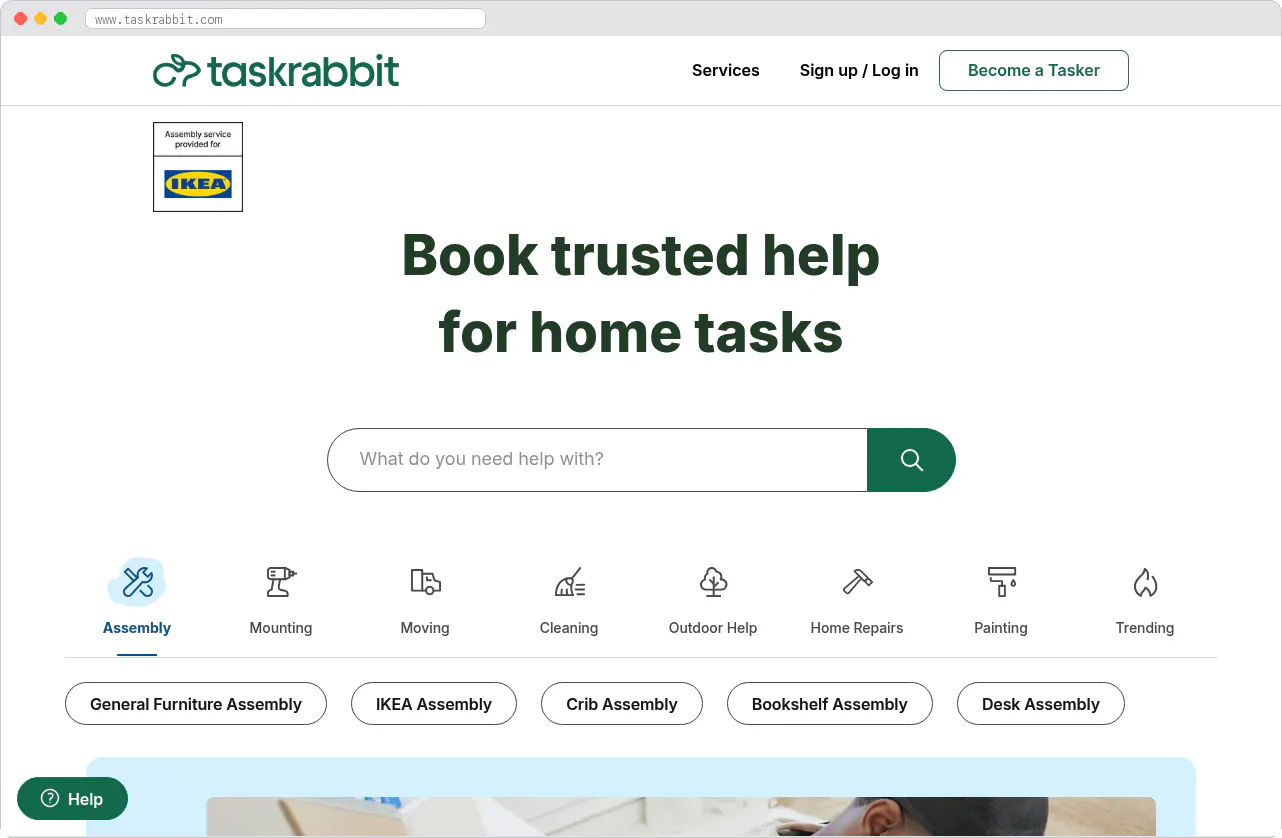
TaskRabbit, acquired by IKEA in 2017, operates as a general services marketplace with cleaning as one service category among many. The platform connects customers with "Taskers" who can handle various household needs including furniture assembly, moving, and cleaning.
TaskRabbit's strength lies in its verified Tasker network and transparent pricing. Taskers set their own rates and build individual reputations on the platform. The IKEA acquisition provides financial stability and integration opportunities with home furnishing purchases.
However, TaskRabbit's generalist approach means less specialized functionality for cleaning services. The platform lacks features like recurring booking management and detailed cleaning customization options that dedicated cleaning platforms provide.
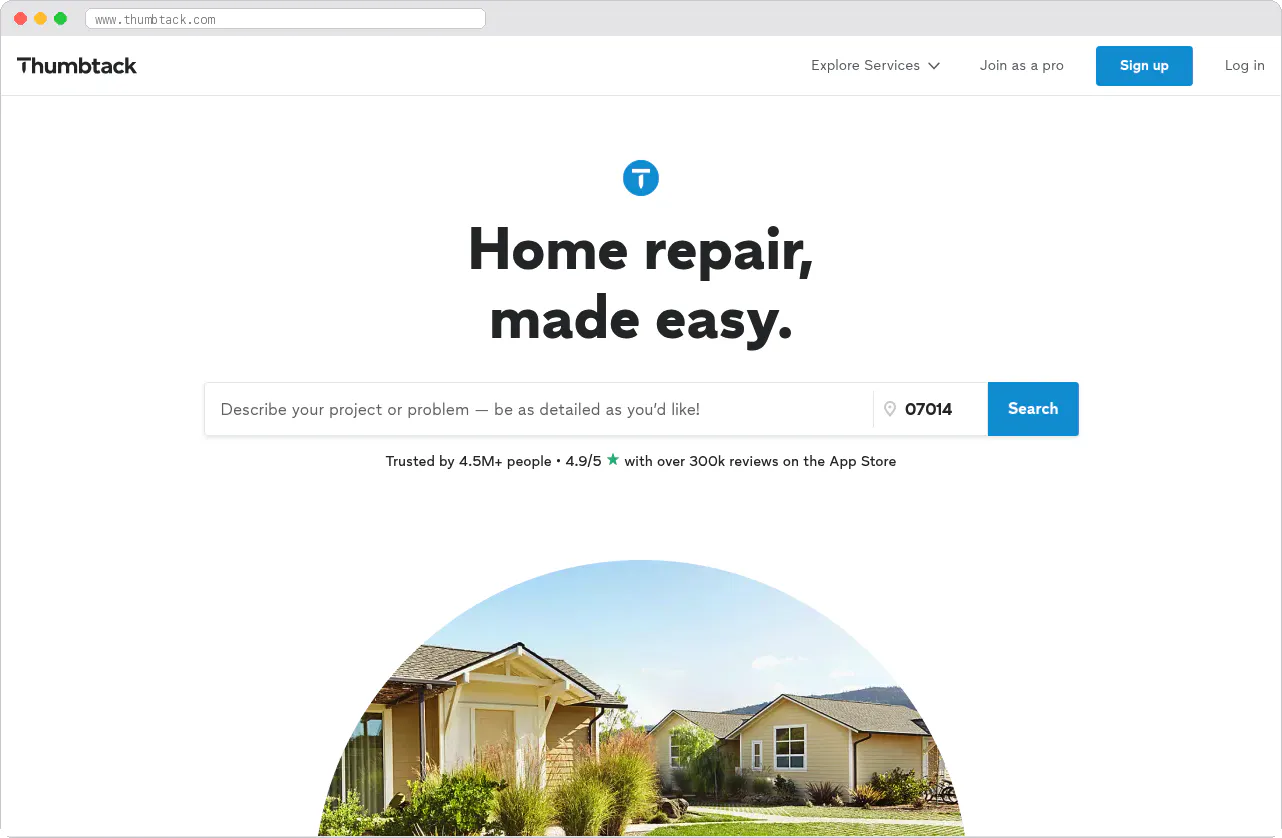
Thumbtack
Thumbtack operates as a lead generation platform rather than a full transaction marketplace. Customers submit project requests, and service providers pay to submit quotes. The model works well for large, one-time projects but creates friction for routine cleaning services.
The platform's strength lies in its extensive service provider network and detailed matching algorithms. Customers receive multiple quotes, creating competitive pricing. Thumbtack has achieved significant scale with over 10 million projects completed annually.
Thumbtack's lead-based model creates challenges for recurring cleaning services. Customers must repeatedly request quotes rather than booking directly with preferred cleaners. This friction reduces customer retention for routine services.
Local and regional competitors
Many successful cleaning marketplaces operate at city or regional levels. Platforms like Tidy (which ceased operations in 2018), Homejoy (closed in 2015), and current players like MyClean in New York focus on specific geographic markets to build dense supply networks.
These local platforms often provide superior service quality through closer relationships with cleaning professionals and better understanding of local market dynamics. However, they face challenges in achieving scale economies and competing with well-funded national platforms.
Traditional cleaning services
Established cleaning companies like Merry Maids, The Cleaning Authority, and Molly Maid represent indirect competition. These franchised operations provide consistent service quality and brand recognition but lack the technology features and competitive pricing that marketplace models enable.
Many traditional companies now offer online booking and mobile apps, blurring the line between direct service providers and marketplace platforms. Some have launched marketplace-style platforms to connect customers with franchise locations.
How to build a successful home cleaning marketplace
Building a home cleaning marketplace requires both technical platform development and complex business model execution. Success depends on achieving liquidity in local markets while maintaining service quality standards.
Start with market validation
Before building any technology, validate demand and supply in your target market. Interview potential customers about their current cleaning arrangements, pain points with existing services, and willingness to try a new platform. Focus on specific geographic areas where you can realistically build supply density.
Customer interviews should explore cleaning frequency, budget ranges, specific service requirements, and preferred booking methods. Many potential marketplace founders discover that their assumptions about customer needs differ significantly from reality.
Supply validation requires engaging with professional cleaners and cleaning companies. Understand their current customer acquisition methods, average job values, scheduling challenges, and technology adoption willingness. Many cleaners prefer simple phone-based systems over complex apps, requiring user experience adaptations.
Choose your initial market carefully
Geographic focus is crucial for cleaning marketplace success. Unlike digital products that can scale globally, cleaning services require dense local supply networks. Starting too broadly spreads resources thin and prevents achieving the liquidity necessary for marketplace success.
Ideal initial markets combine several characteristics: sufficient population density to support multiple cleaners, demographic profiles matching target customers (dual-income households, professionals, families), and limited existing marketplace penetration. Mid-size cities often provide better opportunities than major metropolitan areas where established platforms already dominate.
Market size analysis should consider both total addressable market and serviceable addressable market. A city with 100,000 households might seem promising, but if only 10% regularly use cleaning services and 5% would consider online booking, the addressable market becomes much smaller.
Build your minimum viable platform
The first version of your cleaning marketplace should include only essential features necessary to facilitate transactions. Core functionality includes cleaner profiles with photos and basic information, customer registration and booking, payment processing with basic commission structure, and simple messaging between parties.
Avoid feature complexity in the MVP stage. Advanced scheduling, detailed customization options, and sophisticated matching algorithms can wait until you understand actual user behavior. Many successful platforms launched with manual processes for tasks later automated.
Mobile-first design is essential given that many cleaners and customers prefer mobile interfaces. The booking flow should work smoothly on smartphones, with simple navigation and minimal data entry requirements.
Recruit and onboard cleaning professionals
Supply acquisition represents the most challenging aspect of cleaning marketplace development. Professional cleaners already have established customer bases and may be skeptical of new platforms that charge commissions on their existing relationships.
Direct outreach often proves most effective for initial supply recruitment. Visit cleaning professionals at local events, contact them through business listings, and use personal networks. Offer significant incentives for early adopters, including reduced commission rates, marketing support, and priority placement in search results.
The onboarding process should be thorough but not overwhelming. Required elements include identity verification, background check processing, insurance verification, and platform training. However, excessive requirements can deter potential cleaners who have other customer acquisition options.
Focus on customer experience and retention
Customer acquisition costs in service marketplaces can be substantial, making retention crucial for profitability. Focus on delivering exceptional experiences that encourage repeat bookings and referrals.
Customer onboarding should be streamlined and educational. First-time users need clear guidance on booking processes, service expectations, and platform policies. Follow-up communications after initial bookings help address concerns and encourage recurring appointments.
Service quality monitoring requires ongoing attention. Automated review requests, photo documentation requirements, and customer satisfaction surveys provide quality insights. Poor-performing cleaners should be addressed quickly through additional training or platform removal.
Develop your monetization strategy
Commission-based revenue models align marketplace incentives with transaction success but require careful balance between customer pricing, cleaner compensation, and platform profitability. Initial commission rates should be competitive with alternatives while providing sufficient revenue for platform operations.
Many successful platforms start with lower commission rates to attract supply and gradually increase rates as value proposition strengthens. Tiered commission structures can reward high-performing cleaners with lower rates while maintaining higher rates for new or lower-rated providers.
Additional revenue streams might include featured listing fees, premium cleaner subscriptions, and add-on services like insurance or background checking. However, focus on core transaction commissions before expanding monetization complexity.
Scale systematically
Geographic expansion should follow proven playbooks rather than opportunistic growth. Each new market requires dedicated supply recruitment, local marketing, and operational support. Expanding too quickly often results in poor service quality and customer satisfaction.
Successful scaling typically involves geographic adjacency, where new markets share characteristics with successful existing markets. Urban-to-suburban expansion often works well, as does expansion along transportation corridors where cleaners might serve multiple adjacent areas.
Operational scaling requires investment in customer support, quality assurance, and technology infrastructure. Manual processes that work for hundreds of monthly transactions become unsustainable at thousands of transactions.
Development approaches and costs for home cleaning marketplaces
Building a home cleaning marketplace involves several technical approaches with significantly different cost and time implications.
Custom development from scratch
Custom development provides maximum control over features and user experience but requires substantial investment. A basic cleaning marketplace with core features typically costs $50,000-$90,000 for initial development, with ongoing maintenance and hosting adding $5,000-$15,000 monthly.
Development timelines generally extend 6-12 months for initial launch, depending on feature complexity and team size. This timeline includes user interface design, backend development, payment integration, mobile app development, and testing phases.
Custom development makes sense for well-funded teams with specific technical requirements or unique business models that existing platforms cannot accommodate. However, the opportunity cost of spending months on basic marketplace functionality rather than customer acquisition and market development often outweighs technical benefits.
No-code marketplace platforms
No-code marketplace builders like Sharetribe enable rapid platform deployment without programming requirements. These platforms include pre-built features specifically designed for service marketplaces, including booking systems, payment processing, and user management.
Sharetribe's approach combines no-code speed with developer extensibility. The platform handles marketplace essentials like user registration, payment processing with commission support, booking management, and review systems. When custom features become necessary, developers can add functionality through APIs and custom development.
Launch timelines with no-code platforms typically range from days to weeks rather than months. Initial costs involve monthly subscription fees ($39-$299 monthly depending on features) plus transaction fees for payment processing. This model allows founders to validate their marketplace concept quickly and affordably.
Hybrid approaches
Many successful marketplaces combine no-code tools for core functionality with custom development for differentiation features. This approach balances speed-to-market with customization capabilities.
A typical hybrid approach might use Sharetribe for user management, payments, and basic booking while adding custom mobile apps, advanced scheduling systems, or specialized service customization. This strategy allows platforms to launch quickly while building competitive advantages over time.
Why Sharetribe works well for home cleaning marketplaces
Sharetribe's platform design specifically addresses the challenges of service marketplaces like home cleaning platforms.
Built-in booking and scheduling
Sharetribe includes sophisticated booking functionality that handles the time-sensitive nature of cleaning services. The platform supports availability management, recurring bookings, and service customization without custom development. Cleaners can manage their schedules through intuitive interfaces while customers book available time slots smoothly.
The booking system handles complex scenarios like recurring appointments, last-minute cancellations, and schedule modifications. Automated confirmation and reminder systems reduce no-shows and improve customer satisfaction.
Commission-ready payment processing
Payment processing through Stripe Connect enables automatic commission calculation and distribution. When customers pay for cleaning services, Sharetribe automatically deducts marketplace commissions and transfers remaining funds to cleaners. This eliminates complex payment reconciliation and reduces administrative overhead.
Escrow-style payment holding protects both parties by collecting payment at booking but releasing funds only after service completion. This arrangement addresses trust concerns while ensuring cleaners receive payment promptly after job completion.
Local search and geographic features
Location-based search functionality enables customers to find cleaners in their specific areas. Map integration shows cleaner locations and travel distances, helping customers make informed booking decisions.
Geographic filtering supports different service areas for cleaners who might serve multiple neighborhoods or cities. The platform handles location validation and ensures customers only see relevant service providers.
Mobile-optimized experience
Sharetribe provides responsive design that works smoothly on mobile devices. Given that many cleaners and customers prefer mobile interfaces, this capability is essential for marketplace adoption.
Mobile optimization includes simplified booking flows, touch-friendly navigation, and offline functionality for areas with limited internet connectivity.
Extensibility for custom features
While Sharetribe handles marketplace essentials without coding, the platform supports custom development when unique features become necessary. API access enables integration with specialized scheduling systems, customer relationship management tools, or custom mobile applications.
This extensibility provides a growth path from initial no-code launch to sophisticated custom platform without rebuilding core marketplace functionality.
Next steps for launching your home cleaning marketplace
Successful home cleaning marketplace development follows a systematic approach that prioritizes market validation over technical perfection.
Start by conducting thorough market research in your target geographic area. Interview potential customers about their cleaning service needs, current providers, and frustrations with existing options. Engage with professional cleaners to understand their business models, customer acquisition challenges, and technology preferences.
Validate your business model assumptions through small-scale testing. Create simple landing pages describing your proposed marketplace and gauge customer interest through email signups or survey responses. This validation costs far less than platform development and provides crucial market feedback.
Choose a development approach that minimizes time-to-market while providing necessary functionality. For most founders, no-code platforms like Sharetribe offer the best balance of speed, cost, and capability. The ability to launch quickly and iterate based on user feedback typically outweighs custom development benefits.
Focus initial efforts on supply acquisition rather than customer demand. Cleaning marketplaces require adequate cleaner density before customers will adopt the platform. Recruit your first 5-10 cleaners through direct outreach, competitive incentives, and personal relationships.
Plan your customer acquisition strategy around retention rather than pure growth. Cleaning services naturally create repeat customers, so focus on delivering exceptional experiences that generate recurring bookings and referrals rather than expensive customer acquisition campaigns.
The home cleaning marketplace opportunity remains strong, but success requires execution discipline and market understanding rather than just technological capability.
Frequently asked questions
How much does it cost to build a home cleaning marketplace?
Costs vary by approach: no-code platforms like Sharetribe start at $39-$299/month plus transaction fees, custom development typically costs $50,000-$90,000 upfront with $5,000-$15,000 monthly maintenance, and hybrid approaches fall between these ranges.
What features are essential for a home cleaning marketplace?
Core features include cleaner profiles with verification badges, booking and scheduling systems with recurring appointment support, secure payment processing with commission handling, customer reviews and ratings, in-app messaging, and mobile-optimized interfaces.
How do home cleaning marketplaces make money?
Most platforms use commission-based models, charging 15-25% from cleaners and 5-15% booking fees from customers. Additional revenue comes from featured listings, premium subscriptions for cleaners, and value-added services like insurance or background checks.
How long does it take to launch a cleaning marketplace?
Timeline depends on development approach: no-code platforms enable launch in 1-2 weeks, custom development takes 6-12 months, and hybrid approaches typically require 2-4 months. Market validation and supply recruitment often take longer than technical development.
What are the biggest challenges in running a cleaning marketplace?
Key challenges include achieving local supply density, maintaining service quality standards, handling customer disputes and property damage claims, managing seasonal demand fluctuations, and competing with established local cleaning companies.
How do I compete with established platforms like Handy?
Focus on specific geographic markets, provide better cleaner compensation and support, offer superior customer service, specialize in particular cleaning types (eco-friendly, luxury, etc.), or target underserved demographics that larger platforms overlook.
Start your 14-day free trial
Create a marketplace today!
- Launch quickly, without coding
- Extend infinitely
- Scale to any size
No credit card required