How to build a marketplace for buying and selling second-hand clothing
Building an online platform for selling second-hand clothing could be a great business. This comprehensive guide provides insights into all the things one should think about.

Summary
The global resale market will double to $350 billion by 2028, with the secondhand market expected to hit $53 billion this year. Resale is growing nine times faster than traditional retail. Second-hand clothing marketplaces connect buyers seeking affordable, unique fashion with sellers decluttering their closets while contributing to sustainability.
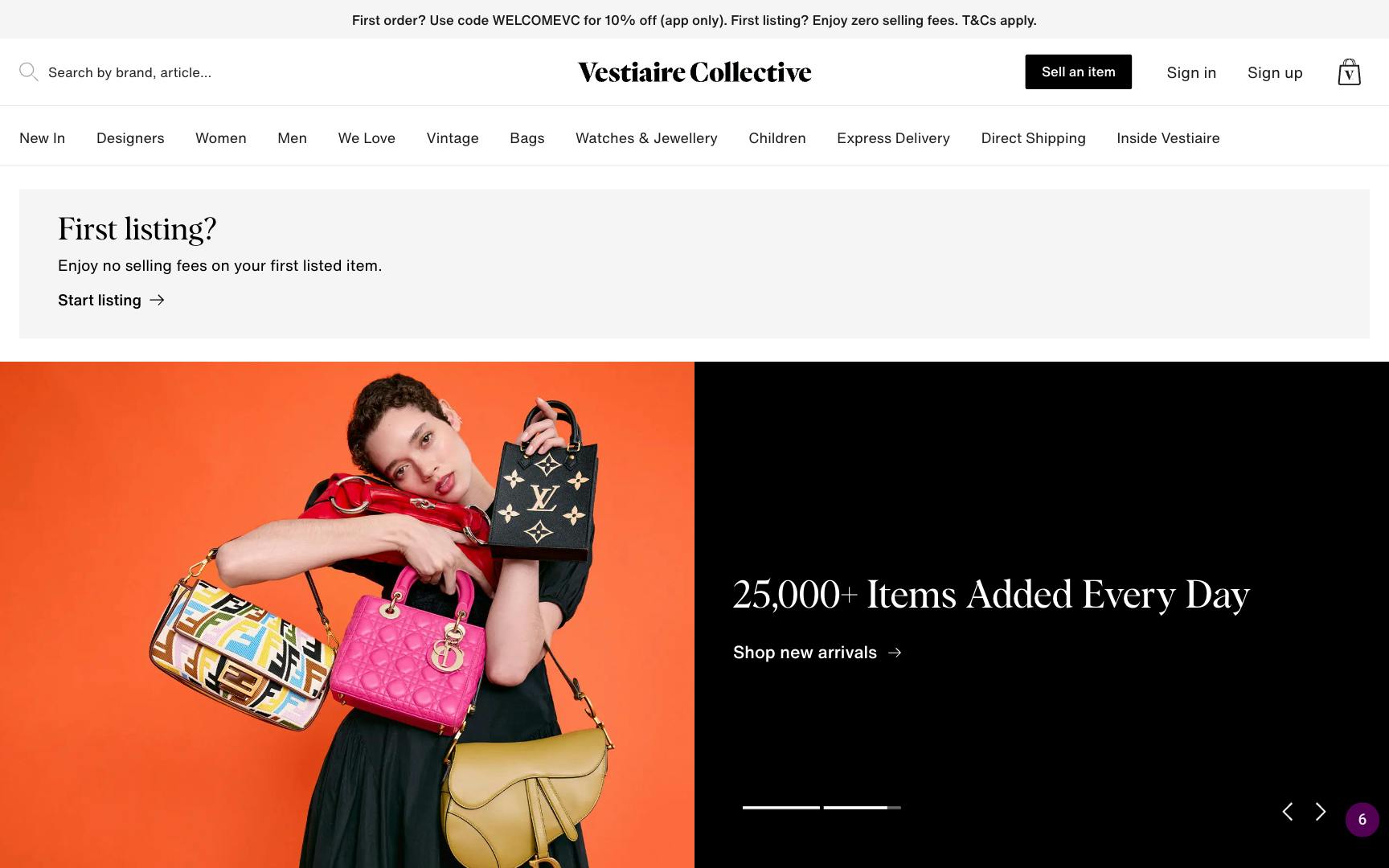
The platforms typically monetize through commission-based models (charging a percentage per sale), listing fees (charging sellers to post items), or subscription models (monthly fees for unlimited listings). Successful examples include Depop, Poshmark, ThredUP, Vinted, and Vestiaire Collective, each worth over $1 billion.
Essential features include user-friendly interfaces, listing management with photos and descriptions, robust search and filtering options, secure payment systems, communication tools, rating systems, and shipping integration. Tools like Sharetribe let founders launch in one day without coding, then iterate based on user feedback.
Key takeaways
- Increased consumer interest: ThredUp reports that consumers find sustainability increasingly important, making second-hand fashion marketplaces appealing to environmentally conscious buyers.
- Choose your revenue model: Successful platforms use commission-based fees (percentage of sales), listing fees, or subscription models for professional sellers.
- Build trust: Features like secure payments, shipping arrangements, and rating systems are critical for building trust between buyers and sellers.
Online marketplaces for selling second-hand clothing provide a platform for individuals to sell their pre-loved garments to a large audience.
These platforms allow users to create listings with detailed descriptions, photos, and pricing information. Buyers can browse through a wide range of clothing options, filter their search based on size, brand, or style, and make purchases directly from the seller.
These marketplaces often offer secure payment options and facilitate shipping arrangements between the buyer and seller. Additionally, they may have rating systems or feedback mechanisms to ensure trust and transparency within the community.
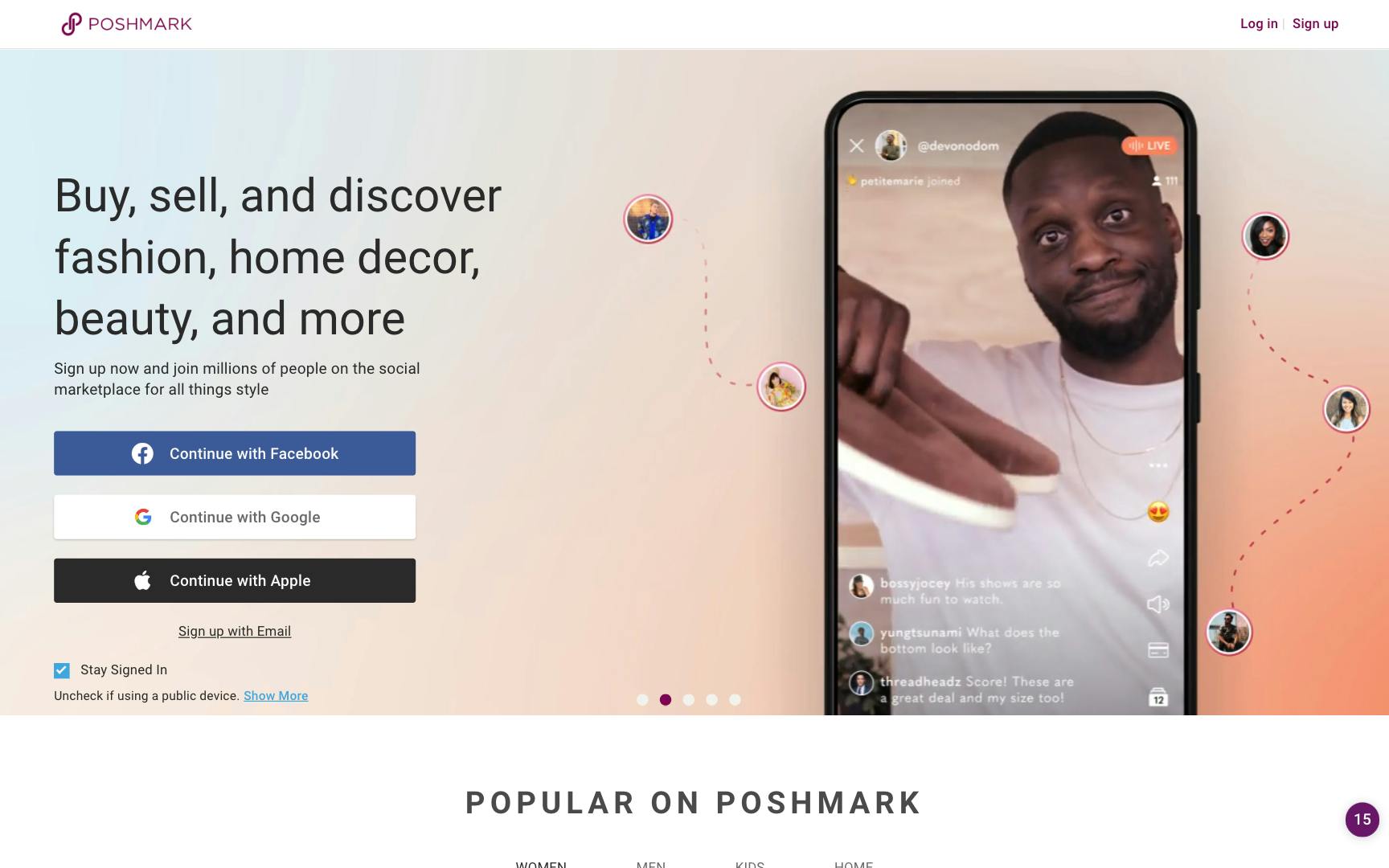
The resale market has seen massive growth in recent years, with the top sites like Poshmark, Depop, and Vinted all worth over $1 billion. The global market will double to $350 billion by 2028, according to a recent thredUP industry report.
The US Census Bureau expects the resale market to hit $53 billion this year, and the report from thredUP estimates that by 2027, resale will have grown nine times faster than the broad retail sector.
The online secondhand market is truly a niche on the brink of tremendous growth, and the opportunities in this sector are endless. By creating value, a good business can position itself to meet the needs of the buyers and sellers and make enormous profits doing so.
Here's a closer look at the benefits for all sides, and any marketplace owner who can tick most of these boxes will be well-positioned to take advantage of the coming boom.
Buyers in a marketplace for second-hand clothing can enjoy several benefits. Firstly, they have access to various affordable clothing options, allowing them to find unique and stylish pieces at a fraction of the original price.
Secondly, buyers can contribute to sustainable fashion by reducing the demand for new clothing and extending the lifecycle of pre-owned items. According to the Thredup report, sustainability is something that consumers find more and more important.
In additional, buyers can often negotiate prices or find great deals, making it a cost-effective way to update their wardrobe.
Sellers in a marketplace selling second-hand clothing can also reap numerous advantages.
Of course, they can declutter their closets and make extra money by selling items they no longer wear or need.
Also, selling second-hand clothing promotes sustainability by giving these items a new life instead of ending up in landfills. Just as with buyers, this is increasingly a concern.
Lastly, sellers can connect with a community of like-minded individuals who appreciate and value pre-owned fashion, creating a sense of camaraderie and support.
Online marketplaces for second-hand clothing often adopt a variety of business models to generate revenue while satisfying consumer needs for sustainability and affordability.
Here are some common models:
- Commission-Based Model: Marketplaces charge sellers a fee or commission on each sale. This fee can be a fixed percentage of the sale price or a tiered rate, depending on the item's value.
- Listing Fees: Some platforms charge sellers a fee to list items, ensuring revenue upfront. This fee might be a flat rate or vary based on the product category or price.
- Subscription Model: Platforms may offer sellers a subscription plan that allows them to list a certain number of items or unlimited listings for a monthly fee. This model can attract professional sellers and thrift stores looking to expand their online presence.
Each model has its benefits and challenges, and some marketplaces combine elements of these models to optimize revenue and appeal to different seller and buyer segments. These strategies also allow for scalability and adaptation as the marketplace and consumer preferences evolve.
Here are a few thriving online marketplaces that specialize in selling pre-loved clothing. Analyzing these platforms can provide valuable insights into the market and assist you in finding your niche.
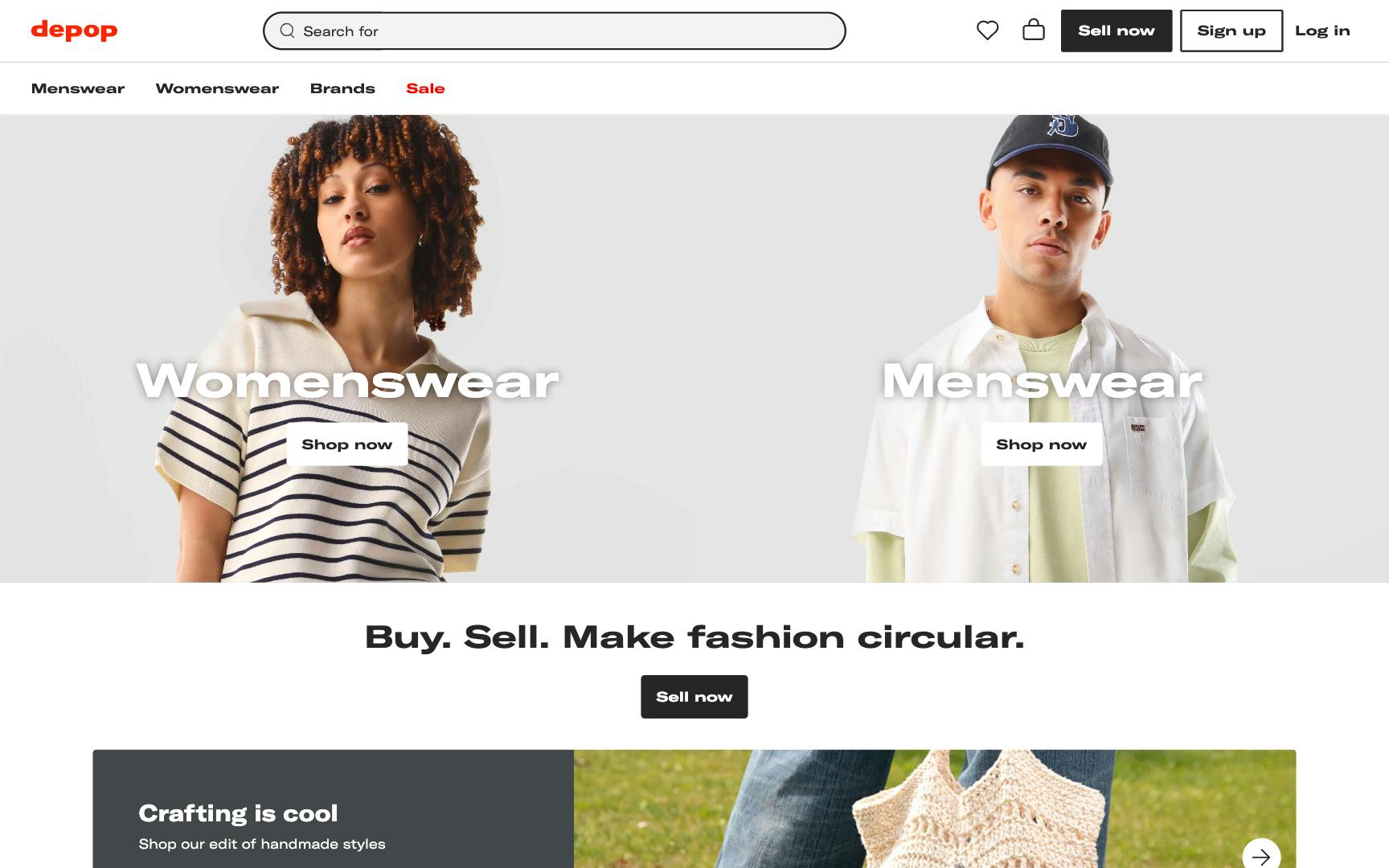
Depop is a popular marketplace for buying and selling second-hand clothing, shoes, and accessories. It has a large user base and offers a social media-like experience with features such as following other users and liking items.
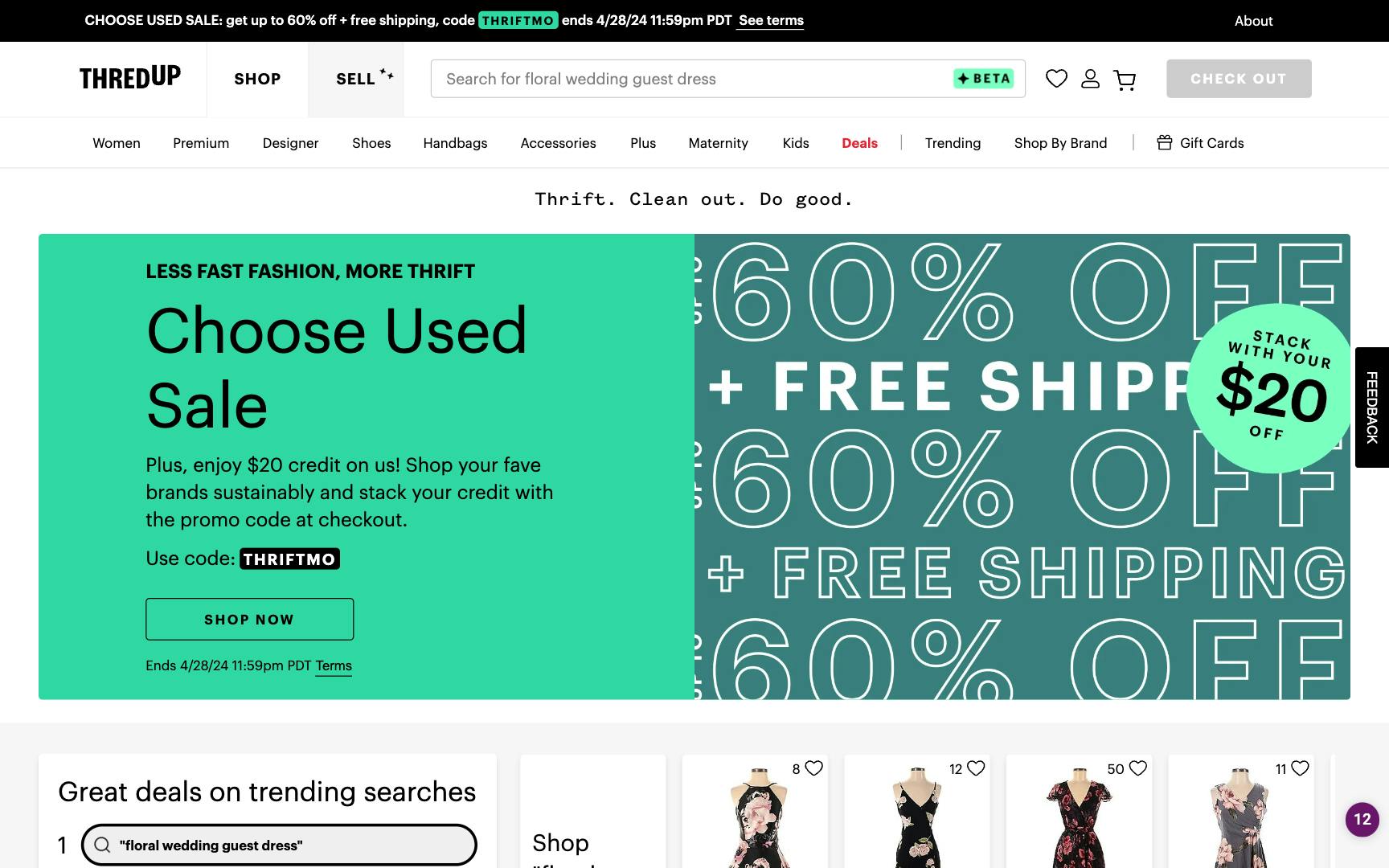
ThredUP is an online consignment and thrift store that specializes in second-hand clothing for women and kids. It offers a wide range of brands and styles, and users can either sell their items directly to ThredUP or request a Clean Out Kit to send in their items for consignment.
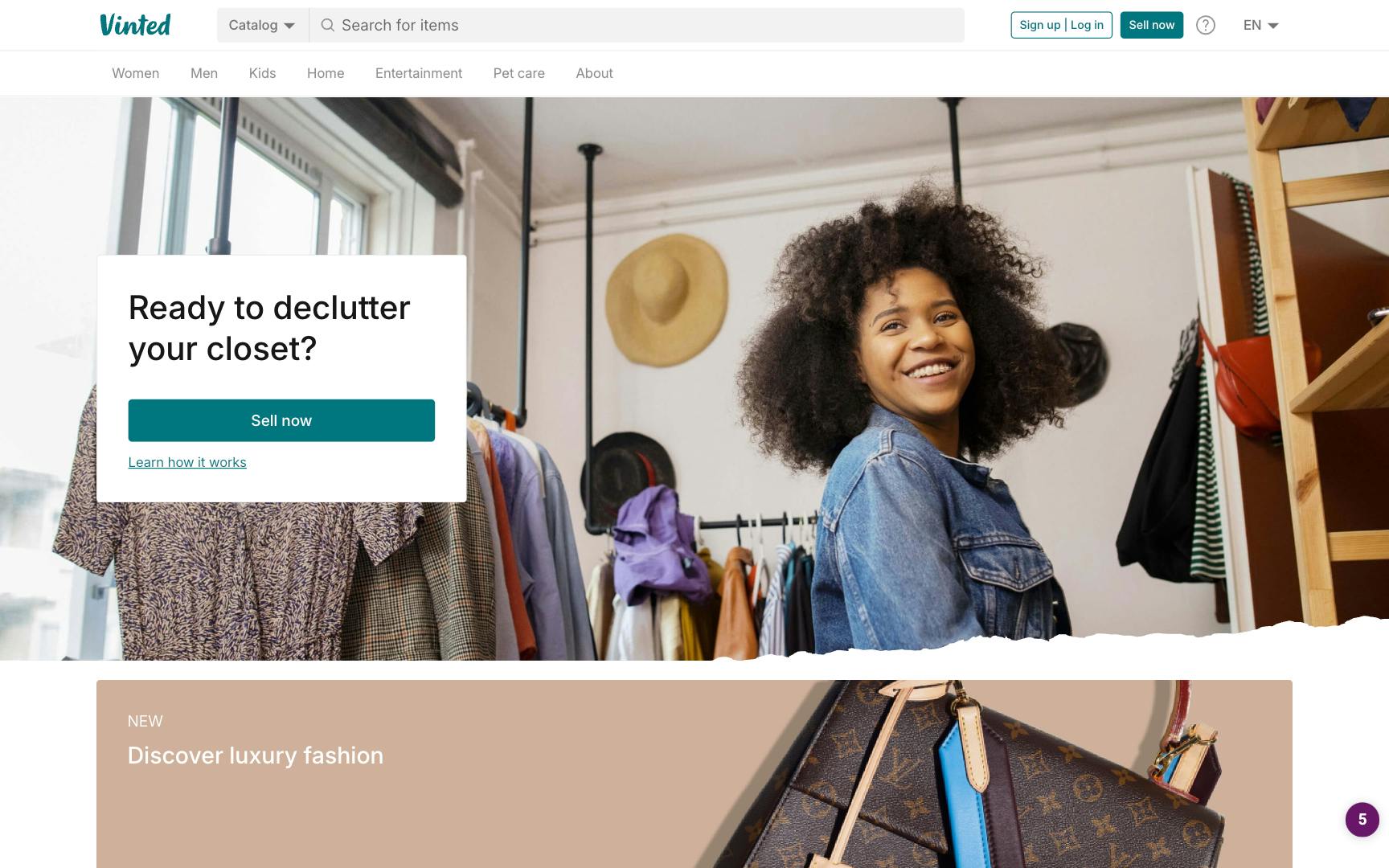
Vinted is a marketplace for buying and selling second-hand clothing, shoes, and accessories. It allows users to create their own profiles, list items for sale, and communicate with potential buyers. Vinted also offers a secure payment system and shipping options. See also our guide on how to build a website like Vinted.
The most critical functionality of a marketplace for selling second-hand clothing would be:
- User-friendly interface: The platform should have an intuitive and easy-to-use interface that allows sellers to list their items quickly and buyers to browse and purchase items effortlessly.
- Listing management: Sellers should be able to easily create and manage their listings, including adding detailed descriptions, uploading multiple photos, setting prices, and specifying item conditions.
- Search and filtering options: The marketplace should provide robust search and filtering options, allowing buyers to find specific items based on size, brand, color, style, and other relevant criteria.
- Secure payment system: The platform should offer a secure payment system that protects buyers and sellers, ensuring smooth transactions and preventing fraud or disputes.
- Communication tools: The marketplace should provide messaging or chat features that enable buyers and sellers to communicate directly, ask questions, negotiate prices, and arrange shipping or pickup details.
- Rating and review system: A rating and review system is crucial for building user trust. It allows buyers to leave feedback about sellers and their products, helping future buyers make informed decisions.
- Shipping and logistics integration: Integrating with shipping providers or offering shipping labels can simplify the process for sellers, making it easier to ship items to buyers and track packages.
- Social sharing and promotion: The marketplace should have built-in social sharing features that allow sellers to promote their listings on various social media platforms, increasing visibility and attracting potential buyers.
- Mobile app compatibility: With the increasing use of smartphones, having a mobile app version of the marketplace is essential. It allows users to access the platform conveniently and conduct transactions on the go.
- Trust and safety measures: Implementing trust and safety measures, such as verifying user identities, providing buyer protection policies, and offering dispute resolution mechanisms, helps create a secure and reliable environment for buyers and sellers.
Developing a website for selling second-hand clothing from scratch is an exciting venture that can bring immense rewards. However, it is important to consider the necessary costs that come with such an endeavor.
To begin with, you will need to account for expenses related to website development, including design, front-end and back-end development, and database setup. The complexity and functionality of your marketplace may affect the costs incurred, but with the right team and resources, you can create a platform that meets your needs and those of your customers.
Integrating payment gateways and implementing secure transactions is crucial to ensure a seamless and safe shopping experience. While there may be fees for setting up merchant accounts or using third-party payment processors, these costs are worth it in the long run as they build trust with your customers and attract more business.
A robust infrastructure is also essential to handling user traffic, data storage, and security. Costs for hosting, server setup, and maintenance should be factored in to ensure that your marketplace runs smoothly and securely.
Marketing and promotion expenses are crucial to attracting buyers and sellers to your platform. With online advertising, social media campaigns, and search engine optimization, you can create a buzz around your site and draw in more customers.
Finally, ongoing maintenance and updates are necessary to keep your platform up-to-date and functional. Hiring developers or a technical team can help ensure that your marketplace remains sustainable and successful.
In conclusion, creating a platform for selling vintage clothing from scratch may have varying costs depending on the scale and complexity of the project, but with careful planning and budgeting, it is a worthwhile venture that can yield great results.
Has this guide made you interested in creating an online marketplace to sell vintage or second-hand clothing? It's an exciting venture, but we understand that it can be daunting and expensive to create one from scratch.
However, there are numerous alternative methods that can help you build a marketplace on a small budget. The choice you make will depend on your desired features, technical abilities, budget, and time available.
Fortunately, there are several ways to build your marketplace, such as:
- utilizing WordPress and extensions
- constructing one on top of open-source software
- employing a combination of no-code tools
- using a dedicated no-code marketplace SaaS tool
- develop on top of an API-based marketplace SaaS tool.
But in addition to the costs, it is strongly recommended to consider the speed of learning, especially if you're new to this. There is no point in spending months or years of developing, only to find out there is no market. Or that your idea needs significant changes.
Instead of months of building, being fast in launching your platform for selling second-hand clothing can help you quickly gain insights about your target audience and assumptions. These insights can assist you in creating a platform that users prefer over any other existing solution.
At Sharetribe, we understand the importance of the iterative learning process. That's why we designed our marketplace software to help you launch your platform in just one day without any coding. You can use the two-week-long free trial of Sharetribe to test and get your marketplace ready quickly. Once you're satisfied with your marketplace, you can subscribe to one of the plans to go live.
After launching, you will learn about the additional features and functionality your platform needs to cater to your audience. Whether you want to change the design and workflow completely, integrate multiple third-party services, or develop a mobile application, Sharetribe can help you customize all these modifications and much more. You can do it independently, using our no-code features, or with the assistance of our Expert partners.
At Sharetribe, we have been constructing marketplaces for over ten years. Our experience and expertise are available through our content resources, which you can access and utilize regardless of the approach you choose to build your platform.
If you want to read more about the steps of building a marketplace, check out our Complete guide to building an online marketplace. It gives a ton of expert advice for marketplace entrepreneurs that you can apply regardless of how you choose to build your website.
We wish you all the best with your marketplace!
- How to build a website like Airbnb
- How to build a rental marketplace
- How to build a service marketplace
- How to build a two-sided marketplace
- How to build a B2B marketplace
- How to build a peer-to-peer (P2P) marketplace
- How to create a multi-vendor marketplace
Second-hand clothing sales are expected to reach $350 billion by 2028, growing 3x faster than the overall apparel market. This growth is driven by sustainability concerns, affordability, and changing consumer attitudes toward pre-owned fashion. The market is shifting from stigmatized to mainstream.
The main models are commission-based (Depop takes a percentage of sales), subscription (thredUP charges sellers monthly fees), and listing fees (Poshmark charges to post items). Many platforms combine models. Vinted's unique approach charges buyers instead of sellers to encourage more listings.
Essential features include user profiles with seller ratings, photo-based listings with descriptions, search and filtering by size/brand/style, messaging between buyers and sellers, and secure payment processing. Start simple and add features like offers, bundles, or authentication later based on user needs.
Focus on onboarding sellers first since they create the supply that attracts buyers. Manually recruit your first 10-20 sellers by offering reduced commissions or featured placement. Set high quality standards to create a strong first impression. Once you have enough inventory, launch to buyers.
Start with a specific niche like vintage designer items, plus-size fashion, or kids' clothes. This makes it easier to build liquidity and word-of-mouth within a focused community. You can expand to adjacent categories after proving your model works in the initial niche.
Start your 14-day free trial
Create a marketplace today!
- Launch quickly, without coding
- Extend infinitely
- Scale to any size
No credit card required