
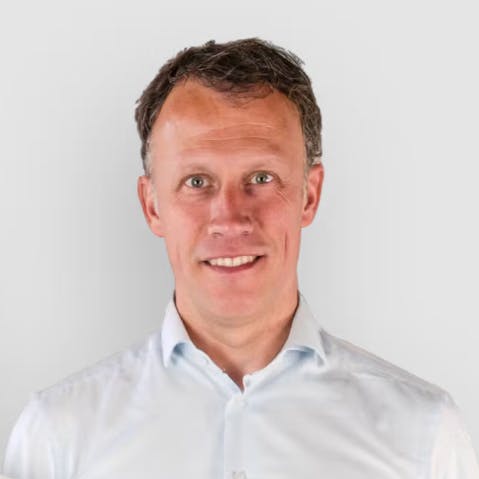
Nils Lohmann & Alexander Haufschild from socialbnb
socialbnb connects travelers with social impact projects across 45 countries
The marketplace for responsible travel alternatives started as a student initiative and grew into a platform supporting 500+ organizations worldwide.
“Sharetribe was the perfect tool to start building a full-scale marketplace right away.”
– Nils Lohmann, Co-founder and CEO, socialbnb
The spark for socialbnb came during a trip to Cambodia. Nils Lohmann and Alexander Haufschild met Mr. T, who was struggling to gather the resources to build a school for his village just 30 minutes from tourist-heavy Phnom Penh.
The solution was simple: connect travelers seeking authentic experiences with Mr. T's homestay program. Visitors could stay with his family, experience rural Cambodian life, and directly fund the school project.
Starting with a basic WordPress website and manual email coordination, Nils and Alex promoted Mr. T's program to friends and family. The response exceeded expectations, and they successfully funded both the school and a teacher.
"That's when we started to see that this problem—or this opportunity—doesn't only exist in Cambodia," Nils says. "There are communities and projects doing amazing work worldwide that could benefit from tourism as an income source."

What began as a single project gradually expanded into two, then three projects in three different countries. For nearly two years, Nils and Alex manually forwarded emails between travelers and hosts, maintaining low volume while validating their concept alongside their studies.
The turning point came in 2020 when they reached the limits of their WordPress-powered site and needed professional infrastructure to scale their impact.
But the founders faced a challenge: neither Nils nor Alex had a technical background. A friend recommended Sharetribe.
"We knew we had very limited resources as a student initiative. We didn't have the capacity to build a full-scale marketplace from scratch, so Sharetribe was the perfect place to start building right away."
The new Sharetribe-powered platform was launched in 2021. Building on their validated concept—and staying “positively naïve” as the COVID-19 pandemic put tourism on hold for a couple of years—socialbnb has since grown into a global platform that operates in 45 countries with over 500 partner organizations.
On the supply side, projects span community development, reforestation, nature preservation, climate action, gender equality, education, health initiatives, and more. All partners are social businesses, NGOs, nonprofits, or community-run organizations.
The platform's curation process remains intentionally hands-on. Every organization undergoes detailed quality checks to verify its impact, local ownership, and community involvement. Many hosts work with socialbnb to jointly develop and market their tourism programs, especially the newer multi-day Impact Trips that package accommodation, activities, food, and transportation into impact journeys.
The demand side is growing through word of mouth, social media, and storytelling.
"Most people would agree that mass tourism as it is today is not fit for the future. So when people see we're developing a new approach, that generates a lot of interest," Nils says.
The average rating on the platform is five stars. The feedback from both sides of the marketplace is that the experience is completely different from traditional tourism.
"The local communities get the chance to be involved in building touristic products that are actually beneficial for them. And the tourists get the experience they're truly after. Most of them aren't there just to be entertained; they're interested, curious, and want to learn more about the culture and the region and contribute to their well-being."
socialbnb's business model aligns with its values: only the travelers pay a 15 percent transaction fee for being connected with unique projects. This approach keeps the service completely free for the communities they aim to support.
Looking back, Nils says he would’ve chosen a narrower focus in the early days.
"We founders always love to start big and global. But sometimes, it's better to start niche, get to know your customer, get to know the problem you're solving, get recognition for being the provider for this specific thing—and then grow from there with an existing customer base."
But he doesn't regret taking the time to validate the idea through emails and manual work.
"You get to talk directly to the customers and with the hosts when you are in the email flow with them, and see the types of questions they ask. You learn a lot in the process."
Watch or listen to the full discussion with Nils
You can also listen to this episode on Spotify, Apple Podcasts, or wherever you get your podcasts. Don't forget to subscribe to be notified when new interviews drop!
Mira Muurinen - Sharetribe: Hi, Nils. Welcome to the podcast.
Nils Lohmann - socialbnb: Hi Mira, thanks so much for having me.
Mira: It's a pleasure. Thank you so much for taking the time. Could we start off by you telling us a little bit about your background and how you decided to pursue the entrepreneurial path and become a marketplace founder?
Nils: For sure, I'd love to. My name is Nils. I'm 31 years old. I'm one of the founders of Socialbnb, a marketplace for responsible travel alternatives on your next trip. I decided to pursue the entrepreneurial career because I have my background in international business and international relations. So we already learned a bit about the entrepreneurial career that this could be an option.
However, my first couple of experiences were in the corporate world, but always working in the sustainability department because I always found the idea of how can we use our capacities for the common good. So more of a social entrepreneurship approach, always very interesting and very appealing. And after first corporate experience, I saw that I could have a much bigger impact in starting your own venture and really making a meaningful change with that.
Mira: That sounds really great. Responsible travel alternatives. What does that mean?
Nils: With Socialbnb, we enable travelers to find local, authentic and responsible alternatives for the next trip. So on our platform, travelers can find accommodation, experiences or entire round trips that they can use to on the one hand have a very authentic and meaningful experience on the ground by connecting with local people, learning more about local cultures, local customs, and contributing to projects in the region that they are visiting, be it ecological projects, social projects, or animal welfare projects.
While at the same time with the money that they pay for the activity or the overnight stay, they are directly contributing to the project and that the money that they spend is actually staying in the region that they are visiting. So we want to use tourism as a force for good.
Mira: Yes, so a genuine win-win-win. So for the supply and for the demand and also for society and the environment as a whole.
Nils: Exactly. That's what we're looking for. That's what we think tourism should be.
Mira: And the supply side, what kind of people or companies does that consist of?
Nils: So our suppliers, our projects, our change makers, we call them, or our impact hosts, are from all over the world. So we are working in 45 different countries. We have around 500 different partner organizations and they come from all different kinds of backgrounds. So they work in the field of community development, reforestation, rewilding, nature preservation, fighting climate change, gender equality, education, sport, health, and you name it, so all kinds of different causes.
And all of our partners are either social businesses, NGOs, nonprofits or local community-run organizations. We want to give them access to the global tourism market. Because right now the tourism industry is more exploitive, so they take resources away from the region that they're visiting and we want to reverse that model and actually make sure that the local communities get access to the market and can showcase their unique experiences because we believe that's what tourism is all about. Connecting with the locals, learning more about the people and the places that you are visiting and at the same time contributing to their well-being.
Mira: I believe many people who love to travel want this, but at the same time, they're aware of its positive impacts on the local economies and the possible negative impacts on the environment and the society there. So this sounds like an answer to what many people actually want to achieve with tourism.
Nils: Exactly, and that's what we were actually looking for as well while we were traveling because for us it was always super hard to find these meaningful and authentic alternatives. So how could we really connect with the local people and how could we make it an experience apart from mass tourism?
Mira: Is that how you came up with the idea also as a solution to a problem that you were experiencing?
Nils: Exactly. On the one hand, it was something that we were experiencing while we were looking for new trips. Looking for more authentic, meaningful interactions. And we see that the people are what makes the country and the region so unique. So if you really want to learn more about the place that you are visiting, connecting with the locals, learning more about their lives, about their customs, and at the same time, maybe getting some hidden gems or some ideas for what you can do off the beaten track is so unique.
And at the same time, I worked in different social and ecological organizations in South America for a long time. And there I saw the need for actually building a sustainable business model to be less reliant on donations, but have a second source of income, which we think tourism is a great alternative because there is a very low barrier to entry for these communities. All of them already have projects in place or a lot of our partners already have projects in place or maybe a homestay in place so it's a very low barrier for entry for them to actually access the market and generate some additional income and revenue so that they can sustain their projects.
Mira: I definitely want to hear more about how you find the supply and how do you get them on board. But first I really need to ask, when you got this idea at first, how did you first start moving forward with it? What were the first steps that you took?
Nils: The idea actually started in university. We were some dedicated students who wanted to do something about social entrepreneurship. So it's a student initiative that tries to encourage students to develop their own ideas and then implement them. And as we came up with the idea of how we can use tourism to support local communities, we actually started just with one project in Cambodia.
We met this man who wanted to build a school for the children in this village to learn English because the public school wasn't providing English classes. And we saw that his community, his village was only 30 minutes outside of the capital, which is quite touristy, getting a lot of international visitors, yet 30 minutes outside of the capital, such a basic necessity as education was lacking because there were no resources for it or there was no income coming in.
So we said, OK, how can we help this man offer a touristic program and support it and tell people, first of all, friends and families, hey, whenever you're in Southeast Asia and Cambodia, make sure to meet Mr. T so you can have a very local experience while at the same time contributing to him building the school. So we started very easy with one program, with one project, building a very basic WordPress site where we were just showcasing some information about what he wanted to do. You could send us an email, we would talk to him.
Mira: Can you tell me more about that first project in Cambodia?
Nils: So the first project that we worked with is a program in Cambodia, where one of our former team members was traveling to Cambodia and met this man, Mr. T. And he wanted to build a school for the children in this village to learn English, because that was not provided by the public schools. And his village was only 30 minutes outside of the capital, Phnom Penh, which is quite touristy and gets a lot of international visitors, yet only 30 minutes outside of this capital, there was lacking such a basic necessity as education because there was just no income or revenue coming in.
And we thought, how can we use tourism to, on the one hand, show people and travelers the authentic, unique Cambodia to actually be staying with him in his family so that they can learn more about the culture, learn more about his vision and why he wanted to change it, maybe learn more about why education is an issue there, and at the same time, helping him to fulfill his vision of building the school and offering these English classes.
So that's how we started, first of all, just getting his information on a very basic WordPress website where we're just showcasing information. You would send us an email, we would communicate with him through Facebook Messenger and getting in touch with him and saying, hey, Mr. T, there's someone who wants to stay with you.
First of all, we just reached out to friends and families. Hey, whenever you're in Southeast Asia and Cambodia, make sure to visit him. He will pick you up from Phnom Penh in his tuk tuk. You can go to his village, stay a couple of nights, make a village walk, a cooking class, learn more about the local rural life, and have a very authentic experience that very few travelers would have. And at the same time, make sure that you really saw where your money was going and you saw how you were contributing to building the school.
And as we saw that this has a lot of potential, that we were able to fund the school, to fund the teacher, we saw that there was a lot of potential to use tourism as a means to empower and uplift communities and at the same time enable travelers to have a different experience than they would usually have or find.
Mira: So that was the aha moment. You got the school funded and you saw your friends and acquaintances really enjoy the experience. And that's where you were like, OK, there's something here.
Nils: Exactly, that's when we started to see that this problem or this opportunity does not only exist in Cambodia. So there's a lot of communities, a lot of projects doing amazing work that could benefit from tourism as a source of income. And at the same time, so many different destinations and regions to be visited that could deliver this unique insight into local life for travelers.
Mira: And was this also the light bulb moment where you started thinking about a marketplace platform? And that's how you started thinking about how to actually build tech around your idea.
Nils: It took us one or two more years until we saw, this has really marketplace potential because we started with two, three more countries, but in that case, we were still just forwarding emails back and forth. So it was still a low volume. We had five or 10 hosts maybe in just one or two, three countries. So we were keeping it very low key next to our studies.
But as we saw that the website was growing, we saw, we needed to set up a more professional structure, how we can onboard hosts and how we can get more travelers on the platform and how we can connect them directly without us having to interfere in every transaction, every kind of communication. That's when we thought, okay, this is actually potential for building a global marketplace where we see on the one hand the potential that the interest from travelers is there to have these kinds of experiences. And on the other hand, that the projects or the communities that we've been working with are actually capable of delivering such a service because it was a very new idea. And so we had to validate that these two sides are actually willing to connect and capable to connect. And that's when we came in and started building a marketplace.
Mira: Yeah, that's fantastic. And that's also the advice that we hear from experts and experienced founders time and time again, it's validate your idea with a small initial investment, doing lots of manual work, just interacting with your supply and demand and seeing if that works. And you followed that instruction perfectly.
Nils: Exactly. Yeah, there's a lot of learnings in that process when you talk directly to the customers, directly with the hosts and are even in the email flow with them. So you learn what kind of questions they keep posing. And so that's always a good learning.
Mira: Yeah, that sounds fantastic. And at what point did you come across Sharetribe?
Nils: Sharetribe was actually a recommendation of a friend of mine. He was building a marketplace for the gig economy. So he was for remote workers in 2019, 2020. When all this gig economy was still very early stages and he was trying to build a marketplace and he looked into Sharetribe. And when I told him about our idea, he said, hey, I think Sharetribe would be something for you because we knew that we had very limited resources as a student initiative as a small team. We knew we didn't have the capacities to build a full-scale own marketplace from the get-go so we thought Sharetribe would be the perfect place to start building right away.
Mira: Fantastic, we should send that friend of yours some flowers. At that point, did you consider any alternatives to Sharetribe? Don't know, plugins on top of your WordPress website or something like that?
Nils: Yeah, we stretched WordPress a lot because we had one developer who was familiar with WordPress. So we were very hesitant on moving away from WordPress because we didn't have any other developer and he wasn't aware of Sharetribe or he hadn't worked with Sharetribe yet. So we thought for at least six to 12 months, okay, rather build another plugin, build another... It was just our Frankenstein's monster of WordPress that we had built at that point. A bit more, a bit more until we saw, it just doesn't give us the functionalities and the features that we need to build a platform because WordPress is great for what it does, but it's not necessarily built for building a marketplace. That's what our experience was.
And then we went into the process to build Sharetribe in the background while still maintaining the WordPress site for, I think six to nine months while we were building Sharetribe in the background and then shifted over to Sharetribe fully.
Mira: And this was 2020?
Nils: We took the idea out of university in 2020 when we saw the potential and Alex, my co-founder and I decided to take the idea to a more professional setting to be like, okay, we want to see if this idea works outside of the student environment. We want to build a proper impact startup out of it. We decided to take it out of university in 2020. And that's when we started working with Sharetribe as well in summer 2020. And we launched in April, May 2021.
Mira: So there was the whole COVID pandemic also. Did that impact your plans or discourage you in any way?
Nils: Surprisingly, it never really discouraged us. In hindsight, it's very surprising because we were new founders and we were super dedicated, super convinced about our idea. And we were positively naive, I'd say, because we were always like, okay, how long is this COVID thing going to last? Maybe six months. And after six months, we were like, okay. Then the summer season started, we got a couple of bookings. We were like, okay, we see it's picking up. And then in winter, it started again. And we were like, okay, that's a couple of months again.
So we were always very naive in thinking it wouldn't last as long as it did, finally. But what I think is a good thing, because if someone would have told us in the beginning, okay, for the next two years, the tourism industry is going to be a black hole, basically, you don't know which country is open, where you can go, what are the restrictions, it would have been quite discouraging. In that sense, we were lucky being naive.
Mira: Yes, thank goodness for some misplaced optimism.
Nils: Exactly. I think that's a very good trade-off for entrepreneurs as well as remaining optimistic.
Mira: Yes, well said. What was the experience getting started with Sharetribe, building with Sharetribe? You mentioned that you weren't very technical, didn't have a super big technical team.
Nils: Yeah, and actually neither Alex nor I have any technical background. So we worked with a designer who was kind of a self-taught front-end developer, I'd say. And he was building Sharetribe with us in that sense. So he was taking care of all the technological side. So we were very grateful. I think now you guys have moved even more into the no code solution. So that would have been even better for us four years ago.
But we decided very early that we wanted to go with Flex instead of Go because we needed to make some adjustments, especially in the front end. And so we kind of drew the platform on a whiteboard on what we wanted, what kind of functionalities we wanted, we were doing user stories and that, and then stuff on how it could look. And then he started developing it over the time. And I think it took nine months till we were satisfied with a go live because he was doing it on the side as well. He wasn't doing it full time and he was the only one actually developing and not just putting ideas in. We were just being like, this would be nice. This would be nice. He was like, yeah, okay. Yeah, I think every developer knows that struggle. But yeah, so it was a very good experience for us in getting being quite quick in developing a marketplace.
Mira: Yeah, and that's the thing also, that's what many people mentioned about Go and Flex, our legacy products, that the transition from no code to code was actually quite time consuming. The gap was quite steep and that's exactly what we wanted to solve with the new platform.
Nils: And I think you did. It's very cool to see as well how it developed from being now, I think it would be a no code solution even possible.
Mira: I'm glad to hear that. Now let's get to the real beef of the interview. How you grew Socialbnb. The first suppliers, back when you still had the WordPress site and you were doing lots things manually, the supply side came through your contacts in these different countries and your connections with the local organizations.
Nils: Exactly, mainly. The first, so we kind of went through three phases, I'd say in building the supply. The first was definitely just friends and family, people who have been visiting a community, who have been working in a project, who have been searching for these kinds of experience. And we brought them on the platform. So maybe the first 50 organizations kind of came through recommendations.
In that sense, and I think the next 200 of them came through active research of ours where we were like, okay, we know what we're looking for. We're actively engaging and talking to these organizations. And the third stage, which we're currently working with, is talking to multiply our networks, bigger NGO networks or community-based tourism networks, which have maybe 5, 10, 15 or even 100 communities at the same time that we can then screen and onboard, show them what we do.
And we still get a lot of recommendations. So the people know us, organizations that want to work with us because we're, to my knowledge, one of the few providers who actually do this and give them the access to the market. And so we get a lot of requests as well.
And all of them go through a detailed quality check with us on how we bring them on the platform, what they are doing, who's behind the idea, how they're contributing to the local challenges that they're trying to solve. And obviously how the local community is involved, how it is locally owned, how they are funded so that we get a lot of information that we make sure that the impact that we promise our travelers that is happening and that they can actually see and witness and contribute to is actually happening.
Mira: Yeah, so there's lots of manual work involved in this, selecting, screening, onboarding the supply.
Nils: Exactly. It was always clear to us that we didn't want to be a marketplace where the hosts can just upload any profile or any program because we want to curate the hosts and their ideas. And a lot of our hosts, for them, it's the first time being on a platform as well. So we often develop the programs jointly with them, especially with one of the new programs that we have, which is multi-day experiences where we offer not only accommodation, but we package activities, food and transportation into a very unique package.
And for many of them, it's the first time offering such a thing. So we help them in the brainstorming, what kind of activities could they offer? What kind of things could be explored on site? How could it be priced? What would be an interesting experience for our target group? So we developed these programs jointly with them.
So it's still a lot of manual labor involved, but it's one of the works that I really enjoy doing with Socialbnb, actively working with them and seeing how we can give them access to the market and actually contributing.
Mira: And I can imagine that also being a huge advantage to your demand side in this era of greenwashing and aggressive sort of responsibility washing and marketing to be able to trust that this is the real deal, this is actually as impactful as is being claimed.
Nils: Exactly. That's one of our main targets and main focus, our credibility in the impact that we're delivering. I mean, the amazing thing is that the travelers can see the impact that they are having on the site firsthand. They see where the money goes, they see what they're contributing or they might be even actively contributing to what they're doing, to what the project is doing. And I think that makes it such a unique experience.
Mira: So how do you find this demand then?
Nils: So the demand is mainly through social media and awareness campaigns, public relations. So we've had quite some publications because we see there's a lot of interest in how tourism can work in a different way. Because I think most of the people would agree that tourism as it is today is not very fit for the future. Because we see there's a lot of requests from the local population, be it in European cities, that they say like, OK, we want our city back, there's too many tourists coming in. We are not involved in building these products, we're not benefiting from people coming here.
So we see that there's a big movement in trying to rethink tourism, and that's where we want to enable and develop and allow a different alternative with Socialbnb. How can we actually involve the local communities all over the world in building a touristic product that is beneficial for them because it's actually contributing to nature preservation, animal welfare, gender equality, education whatsoever. And at the same time, it's a very meeting on eye level with the travelers because the travelers are actually interesting, curious, and want to learn more about the culture and the region. They're not just there to be entertained. And so I think that's a different level of interaction with the locals as well.
And that's what we get as a feedback from both our partners and our travelers that it's a really different kind of experience. So back to your question, how we raise the awareness, we see that there was a lot of publications in magazines, TV shows, podcasts, whatsoever that were interested in the way, okay, hey, these guys are really trying something different. These guys are really trying to rethink the system on how it should be done. And that's how we got a lot of interest and step-by-step building our social media channels, which is I think one of the best ways on showcasing the uniqueness of our experiences and showcasing the local change makers that we work with. So making interviews with them, giving them access, allowing them to share their story with the travelers why they chose to fight this injustice, why they chose to take on this challenge and really give a face to the project, to the challenge that the travelers can visit and contribute to.
Mira: That sounds amazing. Is word of mouth a big factor in your demand acquisition also?
Nils: For sure. I think word of mouth and reviews is one of the best things to support us. What our travelers do is what I think we have an average review rating of five stars because the people see that it's something different. They really love what they are seeing, what they're doing. So we see that word of mouth is obviously a very strong recommendation factor and pull factor because I mean, how I decide my next travel destinations as well, talking to different people, learning more about what was their best experience on site and what they did, what they discovered, what they learned, how they liked the destination.
And it's best trust building that you can do because if you just see a shiny, flashy ad, it might be one in a million. But if someone that you trust and that you know has the same values or the same interests as you and says like, this is a very cool experience. This is very cool destination. And you should definitely check it out. It grows higher and higher on my bucket list, which is very long still, but it keeps growing.
Mira: I'm sure. So how do you monetize this? How do you make a profit from these kind of connections?
Nils: So we decided on the marketplace system because we see that this is where we have the main benefit for the travelers and the hosts. So giving the hosts access to the global tourism market, at the same time helping travelers to find these offers that they might not find elsewhere. And that's why we take a transaction fee because we connect these two players. That's how we can keep our service completely free for our communities and our organizations, our projects so they don't pay a listing fee or subscription fee but the travelers pay a transaction fee for us connecting them with these projects and finding these projects and that's how we generate revenue.
Mira: Yes, so a commission that only the demand side pays. Sounds also quite well nicely aligned with your values. Do you remember the first transaction that happened on your Sharetribe marketplace where you had more automation in place?
Nils: The first year was crazy in general when we switched to Sharetribe because the first ones were all still where we were involved or were friends of us or people found us and then they sent an email to us who were always very involved. But all of the sudden, I think when we launched the platform in May, July, I think, and with the first booking in end of July, August, and it was just someone we didn't know. And it was just someone booking through the platform. Just like, wow, wow. And yeah, I just wanted to directly call the person and be like, hey, how? How did you find us? How did you like the experience whatsoever?
No, we don't gather phone numbers. We don't get the phone numbers. We send them an email on how they found out, how they liked the experience. And it was actually through a recommendation of a friend. But it was a crazy feeling. That was the first time we were not involved. And that was the first time that we actually saw, OK, this marketplace idea of us just providing the marketplace and the information and the technology behind it. And people actually looking by themselves, finding something for themselves that they liked was a crazy experience.
Mira: I'm sure. So currently, what are your most important focus areas in terms of business initiatives or marketing or technology or work in the communities? What are you focusing on now?
Nils: We always have three main focus topics that we work on. On the one hand, we're always trying to enhance the technology. Talking to our users, what kind of features would they like? Talking to our hosts, what kind of features would they like? So we're currently, for example, adjusting the transaction process more, allowing more payment methods, more social sign-on, giving them more overview of what is actually included in the price, for example. So we try to give them the best option possible. We adjusted the search process, for example, because we saw that people search differently now than they did six months ago. So we try to accommodate for that. And so we always try to build very user centric new features.
And at the same time in the product department, product development, we developed a new product called Multi-day Experiences where we shifted from only offering the accommodation we did in the beginning and giving information about the activities that you can do to actually packaging activities, accommodation, food, transportation all together to showcase the uniqueness of the product or the project that you're visiting. Because by offering the additional activities, you can really see, can I do a workshop? Can I participate in reforestation efforts? Can I support in the research in rewilding efforts, can I learn more about education, about gender equality? So really making this experience more immersive because we saw that the travelers wanted even more interaction with their hosts.
And that's how we try to work with it in building these packages so that they stay longer on the ground and have an even more special experience by showcasing the uniqueness of our projects even more. And as well enabling the travelers to take maybe a bit of a detour because we also try to divert the tourism streams so you don't visit all the time the same regions, but maybe go to a more rural or semi-urban area. But it's more worth it if you go for three or four nights instead of just staying for one night.
And we will be offering our first own designed round trip now in Sri Lanka, where you will be having 14 days Socialbnb experience. So just visiting, going from one of our partners to the next and having an entire impact round trip. We are very excited about launching that within the next couple of weeks.
Mira: Sounds exciting. Can you give a concrete example of what this kind of experience could be like?
Nils: Yes, I would love to. Specifically these multi-day experiences that we're offering are experiences where you as a traveler can even dive deeper into the local culture and immerse even more and often directly contribute to what the project is doing because you stay longer and are more engaged. So for example, we have programs in Europe where you can participate or see how rewilding efforts are being done. You can see in Italy, for example, be part of a research vessel where you can support the researchers in finding dolphins, whales, and with the research that you're doing, actually contribute to them building a marine life protected area in the Mediterranean Sea with the data that you're gathering. So you're actively contributing with your work and have a very unique experience and being on the sailing vessel, having this community thought and really being hands-on.
Mira: That sounds really cool. I love how I can hear from how you talk that the impact that you want to make is present in all these decisions that you make, be it technology, be it business initiatives. So you mentioned three focus areas and that was two, right? So what's the third?
Nils: Exactly. And the last one is always how to, since we are a marketplace, obviously getting good supply, but on the other hand, growing our demand. So how can we use our marketing channels even better to showcase this uniqueness of our product? So we started doing more targeted ads, doing more video content, which we saw is working very well. So we are trying to work together with all of our partners in developing video content so that we can create short reels, video ads for them, with them, that we can then promote to our platform.
Because what we saw is that when the hosts can actually tell a bit more about their story, have video about why the experience is so unique or what the travelers can experience, we saw that travelers are much more likely to book these kind of experiences because they get a better touch of the people and what they could see. And that's what we're actively promoting as well. Building more video content, helping our partners to create this content or edit it for them and then bring it on our socials to make more awareness for our travelers so that they can really have a good feeling on where they want to go next, get some good inspiration.
Mira: Sounds great. You rather recently raised funding, correct? Do you want to share something about that?
Nils: Yeah, for sure. Funding is always a very big topic for young startups. I think especially for us, since we've been working a lot with public money in the beginning with government grants, scholarships and award money, we saw that we were kind of reaching a glass ceiling because we were able to build this platform. We were able to build this marketplace. We were able to get the first customers, the first traction showing that it could work.
But we also saw that especially the marketing efforts take a lot more time than we expected in the beginning because we thought, there's a lot of agreement and nodding about yes, tourism should be done differently. But we saw that marketing is very price intensive or money intensive because in the end when people decide where they go on their next trip, there's so many options out there and there's so many big platforms that they can turn to that they can find something wherever they go, they will find a suitable alternative.
So we saw that we need to put in more money into marketing and actually drive the people and showcase that Socialbnb exists. Because to everyone that I talked to about Socialbnb, they'd like, hey, wow, I would have loved to know about this before my last trip. I was like, yes, that's exactly what we're working on. That's what we're trying to push with this funding as well, that more people know about us and they know about us in the right moment when they're trying to make the booking decision. Or we can even be the inspiration for the next trip where they want to go.
Mira: Makes sense, makes perfect sense. Looking back on your journey, is there anything that you would have done differently with the wisdom that comes with hindsight?
Nils: A million things. I think I haven't met an entrepreneur who has done it right from the beginning. I mean, looking back, I hope I can always say that we did the best to our knowledge at that certain point, which is comforting. And I really love that we've been a team since day one. So we were always a lot of great minds trying to find good ideas and involving everyone in the decision making.
But what I would focus even earlier on is, now we focus very much on user centric features. In the beginning, we developed the platform rather for us saying like, okay, we would love to have this, we would love to have that. And until we realized what we expect from a platform might not be what someone else would be expecting from the platform. And that in the end, if a user would expect this feature to work in a certain way or the search to work in a certain way or the transaction process to work in a certain way, we need to accommodate for that if we see patterns and behaviors.
So what I would do differently is definitely talk even more and even earlier with our travelers, with our customers on where they want to go and what would they expect from a platform like us, how we can make it even easier for them to find these suitable alternatives. And developing, so the technological product jointly with them, but as well the touristic product jointly with them, because in the beginning we're like, it's super nice to have a global reach with 45 different countries. That's amazing. But I think it would have been easier for us to focus maybe on three, four, five countries in the beginning, build a stronger network in those countries, focus on marketing these specific countries, building them up as responsible impact destinations from the get-go, which would have made it easier to market these specific destinations.
So we founders always love to start big and start global. But I think sometimes it's very good to start niche, get to know your customer, get to know the problem that you're solving for them, get recognition for being the provider for this specific thing or this specific country in our case, and then grow from there with an existing customer base.
Mira: Yes, that's also very good useful advice for many people who are just at the early stages of this journey to starting out. It's often super tempting to start building the marketplace of your dreams and make it very flashy. But very often it's just like you said, start with an MVP and talk to your users, find out what they need and build from there.
Nils: 100%.
Mira: Thank you so much, Nils, for this interview and for sharing your inspiring story and your advice with early stage founders. We're super proud to share this story with our audience.
Read more founder stories

Marcel Fairbairn from GearSource
GearSource survived three re-platforms and found stability after two decades

Shira Yevin from Gritty In Pink
Gritty In Pink launched a marketplace and saw sixteen months of continuous growth
Gaurav Singhal and Dirk-Jan ter Horst from Drive lah
Drive lah raised millions in venture capital and scaled internationally
PS. Would you like to see more examples of what others have built with Sharetribe? Check out marketplace gallery
Start your 14-day free trial
Create a marketplace today!
- Launch quickly, without coding
- Extend infinitely
- Scale to any size
No credit card required