How to build a website like Trivago
Learn how Trivago's hotel comparison marketplace works, generates revenue through advertising, and how to build a similar travel booking platform. Includes business model analysis, key features, and development approaches.
Published: Mar 6, 2026
Last updated: Mar 19, 2026
Trivago pioneered a new approach to hotel booking by creating a meta-search platform that compares prices across hundreds of booking sites. Founded in 2005 by Rolf Schrömgens, Peter Vinnemeier, and Malte Siewert in Düsseldorf, Germany, Trivago has become one of the world's largest hotel search platforms, processing over 120 million visitors monthly and generating approximately €600 million in annual revenue.
Compared to traditional booking sites that handle reservations directly, Trivago operates as a marketplace that links travelers with hotel booking platforms. The company doesn't process bookings itself, instead, it aggregates hotel prices from multiple sources and redirects users to partner booking sites for actual reservations. This business model has proven highly scalable, allowing Trivago to expand to over 55 countries while maintaining relatively low operational costs.
Building a marketplace like Trivago requires understanding both the technical complexity of price comparison and the strategic challenges of multi-sided platforms. Success depends on balancing the needs of three distinct user groups: travelers seeking the best deals, hotels wanting visibility, and booking platforms competing for conversions.
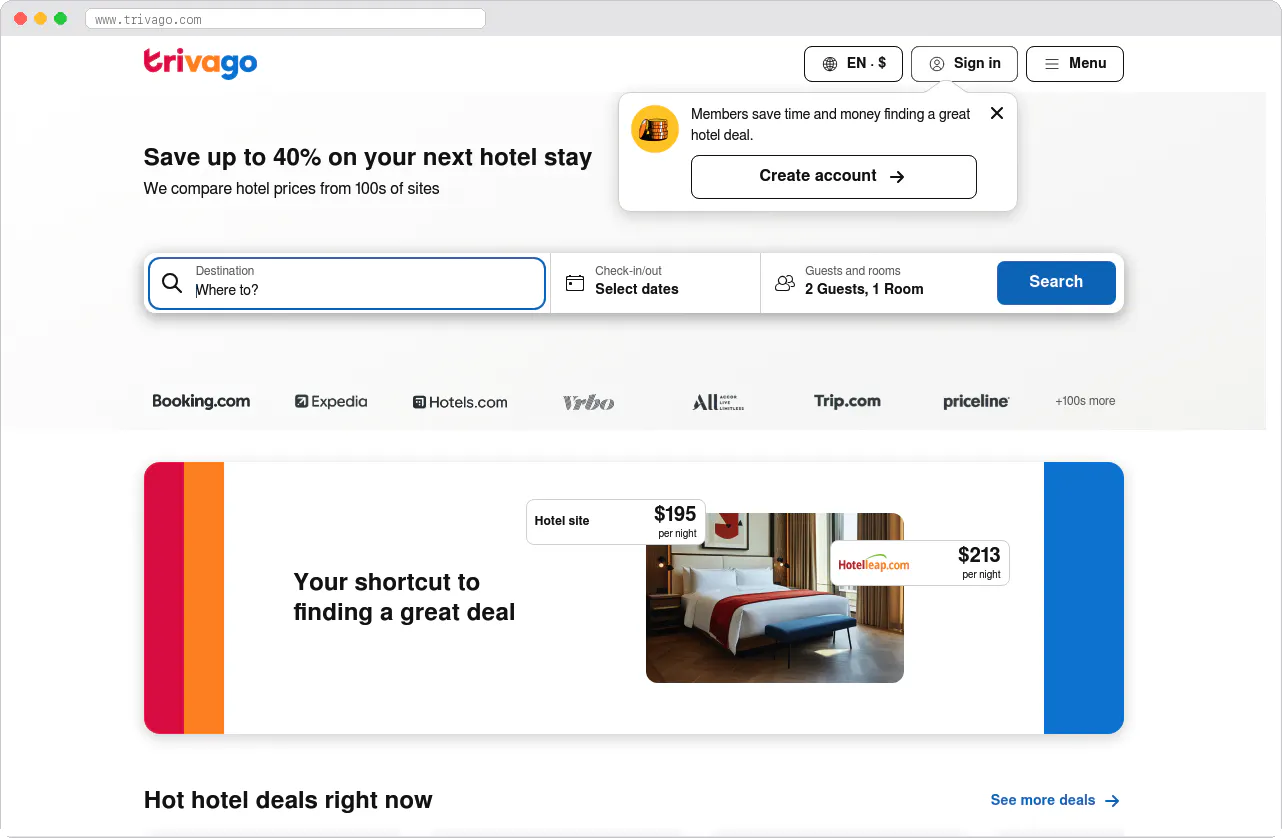
How does Trivago work?
Trivago operates as a three-sided marketplace connecting travelers, hotels, and booking platforms through a refined price comparison engine. The platform aggregates hotel rates from over 400 booking sites, presenting travelers with full price comparisons while generating revenue through advertising and referral commissions.
The user journey begins when travelers search for accommodations by destination, dates, and preferences. Trivago's search algorithm queries its database of hotel rates from partner booking sites, displaying results in a standardized format that allows easy price comparison. Each hotel listing shows multiple booking options with different rates, cancellation policies, and availability.
When users click on a booking option, Trivago redirects them to the partner booking site where they complete their reservation. This redirect generates revenue for Trivago through cost-per-click advertising fees paid by booking platforms. The smooth handoff maintains user experience while enabling Trivago to monetize without handling complex booking processes, payment processing, or customer service issues related to actual stays.
The platform's value proposition differs for each user group. Travelers benefit from thorough price comparison without visiting multiple booking sites individually. Hotels gain visibility across numerous booking channels through a single integration point. Booking platforms access qualified traffic from users already expressing purchase intent, though they must compete on price and booking terms to win conversions.
Trivago's backend systems continuously crawl partner booking sites to update rates, availability, and hotel information. This real-time data aggregation requires smart technical infrastructure to handle millions of rate updates daily while maintaining search performance. The platform also uses machine learning algorithms to optimize search results based on user behavior, conversion rates, and revenue potential.
How does Trivago make money?
Trivago generates revenue primarily through advertising fees from booking platforms, operating on a cost-per-click (CPC) model where partners pay for each user redirected to their sites. This advertising-based revenue model has proven highly scalable, generating approximately €600 million annually as of recent financial reports.
The CPC rates vary markedly based on destination, seasonality, and competition among booking platforms. Premium destinations like Paris or New York command higher click prices than smaller cities, with rates ranging from €0.50 to €5.00 per click depending on market dynamics. Partners bid on placement and visibility through Trivago's advertising auction system, similar to Google Ads but specifically for hotel bookings.
Booking platforms also pay Trivago through performance-based commissions on completed bookings, typically ranging from 3% to 7% of the reservation value. This dual revenue stream, immediate CPC payments plus backend commissions, provides Trivago with both short-term cash flow and long-term revenue tied to actual booking performance.
Trivago Business, the platform's hotel management solution, generates additional revenue through subscription fees. Hotels pay monthly fees starting around €50 for basic listing management tools, profile optimization, and performance analytics. Premium subscriptions can cost several hundred euros monthly for larger hotel groups requiring advanced features and dedicated account management.
The company also monetizes through display advertising on its platform, allowing travel-related companies to purchase banner placements and sponsored content. These advertising revenues represent a smaller portion of total income but provide diversification beyond the core CPC model.
Advertising revenues are heavily concentrated in peak travel seasons, with Trivago typically generating 40-60% of annual revenue during summer months in Europe and North America. This seasonality requires careful cash flow management and has influenced the company's expansion into year-round travel markets in Asia and South America.
What makes Trivago successful?
Trivago's success stems from its focus on solving a specific pain point, hotel price comparison, without the operational complexity of processing bookings directly. This strategic positioning has enabled rapid scaling while maintaining healthy profit margins compared to full-service booking platforms.
The platform's detailed data aggregation creates strong network effects. More booking partners mean better price coverage for travelers, which attracts more users and makes the platform more valuable to additional booking sites seeking qualified traffic. This virtuous cycle has helped Trivago maintain market leadership despite competition from Google Hotel Ads and direct booking initiatives from major hotel chains.
Trivago's investment in localization has been key for international expansion. The platform operates in 33 languages across 55+ countries, with localized content, currency support, and region-specific partnerships. Local market knowledge helps Trivago adapt to different booking behaviors, for example, European travelers often prefer flexible cancellation policies, while Asian markets show stronger mobile usage patterns.
The company's data-driven approach to user experience optimization provides competitive advantages. Trivago continuously A/B tests search interfaces, result layouts, and conversion funnels to maximize both user satisfaction and advertising revenue. Machine learning algorithms personalize search results based on user behavior patterns, improving relevance while optimizing revenue per visitor.
Strategic partnerships with major booking platforms like Booking.com, Expedia, and Agoda provide Trivago with complete rate coverage and preferential API access. These relationships, built over years of collaboration, create barriers for new competitors attempting to replicate Trivago's booking partner network.
Trivago's brand recognition through extensive marketing campaigns, particularly television advertising, has established strong consumer awareness in key markets. The memorable "Trivago guy" advertising campaign helped differentiate the brand and drive direct traffic, reducing dependency on expensive Google search advertising.
Key features of a Trivago-like marketplace
Building a hotel comparison marketplace requires advanced technical infrastructure to aggregate, process, and present real-time pricing data from multiple sources. The platform must handle millions of rate updates daily while maintaining fast search performance and accurate availability information.
Price comparison engine
The core functionality requires APIs or web scraping capabilities to collect rates from booking partners in real-time. Rate aggregation systems must normalize different data formats, handle currency conversions, and account for varying tax and fee structures across booking platforms. Advanced caching and database optimization ensure search results load quickly despite querying multiple data sources simultaneously.
Advanced search and filtering
Users need granular filtering options including price ranges, star ratings, amenities, guest ratings, cancellation policies, and distance from landmarks. Location-based search with interactive maps helps users understand hotel positions relative to their intended activities. Smart search suggestions and autocomplete functionality improve user experience while reducing server load.
Real-time availability tracking
Accurate availability data prevents users from clicking through to booking sites only to find rooms unavailable. This requires continuous synchronization with partner booking platforms and complex cache management to balance data freshness with system performance. Availability tracking becomes more complex during peak booking periods when rates and availability change rapidly.
Mobile-optimized interface
With over 60% of hotel searches now occurring on mobile devices, responsive design is essential. Mobile interfaces must accommodate smaller screens while maintaining full search functionality. Touch-friendly filters, thumb-optimized button placement, and streamlined booking flows improve mobile conversion rates.
Partner management system
Backend tools for managing booking platform relationships include API integration monitoring, rate comparison analytics, and partner performance tracking. Automated systems should detect and resolve data inconsistencies, monitor partner site uptime, and manage advertising campaign optimization.
Analytics and reporting dashboard
Full analytics track key metrics including search volume, click-through rates, conversion rates by partner, and revenue per visitor. Heat mapping and user behavior analysis help optimize search result layouts and improve overall user experience.
Multi-language and currency support
International expansion requires solid localization infrastructure supporting multiple languages, currencies, and regional booking preferences. Content management systems must handle translated hotel descriptions, localized search interfaces, and region-specific legal compliance requirements.
Competitors and alternatives
The hotel comparison market includes several established players, each with different strategic approaches and competitive advantages.
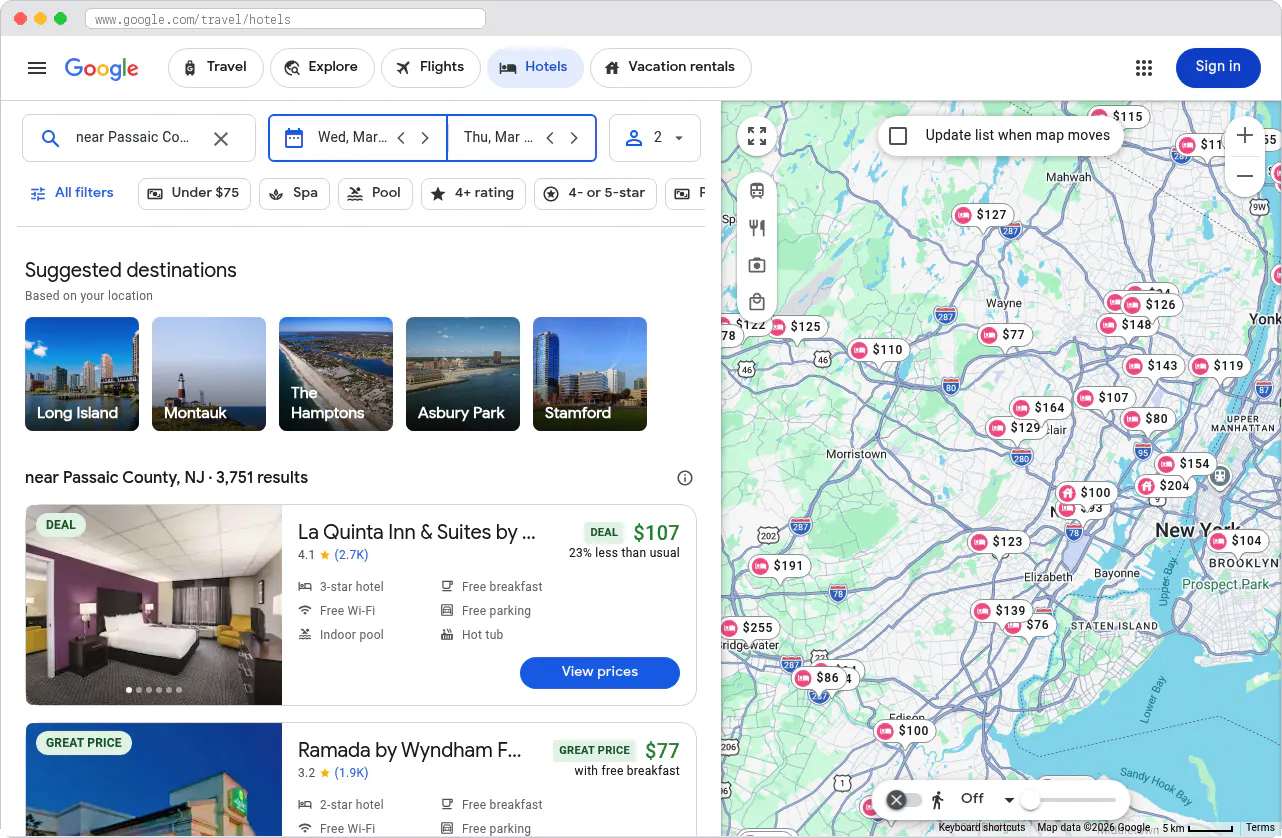
Google Hotel Ads
Google's hotel search integration directly within search results represents Trivago's most considerable competitive threat. Google uses its dominant search market position to display hotel comparisons without requiring users to visit third-party sites. The platform generates revenue through similar CPC advertising from booking sites while offering superior integration with Google's broader advertising ecosystem. Google's advantage lies in capturing user intent at the initial search phase, though Trivago maintains advantages in specialized hotel search functionality and booking partner relationships.
Kayak
Kayak operates as a broader travel metasearch platform including flights, hotels, and rental cars. Founded in 2004, Kayak was acquired by Booking Holdings (formerly Priceline Group) for $1.8 billion, providing access to extensive booking platform partnerships. Kayak differentiates through thorough travel planning tools including price forecasting, fare alerts, and trip planning features. However, this broader focus means less specialized hotel search optimization compared to Trivago's dedicated approach.
Momondo
Momondo, also owned by Booking Holdings, focuses on price comparison with an emphasis on finding deals and inspiring travel discovery. The platform emphasizes visual search interfaces and travel inspiration content alongside price comparison functionality. Momondo tends to attract younger, price-conscious travelers through social media marketing and influencer partnerships. The platform's strength lies in deal discovery features, though it has smaller market share in pure hotel comparison.
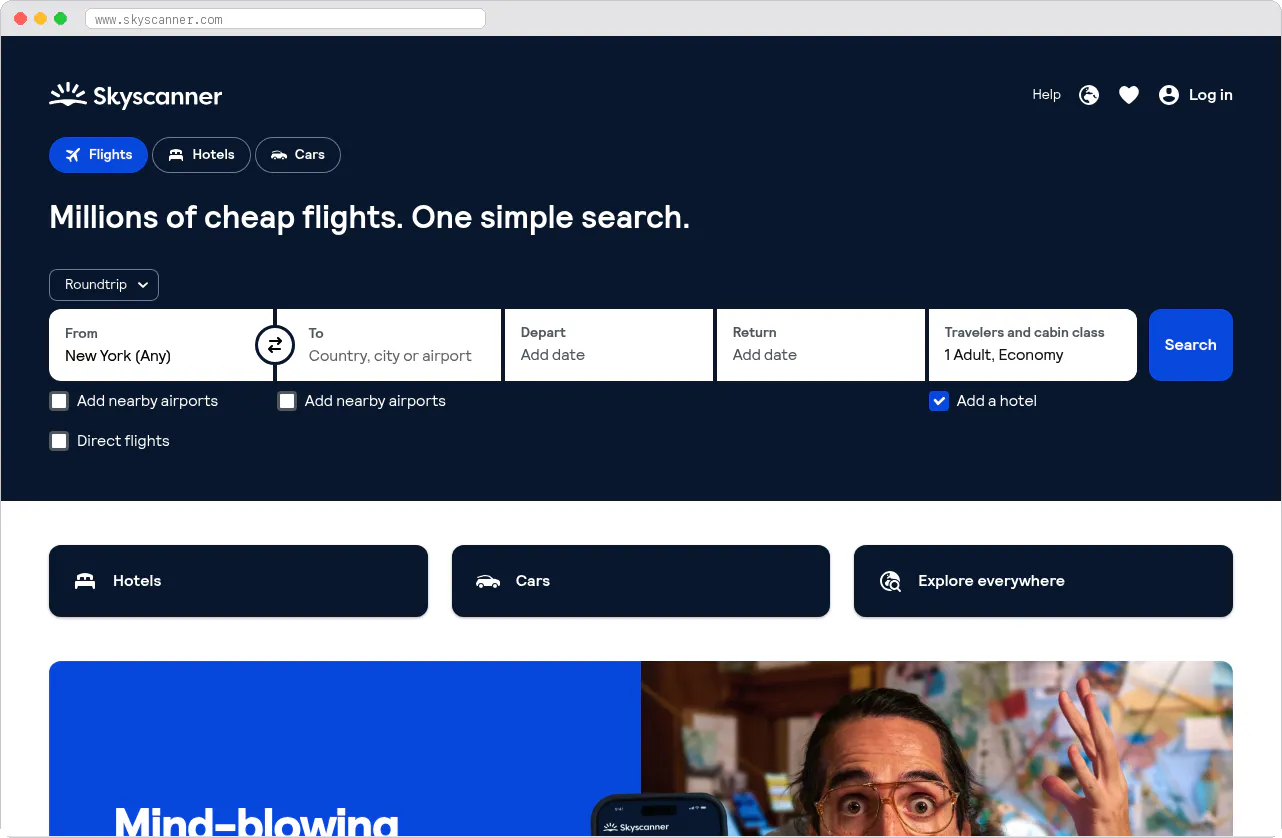
Skyscanner
Primarily known for flight comparison, Skyscanner has expanded into hotel search to provide detailed travel booking solutions. The platform's strength lies in flight search optimization and global market presence, particularly in European and Asian markets. Skyscanner's hotel comparison features are less developed than dedicated platforms, representing an opportunity for specialized competitors.
HotelsCombined
Owned by Booking Holdings, HotelsCombined operates as a pure-play hotel comparison platform similar to Trivago's original model. The platform focuses on complete price comparison without additional travel services. HotelsCombined maintains strong presence in Asian markets, particularly Australia and Southeast Asia, where local booking platforms require specialized partnership approaches.
How to build a marketplace like Trivago
Building a successful hotel comparison marketplace requires careful planning around technical infrastructure, partner acquisition, and user experience optimization. The development process involves complex backend systems for data aggregation alongside user-friendly frontend interfaces.
Validate your market opportunity
Before development begins, identify specific market gaps or underserved segments where your platform can compete effectively. Trivago succeeded by focusing on European markets before expanding globally, while newer competitors might target specific regions, property types, or user demographics. Research existing booking patterns, price transparency issues, and partnership opportunities in your target markets.
Analyze competitor weaknesses and user complaints about existing platforms. Common issues include outdated pricing information, limited booking partner coverage, poor mobile experiences, or inadequate filtering options. Survey potential users about their hotel booking frustrations and willingness to try new comparison platforms.
Build core technical infrastructure
Data aggregation systems form the foundation of any price comparison platform. Start by developing API integrations with major booking platforms, beginning with those offering affiliate programs or public APIs. Booking.com, Expedia, and Hotels.com provide affiliate access, though terms and data availability vary substantially.
Web scraping may be necessary for booking platforms without public APIs, though this approach carries legal and technical risks. Implement strong error handling, rate limiting, and IP rotation to maintain scraping operations. Monitor partner websites for structure changes that could break data collection systems.
Database optimization becomes critical as data volumes grow. Implement efficient caching strategies to serve search results quickly while maintaining data freshness. Consider using separate databases for real-time booking data versus static hotel information like descriptions and amenities.
Design user experience for conversion
Hotel comparison interfaces must balance full information display with usability. Users need sufficient detail to make informed decisions without overwhelming interface complexity. A/B testing different layouts, filtering options, and search result presentations helps optimize conversion rates.
Mobile optimization requires careful consideration of touch interfaces and limited screen space. Simplified filtering menus, swipe gestures for browsing results, and thumb-friendly button placement improve mobile user experience. Consider developing native mobile apps for markets with high smartphone adoption rates.
Establish booking platform partnerships
Successful price comparison platforms require extensive booking partner networks. Start with major platforms offering affiliate programs, focusing on those with strong presence in your target markets. Booking.com dominates European markets, while regional players may be more important in specific countries.
Negotiate preferential API access and commission rates based on projected traffic volumes. Larger platforms may require minimum traffic commitments or exclusivity agreements. Document partnership terms carefully, as these relationships determine available inventory and revenue potential.
Implement monetization systems
CPC advertising requires refined tracking systems to measure partner performance and optimize revenue. Implement conversion tracking to understand which booking platforms generate highest-value traffic. This data enables better partner negotiations and advertising auction optimization.
Develop partner bidding interfaces allowing booking platforms to adjust CPC rates based on performance metrics. Automated bidding systems can optimize partner spend while maximizing platform revenue. Consider implementing minimum bid requirements to ensure sustainable advertising revenues.
Plan for international expansion
Global expansion requires meaningful localization investment including language translation, currency support, and region-specific partnerships. Different markets have varying booking behaviors, preferred payment methods, and regulatory requirements that affect platform design.
Consider partnerships with local booking platforms in target markets, as global platforms may have limited inventory in certain regions. Southeast Asian markets, for example, often require partnerships with regional booking sites to provide thorough hotel coverage.
Cost and development considerations
Building a hotel comparison marketplace involves substantial upfront investment in technical infrastructure and ongoing operational costs for data management and partner relationships. Development costs vary considerably based on feature complexity and technical approach.
Custom development costs
Building a detailed hotel comparison platform from scratch typically requires $200,000 to $500,000 in initial development costs, depending on feature scope and team location. Core functionality including search interfaces, partner integrations, and basic mobile support represents the minimum viable product scope.
Advanced features like machine learning personalization, complete mobile apps, and multi-language support can add $100,000 to $300,000 to development budgets. Ongoing development costs for new features, platform maintenance, and partner integration updates typically require dedicated development teams costing $20,000 to $50,000 monthly.
Data and infrastructure costs
API access fees from booking platforms vary widely, with some charging per query while others operate on commission-only models. Budget $5,000 to $20,000 monthly for API access across major booking platforms, scaling with search volume and geographic coverage.
Server infrastructure must handle intensive data processing and search traffic. Cloud hosting costs for a mid-scale platform typically range from $3,000 to $15,000 monthly, depending on traffic volume and data processing requirements. Content delivery networks and database optimization services add additional monthly costs.
Web scraping infrastructure, if required for platforms without APIs, involves proxy services, rotating IP addresses, and monitoring systems. These services typically cost $1,000 to $5,000 monthly depending on scraping volume and geographic distribution requirements.
Marketing and partnership costs
Establishing brand recognition in competitive travel markets requires major marketing investment. Trivago spent over €300 million annually on marketing at its peak, though smaller platforms can start with more targeted approaches. Budget at least $50,000 to $200,000 for initial market entry including digital advertising, content marketing, and partnership development.
Partnership development may require upfront costs for integration development, legal review, and minimum traffic commitments to major booking platforms. Some partnerships require revenue guarantees or exclusivity agreements that affect business model flexibility.
Alternative development approaches
No-code and low-code platforms can greatly reduce initial development costs, though they may limit customization options for complex price comparison functionality. Marketplace builders designed for service platforms can provide basic comparison features at $99-399 per month in subscription costs.
Hybrid approaches combining no-code platforms with custom development for specialized features can balance cost efficiency with functionality requirements. Start with simplified price comparison features using existing tools, then invest in custom development as revenue grows and requirements become clearer.
Consider white-label solutions from existing travel technology providers, which can provide faster market entry at the cost of differentiation. These solutions typically involve monthly licensing fees plus revenue sharing arrangements.
Frequently asked questions
How does Trivago make money if it's free to use?
Trivago generates revenue primarily through cost-per-click advertising fees from booking platforms, earning money each time users click through to partner sites. They also earn commissions from completed bookings and subscription fees from hotels using their business tools.
What is Trivago's business model exactly?
Trivago operates as a three-sided marketplace connecting travelers, hotels, and booking platforms. They aggregate hotel prices from 400+ booking sites and monetize through CPC advertising, booking commissions, and subscription services rather than processing bookings directly.
How much does it cost to build a hotel comparison website like Trivago?
Custom development typically costs $200,000-$500,000 initially, plus $20,000-$50,000 monthly for ongoing development. Additional costs include API access ($5,000-$20,000/month), hosting ($3,000-$15,000/month), and marketing budget for user acquisition.
Why doesn't Trivago process bookings directly like other travel sites?
Trivago focuses solely on price comparison to avoid the operational complexity of payment processing, customer service, and booking management. This model enables faster scaling, higher profit margins, and allows them to remain neutral between competing booking platforms.
What are Trivago's main competitors in hotel price comparison?
Trivago's main competitors include Google Hotel Ads, Kayak, Momondo, Skyscanner, and HotelsCombined. Google represents the biggest threat due to integration with search results, while others compete through broader travel services or regional market focus.
How does Trivago get real-time hotel prices from different booking sites?
Trivago uses API integrations with booking platforms and web scraping technology to continuously collect rate updates. Their systems process millions of price changes daily, using caching and database optimization to maintain fast search performance.
Start your 14-day free trial
Create a marketplace today!
- Launch quickly, without coding
- Extend infinitely
- Scale to any size
No credit card required