How to build a website like Freelancer.com
Freelancer.com connects over 70 million freelancers and employers globally through project bidding and secure payments. Learn how to build your own freelance marketplace with the right features, business model, and growth strategy.
Published: Mar 20, 2024
Last updated: Mar 19, 2026
How Freelancer.com became a freelancing giant
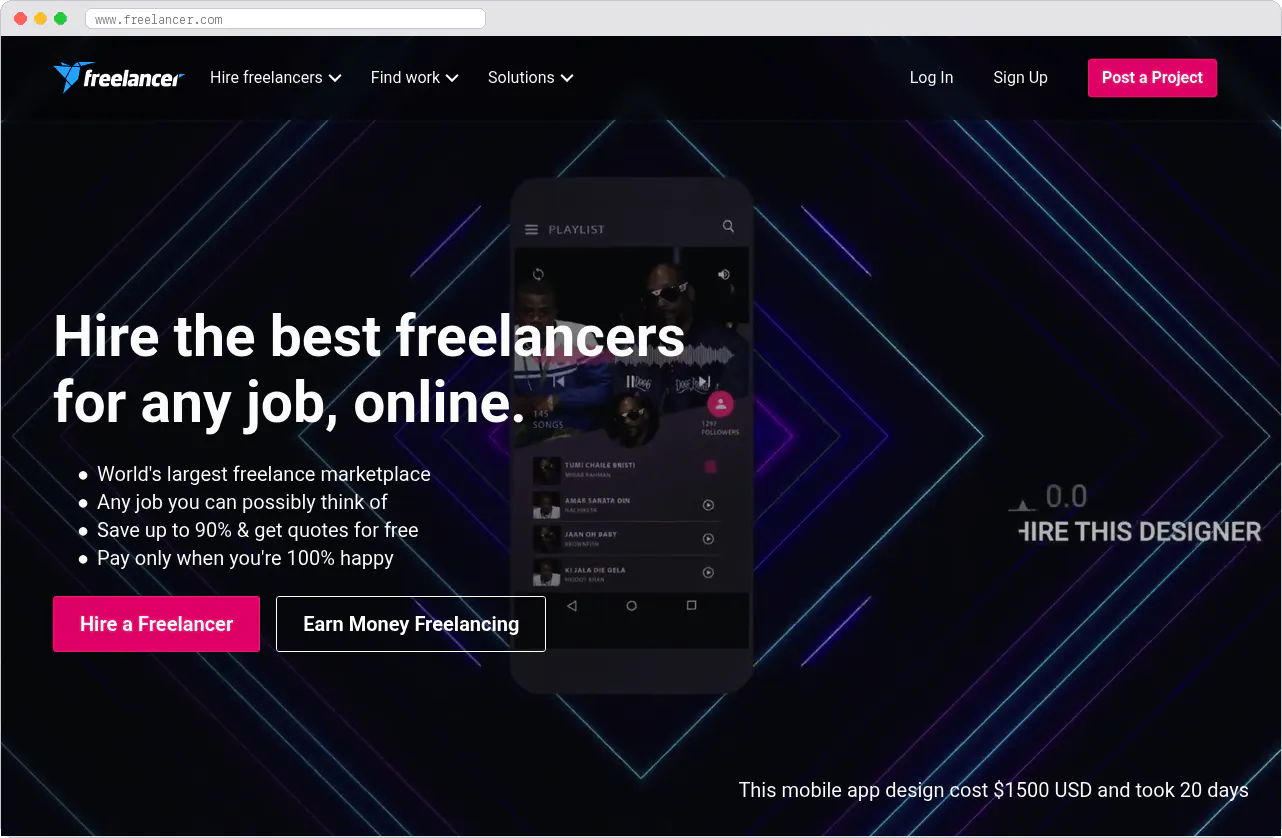
Freelancer.com has grown into one of the world's largest freelancing platforms, connecting over 70 million users across 247 countries. Founded in 2009 by Matt Barrie in Sydney, Australia, the platform emerged from Barrie's acquisition of several smaller freelancing sites, including GetAFreelancer.com, which he purchased for $4.2 million. By consolidating these platforms and improving their functionality, Barrie created what would become a dominant force in the gig economy.
The platform's success stems from its comprehensive approach to freelance work. Unlike traditional job boards that simply list opportunities, Freelancer.com creates a complete ecosystem where businesses can post projects, freelancers can compete through bidding, and secure transactions happen through escrow systems. This model has proven incredibly scalable, the platform now hosts over 32 million projects and processes billions in payments annually.
Freelancer.com went public on the Australian Securities Exchange in 2013, raising $15 million at a valuation of approximately $175 million. Today, it operates as a publicly traded company with revenue exceeding $50 million annually, primarily generated through commission fees, membership subscriptions, and value-added services.
What makes Freelancer.com particularly interesting for marketplace founders is its focus on price competition through bidding. While platforms like Upwork emphasize long-term relationships and Fiverr focuses on standardized services, Freelancer.com thrives on competitive pricing where multiple freelancers bid for the same project. This creates a highly liquid marketplace but also drives down prices, which has both advantages and drawbacks depending on your target market.
How does Freelancer.com work?
Freelancer.com operates as a project-based bidding marketplace where the core interaction revolves around competitive proposals rather than fixed-price services or long-term contracts.
For employers, the process starts with posting a detailed project description that includes scope, budget range, required skills, and timeline. Projects span virtually every category of knowledge work: web development, graphic design, writing, data entry, digital marketing, mobile app development, and hundreds of specialized niches. The platform encourages detailed project briefs to attract quality bids, though many postings remain relatively simple.
Once a project is live, freelancers can browse the marketplace and submit bids that include their proposed price, timeline, and approach. This creates immediate competition, projects commonly receive dozens of bids within hours. Employers can review each proposal, examine freelancer profiles, check ratings and reviews, and often conduct interviews before making their selection.
Freelancers build their presence through comprehensive profiles that showcase skills, portfolio items, certifications, and past project reviews. The platform includes skills testing for technical abilities, verified payment histories, and detailed feedback from previous clients. Success on Freelancer.com often depends on competitive pricing, quick response times, and building a strong reputation through completed projects.
The payment system protects both parties through milestone-based escrow. Employers fund their budget upfront, money is held in escrow during the project, and funds are released when work is completed to satisfaction. This system handles disputes, ensures freelancers get paid, and gives employers confidence in the process.
Freelancer.com's business model and revenue streams
Freelancer.com generates revenue through multiple streams that capitalize on high transaction volume and user engagement across its massive global user base.
Commission fees form the primary revenue source. The platform charges freelancers a fee ranging from 3% to 10% of project value, depending on their membership level and total lifetime billings. Higher-volume freelancers pay lower percentages, incentivizing platform loyalty. Employers typically don't pay commission fees, making the platform attractive for hiring.
Membership subscriptions provide recurring revenue through tiered plans. Basic membership is free but limits monthly bids and includes higher commission rates. Paid memberships (ranging from $15 to $100+ monthly) offer benefits like unlimited bidding, reduced fees, priority support, advanced analytics, and enhanced profile visibility. For many active freelancers, membership pays for itself through increased project wins and lower commission rates.
Contest fees represent another significant revenue stream. The platform hosts design contests where multiple freelancers submit work competing for a single prize. Contest holders pay upfront fees plus platform commissions, while only winning submissions receive payment. This model works particularly well for creative projects like logo design, where seeing multiple concepts adds value.
Value-added services generate additional income through optional features. These include project highlighting for better visibility, urgent project designation, skills verification tests, featured freelancer listings, and premium customer support. While individually small, these services add substantial revenue across millions of users.
The model's strength lies in its scalability and network effects. As more freelancers join, the platform becomes more valuable to employers. As more projects are posted, freelancers have more opportunities. This creates a self-reinforcing cycle that has allowed Freelancer.com to dominate many markets despite intense competition.
Essential features for a freelance marketplace
Building a marketplace like Freelancer.com requires specific functionality that differs significantly from e-commerce platforms or service booking sites. The core features must support competitive bidding, project management, and trust building between strangers working on complex deliverables.
Project posting and management system
Employers need comprehensive project creation tools that capture requirements clearly while encouraging quality bids. This includes detailed description fields, file upload capabilities, budget ranges, timeline specification, required skills tagging, and project categorization. The system should support both fixed-price and hourly projects, allow project amendments, and provide templates for common project types.
Project management extends beyond initial posting. Employers need dashboards showing active projects, bid comparisons, freelancer communication, milestone tracking, and payment status. Automated notifications keep everyone updated on project progress, deadline reminders, and required actions.
Bidding and proposal system
Freelancers require intuitive bidding interfaces that showcase their qualifications effectively while remaining competitive. Bid submissions should include proposed pricing, timeline estimates, relevant experience, portfolio samples, and detailed approaches. The system needs to prevent bid modification after submission while allowing message attachments and follow-up questions.
Bid management tools help freelancers track submitted proposals, response rates, and success metrics. Smart bidding features might suggest pricing based on market rates, highlight relevant skills automatically, and provide templates for common project types.
User profiles and portfolio management
Comprehensive profiles are crucial for building trust in a competitive marketplace. Freelancer profiles need skills listings, experience descriptions, education backgrounds, language capabilities, hourly rates, availability status, and detailed portfolio sections. Integration with external platforms like GitHub, Behance, or personal websites adds credibility.
Employer profiles should display company information, previous projects, payment history, and feedback patterns. This helps freelancers assess whether potential clients are legitimate and worth bidding for.
Communication and collaboration tools
Project success depends on clear communication throughout the work process. Built-in messaging systems need file sharing, real-time chat, video calling capabilities, and message threading for complex projects. All communication should be logged and searchable for dispute resolution purposes.
Collaboration features might include shared workspaces, version control for deliverables, approval workflows, and integration with popular tools like Slack, Trello, or Google Workspace.
Payment and escrow system
Secure payment processing protects both parties while enabling commission collection. The escrow system holds employer funds during project execution, supports milestone-based releases, and handles disputes fairly. Payment methods should include credit cards, PayPal, bank transfers, and local options for international users.
Freelancer payout systems need multiple withdrawal options, transparent fee structures, and reasonable processing times. Currency conversion, tax reporting, and regional compliance add complexity but are essential for global operations.
Review and rating system
Two-way feedback builds marketplace trust and helps users make informed decisions. Review systems should allow detailed written feedback, numerical ratings across multiple criteria, and response mechanisms for disputed reviews. Historical rating patterns help identify trends and potential issues.
Public ratings influence future opportunities significantly, so the system needs safeguards against manipulation, retaliatory reviews, and fake feedback. Some platforms implement review timing restrictions or mutual review systems where feedback isn't published until both parties submit reviews.
Search and discovery features
Effective search helps employers find qualified freelancers and helps freelancers discover relevant projects. Advanced filtering options should include skills, location, budget range, project type, timeline, and freelancer ratings. Search algorithms can incorporate machine learning to improve matching over time.
Recommendation systems that suggest relevant projects to freelancers or qualified freelancers to employers can increase engagement and transaction volume significantly.
Freelancer.com competitors and alternatives
The freelancing marketplace space is highly competitive, with several major platforms taking different approaches to connecting freelancers with work opportunities. Understanding these alternatives helps founders identify positioning opportunities and potential differentiators.
Upwork
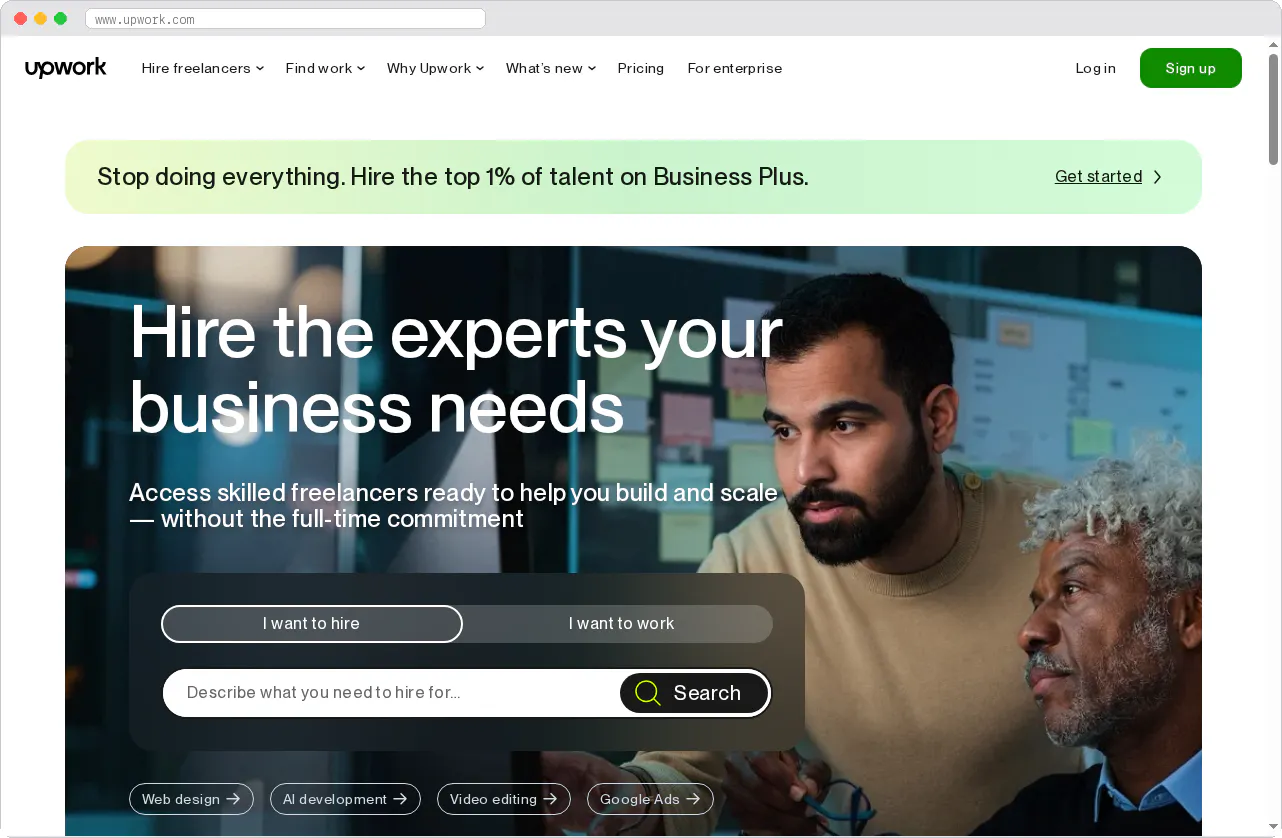
Upwork is Freelancer.com's largest competitor, processing over $2 billion in annual gross services volume. Founded in 2015 through the merger of Elance and oDesk, Upwork focuses on building long-term relationships between freelancers and clients rather than project-by-project bidding.
Upwork's key differentiator is its emphasis on hourly work and ongoing contracts. While Freelancer.com emphasizes competitive bidding for fixed-price projects, Upwork encourages clients to hire freelancers for extended periods with time tracking, regular payments, and relationship building. This model generates higher lifetime value per client relationship but requires more sophisticated matching and onboarding processes.
The platform charges freelancers sliding commission rates from 5% to 20% based on lifetime billings with each client, incentivizing long-term relationships. Clients pay additional fees, making Upwork more expensive but potentially higher quality than purely freelancer-funded platforms.
Fiverr
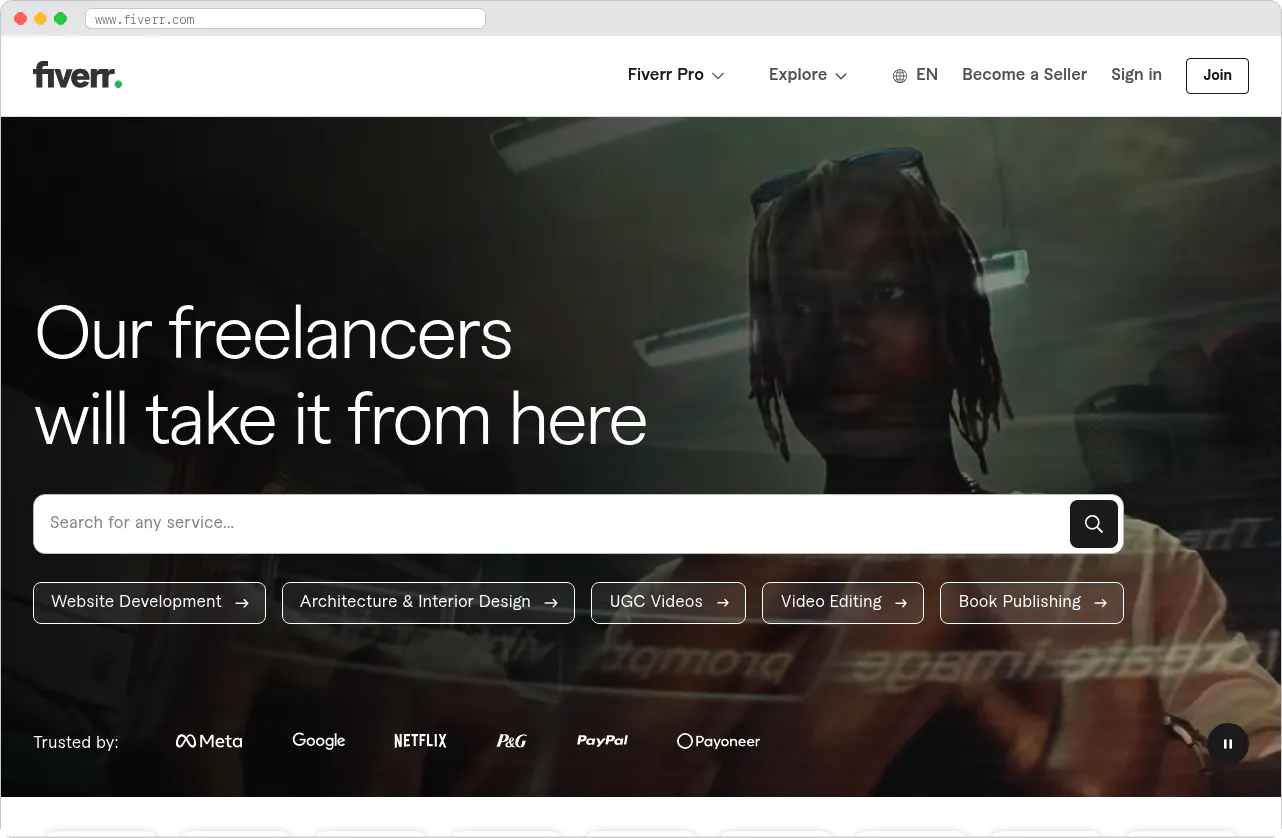
Fiverr revolutionized freelancing by flipping the traditional model. Instead of employers posting projects for bidding, freelancers create standardized service packages called "gigs" that buyers can purchase directly. This eliminates the bidding process entirely and creates more predictable pricing and delivery.
Fiverr's approach works exceptionally well for standardized services like logo design, content writing, voiceovers, and digital marketing tasks. The platform has expanded into higher-value services through Fiverr Pro and Fiverr Business, but the core model remains package-based rather than project-based.
Revenue generation differs significantly from Freelancer.com. Fiverr charges both buyers (processing fees) and sellers (20% commission), but transactions are typically smaller and more frequent. The platform went public in 2019 and generates about over $250 million annual revenue.

Toptal targets the premium end of the freelancing market by accepting only the "top 3%" of freelancers through rigorous screening processes. This positioning allows them to charge premium rates while providing clients with pre-vetted, high-quality talent.
Unlike Freelancer.com's open marketplace model, Toptal operates more like a traditional staffing agency. They handle client-freelancer matching internally, negotiate rates, and manage relationships closely. This approach generates higher margins but limits scalability compared to open marketplace models.
Toptal focuses primarily on technical roles like software development, design, and project management. Their success demonstrates market demand for quality-over-quantity approaches, though their model requires different operational capabilities than open marketplaces.
Guru
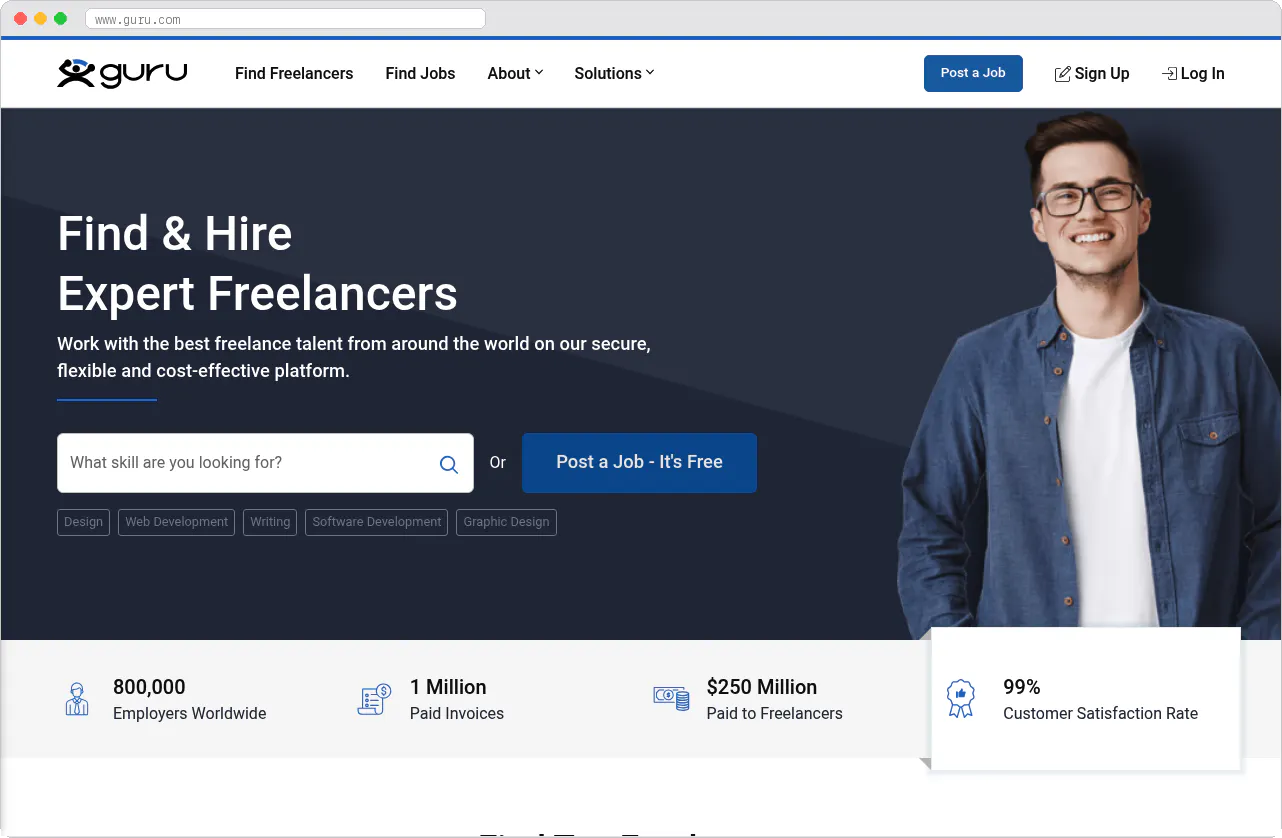
Guru positions itself between Freelancer.com and Upwork, offering both project-based and long-term work opportunities. Their key differentiator is lower fees for active users and more flexible working arrangements.
Guru's "WorkRoom" collaboration tools are more advanced than many competitors, providing project management, file sharing, and communication tools that support complex projects. They also offer more payment flexibility, including milestone payments, hourly tracking, and task-based payments within single projects.
The platform has remained smaller than major competitors but maintains loyal user bases in specific niches, particularly among freelancers who prefer their fee structure and collaboration tools.

99designs specializes in design work through contest-based models. Clients post design briefs, multiple designers submit concepts, and clients select winners. This approach works well for creative projects where seeing multiple options adds value.
While more limited in scope than general freelancing platforms, 99designs demonstrates the viability of niche-focused marketplaces. They've expanded beyond basic design contests to include one-on-one projects and ongoing design services, but contests remain their core differentiator.
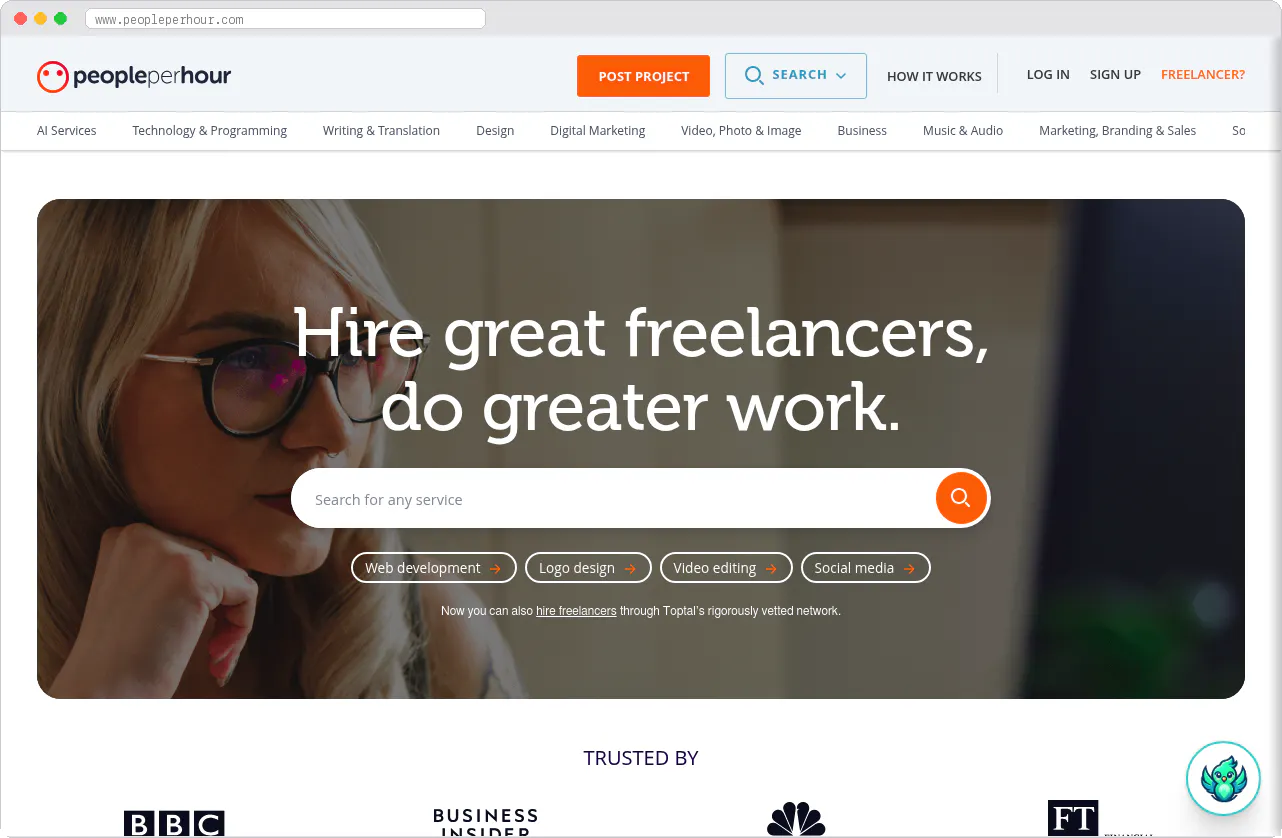
PeoplePerHour
PeoplePerHour combines traditional project bidding with fixed-price "Hourlies" similar to Fiverr's gigs. This hybrid approach gives both freelancers and clients flexibility in how they structure work relationships.
The platform is smaller than major competitors but offers competitive fee structures and focuses heavily on user experience. Their success in specific geographic markets (particularly the UK) shows how regional focus can compete with global platforms.
How to build a freelance marketplace like Freelancer.com
Creating a successful freelancing marketplace requires a systematic approach that balances platform functionality, user acquisition, and business model validation. The process involves ten key stages that build upon each other to create sustainable marketplace growth.
1. Identify your marketplace niche
The freelancing space is crowded with established players, making niche focus crucial for new entrants. Successful marketplace founders typically identify underserved segments where existing platforms fall short or specific industries with unique requirements.
Vertical specialization works particularly well in freelancing. Instead of competing with Freelancer.com across all categories, focus on specific industries like legal services, healthcare, real estate, or manufacturing. These verticals often have specialized requirements, compliance needs, or workflow patterns that general platforms handle poorly.
Geographic focus offers another differentiation strategy. While major platforms operate globally, local marketplaces can provide better language support, payment methods, legal compliance, and cultural understanding. This approach worked well for platforms like Workana in Latin America or Freelancer alternatives in specific countries.
Skill-level differentiation represents a third approach. Toptal succeeded by focusing exclusively on premium talent, while other platforms might target entry-level freelancers, students, or specific certification levels. Each segment has different needs for pricing, support, and platform features.
2. Choose your business model
Freelancing marketplaces typically use commission-based models, but the specific structure significantly impacts user behavior and platform growth. Freelancer.com charges freelancers only, making the platform free for employers. This approach maximizes employer adoption but requires higher freelancer fees to generate sufficient revenue.
Alternative models include charging both sides (like Upwork), subscription-based pricing for access, or hybrid approaches combining multiple revenue streams. The choice depends on your target market, competitive positioning, and growth strategy.
Commission structures also vary significantly. Fixed percentages are simple but may discourage high-value projects. Sliding scales based on project size or user tenure can encourage growth and loyalty. Some platforms charge different rates for different project types or add premium features as separate revenue streams.
3. Validate your marketplace concept
Before building complex platform features, validate core assumptions through direct market research. This involves identifying potential users, understanding their current solutions, and testing willingness to adopt a new platform.
For supply validation, interview freelancers in your target niche about their current challenges, preferred platforms, fee structures, and unmet needs. Understanding their workflow, client acquisition methods, and pain points helps design features that genuinely solve problems rather than replicating existing solutions.
Demand validation requires talking to potential employers about their hiring processes, budget allocation, quality expectations, and platform preferences. Many businesses have strong preferences about freelancer vetting, communication methods, payment terms, and project management approaches.
Simple validation can involve creating landing pages describing your planned platform and measuring sign-up interest. More sophisticated validation might include manually matching freelancers with projects to test market dynamics before building automated systems.
4. Design core user flows
Successful freelancing marketplaces optimize for three critical user journeys: project posting (employers), bidding (freelancers), and project completion (both parties). Each flow needs to balance completeness with simplicity, ensuring users can accomplish their goals without unnecessary friction.
Employer flows should make project posting straightforward while capturing enough detail for quality bids. This includes guided project creation, budget recommendation tools, skills suggestion features, and templates for common project types. The goal is encouraging detailed project descriptions without overwhelming non-technical users.
Freelancer flows need to support efficient bid discovery and submission. This means effective search and filtering, saved search capabilities, bid tracking systems, and proposal templates. Advanced features might include automated bid suggestions, portfolio integration, and response rate analytics.
Project completion flows handle the most complex interactions, including milestone definition, work submission, revision requests, approval processes, and payment release. These workflows must accommodate various project types while maintaining security and dispute resolution capabilities.
5. Build your minimum viable platform
The first version of your marketplace should include only essential features needed to facilitate basic transactions. This typically includes user registration, project posting, bid submission, basic messaging, and payment processing through escrow systems.
Profile creation needs to be comprehensive enough for trust building but simple enough to encourage completion. Essential elements include skills listing, experience description, portfolio uploads, and basic verification features. Advanced features like skills testing or detailed work history can be added later.
Payment integration is crucial from day one if you plan to charge commissions. This requires partnering with payment processors that support marketplace models, implementing escrow functionality, and ensuring compliance with financial regulations. Sharetribe includes built-in payment processing through Stripe Connect, handling much of this complexity automatically.
Admin tools for platform management are often overlooked but essential for marketplace operations. You need capabilities for user moderation, dispute resolution, payment management, and basic analytics from launch day.
6. Solve the chicken-and-egg problem
Like all marketplaces, freelancing platforms face the challenge of needing both freelancers and projects to create value. Most successful platforms start by building supply (freelancers) first, then attracting demand through guaranteed project availability.
Supply acquisition often involves direct outreach to freelancers on existing platforms, professional networks, or industry forums. Offering better fee structures, superior tools, or niche specialization can motivate platform switching. Some founders start by becoming freelancers themselves to understand user needs firsthand.
Demand generation requires having enough qualified freelancers available to fulfill posted projects quickly and effectively. This might involve guaranteeing minimum bid quantities, providing bid quality scores, or manually curating freelancer recommendations for early projects.
Some platforms bootstrap demand by posting their own projects or partnering with businesses that need regular freelance work. This ensures consistent project flow during early growth phases while building freelancer confidence in platform viability.
7. Implement trust and safety measures
Freelancing marketplaces handle significant trust challenges as strangers collaborate on complex projects involving advance payments. Building robust safety measures is essential for user confidence and platform growth.
Identity verification helps establish basic trustworthiness through document checking, phone verification, or social media linking. More advanced verification might include background checks, skills testing, or reference verification, depending on your target market requirements.
Payment security through escrow systems protects both parties while enabling commission collection. Funds are held during project execution and released based on predefined milestones or completion criteria. Dispute resolution processes handle disagreements fairly while maintaining platform neutrality.
Review and rating systems provide ongoing trust signals but need safeguards against manipulation. This includes review timing restrictions, mutual review requirements, and detection algorithms for fake feedback patterns.
8. Focus on user experience optimization
Successful marketplaces invest heavily in user experience across all platform touchpoints. This includes website design, mobile responsiveness, search functionality, communication tools, and payment processes.
Search and discovery features significantly impact marketplace efficiency. Users need to find relevant opportunities quickly through effective filtering, sorting, and recommendation systems. Machine learning can improve matching over time, but basic functionality must work well from launch.
Communication tools facilitate project success through clear coordination between freelancers and employers. This includes messaging systems, file sharing, video calling, and project tracking features. Integration with popular productivity tools can add significant value.
Mobile optimization is crucial as many freelancers use mobile devices for platform access, communication, and project management. Responsive design or dedicated apps ensure full functionality across devices.
9. Scale your marketplace operations
As your platform grows, operational challenges require systematic solutions. This includes customer support, dispute resolution, quality control, and fraud prevention at scale.
Customer support needs to handle diverse issues from payment problems to project disputes to technical difficulties. Self-service options, comprehensive help documentation, and tiered support systems help manage volume while maintaining quality.
Quality control becomes increasingly important as user volume grows. This might include automated content moderation, freelancer performance tracking, employer behavior monitoring, and intervention systems for problematic users.
Internationalization opens new markets but requires localization efforts including language translation, local payment methods, cultural adaptation, and regional legal compliance. The complexity varies significantly based on target markets.
10. Optimize for marketplace liquidity
Long-term success depends on achieving strong marketplace liquidity where projects get quality bids quickly and freelancers find regular work opportunities. This requires ongoing optimization of supply-demand balance, user matching, and platform incentives.
Liquidity metrics help track marketplace health through bid rates, project completion rates, repeat usage patterns, and user satisfaction scores. These metrics guide feature development, marketing allocation, and operational improvements.
Algorithmic improvements can enhance matching through better search results, personalized recommendations, and automated bid suggestions. Machine learning applications might include price optimization, quality scoring, or fraud detection.
Market expansion should be carefully managed to maintain liquidity in each segment. Geographic or category expansion needs sufficient supply and demand to create value rather than diluting existing market strength.
Ways to build your freelance marketplace
Creating a platform like Freelancer.com involves several development approaches, each with distinct advantages, limitations, and resource requirements. The right choice depends on your technical skills, budget, timeline, and long-term vision for platform growth and customization.
Custom development from scratch
Building a freelancing marketplace from the ground up provides maximum flexibility but requires significant investment in time, money, and technical expertise. Custom development allows complete control over features, design, user experience, and business logic while ensuring the platform matches your exact vision.
Development typically requires full-stack developers familiar with marketplace architectures, payment integration, user management systems, and scalable infrastructure. The technology stack might include React or Vue.js for frontend development, Node.js, Python, or Ruby on Rails for backend systems, PostgreSQL or MongoDB for databases, and cloud hosting through AWS, Google Cloud, or Azure.
Timeline estimates for custom development range from 6 to 18 months for a fully functional marketplace, depending on feature complexity and team size. Costs typically start around $100,000 for basic functionality and can exceed $500,000 for comprehensive platforms matching Freelancer.com's feature set.
Ongoing maintenance, security updates, feature additions, and infrastructure scaling require dedicated technical resources or ongoing development partnerships. These operational costs often exceed initial development expenses over time.
No-code marketplace builders
No-code platforms like Sharetribe enable rapid marketplace creation without programming knowledge while providing essential freelancing marketplace features out of the box. This approach dramatically reduces development time, costs, and technical complexity while still enabling significant customization.
Sharetribe includes built-in functionality for user profiles, project posting, bidding systems, messaging, payment processing through Stripe Connect, review systems, and administrative tools. The platform handles hosting, security, maintenance, and updates automatically, allowing founders to focus on business development rather than technical operations.
Customization options include visual design modifications, workflow adjustments, custom fields, and integration capabilities. For advanced requirements, Sharetribe's development platform allows custom coding on top of the no-code foundation, providing expansion paths without complete rebuilds.
Launch timelines with no-code builders typically range from days to weeks rather than months. Subscription costs start around $100 monthly for basic functionality, making this approach accessible for bootstrap entrepreneurs while remaining cost-effective as platforms scale.
Hybrid no-code and custom development
Many successful marketplaces start with no-code solutions for rapid validation and initial growth, then add custom features as business needs evolve. This approach combines speed-to-market benefits with long-term flexibility.
Sharetribe's architecture specifically supports this evolution through its developer platform, which allows custom feature development while maintaining core marketplace functionality. Founders can launch quickly with standard features, then add unique differentiators like specialized matching algorithms, industry-specific workflows, or advanced analytics.
This approach works well for founders who want to validate market demand before making large development investments. Starting with proven marketplace patterns reduces risk while preserving options for future customization based on real user feedback.
Open-source marketplace solutions
Several open-source projects provide freelancing marketplace foundations that can be customized and self-hosted. Options like Mayocat or Cocorico offer free access to marketplace code but require technical expertise for deployment, customization, and maintenance.
Open-source solutions provide cost advantages for technically skilled founders but require significant time investment for setup, security hardening, and ongoing maintenance. Hidden costs include hosting, SSL certificates, payment processing setup, and development time for customizations.
The approach works well for developers who want complete code control and have time to handle technical operations. However, most marketplace founders find that business development activities provide better return on investment than technical infrastructure management.
WordPress and marketplace plugins
WordPress marketplace plugins like WP Freelancer or Taskerr provide basic freelancing platform functionality through familiar content management systems. This approach uses existing WordPress knowledge while adding marketplace-specific features.
Limitations include scalability challenges, security concerns, and feature restrictions compared to dedicated marketplace platforms. WordPress marketplaces often struggle with complex payment workflows, advanced search functionality, and performance optimization as user bases grow.
This approach might work for simple, niche marketplaces with limited technical requirements, but most serious marketplace ventures outgrow WordPress solutions quickly.
How much does it cost to build a website like Freelancer.com?
Development costs for freelancing marketplaces vary dramatically based on chosen approach, feature complexity, and long-term operational requirements. Understanding these cost structures helps founders make informed decisions about development strategies and budget allocation.
Custom development costs
Building a comprehensive freelancing marketplace from scratch represents the highest upfront investment but provides maximum customization potential. Development costs depend on team location, expertise level, feature complexity, and timeline requirements.
Basic marketplace functionality including user registration, project posting, bidding systems, messaging, and payment processing typically costs $50,000 to $100,000 when developed by professional agencies. This includes frontend and backend development, database design, basic security implementation, and initial testing.
Advanced features like sophisticated search algorithms, mobile applications, real-time messaging, advanced analytics, multi-language support, and comprehensive admin panels can double or triple development costs. Full-featured platforms comparable to Freelancer.com often require $100,000 to $500,000 in initial development investment.
Ongoing operational costs include hosting ($500 to $5,000 monthly depending on traffic), maintenance and updates ($5,000 to $15,000 monthly), security monitoring, backup systems, and feature additions. These recurring costs often exceed initial development expenses over 2-3 years.
International development teams can reduce costs significantly. Eastern European developers might charge $50-80 hourly compared to $100-200 for North American developers, though communication and coordination complexity increases.
No-code platform costs
No-code marketplace builders like Sharetribe offer dramatic cost reductions while providing professional functionality suitable for most freelancing marketplace needs. Subscription-based pricing eliminates large upfront investments while including hosting, maintenance, and security.
Sharetribe pricing starts with a free 14-day trial for platform evaluation, followed by build plans at $39 monthly during development phases. Live marketplace plans begin at $99/month for basic functionality, scaling to $199 monthly for advanced features and higher transaction volumes.
Transaction fees typically range from 2-5% of gross transaction volume, though some plans include transaction allowances. For a marketplace processing $10,000 monthly in transactions, total platform costs might be $300-500 monthly including subscription fees and transaction costs.
Customization costs through Sharetribe's developer platform or Expert Network vary based on requirements. Simple design modifications might cost $1,000-3,000, while complex custom features could require $5,000-15,000 investments. However, these customizations build upon proven marketplace foundations rather than starting from scratch.
The total first-year cost for a Total first-year costs with a no-code marketplace platform typically run $2,000-5,000.
Hybrid development approach costs
Many successful marketplaces start with no-code platforms for rapid launch and market validation, then invest in custom development as business requirements become clearer. This approach minimizes early-stage risk while preserving long-term flexibility.
Initial costs using Sharetribe might total $5,000-10,000 for the first year including platform subscriptions, basic customizations, and design modifications. As the business grows and specific needs emerge, additional custom development can be added incrementally.
This approach allows founders to invest development resources based on validated user needs rather than assumptions. A successful marketplace might invest $20,000-50,000 in custom features during years two and three, but only after proving market demand and generating revenue to fund development.
Additional operational costs
Regardless of development approach, successful marketplaces require investments beyond platform development. Marketing and user acquisition often represent the largest ongoing expenses, particularly in competitive markets.
Customer support systems, legal compliance, content moderation, and quality assurance require ongoing operational investment. These costs scale with user base size but are essential for marketplace trust and growth.
Payment processing fees typically range from 2.9% to 4.5% of transaction value depending on payment methods and processing volumes. These fees are unavoidable but should be factored into commission structures and financial projections.
Insurance, legal consulting, accounting, and business development represent additional operational costs that vary based on geographic location, business structure, and growth stage.
Why Sharetribe works for freelance marketplaces
Sharetribe provides specific advantages for founders building freelancing platforms by combining essential marketplace functionality with flexibility for customization and growth. The platform addresses common challenges in marketplace development while supporting diverse business models and user requirements.
Speed to market advantage
Time represents the most critical factor for marketplace success, as early market entry provides significant competitive advantages through user acquisition, brand building, and iterative improvement based on real user feedback. Sharetribe enables marketplace launches in days rather than months, allowing founders to begin market validation immediately.
The platform includes pre-built functionality for all essential freelancing marketplace features including user profiles, project posting workflows, bidding systems, secure messaging, escrow-based payments, review systems, and administrative tools. This comprehensive feature set eliminates months of development time while ensuring professional functionality from day one.
Built-in mobile responsiveness, SEO optimization, and performance features ensure the marketplace works effectively across all devices and search engines without additional development investment. These technical foundations often require significant custom development effort but are included automatically with Sharetribe.
Payment processing and commission handling
Freelancing marketplaces require sophisticated payment systems that handle escrow functionality, commission collection, multi-party payouts, and international transactions. Building these systems from scratch involves complex financial regulations, security requirements, and integration challenges.
Sharetribe includes integrated payment processing through Stripe Connect, which handles marketplace-specific payment flows including fund holding, automated commission deduction, and secure payout distribution. The system supports multiple currencies, international transactions, and various payment methods without custom development.
Escrow functionality protects both freelancers and employers by holding funds during project execution and releasing payments based on milestone completion or dispute resolution. This critical trust feature requires careful implementation but is included automatically with Sharetribe's payment system.
Commission structures can be configured flexibly to support different business models, user tiers, or project types. The system handles complex fee calculations, tax reporting, and financial compliance automatically while providing transparent reporting for both users and platform operators.
Customization and growth flexibility
While no-code platforms provide rapid launch capabilities, long-term success often requires unique features or specialized functionality that differentiates the marketplace from competitors. Sharetribe addresses this need through its developer platform, which allows custom code development on top of the no-code foundation.
This architecture enables founders to start with proven marketplace patterns for rapid validation, then add distinctive features as business needs become clear. Custom development can include specialized matching algorithms, industry-specific workflows, advanced analytics, third-party integrations, or mobile applications.
The Expert Network provides access to experienced developers familiar with Sharetribe's architecture and marketplace best practices. This reduces the challenge of finding qualified development resources while ensuring customizations integrate properly with platform foundations.
Scaling capabilities include automatic infrastructure management, performance optimization, and security updates without requiring dedicated DevOps resources. As marketplaces grow from hundreds to millions of users, Sharetribe handles technical scaling challenges while founders focus on business development.
Trust and safety features
Freelancing marketplaces face significant trust challenges as strangers collaborate on complex projects involving advance payments. Building comprehensive safety measures requires expertise in fraud detection, dispute resolution, and user verification that most founders lack.
Sharetribe includes built-in features for user verification, secure communication, payment protection, and review systems that establish basic trust foundations. These features can be enhanced with additional verification requirements, automated moderation, or specialized trust signals based on marketplace requirements.
Dispute resolution tools help manage conflicts between users while maintaining platform neutrality. The system provides structured processes for handling payment disputes, quality disagreements, or communication problems without requiring manual intervention for routine issues.
Content moderation capabilities help maintain marketplace quality through automated and manual review processes for user profiles, project postings, and communication. These tools scale with marketplace growth while ensuring appropriate content standards.
Sharetribe's approach combines proven marketplace foundations with flexibility for customization, enabling founders to focus on business development rather than technical implementation while preserving options for future differentiation and growth.
Frequently asked questions
How much does it cost to build a website like Freelancer.com?
Custom development typically costs $100,000-500,000+ for full features, while no-code solutions like Sharetribe start at $99/month. No-code platforms can launch in weeks rather than months, making them ideal for validation.
What features does a freelance marketplace need?
Essential features include project posting, bidding systems, user profiles, secure messaging, escrow payments, review systems, and admin tools. Advanced features like skills testing and automated matching can be added later.
How does Freelancer.com make money?
Freelancer.com generates revenue through commission fees (3-10% from freelancers), membership subscriptions, contest fees, and value-added services like project highlighting. They process billions in payments annually across 70+ million users.
What are the main competitors to Freelancer.com?
Major competitors include Upwork (focused on long-term relationships), Fiverr (standardized service packages), Toptal (premium talent only), and Guru (flexible payment structures). Each takes different approaches to freelancer-client matching.
How do I solve the chicken-and-egg problem for a freelance marketplace?
Start by building supply (freelancers) first through direct outreach and better value propositions. Ensure you have enough qualified freelancers before attracting employers, and consider posting your own projects initially to guarantee activity.
Do I need coding skills to build a freelance marketplace?
No-code platforms like Sharetribe allow you to build full marketplaces without programming. You can launch quickly with essential features, then add custom functionality later as your business grows and requirements become clearer.
Start your 14-day free trial
Create a marketplace today!
- Launch quickly, without coding
- Extend infinitely
- Scale to any size
No credit card required