How to build a website like 99designs
99designs proved that design contests work as a business model, generating around over $300 million in designer payouts since 2008. This guide shows you how to build a similar design marketplace, from validating your niche to launching your platform.
Published: Mar 15, 2024
Last updated: Mar 17, 2026
How 99designs transformed the design industry
99designs fundamentally changed how businesses access design services. Since launching in 2008, the platform has facilitated over $300 million in designer payouts, connecting millions of businesses with creative professionals worldwide. What started as a side project by Mark Harbottle in Melbourne has grown into one of the world's largest design marketplaces, serving over 1 million customers across 192 countries.
The platform's success stems from solving a persistent problem in the design industry: the difficulty businesses face in finding and hiring quality designers, especially for smaller projects. Traditional design agencies often have high minimums and lengthy processes that don't work for startups, small businesses, or one-off projects. 99designs democratized access to professional design by creating a contest-based model where multiple designers compete for each project.
This crowdsourcing approach benefits both sides of the marketplace. Businesses receive multiple design concepts to choose from, typically within a week, while designers gain access to a global client base without the overhead of traditional client acquisition. The competitive element drives creativity and ensures clients see diverse approaches to their design challenges.
The business model has proven remarkably durable. Even as the freelance economy has exploded with platforms like Upwork and Fiverr, 99designs has maintained its position by focusing specifically on design work and refining the contest experience. The platform has expanded beyond contests to include 1-to-1 projects, but the core contest model remains its differentiator.
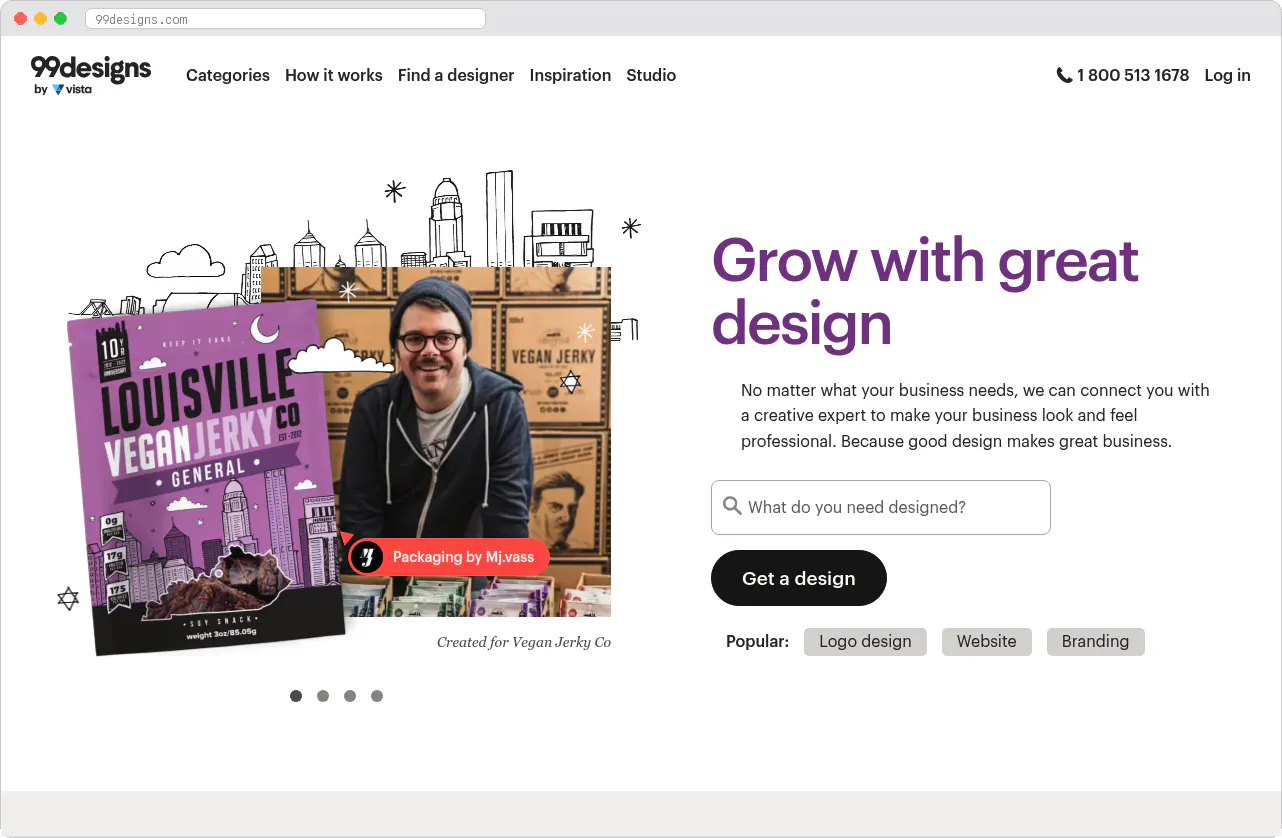
How does 99designs work?
99designs operates as a two-sided marketplace connecting businesses seeking design work with freelance designers. The platform offers two primary ways for clients and designers to work together: design contests and 1-to-1 projects.
In the contest model, clients post a design brief describing their project, budget, and requirements. Designers then submit concepts based on this brief, typically within 7 days. Throughout the contest, the client can provide feedback, request revisions, and interact with designers. At the end of the contest period, the client selects a winning design and awards the prize money to that designer. Contest prizes typically range from $299 for logo designs to $1,899 for complex web design projects.
The 1-to-1 project model works more like traditional freelancing platforms. Clients browse designer portfolios, send project invitations to specific designers, and work directly with their chosen professional. This approach works better for clients who want more control over the process or have found a designer whose style matches their vision.
For designers, 99designs provides access to a steady stream of potential projects without the need to pitch to clients individually. Designers create profiles showcasing their portfolios, participate in contests that match their skills, and build reputations through client feedback. The platform uses a tier system that gives higher-rated designers advantages in contests, such as guaranteed payouts for participation or higher visibility for their submissions.
The platform handles all payment processing, holds funds in escrow during contests, and facilitates file transfer once projects are complete. This infrastructure removes friction for both clients and designers while ensuring secure transactions.
What makes 99designs successful?
The success of 99designs rests on several key factors that any aspiring marketplace founder should understand.
The contest model creates natural engagement and excitement. Unlike traditional freelancing platforms where clients must evaluate portfolios and make hiring decisions upfront, contests let clients see actual work before committing. This reduces the perceived risk of hiring unknown designers and often produces better outcomes because multiple creative minds tackle each project.
Quality control mechanisms maintain standards that keep clients returning. 99designs pre-screens designers before they can participate in contests, removing low-quality submissions that could frustrate clients. The platform also offers a money-back guarantee if clients aren't satisfied with their contest results, reducing buyer hesitation.
Specialization in design creates network effects. Because the platform focuses exclusively on design work, it attracts the best designers in various specialties. Clients know they'll find logo designers, web designers, packaging experts, and other specialists in one place. This concentration of talent makes 99designs more valuable than generalist freelancing platforms for design-specific needs.
Clear project scoping and standardized pricing reduce friction. Contest categories come with pre-defined prize amounts and project scopes, eliminating the back-and-forth negotiations common on other platforms. Clients know what to expect, and designers understand the potential payoff before investing time in submissions.
The platform successfully balances competition with community. While designers compete for projects, 99designs has fostered a supportive community through design challenges, educational content, and recognition programs. This keeps designers engaged even when they don't win specific contests.
Essential features for a design marketplace like 99designs
Building a successful design marketplace requires specific functionality that supports both the contest model and direct hiring workflows. These features must handle the unique aspects of creative work, from file sharing to intellectual property transfer.
Contest management system: The core of any 99designs-style platform is robust contest functionality. Clients need tools to create detailed briefs, set contest parameters, and manage submissions. The system must handle contest timelines, automatically notify participants of deadlines, and provide tools for client feedback throughout the process. Contest categories should be clearly defined with standardized pricing tiers to reduce decision paralysis for new clients.
Designer portfolio and verification: Unlike product marketplaces, design marketplaces must showcase creative work effectively. Designer profiles need portfolio galleries, skill tags, client reviews, and verification badges. The portfolio system should handle various file types and allow designers to organize work by category or style. Verification processes might include skills tests, portfolio reviews, or identity confirmation to maintain quality standards.
Advanced search and filtering: Clients need sophisticated tools to find the right designers or evaluate contest submissions. Search functionality should filter by design style, industry experience, budget range, and designer location. For contests, clients need tools to sort submissions by rating, recency, or designer tier level.
File management and transfer: Design work involves large files that must be securely transferred between parties. The platform needs robust file upload capabilities, version control for revisions, and secure file sharing once projects are complete. File types should include common design formats like AI, PSD, PDF, and high-resolution images.
Communication tools: Effective client-designer communication drives better project outcomes. The platform needs messaging systems, comment threads on submissions, and tools for requesting specific revisions. Some design marketplaces benefit from video chat integration for complex projects requiring detailed discussions.
Payment and escrow system: Design marketplaces require sophisticated payment handling because of the contest model. Funds must be held in escrow during contests, split among multiple winners if necessary, and include commission deduction. The system should support various payment methods and handle international transactions with appropriate tax reporting.
Review and rating system: Trust is crucial in creative marketplaces where quality is subjective. Both clients and designers should be able to review each other after project completion. The rating system should be transparent and factor into designer rankings and contest visibility.
Intellectual property transfer: Unlike service marketplaces, design platforms must facilitate the transfer of creative rights from designer to client. This includes providing legal framework for rights transfer and ensuring clients receive necessary file formats for commercial use.
99designs competitors and alternatives
The design marketplace space includes several significant competitors, each with different approaches to connecting clients with creative professionals. Understanding these alternatives helps founders identify opportunities for differentiation.
DesignCrowd operates the closest model to 99designs, using design contests as its primary mechanism. The platform launched in Australia around the same time as 99designs and has expanded globally with similar features. DesignCrowd tends to offer lower prize amounts, starting around $200 for logo contests, which attracts more price-sensitive clients but may result in lower-quality submissions. The platform also includes more contest categories, including naming and writing services, making it broader but less specialized than 99designs.
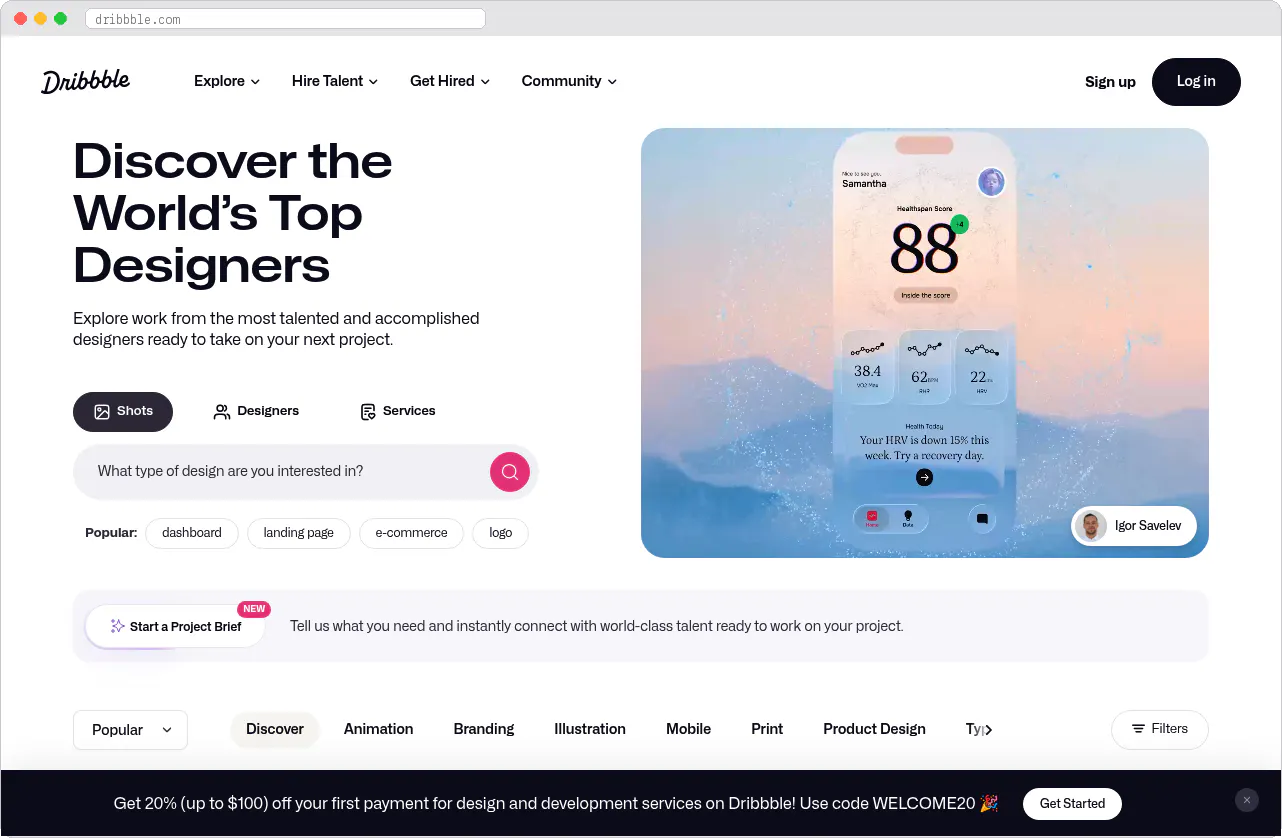
Dribbble takes a different approach by functioning primarily as a design community and portfolio platform. Designers showcase their work, build followings, and connect with potential clients through the platform's job board and freelance marketplace. Rather than contests, Dribbble emphasizes long-term relationships and higher-end design work. The platform attracts top-tier designers who use it for networking and reputation building, making it valuable for clients seeking premium design talent.
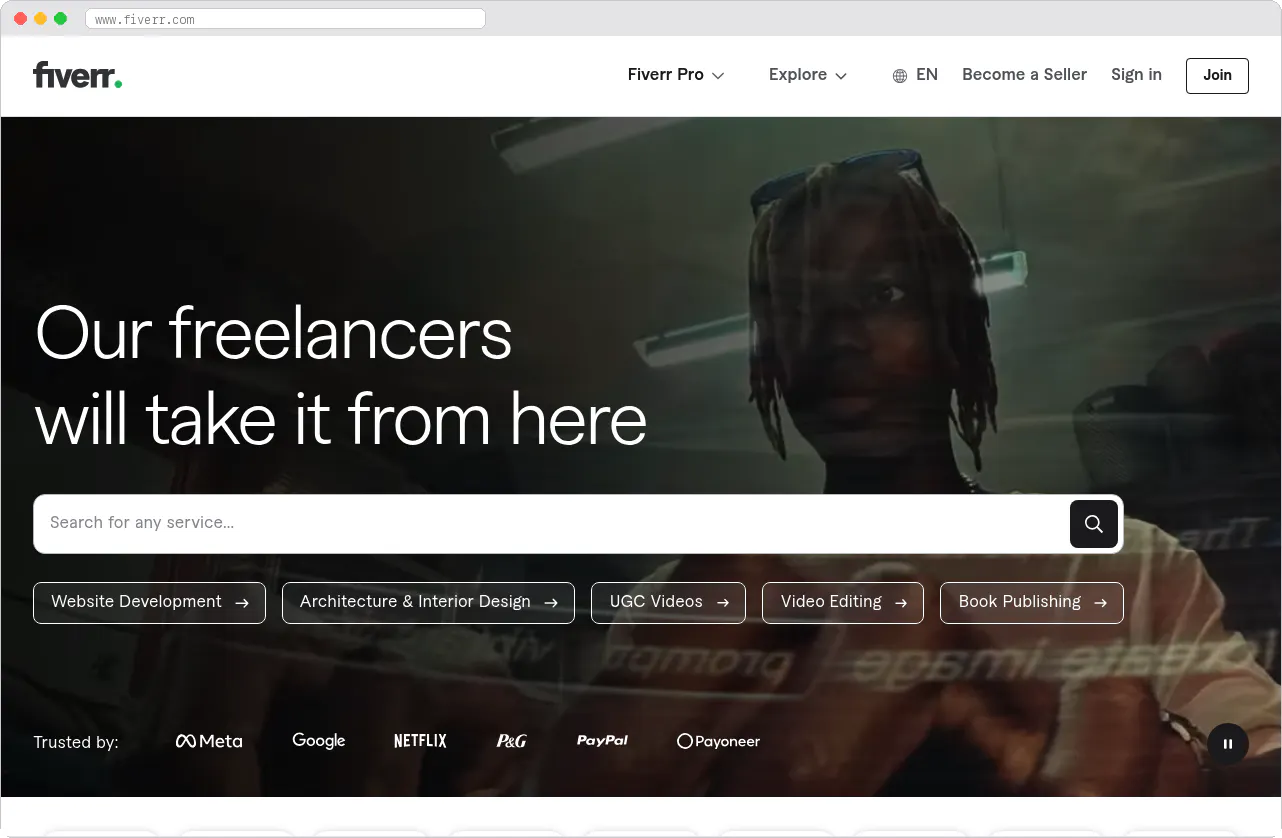
Fiverr operates on a gig-based model where designers create predefined service packages starting at $5. This approach offers faster turnaround times and clear pricing but limits customization compared to 99designs contests. Fiverr's broader service categories dilute its focus on design, but its massive scale provides designers with high volume opportunities. The platform works well for simple, template-based design work but struggles with complex, custom projects.
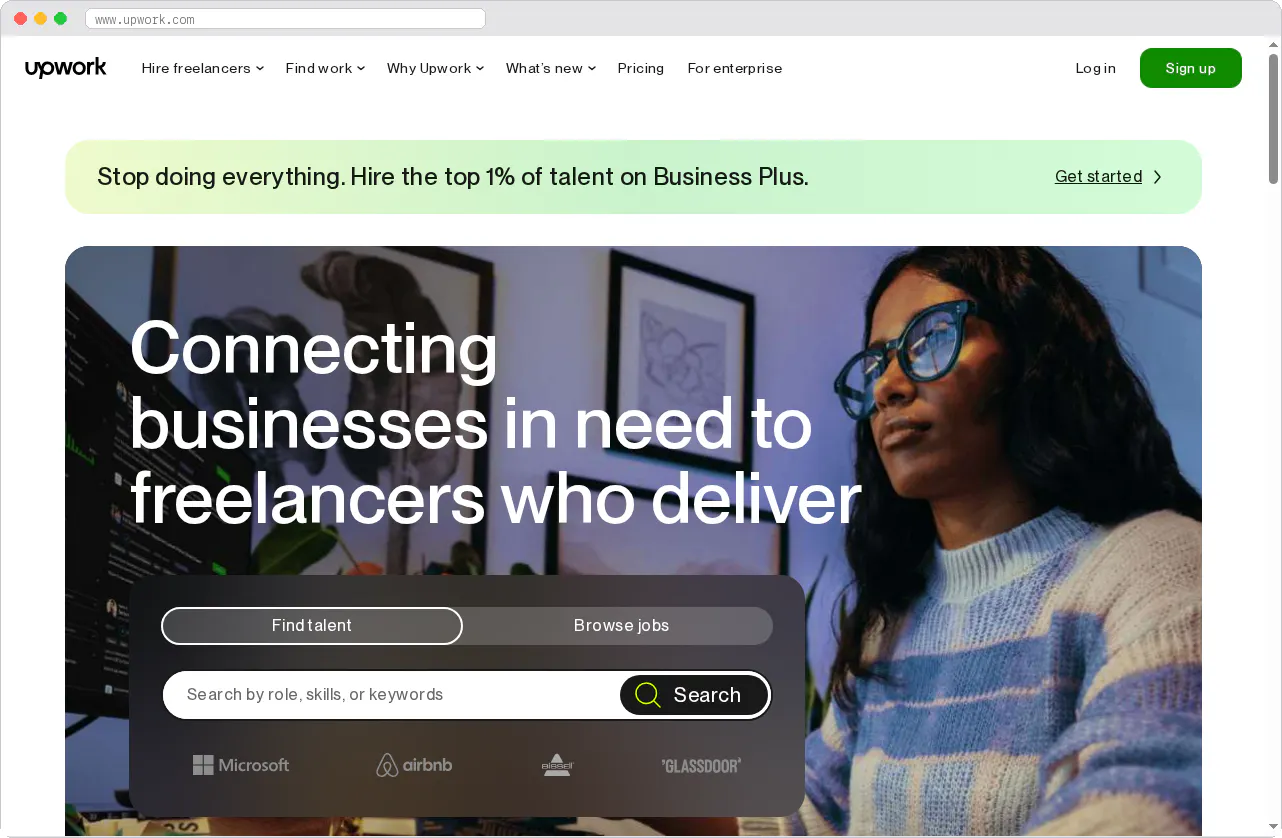
Upwork provides the most comprehensive freelancing platform, covering design alongside programming, writing, and other services. Clients post projects and receive proposals from freelancers, then negotiate terms directly. This model offers more flexibility than contests but requires clients to evaluate freelancers without seeing actual work samples for their specific project. Upwork's hourly billing options work well for ongoing design relationships but add complexity for one-off projects.
Behance serves primarily as a portfolio platform owned by Adobe, allowing designers to showcase work and connect with potential clients. While not a transactional marketplace, many clients use Behance to discover designers for direct hire. The platform's integration with Adobe Creative Suite makes it popular among professional designers, creating a high-quality talent pool.
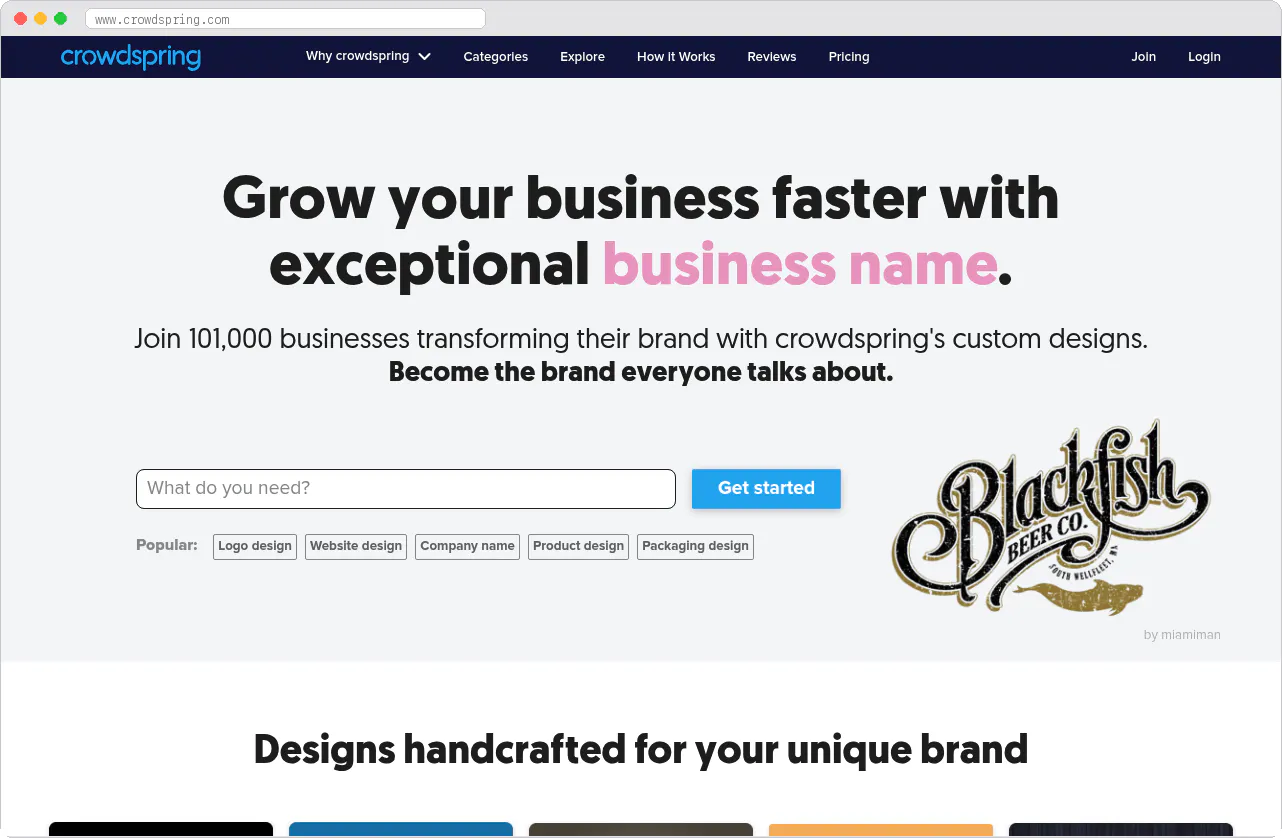
Crowdspring competes directly with 99designs in the contest space but emphasizes customer service and support. The platform offers more hands-on assistance for clients creating briefs and provides guarantees on contest outcomes. Crowdspring's pricing falls between 99designs and DesignCrowd, positioning it as a premium alternative with better support.
Each platform succeeds by focusing on different client needs and designer preferences. 99designs maintains its leadership through contest specialization, quality control, and designer community building.
How to build a marketplace like 99designs
Creating a successful design marketplace requires following a structured approach that validates your concept before heavy investment in development. The process involves ten key steps that move from idea validation through scaling.
Step 1: Define your design marketplace niche. The design industry is vast, covering everything from logos to packaging to web design. Rather than competing directly with 99designs across all categories, successful new entrants typically focus on underserved niches. Consider specializing in specific industries (healthcare, finance, technology), design types (mobile app interfaces, book covers, product packaging), or target markets (local businesses, startups, enterprise clients).
Research existing platforms to identify gaps in service quality, pricing, or designer expertise. For example, you might find that existing platforms don't serve B2B software companies well, or that there's demand for faster turnaround times in certain design categories.
Step 2: Validate demand with potential clients. Before building anything, confirm that your target market has genuine demand for your proposed solution. Interview potential clients about their current design procurement process, pain points with existing platforms, and willingness to pay for improved service.
Create landing pages describing your planned marketplace and gauge interest through email signups or survey responses. This validation step prevents building a platform that nobody wants and helps refine your value proposition based on real market feedback.
Step 3: Recruit initial designer supply. Like all marketplaces, design platforms face the classic chicken-and-egg problem of needing supply to attract demand and vice versa. Start by recruiting a core group of quality designers before launching to clients. Look for designers through existing portfolio sites, design communities, social media, and professional networks.
Offer initial designers favorable terms, such as reduced commission rates or guaranteed minimum earnings, to incentivize early participation. Focus on quality over quantity at this stage, as early client experiences will determine your platform's reputation.
Step 4: Build your minimum viable platform. Your first version should include core functionality for contests or project matching without advanced features that can be added later. Essential components include user registration, basic profiles, project posting, file upload, messaging, and payment processing.
Avoid over-engineering at this stage. Many features that seem important initially prove unnecessary once real users start engaging with your platform. Focus on making core workflows smooth and reliable rather than building comprehensive functionality.
Step 5: Launch with a small, focused market. Begin with a narrow geographic or industry focus rather than trying to serve everyone immediately. This approach lets you provide better support to early users, gather concentrated feedback, and build reputation within a specific community.
Promote your launch through the networks you used to recruit designers and validate demand. Personal outreach, content marketing, and partnerships with complementary businesses work better than broad advertising at this stage.
Step 6: Iterate based on user feedback. Monitor how clients and designers actually use your platform versus how you expected them to behave. Common areas requiring adjustment include contest duration, pricing models, feedback mechanisms, and quality control processes.
Implement changes gradually and measure their impact on key metrics like contest completion rates, designer participation, and client satisfaction. This iterative approach prevents major mistakes while continuously improving the user experience.
Step 7: Develop quality control systems. As your platform grows, maintaining design quality becomes crucial for client retention. Implement designer screening processes, submission review systems, and client feedback mechanisms that surface quality issues quickly.
Consider features like designer tier systems that give proven professionals advantages in contests, or client education resources that help them create better project briefs. Quality control is often manual initially but can be partially automated as patterns emerge.
Step 8: Scale marketing and expand categories. Once you've achieved product-market fit in your initial niche, gradually expand to related design categories or geographic markets. Each expansion should use learnings from your initial market while adapting to new audience needs.
Invest in content marketing, search engine optimization, and paid advertising to reach larger audiences. Case studies showcasing successful projects on your platform provide powerful social proof for potential clients.
Step 9: Add advanced features and automation. As your platform matures, layer in sophisticated functionality that improves user experience and operational efficiency. This might include AI-powered designer matching, automated quality scoring, mobile apps, or integration with popular design tools.
Prioritize features based on user requests and their potential impact on key business metrics. Avoid feature creep by maintaining focus on your core value proposition while adding genuinely useful enhancements.
Step 10: Optimize unit economics and explore expansion. Track key metrics like customer acquisition cost, lifetime value, and take rate to ensure sustainable growth. Design marketplaces typically charge 5-20% commissions, but optimal rates depend on your specific value proposition and competitive positioning.
Consider expansion opportunities like offering additional services (branding consultation, trademark assistance), serving new customer segments (enterprise clients, design agencies), or geographic expansion to international markets.
Technical approaches for building a design marketplace
Several technical approaches can power a design marketplace like 99designs, each with different trade-offs in terms of development time, costs, and long-term flexibility.
Custom development from scratch offers maximum control and customization but requires significant time and budget. A full-featured design marketplace built by an experienced development team typically costs $100,000-300,000 and takes 6-12 months to launch. This approach makes sense for well-funded startups with specific technical requirements that existing solutions can't meet.
Custom development allows you to optimize every aspect of the user experience and integrate exactly the features your market needs. However, you'll also need ongoing development resources for maintenance, security updates, and feature additions. The high upfront investment and long development timeline mean you can't start learning from real users for many months.
No-code marketplace builders like Sharetribe provide the fastest path to launch while maintaining professional functionality. These platforms include essential marketplace features out of the box, handle hosting and security, and allow customization without coding. You can typically launch a functional design marketplace within 2-4 weeks using this approach.
The main limitations involve customization flexibility and potential platform dependencies. While most no-code solutions allow significant customization, you may eventually need custom development for highly specific features. However, platforms like Sharetribe support custom development on top of the no-code foundation, providing a path for growth without requiring a complete rebuild.
Combining multiple no-code tools creates more flexibility than single-platform solutions but introduces complexity in integration and maintenance. You might use Webflow for your frontend, Airtable for database management, Stripe for payments, and Zapier to connect everything. This approach costs less than custom development but requires more technical skill to implement and maintain.
The fragmented nature of multi-tool setups makes them vulnerable to breakage when any component changes its API or features. You'll also need to manage multiple vendor relationships and potential data synchronization issues between platforms.
Open-source marketplace frameworks like Sharetribe Open Source or CS-Cart Multi-Vendor provide middle ground between custom development and SaaS solutions. These platforms offer marketplace functionality with full control over hosting and modifications. However, you'll need development skills for setup, customization, and ongoing maintenance.
Open-source solutions work well for technically capable teams who want more control than SaaS platforms provide but don't want to build everything from scratch. The trade-off involves taking responsibility for security, updates, and infrastructure management.
For most design marketplace startups, no-code marketplace builders offer the best balance of speed, functionality, and growth potential. The ability to launch quickly and start learning from real users typically outweighs limitations in initial customization options.
Cost considerations for building a design marketplace
The financial investment required to build a design marketplace varies dramatically based on your chosen approach, required features, and quality standards. Understanding these costs helps founders plan realistic budgets and fundraising needs.
No-code marketplace platform costs represent the most affordable approach for most startups. Sharetribe's pricing starts at $99/month for basic functionality, scaling to $599/month for advanced features and higher transaction volumes. Annual subscriptions provide significant discounts, bringing first-year costs to approximately $950-7,100 depending on your plan.
Additional costs include domain registration ($10-15/year), any premium themes or customizations ($500-5,000), and third-party integrations for email marketing, analytics, or customer support ($50-300/month total). Your total first-year budget using a no-code platform typically ranges from $2,000-15,000, making it accessible for bootstrap startups.
Custom development costs start much higher but vary widely based on team location and experience level. A minimum viable design marketplace built by a U.S.-based agency typically costs $50,000-150,000, while offshore development might range from $25,000-75,000. These estimates assume 3-6 months of development time with a team including project manager, designer, frontend developer, and backend developer.
Ongoing costs for custom development include hosting ($100-1,000/month), security monitoring, regular updates, and new feature development. Many custom-built marketplaces require $5,000-20,000/month in ongoing development and maintenance once launched.
Hybrid approaches combining no-code platforms with custom development offer flexible cost structures. You might start with Sharetribe at $99/month, then add $10,000-50,000 in custom development as your platform grows. This approach spreads costs over time while providing upgrade paths as revenue increases.
Marketing and operational costs are often underestimated but crucial for marketplace success. Plan to spend $2,000-10,000/month on marketing once launched, including content creation, paid advertising, and community management. Customer support tools, payment processing fees, and legal compliance add another $500-2,000/month to operational costs.
Most successful design marketplaces require $50,000-200,000 in total investment to reach sustainable growth, including development, marketing, and operational costs for the first 12-18 months. No-code approaches reduce the initial development portion significantly, allowing more budget allocation to user acquisition and market development.
How Sharetribe enables design marketplace creation
Sharetribe provides comprehensive marketplace infrastructure specifically designed for creative service platforms like design marketplaces. The platform handles technical complexity while allowing founders to focus on building their communities and refining their business models.
The no-code builder includes essential design marketplace features out of the box. Contest management functionality lets clients post projects, set budgets, and collect submissions from multiple designers. Designer profiles support portfolio galleries, skills tags, and client reviews that help buyers evaluate creative professionals. Advanced search and filtering tools help clients find the right designers while geographic and category filters ensure relevant matches.
Payment infrastructure handles the complex requirements of contest-based business models. Escrow functionality holds client payments during contests, releasing funds to winning designers upon project completion. Commission splitting automatically deducts platform fees from transactions while supporting various fee structures. International payment processing accommodates global designer communities while handling currency conversion and tax compliance.
The platform scales smoothly as marketplaces grow from initial launch through enterprise-level operation. Hosting infrastructure automatically handles traffic spikes during popular contests while content delivery networks ensure fast file uploads and downloads globally. Admin dashboards provide tools for user management, transaction monitoring, and content moderation that become essential as communities expand.
Customization capabilities extend far beyond typical no-code limitations. The development platform supports custom feature development using modern web technologies while maintaining the no-code foundation for standard functionality. This hybrid approach lets marketplaces launch quickly with standard features, then add unique capabilities as their communities grow and requirements become clearer.
APIintegrations connect with popular tools used by design professionals, including Adobe Creative Suite, Slack, and project management platforms. Email automation helps onboard new users, notify participants of contest updates, and re-engage inactive community members. Mobile-responsive designs ensure optimal experience across devices, crucial for designer communities who often work from various locations.
Sharetribe's design marketplace template provides a 99designs-inspired starting point that can be live within days rather than months. The template includes contest workflows, designer portfolios, and payment processing pre-configured for creative services. Customization options let founders adapt the template to their specific niche while maintaining proven user experience patterns.
For founders considering alternatives, Sharetribe offers transparent trade-offs compared to custom development or other no-code platforms. While less flexible than completely custom solutions, the platform provides faster time-to-market and ongoing support that most early-stage startups value more than unlimited customization. Compared to simpler no-code tools, Sharetribe offers marketplace-specific functionality that generic website builders can't match.
Conclusion: Building your design marketplace
The success of 99designs demonstrates that design marketplaces can create significant value for both clients and creative professionals. However, building a successful alternative requires careful attention to community building, quality control, and user experience rather than just replicating existing features.
Focus on serving a specific niche better than existing platforms rather than trying to compete across all design categories immediately. Whether that's serving local businesses, specializing in mobile app design, or focusing on specific industries, a clear value proposition helps attract both clients and designers to a new platform.
Speed to market matters more than perfect functionality at launch. The sooner you can get real users engaging with your platform, the faster you can learn what actually drives success in your specific market. No-code solutions like Sharetribe enable this rapid iteration while providing upgrade paths as your understanding and requirements evolve.
Design marketplaces succeed through community building as much as technology. Invest time in recruiting quality designers, educating clients on effective brief writing, and facilitating positive interactions between both sides. The best technical platform means nothing without engaged users who love using your service.
Start building your design marketplace today by defining your niche, validating demand with potential users, and choosing a development approach that gets you to market quickly. The creative economy continues growing, providing ample opportunity for new platforms that serve specific communities better than existing generic solutions.
Frequently asked questions
How much does it cost to build a website like 99designs?
A Total first-year costs with a no-code marketplace platform typically run $2,000-5,000. Most successful platforms require $50,000-200,000 total investment including marketing and operations.
What features does a design marketplace need?
Essential features include contest management, designer portfolios, file upload/transfer, escrow payments, search and filtering, messaging systems, and review/rating functionality. Quality control and intellectual property transfer tools are also crucial.
How does 99designs make money?
99designs charges listing fees when clients post contests ($299-1,899 typically) and takes a percentage commission from designer payouts. They also offer 1-to-1 project services with service fees for direct hiring.
Can I build a design marketplace without coding?
Yes, platforms like Sharetribe let you launch a fully functional design marketplace without coding in 2-4 weeks. You can add custom features later as your platform grows and requirements become clearer.
What are the main competitors to 99designs?
Major competitors include DesignCrowd (contest-based), Fiverr (gig-based), Upwork (general freelancing), Dribbble (portfolio-focused), and Crowdspring (contest-based with customer service focus). Each serves different client needs and designer preferences.
How do I attract designers to a new marketplace?
Start by recruiting through existing portfolio sites, design communities, and social media. Offer favorable initial terms like reduced commission rates or guaranteed earnings to incentivize early participation and focus on quality over quantity.
Start your 14-day free trial
Create a marketplace today!
- Launch quickly, without coding
- Extend infinitely
- Scale to any size
No credit card required