How to build a website like DesignCrowd
DesignCrowd connects businesses with freelance designers through a contest-based marketplace model. Learn how to build your own design marketplace, from validating the idea to choosing between contest and direct-hire approaches to scaling globally.
Published: Mar 15, 2024
Last updated: Mar 19, 2026
How DesignCrowd transformed the design marketplace
DesignCrowd revolutionized how businesses access design talent by creating a contest-based marketplace where clients post design briefs and receive dozens of creative concepts from designers worldwide. Founded in Sydney in 2008 by Alec Lynch, the platform has facilitated over 200,000 design projects and built a community of more than 900,000 designers across 165+ countries.
The platform's success stems from solving a fundamental problem in the design industry: matching clients who need custom creative work with talented designers seeking opportunities. Traditional design agencies were expensive and offered limited creative perspectives, while freelance platforms made it difficult to evaluate creative quality before hiring. DesignCrowd's contest model allows clients to see multiple design interpretations of their brief before making a decision, while giving designers a chance to showcase their creativity and build their portfolios.
Today, DesignCrowd operates as one of the largest crowdsourced design marketplaces globally, having raised over $8 million in funding and processing millions in design transactions. The platform handles everything from logo design and business cards to website mockups and packaging design, with typical contests receiving 50-100+ design submissions.
How DesignCrowd works
DesignCrowd operates on a contest-based model that differs significantly from traditional freelance marketplaces. Instead of hiring a single designer upfront, clients post design briefs and receive multiple creative concepts to choose from.
For clients, the process begins with posting a design brief that outlines their requirements, target audience, style preferences, and timeline. They set a prize amount that will be awarded to the winning designer, typically ranging from $199 for simple logos to $1,500+ for complex branding packages. Once the contest goes live, designers from around the world submit their interpretations of the brief. Clients can provide feedback, request revisions from promising designers, and ultimately select a winner. The entire process typically takes 7-10 days, after which the client receives full ownership rights to their chosen design along with source files.
For designers, DesignCrowd provides access to a steady stream of real commercial projects without the overhead of client acquisition. Designers browse active contests, analyze the briefs, and submit their best creative concepts. While only one designer wins each contest, participants build portfolios, gain exposure to different industries, and can earn significant income from winning designs. Top designers on the platform often win multiple contests per month, creating sustainable freelance income streams.
The contest model creates natural quality control through competition. Clients see multiple approaches to their design challenge, while designers must deliver their best work to stand out from dozens of competitors. This dynamic has proven particularly effective for creative projects where subjective taste and multiple creative perspectives add value.
DesignCrowd's business model and revenue streams
DesignCrowd generates revenue through several complementary streams built around facilitating design transactions. The primary revenue source comes from contest fees paid by clients. When posting a design brief, clients pay the full contest amount upfront, which includes both the designer prize and DesignCrowd's service fee. The platform typically charges 20-40% above the designer payout as their commission, meaning a $500 designer prize might cost the client $700 total.
Additional revenue comes from premium services that enhance the contest experience. Clients can purchase contest upgrades like featured listings (which give their contests more visibility to designers), extended timelines, additional design concepts, or priority support. The platform also offers "guaranteed" contests where DesignCrowd commits to delivering a design the client loves or provides a full refund, which commands higher service fees.
For designers, DesignCrowd operates on a success-based model where they only pay fees when they win contests. The platform takes no upfront fees from designers but retains a portion of the prize money when designs are selected. This structure aligns DesignCrowd's interests with designer success and removes barriers to participation.
The business model's strength lies in its low marginal costs and network effects. Once the platform infrastructure exists, adding new contests and designers requires minimal additional resources, while a larger designer community attracts more clients and vice versa. However, the model also faces challenges around designer retention, as unsuccessful contestants receive no compensation for their creative work.
Essential features for a DesignCrowd-like marketplace
Building a successful design marketplace requires specific functionality that supports the unique workflow of creative contests and client-designer interactions. Unlike product marketplaces or traditional service platforms, design marketplaces must handle subjective evaluation, intellectual property transfer, and collaborative creative processes.
Contest management system forms the backbone of platforms like DesignCrowd. This system allows clients to create detailed design briefs with requirements, style guides, and reference materials. Clients need tools to specify project scope, timeline, budget, and evaluation criteria clearly. The brief creation process should guide clients through providing comprehensive information that helps designers understand their vision while avoiding overly restrictive constraints that stifle creativity.
Contest management also includes timeline control, submission organization, and winner selection processes. Clients must be able to extend deadlines, request specific revisions from individual designers, and communicate feedback effectively. The system needs to handle different contest types, from simple logo competitions to complex multi-phase branding projects that might require multiple rounds of submissions and refinements.
Designer portfolios and submission systems enable creative professionals to showcase their capabilities and submit contest entries effectively. Portfolio pages need robust image management, categorization by design type, client testimonials, and detailed designer profiles that build trust and credibility. The submission process must support various file formats, high-resolution uploads, and design presentation tools that help entries stand out.
Submission systems should also include version control for design iterations, watermarking for contest entries, and source file delivery for winning designs. Designers need clear guidelines about file requirements, submission limits per contest, and intellectual property rights during and after the contest period.
Rating and review systems build marketplace credibility through transparent feedback mechanisms. Both clients and designers need the ability to rate their experiences and leave detailed reviews. For designers, positive reviews and high ratings increase their chances of winning future contests. For clients, reviews help the community identify reliable, communicative clients who provide clear briefs and fair feedback.
The review system should capture different aspects of the collaboration experience: design quality, communication effectiveness, adherence to requirements, and overall satisfaction. This multifaceted approach provides nuanced insights that help future marketplace participants make informed decisions about contest participation.
Communication and collaboration tools facilitate the iterative creative process that design work requires. Built-in messaging systems allow private communication between clients and individual designers for clarification questions, feedback delivery, and revision requests. Public comment systems enable clients to provide general feedback that all contest participants can see, which improves overall submission quality.
Collaboration tools should also include annotation features for providing visual feedback on design submissions, file sharing capabilities for reference materials, and notification systems that keep participants informed about contest updates and new submissions.
Secure payment processing with escrow functionality protects both parties in creative transactions. When clients post contests, their payment should be held in escrow until they select a winning design and receive final files. This arrangement ensures designers get paid promptly when they win while protecting clients from paying for work that doesn't meet their requirements.
Payment systems must handle different prize structures, partial payments for milestone-based projects, and refund processing for guaranteed contests where clients aren't satisfied with submissions. International payment processing is particularly important given the global nature of design talent, requiring support for multiple currencies and payment methods.
Intellectual property management addresses the complex ownership questions that arise in creative marketplaces. Contest platforms need clear terms governing who owns submitted designs, when ownership transfers to clients, and what rights unsuccessful contestants retain over their work. The system should automatically transfer full intellectual property rights to clients upon contest completion while protecting designers from unauthorized use of non-winning submissions.
File delivery systems must provide secure transfer of high-resolution source files, fonts, and other assets that clients need to use their designs effectively. Version control ensures clients receive the most current iteration of their chosen design along with any requested modifications.
The competitive landscape: DesignCrowd alternatives
The design marketplace space includes several established players, each with distinct approaches to connecting clients with creative talent. Understanding these alternatives helps founders identify opportunities for differentiation and improvement.
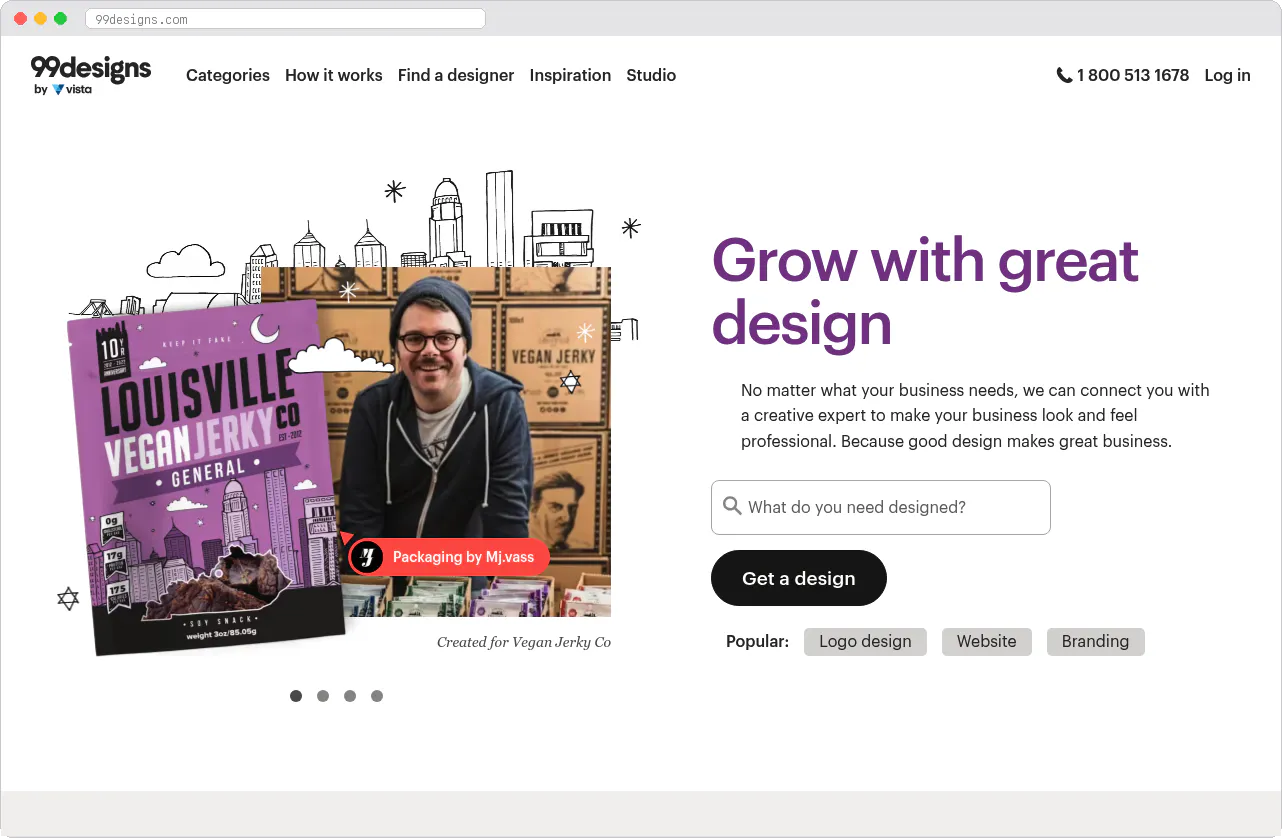
99designs represents DesignCrowd's closest direct competitor, also operating on a contest-based model with similar service categories and global designer communities. Founded in 2008, 99designs has processed over $200 million in design transactions and claims more than one million registered designers. The platform differentiates itself through more curated designer communities, with application processes that screen for portfolio quality and experience levels.
99designs contests typically attract higher-caliber submissions but command premium pricing, with logo contests starting around $299 compared to DesignCrowd's $199 entry point. The platform also offers "99designs Pro," a managed service where 99designs staff help clients refine their briefs and manage the contest process, targeting businesses that want professional guidance throughout their design project.
The key difference lies in market positioning: 99designs targets established businesses and agencies willing to pay premium rates for higher-quality creative work, while DesignCrowd appeals more broadly to startups and small businesses seeking affordable design solutions.
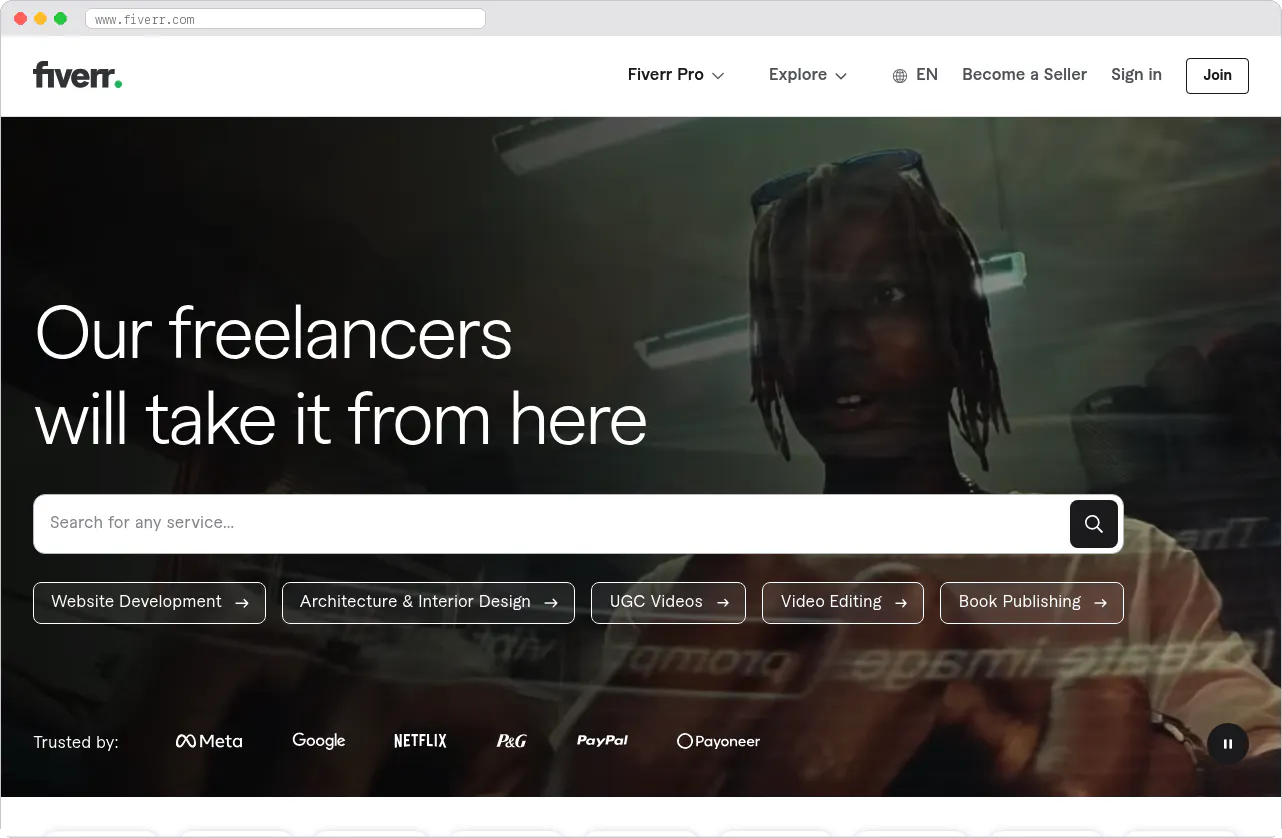
Fiverr takes a completely different approach through direct freelancer hiring rather than contests. Clients browse individual designer profiles, review portfolios and pricing, then hire specific designers for their projects. This model eliminates the uncertainty of contest-based platforms where clients might not receive designs they love, but it also removes the benefit of seeing multiple creative approaches to the same brief.
Fiverr's strength lies in price transparency and speed. Clients know exactly what they'll pay and can often receive completed designs within 24-48 hours. However, the platform's "gig economy" structure can lead to commoditized design work, with many designers competing primarily on price rather than creative quality. Fiverr has attempted to address this through "Fiverr Pro," which features vetted professionals charging higher rates for premium work.
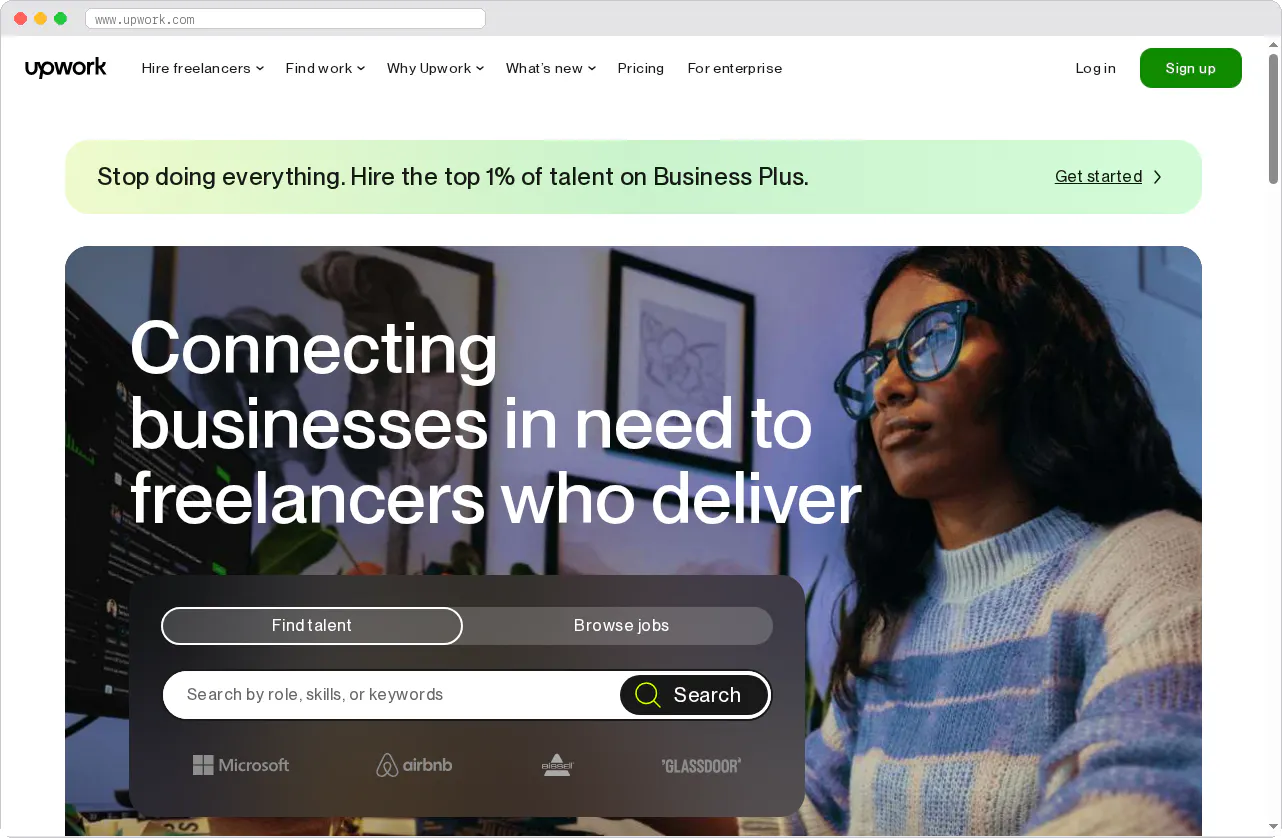
Upwork operates as a traditional freelance marketplace where clients post projects and receive proposals from interested designers. This model provides more opportunity for relationship building between clients and designers, potentially leading to ongoing collaborations rather than one-off transactions. Upwork's time-tracking and milestone-based payment systems also support longer-term design projects like website development or ongoing marketing material creation.
The platform's weakness in the design space lies in evaluation difficulty. Unlike contests where clients see actual creative work before deciding, Upwork requires clients to assess designers based primarily on portfolios, proposals, and reviews from previous projects. This can make it challenging for clients without design experience to identify the best creative partners for their needs.
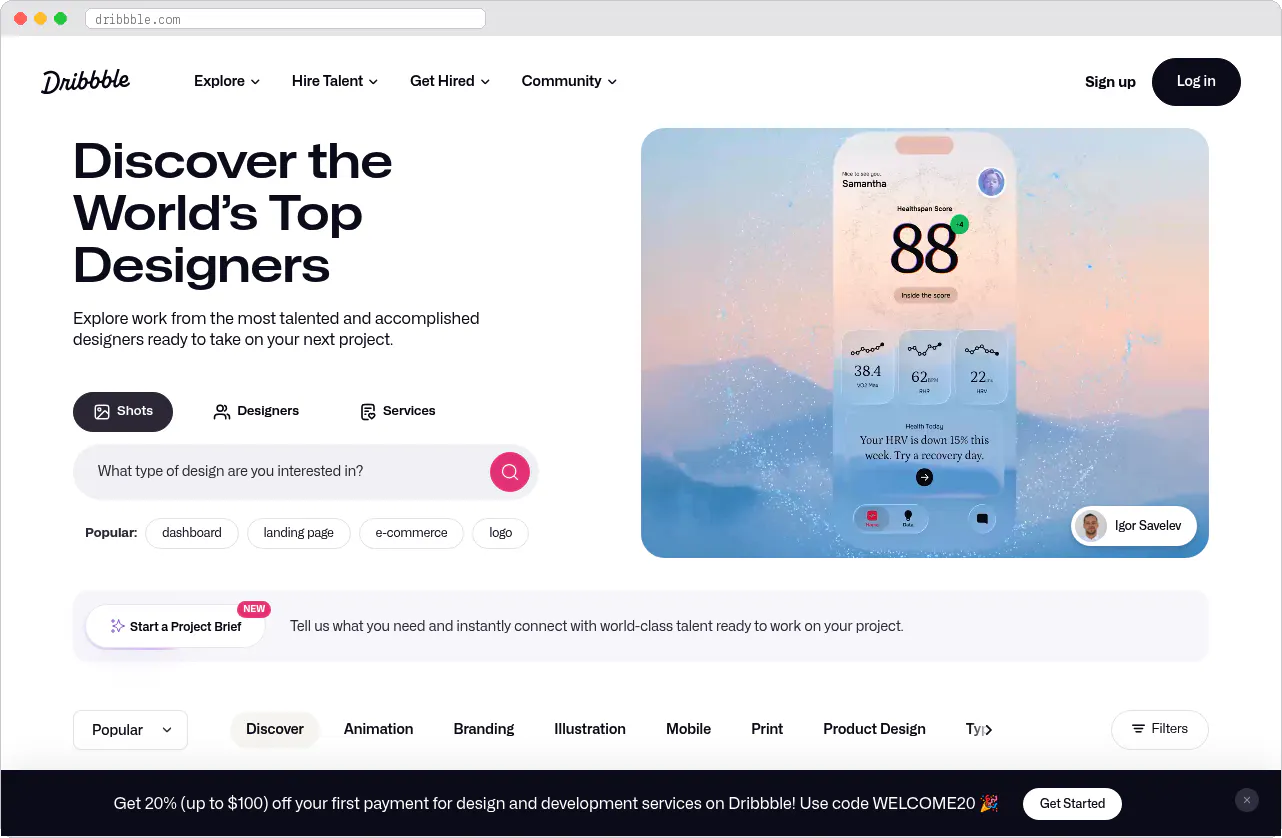
Dribbble approaches the design marketplace from a community-first perspective. Originally built as a designer portfolio and inspiration platform, Dribbble added marketplace functionality that allows clients to discover and hire designers based on their showcased work. This model attracts high-quality creative talent who use the platform primarily for professional networking and inspiration sharing.
Dribbble's designer community skews toward more experienced professionals and cutting-edge creative work, making it an excellent resource for clients seeking innovative design approaches. However, the platform's focus on visual inspiration rather than commercial transactions means it lacks some of the structured project management and payment processing features that dedicated marketplaces provide.
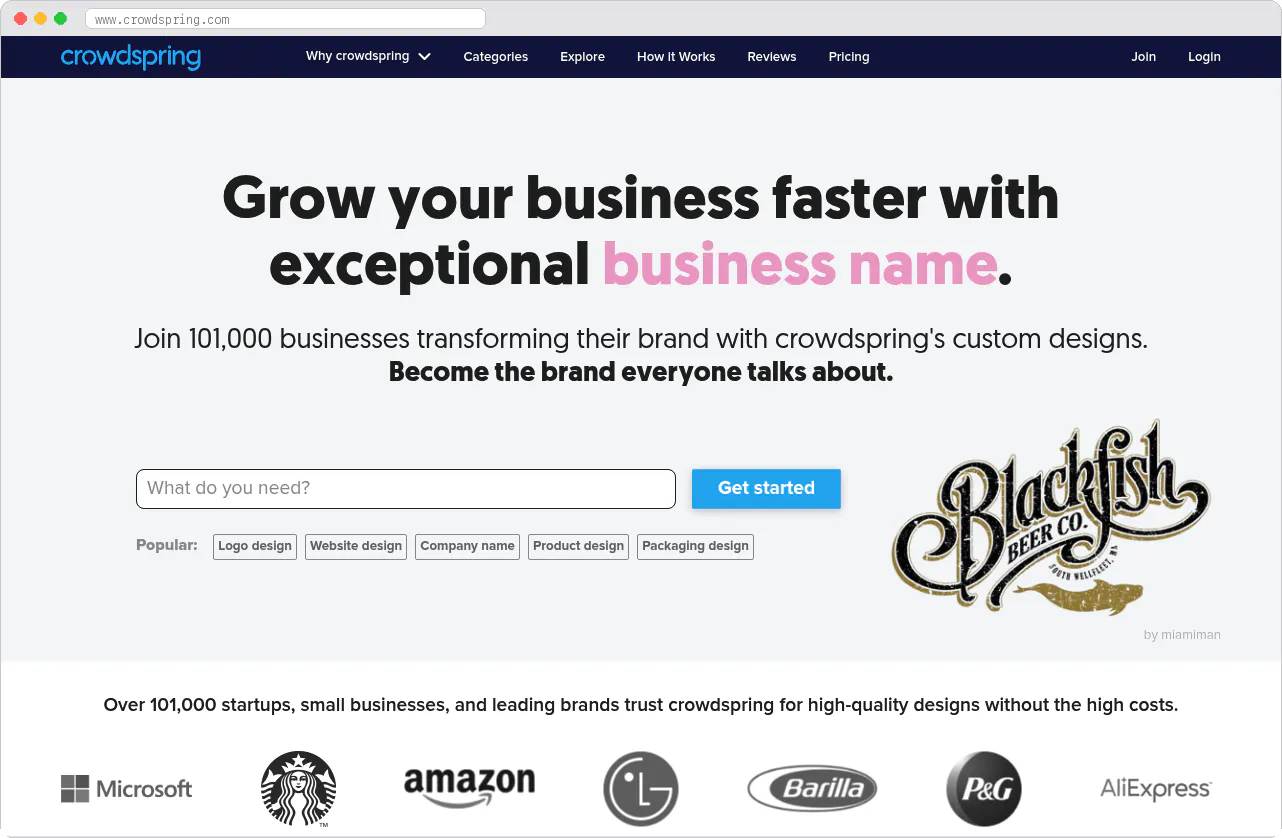
Crowdspring operates similarly to DesignCrowd with contest-based creative projects, but positions itself as a more premium alternative with higher minimum contest prizes and more selective designer communities. The platform emphasizes customer service and creative guidance, offering more hands-on support throughout the contest process.
Crowdspring's differentiation strategy focuses on quality over quantity, with fewer but potentially higher-caliber design submissions per contest. The platform also offers "managed contests" where Crowdspring staff help clients develop their creative briefs and provide professional guidance throughout the selection process.
Steps to build your own design marketplace
Creating a successful design marketplace requires a systematic approach that balances technical development with community building and market validation. The following steps outline a proven path from initial concept to scalable platform.
Step 1: Define your marketplace positioning
The design marketplace space is crowded with established players, making differentiation crucial for new entrants. Successful positioning often comes from serving underserved niches or improving existing marketplace experiences in specific ways.
Consider focusing on particular design categories where you can build deep expertise and specialized features. For example, a marketplace dedicated exclusively to packaging design could offer industry-specific brief templates, material specification tools, and connections to printing services. Similarly, a platform focused on logo design for specific industries (restaurants, law firms, healthcare) could provide specialized brief guidance and style recommendations.
Geographic specialization also creates opportunities, particularly in markets where language barriers or cultural understanding provide advantages for local designers. A platform serving Latin American businesses with Spanish and Portuguese language support might attract clients who feel underserved by predominantly English-language global marketplaces.
Alternatively, consider process improvements to existing contest models. Some founders have found success with "collaborative contests" where clients work directly with 2-3 selected designers through multiple revision rounds, combining the creative variety of contests with the relationship building of direct hiring.
Step 2: Validate demand through pre-launch research
Before building any technology, validate that your target market has genuine demand for an alternative to existing design marketplaces. This research phase prevents costly development of solutions that don't address real market needs.
Start by identifying your target client segments and conducting direct interviews about their current design procurement processes. Ask about frustrations with existing platforms, budget constraints, timeline requirements, and decision-making criteria. Pay particular attention to situations where they chose not to pursue design projects due to platform limitations or poor experiences.
For potential designers, research their income sources, platform preferences, and barriers to participation in existing marketplaces. Many designers supplement contest winnings with direct client work, so understand how your platform could fit into their broader business strategies.
Survey data from both client and designer segments provides quantitative validation for your positioning decisions. However, be cautious about stated preferences versus revealed preferences, what people say they want doesn't always match their actual behavior when faced with real purchasing decisions.
Step 3: Start with a focused minimum viable platform
Rather than attempting to replicate every DesignCrowd feature immediately, launch with core functionality that delivers your unique value proposition. This approach allows faster market entry and earlier customer feedback that guides feature development priorities.
Your MVP should include basic contest posting capabilities, designer registration and portfolio creation, submission management, and simple payment processing. Focus on making these core workflows excellent rather than adding secondary features like advanced search filters or social sharing tools.
The contest posting process deserves particular attention since clear, comprehensive briefs directly impact submission quality. Invest in guided brief creation that helps clients articulate their requirements effectively, provides relevant examples, and sets appropriate expectations about timelines and revision processes.
Designer onboarding should emphasize portfolio quality and submission best practices. Many unsuccessful contest participants fail because they don't understand how to present their work effectively or misinterpret client requirements. Early education and guidance can significantly improve designer success rates and platform reputation.
Step 4: Build initial designer community before client acquisition
Design marketplaces face a classic chicken-and-egg problem: clients want to see quality designers before posting contests, while designers want active contests before investing time in portfolio creation. Generally, building designer supply first proves more effective than attracting clients to an empty marketplace.
Recruit initial designers through existing creative communities, design schools, freelance forums, and social media groups. Many designers actively seek new income opportunities and will experiment with promising platforms, especially if the signup process is straightforward and the platform appears legitimate.
During this phase, consider posting internal or sponsored contests to give designers immediate opportunities to submit work and test your platform processes. These early contests provide valuable user experience feedback while building initial portfolio content that makes your marketplace appear active to prospective clients.
Focus on designer diversity across skill levels, design specialties, and geographic regions. A marketplace with 50 excellent logo designers might struggle with web design or packaging requests, while geographic diversity ensures clients can find designers familiar with their local markets and regulations.
Step 5: Launch with strategic client acquisition
Once you have 20-50 active designers with quality portfolios, begin targeted client acquisition. Start with your personal and professional network, as these clients are more likely to try new platforms and provide honest feedback about their experiences.
Early client acquisition should prioritize relationship building over scaling. Work closely with initial clients to ensure their contests receive high-quality submissions and successful outcomes. These positive experiences create case studies, testimonials, and word-of-mouth referrals that fuel organic growth.
Consider offering incentives for early adopters, such as reduced contest fees or guaranteed satisfaction policies. These investments in client success pay dividends through repeat business and referrals, while poor early experiences can permanently damage your platform's reputation.
Track key metrics throughout the launch phase: contest completion rates, client satisfaction scores, designer participation rates, and repeat usage patterns. These metrics indicate whether your marketplace is creating value for both sides and guide optimization priorities.
Step 6: Optimize for marketplace liquidity
Successful design marketplaces achieve liquidity when clients consistently receive satisfactory designs while designers win contests frequently enough to justify continued participation. This balance requires ongoing optimization based on user behavior and feedback.
Monitor contest performance metrics closely: How many designers participate in average contests? What percentage of contests result in satisfied clients? How long do contests typically run before clients find acceptable designs? Poor performance in any area indicates optimization opportunities.
Client satisfaction often correlates with submission quality and quantity. If contests receive few submissions or low-quality work, investigate whether brief requirements are unclear, prize amounts are insufficient, or the designer community lacks relevant skills. Solutions might include brief improvement tools, pricing guidance, or targeted designer recruitment.
Designer success rates influence long-term participation and platform quality. If talented designers consistently lose contests to lower-quality work, they'll eventually leave for more promising opportunities. This dynamic requires careful balance between client preferences and objective design quality assessment.
Step 7: Scale through geographic and category expansion
Once your marketplace achieves consistent liquidity in its initial market segment, expansion opportunities emerge through geographic reach and design category diversification. Successful expansion requires understanding new market dynamics rather than simply replicating existing approaches.
Geographic expansion often requires localization beyond simple language translation. Different markets have distinct design preferences, cultural sensitivities, pricing expectations, and business practices. Research these differences thoroughly and adapt your platform accordingly rather than assuming universal applicability.
Category expansion should build on existing community strengths while addressing new client needs. If your marketplace excels at logo design, packaging design might be a natural extension since many clients need both services. However, expanding into completely different categories like web development might require recruiting entirely new designer communities.
Expansion timing matters significantly. Premature scaling can dilute resources and harm performance in your core market, while delayed expansion allows competitors to capture emerging opportunities. Monitor competitor activities and market demand signals to optimize expansion timing.
Development approaches and cost considerations
Building a design marketplace involves several technical and strategic decisions that significantly impact development timelines, costs, and long-term scalability. Understanding these options helps founders choose approaches that align with their resources, timeline, and business objectives.
Custom development approach
Custom development provides complete control over marketplace functionality, design, and user experience but requires significant time and financial investment. A full-featured design marketplace built from scratch typically requires 6-12 months of development time and costs between $50,000-200,000 depending on feature complexity and development team rates.
The technical architecture for design marketplaces involves several sophisticated components. File management systems must handle large image uploads, multiple file formats, and secure delivery of source files to contest winners. Payment processing requires escrow functionality, international currency support, and complex fee structures that account for platform commissions and designer payouts.
User management systems need role-based access control for clients, designers, and administrators, along with reputation systems that track performance across multiple contests. Contest management involves workflow engines that handle submission deadlines, revision processes, and winner selection protocols.
Custom development makes sense for well-funded startups with unique technical requirements or innovative marketplace models that existing platforms can't support. However, the high upfront investment and lengthy development cycles delay market entry and customer feedback collection, increasing overall business risk.
No-code and low-code solutions
No-code platforms offer faster development timelines and lower costs for founders without technical backgrounds. Tools like Bubble, Webflow, or Airtable can power basic marketplace functionality, though complex workflows like contest management and escrow payments often require creative workarounds.
A no-code approach might combine several tools: Webflow for the main website, Airtable for database management, Stripe for payments, and Zapier for workflow automation. This approach can launch a basic marketplace in 4-8 weeks for under $5,000 in development costs.
However, no-code solutions often struggle with the specialized requirements of design marketplaces. File management, complex user flows, and custom payment structures frequently exceed no-code platform capabilities. These limitations become more apparent as the marketplace grows and requires sophisticated features for managing contests, intellectual property transfer, and designer communities.
Marketplace-specific platforms
Platforms like Sharetribe offer marketplace-specific functionality that accelerates development while maintaining customization flexibility. These solutions include built-in user management, payment processing, messaging systems, and admin tools designed specifically for marketplace businesses.
Sharetribe's approach particularly suits design marketplaces because it handles complex payment scenarios, supports file sharing and messaging, and provides the administrative tools needed to manage contests and creative workflows. The platform allows launching a functional marketplace in 1-2 weeks while maintaining the ability to add custom features as the business grows.
This approach costs significantly less than custom development while offering more marketplace-specific functionality than general no-code tools. Sharetribe pricing starts at $39/month during development and scales with transaction volume, making it accessible for bootstrapped startups while supporting growth to enterprise scale.
The trade-off involves some limitations on core platform modifications, though Sharetribe's API and customization options address most marketplace-specific requirements. For founders prioritizing speed to market and cost efficiency, marketplace-specific platforms often provide the optimal balance of functionality and flexibility.
Hybrid development strategies
Many successful marketplaces combine multiple approaches throughout their growth journey. A common pattern involves launching with a marketplace platform like Sharetribe to achieve fast market entry, then adding custom features as specific needs emerge and revenue supports additional development investment.
This hybrid approach allows founders to validate their marketplace concept and understand user needs before committing to expensive custom development. Early user feedback often reveals requirements that weren't apparent during initial planning, making the iterative approach more likely to produce successful outcomes.
For example, a design marketplace might launch with standard contest functionality, then add custom features like collaborative design tools, industry-specific brief templates, or integration with printing services based on actual user demand rather than assumptions about what clients and designers want.
Building trust and quality in creative marketplaces
Design marketplaces face unique trust and quality challenges because creative work involves subjective evaluation and intellectual property concerns. Successful platforms implement multiple mechanisms to build confidence among both clients and designers while maintaining high creative standards.
Designer vetting and community management significantly impact marketplace quality and client satisfaction. While open registration allows rapid community growth, it often leads to inconsistent submission quality that frustrates clients and discourages repeat usage.
Effective vetting might include portfolio review processes, skill assessments, or trial periods where new designers must demonstrate competency before accessing high-value contests. Some platforms implement tier systems where designers earn access to premium contests based on their track record of successful submissions and client satisfaction scores.
Community management extends beyond initial vetting to ongoing moderation of submissions, enforcement of platform guidelines, and education about best practices. Many design marketplaces provide resources about creating effective contest submissions, understanding client requirements, and building professional relationships that lead to repeat business.
Quality control mechanisms help maintain creative standards without stifling innovation or limiting designer participation. These systems might include peer review processes where experienced designers evaluate submissions, client feedback integration that improves future contest performance, or automated screening that identifies potential copyright violations.
Some platforms implement "quality guarantees" where they commit to contest success or offer refunds, which requires sophisticated quality prediction and designer community management. These guarantees build client confidence but require careful implementation to avoid financial losses from unsuccessful contests.
Intellectual property protection addresses concerns that prevent many businesses from using crowdsourced design services. Clear terms of service must specify ownership rights throughout the contest process, protecting both submitted designs and client briefs from unauthorized use.
Technical measures like watermarking contest submissions, secure file delivery for winning designs, and audit trails for intellectual property transfer help enforce these policies. Some platforms also provide legal resources or insurance to address IP disputes, though these services typically target enterprise clients rather than small business users.
Transparent communication tools facilitate the collaborative relationships that produce the best creative outcomes. Built-in messaging, feedback systems, and revision management help clients articulate their requirements clearly while giving designers opportunities to ask clarifying questions and propose alternative approaches.
Effective communication tools also include educational resources that help both parties set appropriate expectations about creative processes, revision cycles, and project timelines. Many client disappointments stem from unrealistic expectations about design timelines or the iterative nature of creative work.
Monetization strategies beyond basic commissions
While contest fees and commissions provide the foundation for design marketplace revenue, successful platforms often develop additional monetization streams that enhance the core service while increasing profitability.
Premium services and upgrades allow clients to improve their contest visibility, attract higher-quality designers, or receive additional support throughout the creative process. Featured contest listings, extended submission periods, or guaranteed minimum submission counts command premium pricing while delivering tangible value.
Managed services represent higher-value offerings where platform staff provide creative consultation, brief development assistance, or post-contest design refinement. These services appeal to clients who lack design experience or prefer professional guidance throughout their projects.
Designer monetization tools help creative professionals succeed on the platform while generating additional platform revenue. Portfolio enhancement services, submission feedback tools, or educational resources about winning contest strategies create value for designers while diversifying platform income.
Some platforms offer designer subscription services that provide access to premium contest categories, early submission opportunities, or enhanced profile visibility. These services must deliver genuine value to avoid alienating the designer community that creates marketplace value.
Enterprise and agency services target larger clients with more complex design needs and higher project values. Enterprise offerings might include dedicated account management, custom contest categories, or integration with existing procurement systems.
Agency partnerships allow platforms to serve clients who prefer working with design firms while still using the marketplace's creative community. These hybrid models can access larger project budgets while maintaining the creative variety that makes contest-based platforms attractive.
Marketplace expansion opportunities include related services like trademark research, printing partnerships, or ongoing design maintenance that extend the client relationship beyond initial contest completion. These services increase customer lifetime value while addressing adjacent needs that clients often have after receiving their designs.
Successful expansion requires careful market research to ensure demand exists for additional services and that the platform can deliver them effectively without compromising core marketplace quality.
Why Sharetribe works well for design marketplaces
Building a design marketplace involves numerous technical challenges and business complexities that specialized platforms like Sharetribe are designed to address. Rather than developing these capabilities from scratch, founders can use proven marketplace infrastructure while focusing on community building and market development.
Rapid deployment capabilities allow design marketplace founders to launch functional platforms in days rather than months. Sharetribe includes user registration, profile management, project posting, messaging systems, and payment processing out of the box. This speed to market enables early customer feedback and iterative improvement based on real user behavior rather than assumptions.
For design marketplaces specifically, Sharetribe's file sharing capabilities support the image-heavy workflows that creative contests require. Designers can upload portfolios, submit contest entries, and deliver final files through secure, integrated systems that handle various file formats and sizes.
Payment processing flexibility addresses the complex financial arrangements that design marketplaces require. Contest-based platforms need escrow functionality to hold client payments until contests conclude, along with commission structures that compensate the platform while fairly rewarding winning designers.
Sharetribe's integration with Stripe Connect handles these requirements automatically, including international payment processing, currency conversion, and tax reporting. This infrastructure eliminates months of payment system development while ensuring compliance with financial regulations across different markets.
Customization and scalability options allow marketplaces to start with proven functionality and add unique features as their communities grow and specific needs emerge. Sharetribe's API and development framework support custom integrations, specialized workflow modifications, and unique user experience enhancements.
This approach proves particularly valuable for design marketplaces because creative workflows often require specialized features that become apparent only after observing actual user behavior. The ability to add custom functionality incrementally prevents over-engineering while ensuring the platform can evolve with community needs.
Administrative tools and analytics provide the operational capabilities needed to manage creative communities effectively. Design marketplaces require moderation tools for contest submissions, user management systems for handling designer applications, and analytics dashboards for monitoring contest performance and community health.
Sharetribe includes these administrative capabilities while providing APIs for custom analytics and reporting tools that design marketplaces often need for understanding creative trends, designer performance patterns, and client satisfaction metrics.
The platform's strength lies in handling marketplace fundamentals reliably while maintaining flexibility for creative industry requirements. Founders can focus on building designer communities, refining contest processes, and developing market-specific features rather than solving basic marketplace infrastructure challenges.
However, highly specialized design marketplace concepts might require custom development if they involve unique workflow requirements that existing platforms can't accommodate. Founders should evaluate whether their marketplace concept requires standard functionality (where Sharetribe excels) or innovative features that necessitate custom development approaches.
Frequently asked questions
How much does it cost to build a website like DesignCrowd?
Costs vary by approach: Sharetribe marketplace builder starts at $39/month and can launch in 1-2 weeks. Custom development typically costs $50,000-200,000 and takes 6-12 months. No-code tools cost under $5,000 but have functionality limitations for complex contest workflows.
What's the difference between contest-based and direct-hire design marketplaces?
Contest marketplaces like DesignCrowd show clients multiple design concepts before deciding, while direct-hire platforms like Fiverr let clients choose specific designers upfront. Contests provide more creative variety but take longer, while direct hiring offers faster delivery and price certainty.
How do design marketplaces handle intellectual property rights?
Winning designs typically transfer full IP rights to clients upon payment, while non-winning submissions remain with their creators. Platforms use watermarking for contest entries and secure file delivery for final designs to protect both parties during the creative process.
What features does a design marketplace need to succeed?
Essential features include contest posting and management, designer portfolios, file upload systems, messaging tools, escrow payment processing, rating systems, and IP management. Advanced features might include collaborative tools, industry-specific templates, and designer community features.
How do design marketplaces compete with established platforms like 99designs?
New platforms succeed through specialization (specific industries or design types), geographic focus, improved user experience, or alternative business models like collaborative design processes. Success requires clear differentiation and superior execution in chosen market segments.
What's the best way to attract designers to a new design marketplace?
Start by recruiting through design communities, schools, and social media groups. Offer initial contests or portfolio showcases to give designers immediate opportunities. Focus on designer success through education, fair pricing, and quality client matching rather than just platform promotion.
Start your 14-day free trial
Create a marketplace today!
- Launch quickly, without coding
- Extend infinitely
- Scale to any size
No credit card required