How to build a website like YourMechanic
YourMechanic brings certified mechanics directly to customers' locations, revolutionizing car maintenance with mobile service. Learn how to build a similar on-demand automotive service marketplace with the right features, business model, and technical approach.
Published: Mar 22, 2024
Last updated: Mar 19, 2026
Why YourMechanic's model works
YourMechanic has fundamentally reimagined car maintenance by solving one of the most frustrating aspects of vehicle ownership: the inconvenience of traditional auto repair shops. Founded in 2012 by Art Agrawal and Jason Hawkins, the platform connects car owners with certified mechanics who perform services at the customer's location, whether at home, work, or anywhere else.
The company has grown significantly since its founding, operating in over 2,000 cities across the United States and completing millions of services. What makes YourMechanic particularly compelling is its approach to trust and transparency in an industry notorious for both problems. The platform provides upfront pricing before booking, detailed service explanations, and a network of background-checked, ASE-certified mechanics.
YourMechanic's success stems from addressing multiple pain points simultaneously. Car owners avoid the hassle of dropping off their vehicle, waiting in uncomfortable service areas, or arranging alternative transportation. Mechanics gain access to a steady stream of customers without the overhead costs of maintaining a physical shop. The platform creates value for both sides while capturing revenue through its service model.
The timing of YourMechanic's launch proved crucial. The company emerged during the growth of the on-demand economy, when consumers were becoming comfortable with mobile services through platforms like Uber and TaskRabbit. This cultural shift toward convenience-first services helped establish mobile mechanics as a viable alternative to traditional repair shops.
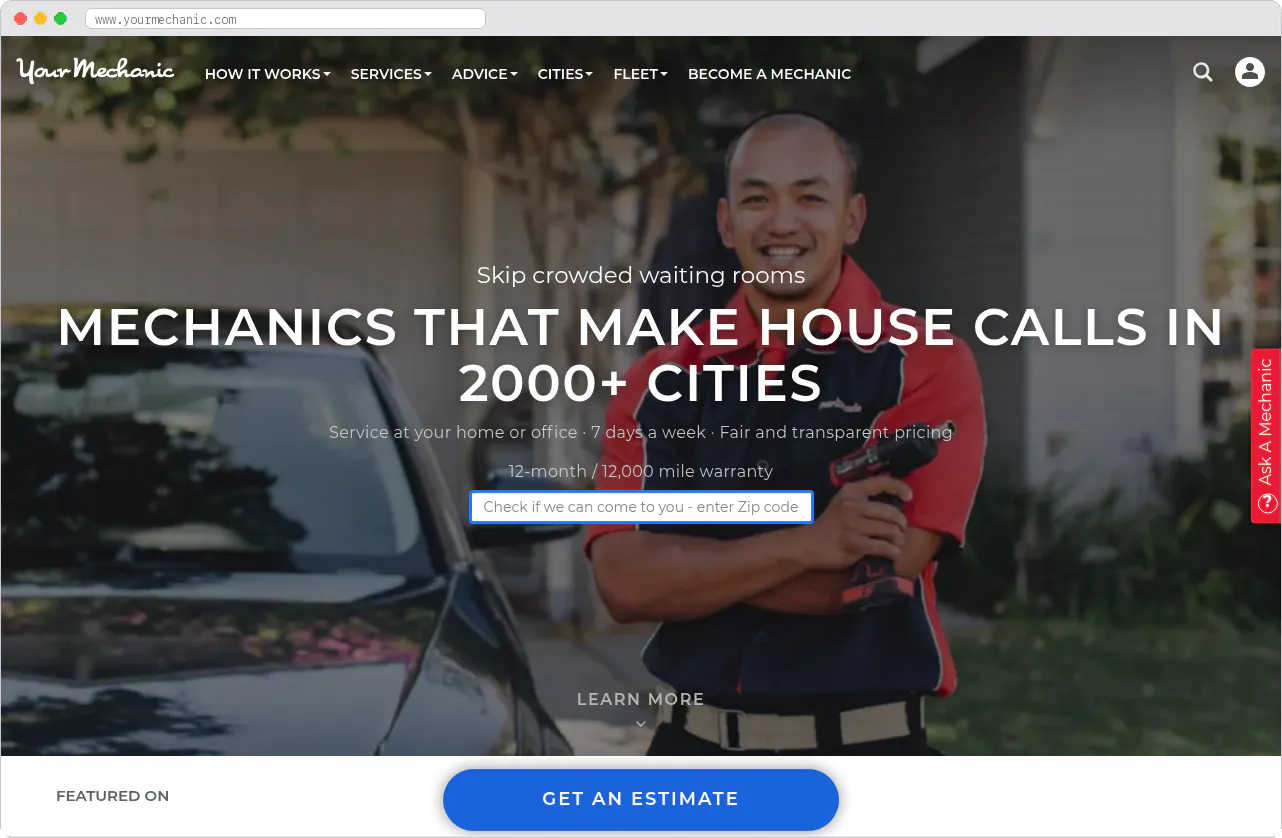
How does YourMechanic work?
YourMechanic operates as a location-based service marketplace connecting car owners with mobile automotive technicians. The platform follows a three-sided model involving customers, mechanics, and YourMechanic itself as the facilitating marketplace.
For customers, the process begins with entering their vehicle information and selecting from a comprehensive menu of services ranging from basic oil changes to complex engine repairs. The platform's diagnostic tool asks specific questions about symptoms or issues to help identify the right service. Customers receive instant quotes that break down parts and labor costs, then choose their preferred appointment time and location. On service day, the assigned mechanic arrives with professional tools and equipment to perform the work on-site.
Mechanics on YourMechanic operate as independent contractors who can set their own schedules and choose which jobs to accept. The platform requires mechanics to have ASE certification, undergo background checks, and maintain commercial insurance. They use their own vehicles and tools but can order parts through YourMechanic's supply chain or purchase them independently. After completing a job, mechanics upload photos and service details to maintain transparency with customers.
YourMechanic itself handles customer acquisition, scheduling, payment processing, quality assurance, and dispute resolution. The company maintains a customer service team that can troubleshoot issues, reschedule appointments, or handle warranty claims. This centralized support system allows mechanics to focus on the technical work while YourMechanic manages the business operations.
YourMechanic's business model and revenue
YourMechanic generates revenue primarily through a commission-based model similar to other successful service marketplaces. When customers book a service, they pay YourMechanic the full quoted amount upfront. YourMechanic then pays the mechanic a predetermined rate for their labor while keeping the difference as their commission.
The company's pricing strategy involves setting standardized rates for common services across different markets, though prices may vary based on local labor costs and market conditions. For parts, YourMechanic either supplies them directly at a markup or allows mechanics to source parts independently, depending on the service type and availability.
This model offers several advantages over traditional approaches. YourMechanic can guarantee pricing consistency and handle all payment processing, reducing friction for both sides of the marketplace. Customers receive warranty protection on both parts and labor through YourMechanic rather than relying on individual mechanic policies. The commission structure also aligns incentives. YourMechanic succeeds when more services are completed successfully.
The company has also expanded beyond basic repairs into fleet services for businesses and partnerships with insurance companies for claim-related work. These B2B revenue streams provide higher-value transactions and more predictable volume than individual consumer bookings.
Essential features for a YourMechanic-like marketplace
Building a successful mobile automotive service marketplace requires specific functionality that differs significantly from product-based marketplaces or even other service platforms. The unique requirements stem from the technical nature of automotive work, liability concerns, and the need to coordinate physical service delivery.
Detailed vehicle information systems form the foundation of any automotive service platform. Customers must provide their vehicle's year, make, model, engine type, and mileage to receive accurate service quotes and ensure mechanics arrive with the right parts and tools. This requires comprehensive vehicle databases that can handle thousands of car configurations and their specific service requirements. The system needs to validate vehicle information and flag potential compatibility issues before booking confirmation.
Service catalogs for automotive platforms must be far more sophisticated than typical service marketplaces. Each service needs detailed descriptions, estimated completion times, required tools and workspace, and specific qualifications needed. Some services can only be performed with specialized equipment or in particular environments. For example, transmission work might require a lift, while brake bleeding needs specific tools that not all mobile mechanics carry. The platform must clearly communicate these requirements and limitations to avoid booking incompatible services.
Dynamic pricing engines become essential when dealing with automotive services because costs vary significantly based on vehicle type, service complexity, and local market conditions. A brake pad replacement on a luxury vehicle costs substantially more than the same service on an economy car due to parts pricing and labor complexity. The system needs to calculate accurate quotes that account for these variables while remaining competitive with local shop rates.
Mechanic qualification and verification systems require more rigorous standards than most service platforms. Automotive work involves significant safety and liability concerns, so mechanics need professional certifications, insurance coverage, and background checks. The platform should track and display mechanic credentials, specializations, and customer feedback to help customers make informed choices. Some services may require specific certifications that not all mechanics possess.
Real-time communication tools become crucial during service delivery because automotive work often reveals additional issues or complications. Customers need immediate notification if mechanics discover problems requiring additional work or parts. The platform should support photo sharing so mechanics can document issues and get customer approval for expanded services. This transparency helps build trust and reduces disputes over unexpected charges.
Warranty and guarantee management systems must handle the complexity of automotive service warranties, which often involve both parts and labor coverage with different terms. Some parts come with manufacturer warranties while labor warranties are typically provided by the service platform or individual mechanics. The system needs to track warranty status, facilitate claims, and coordinate with parts suppliers or manufacturers when necessary.
Payment processing for automotive services involves more complexity than typical marketplace transactions. Services may require parts procurement before work begins, and final costs might differ from initial quotes if additional issues are discovered. The platform needs to handle deposits, parts charges, additional work approvals, and final payment reconciliation while protecting both customers and mechanics from payment disputes.
Step-by-step guide to building your automotive service marketplace
Developing a successful alternative to YourMechanic requires a systematic approach that balances technical development with market validation and business strategy. The following framework helps founders navigate the complexity of launching a location-based service marketplace in the automotive industry.
1. Research and validate your niche opportunity
Successful automotive service marketplaces often start by identifying underserved segments or geographic areas rather than competing directly with YourMechanic across all services. Consider focusing on specific vehicle types like luxury cars, electric vehicles, or motorcycles where specialized knowledge creates barriers to entry. Geographic focus can also work well, particularly in suburban or rural areas where YourMechanic has limited coverage.
Validate demand by surveying potential customers about their current automotive service experiences and pain points. Identify specific services that are difficult to find locally or situations where mobile service would provide exceptional value. Fleet owners, car dealerships, and ride-share drivers represent potential B2B segments with different needs than individual consumers.
Research the competitive landscape thoroughly, including both direct competitors like Wrench and RepairSmith as well as traditional alternatives like independent shops and dealership service centers. Understand pricing structures, service quality levels, and customer satisfaction issues that create opportunities for improvement or differentiation.
2. Define your service catalog and pricing model
Decide which automotive services you'll offer initially, keeping in mind that mobile mechanics face constraints that traditional shops don't. Services requiring lifts, specialized diagnostic equipment, or hazardous waste disposal may not be suitable for mobile delivery. Focus on high-demand services that can be performed with portable tools in standard parking spaces.
Develop a pricing strategy that accounts for local market conditions, competitor rates, and the value proposition of mobile service. Many customers pay a premium for convenience, but the premium must be justified by genuine benefits. Consider offering package deals for multiple services or subscription plans for regular maintenance to increase customer lifetime value.
Plan your expansion roadmap by identifying which additional services you'll add over time and in what order. This helps ensure your initial technology platform can accommodate future growth without requiring complete rebuilds.
3. Build your minimum viable platform
Your first version should focus on core booking and service delivery functionality rather than advanced features. Customers need to search for services, get accurate quotes, book appointments, and communicate with mechanics. Mechanics need to receive job notifications, access customer information, and report service completion.
Start with a limited geographic area and service menu to simplify operations and concentrate your marketing efforts. YourMechanic began in Silicon Valley before expanding nationally, allowing them to refine their processes in a single market before scaling.
Implement basic trust and safety features from launch, including mechanic background checks, insurance verification, and customer review systems. These elements are table stakes in the automotive service industry where safety concerns are paramount.
4. Recruit and onboard quality mechanics
Finding qualified mechanics willing to work as independent contractors requires targeted outreach and competitive compensation packages. Many experienced mechanics already work for shops or operate their own businesses, so you need to offer compelling benefits to attract them to a new platform.
Develop relationships with automotive training schools, community colleges, and certification programs to identify mechanics seeking flexible work arrangements. Recent graduates may be more willing to try platform work while building their customer base.
Create comprehensive onboarding processes that verify credentials, provide platform training, and set clear expectations for service quality and customer communication. Consistent service delivery across all mechanics is essential for building brand trust.
5. Launch with focused customer acquisition
Start marketing to specific customer segments rather than attempting broad awareness campaigns. Fleet managers, busy professionals, and car enthusiasts represent distinct groups with different motivations and communication preferences. Tailor your messaging and channels accordingly.
Partner with complementary businesses like auto parts stores, car washes, or parking facilities to reach customers when they're already thinking about vehicle maintenance. Cross-promotional opportunities can provide cost-effective customer acquisition in the early stages.
Implement referral programs that reward both customers and mechanics for bringing new users to the platform. Word-of-mouth marketing is particularly powerful in automotive services where trust and recommendations carry significant weight.
6. Optimize operations and expand strategically
Monitor key performance indicators including booking conversion rates, service completion rates, customer satisfaction scores, and mechanic utilization rates. These metrics reveal operational issues that need attention before they impact growth or reputation.
Gradually expand your service area and catalog based on data about demand patterns and mechanic availability. Rapid expansion can strain operations and dilute service quality if not managed carefully.
Develop additional revenue streams such as parts sales, extended warranties, or fleet services that use your existing customer relationships and operational capabilities.
YourMechanic competitors and alternatives
Understanding the competitive landscape helps founders identify positioning opportunities and learn from both successful and failed approaches in the mobile automotive service market.
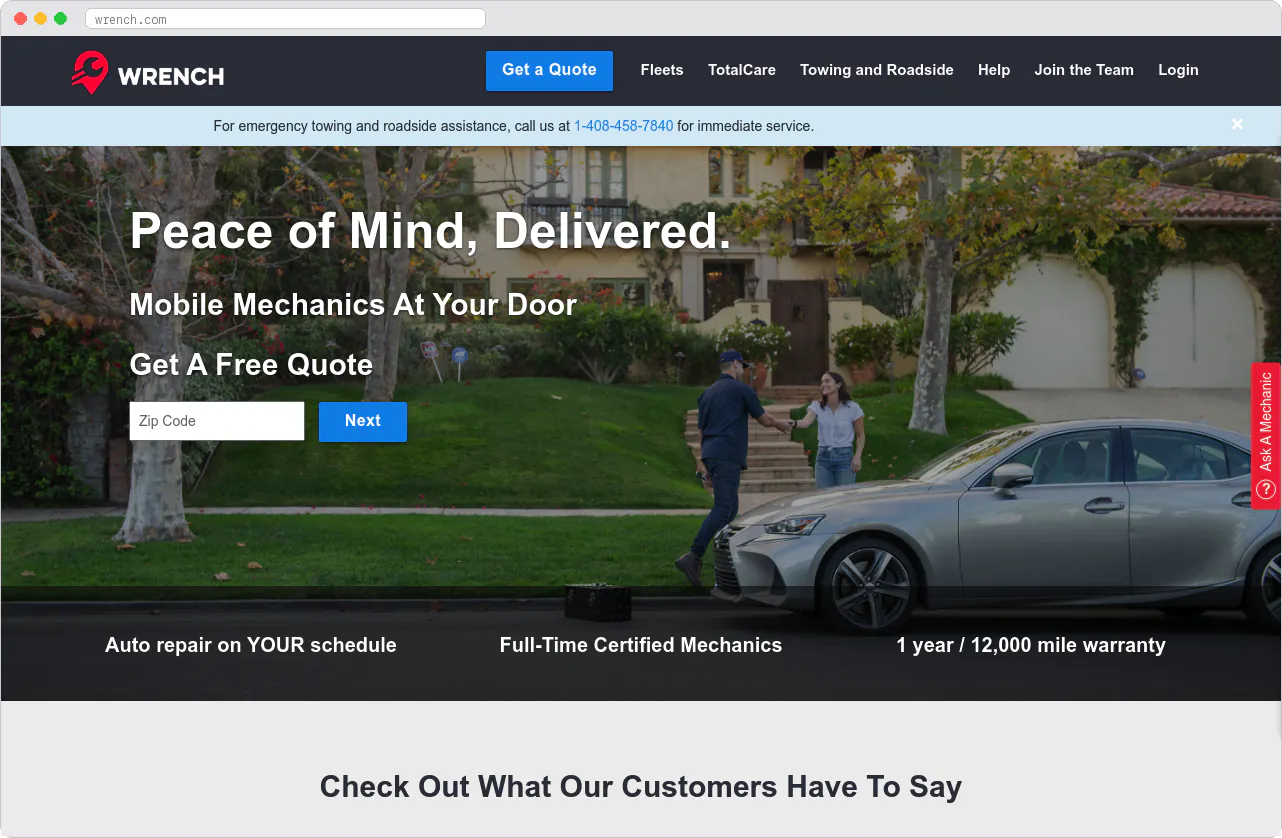
Wrench operates as YourMechanic's most direct competitor, offering mobile mechanic services in major metropolitan areas across the United States. The platform differentiates itself through a focus on premium service quality and customer experience, often charging higher prices than YourMechanic but emphasizing white-glove treatment and guaranteed satisfaction. Wrench employs some mechanics as full-time staff rather than using only independent contractors, providing more control over service consistency but higher operational costs. The company has focused on fewer markets than YourMechanic but aims for deeper penetration and higher customer satisfaction in those areas.
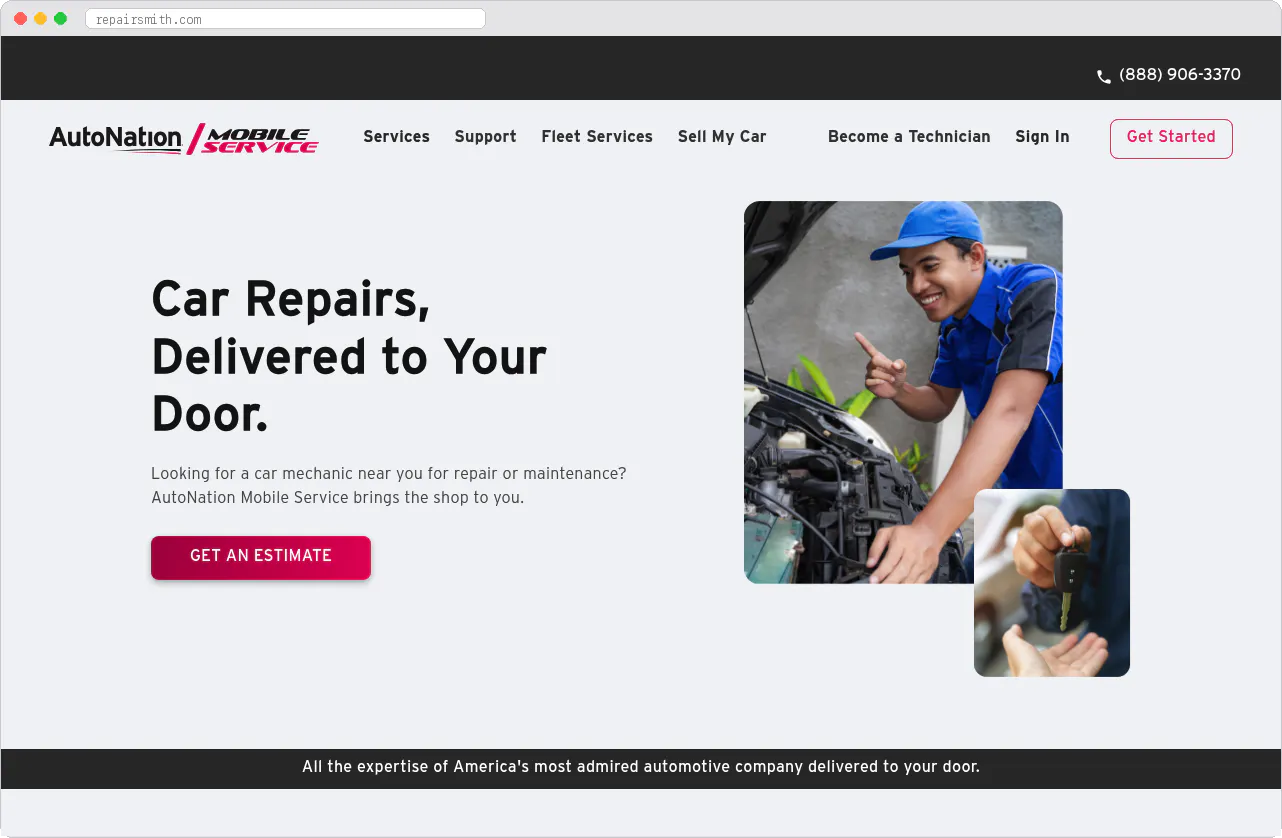
RepairSmith takes a hybrid approach that combines mobile service with traditional shop locations, giving customers flexibility in how they access automotive services. The platform offers both on-site service and drop-off options depending on the complexity of the work required. RepairSmith has positioned itself as a technology-forward alternative with advanced diagnostic tools and digital service records. Their mechanics use branded vehicles and uniforms to create a more professional appearance than typical independent contractors. However, this increased overhead means RepairSmith operates in fewer markets than pure mobile-only competitors.
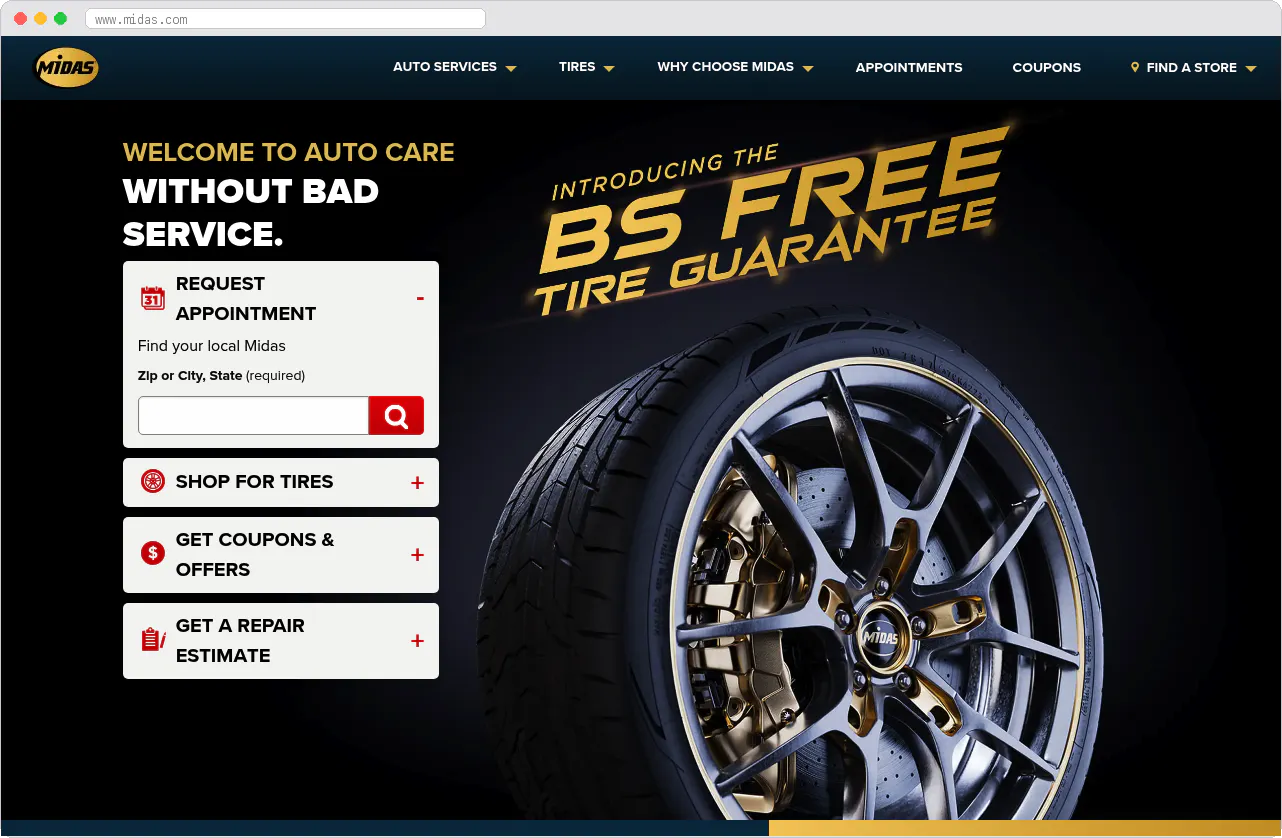
Midas represents the traditional automotive service industry's response to mobile competitors through their "Midas On-Site" program. This established brand uses decades of customer trust and nationwide parts distribution networks while adapting to customer demand for mobile service. Midas can offer competitive pricing due to their scale and existing infrastructure, but they lack the technology-first approach and user experience design of startup competitors. Their mobile service remains a supplement to traditional shop operations rather than a primary focus.
Local independent mobile mechanics continue to represent significant competition, particularly in suburban and rural areas where platform-based services have limited coverage. These mechanics often build strong relationships with customers through personal service and competitive pricing. However, they typically lack the professional branding, insurance guarantees, and consistent availability that platform-based services provide. Some independent mechanics use platforms like YourMechanic to supplement their direct customer base.
Traditional auto repair shops remain the largest competitor by serving customers who prefer familiar, established service locations. Many shops offer pickup and delivery services to compete with mobile alternatives, and their established customer relationships provide strong defense against new entrants. However, shops struggle to match the convenience and transparency that mobile platforms offer, particularly for routine maintenance services.
Technical approaches and cost considerations
Building an automotive service marketplace involves significant technical complexity beyond typical service platforms due to vehicle-specific requirements, safety considerations, and regulatory compliance needs. Founders must balance development costs with time to market while ensuring their platform can handle the unique demands of automotive service delivery.
Custom development provides maximum flexibility but requires substantial investment and technical expertise. Building from scratch typically costs $100,000 to $500,000 for a basic platform with essential features, plus ongoing development and maintenance costs. This approach makes sense for well-funded teams with specific technical requirements that existing solutions cannot accommodate. However, the long development timeline means delayed market entry and learning, which can be fatal in competitive markets.
No-code marketplace builders like Sharetribe offer the fastest path to market while maintaining professional quality and essential features. These platforms include built-in booking systems, payment processing, user management, and mobile optimization that would take months to develop independently. For automotive services specifically, Sharetribe provides location-based search, service catalogs, provider profiles, and commission-based payment processing that handle the core requirements of platforms like YourMechanic. Costs start around $99 per month for basic functionality, scaling to $299-399/month for advanced features and high transaction volumes.
Sharetribe's approach allows founders to launch quickly and test their market hypothesis before investing heavily in custom development. As the business grows and specific customization needs emerge, the platform supports custom coding and third-party integrations without requiring a complete rebuild. This flexibility proves particularly valuable in automotive services where regulatory requirements and operational needs often evolve as the business scales.
Hybrid development approaches combine marketplace builders with custom features for specialized requirements. This strategy works well when core marketplace functionality meets most needs but specific automotive features require custom development. For example, a founder might use Sharetribe for basic operations while building custom integrations for parts suppliers or diagnostic tools. This approach balances speed to market with customization flexibility while controlling costs.
WordPress and plugin combinations represent the most budget-friendly option but with significant limitations for complex marketplaces. While plugins exist for booking systems and payment processing, creating a cohesive user experience requires extensive customization. The resulting platforms often feel disconnected and lack the professional polish necessary for trust-dependent services like automotive repair.
Cost considerations extend beyond initial development to include ongoing operational expenses. Payment processing typically costs 3-5% of transaction volume, customer support systems require monthly subscriptions, and mobile apps add development and maintenance costs. Marketing expenses often exceed technology costs in the early stages as founders work to establish brand awareness and recruit both customers and service providers.
Key success factors and common pitfalls
Successful automotive service marketplaces share common characteristics that distinguish them from failed attempts. Understanding these patterns helps founders prioritize their efforts and avoid costly mistakes.
Trust building represents the most critical success factor because customers are entrusting valuable assets to strangers in vulnerable locations. Comprehensive background checks, insurance verification, and transparent review systems form the foundation, but successful platforms go further by maintaining high service standards and quickly addressing any issues. YourMechanic's success stems partly from their rigorous mechanic screening and quality control processes that maintain customer confidence.
Operational complexity management separates successful platforms from those that struggle with service delivery. Automotive work involves unpredictable complications, parts availability issues, and varying skill requirements that can disrupt smooth operations. Successful platforms develop systems for handling these situations proactively rather than reactively. This includes clear policies for additional work authorization, parts procurement processes, and backup mechanic coverage for no-shows or emergencies.
Geographic expansion strategy requires careful balance between market coverage and service quality. Expanding too quickly dilutes mechanic availability and compromises customer experience, while expanding too slowly allows competitors to capture markets. YourMechanic succeeded by focusing initially on major metropolitan areas with sufficient customer density to support multiple mechanics, then gradually expanding to smaller markets.
Revenue model optimization involves finding the right balance between competitive customer pricing and fair mechanic compensation while generating platform revenue. Platforms that squeeze mechanics too hard lose quality providers, while those that squeeze customers too hard lose bookings to alternatives. Successful platforms typically start with lower margins to build liquidity then gradually optimize pricing as they establish market position.
Common pitfalls include underestimating liability and insurance requirements, inadequate mechanic screening leading to service quality issues, poor handling of customer complaints or disputes, and insufficient working capital to handle payment timing differences between customer payments and mechanic compensation.
Why Sharetribe works for automotive service marketplaces
Sharetribe addresses many of the unique challenges involved in building automotive service platforms while providing the flexibility needed for industry-specific customizations. The platform includes location-based search functionality essential for connecting customers with nearby mechanics, booking systems that handle appointment scheduling across multiple providers, and payment processing that supports commission-based revenue models.
For automotive services specifically, Sharetribe's service catalog features accommodate the complex service descriptions and variable pricing that automotive work requires. The platform supports custom fields for vehicle information, service specifications, and mechanic qualifications that other marketplace builders often lack. Built-in review and rating systems help establish the trust relationships essential for automotive services.
The platform's mobile optimization ensures good user experience across devices, which matters significantly for on-demand services where customers often book while away from computers. Push notifications and messaging systems facilitate the real-time communication needed during service delivery when issues or complications arise.
Sharetribe's extensibility allows automotive-specific features to be added through custom development or third-party integrations. This might include diagnostic tool connections, parts supplier integrations, or specialized warranty management systems. The ability to start with a functional platform and add sophisticated features over time helps manage development costs while ensuring core functionality works properly.
However, Sharetribe may not suit every automotive marketplace concept. Platforms requiring highly specialized workflows, complex diagnostic integrations, or unique payment models might benefit more from custom development despite the higher costs and longer timelines.
Launching and scaling your automotive service marketplace
Successful launch requires coordinated execution across technology, operations, and marketing while maintaining focus on core value proposition validation. Begin with a narrow geographic area and limited service menu to establish operational processes and build initial customer reviews.
Pre-launch preparation involves recruiting sufficient mechanics to handle expected demand while avoiding over-commitment before revenue generation. Five to ten qualified mechanics typically provide adequate coverage for initial operations in a metropolitan area, assuming each can handle 3-5 services per day. Establish parts supply relationships and emergency backup procedures before processing your first customer booking.
Launch execution focuses on generating initial bookings and successful service completions rather than broad marketing campaigns. Target specific customer segments like busy professionals, car enthusiasts, or fleet managers who clearly understand the value proposition. Use targeted digital advertising, local partnerships, and referral incentives to drive initial bookings.
Post-launch optimization involves rapid iteration based on customer feedback and operational experience. Monitor completion rates, customer satisfaction scores, and mechanic feedback to identify improvement opportunities. Common early-stage issues include scheduling conflicts, parts availability problems, and communication breakdowns that can be addressed through process refinements.
Scaling strategy should prioritize service quality maintenance over rapid geographic expansion. Add services and mechanics gradually while monitoring capacity utilization and customer satisfaction. Consider expanding to adjacent markets only after establishing strong operations in your initial area.
Long-term success requires building defensible competitive advantages beyond first-mover benefits. This might include exclusive mechanic relationships, superior technology features, strategic partnerships with parts suppliers, or specialized expertise in particular vehicle types or service categories.
Frequently asked questions
How much does it cost to build a website like YourMechanic?
Development costs range from $99/month for no-code platforms like Sharetribe to $100,000+ for custom development. Most successful platforms start with no-code solutions to validate demand before investing in custom features.
What are the key features needed for an automotive service marketplace?
Essential features include vehicle information systems, service catalogs with dynamic pricing, mechanic verification, booking management, real-time communication, payment processing with commissions, and warranty tracking.
How do automotive service marketplaces make money?
Most use commission-based models, taking 15-30% of each transaction. Additional revenue comes from parts markup, subscription plans, and B2B fleet services.
What makes YourMechanic successful compared to competitors?
YourMechanic succeeded through rigorous mechanic screening, transparent pricing, comprehensive insurance coverage, and focusing on customer convenience. Their early market entry and geographic expansion strategy also provided competitive advantages.
How do I find mechanics for my automotive service platform?
Recruit through automotive schools, certification programs, and existing mechanics seeking flexible work. Offer competitive compensation, flexible scheduling, and access to a customer base they couldn't reach independently.
Can I start an automotive service marketplace without technical skills?
Yes, no-code platforms like Sharetribe allow non-technical founders to launch fully functional automotive service marketplaces. You can add custom features later as your business grows and generates revenue for development.
Start your 14-day free trial
Create a marketplace today!
- Launch quickly, without coding
- Extend infinitely
- Scale to any size
No credit card required