How to build a website like Treatwell
Treatwell transformed beauty booking by matching customers with salons and spas across Europe. Learn how their marketplace model works and get a actionable plan to building your own beauty services platform.
Published: Feb 22, 2026
Last updated: Mar 19, 2026
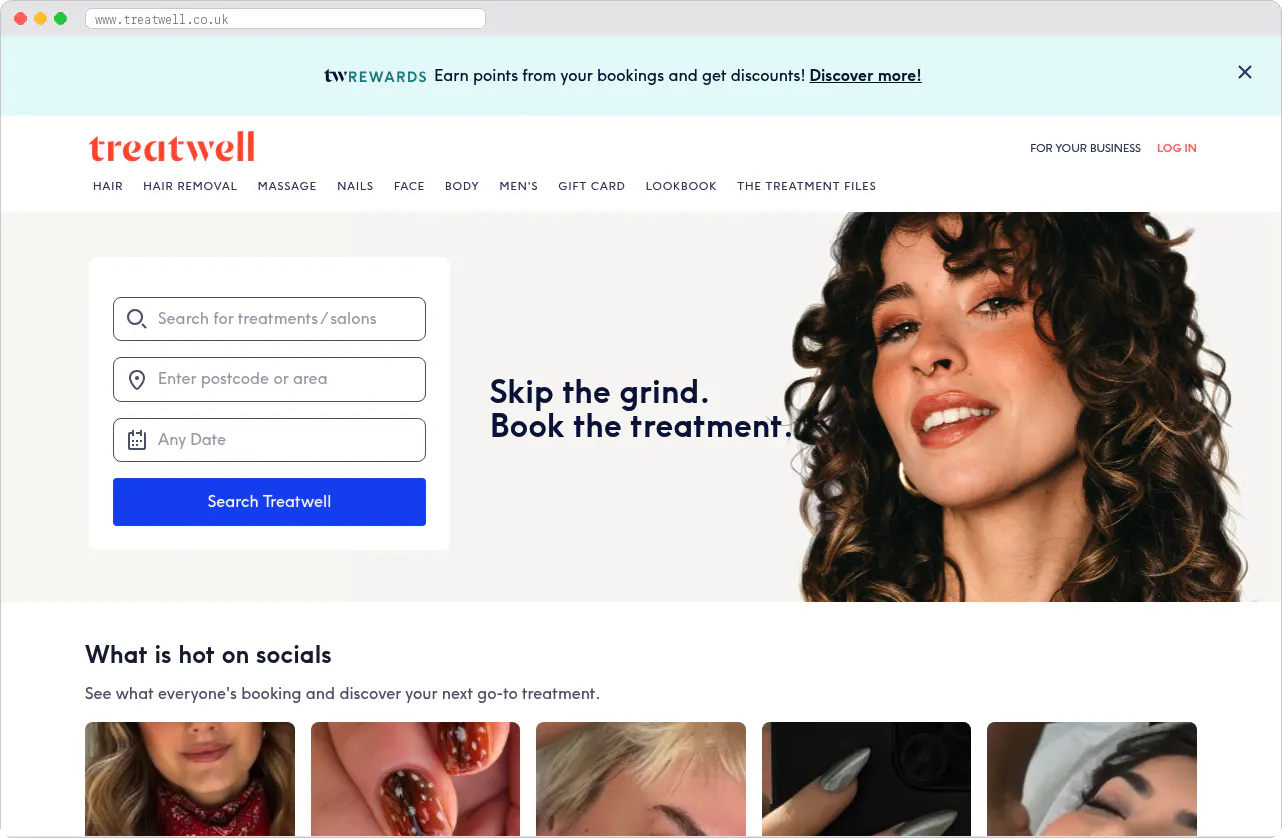
How does Treatwell work?
Treatwell operates as a two-sided marketplace that pairs beauty and wellness service providers with customers seeking appointments. Founded in 2008 by Lopo Champalimaud in London, the platform has grown to become Europe's largest beauty booking marketplace, operating across 13 countries including the UK, Germany, France, Italy, and Spain.
The marketplace model centers on solving a fundamental problem in the beauty industry: the friction between customers wanting to book appointments and salons struggling with booking management and customer acquisition.
Customer journey on Treatwell:
Customers begin by searching for services in their location using filters for treatment type (haircuts, massages, manicures), price range, availability, and ratings. The search results display nearby salons with real-time availability, pricing, and customer reviews. Users can book directly through the platform, receive instant confirmation, and pay either online or at the venue depending on the salon's preferences.
The booking process includes automatic email and SMS confirmations, calendar integration, and reminder notifications to reduce no-shows. Customers can also reschedule or cancel appointments through their account, following each salon's specific policy.
Provider journey on Treatwell:
Salons and spas join Treatwell by creating detailed business profiles that include photos, service menus with descriptions and pricing, staff information, and operating hours. They integrate their existing booking systems or use Treatwell's calendar management tools to display real-time availability.
When customers book appointments, providers receive immediate notifications and can manage their schedule through Treatwell's dashboard or mobile app. The platform handles customer communications, payment processing for prepaid bookings, and review management.
Transaction flow and value creation:
Treatwell creates value for both sides by reducing friction in the booking process. For customers, it eliminates phone calls during business hours and provides transparent pricing and reviews. For providers, it offers a steady stream of new customers, automated booking management, and marketing exposure without upfront costs.
The platform processes millions of bookings annually, with customers able to discover services they might never have found otherwise, while salons fill appointment slots that would otherwise remain empty.
How does Treatwell make money?
Treatwell employs a commission-based revenue model, taking a percentage of each completed booking made through the platform. This aligns the company's success with the success of its partner salons, as Treatwell only makes money when businesses receive paying customers.
Commission structure:
Treatwell typically charges salons a commission rate between 10-20% of the service value, though exact percentages vary by market and service type. The commission is only charged on completed appointments, not on bookings that result in no-shows or cancellations.
For online prepaid bookings, Treatwell collects payment from customers and remits the net amount (minus commission) to salons. For pay-at-venue bookings, salons pay Treatwell the commission fee after the service is completed.
Additional revenue streams:
Beyond transaction commissions, Treatwell generates revenue through several channels:
- Premium listing fees: Salons can pay for enhanced visibility in search results, featured placement, or promoted listings
- Software subscriptions: Some salons pay monthly fees for access to advanced booking management tools and analytics
- Marketing services: Treatwell offers additional marketing and promotional services to help salons attract more customers
- Partnership integrations: Revenue sharing with complementary service providers like POS systems or marketing tools
Scale and financial performance:
While Treatwell doesn't publish detailed financial figures, industry estimates suggest the company processes hundreds of millions of euros in gross merchandise value annually across its European markets. The platform has facilitated millions of bookings since its founding and works with more than 40,000 partner venues.
The commission model has proven sustainable because it creates aligned incentives: Treatwell invests in customer acquisition and platform improvements knowing that successful bookings directly translate to revenue.
What makes Treatwell successful?
Treatwell's market-leading position stems from several strategic advantages that create strong network effects and barriers to entry.
First-mover advantage and market focus:
Treatwell entered the European beauty booking market early, before many competitors recognized the opportunity. By focusing specifically on beauty and wellness services rather than trying to be a general booking platform, they developed deep expertise in this vertical's unique needs.
The beauty industry has specific requirements like detailed service descriptions, treatment duration management, stylist preferences, and visual portfolio showcasing. Treatwell built features specifically for these needs, making their platform more valuable than generic booking systems.
Network effects and liquidity:
As more salons joined Treatwell, the platform became more attractive to customers due to greater selection and availability. More customers, in turn, attracted more salons seeking access to this demand. This created a virtuous cycle that competitors struggle to replicate.
The network effects are particularly strong in beauty services because customers often book multiple different treatments (hair, nails, massage) and prefer platforms with detailed local coverage.
Geographic market-by-market expansion:
Rather than launching globally at once, Treatwell expanded methodically across European markets. They achieved strong market penetration in each country before moving to the next, building local partnerships and adapting to regional preferences.
This approach allowed them to achieve meaningful liquidity in each market rather than spreading resources too thin across many locations where they couldn't achieve critical mass.
Technology investment and user experience:
Treatwell invested heavily in mobile-first design, recognizing that beauty bookings often happen spontaneously when customers are out and about. Their iOS and Android apps consistently rank highly in app store reviews for usability.
The platform's integration capabilities with existing salon management software reduced barriers to adoption, as salons didn't need to abandon their current systems to join Treatwell.
Trust and quality control:
Treatwell implemented quality controls including verified customer reviews, salon verification processes, and customer service support for booking issues. This trust infrastructure became more important as the platform scaled, helping maintain service quality despite rapid growth.
Key features of a Treatwell-like marketplace
Building a successful beauty services marketplace requires specific functionality tailored to the unique characteristics of appointment-based businesses.
Core booking and scheduling features:
- Real-time availability management: Service providers need calendar systems that sync with their existing booking tools and display accurate availability to prevent double-bookings
- Service catalog with detailed descriptions: Unlike product marketplaces, service marketplaces need rich descriptions of treatments, duration, pricing tiers, and prerequisite information
- Staff and resource scheduling: Many beauty services require specific staff members or equipment, necessitating complex scheduling logic beyond simple time slots
- Automated confirmations and reminders: Reducing no-shows is critical for service providers, requiring SMS and email automation with customizable timing
- Flexible cancellation policies: Different providers have varying cancellation windows and fee structures that the platform must accommodate
Location-based discovery:
- Geographic search with radius filtering: Users need to find services within traveling distance, with options to expand search radius if initial results are limited
- Map-based browsing: Visual representation of nearby salons with key information displayed on map pins
- Neighborhood and landmark search: Many users search by familiar area names rather than specific addresses
- Travel time integration: Showing estimated travel time from user's location or specified address
Provider management tools:
- Business profile management: Complete salon information including photos, staff bios, service menus, policies, and operating hours
- Calendar integration: Two-way sync with popular salon management systems to prevent scheduling conflicts
- Customer communication tools: Messaging systems for pre-appointment consultations or clarifications
- Analytics and reporting: Revenue tracking, customer acquisition metrics, and performance insights
- Pricing and promotion management: Tools for special offers, package deals, and dynamic pricing
Customer experience features:
- Detailed filtering options: Search by treatment type, price range, provider rating, availability, special offers, and accessibility features
- Review and rating system: Verified customer feedback with photos and detailed service descriptions
- Favorite providers and rebooking: Easy access to preferred salons and stylists with simplified rebooking flows
- Payment flexibility: Options for online payment, pay-at-venue, or split payment for group bookings
- Wishlist and comparison tools: Saving potential appointments and comparing different providers
Trust and safety infrastructure:
- Provider verification: Business license verification, insurance confirmation, and quality audits
- Secure payment processing: PCI-compliant payment handling with fraud detection
- Dispute resolution: Clear processes for handling booking issues, service complaints, or payment disputes
- Insurance integration: Liability coverage for bookings made through the platform
Competitors and alternatives to Treatwell
The beauty and wellness booking space includes several established players, each with different approaches to the market.
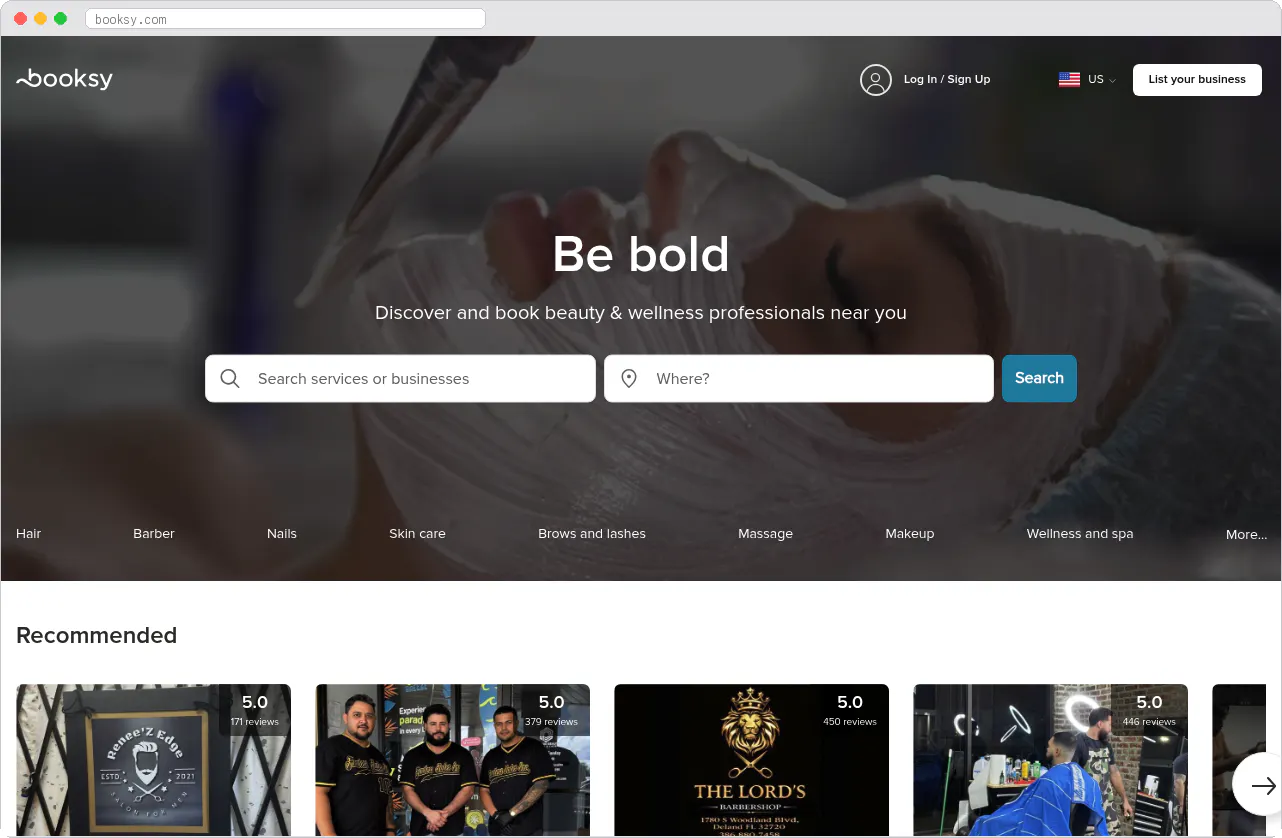
Booksy takes a more global approach than Treatwell, operating in the US, UK, and Poland with plans for further expansion. Founded in 2015 in Poland, Booksy focuses heavily on mobile-first experiences and offers both consumer booking and full salon management software.
Unlike Treatwell's commission-only model, Booksy offers subscription plans for salons alongside commission fees, giving providers more predictable monthly costs. Their software includes more advanced features like inventory management and detailed analytics, positioning them as a more thorough business management solution rather than just a booking platform.
Booksy's strength lies in their integrated approach, salons get both customer acquisition and business management tools in one package. However, their later entry into established markets like the UK means they're competing against Treatwell's already-established network effects.
Fresha (formerly Shedul)
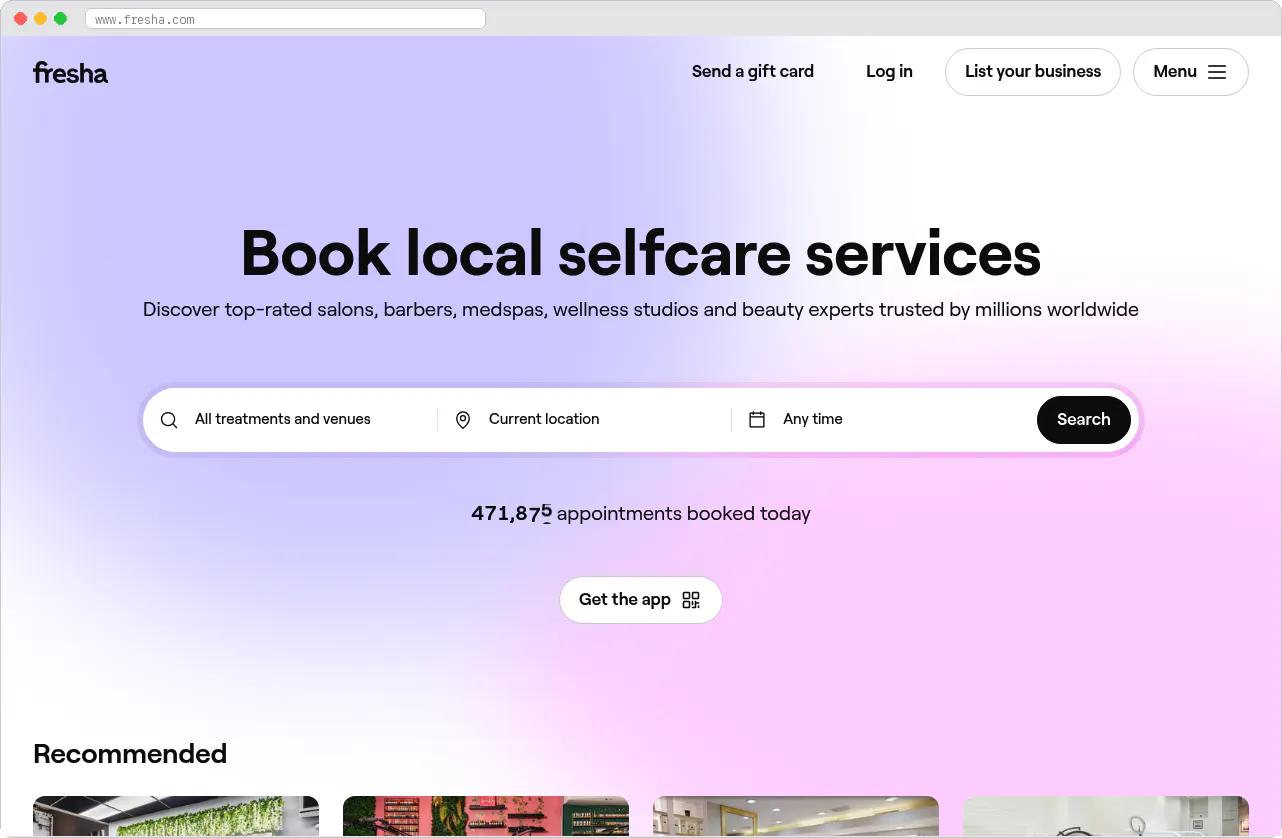
Fresha positions itself as a detailed salon management platform that includes a consumer booking marketplace as one component. Founded in 2015, they offer completely free salon management software and make money through payment processing fees and premium features.
This freemium model creates a different dynamic than Treatwell's commission approach. Salons can use Fresha's software without paying commissions on direct bookings, only paying processing fees similar to any payment provider. Fresha then drives additional customers through their marketplace component.
The advantage for salons is lower overall costs, especially for businesses with strong direct booking volumes. However, Fresha's marketplace discovery features and customer base are generally smaller than Treatwell's in most European markets.
Vagaro
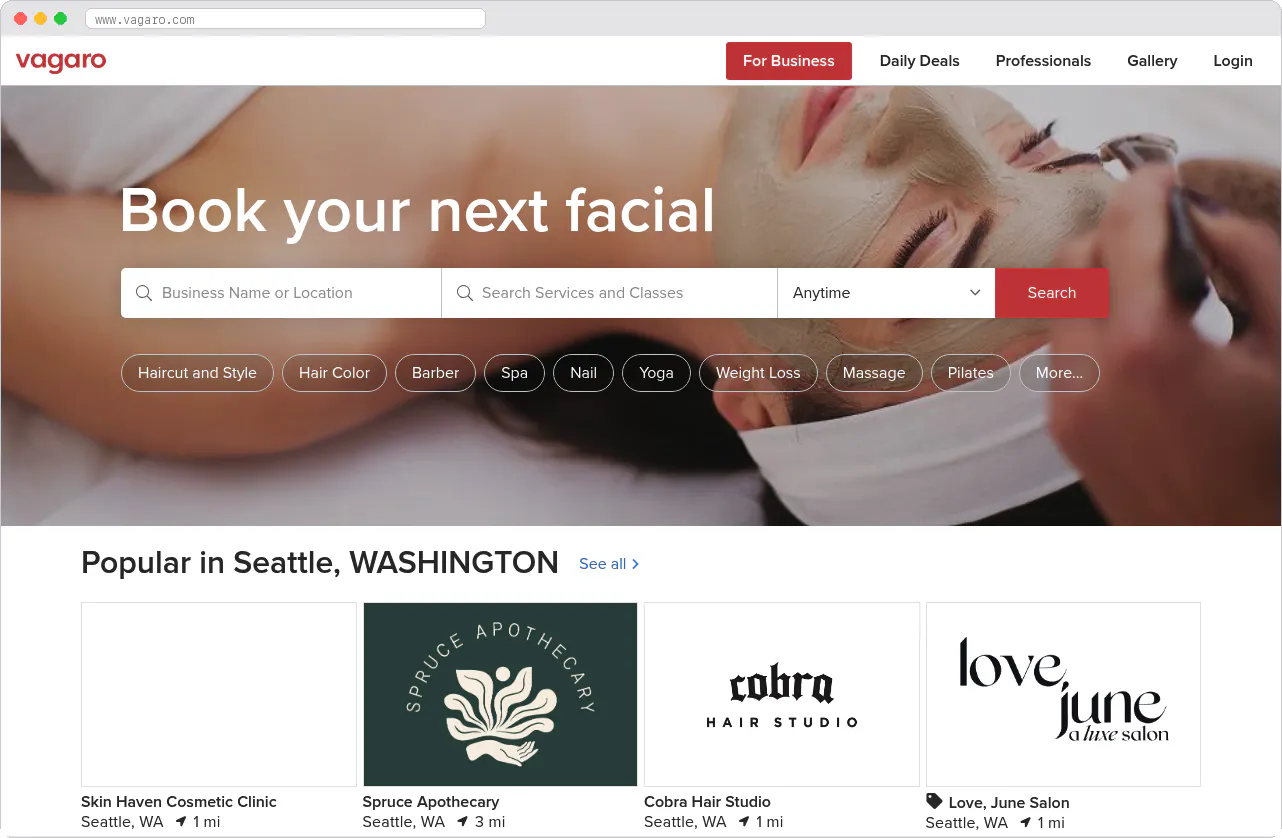
Vagaro operates primarily in the US market and combines appointment booking with point-of-sale systems, inventory management, and marketing tools. Their business model relies heavily on monthly subscription fees rather than per-transaction commissions.
Vagaro's approach appeals to larger salons and spas that need full business management solutions. Their consumer marketplace is secondary to their salon software business, which creates a different customer acquisition and retention dynamic than pure marketplace plays like Treatwell.
StyleSeat
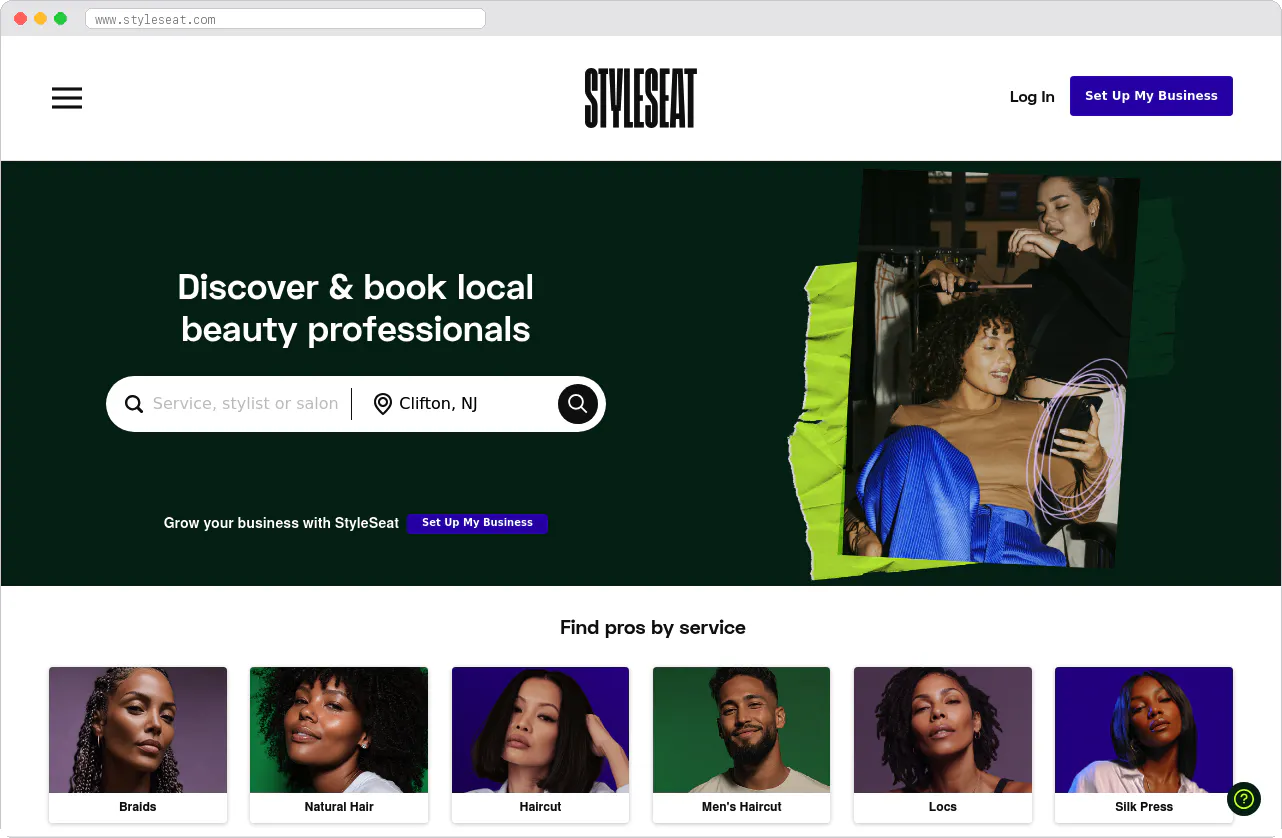
StyleSeat focuses specifically on individual beauty professionals rather than salons, creating a platform for freelance stylists, nail technicians, and other independent service providers. This model works particularly well in markets like the US where independent beauty professionals are common.
Their approach differs meaningfully from Treatwell's salon-focused model. StyleSeat provides tools for independent professionals to build their client base and manage their business, while Treatwell primarily serves established salon businesses looking for additional customer acquisition.
Planity
Planity operates primarily in France and has expanded into other European markets. They use a similar business model to Treatwell but with stronger focus on mobile-first experiences and social features like allowing users to share appointments and reviews on social media.
Planity's differentiation comes through community features and integration with social media platforms, appealing to younger demographics who value social sharing and discovery through peer recommendations.
How to build a marketplace like Treatwell
Creating a successful beauty services marketplace requires careful planning, strategic execution, and deep understanding of both customer and provider needs.
Step 1: Define your niche and geographic focus
While Treatwell covers all beauty services across multiple countries, successful new entrants typically start with a specific focus. Consider targeting:
- Specific service categories (hair only, spa services, nails)
- Particular provider types (independent professionals, luxury salons, chain locations)
- Geographic regions (single city, specific country, underserved areas)
- Customer segments (budget-conscious, luxury-seeking, specific demographics)
This focused approach allows you to build deep expertise and achieve meaningful market penetration before expanding.
Step 2: Research and validate your market
Understanding your target market's specific needs prevents costly mistakes during development:
- Survey potential customers about their current booking methods, pain points, and feature preferences
- Interview salon owners about their customer acquisition challenges, booking management needs, and technology comfort levels
- Analyze competitors' strengths and weaknesses through user reviews and direct platform testing
- Research local regulations around online booking, payment processing, and service provider requirements
Step 3: Choose your business model and pricing strategy
While commission-based models like Treatwell's are common, consider alternatives based on your market:
- Pure commission (10-20% of booking value)
- Subscription plus lower commission (monthly fee plus 5-10% commission)
- Freemium with premium features (free basic tools, paid advanced features)
- Lead generation fees (fixed fee per qualified booking regardless of value)
- Hybrid models combining multiple revenue streams
Your choice affects both your development priorities and go-to-market strategy. Commission models require strong payment processing but lower barriers to provider adoption. Subscription models need stronger value propositions but provide more predictable revenue.
Step 4: Plan your minimum viable platform (MVP)
Prioritize must-have features for launch while avoiding over-engineering:
Must-have MVP features:
- Basic provider profiles with services and availability
- Customer booking flow with confirmation
- Simple payment processing (even manual initially)
- Basic search and filtering
- Essential provider dashboard
Phase 2 additions:
- Advanced search and filtering
- Review and rating systems
- Mobile applications
- Provider analytics and reporting
- Marketing and promotional tools
Later-stage features:
- Complex scheduling logic
- Integration with existing salon software
- Advanced customer features
- Multi-language and multi-currency support
Step 5: Solve the chicken-and-egg problem
Marketplaces face the fundamental challenge of needing both providers and customers to create value. Successful strategies include:
Provider-first approach:
- Offer valuable tools even without customer traffic (scheduling software, basic website)
- Target providers who already have demand but poor online presence
- Provide manual booking management initially while building customer base
Geographic concentration:
- Focus on single neighborhoods or cities to achieve critical mass
- Partner with local business associations or trade groups
- use local events and networking opportunities
Seed content and listings:
- Manually curate high-quality initial provider listings
- Focus on providers likely to attract customers quickly
- Ensure good geographic coverage in your initial target area
Step 6: Build trust and quality control systems
Trust is essential in service marketplaces where customers commit to appointments with unfamiliar providers:
- Implement provider verification processes (business licenses, insurance, references)
- Create clear quality standards and enforcement mechanisms
- Develop dispute resolution processes for booking and service issues
- Build reliable customer review systems with fraud prevention
- Provide responsive customer service for booking problems
Step 7: Focus on mobile experience
Beauty service bookings often happen spontaneously on mobile devices. Ensure your platform works excellently on smartphones from day one, with fast loading times, intuitive navigation, and easy booking flows.
Step 8: Plan for scaling and expansion
Successful marketplace expansion requires systematic approaches:
- Document what works in your initial market for replication
- Build scalable onboarding processes for new providers
- Develop market entry strategies for new geographic areas
- Create operational processes that can handle increased transaction volumes
- Plan technical architecture that scales with user growth
Common pitfalls to avoid:
- Expanding geographically before achieving strong market penetration
- Over-building features before validating core marketplace mechanics
- Neglecting provider needs in favor of customer-facing features
- Underestimating the complexity of payment processing and regulatory compliance
- Failing to maintain service quality as the platform scales
Cost and development considerations
Building a beauty services marketplace involves notable upfront investment and ongoing operational costs. Understanding realistic budget ranges helps with planning and fundraising.
Custom development approach:
Building from scratch provides maximum flexibility but requires substantial investment:
Development costs:
- MVP development: $75,000-$150,000 (6-12 months)
- Full-featured platform: $200,000-$500,000 (12-18 months)
- Mobile applications: $50,000-$100,000 additional
- Payment processing integration: $25,000-$50,000
Ongoing technical costs:
- Hosting and infrastructure: $500-$5,000+ monthly depending on scale
- Payment processing fees: 2.9% + $0.30 per transaction typical
- Third-party integrations: $100-$1,000+ monthly
- Security and compliance: $200-$2,000+ monthly
- Maintenance and updates: $5,000-$20,000+ monthly
No-code marketplace builders:
No-code marketplace platforms bring costs down to $99-399 per month in subscription fees, with no large upfront investment needed. However, customization options may be limited, and transaction fees can become expensive at scale.
Hybrid development approach:
Many successful marketplaces use hybrid approaches, starting with no-code tools for validation and gradually adding custom development:
Phase 1 (validation): No-code marketplace platform ($99-399/month, roughly $2,000-5,000 first year)
Phase 2 (growth): Custom development of key features while maintaining core platform ($25,000-$75,000)
Phase 3 (scale): Full custom platform with advanced features ($100,000-$300,000)
This approach balances speed to market with long-term flexibility and cost control.
Hidden costs to budget for:
- Legal and compliance: $10,000-$50,000 for terms of service, privacy policies, and regulatory compliance
- Customer acquisition: $20-$100+ per customer depending on market and competition
- Provider acquisition: Often requires manual outreach and relationship building
- Customer service: Important for handling booking issues and disputes
- Marketing and branding: $10,000-$100,000+ depending on market competition
- Insurance and liability coverage: $2,000-$10,000+ annually
Revenue timeline expectations:
Most marketplaces take 6-18 months to generate meaningful revenue and 2-3 years to achieve profitability. Budget for extended periods of customer and provider acquisition before reaching sustainable unit economics.
Funding considerations:
Marketplace businesses often require external funding due to the time needed to achieve profitability and the upfront investment in both technology and customer acquisition. Typical funding rounds:
- Pre-seed: $50,000-$250,000 for MVP development and initial validation
- Seed: $500,000-$2,000,000 for market expansion and team building
- Series A: $2,000,000-$10,000,000 for multi-market expansion
Investors typically look for evidence of strong unit economics, growing transaction volumes, and clear paths to market leadership before investing in marketplace businesses.
Frequently asked questions
What is Treatwell's business model and how do they make money?
Treatwell uses a commission-based model, taking 10-20% of each completed booking made through their platform. They only charge when appointments are completed, aligning their success with salon success. Additional revenue comes from premium listings and software subscriptions.
How much does it cost to build a Treatwell alternative?
Custom development of a platform this complex typically costs $150,000-500,000+ for the initial build, with $10,000-50,000 monthly in ongoing development. A no-code marketplace platform ($99-399/month) can replicate the core marketplace mechanics at a fraction of the cost, though highly specialized features like real-time tracking or complex algorithms may need custom work later.
What are the main competitors to Treatwell in the beauty booking market?
Key competitors include Booksy (global, mobile-first), Fresha (free salon software with marketplace), Vagaro (US-focused with POS integration), StyleSeat (independent professionals), and Planity (France-focused with social features).
What features are essential for a beauty services marketplace like Treatwell?
Important features include real-time booking calendars, location-based search, service catalogs with pricing, provider profiles, payment processing, review systems, and mobile optimization. Advanced features like staff scheduling and salon software integration can be added later.
How long does it take to build and launch a marketplace like Treatwell?
Timeline depends on approach: no-code platforms can launch in 2-6 weeks, while custom development typically takes 6-12 months for an MVP and 12-18 months for a full platform. Most marketplaces take 6-18 months to generate meaningful revenue.
What makes Treatwell successful compared to other booking platforms?
Treatwell's success stems from first-mover advantage in Europe, focus specifically on beauty services, strong network effects, methodical geographic expansion, mobile-first design, and complete trust systems including verified reviews and quality control.
Start your 14-day free trial
Create a marketplace today!
- Launch quickly, without coding
- Extend infinitely
- Scale to any size
No credit card required