How to build a website like Carousell (2026 guide)
Learn how Carousell became Southeast Asia's largest C2C marketplace and how to build a similar platform. Covers business model, key features, development approaches, and costs with actionable steps for founders.
Published: Feb 26, 2026
Last updated: Sep 18, 2026
Carousell turned a university project into Southeast Asia's largest consumer-to-consumer marketplace by making it as easy to sell a used phone as it is to post a photo on social media. The company built its business on a simple insight: people have things they no longer want, and a mobile-first, chat-driven experience removes the friction that keeps those items in a closet instead of in someone else's hands. This guide breaks down how Carousell works, why it succeeded, who competes with it today, and how you can build a similar marketplace for your own niche or region without needing a decade of engineering work to get started.
What is Carousell and how does it work?
Carousell is a consumer-to-consumer marketplace where individual users list, browse, and negotiate the sale of secondhand goods, primarily through a mobile app. Founded in Singapore in 2012, the company expanded across Malaysia, Indonesia, the Philippines, Hong Kong, and Taiwan, then merged in 2020 with 701Search (owner of Vietnam's Cho Tot and Indonesia's OLX) to form Carousell Group. The combined group reports serving tens of millions of monthly active users across its family of apps, and Carousell was valued at over $1.1 billion in its 2021 funding round (Carousell Press).
The transaction flow is deliberately lightweight. A seller photographs an item, writes a short description, sets a price, and publishes the listing in under a minute. Buyers browse by category or search, then message the seller directly through in-app chat to negotiate price, ask questions, and arrange a meetup or shipment. Most transactions, especially in Southeast Asia, still settle in cash at a local meetup, though the platform has steadily pushed users toward in-app payment options. What separates Carousell from a plain classifieds site is the layer built around that simple flow: user profiles with ratings, verification badges, in-app chat that keeps communication on-platform, and community features that turn casual sellers into repeat users.
How Carousell makes money
Carousell built a multi-stream revenue model on top of a free core product, which let it grow its user base before introducing paid features. Carousell Bump is the primary monetization lever: sellers pay a small fee, typically between $0.50 and $2.00 depending on the market, to push a listing back to the top of search results and category pages. Because bumping is optional and cheap, most active sellers pay for it repeatedly rather than treating it as a one-time cost, which makes it a durable revenue source.
CarouBiz, Carousell's subscription tier for sellers, bundles Bulk Bump discounts, business analytics, a bigger listing quota, and quick-reply tools for power sellers, with pricing that varies by plan and market (Carousell College). Advertising sold to brands wanting access to Carousell's user base adds a third stream, and Carousell Pay, the platform's in-app payment option, charges a transaction fee (commonly cited around 2 to 3% of sale value) when buyers and sellers choose to pay digitally instead of in cash. Vertical-specific monetization, particularly Carousell Motors for vehicle listings, charges dealers listing and placement fees and typically generates higher revenue per user because of higher average transaction values in that category. Together, these streams let Carousell monetize serious sellers and businesses while keeping the core experience free for casual users, a structure that's common across successful C2C marketplaces.
What makes Carousell work: key features
Frictionless mobile listing creation. Carousell's entire growth strategy depends on making selling feel as easy as posting to a social feed. A seller can photograph an item, apply a suggested category, and publish in under a minute, which matters enormously for impulse sellers who decide to list something the moment they notice it in a drawer.
In-app chat built for negotiation. Rather than routing users to email or SMS, Carousell keeps the entire back-and-forth, price haggling, condition questions, meetup logistics, inside the app. This keeps users engaged with the platform, gives the company visibility into transaction intent, and creates a paper trail useful for dispute resolution.
Bidirectional ratings and verification badges. Both buyers and sellers rate each other after a transaction, which discourages bad behavior on both sides rather than only holding sellers accountable. Verification badges (phone number, government ID, social account linking) give buyers a quick trust signal before they commit to meeting a stranger.
Bump and promoted listings as a growth-compatible monetization layer. Because Bump is cheap and optional, it monetizes power sellers without putting a paywall in front of casual users, which protects the network effects that make the marketplace valuable in the first place.
Category-specific verticals. Carousell Motors and Carousell Property adapted the core listing and chat model to higher-value categories with different buyer expectations, showing how a generalist C2C marketplace can extend into adjacent categories without rebuilding its foundation.
Community and interest groups. Features that let users join groups around vintage fashion, collectibles, or gaming gear add a social layer on top of pure transactions, which increases the time users spend in the app and the likelihood they return even when not actively buying or selling.
Deep, market-by-market localization. Rather than launching everywhere at once, Carousell expanded city by city and country by country, adapting to local payment habits, delivery norms, and negotiation culture in each new market instead of forcing a single global experience.
The competitive landscape
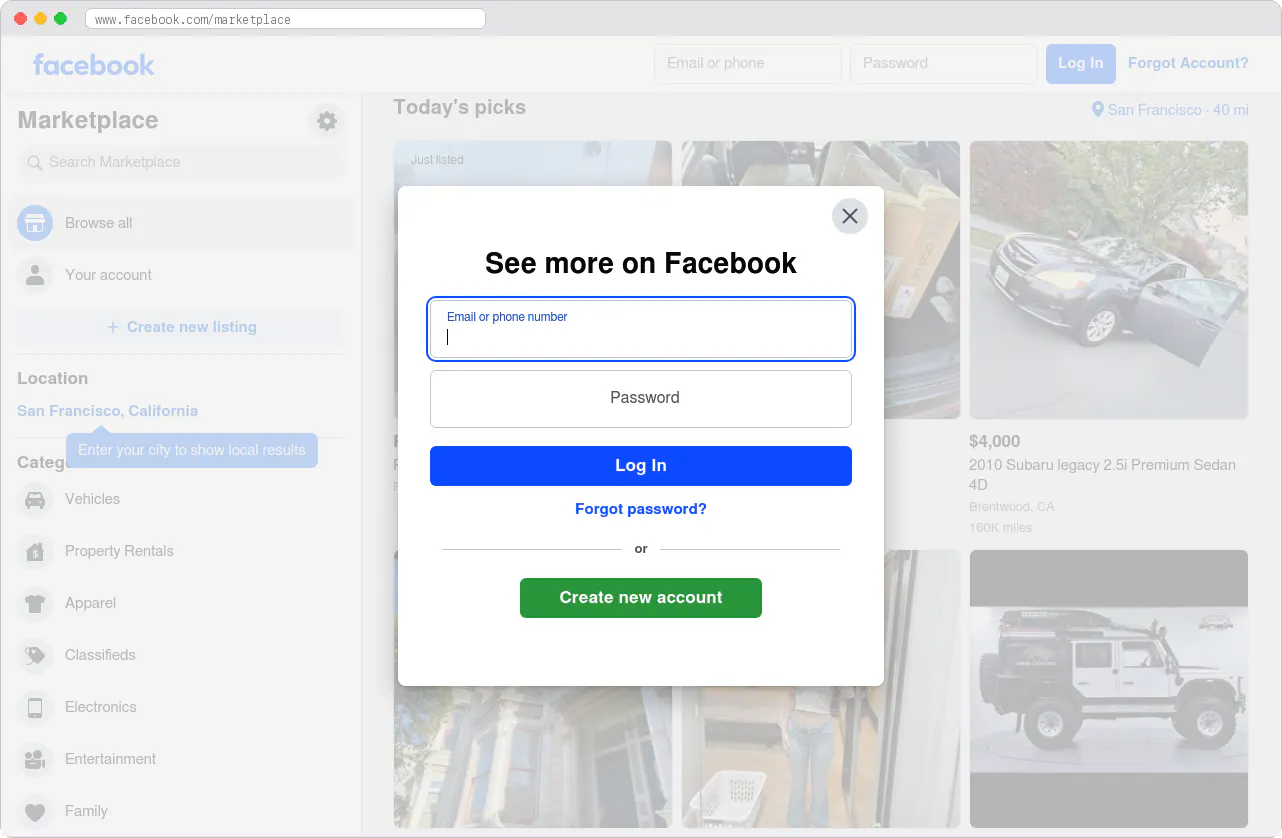
Facebook Marketplace is Carousell's most significant competitor because it starts with a built-in social graph and enormous scale. Buyers often feel safer transacting with someone who shares mutual friends, and there's zero cost to list. Its weaknesses are real, though: search and filtering are limited, the interface is cluttered by Facebook's broader feed and ad experience, and there's no dedicated seller tooling, verification tier, or analytics. That gap creates room for platforms that offer a purpose-built, distraction-free selling experience with better discovery.
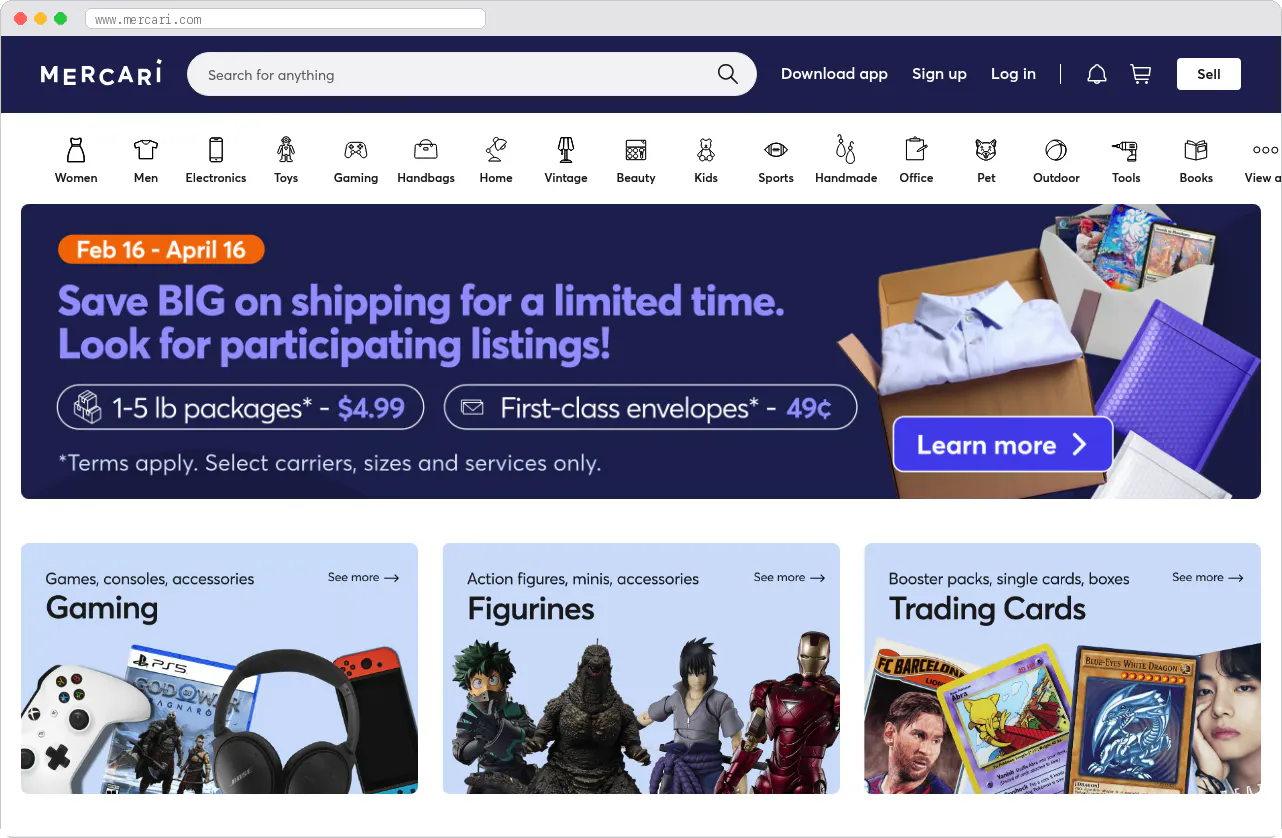
Mercari built its business around shipping-based transactions rather than local meetups, which works well in markets like Japan and the US where postal infrastructure is reliable and fast. Its authentication services for luxury goods add trust for high-value categories. The tradeoff is that shipping adds cost and friction, and it removes the impulse-selling behavior (see it, snap it, list it, meet up nearby) that drives engagement on meetup-first platforms like Carousell. A new entrant focused on local, cash-based transactions in dense urban markets can out-compete a shipping-first model on speed and simplicity.
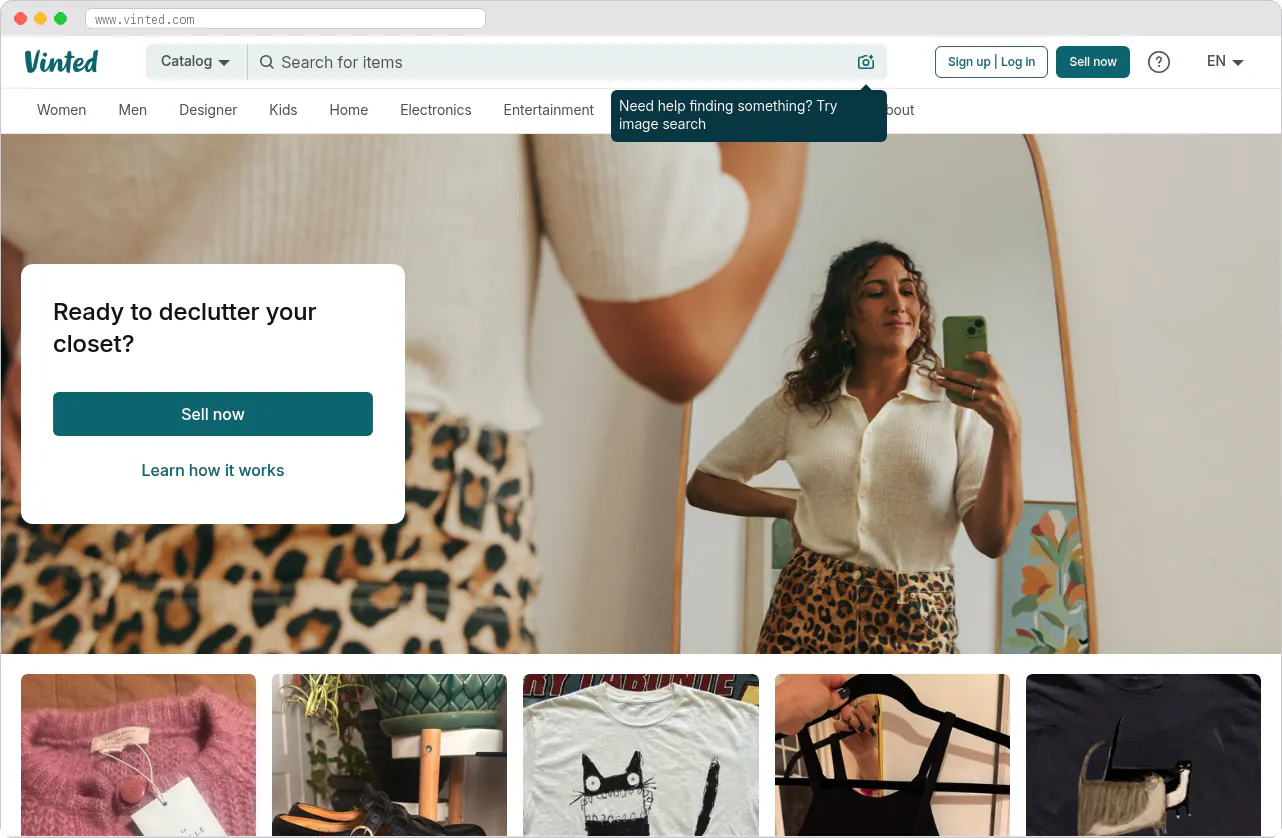
Vinted narrows the category to fashion and lifestyle items only, and that focus lets it build features generalist marketplaces can't easily justify: size-based search, style filters, seller protection with integrated shipping labels. The narrower focus caps the addressable market but produces a much denser, more liquid network within that vertical. This is a strong argument for category-specific C2C marketplaces over broad generalist ones when you're starting from zero.
OfferUp competed head-to-head with Carousell in several Asian markets before consolidating its focus on North America. Its TruYou identity verification and in-person safety features (public meetup spots, background checks for certain transactions) pushed the category toward more professionalized trust infrastructure. It never matched Carousell's network density in Southeast Asia, largely because it entered markets where Carousell had already built deep local liquidity. The lesson: network effects in C2C marketplaces are geographically local, and a first mover with density in a specific city or country is very hard to dislodge without a genuinely differentiated angle.
OLX operates in emerging markets globally with a lighter-weight classifieds model requiring minimal verification or platform engagement. That approach is fast to scale but tends to produce lower transaction completion rates and more fraud complaints than platforms with stronger trust layers. The opening this creates is straightforward: a new entrant that keeps OLX's low listing friction but adds Carousell-style ratings, chat, and verification can win users who've been burned by classifieds-style anonymity.
How to build a marketplace like Carousell
1. Define your niche within Carousell's category
You are not building a generalist, all-categories clone of a billion-dollar platform on day one. Pick a specific wedge: a single city, a single category (electronics, kids' items, vintage collectibles, tools), or a specific community (university students, a regional expat population). Carousell itself started as a single-category, single-city app before expanding, and the same discipline applies to any new entrant today.
2. Validate demand before you build
Talk to people who currently sell items through Facebook groups, WhatsApp chats, or local classifieds, and find out where those channels fail them. Test your value proposition with a landing page, a manually-run Facebook or Telegram group, or a simple spreadsheet-based matching service before writing a line of product code. If you can't get 50 people to list items manually, a polished app won't fix the underlying demand problem.
3. Choose your development approach
Vibe coding from scratch. AI tools like Cursor, Lovable, and Bolt can produce a working Carousell-style prototype in a matter of hours: listing pages, a chat window, a search bar. That's genuinely useful for pressure-testing an idea or showing early users a clickable concept. It's not sufficient for launching a platform that handles real payments between strangers who've never met. A documented Sharetribe experiment spent 60+ hours vibe coding a marketplace to demo quality, and the result still contained a checkout exploit that would have let any user manipulate transaction prices through a direct API call. Getting from demo to production-safe requires real understanding of payment flows, authentication, and data validation, work that AI prompting alone doesn't replace. Treat vibe coding as a prototyping tool, not a launch strategy.
Custom development from scratch. Hiring developers, who will themselves lean heavily on AI tools, gives you full control over every feature. For a Carousell-type marketplace, the relevant complexity tier is production-grade: you need user ratings, identity verification, in-app payments, and dispute handling from fairly early on, which puts a real build in the $80,000–$200,000 range over 16–28 weeks (Codica, RaftLabs). A bare-bones MVP without those trust features could land in the $30,000–$80,000, 8–20-week Tier 1 range, but you'd be rebuilding trust infrastructure soon after launch anyway. The low end of either range assumes offshore development teams billing $15–40/hour; US or Western European teams push costs toward the top. This path makes sense once you have specific requirements, a proprietary matching algorithm, a unique vertical workflow, that no existing platform can support.
Building on a marketplace operating system like Sharetribe. With this approach you start at roughly 90% done on the standard marketplace foundation: payments, user accounts, listing management, messaging, transaction flows, fraud detection, and compliance are already built. Your time and budget go toward the features that make your C2C marketplace distinct. Three paths within this approach:
- No-code builder. Configure listing types, categories, location-based search, and a chat-enabled transaction flow directly from the Sharetribe Console, no code required. This gets a founder to a live, mobile-friendly C2C marketplace in weeks rather than months.
- AI-assisted development. Connect Claude Code, Cursor, or Codex to Sharetribe's open APIs and open-source template to build Carousell-specific features like a bump-style listing boost, bidirectional rating displays, or category-specific listing fields. Because Sharetribe already handles payment infrastructure and transaction integrity, AI-assisted work on top of it carries far less risk than building the whole payment layer from scratch.
- Custom code. Build directly on the developer platform for deeper integrations (shipping API connections, custom verification workflows), or hire a specialist from Sharetribe's Expert Marketplace.
Most founders start with the no-code builder, launch, and then add AI-assisted or custom features once real user behavior tells them what's actually missing.
4. Solve the cold start problem
Every C2C marketplace faces the same chicken-and-egg problem: buyers won't show up without listings, and sellers won't list without buyers. Carousell solved this in its early days by focusing obsessively on a single city (Singapore), recruiting sellers manually through university networks and local classifieds groups, and encouraging low-friction, low-stakes first listings (used textbooks, dorm furniture) that got people comfortable with the platform before higher-value categories followed.
You can apply the same logic at a smaller scale. Focus geographically: launch in one city or campus rather than an entire country, so early buyers actually find relevant, nearby listings. Seed supply manually: personally recruit the first 100 to 200 sellers from Facebook groups, subreddits, or local community boards related to your niche, and list a batch of items yourself if needed to avoid an empty marketplace on day one. Consider manual matching in the earliest weeks, personally connecting a buyer who asks about a category with a seller you know has relevant inventory, even if that means acting as a human matchmaker before your search and discovery features are polished. Launching small and tight, one city, one category, beats launching broad and thin, because a marketplace with ten good listings in one neighborhood is more useful to a nearby buyer than a thousand scattered listings across a whole country.
5. Design trust and safety mechanisms early
Decide upfront what verification you'll require (phone number at minimum, ID verification for higher-value categories), what your dispute policy looks like, and how you'll moderate prohibited items. Retrofitting trust and safety after a fraud incident is far more expensive, in both money and reputation, than building it into your launch.
6. Build your launch supply and seed the community
Recruit early sellers through targeted outreach rather than broad advertising. Small incentives, free promoted listings, waived fees for the first month, can motivate the first wave of sellers who make your marketplace worth visiting for buyers.
7. Launch and iterate on completion rates
Track not just signups but the percentage of inquiries that turn into completed transactions. Low completion rates usually point to unresponsive sellers, unclear pricing, or friction in arranging meetups or payment, all fixable with reminders, templates, and clearer in-app guidance.
8. Plan your monetization roadmap
Stay free for as long as it takes to build real liquidity, then introduce optional paid features (promoted listings, subscription tools for high-volume sellers) that enhance the experience for your most engaged users rather than gating basic functionality for everyone.
Do you need to build everything Carousell has?
No. Carousell Motors, Carousell Property, in-house authentication services for luxury goods, and a fully custom payments stack were all built over roughly a decade, funded by hundreds of millions of dollars in venture capital. None of that is required to launch a working C2C marketplace today. What's essential at launch is a clean listing flow, reliable search, in-app messaging, basic ratings, and a way to move money safely if you support in-app payment. Everything else, vertical expansion, advanced analytics, machine-learning-based fraud detection, can be added once you have real transaction volume telling you what's worth building.
The instinct to "just vibe-code a clone" is understandable given how capable AI coding tools have become, but it usually leads to wasted effort. Building on a foundation like Sharetribe is faster even with AI tools in the mix, because the payment processing, user account security, and transaction logic are already production-tested. Your AI tokens and developer hours go toward the 10% that makes your marketplace different, a bump-style promotion feature, a category-specific verification flow, a rating display tuned to your niche, rather than toward reinventing checkout security that a vibe-coded prototype has already been shown to get wrong.
Trust and safety for a Carousell-type marketplace
C2C secondhand marketplaces carry specific trust risks that don't apply to platforms selling new goods from vetted businesses. Item authenticity is a real concern, especially in electronics and designer goods categories, where counterfeit or stolen items can slip through. Payment disputes arise when a buyer claims an item doesn't match its description after an in-person meetup or shipped delivery. Physical safety matters too, since many transactions involve strangers meeting in person to exchange cash for goods.
Standard mitigations in this space include phone number verification at signup, optional government ID verification for higher-value transactions, bidirectional ratings that hold both parties accountable, and clear guidance pushing first-time meetups toward public, well-lit locations. Sharetribe provides the transactional backbone out of the box: secure payment processing with Stripe, structured transaction flows that log every step of a sale, user accounts with optional identity verification, and messaging that keeps communication on-platform for dispute reference. What founders need to add on top is category-specific verification logic (e.g., requiring proof of ownership for electronics with serial numbers), clear prohibited-items policies, and a moderation process for flagged listings, since these decisions depend on your specific category and market rather than being generic to all marketplaces.
Running a marketplace like Carousell
Running a live C2C marketplace day to day means monitoring listing quality, responding to user reports, handling the occasional payment dispute, and watching for spam or duplicate accounts. As volume grows, this becomes a real operational function, not something founders can handle in spare hours, but at launch and through early growth, a single founder or small team can manage moderation manually with basic reporting tools.
Carousell today operates with dedicated trust and safety teams, machine learning-based fraud detection, and 24/7 customer support across multiple markets and languages, none of which a new entrant needs on day one. Sharetribe handles the technical infrastructure automatically: hosting, payment processing, uptime, and security patching happen behind the scenes, so your operational focus stays on customer support, moderation policy, and growth rather than server maintenance.
Development costs and timeline
Three realistic scenarios:
Vibe coding from scratch: Free or very cheap to start, and a working Carousell-style prototype, listings, a chat window, a search bar, is buildable in a day or two with tools like Cursor or Bolt. What you won't get is a production-ready platform: secure payment handling, real dispute resolution workflows, fraud detection, and data validation that prevents users from manipulating prices or exploiting API calls all require engineering work that AI prompting doesn't shortcut. The documented Sharetribe experiment mentioned earlier logged over 60 hours to reach demo quality and still turned up a critical checkout exploit. Useful for testing an idea, not a cost-effective path to a live business handling real money.
Custom development from scratch: Cost depends on complexity tier. A Carousell-type marketplace generally lands in the production-grade tier because ratings, identity verification, in-app payments, and dispute handling are core to user trust, not optional extras: expect $80,000–$200,000 over 16–28 weeks (Codica, RaftLabs). A stripped-down MVP without those trust features could fall into the $30,000–$80,000, 8–20-week range, but expect to revisit that investment quickly once real users start transacting. The low end of each range assumes offshore development teams; US or Western European agencies push costs toward the top. Ongoing maintenance typically runs 15–25% of the original build cost per year. This path makes sense once your marketplace needs a feature, a proprietary algorithm, a highly specific vertical workflow, that no existing platform can support out of the box.
Building on Sharetribe: Before you launch, the Sharetribe Build plan costs just $39/month. To open to real users, you need the Live plan, which costs $199/month billed yearly ($259/month billed monthly). Both plans include 1 million usage credits per month. Sharetribe covers the full transactional foundation, payments, accounts, listings, messaging, search, and fraud protections, that a Carousell-type marketplace needs from day one. Most founders reach a live, mobile-friendly MVP in weeks rather than months, and any Carousell-specific features (a bump-style promotion tool, category-specific fields, bidirectional ratings) get added through the no-code builder or scoped AI-assisted development, narrowly, because the hard infrastructure work is already done.
Why Sharetribe for building a marketplace like Carousell
Sharetribe's core transaction engine maps directly onto what makes Carousell's model work: structured listings, in-platform messaging between buyers and sellers, secure payment processing, and user accounts that support ratings and optional identity verification. The no-code builder lets you configure a mobile-friendly, category-based listing flow without a development team, which matches Carousell's own emphasis on frictionless, mobile-first listing creation. Because Sharetribe's architecture exposes open APIs and a customizable data schema, you can extend that foundation with AI-assisted development to add Carousell-specific touches, promoted listings, community groups, or category-specific verification, once you understand what your users actually need, rather than guessing at a full feature set before you've launched.
Frequently asked questions
How does Carousell make money?
Carousell earns revenue through paid listing promotions (Carousell Bump), a subscription tier for power sellers (Carousell Pro), advertising sold to brands, transaction fees through its in-app payment option (Carousell Pay), and vertical-specific fees in categories like vehicles through Carousell Motors. This diversified model lets the company monetize serious sellers and businesses while keeping the core listing experience free for casual users.
How much does it cost to build a marketplace like Carousell?
A production-grade custom build with reviews, verification, and payment handling typically costs $80,000–$200,000 and takes 16–28 weeks (Codica, RaftLabs). Building on Sharetribe costs just $39/month on the Build plan after a 14-day free trial (the Live plan for running your marketplace is $199/month billed yearly) and gets a working MVP live in weeks rather than months, since the payment and transaction infrastructure is already built.
What are the essential features for a C2C marketplace like Carousell?
The essentials are mobile-friendly listing creation, location-based search, in-app messaging, user ratings, and basic verification (at minimum, phone number confirmation). Advanced features like machine learning-based fraud detection, bulk listing tools, and analytics for power sellers matter more once you have real transaction volume, not on day one.
Who are Carousell's biggest competitors?
Facebook Marketplace competes on scale and social trust but has weaker search and no dedicated seller tools. Mercari focuses on shipping-based transactions rather than local meetups, Vinted specializes exclusively in fashion, OfferUp emphasizes in-person safety features in North America, and OLX runs a lighter-weight classifieds model in emerging markets. Each represents a different tradeoff between trust, focus, and ease of listing.
Can I really build a marketplace like Carousell without coding?
Yes, for the core functionality. A no-code marketplace operating system like Sharetribe lets you configure listings, categories, location-based search, messaging, and payments without writing code, which covers most of what a launch-stage C2C marketplace needs. More advanced or highly specific features can be added later through AI-assisted development or custom code as your platform grows.
Is vibe coding a marketplace like Carousell a good idea?
Vibe coding tools can produce an impressive-looking prototype quickly, which is useful for testing an idea with early users. They're not reliable for launching a platform that handles real payments, since a documented Sharetribe experiment found a critical checkout exploit even after 60+ hours of work. Treat it as a proof-of-concept tool, not a path to a production-ready business.
Start your 14-day free trial
Create a marketplace today!
- Launch quickly, without coding
- Extend infinitely
- Scale to any size
No credit card required