How to build a home cleaning marketplace
The home services market reached about $429 billion in 2023, with cleaning services representing the largest segment. Learn how to build a successful home cleaning marketplace with the right features, monetization model, and strategy to connect homeowners with professional cleaners.
Published: Dec 14, 2023
Last updated: Sep 11, 2026
What is a home cleaning marketplace?
A home cleaning marketplace connects homeowners and renters who need cleaning done with independent cleaners or cleaning companies who do the work, with a platform in between that handles discovery, booking, and payment. The marketplace doesn't clean anything itself. It matches demand (customers who want a clean home) with supply (professionals who want jobs) and takes a cut of each transaction for making that match happen reliably.
This differs from a staffing agency or a franchise cleaning company like Merry Maids, where the company employs or licenses the cleaners directly and controls pricing, scheduling, and quality end to end. A marketplace instead lets independent cleaners set their own rates, build their own reputations, and choose their own jobs, while the platform provides the booking infrastructure, payment processing, trust signals, and customer acquisition that an individual cleaner could never build alone.
It also differs from a lead-generation site, where a customer request gets sold to multiple providers who then compete to win the job outside the platform. True marketplaces close the loop: booking, payment, and (often) the relationship all happen inside the product, which is what makes recurring revenue and reliable quality possible.
How the business model works
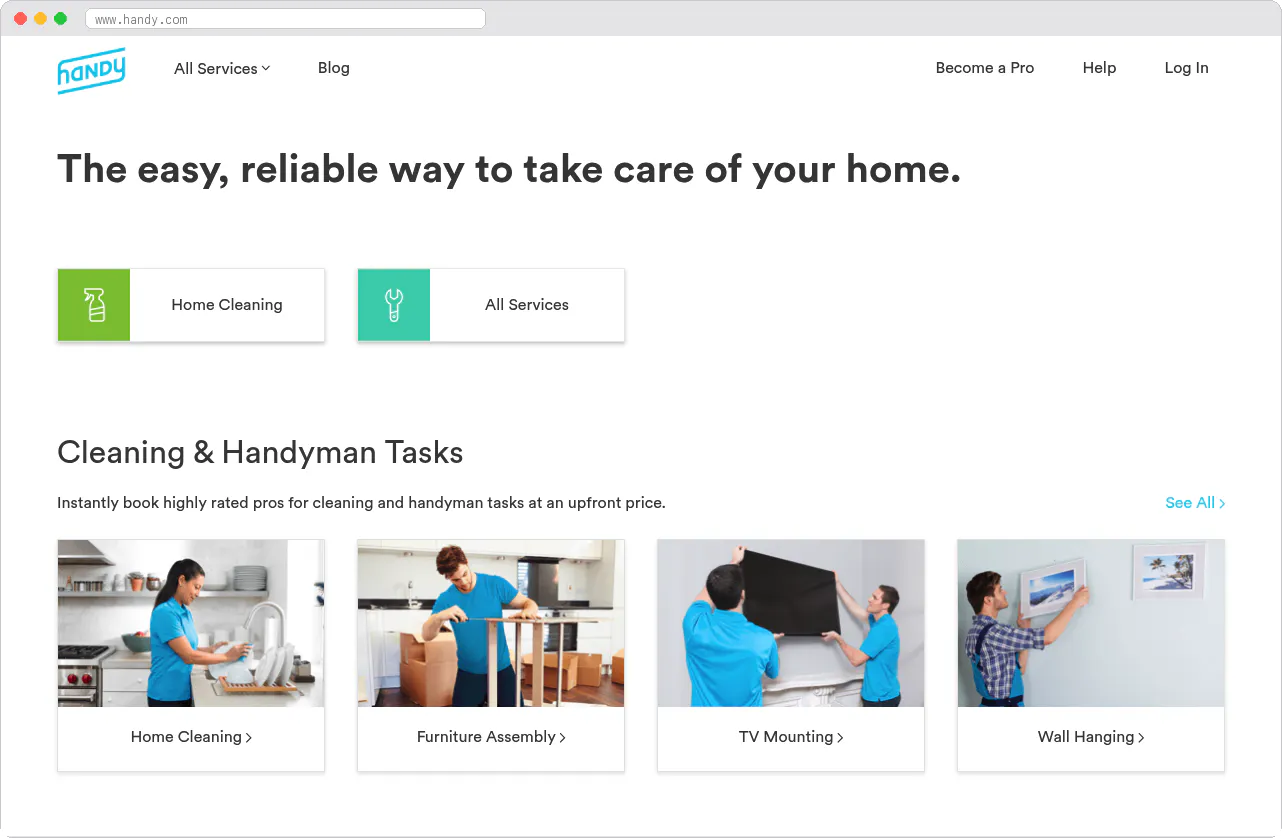
Home cleaning marketplaces make money primarily through commission on completed bookings, charged to one or both sides of the transaction. Handy (now rebranded as Angi Services for Pros) has historically taken a cut from the cleaner's payout that professionals report can exceed 50% of the job total (Indeed reviews), while also charging customers service and trust fees on top of the quoted price. TaskRabbit charges customers a service fee (currently around 15% of the Tasker's rate) plus a separate trust and support fee, while Taskers keep 100% of the hourly rate they set (TaskRabbit Support). Thumbtack works differently: it charges providers per lead or per quote rather than a percentage of the job, which shifts the risk of an unbooked lead onto the professional rather than the platform.
A workable blended take rate for a new cleaning marketplace generally sits between 15% and 25% of transaction value, split between a customer-facing booking fee (5-15%) and a cleaner-facing commission (10-20%). Undercutting this too aggressively to win supply makes the platform unsustainable once payment processing and support costs are accounted for; overcharging pushes your best cleaners to keep their existing direct customers off-platform.
Beyond commission, mature cleaning marketplaces add secondary revenue: subscription tiers for cleaners who want top search placement, background check or insurance verification fees passed through at cost or with a small markup, and premium customer memberships that bundle recurring cleanings at a discount. None of these should be your primary revenue engine at launch. Get commission economics working first.
The competitive landscape
Handy built the largest US home-cleaning-focused marketplace, with a hybrid model that blends marketplace matching with employment-like controls (fixed pricing, mandatory acceptance windows, platform-set schedules in some markets). This gives customers consistency and Handy strong brand recognition, but it has generated persistent complaints from cleaners about low take-home pay after commission and inflexible terms, along with worker classification lawsuits in multiple US states, including a $6 million settlement with California prosecutors in 2023 (Mission Local). The opening this creates is for a platform that treats cleaners as genuine independent businesses, with transparent pricing and no forced acceptance.
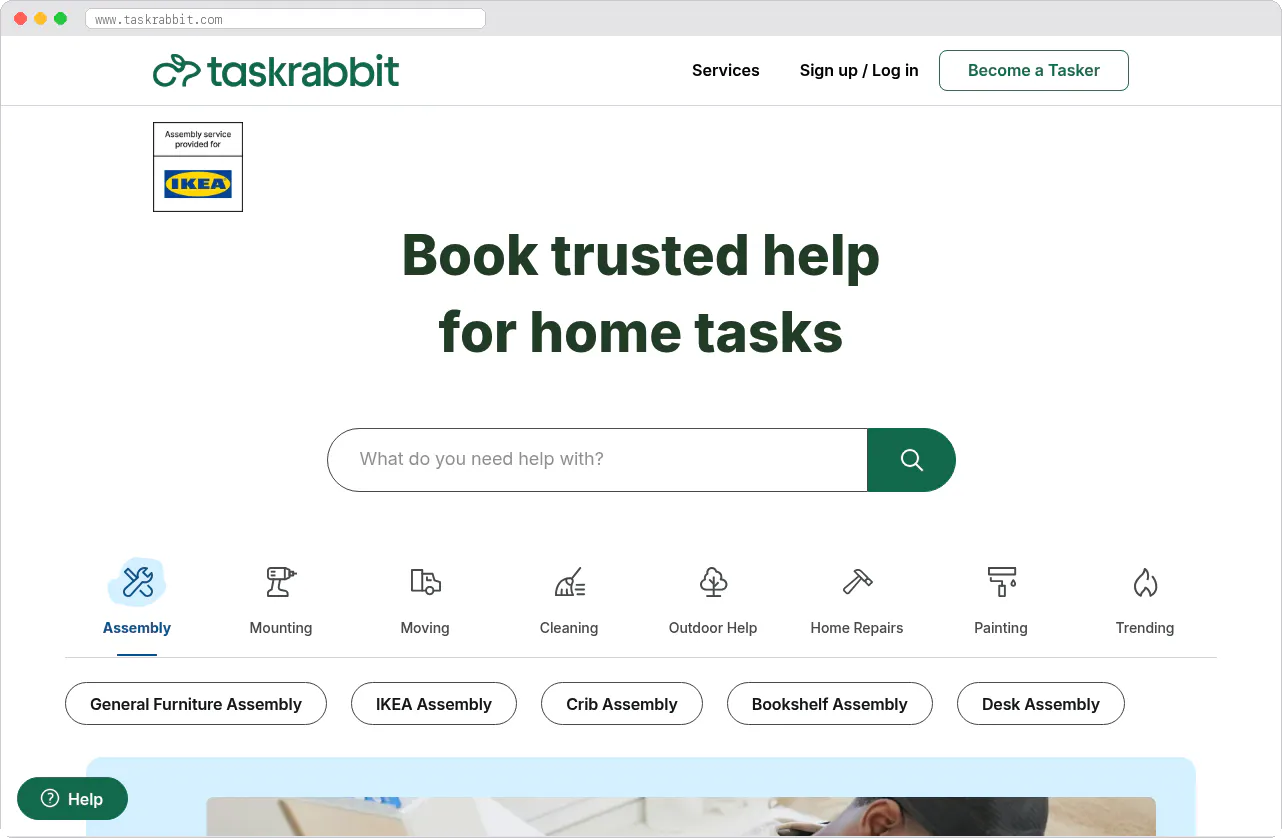
TaskRabbit, owned by IKEA since 2017, treats cleaning as one of many task categories rather than a specialty. Taskers set their own rates and build individual profiles, which cleaners generally prefer to Handy's model. But because the platform is built for one-off tasks like furniture assembly and moving, it lacks recurring-booking management, detailed home-size pricing calculators, and cleaning-specific customization that a dedicated platform needs. A specialist can out-execute TaskRabbit on anything related to repeat scheduling.
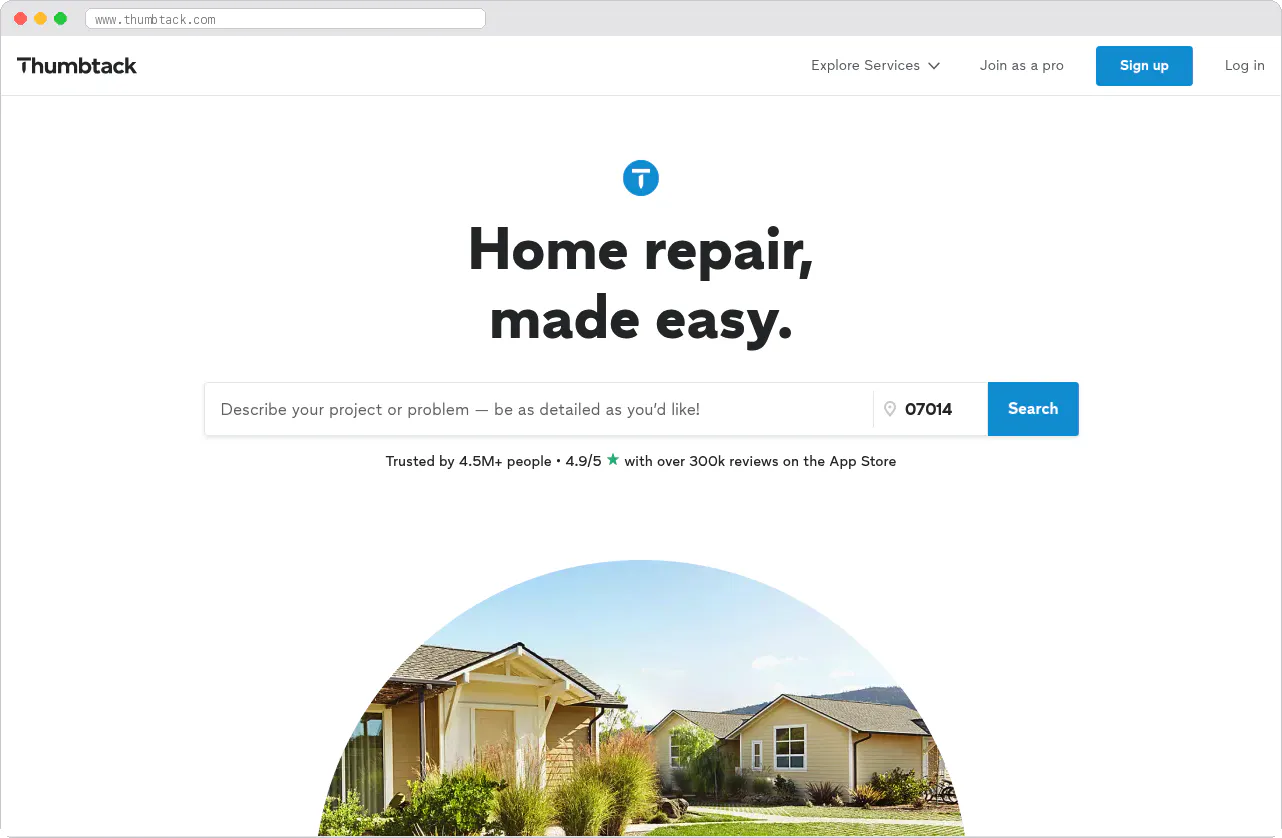
Thumbtack operates as a lead marketplace: customers post a request, providers pay to send quotes, and the transaction itself typically happens off-platform. This works for one-time or complex jobs where comparison shopping makes sense, but it creates real friction for a service like weekly cleaning that benefits from a direct, repeatable booking relationship. Customers who want to "just rebook the same person, same time, every two weeks" find Thumbtack's request-and-quote cycle unnecessarily heavy.
Local and regional players fill gaps the national platforms leave open. Homejoy (closed 2015) and Tidy (ceased operations 2018) both tried and failed to scale cleaning marketplaces nationally, largely on unit economics and supply retention, which is a useful cautionary note for anyone assuming venture-style blitzscaling is the only path. Smaller city-specific platforms like MyClean in New York persist by building denser, more personal cleaner relationships than a national player can sustain.
Traditional franchise cleaning companies (Merry Maids, Molly Maid, The Cleaning Authority) are indirect competitors. They offer consistency and brand trust but charge more, offer less scheduling flexibility, and increasingly bolt on their own booking apps, which blurs the line between direct provider and marketplace without actually opening their supply to independent cleaners.
The pattern across all of these: nobody has built a platform that is simultaneously cleaning-specialized, cleaner-friendly on take rate, and strong on recurring-booking mechanics. That combination is the opening for a new entrant, especially at the city or regional level where dense local supply matters more than national brand.
Essential features for home cleaning marketplaces
Verified cleaner profiles. Trust is the entire product here, since a stranger enters someone's home. Profiles need professional photos, years of experience, specific services offered, and visible badges for background checks, insurance, and identity verification, not just a star rating.
Recurring booking management. Cleaning is one of the few home services where the same customer books the same provider weekly, biweekly, or monthly. Your booking system needs to handle recurring schedules as a first-class object, not a workaround, including easy skip, reschedule, and provider-swap flows when a regular cleaner is unavailable.
Real-time availability and same-day booking. Customers frequently need a cleaner tomorrow, not next week. This requires live calendar sync between what a cleaner marks as available and what customers see, plus a fast-match flow that surfaces the nearest available, highest-rated cleaner for urgent requests.
Instant, itemized pricing. Quotes should be calculable from home size, service type (standard, deep, move-out), and add-ons (inside oven, fridge, garage) without a back-and-forth message thread. Transparent, instant pricing is one of the biggest reasons customers choose a marketplace over calling around for quotes.
Two-way reviews with photo evidence. Cleaning quality is hard to describe in words alone, so before-and-after photo reviews matter more here than in most service categories. Two-way rating also lets cleaners flag difficult customers or unsafe properties, which protects supply.
Escrow-based payment with automatic commission split. Customers pay at booking; funds release to the cleaner after the job is marked complete and (ideally) a short dispute window passes. This protects both sides and removes the awkward cash-or-invoice negotiation that plagues off-platform cleaning arrangements.
In-app messaging with access instructions. Cleaners need building codes, pet warnings, and parking instructions before they arrive, and customers don't want to hand out a personal phone number to do it. Automated arrival notifications and photo-based job documentation both live in this same messaging layer.
Dispute and damage resolution workflow. Property damage claims and "the job wasn't finished" disputes are common enough in cleaning that you need a structured process, not ad hoc email threads, from day one. Clear service guarantees (free re-clean, partial refund) reduce the number of disputes that escalate to a demand for a full refund.
Service-area and geo-search. Cleaners typically only serve a defined radius from where they live or park. Map-based search and service-area filtering keep customers from booking someone who can't actually take the job, which is a common source of cancellations on generalist platforms.
How to build a home cleaning marketplace
1. Define your niche and geography
Decide whether you're building a general residential cleaning marketplace or specializing (eco-friendly products only, luxury/high-end homes, move-in/move-out turnovers, Airbnb turnover cleaning). Specialization gives you a clearer pitch to both sides and an easier initial marketing message. Pick one city or metro area to launch in rather than a country or region; cleaning is hyperlocal, and spreading thin kills liquidity before it starts.
2. Validate demand and supply separately
Talk to homeowners about how they currently find and pay cleaners, what frustrates them (no-shows, inconsistent quality, awkward cash handoffs), and whether they'd try a platform. Separately, talk to independent cleaners and small cleaning companies about how they get customers today and what commission rate they'd actually accept. Many founders discover their assumed price point or commission rate doesn't match what either side will tolerate, and it's far cheaper to learn that before writing a line of code or configuring a platform.
3. Choose your development approach
Vibe coding from scratch. AI tools like Cursor, Lovable, and Bolt can produce a working cleaning-booking prototype quickly, and that's genuinely useful for pressure-testing your concept with a handful of early cleaners or showing investors a clickable demo. For a platform that will hold customer payment information and pay out real money to strangers entering people's homes, it's probably not sufficient on its own. What vibe-coded outputs reliably don't produce is the infrastructure underneath: payment escrow, dispute resolution, fraud detection, and compliance. A documented Sharetribe experiment ran 60+ hours to reach demo quality but revealed a critical checkout exploit that would have allowed price manipulation via a direct API call. Bringing that output to production standard requires significant additional time and a clear understanding of how the pieces of a web application fit together. Treat it as a prototyping tool, not a cost-effective path to launch.
Custom development from scratch. Hiring developers, who will likely lean on AI tools themselves, gives you full control over every workflow. For a home cleaning marketplace, most founders land in the Tier 1 to Tier 2 range: a simple MVP with listings, search, messaging, and basic payments runs $30,000-$80,000 and ships in 8-20 weeks, while a production-grade build that adds identity verification, insurance coordination, escrow, and a proper dispute-resolution flow runs $80,000-$200,000 over 16-28 weeks (Codica, RaftLabs). Background check integration, recurring-booking logic, and damage-claim workflows are what push a cleaning marketplace toward the higher end of that range. The low end of each range assumes offshore teams at $15-40/hr; US or Western European teams push toward the top. This route makes sense if you have a genuinely novel matching model or scheduling logic that no existing platform can support.
Building on a marketplace operating system like Sharetribe. You start at roughly 90% done on the standard marketplace foundation: payments, user accounts, listing management, messaging, transaction flows, fraud detection, and compliance. Your time and budget go toward cleaning-specific features instead of rebuilding plumbing every other marketplace also needs. Three paths within this approach, which most founders combine:
- No-code builder. Configure cleaner listings, service-area search, recurring-booking transaction flows, instant-quote pricing rules, and commission splits directly in the Sharetribe Console, no engineer required. Most founders reach a live, bookable marketplace in one to four weeks.
- AI-assisted development. Connect Claude Code, Cursor, or Codex to Sharetribe's open APIs and open-source template to build cleaning-specific features like a home-size pricing calculator, photo-based before-and-after documentation, or a custom cleaner-matching algorithm. Because Sharetribe already handles payment and compliance infrastructure, AI-assisted development on top of it carries much lower risk than building from scratch.
- Custom code. Build directly on the developer platform for deeper integrations (background check APIs, insurance providers, GPS tracking), or hire from Sharetribe's Expert Marketplace.
Most founders start with the no-code builder, launch, and add AI-assisted or developer-built features as they learn what their specific market actually needs.
4. Solve the cold start problem
A cleaning marketplace with no cleaners is useless to customers, and a cleaning marketplace with no customers is useless to cleaners; you need both sides present at the same time in the same small area for the first booking to happen. The standard fix is supply-first: recruit 10-20 cleaners in a single neighborhood or small city before you spend a dollar on customer marketing, so that the first customer who lands on your site actually finds someone available near them. Reach cleaners through direct outreach at cleaning-supply stores, local Facebook groups, and existing cleaning company owners who might want extra jobs for their team; offer reduced or zero commission for the first cohort in exchange for reviews and calendar data.
A second tactic is manual matching in the earliest days: personally text or call a cleaner to confirm they can take a job a customer just requested, even if the "matching" isn't automated yet. This is slow and doesn't scale, but it lets you launch before your booking algorithm is perfect and teaches you what actually determines a good match. Launching in one zip code with real density beats launching city-wide with thin, unreliable coverage; a customer who can't find anyone available on their first visit rarely comes back to try again.
5. Recruit and onboard cleaners with real verification
Require identity verification, a background check, and proof of insurance before a cleaner goes live, and be upfront about turnaround time so early supply doesn't stall waiting on paperwork. Keep the onboarding flow itself short (profile, photos, availability, rate) since cleaners who already have customers elsewhere have low patience for a lengthy signup process.
6. Launch, measure, and refine pricing
Track completion rate, rebooking rate, and cleaner earnings per hour, not just gross bookings. If cleaners aren't earning enough after commission to stay active, your supply will quietly erode even if customer demand looks healthy. Adjust your commission split and instant-quote pricing based on what actually clears, not what you assumed at launch.
7. Expand to adjacent geography once retention holds
Only move to a second market once your first one shows healthy rebooking rates and cleaner retention over several months. Expand into adjacent neighborhoods or a nearby suburb before jumping to a different metro area entirely, since much of your playbook (recruiting tactics, pricing calibration, support processes) transfers more cleanly to similar markets.
Trust and safety for home cleaning marketplaces
The core risk in home cleaning is physical: a stranger enters someone's home, often while the customer is at work, and has access to belongings and personal space. This makes identity verification and background checks non-negotiable rather than optional trust signals. Property damage claims are the second major risk category; without a clear liability framework and insurance coordination, a single bad incident can generate a public dispute that damages the platform's reputation far beyond the dollar value of the claim.
Standard verification for this niche includes government ID checks, criminal background checks, and proof of general liability insurance (either the cleaner's own policy or platform-provided coverage). Many established platforms also require a phone or video interview before a new cleaner goes live, and some require a supervised or trial first job. Two-way reviews that let cleaners flag unsafe or difficult customers are equally important, since supply-side safety concerns push good cleaners off the platform quietly.
Sharetribe provides the transaction and account infrastructure this depends on out of the box: escrow-style payment holding that releases funds only after job completion, user accounts that support identity verification, and structured transaction flows that create a documented record for disputes. What you need to add yourself is the actual verification pipeline (a background check API integration, insurance document collection), your dispute-resolution policy for damage claims, and the customer service muscle to handle escalations, since no platform automates human judgment calls about who's at fault.
Running your home cleaning marketplace
Once you're live, the daily operational load shifts from building features to managing quality and supply density in real time. Cleaner no-shows, last-minute cancellations, and quality complaints need a fast response process, because a bad first experience for a new customer usually means they never come back. You'll also be constantly rebalancing supply: as demand grows in one neighborhood faster than cleaner coverage, response times slow and booking abandonment rises.
Sharetribe automatically handles payment splitting, commission calculation, booking calendar logic, and transaction status tracking, so your team's time goes into support and supply recruitment rather than payment reconciliation or calendar bugs. Automated messages can handle routine communications like booking confirmations, arrival reminders, and post-job review requests without staff involvement.
AI agents increasingly help with the parts of operations that used to require a human: drafting personalized responses to common support tickets, flagging suspicious booking patterns for fraud review, summarizing recurring customer complaints about a specific cleaner for a quality-control review, or generating a first-draft resolution offer for a damage dispute that a human then approves. None of this replaces judgment on genuinely contested disputes, but it cuts the volume of routine work that would otherwise require hiring ahead of revenue.
Development costs and timeline
Three realistic scenarios:
Vibe coding from scratch: Free or very cheap to start, and a working cleaning-booking prototype is buildable in days with AI tools. What you can't get from here is a production-ready platform: escrow payment handling, background-check integration, recurring-booking logic, and damage-dispute workflows all require work that AI coding tools don't shortcut. A documented Sharetribe experiment logged 60+ hours to reach demo quality and still found critical payment vulnerabilities. Treat it as a proof-of-concept tool, not a cost-effective path to a live business.
Custom development from scratch: Cost depends on complexity tier. A simple cleaning marketplace MVP (listings, search, messaging, basic payments) runs $30,000-$80,000 and ships in 8-20 weeks. A production-grade build adding reviews, identity verification, escrow, and a dispute-resolution flow runs $80,000-$200,000 over 16-28 weeks (Codica, RaftLabs). Cleaning marketplaces rarely need Tier 3 features like real-time logistics or native driver-matching, so most founders should budget for Tier 1 or Tier 2, with background checks and recurring-scheduling logic being the features most likely to push you toward the higher end. The low end of each range assumes offshore teams; US or Western European teams push toward the top. Ongoing maintenance typically runs 15-25% of the original build cost per year, on top of hosting.
Building on Sharetribe: Before you launch, the Sharetribe Build plan costs just $39/month. To open to real users, you need the Live plan, which costs $199/month billed yearly ($259/month billed monthly). Both plans include 1 million usage credits per month. Sharetribe covers the payment processing, booking calendar, user accounts, messaging, and search infrastructure a cleaning marketplace needs on day one, so your spend goes toward configuration and cleaning-specific customization rather than rebuilding a transaction engine. Most founders reach a live marketplace in one to four weeks. Custom features like a home-size pricing calculator or a background-check integration can be added later via AI tools or a developer, scoped narrowly because the foundation is already there.
Why Sharetribe works for home cleaning marketplaces
Sharetribe's transaction engine was built for exactly this category of problem: matching supply and demand around a scheduled, recurring, trust-sensitive service. The built-in booking and availability system supports recurring transactions, which is the single feature that most differentiates a cleaning marketplace from a one-off task platform, and it's already there rather than something you build from scratch. Stripe Connect integration handles the commission split and payout automatically, so a customer's payment is held until the job is marked complete and the cleaner is paid out promptly afterward.
Location-based search and service-area filtering address the hyperlocal nature of cleaning directly, ensuring customers only see cleaners who actually serve their address. And because Sharetribe's architecture exposes open APIs and a customizable data schema, the platform is AI-compatible: you can connect Claude Code or Cursor to build a home-size pricing calculator, a background-check integration, or a custom matching algorithm without touching the underlying payment and compliance layer. That combination, a working transaction foundation plus room to extend it, is what lets a founder go from idea to a live, bookable cleaning marketplace in weeks rather than months, and then keep building as the business grows.
Frequently asked questions
How much does it cost to build a home cleaning marketplace?
It depends on the approach. Building on Sharetribe costs just $39/month on the Build plan after a 14-day free trial (the Live plan for running your marketplace is $199/month billed yearly), custom development runs $30,000-$200,000+ depending on feature complexity, and vibe-coded prototypes are nearly free but not production-ready. Most founders get to a real, revenue-generating platform fastest and cheapest by starting on a marketplace operating system and adding custom features as they validate demand.
How do home cleaning marketplaces make money?
Most charge a commission on each booking, typically split between a customer-facing fee (5-15%) and a cleaner-facing commission (10-20%), for a blended take rate around 15-25%. Some platforms, like Thumbtack, instead charge providers per lead rather than a percentage of the completed job. Additional revenue often comes from featured listings, premium subscriptions for cleaners, or passthrough fees on background checks and insurance.
What features does a cleaning marketplace need at launch?
At minimum: verified cleaner profiles, instant or fast-quote pricing based on home size and service type, recurring-booking support, escrow-based payment, in-app messaging, and a review system with photo evidence. Advanced features like dynamic pricing or automated matching algorithms can wait until you understand actual booking patterns.
How long does it take to launch a cleaning marketplace?
A no-code build on a platform like Sharetribe typically takes one to four weeks to reach a live, bookable marketplace. Custom development from scratch takes 8-20 weeks for a simple MVP and up to 28 weeks for a production-grade build with verification and dispute-resolution flows. In both cases, recruiting enough cleaners to make the platform useful usually takes longer than the technical build itself.
How do I compete with Handy, TaskRabbit, and Thumbtack in my city?
Focus on a specific geography where you can build denser local supply than a national platform bothers to maintain, and offer cleaners a materially better commission split than Handy's model. Specializing in a niche like eco-friendly cleaning, move-out turnovers, or Airbnb turnaround service also gives you a clearer pitch than trying to out-generalize a generalist. Superior recurring-booking mechanics, something none of the three national players optimize for, is a durable structural advantage if you build it well.
Do I need background checks for a cleaning marketplace?
Yes. Because cleaners enter customers' homes, often unsupervised, background checks and identity verification are standard practice across every major platform in this space and a baseline trust expectation for customers. Skipping this to launch faster creates liability exposure and makes it harder to earn customer trust regardless of how good your product otherwise is.
Start your 14-day free trial
Create a marketplace today!
- Launch quickly, without coding
- Extend infinitely
- Scale to any size
No credit card required