How to build a vintage furniture marketplace
Vintage furniture marketplaces connect collectors and dealers with buyers seeking unique pieces. This guide shows you how to validate your concept, build essential features, and launch a profitable platform in the growing $30 billion vintage market.
Published: Dec 14, 2023
Last updated: Sep 18, 2026
What is a vintage furniture marketplace?
A vintage furniture marketplace connects sellers of authentic, previously owned furniture from past design eras with buyers looking for pieces that mass-produced retail can't offer. Sellers range from professional dealers and estate liquidators to individual collectors clearing out inherited pieces. Buyers include interior designers sourcing for clients, homeowners chasing a specific aesthetic, and collectors building a portfolio of investment-grade design.
What separates a vintage furniture marketplace from a general secondhand or classifieds site is the depth of information a transaction requires. A used sofa on Facebook Marketplace needs a price and a photo. A 1962 Hans Wegner chair needs provenance, maker's marks, restoration history, and condition notes detailed enough for a buyer three states away to commit thousands of dollars sight unseen. That information burden shapes almost every product decision covered in this guide.
The category has grown alongside broader shifts in how people shop for design. Resale and secondhand furniture sit inside a circular economy trend that resonates especially with younger buyers who associate vintage pieces with sustainability and individuality rather than compromise. The global vintage and antique furniture resale market continues to grow at a healthy pace, and platforms serving specific eras, price points, or regions have captured share from generalist resale sites that treat furniture as an afterthought.
How the business model works
Commission on completed sales is the dominant revenue model in this category, and the rates vary widely with buyer type. Chairish uses a tiered commission that ranges from about 3% to 30% depending on item value and seller plan, rewarding professional dealers who list consistently with lower effective rates (Chairish). 1stDibs, operating at the true luxury end, charges dealers a base commission plus optional paid placement, since most listings run into the thousands of dollars and dealers expect concierge-level support in return.
A workable blended take rate for a new vintage furniture marketplace sits between 8% and 15% of transaction value, high enough to cover payment processing and support costs on a low-volume, high-ticket business, low enough not to push sellers back to zero-fee alternatives like Facebook Marketplace. Many platforms supplement commission with white-glove delivery fees, paid placement for sellers wanting more visibility, and buyer-side authentication or insurance add-ons for high-value purchases. Because average order values in vintage furniture often run into the hundreds or thousands of dollars, even a modest commission on a small number of monthly transactions can generate meaningful revenue, unlike marketplaces built on low-ticket, high-frequency purchases.
The competitive landscape
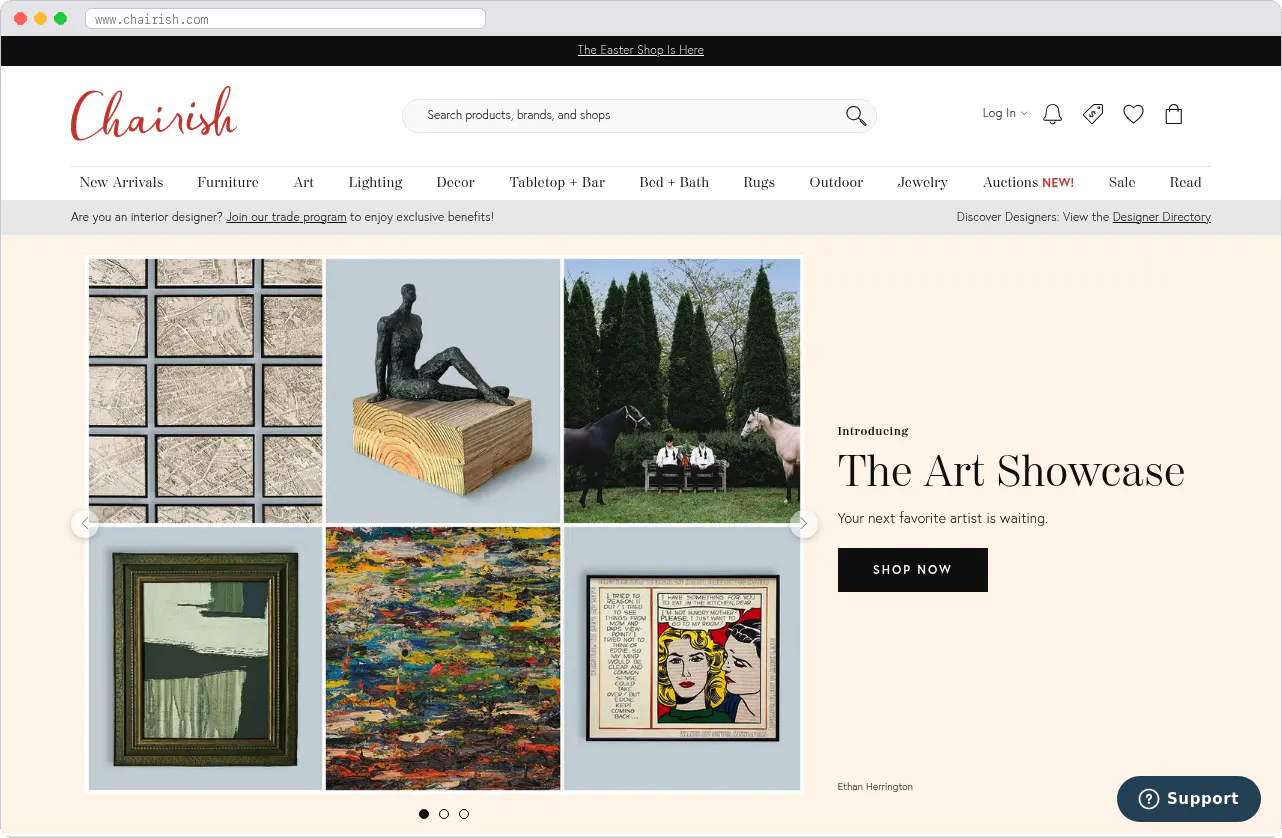
Chairish has built the largest vetted inventory of vintage and vintage-adjacent designer furniture, with hundreds of thousands of listings aimed at interior designers and design-literate homeowners (Chairish). Its strength is scale combined with in-house authentication for higher-value pieces and white-glove delivery for large items. Where it falls short is depth of curation: with a catalog this large, discovery can feel closer to a search engine than an edited collection, and lower-value sellers compete for attention against thousands of similar listings.
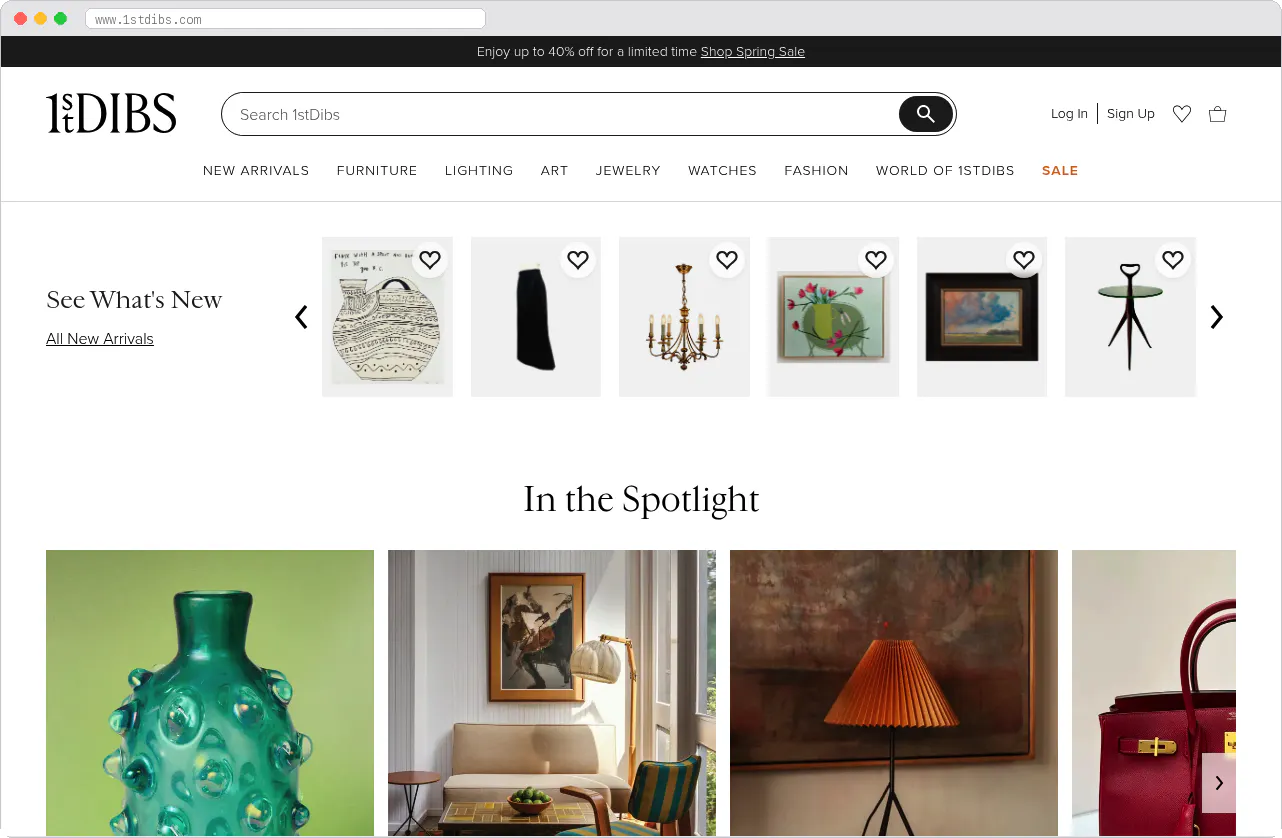
1stDibs sits above Chairish in price point and ceremony, sourcing from established dealers and auction houses rather than individual sellers, and wrapping every purchase in global shipping coordination and insurance. It does this extremely well for buyers spending five and six figures on museum-grade antiques. It does almost nothing for the buyer looking for an affordable mid-century side table, and it isn't built to onboard casual sellers at all, which leaves the entire mid-market underserved.
Etsy carries vintage furniture as one category inside a much broader handmade and vintage marketplace, which means low fees and low barriers to entry for sellers but no furniture-specific tooling. There's no structured condition reporting, no shipping calculator built for bulky freight, and no era or designer taxonomy beyond basic tags. It works for smaller vintage decor and accessories; it consistently struggles with anything that needs a truck to move.
Facebook Marketplace and Craigslist remain the default for local, in-person vintage furniture sales because they're free and everyone already has the app installed. Neither offers payment protection, seller verification, or any way to filter by era or designer, which caps their usefulness to buyers willing to negotiate cash and load a truck themselves. They're a real competitor for local pickup transactions, not for anything requiring trust between strangers who can't meet in person.
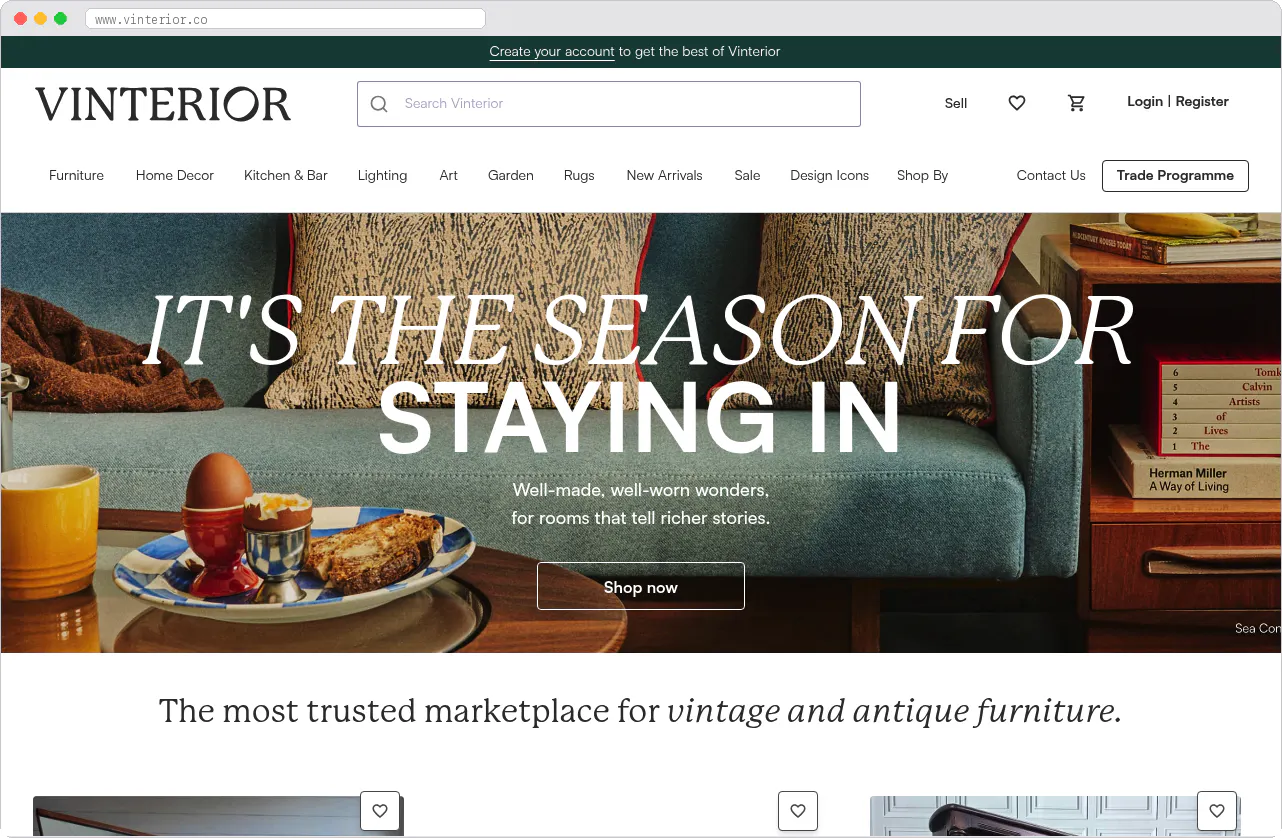
Vinterior in the UK and Pamono in continental Europe show what regional focus buys you: shipping costs, currency, and customer service tuned to a specific market rather than a global one. Both compete credibly with Chairish and 1stDibs in their home regions precisely because they don't try to be everywhere at once.
The opening these platforms leave behind is a mid-market, regionally focused, or era-specific marketplace: one that isn't trying to be the biggest catalog or the most exclusive one, but the best possible experience for a specific buyer (say, mid-century modern buyers in the Pacific Northwest, or Art Deco specialists in France) who currently has to wade through Chairish's scale or 1stDibs' price tags to find what they want.
Essential features for vintage furniture marketplaces
Structured listing fields for era, designer, and provenance. A generic "title and description" listing form loses the information buyers actually filter and negotiate on. Vintage furniture listings need dedicated fields for era or style (Mid-Century Modern, Art Deco, Victorian), designer or maker, materials, dimensions, and known provenance, so that data stays structured and searchable rather than buried in free text.
Detailed, standardized condition reporting. Unlike new furniture, vintage pieces exist on a spectrum from "original and pristine" to "structurally sound restoration project," and buyers need consistent language to compare listings. Requiring sellers to fill out a condition checklist (original finish, wear location, repairs, structural integrity) alongside close-up photos of flaws reduces disputes far more effectively than a five-star rating ever will.
High-resolution, multi-angle photo uploads. Buyers are committing real money to an item they can't touch. Support for multiple full-resolution photos per listing, including detail shots of joinery, maker's marks, and wear, is not optional polish here, it's the substitute for an in-person inspection.
Location-based search and local pickup filters. Shipping a dining table or armoire can cost more than the item itself, so many vintage furniture buyers actively prefer local pickup. Map-based search that lets buyers filter by driving distance, alongside clear seller location tags, directly addresses the category's biggest logistics constraint.
Freight and white-glove shipping integration. Standard parcel carriers don't handle a nine-foot vintage credenza. Integrating shipping quotes from furniture-specific freight services, or partnering directly with a white-glove delivery provider, lets sellers give buyers an accurate landed cost at checkout instead of an unpleasant surprise after purchase.
Escrow-based payment protection. Given average order values well above typical e-commerce, buyers need assurance that funds are only released after they've received and inspected the item, and sellers need assurance they'll get paid once they've shipped something expensive to a stranger. Holding payment through a brief post-delivery inspection window is standard practice on every serious platform in this category.
Messaging with photo sharing. Vintage furniture sales involve negotiation and clarification: questions about a repair, a request for an extra photo of the underside of a chair, a haggle over price. In-platform messaging that supports photos keeps that conversation, and the record of what was disclosed, inside the transaction rather than scattered across text messages.
Authentication and dealer verification. Full expert authentication on every listing isn't practical for most new marketplaces, but seller verification tiers (professional dealer vs. individual seller), authenticity guarantees on higher-value items, and optional third-party appraisal partnerships all build the trust that drives buyers to spend more with confidence.
Reviews that address more than star ratings. Given how few transactions a buyer completes per year in this category, a handful of detailed reviews carries outsized weight. Prompting reviewers to comment specifically on condition accuracy, packaging, and communication gives future buyers more useful signal than a generic five-star average.
Shipping and logistics: the structural challenge unique to this niche
Furniture is the one product category where the item's size and fragility fundamentally change how the marketplace has to operate. A pair of vintage earrings ships in a padded envelope for a few dollars; a mid-century sideboard needs professional freight, careful crating, and a delivery team that can navigate a narrow stairwell without damaging a sixty-year-old finish. Most general-purpose marketplace software assumes parcel-scale shipping, and that assumption breaks immediately in vintage furniture.
Founders in this category typically solve it one of three ways: build in local pickup as the default and treat shipping as an exception handled through a partner network (uShip, Shiply, or regional white-glove services); require sellers to quote shipping manually per item rather than relying on a real-time calculator, since freight pricing is far less standardized than parcel rates; or restrict the marketplace to a defined geographic radius early on, so most transactions can be completed by local delivery or pickup and shipping complexity only becomes relevant as the platform scales.
None of these approaches require solving freight logistics on day one. They require deciding, deliberately, which transactions your MVP will support and being honest with sellers and buyers about what happens outside that scope.
How to build a vintage furniture marketplace
1. Define your niche and geography
"Vintage furniture" spans everything from $40 flea-market finds to $40,000 designer originals, and trying to serve all of it at once dilutes your positioning against Chairish and 1stDibs, who already do scale well. Pick a specific segment: a style era (mid-century modern, Art Deco, Scandinavian), a price band (affordable vintage for first apartments, investment-grade design for collectors), or a geography (a metro area where local pickup solves most of the shipping problem). The narrower the starting point, the easier it is to source the right sellers and market to the right buyers.
2. Validate demand with real sellers and buyers
Talk to both sides before building anything. Ask buyers where they currently shop for vintage pieces, what frustrates them about Chairish's scale or Etsy's lack of furniture-specific tools, and what would make them trust a new platform with a large purchase. Ask potential sellers, especially professional dealers and estate sale companies who already photograph and describe furniture well, what commission structure and features would move them from their current channels to yours. If neither side shows real interest in switching, the niche needs narrowing further before you write a line of code or configure a listing form.
3. Choose your development approach
Vibe coding from scratch. AI tools like Cursor, Lovable, and Bolt can produce a working vintage furniture marketplace prototype quickly. For pressure-testing a concept or demonstrating it to early sellers, they're genuinely useful. For launching a platform that handles real money between strangers, they're probably not sufficient. What vibe-coded outputs reliably don't produce is the infrastructure underneath: payment escrow, dispute resolution, fraud detection, and compliance. A documented Sharetribe experiment ran 60+ hours to reach demo quality but revealed a critical checkout exploit that would have allowed price manipulation via direct API call. Bringing the output to production standard requires significant time, testing, and a clear understanding of how the different components of a web application fit together. A useful prototyping tool, not a cost-effective path to launch.
Custom development from scratch. Hiring developers (who will likely use AI heavily) gives you full control. For a vintage furniture marketplace, a simple MVP (listings, search, messaging, basic payments) runs $30,000 to $80,000 and ships in 8 to 20 weeks. A production-grade build adding reviews, seller verification, escrow, and dispute resolution runs $80,000 to $200,000 over 16 to 28 weeks; real-time logistics, geo-matching, or native iOS and Android push costs to $150,000 to $350,000+ and 26 to 52+ weeks (Codica, RaftLabs). The low end of each range assumes offshore teams at $15 to $40 an hour. Most vintage furniture marketplaces land in the production-grade tier, since escrow-based payments, seller verification, and dispute handling for high-value goods aren't optional here, they're baseline trust requirements. Custom development makes sense when you have requirements no existing platform can meet, not as a default starting point.
Building on a marketplace operating system like Sharetribe. You start at roughly 90% done on the standard marketplace foundation: payments, user accounts, listing management, messaging, transaction flows, fraud detection, and compliance. Your time and budget go toward vintage furniture-specific features instead of rebuilding infrastructure every other marketplace also needs. Three paths within this approach, which most founders combine:
- No-code builder. Configure structured listing fields for era, designer, and condition, set up location-based search, and launch commission-based payments through the Console without writing code. Gets founders to a live marketplace in one to four weeks.
- AI-assisted development. Connect Claude Code, Cursor, or Codex to Sharetribe's open APIs and open-source template to build custom features like a condition-reporting checklist, freight shipping quote integration, or a dealer verification tier. Because Sharetribe handles the payment and compliance infrastructure, AI-assisted development on top of it carries much lower risk than building from scratch.
- Custom code. Build directly on the developer platform for deeper integrations, like white-glove delivery scheduling or third-party authentication partnerships, or hire from Sharetribe's Expert Marketplace.
Most founders start with the no-code builder, then add features via AI or a developer as they learn what their users actually need.
4. Solve the cold start problem
The cold start problem in vintage furniture is a supply-quality problem more than a raw supply problem. Unlike marketplaces where any listing adds value, a handful of poorly photographed, vaguely described furniture listings can actively repel the buyers you need, since trust and presentation quality are the entire value proposition. You need a small number of excellent listings before you need a large number of mediocre ones.
Two tactics work reliably here. First, go supply-first and recruit a handful of professional dealers or estate sale companies who already have well-photographed inventory and know how to write a condition report, and offer them reduced commission for the first several months in exchange for being founding sellers. Second, stay geographically or stylistically narrow at launch, one metro area, or one design era, so you can personally vet every early listing and every early seller rather than trying to police a national marketplace with no track record. Launching small and tight, with twenty excellent listings in one niche, will convert better and generate more repeat visits than launching broad with two hundred inconsistent ones.
5. Source initial inventory and sellers
Prioritize sellers who already produce quality listings elsewhere: dealers active on Etsy or eBay, estate sale companies, and interior designers with excess inventory from client projects. These sellers understand condition reporting and shipping logistics already, which shortens your onboarding effort considerably. Attending local vintage furniture fairs or estate sales to recruit in person tends to convert better than cold outreach, since founders can demonstrate the platform live and address seller concerns about fees or logistics on the spot.
6. Set your commission structure and pricing
Start with a flat commission in the 8% to 15% range rather than a complex sliding scale, since a simple structure is easier for early sellers to understand and easier for you to communicate in outreach. Consider lower introductory rates for founding sellers who commit to listing a meaningful volume of inventory in your first few months, and layer in optional paid placement or white-glove delivery fees once transaction volume justifies building that functionality.
7. Launch and market to qualified buyers
Market to people already looking for vintage furniture rather than a general audience. Content around authenticating a specific era or style, partnerships with interior design bloggers and vintage-focused Instagram accounts, and participation in relevant Reddit or Facebook communities all reach buyers who are further along in their decision than a cold display ad would. Local marketing (design districts, antique shops, home renovation events) works especially well if you've defined your niche geographically.
8. Scale beyond your initial niche
Once your initial niche is generating consistent transactions and positive seller and buyer feedback, expand deliberately: add an adjacent style era, extend your geographic radius, or introduce a higher-value tier with added authentication. Use transaction data to see which categories, price points, and seller types perform best, and let that data, not assumptions about the broader vintage furniture market, guide where you expand next.
Trust and safety for vintage furniture marketplaces
Authenticity and condition misrepresentation are the two biggest trust risks specific to this category. Buyers are paying a premium for a genuine period piece or a specific designer's work, and a marketplace that lets inaccurate claims slide (intentionally or not) will lose buyer trust fast in a category where transactions are infrequent and high-value. Standard mitigations include seller verification tiers that distinguish professional dealers from casual sellers, mandatory structured condition reporting with photo evidence, and clear, published policies for what happens when a delivered item doesn't match its listing.
Payment disputes are the other major risk, given average order values that make a bad transaction expensive for whichever party gets stuck holding the loss. Sharetribe provides payment escrow through Stripe Connect out of the box, holding buyer funds until a defined point after delivery, along with built-in user accounts that support optional identity verification and a transaction flow structure you can customize to add an inspection period before releasing payment to the seller. What founders still need to add themselves is the vintage-furniture-specific layer: a condition reporting standard, a policy for authenticity disputes, and, for higher-value niches, a partnership with a third-party appraisal or authentication service to back up seller claims.
Running your vintage furniture marketplace
Once live, the operational load in this category concentrates around customer support for disputes and shipping coordination rather than everyday transaction processing. Sharetribe handles the transactional mechanics automatically: payment capture, commission splitting, payout scheduling, and transaction status tracking all run without manual intervention. What still needs a human, or an AI agent trained on your policies, is mediating disagreements about condition, coordinating with freight partners when a delivery goes wrong, and reviewing new sellers before they're allowed to list high-value items.
AI agents can take on a meaningful share of the repetitive parts of this: drafting first-response messages for common disputes, flagging listings with incomplete condition fields before they go live, and summarizing seller performance for periodic reviews. That leaves founders and support staff to focus on judgment calls, like whether a disputed "minor wear" description was reasonable, that genuinely require a human decision.
Development costs and timeline
Three realistic scenarios:
Vibe coding from scratch: Free or very cheap to start. A working vintage furniture marketplace prototype is buildable in days with AI tools. What you can't get from here is a production-ready platform: escrow-protected payments, seller verification, a condition-reporting standard buyers can trust, and freight shipping integration all require work that AI coding tools don't shortcut. A documented Sharetribe experiment logged 60+ hours to reach demo quality and found critical payment vulnerabilities. A useful proof-of-concept tool, not a cost-effective path to a live business.
Custom development from scratch: Cost depends on complexity tier. A simple vintage furniture MVP (listings, search, messaging, payments) runs $30,000 to $80,000 and ships in 8 to 20 weeks. A production-grade build with reviews, seller verification, escrow, and dispute flow (the tier most vintage furniture marketplaces actually need, given the trust and value requirements of the category) runs $80,000 to $200,000 over 16 to 28 weeks. Real-time freight logistics or native iOS and Android apps push costs to $150,000 to $350,000+ (Codica, RaftLabs). The low end of each range assumes offshore teams; US or Western European developers push toward the top. Ongoing maintenance typically runs 15% to 25% of the original build cost per year. Makes sense when you have requirements no existing platform can meet.
Building on Sharetribe: Before you launch, the Sharetribe Build plan costs just $39/month. To open to real users, you need the Live plan, which costs $199/month billed yearly ($259/month billed monthly). Both plans include 1 million usage credits per month. Sharetribe covers the standard marketplace foundation, escrow-based payments, user accounts, messaging, search, and listing management, so your build effort goes toward the vintage furniture-specific layer: structured condition fields, location-based search, and freight shipping quotes. Most founders reach a live marketplace in one to four weeks. Custom features added via AI tools or a developer are scoped narrowly because the transaction engine is already there.
Why Sharetribe works for vintage furniture marketplaces
Sharetribe's core architecture maps directly onto what this category needs: a customizable data schema for structured listing fields (era, designer, dimensions, condition), built-in escrow-based payments through Stripe Connect for high-value transactions, location-based search for buyers who need to filter by shipping distance, and a messaging system that supports the negotiation-heavy conversations vintage furniture sales require. None of this needs to be built from zero.
The developer platform and AI-compatible architecture, public APIs, a common web tech stack, an open-source template, extend that foundation without forcing a rebuild. A founder who launches with the no-code builder to validate demand in a single metro area can later use Claude Code or a hired developer to add a condition-reporting checklist, a freight shipping calculator, or a dealer verification tier, all on top of a payment and compliance layer that's already handling real transactions. That progression, validate first, add complexity only where it's earned, fits a category where trust and presentation matter more than feature volume.
Frequently asked questions
How much does it cost to build a vintage furniture marketplace?
Costs range widely by approach. Building on Sharetribe costs just $39/month on the Build plan after a 14-day free trial (the Live plan for running your marketplace is $199/month billed yearly) plus setup costs like design and photography, typically $15,000 to $35,000 in total first-year spend. Custom development from scratch for a trust-heavy vintage furniture platform typically runs $80,000 to $200,000 given the need for escrow, verification, and dispute handling.
What features are essential for a vintage furniture marketplace?
Structured listing fields for era, designer, and condition, high-resolution multi-photo uploads, location-based search, escrow-based payment protection, and freight shipping integration are essential. Seller verification and detailed reviews matter more here than in most marketplace categories because of high average order values.
How do vintage furniture marketplaces make money?
Most charge a commission on completed sales, typically 8% to 20% depending on item value and seller type, with lower rates for high-value professional dealers. Some platforms add white-glove delivery fees, paid placement for sellers, or buyer-side authentication and insurance add-ons.
What is the biggest challenge in building a vintage furniture marketplace?
Shipping and logistics for large, fragile items is the biggest structural challenge, since standard parcel carriers can't handle most furniture. Authenticity verification and condition disclosure are the second major challenge, since buyers commit significant money to items they can't physically inspect before purchase.
How long does it take to launch a vintage furniture marketplace?
Using Sharetribe's no-code builder, most founders launch in one to four weeks. Custom development from scratch, given the trust infrastructure this category needs, typically takes 16 to 28 weeks for a production-grade build.
Who are the main competitors to a new vintage furniture marketplace?
Chairish (high-end, vetted dealers), 1stDibs (luxury antiques and design), Etsy (affordable, generalist), Facebook Marketplace and Craigslist (local, zero-fee), and regional players like Vinterior in the UK all compete for attention. New entrants typically win by serving a specific era, price band, or geography better than these generalist or scale-focused platforms.
Start your 14-day free trial
Create a marketplace today!
- Launch quickly, without coding
- Extend infinitely
- Scale to any size
No credit card required