10 B2B marketplace examples (and what founders can learn)
Ten real B2B marketplace examples, and the specific lesson each one teaches marketplace founders.

These are ten of the biggest B2B marketplace examples in the world today, each with a specific lesson founders can learn and apply to their own build, from Alibaba's Trust Pass system to Faire's tightly focused niche.
Studying marketplaces that have already solved the same trust, supply, and transaction-complexity problems you're facing is one of the fastest ways to avoid repeating their early mistakes. North America alone accounts for over 40% of global B2B e-commerce, roughly $8.5 trillion, which is part of why so many of the names below are American.
Amazon Business has become a major player in the B2B e-commerce landscape, having reached $35 billion in annualized sales in 2023.
Amazon's rapid growth also owes to its prior success in the B2C space. More than 6 million businesses, including 96 of the Fortune 100 companies, now purchase on Amazon Business.
Amazon Business offers features like business-specific pricing, multi-user accounts, and analytics tools to enhance the buying experience. It supports integrations with over 100 procurement, payments, and ERP systems, making it efficient for companies with highly distinctive procurement processes.
The lesson for founders:
B2B buyers often need to justify purchases internally. Even early on, basics like invoices, order history, and multi-user access matter more than they would in a consumer marketplace.
When choosing your tech stack, also consider the ability to build third-party integrations and add steps in your transaction flow that support the needs of your specific audience.
eBay Business Supply offers a vast selection of products ranging from electronics to business supplies. It caters to business buyers who seek value and price transparency.
A key part of eBay's B2B success is its ability to help small businesses reach a global audience and grow. Unlike some other marketplaces, eBay has no first-party retail business, so it doesn't compete with its own vendors, strengthening its appeal among B2B sellers. This approach has fueled significant growth in eBay's B2B segment.
The lesson for founders:
Suppliers can be wary of platforms that also sell competing inventory.
Being a pure marketplace, one that doesn't compete with its own sellers, is a genuine advantage over large-scale competitors, and worth communicating up front.
Alibaba's rise in the B2B marketplace world is the result of its early strategic focus on underrepresented small- to mid-sized businesses (SMBs) in China. By connecting small entrepreneurs in China who lacked access to international markets, Alibaba rapidly consolidated its position as a market leader.
Another key building block for Alibaba was trust. Trust was a significant issue in the early days of China's e-commerce ecosystem. Alibaba addressed this by introducing the "Trust Pass" system, which rated merchants on various factors and prioritized listings from the market's most reliable and trusted participants.
This strategy helped establish a baseline level of trust, which became essential to the platform's long-term success. Diversification and expansion have further solidified Alibaba's position as a global leader in B2B e-commerce.
The lesson for founders:
Starting with sellers who have no other route to buyers gives you a very motivated supply side.
Want to see B2B marketplaces built by founders like you, not just the household names?
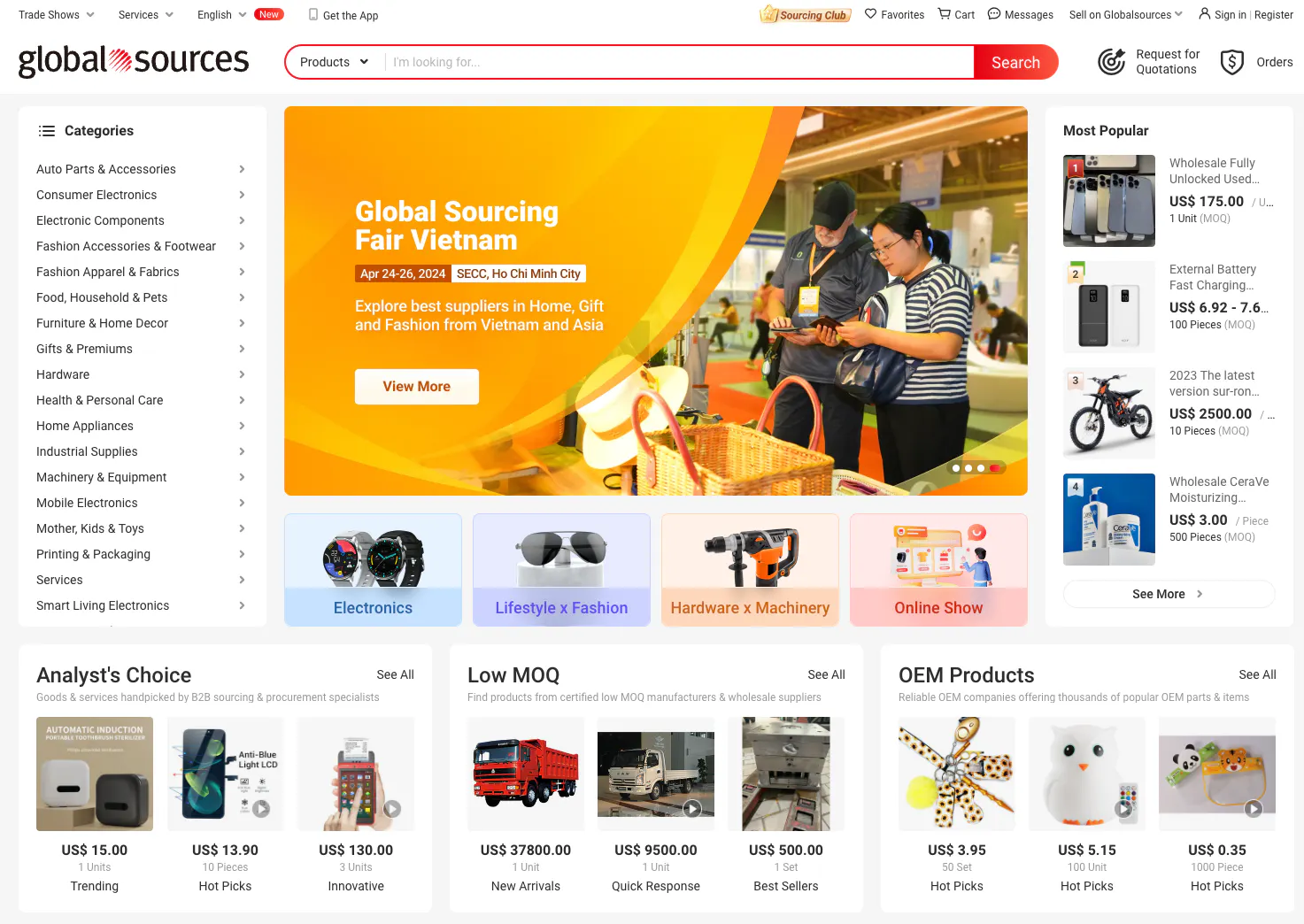
Global Sources has operated in business-to-business trade for over 50 years. It gives buyers worldwide access to new products and qualified B2B lead generation with Chinese manufacturers, following Alibaba as the second-largest B2B marketplace in China.
The platform's success is largely attributed to its extensive industry experience and ability to cater to a diverse range of business needs and sectors.
The lesson for founders:
In B2B, buyers return to platforms where suppliers are vetted.
Some automatic verification is useful once you scale, but manual vetting works well early on: it guarantees quality and gives both parties the feeling of a white-glove experience.
Indiamart is the largest B2B marketplace in India, capturing nearly 60% of the market share, and a significant player globally.
Unlike most B2B marketplaces, the platform operates on a freemium model: it offers basic services for free and charges for premium features, including business listings, buy leads, lead management, payment processing, customer support, marketplace insights, and international reach.
This approach has fueled rapid growth for Indiamart's SMB-dominated user base and supported its expansion to over 100 countries worldwide.
The lesson for founders:
Consider not asking sellers to pay before they've seen value.
Getting supply onto the platform for free, then charging once they're generating leads, is a proven business model in fragmented markets, and a particularly important one for early-stage founders still establishing their footing.
Faire has gained significant attention and success in the retail industry in the United States. Its marketplace connects independent retailers with brands and artisans worldwide.
Faire specializes in unique, often handcrafted or artisanal products, an assortment that appeals to retailers looking to differentiate their inventory with items not commonly found in larger, mainstream retail chains.
By focusing on independent and local makers, Faire helps smaller brands reach a broader market than they could on their own. Its expansion has been backed by substantial venture capital funding.
The lesson for founders:
A tightly defined niche builds a more defensible marketplace than a broad one. Buyers and sellers come for the focus, not the volume.
This interview with Freightos CEO Ruthie Amaru gives a great practical example of the power of narrowing down after attempting a too-broad focus.
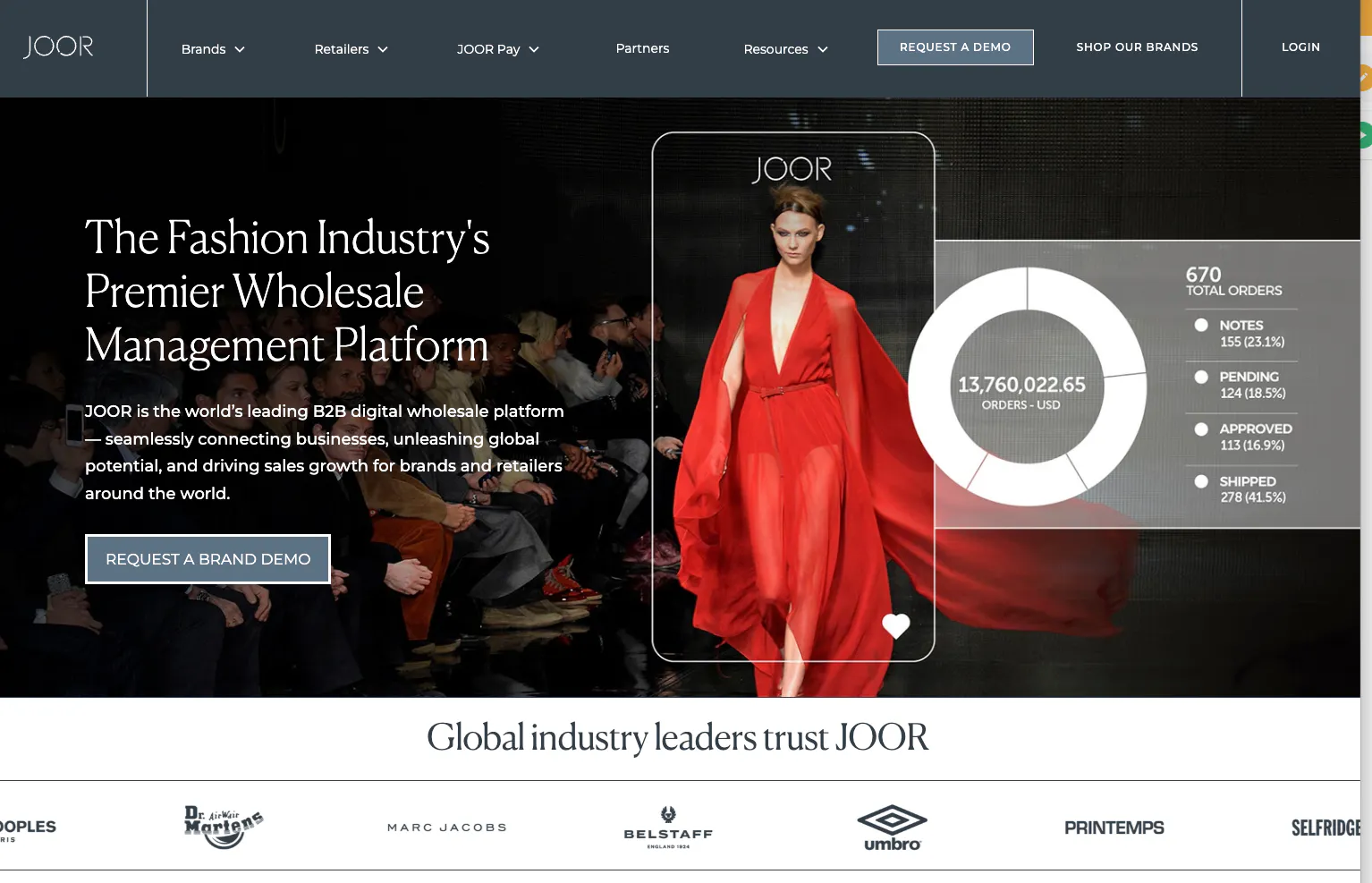
JOOR is a wholesale luxury marketplace serving the fashion, beauty, and home industries.
JOOR has been instrumental in digitizing the wholesale buying process in fashion, an industry traditionally reliant on in-person interactions and paper-based processes. The platform has a large and diverse client base, including high-profile brands and retailers.
The lesson for founders:
In industries still relying on in-person meetings and paper, moving operations online is the value proposition.
Indigo Agriculture is a notable player in the U.S. agricultural sector. The platform connects farmers with buyers, like grain processors and food companies, to facilitate the sale of crops, and it also engages in the carbon credit market.
Indigo strongly emphasizes sustainable, environmentally friendly farming practices that improve crop health and productivity while reducing environmental impact. The company offers data-driven tools and insights that help farmers optimize their practices. Combining technology with traditional farming, through innovations like microbial seed treatments and a digital marketplace, has positioned Indigo as a leader in agricultural innovation.
The lesson for founders:
Niche expertise can be as valuable as scale. Going deep in one vertical and combining data with transactions creates a platform that's hard to replicate.
Material Bank is a growing B2B marketplace focused on the architecture and design industry. It gives professionals a platform to find and sample materials, fabrics, tiles, wall coverings, flooring, paint, and more, from a vast array of suppliers.
A key feature of Material Bank is its ability to deliver material samples quickly. Design professionals can order samples and typically receive them within a very short timeframe, a significant advantage in the fast-paced design industry.
The lesson for founders:
Solving one operational pain point exceptionally well can define your entire marketplace. You don't need to be the biggest if you're the most useful for one specific task.
Farmers Business Network (FBN) collects and analyzes agricultural data, such as seed performance, input efficacy, and pricing information, to help farmers make data-driven decisions. A key offering is its marketplace, which directly connects suppliers of agricultural inputs like seeds, chemicals, and fertilizers with farmers.
As a network, FBN also facilitates a community where farmers share knowledge, experience, and best practices. This peer-to-peer interaction is a valuable resource for many of them.
The lesson for founders:
Combining peer knowledge sharing with transactions gives your marketplace a reason to exist beyond the deal itself. Community and data create retention that pure transaction platforms lack.
Three patterns show up more than any others.
Some platforms won by building trust before scale, like Alibaba's Trust Pass system and Global Sources' manual supplier vetting.
Others won by staying narrow instead of broad, like Faire, JOOR, Indigo, and Material Bank, each dominating one specific vertical rather than competing everywhere at once.
And several won by lowering the barrier for supply to join first, then monetizing once value was proven, like Indiamart's freemium model and eBay's no-first-party-inventory stance.
If you're choosing where to focus first, match the pattern to your market's biggest obstacle: trust, focus, or supply.
Ten marketplaces, three real strategies.
Alibaba and Global Sources built trust first, before anything else.
Faire, JOOR, Indigo, and Material Bank picked one niche and went deep instead of trying to be everything to everyone. Indiamart and eBay made it easy for suppliers to join first, and figured out monetization later. What they all have in common is that each one found the thing that mattered most for their market and put their energy there.
If you're wondering where to focus with your own marketplace, it might help to ask yourself which of these three, trust, focus, or supply, feels like your biggest hurdle right now. That's usually a good place to start.
Ready to get building? Our step-by-step guide to building a B2B marketplace walks you through validating, launching, and growing your own. Still exploring the basics? Here's what a B2B marketplace actually is.
By global scale, Alibaba is the largest B2B marketplace, connecting millions of manufacturers and wholesalers with buyers worldwide. Within the US specifically, Amazon Business leads, having reached $35 billion in annualized sales in 2023. Which one counts as "biggest" depends on whether you're measuring worldwide reach or a single national market.
It depends what you mean by "B2B company." Any business that sells to other businesses rather than individual consumers counts, whether that's a raw materials supplier or a software vendor. A B2B marketplace is a specific kind of B2B company: instead of selling its own products, it operates a platform where many other businesses buy and sell from each other. Amazon Business and Alibaba, above, are two of the best-known examples.
Partly. Costco Business Center serves business customers with bulk pricing and B2B-specific perks, but it's still a traditional retailer: Costco buys inventory and sells it directly, rather than connecting independent third-party sellers with buyers. That's the key difference between a B2B retailer and a B2B marketplace like the ones above, where the platform itself isn't a party to every transaction.
Start your 14-day free trial
Create a marketplace today!
- Launch quickly, without coding
- Extend infinitely
- Scale to any size
No credit card required