How to build a website like JustAnswer
JustAnswer connects users with verified experts to get professional advice on demand. Learn how to build a similar expert marketplace, including essential features, business models, and the fastest way to launch.
Published: Nov 25, 2023
Last updated: Mar 19, 2026
What is JustAnswer and how does it work?
JustAnswer is an online marketplace that connects users with verified experts across dozens of professional categories. Founded in 2003 by Andy Kurtzig in San Francisco, the platform has facilitated over 20 million questions and answers, generating hundreds of millions in revenue by connecting people who need expert advice with professionals who can provide it.
The platform covers an impressive range of expertise, from medical advice and legal consultation to automotive repair, electronics troubleshooting, and pet care. Users can ask questions about anything from "Why is my car making a grinding noise?" to "Is this rash something I should worry about?" and receive answers from verified doctors, mechanics, lawyers, veterinarians, and other professionals.
JustAnswer's success stems from solving a fundamental problem: accessing professional expertise is expensive, time-consuming, and often unnecessary for simple questions. Instead of booking a $200 consultation with a lawyer to understand a contract clause, users can get the same answer for $20-50 through JustAnswer. The platform democratizes access to professional knowledge while creating a new revenue stream for experts.
How JustAnswer's two-sided marketplace operates
For users seeking advice, JustAnswer functions as an on-demand expert consultation service. The process is straightforward: users describe their question or problem, select a relevant category, and choose whether they want a basic answer or premium service with follow-up questions. Payment is collected upfront, and users typically receive responses within hours or minutes.
The platform uses a bidding system where multiple experts can respond to questions, allowing users to choose the expert they prefer based on credentials, response quality, and ratings. Once satisfied with an answer, users can rate the expert and leave reviews, building a reputation system that helps future customers make informed choices.
For experts, JustAnswer represents a flexible way to monetize professional knowledge. Doctors can answer medical questions during downtime between patients. Lawyers can provide quick legal guidance while building their reputation. Mechanics can diagnose car problems based on symptoms described by users. The platform handles all payment processing, marketing, and customer acquisition, allowing experts to focus purely on providing valuable advice.
Experts undergo a verification process that includes credential checks, background verification, and ongoing performance monitoring. This vetting process is crucial to JustAnswer's value proposition, users pay premium prices because they trust they're receiving advice from qualified professionals, not random internet users.
JustAnswer's business model and revenue streams
JustAnswer operates on a commission-based model, taking a percentage of each transaction while the expert receives the remainder. The platform offers several pricing tiers, from basic questions starting around $5-20 to premium consultations that can cost $100 or more depending on the complexity and expert category.
The company also generates revenue through membership subscriptions. For a monthly fee, users can ask unlimited questions within certain categories, creating a predictable revenue stream while encouraging frequent platform usage. This subscription model works particularly well for users with ongoing needs, such as small business owners who regularly need legal or tax advice.
Additional revenue comes from premium services like phone consultations, priority responses, and extended follow-up periods. These upsells increase the average transaction value while providing experts with higher-paying opportunities.
JustAnswer's commission rates vary by category and expert performance, typically ranging from 20-50% of the question fee. While this might seem high, experts appreciate the value: JustAnswer handles all marketing, customer acquisition, payment processing, and dispute resolution, allowing professionals to focus on what they do best.

Essential features for building an expert advice marketplace
Building a platform like JustAnswer requires specific functionality designed for professional service delivery and trust-building between strangers. Unlike product marketplaces, expert platforms must handle real-time communication, credential verification, and complex pricing structures.
User profiles and expert verification
Expert verification is the foundation of any advice marketplace. Users pay premium prices because they trust they're receiving professional guidance, not opinions from unqualified individuals. Your platform needs a comprehensive verification system that checks licenses, certifications, work history, and ongoing credentials.
The verification process typically involves multiple steps: initial application review, document verification, background checks, and ongoing performance monitoring. Some platforms require experts to complete sample questions or pass competency tests before approval. This thorough vetting creates the trust that justifies premium pricing.
User profiles should display relevant credentials prominently. For a doctor, this includes medical school, residency, specializations, and years of practice. For lawyers, it's bar admissions, practice areas, and notable cases or experience. These details help users choose the right expert for their specific situation.
Real-time communication and question management
Unlike marketplaces selling physical products, expert advice platforms need sophisticated communication tools. Users often need clarification or follow-up questions, requiring ongoing dialogue rather than simple one-time transactions.
The platform should support multiple communication methods: text-based questions and answers, file uploads for documents or images, and potentially live chat or phone consultations for premium services. Message threading keeps conversations organized, while notification systems ensure timely responses.
Question categorization helps route inquiries to appropriate experts quickly. A robust tagging and filtering system allows experts to focus on their areas of expertise while ensuring users reach qualified professionals. Some platforms use AI-powered routing to match questions with the best-suited experts automatically.
Flexible pricing and payment systems
Expert marketplaces require more complex pricing structures than typical e-commerce platforms. Different question types, urgency levels, and expert tiers all impact pricing. Your platform needs to handle various payment models: per-question fees, time-based billing, subscription access, and premium consultation packages.
Escrow functionality protects both parties. Users pay upfront, ensuring experts get compensated for their time, while funds are only released after satisfactory answer delivery. This system reduces disputes and builds trust on both sides.
The platform should also support different expert compensation structures. Some experts prefer flat fees per question, others want hourly rates, and top-tier professionals might command premium pricing. Flexible commission structures can incentivize high-quality experts to join your platform.
Rating and review systems
Reputation systems are crucial for expert marketplaces because users can't evaluate service quality before purchase. Unlike physical products with specifications and images, advice quality is subjective and only apparent after delivery.
Two-way rating systems work well: users rate the expert's response quality, helpfulness, and timeliness, while experts can rate users on question clarity and respectful communication. This mutual accountability encourages positive behavior from both parties.
Review systems should capture specific feedback about answer quality, not just overall satisfaction. Categories like "accuracy," "completeness," "timeliness," and "communication" provide more useful information than generic star ratings. Detailed reviews help future users choose experts who excel in areas most important to them.
Content moderation and quality control
Expert advice platforms face unique moderation challenges. Unlike product reviews or social media posts, the content involves professional advice that could impact users' health, finances, or legal situations. Robust content moderation protects both users and the platform from liability issues.
Automated systems can flag potentially problematic content: medical advice that suggests ignoring serious symptoms, legal advice about illegal activities, or financial recommendations that seem fraudulent. Human moderators should review flagged content and have authority to remove inappropriate responses or suspend experts who violate platform policies.
Quality control extends beyond content moderation to answer completeness and helpfulness. Some platforms have expert performance standards, removing or penalizing experts whose answers consistently receive poor ratings or fail to address user questions adequately.
Steps to build a successful expert advice marketplace
Creating a thriving expert marketplace requires balancing supply and demand while establishing trust and quality standards. The process differs significantly from typical marketplace development because professional credibility and service quality matter more than inventory or pricing.
Identify your niche and validate demand
While JustAnswer covers broad categories, successful competitors often start with specific niches. Legal advice for small businesses, medical consultations for pet owners, or technical support for specific software products can provide focused entry points into the expert advice market.
Research existing solutions in your chosen niche. Are people currently paying for advice in this area? How do they find experts now? What gaps exist in current offerings? Understanding the competitive landscape helps identify opportunities for differentiation.
Validate demand through direct user research. Interview potential customers about their current pain points finding expert advice. Survey professionals in your target category about their interest in providing services through an online platform. This research informs both product development and go-to-market strategy.
Build your expert supply first
Expert marketplaces typically require supply-first strategies. Users won't pay for access to a platform without qualified experts available, but experts might join a promising new platform hoping to access new customers.
Recruit experts through professional networks, industry associations, and direct outreach. LinkedIn can be particularly effective for reaching professionals interested in supplemental income opportunities. Professional forums and communities often have members looking for additional revenue streams.
Offer attractive initial terms to early experts: reduced commission rates, marketing support, or guaranteed minimum payments can incentivize quality professionals to join your platform. These investments pay dividends by establishing the expert base necessary to attract paying users.
Develop robust onboarding processes
Both experts and users need smooth onboarding experiences, but experts require more extensive setup. Expert onboarding includes credential verification, platform training, sample question completion, and quality standard explanation.
Create detailed guides explaining how your platform works, what constitutes quality answers, and how experts can maximize their earnings. Video tutorials, written documentation, and one-on-one onboarding calls help experts succeed quickly.
User onboarding should focus on setting proper expectations about response times, question formatting, and platform policies. Clear guidance about what types of questions are appropriate helps reduce frustration and improves expert efficiency.
Launch with focused marketing
Initial marketing should target users with clear, immediate needs for expert advice. Content marketing works particularly well: create guides, how-to articles, and resources that naturally lead to expert consultation needs.
Search engine optimization targets question-based queries where users are actively seeking professional guidance. Long-tail keywords like "small business contract review" or "cat health symptoms" can capture high-intent users ready to pay for expert advice.
Partnership marketing with complementary services can provide user acquisition opportunities. Accounting firms might refer clients needing legal advice, veterinary clinics might recommend your platform for non-emergency pet questions, or software companies might direct users to technical support experts.
Scale through geographic and category expansion
Once you've established strong supply and demand in your initial niche, expansion opportunities include new geographic markets, additional professional categories, or enhanced service offerings.
Geographic expansion requires understanding local professional licensing requirements, payment preferences, and cultural expectations around expert consultation. Some countries have strict regulations about medical or legal advice that impact platform operations.
Category expansion should build on existing strengths. If you've succeeded with legal advice, accounting or business consulting might be natural extensions. If medical consultation works well, veterinary advice or mental health support could be logical additions.
Competitive landscape and alternatives to JustAnswer
The expert advice market includes several established players, each with different positioning and strategies. Understanding these alternatives helps identify differentiation opportunities and competitive advantages.
Direct competitors in expert advice
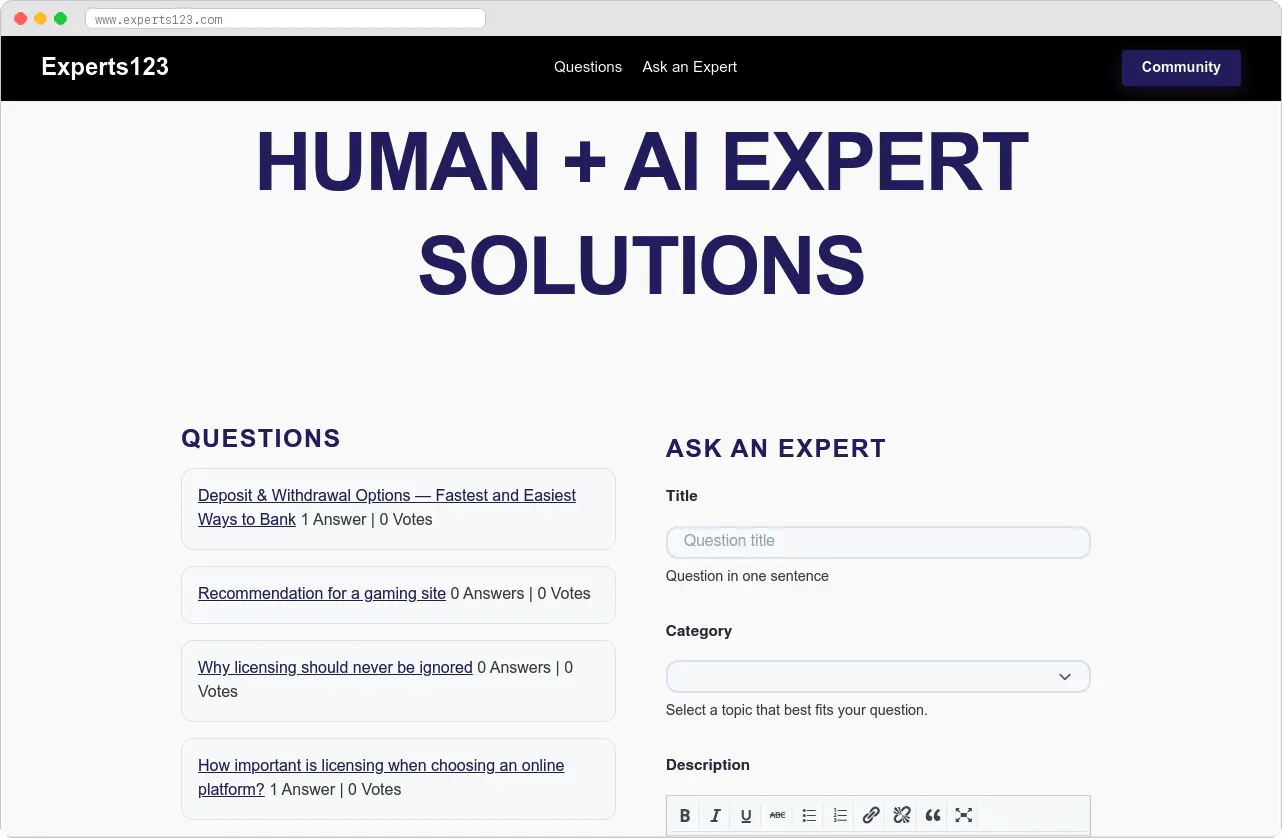
Experts123 operates similarly to JustAnswer but focuses more heavily on technical and professional services rather than personal advice. The platform emphasizes business-to-business expert consultations, connecting companies with industry specialists for project-based work. Their pricing tends to be higher, reflecting the commercial nature of most inquiries.
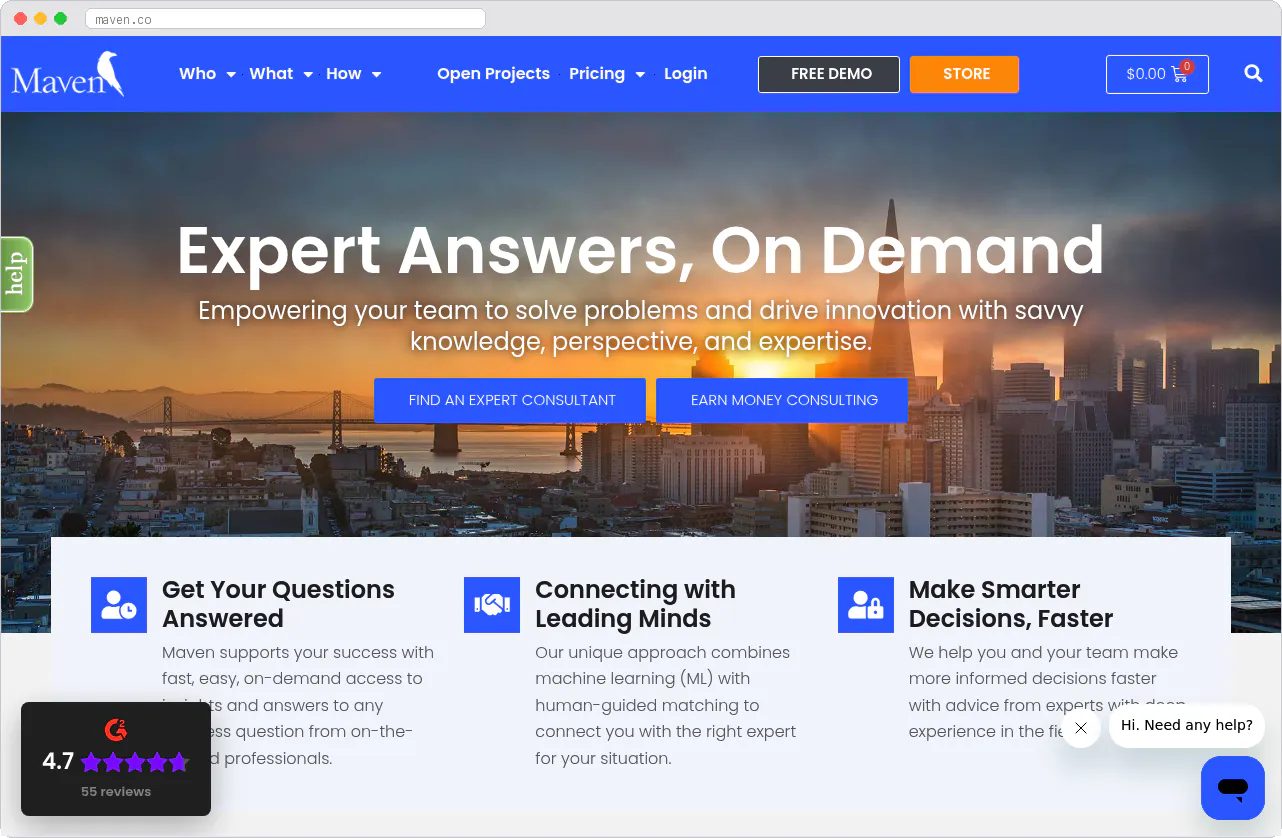
Maven takes a more premium approach, positioning itself as "the world's largest marketplace for live video calls with experts." Rather than text-based questions, Maven emphasizes real-time video consultations, targeting users willing to pay higher fees for more personalized interactions. Their expert vetting process is particularly rigorous, leading to higher-quality but more expensive consultations.
Clarity focuses specifically on business and entrepreneurship advice, connecting startup founders and business owners with successful entrepreneurs, investors, and industry experts. Their model emphasizes phone consultations rather than written questions, with pricing typically ranging from $1-10 per minute depending on the expert's profile and experience.
Alternative models and platforms

Quora represents the free, community-driven alternative to paid expert advice. While Quora doesn't verify credentials or guarantee response quality, it has massive scale and covers virtually every topic imaginable. Many professionals contribute high-quality answers without compensation, making it a significant competitive threat for basic information needs.
Reddit serves a similar function through specialized subreddits like r/legaladvice, r/personalfinance, or r/techsupport. These communities often include verified professionals who provide free advice, though users can't guarantee expert credentials or response reliability.
LinkedIn has evolved into an informal expert advice platform through its professional network features. Users can directly message industry experts, participate in professional groups, or publish content seeking advice. While LinkedIn doesn't facilitate payments, it offers networking benefits that can lead to ongoing professional relationships.
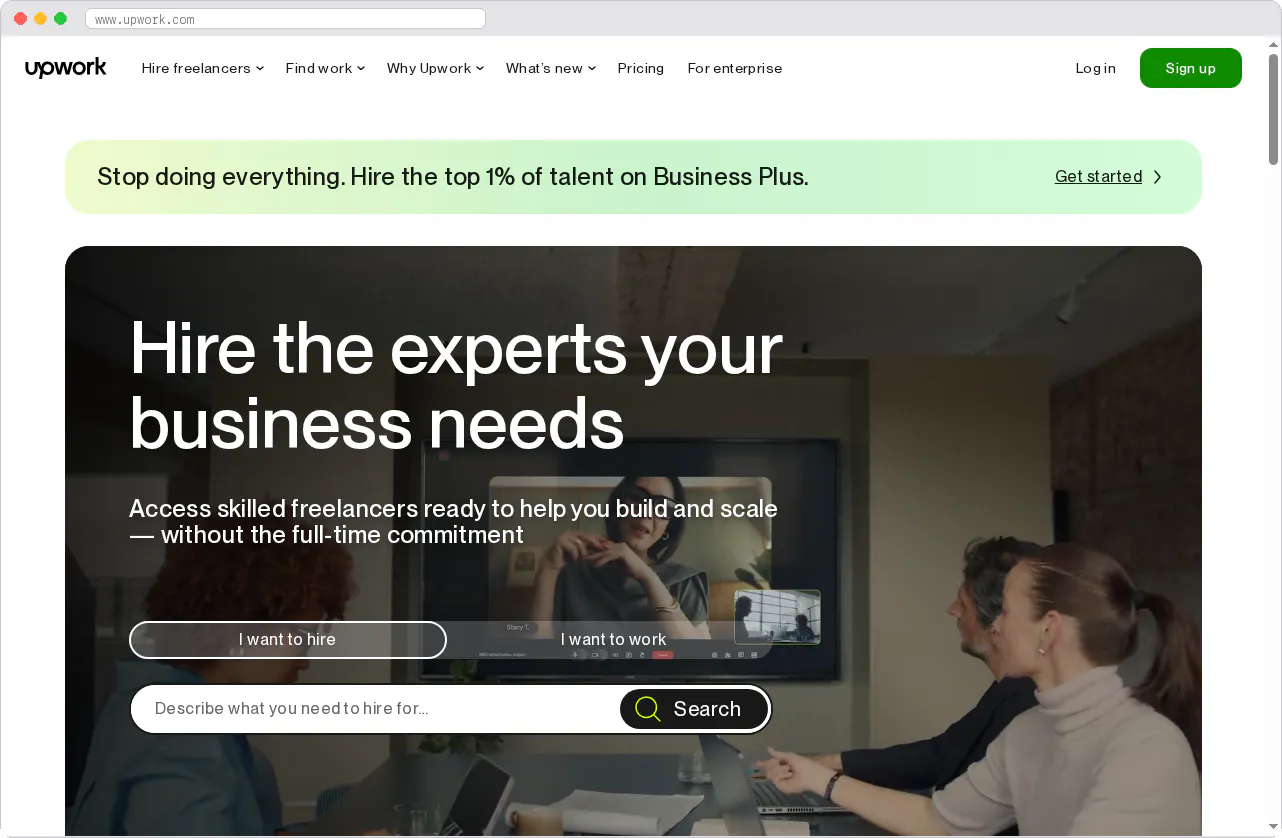
Upwork and Fiverr compete for longer-term consulting projects that might start as simple questions on JustAnswer. Both platforms allow professionals to offer consultations, document reviews, and other advice-based services, often at competitive rates due to global expert pools.
Understanding the competitive advantages
JustAnswer's primary advantages include its broad category coverage, established expert network, and streamlined question-asking process. However, competitors have found success through specialization, alternative interaction models, or different pricing approaches.
Successful JustAnswer alternatives often focus on specific niches where they can develop deeper expertise and stronger expert relationships. For example, a platform focused exclusively on startup legal questions might attract higher-quality lawyers specializing in entrepreneurship law, providing better answers than generalist platforms.
Premium positioning can also differentiate competitors. While JustAnswer serves price-sensitive users seeking quick answers, platforms like Maven command higher prices by offering more personalized, in-depth consultations. This approach attracts users willing to pay more for comprehensive guidance.
Ways to build your expert advice marketplace
The technical complexity of expert advice platforms falls between simple classified sites and sophisticated product marketplaces. You need user authentication, payment processing, communication tools, and content management, but not inventory management or complex logistics.
Custom development approach
Building from scratch gives you complete control over features and user experience but requires significant time and budget investment. Expert advice platforms need specialized functionality like credential verification workflows, real-time messaging systems, and flexible pricing models that generic marketplace templates don't provide.
Development costs typically range from $50,000 to $100,000 for a full-featured platform, depending on complexity and development team location. This includes user registration, expert verification, question posting, answer delivery, payment processing, and administrative tools.
The main advantage of custom development is creating exactly the user experience you envision. You can optimize every interaction for your specific market needs, integrate with industry-specific tools, and build unique features that differentiate your platform.
However, custom development also means handling ongoing maintenance, security updates, payment compliance, and feature development entirely in-house. These operational costs can quickly exceed initial development expenses, particularly as your platform scales.
No-code platform combinations
Combining multiple no-code tools can create functional expert advice platforms more quickly than custom development. A typical setup might include Webflow for the main website, Airtable for expert and user data management, Stripe for payments, Calendly for consultation scheduling, and Zapier to connect everything together.
This approach allows rapid prototyping and validation of your marketplace concept without major upfront investment. You can test whether users will pay for expert advice in your niche before committing to expensive custom development.
The downside is platform fragmentation and limited scalability. Managing user data across multiple tools becomes complex as your user base grows. Payment processing through generic tools may not support marketplace-specific features like escrow or commission splitting that expert platforms require.
User experience also suffers compared to integrated platforms. Moving between different tools for various functions creates friction that can reduce conversion rates and user satisfaction.
Marketplace-specific SaaS solutions
Dedicated marketplace builders like Sharetribe provide middle-ground solutions that combine speed-to-market with marketplace-optimized functionality. These platforms include built-in features specifically designed for service marketplaces: user verification systems, flexible pricing models, communication tools, and payment processing with commission support.
Sharetribe's approach works particularly well for expert advice marketplaces because it includes features like booking management for consultations, secure messaging between users and experts, and flexible transaction types that support both one-time questions and ongoing advisory relationships.
The platform handles technical infrastructure, security compliance, payment processing regulations, and ongoing maintenance, allowing you to focus on building expert supply and user demand rather than managing servers or debugging payment issues.
As your marketplace grows and develops specific requirements, Sharetribe supports custom development on top of the no-code foundation. This means you can launch quickly with standard functionality, then add unique features as you learn what your market needs without rebuilding everything from scratch.
Cost considerations and budget planning
Expert advice marketplaces require different budget allocation than product-based platforms. While you don't need inventory or fulfillment systems, you invest more heavily in trust-building, expert recruitment, and quality assurance.
Initial development and launch costs
Using Sharetribe, you can launch an expert advice marketplace for under $500 in the first month, including platform subscription, domain registration, and basic design customization. This allows rapid market validation before larger investments in custom features or marketing.
The no-code approach means your primary costs are time and platform subscription rather than developer fees. You can build and test your marketplace concept during Sharetribe's 14-day free trial, then launch with monthly subscription pricing that scales with your transaction volume.
Custom development starts around $50,000 for a basic platform and can easily exceed $100,000 for comprehensive functionality. These costs don't include ongoing development, maintenance, hosting, or compliance management that add substantial operational expenses.
Ongoing operational expenses
Expert recruitment represents a significant ongoing cost for advice marketplaces. Quality professionals expect competitive compensation, marketing support, or guaranteed minimum payments to join new platforms. Budget 20-30% of early revenue for expert acquisition and retention programs.
Content moderation becomes particularly important for professional advice platforms due to liability concerns. Whether handled in-house or outsourced, maintaining quality standards requires ongoing investment in human moderators who understand professional standards across your expert categories.
Payment processing fees for marketplaces are higher than standard e-commerce due to commission splitting complexity. Budget 3-5% of gross transaction volume for payment processing, compared to 2-3% for simple online sales.
Revenue and profitability timeline
Expert advice marketplaces typically achieve profitability faster than product marketplaces because they don't require inventory investment or complex logistics. However, building sufficient expert supply and user trust takes 6-12 months of focused effort.
Revenue growth often follows a hockey-stick pattern: slow initial growth while building expert supply and user awareness, followed by accelerated growth as network effects and reputation drive organic user acquisition.
Commission-based models provide high gross margins but require significant transaction volume for meaningful revenue. Subscription models offer more predictable revenue but require demonstrating ongoing value to retain customers.
Why Sharetribe works well for expert advice marketplaces
Sharetribe's feature set aligns particularly well with expert advice marketplace requirements. The platform includes essential functionality for service-based transactions while remaining flexible enough to accommodate various expert consultation models.
Built-in features for expert platforms
The booking system supports various consultation types: immediate question responses, scheduled phone calls, or ongoing advisory relationships. This flexibility accommodates different expert preferences and user needs without requiring custom development.
Secure messaging keeps all expert-user communication within your platform, reducing the risk of users and experts taking transactions offline. Message history provides valuable data for dispute resolution and quality monitoring.
Flexible transaction types support both fixed-price questions and time-based consultations. The payment system handles escrow automatically, releasing funds to experts only after successful service delivery. Commission splitting happens automatically based on your configured rates.
Customization and scaling capabilities
As your marketplace grows, you'll likely need features specific to your expert categories or user needs. Sharetribe supports custom development on top of the no-code foundation, allowing you to add specialized functionality without rebuilding your entire platform.
The API-first architecture means you can integrate with industry-specific tools: credential verification services, specialized communication platforms, or professional licensing databases. These integrations enhance your platform's value without abandoning your existing user base and data.
Performance and reliability scale automatically with your user growth. Sharetribe handles server infrastructure, security updates, and compliance requirements, allowing you to focus on business development rather than technical operations.
Expert marketplace success stories
Several successful expert advice platforms have launched on Sharetribe, validating the platform's suitability for this marketplace type. These founders focused their time on expert recruitment and user acquisition rather than technical development, reaching profitability faster than custom-built alternatives.
The flexibility to start with standard features and add customizations as needed allows marketplace founders to validate their concepts quickly, then invest in differentiation only after proving market demand.
Next steps to launch your expert advice marketplace
Building a successful expert advice marketplace requires balancing speed to market with quality standards. The most successful founders validate their concepts quickly, then iterate based on real user feedback rather than assumptions about market needs.
Start by identifying a specific expert category where you can build deep relationships and establish quality standards. Broad platforms like JustAnswer require massive scale to succeed, while niche-focused alternatives can thrive with smaller user bases.
Validate demand through direct customer research before building anything. Interview potential users about their current challenges finding expert advice, and survey professionals about their interest in providing online consultations. This research guides both product development and pricing strategy.
Choose your development approach based on your timeline and budget constraints. Sharetribe allows rapid validation and iteration, while custom development provides complete control at significantly higher cost and time investment.
Focus on expert supply first, user demand second. Without qualified experts available to answer questions, users won't pay for platform access. Invest in expert recruitment and retention before major marketing campaigns targeting end users.
Remember that marketplace success comes from liquidity, having the right experts available when users need them. Technical features matter, but building a thriving community of experts and users who value your platform is what creates sustainable competitive advantage.
Frequently asked questions
How much does it cost to build a website like JustAnswer?
Costs vary dramatically by approach. Using Sharetribe, you can launch for under $500 in the first month. Custom development typically starts around $50,000 and can exceed $100,000 for comprehensive functionality. No-code tool combinations fall somewhere in between but require ongoing integration maintenance.
What features do I need for an expert advice marketplace?
Essential features include expert verification systems, secure messaging, flexible pricing models, escrow payments, rating and review systems, and content moderation tools. Unlike product marketplaces, you need real-time communication and professional credential management rather than inventory systems.
How does JustAnswer make money?
JustAnswer uses a commission-based model, taking 20-50% of each transaction while experts receive the remainder. They also offer subscription plans for unlimited questions and premium services like phone consultations, creating multiple revenue streams from the same user base.
How do I recruit experts for my marketplace?
Start with professional networks, industry associations, and LinkedIn outreach. Offer attractive initial terms like reduced commission rates or guaranteed minimums to early experts. Focus on building relationships within your niche rather than trying to compete broadly with established platforms.
What makes expert advice marketplaces different from other marketplaces?
Expert marketplaces require professional credential verification, real-time communication tools, and complex liability considerations. Trust and quality matter more than price or inventory, making reputation systems and content moderation crucial for success.
Can I compete with JustAnswer in 2024?
Yes, but focus on specific niches rather than broad competition. Successful alternatives typically specialize in particular expert categories, offer different interaction models (like video consultations), or serve specific geographic markets where they can build deeper expert relationships.
Start your 14-day free trial
Create a marketplace today!
- Launch quickly, without coding
- Extend infinitely
- Scale to any size
No credit card required