How to build a marketplace website like Cameo
Learn how Cameo's celebrity video message marketplace works and get a actionable plan to building your own personalized video service platform. Includes business model analysis, key features, and development costs.
Published: Feb 24, 2026
Last updated: Mar 19, 2026
How does Cameo work?
Cameo operates as a two-sided service marketplace that pairs celebrities, influencers, and notable personalities with fans who want personalized video messages. Founded in 2017 by Steven Galanis, Martin Blencowe, and Devon Townsend in Chicago, the platform grew from a simple idea: what if fans could get their favorite celebrities to record custom messages for special occasions?
The marketplace model works through a straightforward transaction flow. Fans browse profiles of available celebrities, which range from reality TV stars and athletes to comedians and social media influencers. Each celebrity sets their own price for personalized videos, typically ranging from $25 for emerging influencers to several thousand dollars for A-list celebrities.
When a fan finds someone they want to book, they submit a request with specific details about the message they want. This might include the recipient's name, the occasion (birthday, graduation, encouragement), and any special talking points or inside jokes. The celebrity then has seven days to fulfill the request by recording and uploading a personalized video message.
The entire process happens asynchronously, which is important to the platform's scalability. Unlike live video calls or real-time interactions, celebrities can batch their video recordings when convenient, while fans receive a permanent keepsake they can share and replay indefinitely.
This asynchronous model solves several problems simultaneously. For celebrities, it provides a flexible income stream that doesn't require coordinating schedules or traveling to events. They can record multiple videos in a single session and fulfill requests on their own timeline. For fans, it offers unprecedented access to their favorite personalities at relatively affordable prices compared to meet-and-greets or autograph sessions.
The platform also expanded beyond basic video messages to include live video calls (Cameo Calls), business shoutouts for companies, and even text messages from celebrities. However, personalized video messages remain the core offering that drives the majority of transactions.
How does Cameo make money?
The Cameo business model centers on commission-based revenue, taking a percentage of every transaction that occurs on the platform. The company typically retains 25% of the total payment while the celebrity keeps 75%. This commission structure has remained relatively consistent since the platform's early days, though specific terms may vary for high-volume creators or special partnerships.
To understand the scale, Cameo reported over $100 million in gross merchandise volume (GMV) by 2021, with more than 40,000 celebrities on the platform. During peak periods like the COVID-19 pandemic, when traditional entertainment and personal appearance opportunities were limited, the platform saw considerable growth as celebrities sought alternative income sources.
Beyond basic video messages, Cameo generates revenue through several additional streams. Cameo for Business targets corporate clients who want celebrity endorsements or team motivational messages, typically commanding higher prices than personal requests. The platform also offers Cameo Calls, live video conversations that are priced meaningfully higher than pre-recorded messages.
The pricing model creates natural market segmentation. Lesser-known personalities might charge $25-100 per video, making the service accessible to everyday consumers while still generating meaningful revenue. Mid-tier celebrities often price videos between $100-500, while top-tier personalities can charge $1,000 or more per message.
This tiered pricing structure benefits all parties. Fans can find someone within their budget, celebrities can monetize their fame at appropriate market rates, and Cameo captures its commission across all price points. The platform's 25% commission means that even lower-priced videos contribute meaningfully to revenue when multiplied across thousands of transactions.
Revenue seasonality also plays a considerable role in Cameo's business model. The platform sees major spikes during holidays (particularly around Christmas, Mother's Day, and Father's Day), graduation seasons, and major life events. This predictable demand pattern helps celebrities plan their availability and allows Cameo to optimize marketing spend during peak periods.
What makes Cameo successful?
Cameo's success stems from several strategic advantages that create a defensible business position in the celebrity interaction space. The platform solved a genuine market inefficiency: celebrities had unused capacity and fans had unmet demand for personal connections, but no efficient way to connect the two sides.
The network effect is Cameo's strongest competitive moat. As more celebrities join the platform, it becomes more attractive to fans seeking variety and choice. As more fans use the service, celebrities see the platform as an progressively valuable income source. This creates a self-reinforcing cycle where growth on one side drives growth on the other.
Where typical celebrity booking, which often requires agents, contracts, and meaningful coordination, Cameo standardized and simplified the entire process. Celebrities can join without complex negotiations, set their own prices, and fulfill requests on their schedule. Fans get transparent pricing, guaranteed delivery (or a refund), and a streamlined booking experience.
The platform's quality control mechanisms also contribute to its success. Cameo maintains standards for video quality and content appropriateness while giving celebrities creative freedom within reasonable boundaries. This balance ensures fans receive professional-quality content while preserving the authentic, personal feel that makes the service appealing.
Timing played a key role in Cameo's growth trajectory. The platform launched just as social media was creating new categories of micro-celebrities and influencers who needed monetization strategies beyond traditional advertising. Reality TV, YouTube, TikTok, and other platforms were generating personalities with devoted fan bases but limited direct monetization options.
The COVID-19 pandemic accelerated Cameo's adoption as traditional celebrity income sources (tours, appearances, filming) were disrupted. Many celebrities turned to the platform as an alternative revenue stream, while fans stuck at home sought new ways to connect and celebrate special occasions when in-person gatherings were limited.
Cameo also benefited from being first-to-market with a polished, user-friendly platform. While the concept of celebrity video messages existed before, Cameo was the first to create a scalable, mainstream marketplace that handled payments, delivery, and customer service smoothly.
Key features of a Cameo-like marketplace
Building a successful personalized video marketplace requires specific functionality that addresses the unique challenges of connecting fans with celebrities or influencers. These features must balance user experience, trust, and operational efficiency.
Celebrity profiles and discovery
Detailed creator profiles serve as the foundation of the marketplace. Each celebrity needs a detailed profile showcasing their background, personality, and sample content. This typically includes professional photos, biography information, recent work or achievements, and most importantly, sample videos that demonstrate their style and energy level.
The discovery mechanism must help fans find relevant celebrities efficiently. This requires strong search and filtering capabilities based on categories (sports, entertainment, social media), price ranges, response times, and even specific interests or fandoms. Many users browse by category first, then narrow down based on personal preference and budget.
Rating and review systems build trust and help fans make informed decisions. Unlike product reviews, celebrity reviews often focus on the personal touch, effort level, and emotional impact of the message rather than just basic fulfillment.
Video request and fulfillment system
The request submission process needs to capture enough detail for celebrities to create meaningful, personalized content without being overwhelming for fans to complete. This typically includes recipient information, occasion details, specific talking points, and any relevant context that makes the message more personal.
File upload and delivery infrastructure must handle potentially large video files efficiently while maintaining quality. The system needs to compress videos appropriately, ensure reliable delivery, and provide easy sharing options for recipients.
Request management tools help celebrities organize and prioritize their incoming requests. This includes deadline tracking, request details, and batch processing capabilities that let celebrities work efficiently.
Payment and commission handling
Secure payment processing with escrow functionality protects both buyers and sellers. Fans pay upfront, but funds are held until the celebrity delivers the video and the customer has time to review it. This reduces disputes and ensures quality standards.
Commission calculation and payout systems must accurately track earnings, deduct platform fees, and handle tax reporting requirements. Many celebrities are independent contractors who need detailed earnings records for tax purposes.
Refund and dispute resolution processes handle cases where videos aren't delivered, don't meet expectations, or contain inappropriate content. Clear policies and efficient resolution procedures maintain trust on both sides.
Communication and notification systems
Direct messaging between fans and celebrities enables clarification of request details without exposing personal contact information. However, this communication needs moderation to prevent inappropriate interactions.
Notification systems keep both parties informed about request status, deadlines, and important updates. Celebrities need reminders about pending requests and approaching deadlines, while fans want updates on fulfillment progress.
Quality control and moderation
Content review processes ensure videos meet platform standards for appropriateness and quality. This might include automated screening for explicit content as well as human review for context and quality standards.
Reporting mechanisms allow users to flag inappropriate content or behavior, with clear escalation procedures for serious violations.
Analytics and performance tracking
Celebrity dashboard analytics help creators understand their performance metrics, popular request types, optimal pricing, and revenue trends. This data helps them optimize their offerings and maximize earnings.
Platform-level analytics track marketplace health through metrics like fulfillment rates, average order values, repeat purchase rates, and user satisfaction scores.
Competitors and alternatives
While Cameo pioneered the mainstream personalized video message marketplace, several competitors have emerged with different approaches to celebrity fan interaction.
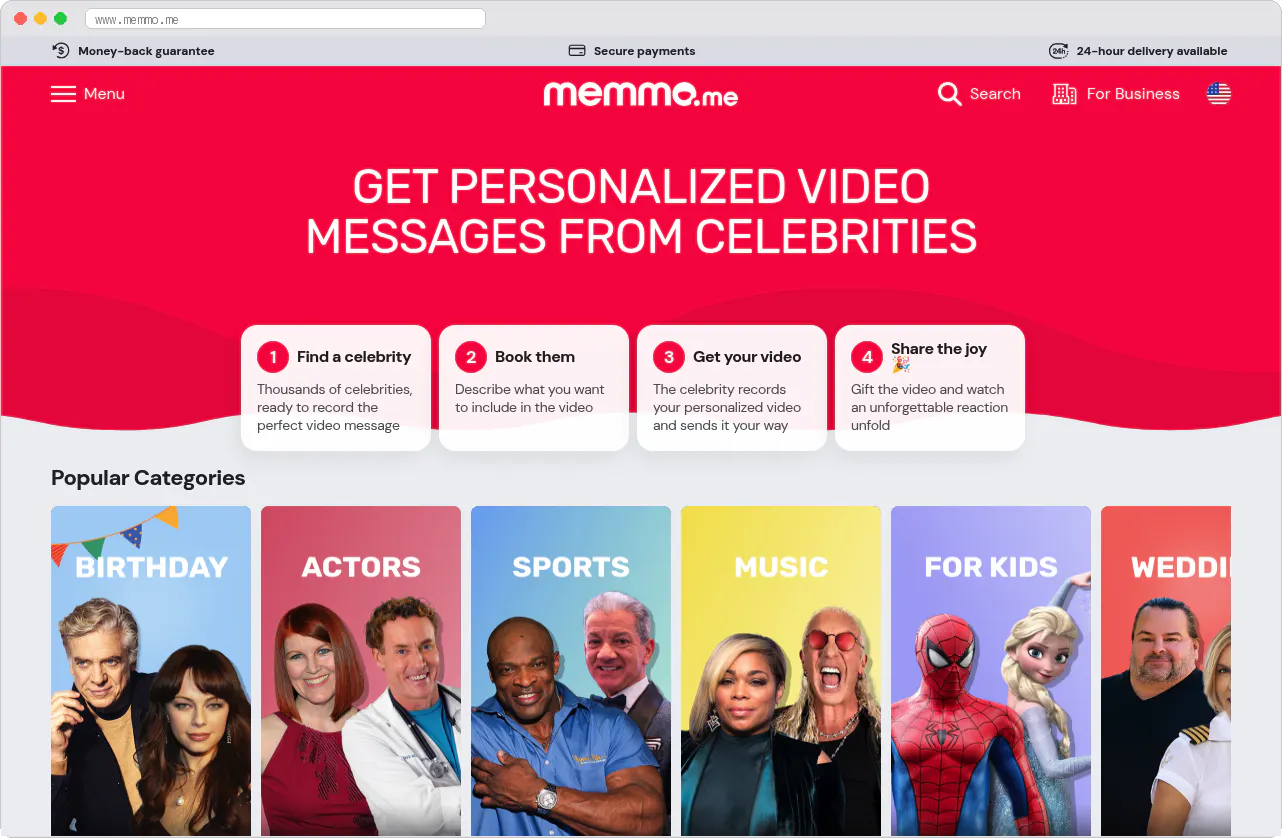
Memmo
Memmo operates as Cameo's primary direct competitor, offering essentially the same service with a focus on European markets. Based in Sweden, Memmo features local celebrities, athletes, and influencers who might not be available on Cameo. The platform uses a similar commission structure and user experience, but often features different pricing strategies and regional payment methods.
Memmo's key differentiation lies in its geographic focus and local partnerships. Rather than competing directly with Cameo for global celebrities, Memmo often secures exclusive relationships with regional stars, particularly in Scandinavian countries and other European markets.
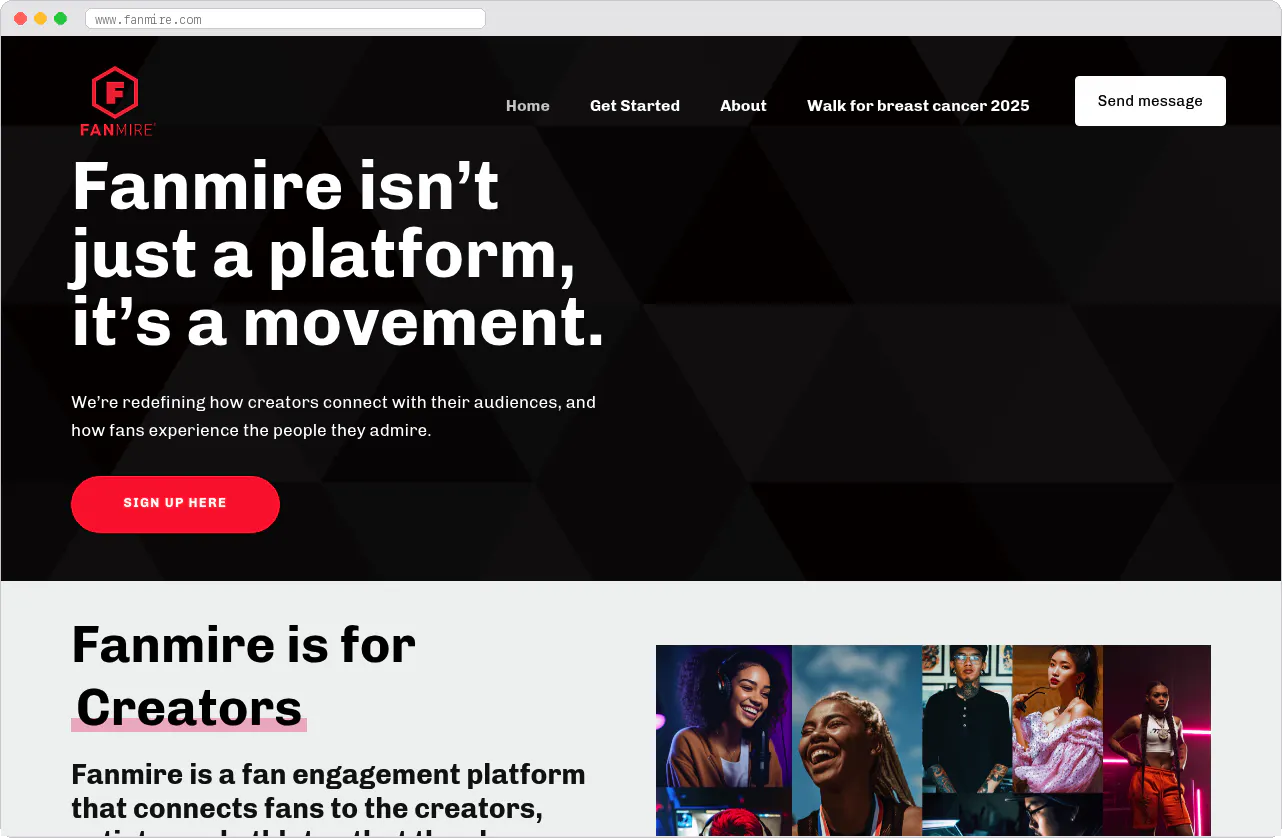
Fanmire
Fanmire takes a different approach by focusing specifically on adult content creators and adult entertainment personalities. While using similar video message functionality, Fanmire caters to a completely different market segment with different pricing models, content policies, and user expectations.
The platform demonstrates how the basic Cameo model can be adapted for niche markets with specific content requirements and audience needs. Fanmire typically features higher prices per video and different promotional strategies suited to its target market.
Starsona
Starsona attempted to compete directly with Cameo in the mainstream celebrity space but with different commission structures and celebrity recruitment strategies. The platform emphasized live interactions and real-time connections more than Cameo's asynchronous model.
Starsona's approach highlighted some of the strategic decisions that make Cameo successful. By trying to offer live interactions, Starsona created scheduling complexity that reduced the scalability and convenience that make personalized video messages appealing to both celebrities and fans.
Celebrity booking agencies
Traditional celebrity booking agencies represent the legacy alternative to platforms like Cameo. These agencies typically handle larger, more complex engagements like corporate events, appearances, and endorsements, but usually at substantially higher price points and with more complex logistics.
The comparison illustrates Cameo's market positioning: democratizing celebrity access by offering smaller, more affordable interactions that traditional agencies wouldn't handle efficiently.
Social media direct interaction
Some celebrities interact directly with fans through social media platforms, live streaming, or direct message responses. However, these interactions are typically unpaid, unpredictable, and don't provide the personalized, permanent content that Cameo offers.
This alternative highlights Cameo's value proposition: creating a reliable, professional service that benefits both parties financially while maintaining appropriate boundaries.
How to build a marketplace like Cameo
Creating a successful personalized video marketplace requires careful planning across multiple dimensions: technical implementation, user experience design, legal considerations, and go-to-market strategy.
Step 1: Define your niche and value proposition
While Cameo covers broad celebrity categories, new entrants often succeed by focusing on specific niches initially. This might mean targeting particular industries (fitness influencers, business coaches, local celebrities), specific types of content (educational messages, motivational content, expertise sharing), or geographic markets underserved by existing platforms.
Successful niche selection involves identifying groups of content creators who have engaged audiences but limited monetization options, combined with audiences willing to pay for personalized interactions. The key is finding markets where the unit economics work at smaller scale while you build toward broader expansion.
Step 2: Design the user experience flow
The core user experience centers on three critical flows: celebrity onboarding, fan booking, and request fulfillment. Each needs to be intuitive while capturing necessary information and maintaining quality standards.
Celebrity onboarding must balance ease of setup with sufficient verification and profiling. New creators need to complete profiles, set pricing, upload samples, and understand platform policies without overwhelming complexity. However, insufficient vetting leads to quality problems that damage the platform's reputation.
Fan booking flows need to be simple enough for non-technical users while gathering enough detail for meaningful personalization. The challenge lies in encouraging fans to provide context that helps celebrities create better content without making the request process feel like homework.
Fulfillment flows must provide celebrities with efficient tools for managing requests, recording videos, and tracking their performance. Since celebrities often batch their recording sessions, the interface needs to present request details clearly and allow efficient processing of multiple requests.
Step 3: Build trust and safety systems
Personalized video marketplaces require reliable trust and safety mechanisms because they involve personal interactions between strangers, often with major emotional investment from fans.
Verification systems confirm celebrity identities and help prevent impersonation, which could damage both fan experience and platform credibility. This typically involves identity verification, social media account linking, and sometimes manual review processes.
Content moderation addresses inappropriate requests or responses while preserving the personal, authentic feel that makes the service valuable. Automated systems can flag obvious violations, but human review often remains necessary for context-sensitive decisions.
Payment protection through escrow systems ensures fans receive their content before celebrities get paid, while also protecting celebrities from fraudulent chargebacks or payment disputes.
Step 4: Solve the chicken-and-egg problem
Like all marketplaces, personalized video platforms face the challenge of attracting both celebrities and fans simultaneously. Most successful platforms start by securing initial celebrity supply before heavily marketing to fans.
Celebrity recruitment often works best through direct outreach, talent agency partnerships, or using existing networks in specific industries. Early celebrities need incentives to join an unproven platform, which might include reduced commission rates, marketing support, or exclusive promotional opportunities.
Once initial supply exists, fan acquisition can begin through targeted marketing, social media promotion, and word-of-mouth referrals. Early fan experiences need to be exceptional to generate positive reviews and repeat usage that attract more celebrities.
Step 5: Optimize unit economics and pricing
Successful personalized video marketplaces require careful balance between celebrity earnings, platform revenue, and fan affordability. Commission rates need to provide meaningful platform revenue while leaving celebrities with attractive earnings that justify their time investment.
Most platforms settle on commission rates between 20-30%, but optimal rates depend on the value provided to celebrities through marketing, tools, and customer support. Higher-value services (like business consulting or specialized expertise) might support different commission structures than entertainment-focused content.
Pricing guidance helps celebrities optimize their earnings while maintaining platform-wide accessibility. Some platforms provide pricing recommendations based on creator popularity, response rates, and market demand patterns.
Step 6: Scale quality control
As the platform grows, maintaining content quality and appropriate interactions becomes gradually complex. Successful platforms develop systems that scale quality control without stifling the authentic, personal interactions that make the service valuable.
Automated screening can handle obvious violations or quality issues, but human review remains important for nuanced decisions about content appropriateness or creator behavior. Building efficient review workflows and clear policy guidelines helps maintain consistency as the team grows.
Celebrity performance tracking identifies creators who consistently deliver high-quality content on time versus those who might need additional support or coaching. Platform features like deadline reminders, quality guidelines, and performance dashboards help celebrities succeed while reducing manual intervention needs.
Cost and development considerations
Development costs for a cameo marketplace hinge on one key decision: build custom or use existing tools.
Technical architecture requirements
Video processing and storage represent substantial technical and cost considerations for platforms like Cameo. The system must handle video uploads from celebrities, process and optimize files for delivery, and provide reliable streaming to fans across different devices and connection speeds.
Video storage costs scale with platform growth and retention policies. Platforms need to balance video quality with storage efficiency while ensuring fast, reliable delivery worldwide. Content delivery networks (CDNs) help optimize performance but add ongoing operational costs.
Payment processing complexity exceeds typical e-commerce requirements because of the commission structure, escrow functionality, and payout management. Integration with payment processors that support marketplace models becomes key for proper commission handling and tax reporting.
Custom development approach
Building a Cameo-like platform from scratch typically requires 6-12 months of development with a team including frontend developers, backend engineers, video processing specialists, and payment integration experts. Total development costs often range from $150,000 to $500,000 depending on feature complexity and team location.
This approach provides maximum flexibility for unique features and user experience optimization. Custom development also avoids ongoing platform fees, though it requires notable ongoing maintenance, security updates, and infrastructure management.
The primary disadvantage lies in time to market and ongoing technical complexity. Building video processing, payment systems, and user management from scratch requires substantial technical expertise and delays learning from real user interactions.
No-code and hybrid approaches
No-code platforms can handle many marketplace fundamentals like user profiles, search functionality, and basic transaction processing. However, personalized video marketplaces have specific requirements around video handling, commission processing, and creator tools that may require custom development.
Hybrid approaches often work well for personalized video platforms: using no-code tools for rapid prototyping and basic functionality while adding custom features for video processing, advanced analytics, and specialized creator tools. This can reduce initial development costs to $25,000-$100,000 while enabling faster market testing.
The trade-off involves potential platform limitations and integration complexity as the business grows. However, hybrid approaches often provide the best balance of speed to market and feature flexibility for early-stage platforms.
Ongoing operational costs
Video storage and bandwidth represent the largest ongoing technical costs for personalized video platforms. Unlike text or image-based marketplaces, video content requires considerable storage space and bandwidth for delivery, with costs that scale directly with platform usage.
Payment processing fees typically run 2.9-3.5% of transaction volume plus fixed fees per transaction. For platforms with many small transactions, per-transaction fees can considerably impact unit economics, especially for lower-priced videos.
Customer support becomes vital as the platform scales because personalized interactions involve higher emotional investment and more complex dispute resolution than typical marketplace transactions. Support costs often require dedicated team members familiar with both technical platform issues and creator relationship management.
Revenue and growth projections
Successful personalized video marketplaces typically see strong repeat usage rates, with many fans making multiple purchases throughout the year. However, the market has seasonal patterns around holidays, special occasions, and cultural events that affect revenue predictability.
Marketplace growth often follows power law distributions where a small percentage of celebrities generate the majority of transactions and revenue. This concentration requires careful creator recruitment and retention strategies to maintain platform growth.
Unit economics improvement typically comes from increased average order values, higher creator retention rates, and operational efficiency improvements rather than commission rate increases. Successful platforms focus on helping celebrities optimize their pricing and content quality to drive sustainable growth for all parties.
Frequently asked questions
How does the Cameo business model work?
Cameo operates as a commission-based marketplace, taking approximately 25% of each transaction while celebrities keep 75%. The platform connects fans with celebrities for personalized video messages, with prices ranging from $25 to several thousand dollars depending on the celebrity's popularity.
How much does it cost to build an app like Cameo?
Custom development of a platform this complex typically costs $150,000-500,000+ for the initial build, with $10,000-50,000 monthly in ongoing development. A no-code marketplace platform ($99-399/month) can replicate the core marketplace mechanics at a fraction of the cost, though highly specialized features like real-time tracking or complex algorithms may need custom work later.
What features are essential for a personalized video marketplace?
Key features include celebrity profile pages with sample videos, video request submission forms, secure payment processing with escrow, video upload and delivery systems, rating and review functionality, and creator dashboard tools for managing requests and tracking earnings.
Who are Cameo's main competitors?
Cameo's primary competitors include Memmo (focused on European markets), Fanmire (adult content creators), and Starsona (emphasizing live interactions). Traditional celebrity booking agencies serve the higher-end market, while direct social media interaction represents free but unpredictable alternatives.
How do personalized video platforms handle quality control?
Platforms use a combination of automated content screening, human review processes, celebrity verification systems, and user reporting mechanisms. Quality control includes checking for appropriate content, ensuring video quality standards, and managing creator performance through dashboard analytics and deadline reminders.
What are the biggest challenges in building a Cameo competitor?
The main challenges include solving the chicken-and-egg problem of attracting both celebrities and fans simultaneously, managing video processing and storage costs at scale, building trust and safety systems for personal interactions, and competing with Cameo's established network effects and celebrity relationships.
Start your 14-day free trial
Create a marketplace today!
- Launch quickly, without coding
- Extend infinitely
- Scale to any size
No credit card required